A home insurance discount for security system owners typically runs 5% to 20% off your annual premium, with most homeowners landing between 5% and 10%. Policygenius, which tracks insurer discounts across carriers, puts the typical discount at 2% to 5% for a basic system and up to 15% at a few insurers, and says homeowners with a security system pay about $100 less per year on average than those without one. The biggest discounts go to professionally monitored systems, and the smallest — sometimes nothing — go to a camera or a smart lock on its own.
That spread is the whole story: the discount is real, but it is smaller than the ads suggest, and it almost never pays for the system by itself. This guide shows you the discount tiers by system type, which devices actually earn a credit, what proof your insurer will ask for, and the honest math on whether the savings cover the monitoring bill. One number in the table below decides whether your system earns 5% or 15%, and it is not the price of the equipment.
The Short Answer: How Much Is the Discount?

Expect 5% to 10% off your homeowners premium for a monitored security system, and up to 15% to 20% for a comprehensive system with central monitoring plus fire and smoke detection. Vivint’s 2026 guide puts the range at 5% to 20% for a professionally monitored system, worth roughly $75 to $300 a year, and The Zebra reports discounts of up to 10% for home safety systems generally. On the average annual US homeowners premium of $1,569, a 10% discount saves about $157 a year, and a 5% discount saves about $78.
Caption: Typical home insurance discount by security system type.
| System Type | Typical Discount | Annual Saving on a $1,569 Premium |
|---|---|---|
| Local alarm, no monitoring | 0% to 5% | $0 to $78 |
| Central-station monitored alarm | 5% to 15% | $78 to $235 |
| Monitored alarm + fire and smoke detection | 10% to 20% | $157 to $314 |
| Premium bundle: security + fire + water + smart locks | Up to 20% | Up to $314 |
Those tiers come from the same pattern every insurer follows: the discount grows with the system’s ability to prevent or shrink a claim, not with the number of gadgets. A monitored alarm earns more than a loud siren because a monitoring center can dispatch help while you are away. Fire detection earns more than burglary detection, because a fire claim costs an insurer far more than a theft claim. And a water leak sensor earns a credit from some insurers because water damage is one of the most common claims of all. Your exact discount depends on your insurer, your state, and your device mix — and on one document your insurer will ask for before they apply a cent.
Why Insurers Pay You to Be Harder to Rob
Insurers discount security systems because a protected home files fewer and smaller claims, and a premium is just the price of expected claims. A monitored alarm shortens the time between a break-in and the police arriving, which limits what a burglar can take. A monitored smoke detector shortens the time between a fire starting and the fire department arriving, which limits how much of the house burns. A water leak sensor catches a burst pipe while it is still a puddle instead of a flooded floor. Each device cuts the insurer’s expected loss, and the discount is the insurer’s share of that saving passed back to you.
The Zebra’s data shows the same logic in numbers: on its sample premiums, a home with no security system paid $1,478 a year, a home with a central-station burglar alarm paid $1,441, and a home with a local alarm paid $1,464. The central-station alarm saved about 3% in that sample, which sits at the low end of the range because the discount usually applies only to the theft portion of the premium, not the whole policy. That is a detail worth knowing before you count the savings: ask your insurer which part of the premium the credit touches, because a 10% credit on the theft portion is a much smaller number than 10% off the whole bill. The devices that earn the most are the ones that protect the most expensive perils, and the next section ranks them.
Which Devices Earn the Biggest Discount
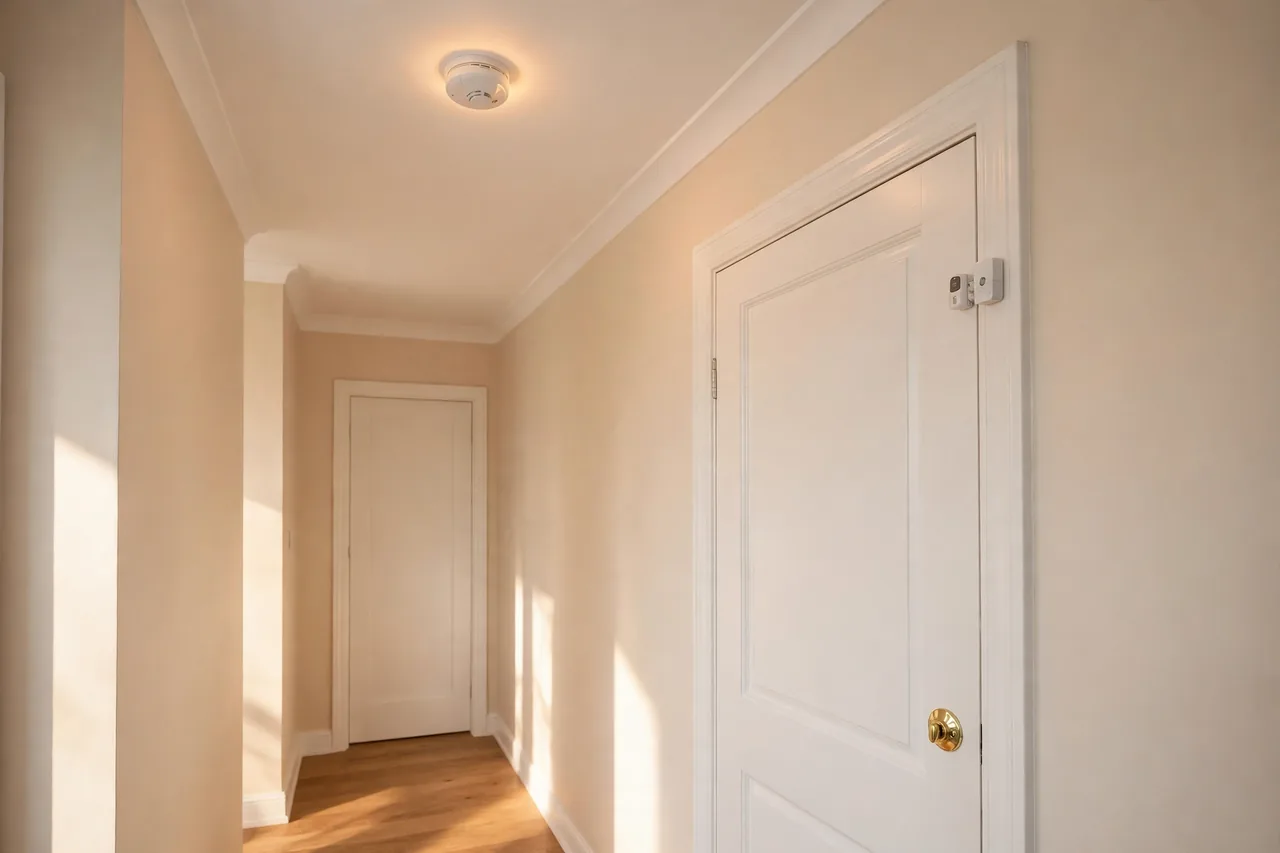
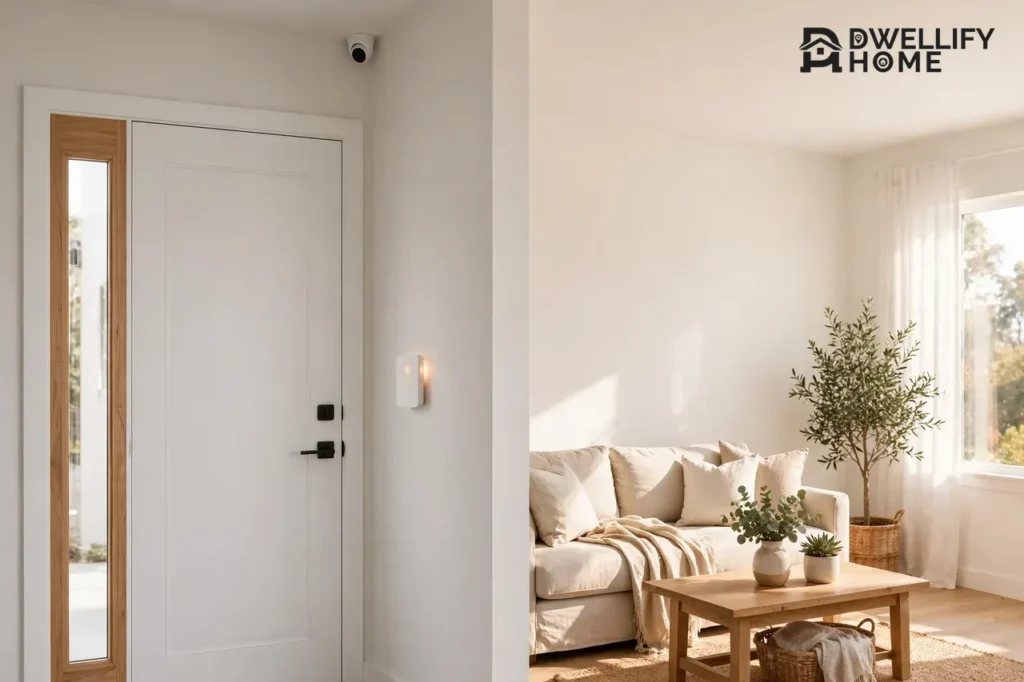
Professionally monitored alarms earn the biggest discount, because monitoring is what turns a noise into a response. Vivint’s guide is blunt about it: professional monitoring with a central station is the key to unlocking the biggest discounts, and self-monitored setups usually qualify for less or nothing at all. A monitored system with door and window sensors, motion detectors, and fire and smoke detection connected to the monitoring service sits at the top of every insurer’s list, and it is the setup that reaches the 15% to 20% tier.
Caption: What each protective device typically earns, and the proof an insurer asks for.
| Device | What It Earns | Proof Asked For |
|---|---|---|
| Centrally monitored burglar alarm | Largest burglary credit | Current monitoring certificate |
| Monitored smoke and fire alarm | Larger credit, fire peril | Monitoring certificate |
| Automatic sprinkler system | Often the largest fire credit, 15–20% | Installer’s certificate or inspection |
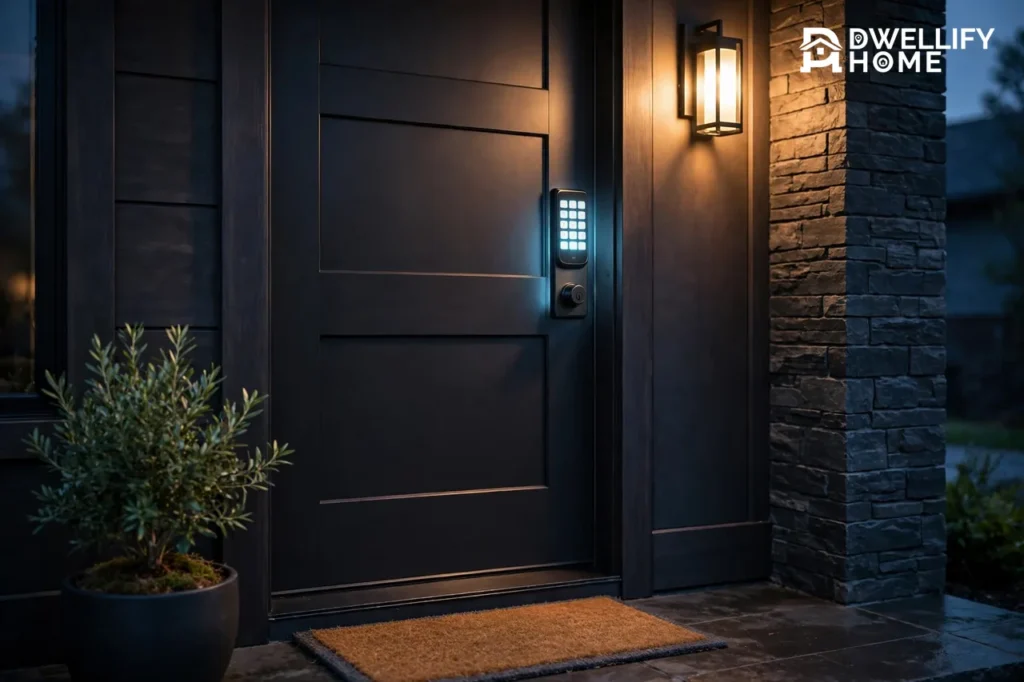
| Deadbolts on all exterior doors | Small credit, up to 10% | Your statement |
| Security cameras alone | Little or nothing at most insurers | Receipts, app screenshots |
| Water leak sensors and shutoff | Varies, sometimes extra 2–5% | Activation confirmation |
Two devices surprise people. First, an automatic sprinkler system earns one of the largest fire credits — Angi reports discounts of 15% to 20% for sprinklered homes, particularly in high-risk areas — because sprinklers stop a fire while it is still small. Second, deadbolts earn a real credit on their own: Angi reports savings of up to 10% for deadbolts on all exterior doors. Cameras surprise people the other way: many insurers give cameras little or no credit, because a camera records a burglary without preventing it. Buy cameras for the evidence and the deterrent, not for the discount. The gap between monitored and self-monitored systems is the next thing to understand, because it decides your tier.
Monitored vs Self-Monitored: The Discount Gap
A monitored system earns more than a self-monitored one because a central station answers the alarm when you cannot. A monitored alarm sends its signal to a professional monitoring center, which verifies the alarm and contacts the authorities. A self-monitored system sends the alert to your phone, and if you are asleep, driving, or out of signal, nobody responds. Insurers price that difference directly: monitored systems typically earn 10% to 15%, while self-monitored systems earn 5% to 10% at best, and some insurers offer nothing for a system nobody watches.
Monitoring costs $10 to $30 a month for most DIY systems, or $120 to $360 a year, which is more than the discount on an average premium. That is the honest trade: monitoring earns the bigger discount, but the discount alone does not pay the monitoring bill. The monitoring is worth buying for the protection — a fire detected at 3 a.m. while you sleep is worth more than any premium credit — and the discount is a rebate on a decision you should make anyway. If your budget only stretches to one thing, a monitored smoke detector earns more than a monitored burglar alarm, because fire claims cost insurers far more than theft claims. Before you buy anything, though, call your insurer, because the discount is theirs to define.
What Most People Get Wrong About the Security Discount
The most common mistake is buying a security system for the discount alone. The discount rarely covers what the equipment costs, and a system bought for the rebate is a system that disappoints twice: it costs more than it saves, and it gets installed without the devices that would have earned the bigger credit. Buy the system for the protection it gives, then make sure your insurer knows about it — that order keeps both the safety and the money honest.
The second mistake is assuming cameras earn a big discount. They usually do not, because most insurers reserve their largest discounts for professionally monitored alarm systems, and a camera that only records is not an alarm. The third mistake is installing the system and never telling the insurer: the discount is not automatic, and no insurer applies a credit they do not know about. The fourth is letting the monitoring lapse: if your certificate expires, the discount can disappear at renewal, and some insurers claw it back. The fifth is forgetting the fire side — smoke detectors and monitored fire alarms earn credits of their own, and a home with burglary protection but no fire protection leaves money on the table. The claim process is simple once you know the steps, and they start before you buy.
How to Claim Your Discount in 5 Steps

Claim your discount in five steps, and do the first one before you buy anything. Step one: call your insurer and ask which protective devices earn a discount, how much each one earns, and whether professional monitoring is required. Requirements vary by company and by state, and a five-minute call can change which system you buy. Step two: install the qualifying system and keep every receipt, invoice, and contract. Step three: get a certificate of installation or a monitoring certificate from your security provider — Vivint notes that you will need this certificate before your insurer applies the discount, and most providers issue one on request.
Step four: send the certificate and the installation proof to your insurer, and ask them to confirm the discount in writing and to show it on your policy declarations page. Policygenius notes that a security discount appears on the declarations page, so check that page rather than trusting a phone promise. Step five: re-check at every renewal, because discounts can drop off when a monitoring contract lapses or a system is replaced. If your insurer says no to a discount, ask which device would change the answer — sometimes adding monitored smoke detection is the step that unlocks the tier. The math on whether the whole thing pays is next, and it is less generous than the ads.
The Math: Does the Discount Pay for the System?
On the average $1,569 annual premium, a 10% discount saves about $157 a year, and a 5% discount saves about $78. A monitored DIY system costs roughly $200 to $600 up front, with monitoring at $10 to $30 a month. The discount alone does not pay for the system in year one, and it may never pay for monitoring by itself: $157 a year in savings against $120 to $360 a year in monitoring fees is break-even at best and a loss at worst. Abode’s guide to insurance savings makes the same point — annual discounts of $50 to $150 can offset the cost over time, but the system pays for itself only when the protection is counted too.
The honest way to do the math is to count the whole value: the premium saving, plus the avoided loss, plus the peace of mind. A single prevented burglary saves a $1,000 deductible and the cost of replacing what was taken. A single early-detected fire saves the house. A burst pipe caught by a leak sensor saves thousands in water damage. The discount is a rebate, not a return on investment, and a system bought on rebate math alone will always disappoint. Buy the protection, claim the discount, and let the discount be the bonus it is. Whether a DIY system qualifies at all is the last question most people ask, and the answer is better than they expect.
Do DIY Security Systems Qualify for the Discount?

Yes, a DIY security system can qualify for a home insurance discount, as long as it includes the features insurers care about. Angi confirms that a DIY system can qualify when it includes cameras, motion detectors, or alarms that deter break-ins, and notes that insurers generally value any proactive measures even though they often lean toward professionally monitored systems. The key is the monitoring: a DIY system with a monitoring plan and a certificate is treated much like a professionally installed system, while a DIY system with no monitoring earns little or nothing.
Most reputable DIY providers issue a certificate showing activation and coverage — Abode, Ring, and SimpliSafe all provide one — and that certificate is what your insurer wants to see. Keep it with your policy documents, and send a fresh copy whenever the monitoring plan renews. If your insurer will not credit a DIY system at all, that is a reason to shop carriers, not a reason to abandon the system: six major carriers — State Farm, Allstate, USAA, Progressive, Farmers, and Liberty Mutual — all offer security-system discounts, according to Vivint’s carrier comparison, and they do not all define “qualifying system” the same way. A carrier that credits your system is worth more than a carrier that does not, and the difference shows up on the declarations page.
Related Guides
To choose the system that earns the discount, start with our best home security systems with cameras guide and our best home security camera system guide. For the fire side, read our monitored fire alarm guide and our fire alarm installation cost guide. For locks, our best lock types for home guide covers the deadbolts that earn their own credit.
Frequently Asked Questions
Does a security system lower home insurance?
Yes. Most insurers offer a discount of 5% to 20% for a qualifying security system, with professionally monitored systems earning the most. Policygenius reports homeowners with a security system pay about $100 less per year on average than those without one.
How much can I save with a security system?
Typical savings run $75 to $300 a year, depending on your premium and your system. On the average $1,569 annual premium, a 10% discount saves about $157 a year, while a basic unmonitored alarm may save nothing at all.
Do I need professional monitoring to get the discount?
Usually, for the biggest discount. Most insurers reserve their largest credits for 24/7 professionally monitored systems, and self-monitored setups qualify for less or nothing. A DIY system with a monitoring plan and a certificate can still qualify.
Will security cameras lower my homeowners insurance?
Sometimes a little, often not at all. Many insurers give cameras little or no credit because a camera records a burglary without preventing it. Monitored alarms and monitored fire detection earn far more than cameras on their own.
What proof does my insurer need for the discount?
Usually a certificate of installation or a monitoring certificate from your security provider, plus installation receipts. Send them to your insurer and check that the discount appears on your policy declarations page, then re-check it at every renewal.
Do all insurance companies offer security system discounts?
No. Discounts vary by insurer and by state, and not every company offers the same credits. State Farm, Allstate, USAA, Progressive, Farmers, and Liberty Mutual all offer them, but the qualifying rules differ — shop carriers if yours says no.
Call your insurer before you buy, install a monitored system with fire detection, get the certificate, and check your declarations page. The discount will not pay for the system on its own — but on a $1,569 premium, 10% is $157 a year back for protection you should have anyway. Start with our best home security systems with cameras guide to pick the system that earns the most.