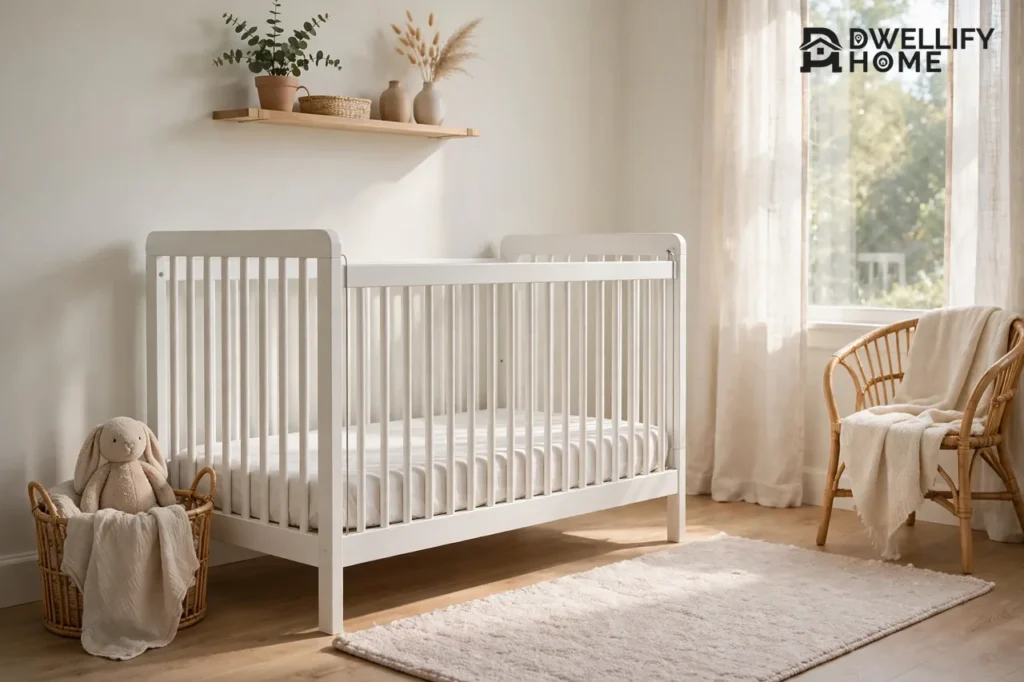
The best way to prevent a baby from falling off a bed is to keep the baby in a safe sleep space, a crib or bassinet with the mattress at its lowest setting, and never leave a baby alone on an adult bed, sofa, or changing table. How to prevent baby from falling off bed comes down to two habits: always watch your baby on high surfaces, and make the sleep setup safe before your baby can roll.
This guide covers babies, toddlers, and the move to a big bed, including bed rails, floor beds, and what to do if a fall already happened. It uses guidance from pediatric and child-safety sources, and it flags the products that are not safe for babies.
Why Babies Fall Off Beds So Easily
Babies fall because they move more than parents expect. A baby who cannot roll today may roll tomorrow, and a baby who rolls can cross a bed in seconds. Kicking, wiggling, and reaching all push a baby toward the edge, even during sleep.
A fall from a small height can still hurt a baby badly. Israel’s Ministry of Health warns parents that falling from a height of just half a meter can cause serious injury to babies, and it advises never leaving an infant alone, not even for a minute, on tall furniture such as a dresser, sofa, changing table, or parents’ bed. A baby can fall in the seconds you turn away to heat milk or grab a phone.
The risk grows as your baby grows. Rolling starts the risk, sitting adds reaching, and crawling and pulling up add climbing. Each new skill needs a fresh look at the bed setup, because the setup that was safe last month may not be safe now.
The Safest Sleep Setup for Babies
For babies under one year, the safest sleep space is their own crib, bassinet, or play yard, on their back, on a firm, flat mattress with a fitted sheet and nothing loose inside. An adult bed, sofa, or pile of pillows is not a safe sleep space for a baby, even with pillows arranged as a barrier.
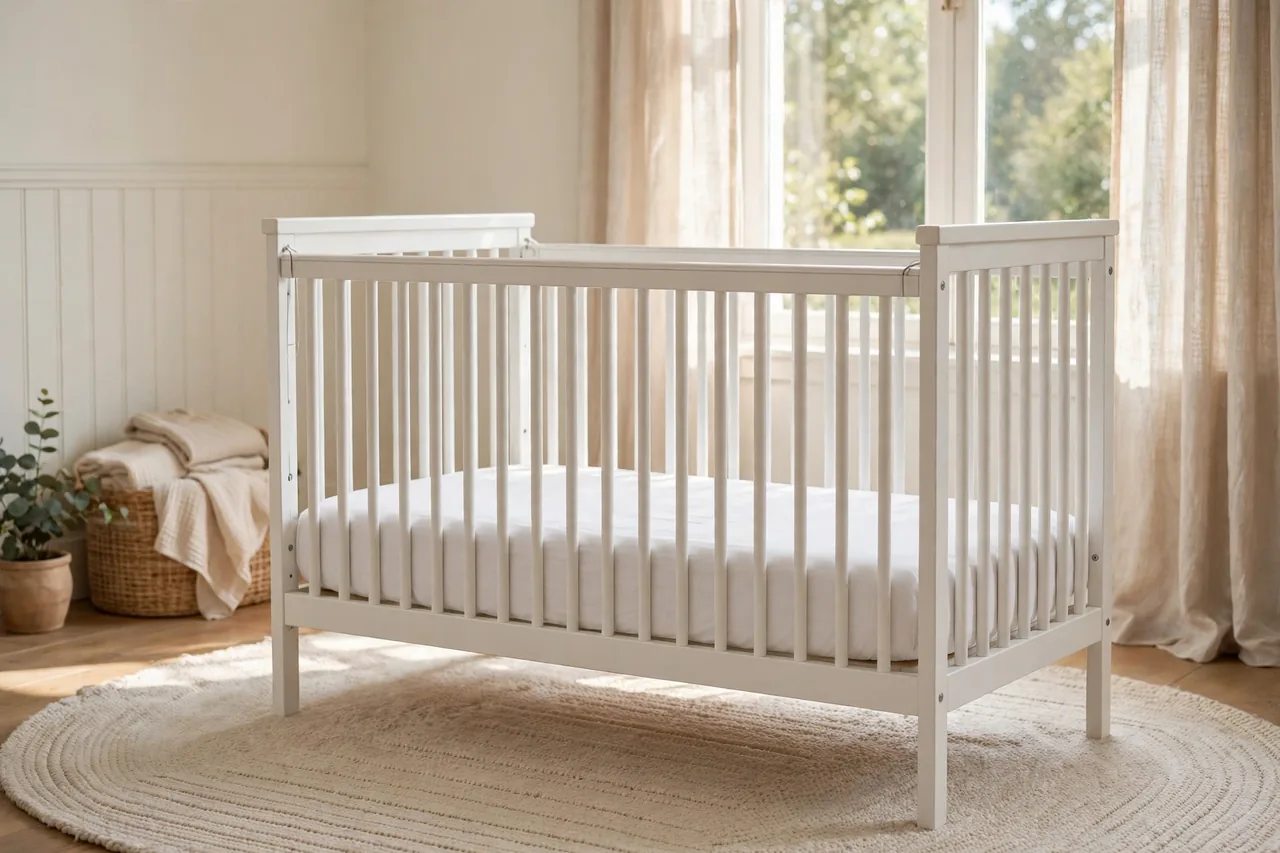
Keep the crib rails locked in the highest position whenever your baby is inside. Lower the crib mattress to its lowest point as soon as your baby can sit up, and lower it again as your baby learns to pull up. A high mattress plus a pulling-up baby is a climbing baby, and climbing babies go over rails.
Move your child to a toddler bed when they show signs of climbing out of the crib, even if they are still small. A child who can climb out will fall from rail height, so a low toddler bed is safer than a crib they can escape. The Consumer Product Safety Commission guidance, summarized by Consumer Reports, says bed rails are for children who can get into and out of bed without help, and its safety bed rails guide warns never to install portable rails on a crib or toddler bed, since the mattress is too small to support them.
Keep the crib away from windows, cords, and shelves. A baby who can climb can reach a curtain cord or pull a shelf down, so move the crib to a clear wall and keep cords wrapped up high and out of reach.
Never Leave a Baby Alone on a High Surface
This is the rule that stops most falls. Never leave a baby alone on an adult bed, a sofa, a changing table, or a counter, not even for a moment. If you must step away, move your baby to a safe place first, such as the crib or a playpen.
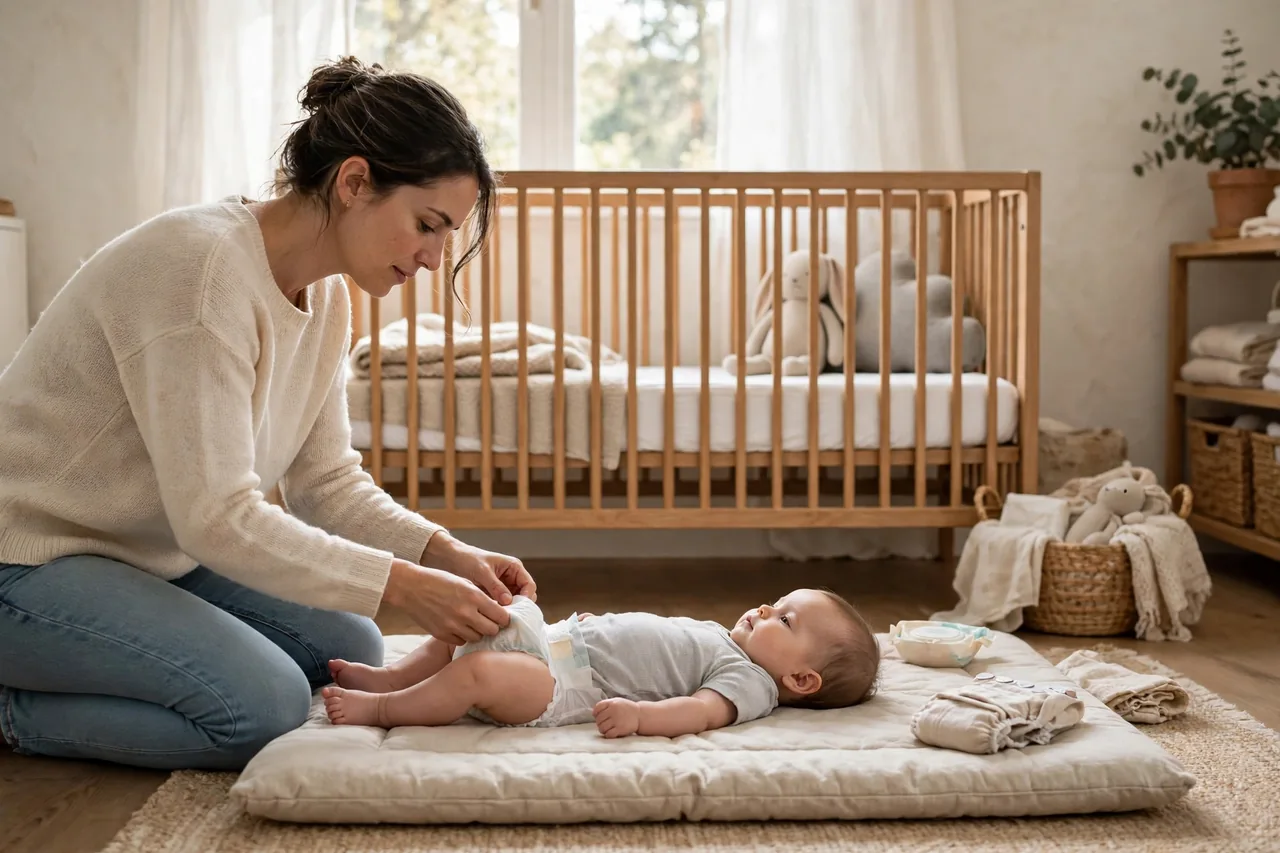
Change diapers on the floor when you can. Floor changing removes the fall risk entirely, and it is the safest option for a wiggly baby. If you use a changing table, keep one hand on your baby the whole time, even when the safety straps are fastened, and keep everything you need within reach before you start.
Never place a car seat, baby chair, or bassinet on a bed, sofa, or counter. A baby can wiggle a seat to the edge and tip it off, even while strapped in. Put seats and carriers on the floor only.
Do not let your baby sleep on a sofa, even beside you. Sofas have soft surfaces, gaps, and cushions a baby can sink into, and a baby can roll into a gap and get trapped. Alberta Health Services advises parents to protect babies from falls with two habits every time: active supervision and a safe environment, and its guide to keeping babies safe from falls lists the crib, the changing table, and the sofa as the places where falls happen most.
Bed Rails: When They Help and When They Don’t
Bed rails help toddlers in big beds, but they are not for babies, and they are not safe on every bed. Use them only when your child is ready, and install them exactly as the maker instructs.
Portable bed rails are meant for children around age 2 to 5 who sleep in an adult-size bed with a mattress and box spring, and who can climb into and out of bed alone. Do not use them on a crib, toddler bed, bunk bed, waterbed, youth bed, inflatable mattress, or a bed without a box spring. On those beds the rail cannot anchor properly, and a gap can trap a child.
Look for a certification sticker from the Juvenile Products Manufacturers Association (JPMA) on the rail or its packaging, and follow the maker’s instructions to the letter. The rail must fit tightly against the mattress with no gap, since a child can get stuck in a gap between the rail and the mattress. Leave at least 9 inches between the bed rail and the headboard and footboard.
Check the rails every night before bed. Push on them to confirm they are tight, and re-tighten the bed frame so the bed does not wobble. A loose rail is worse than no rail, because it looks safe while it is not.
Do not use the wall as a bed rail. Pushing a bed against the wall is not a safe substitute, since a child can get trapped between the wall and the mattress. Use a real rail on both open sides, or use a floor bed instead.
The Floor Bed Option

A floor bed is one of the simplest ways to stop bed falls: put the mattress directly on the floor, or use a very low frame with no box spring. A baby who rolls off a floor mattress falls a few inches onto a soft surface, not two feet onto a hard floor.
Set the mattress on a clean, firm floor, with a soft rug or foam mat beside it to soften any landing. Keep the area around the bed clear of hard toys, cords, and furniture corners. A floor bed also lets a toddler climb in and out alone, which builds independence without the climbing risk of a high bed.
Make the whole room safe if you use a floor bed, since your child can now roam the room at night. Anchor dressers and shelves to the wall, cover outlets, remove small objects, and fit a gate at the bedroom door. A floor bed only works when the room itself is safe.
Teach Your Toddler to Get Down Safely

Once your child is old enough to understand, teach them to get off the bed on their belly, feet first. Show them how to turn around, slide down on their tummy, and land feet first on the floor. Practice it as a game during the day until it becomes a habit.
Keep the bed low while they learn. A low-profile mattress without a box spring shortens the fall while your child practices, and it makes the belly-slide easy to do. Discourage playing, jumping, and wrestling on the bed, since rough play is a common cause of falls.
Place soft landing material beside the bed, such as a thick rug, foam mats, or bean bags. These do not stop a fall, but they soften the landing while your child learns. Move the bed away from windows, shelves, and other objects that invite climbing or reaching from the bed.
What to Do If Your Baby Falls Off the Bed
Stay calm first. Your baby will likely cry from fright, and your calm voice helps them settle. Pick your baby up gently and check for injuries: look for swelling, bleeding, bruising, and any change in how your baby moves or responds.
Call emergency services at once if your baby is unresponsive, not breathing normally, having a seizure, very hard to wake, or bleeding heavily. Call your pediatrician promptly in every other case, and describe the fall clearly: your baby’s age, the height of the fall, the surface they landed on, and how they are acting now.
Watch your baby closely for the next 24 hours. Seek medical care right away if you see repeated vomiting, unusual drowsiness, inconsolable crying, feeding refusal, unequal pupils, a bulging soft spot, weakness on one side, or a seizure. The American Academy of Pediatrics’ infant guidance lists these as warning signs after a head injury, and SleepBaby.org’s fall guide stresses that babies under one year need particular caution, since a short fall and immediate crying do not prove a baby is fine. Its guide to a baby falling off the bed advises calling the pediatrician promptly and following the clinician’s own plan for sleep and checks that night.
Do not rely on the old advice to keep a baby awake all night after a fall. Modern guidance uses observation instead: watch your baby while awake for a couple of hours, check that they feed and behave normally, and follow your clinician’s instructions about sleep and night checks.
Preventing Falls Around the Whole Bedroom
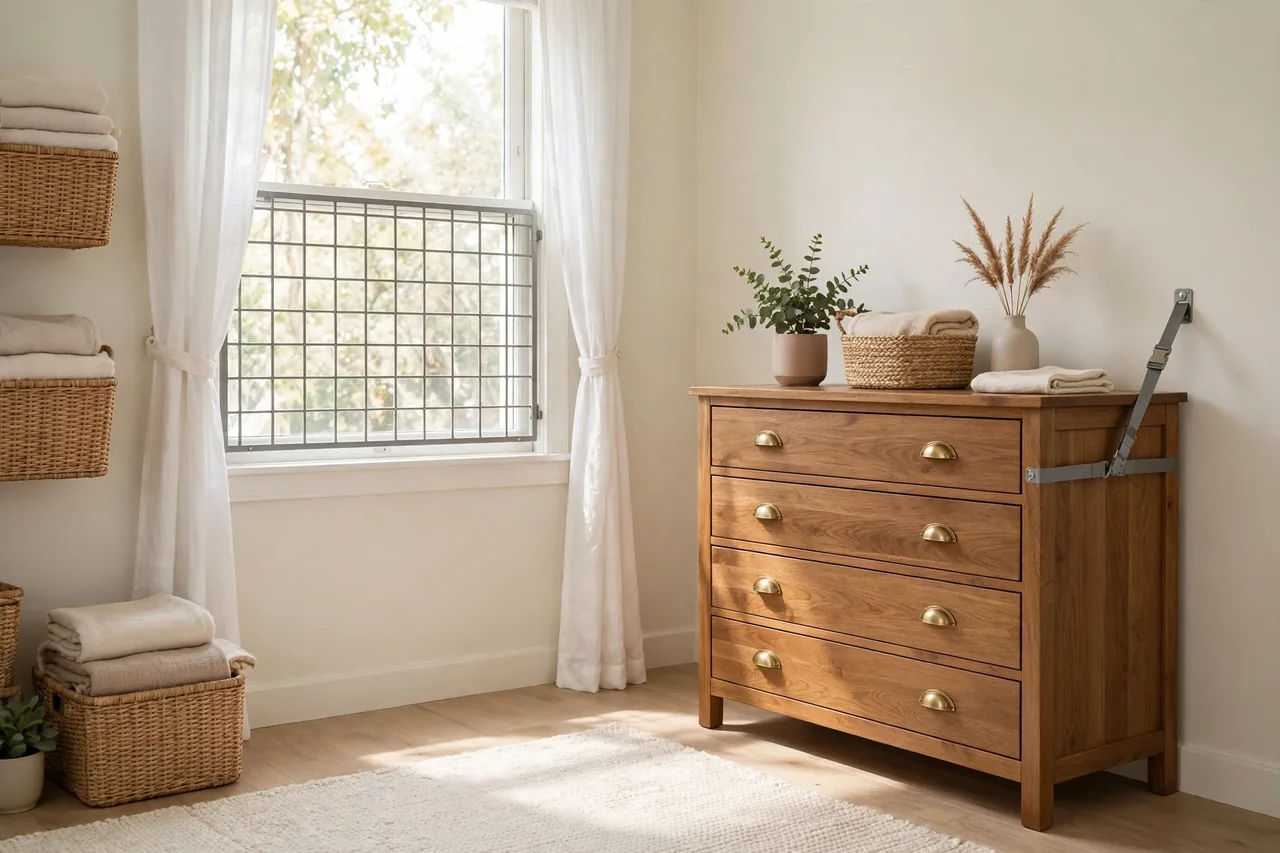
Bed falls are one part of bedroom safety. Anchor tall furniture such as dressers, bookshelves, and TVs to the wall, since children climb furniture and can pull it over onto themselves. Keep tempting objects off the top of tall furniture so your child has no reason to climb.
Fit window guards on windows above the ground floor, and use safety devices that stop windows opening more than 4 inches. A screen will not hold a child, so never rely on one. Move the crib and bed away from windows so your child cannot climb from the bed to the window.
Keep the floor clear of tripping hazards, use a night-light so your child can see the floor at night, and keep the bedroom door gate in good repair. Check the whole room once a month, since children grow fast and find new ways to climb.
Related Guides
Set up a safer kids’ room with 7 creative ways to transform a small kids’ room. Keep toys and clothes tidy with playroom organization ideas, and build daily habits with how to help kids stay organized.
Frequently Asked Questions
How can I stop my baby from rolling off the bed?
Do not let a baby sleep in an adult bed. Use a crib or bassinet with the rails locked high and the mattress at its lowest setting. Never leave a baby alone on a bed, sofa, or changing table, and move your baby to a safe place before you step away.
Are bed rails safe for babies?
No. Portable bed rails are not for babies or infants, and they must never go on a crib or toddler bed. They are meant for children around age 2 to 5 who sleep in an adult-size bed with a mattress and box spring and can get in and out alone.
Is a floor bed safe for a baby?
A floor mattress is one of the safest options for a toddler, since a roll-off is only a few inches onto a soft surface. Make the whole room safe first: anchor furniture, cover outlets, remove small objects, and fit a gate at the door, since your child can now roam the room.
What should I do if my baby falls off the bed?
Stay calm, check for injuries, and call your pediatrician promptly. Call emergency services at once if your baby is unresponsive, not breathing normally, having a seizure, or very hard to wake. Watch closely for 24 hours for vomiting, unusual drowsiness, or changes in behavior.
Can a baby sleep after falling off the bed?
Often yes, but only after medical advice for your baby’s case. Watch your baby awake and behaving normally for a couple of hours first, then follow your clinician’s plan for sleep and night checks. A baby who is abnormally drowsy or hard to wake needs emergency help, not sleep.
A Short Safety Note
This guide shares general child-safety information, not medical advice. Every baby is different, and only your pediatrician can judge your baby’s case after a fall. If your baby falls, shows any warning sign, or acts strangely afterward, call your pediatrician or emergency services right away. When in doubt, get medical advice first and worry about the bed setup second.
Lower the mattress, lock the rails, and never step away from a baby on a high surface, and most bed falls never happen.