To help kids stay organized, give each thing one clear home, build short daily routines around it, and let your child use the system without your constant reminders. Start with one small area, such as the backpack or the toy shelf, and add the next system only when the first one works on its own. Organization is a skill children learn step by step, not a trait they either have or lack.
That last point matters more than any bin or label. KidsHealth, the children’s health site from Nemours, explains that organization is a skill learned over time, and that with help and practice kids can build an effective way to get things done. In other words, your child is not failing at being tidy. Your child is still learning how to plan, remember, and follow through, and your job is to make that learning as easy as possible.
This guide shows you how to do that in real homes: simple storage your child can reach, morning and evening routines that run without nagging, a homework spot that works, toy and clothing systems that survive a busy week, and age-by-age expectations so you ask for the right amount at the right time.
Start With One Simple System, Not a Whole Overhaul
The fastest way to kill a new organization system is to launch five of them on the same weekend. A full bedroom reset, a new homework routine, a color-coded closet, and a chore chart all at once will overwhelm your child and exhaust you. Pick the single spot that causes the most daily stress instead.
For many families, that spot is the front door or the backpack. For others, it is the homework table or the toy corner. Ask yourself where the morning falls apart or where you hear the most arguing, and start there. Fix one flow, live with it for two weeks, and then move on to the next one.
Work on the system together. Let your child choose which bin holds the cars and which shelf holds the books, even if you would have sorted them differently. A child who helped build the system will use it far more willingly than a child who simply received it. Ownership turns a rule into a habit.
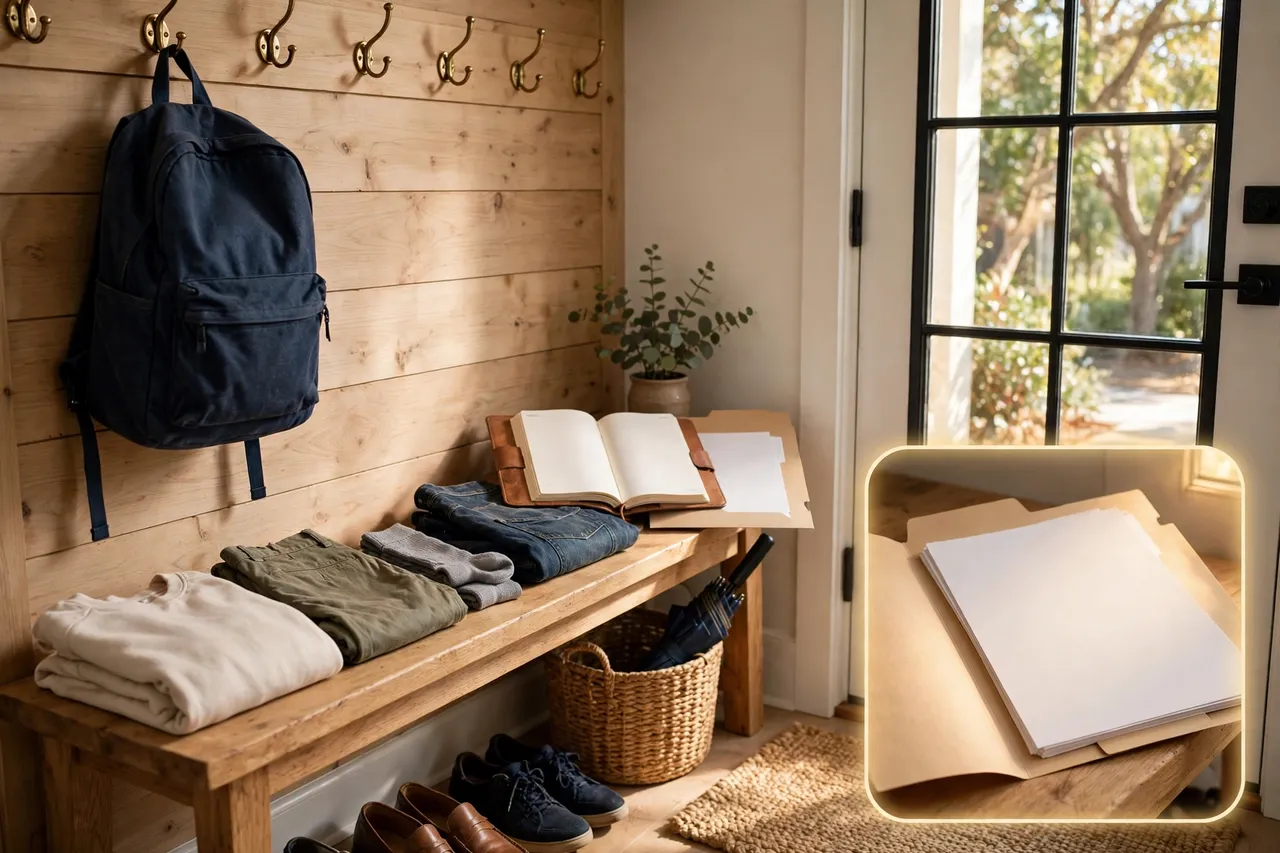
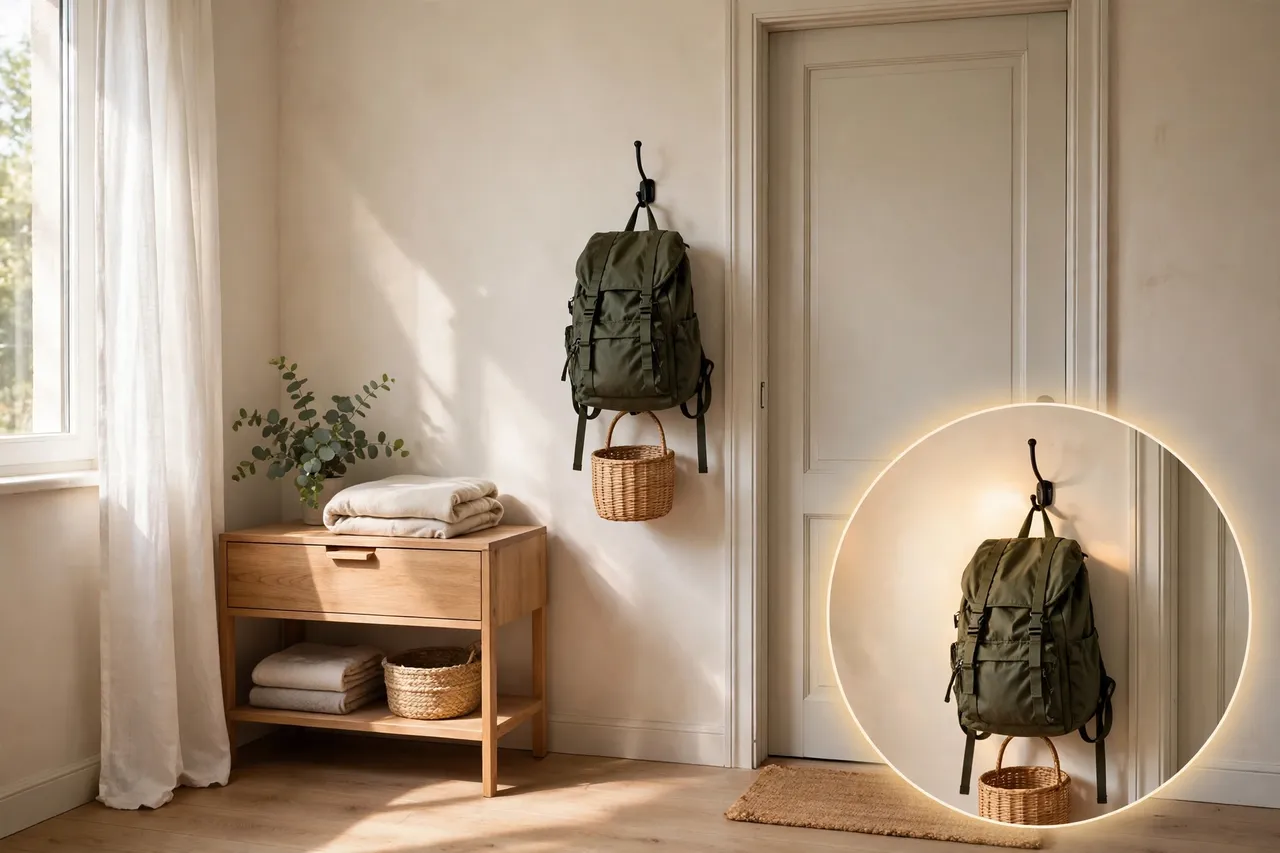
Keep the first version almost embarrassingly simple. One basket for dirty clothes, one hook for the backpack, one folder for papers going back to school. You can always add a second basket later. You cannot easily repair a system your child already decided was too hard.
Make Every Thing Easy to Put Away
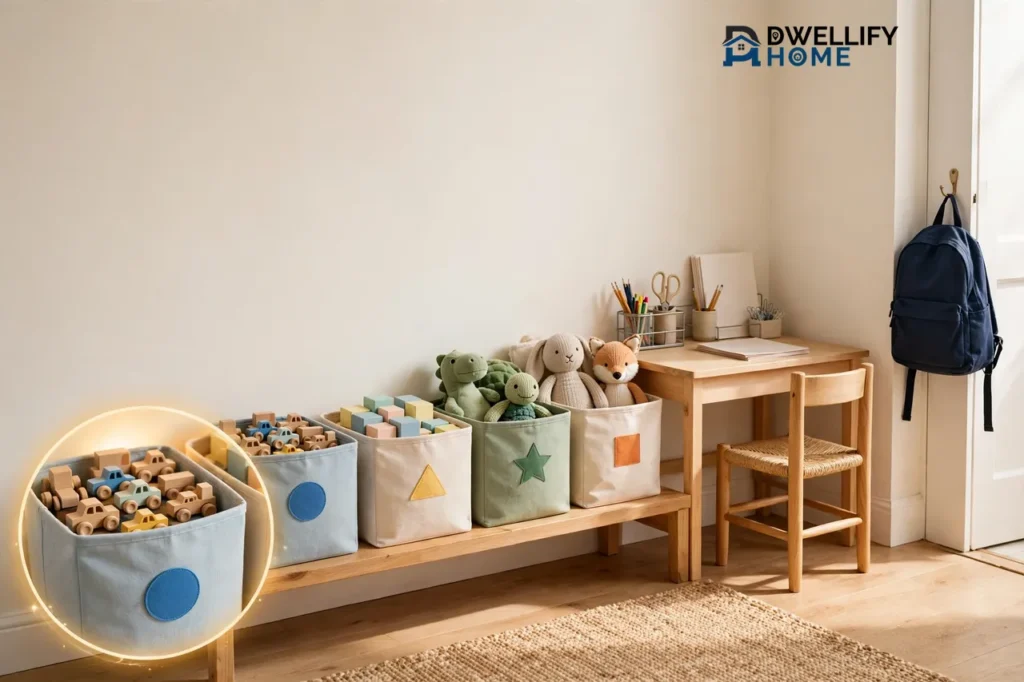
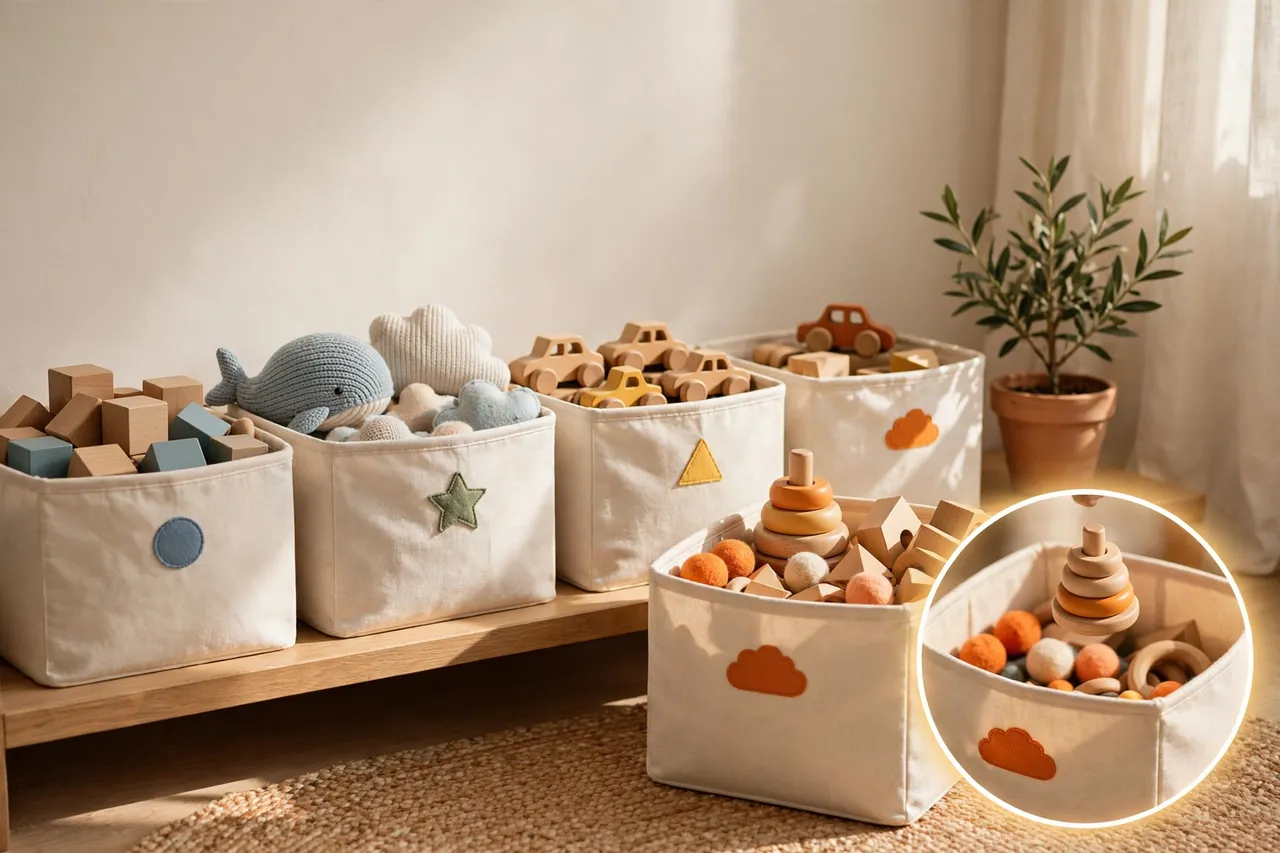
Here is the golden rule of kids’ organization: putting something away must be easier than leaving it out. If a toy lives in a lidded box on a high shelf inside a closet, your child will leave it on the floor. If it lives in an open bin at knee height, your child has a real chance of returning it.
Give everything a home of its own. LD OnLine, drawing on guidance from the Coordinated Campaign for Learning Disabilities, lists this as a core strategy: every item belongs in one central spot so nothing gets lost in the shuffle. When your child asks where something goes, the answer should be one place, every time.
Use labels your child can actually read. Picture labels work for children who cannot read yet: a photo of blocks on the block bin, a drawing of cars on the car bin. Word labels work once reading clicks, and color coding adds another clue for school-age kids, such as one color per subject or per child.
Keep storage low, open, and reachable. Low shelves beat tall bookcases for young kids, both because children can reach them and because nothing heavy can fall from above. Open bins beat closed boxes for daily-use toys. Reserve lids and high shelves for things used rarely, such as seasonal crafts or keepsakes.
Finally, own less than the system can hold. No bin, label, or routine can organize twice as many toys as a room can store. A regular clear-out of broken, outgrown, or never-played-with items is part of the system, not a separate chore you do once a year.
Build Morning and Evening Routines That Run Themselves
Routines do the remembering so your child does not have to. When the same steps happen in the same order every day, your child stops needing a reminder for each one. The routine itself becomes the prompt, and mornings get calmer for everyone.
Start with the evening, because evenings decide how mornings go. Before bed, your child packs the backpack, picks tomorrow’s clothes, and puts shoes by the door. LD OnLine’s guidance makes the same point: pack schoolwork the night before and lay out clothes with shoes and accessories, so the morning holds no frantic search.
Then build a short morning checklist your child can follow alone. Keep it to five or six steps at most: get dressed, eat breakfast, brush teeth, grab backpack, put on shoes, out the door. Post it where your child will see it, such as on the fridge or beside the front door, and use pictures for younger kids.
Keep the order fixed, even when you are in a rush. Children learn sequences by repeating them, not by hearing a different order each day. First, next, then: those little words teach your child to think in steps, which is the same skill behind planning a school project later on.
Expect the routine to wobble on weekends, holidays, and sick days. That is normal, not failure. Restart it the next school day without a lecture, and it will settle again faster than you expect.
Set Up a Homework Station That Works
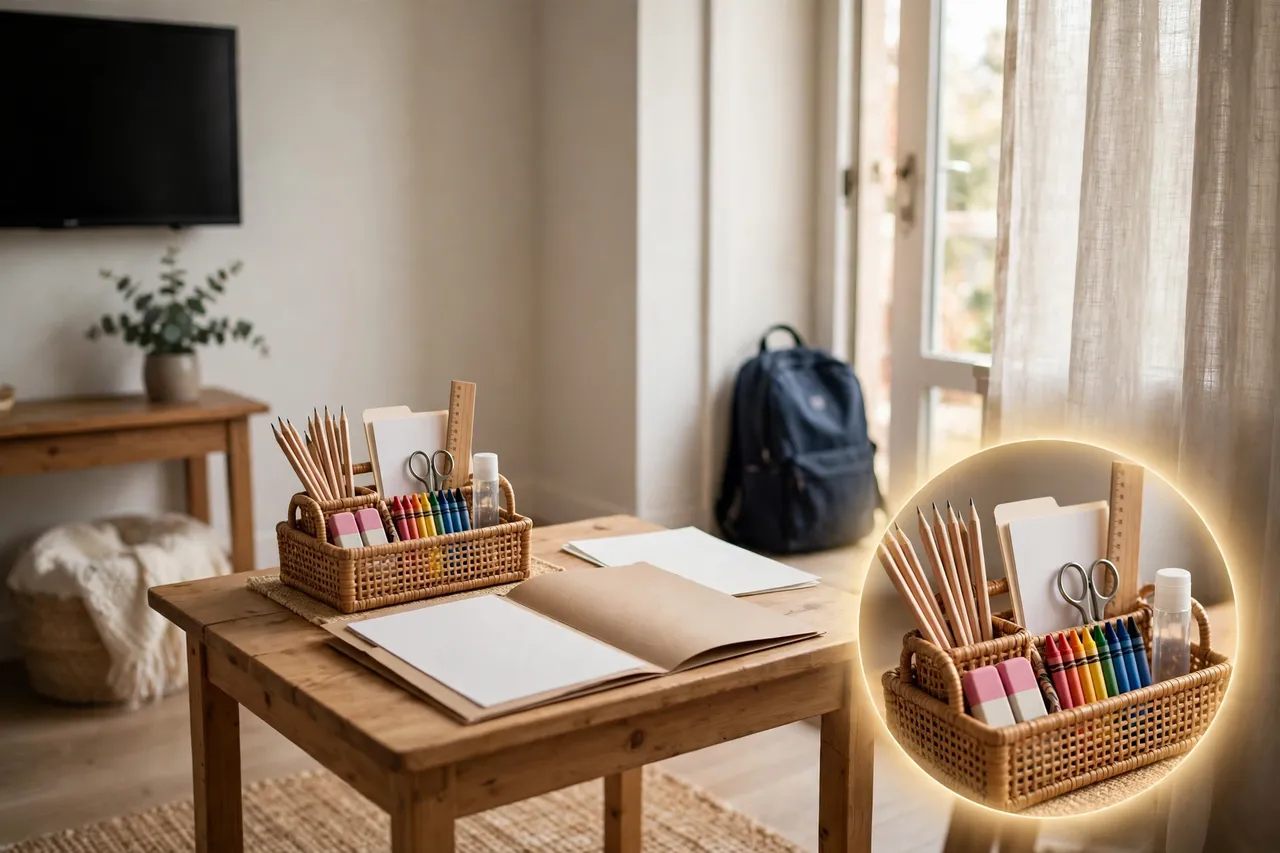
A homework station does not need a fancy desk or a separate room. It needs one consistent place, good light, and every supply within reach, so your child can start work without hunting for a pencil first. LD OnLine advises a designated study space where supplies and materials stay close at hand, and a set study time each day.
Pick a spot with few distractions. A kitchen table works well for younger kids who still want you nearby, while a quiet bedroom corner suits an older child who focuses better alone. Avoid facing a television or a busy walkway, and keep phones and tablets out of reach unless the homework itself needs them.
Stock the station once, then restock it weekly. Pencils, erasers, crayons or pens, scissors, glue, a ruler, and paper cover most school nights. A small caddy or box keeps these together, and a weekly five-minute restock stops the nightly search for a working pencil.
Set a regular homework time, but not immediately after school. Most kids need time to unwind, eat a snack, and move around first. A calm start beats a fast start: a child who sits down willingly finishes faster than a child who sits down resentfully.
Teach the finish, not just the start. When homework ends, the paper goes in the right folder, the folder goes in the backpack, and the backpack goes by the door. KidsHealth calls this last part “getting it done,” and it is where most lost homework actually disappears. Practice the pack-up until it becomes automatic.
Toy and Clothing Systems Kids Can Actually Use
Toys cause the most visible mess, so they deserve the simplest system in the house. Sort toys by type, not by size or color: cars together, blocks together, dolls together, art supplies together. One category per bin, with a picture or word label on the front, means your child never has to guess.
Try toy rotation if the sheer number of toys overwhelms the room. Keep part of the collection in a closet or storage box and swap it every few weeks. Fewer toys out at once means faster cleanups, and the “new” toys feel fresh again when they return. It also makes clear-outs easier, because you can see which toys never get missed.
Build cleanup into the day in small doses. A ten-minute tidy before dinner or a quick reset before bed beats a huge weekend cleanup every time. Make it a game for younger kids: set a timer, call out a color, or race the cleanup song. The goal is a habit, not a perfect room.
Clothing works the same way: fewer choices, clearer homes. Keep daily clothes at your child’s height, with one drawer or section for shirts, one for pants, and one for socks and underwear. Outfits picked the night before remove the morning debate entirely, and a laundry basket in the bedroom stops clothes from colonizing the floor.
For school-age kids, add a simple weekly rhythm: dirty clothes go in the basket every night, and one day a week the room gets a quick reset. Short, regular resets keep small messes from growing into weekend-long projects.
Organization by Age: What to Expect at Each Stage
Children do not all need the same system, because their brains do not all work the same way yet. Younger kids need pictures, short steps, and your hands-on help. Older kids need planners, deadlines, and room to manage things themselves. Match the system to the child in front of you, not to the child you wish you had.
The table below sums up what each age band can usually handle, what system fits best, and where parents should still step in. Use it as a starting point, then adjust for your own child’s pace.
| Age band | What your child can usually handle | System that fits best | Your role |
|---|---|---|---|
| Young kids (about ages 3 to 6) | One-step directions, picture cues, short tidy-ups | Picture labels, open bins, one cleanup song or timer game | Do it with them, every time, until the steps stick |
| School-age kids (about ages 7 to 11) | Checklists, homework routines, sorting by category | Written checklists, color-coded folders, a homework station | Coach and check in, then step back as habits form |
| Teens (about ages 12 and up) | Planners, deadlines, longer projects | Planner or calendar app, project checklists, weekly bag clean-out | Monitor results, not every step, and let natural results teach |
Young Kids: Keep It Visual and Short
Young children learn organization through their eyes and hands, not through lectures. Picture labels, open bins, and a cleanup song turn tidying into something they can do, not something done to them. Keep every task to one or two steps: “Cars go in the red bin” works, while “Clean your room” does not.
Do the routine beside them, not from the next room. Sit on the floor, hand them one toy at a time, and praise the effort as it happens. Your presence is the system at this age, and it slowly becomes their own habit as they grow.
School-Age Kids: Checklists and Homework Habits
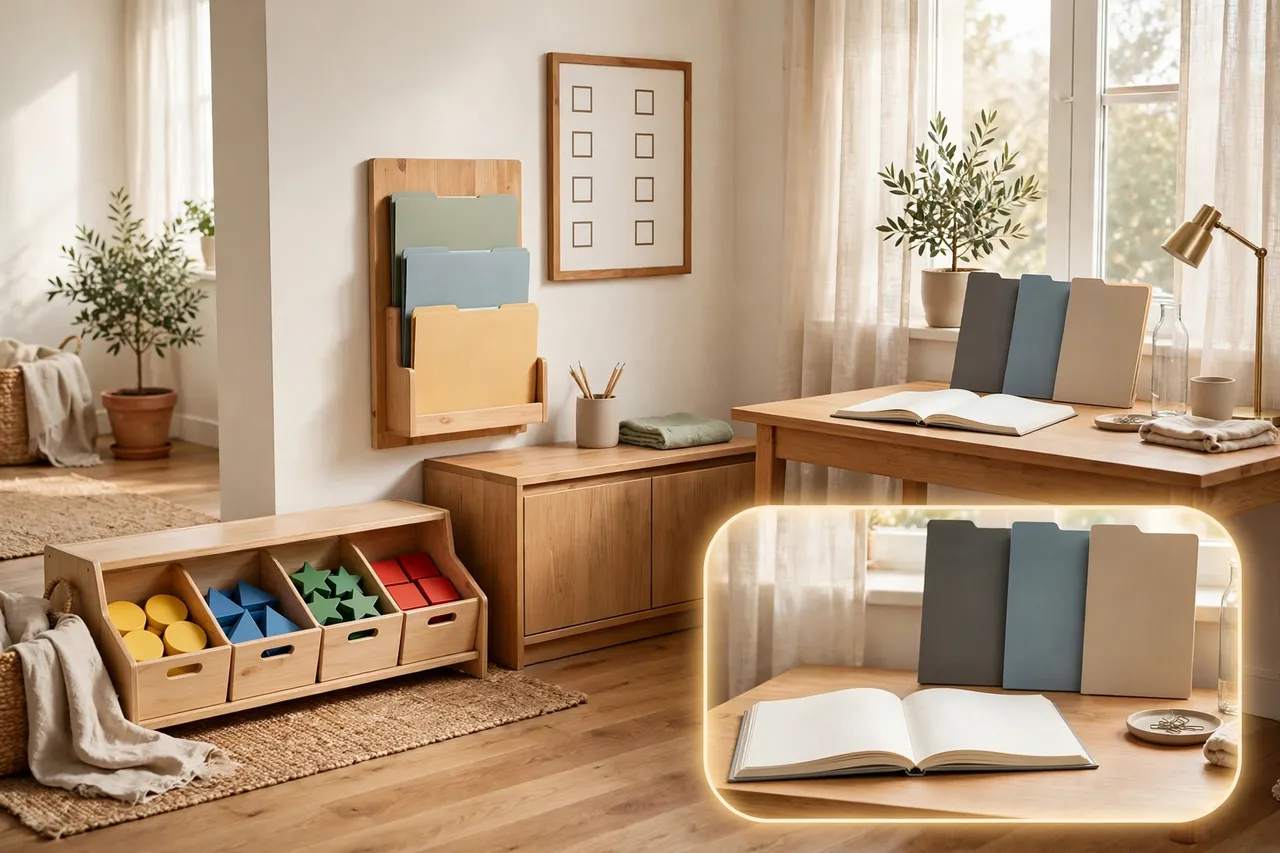
School-age kids can follow a written list, keep a folder system, and run a homework routine with a little coaching. This is the age to teach the backpack check: finished work in the “to school” folder, papers to keep in a home file, and everything else recycled. LD OnLine recommends a weekly clean-up of bags and notebooks, with old tests and papers filed at home.
Give them a planner or assignment notebook and check it together at first, then less often. The goal is a child who writes down the assignment, checks it off, and packs it without being asked. That takes months of practice, so celebrate steady progress instead of demanding instant perfection.
Teens: Hand Over the Planner
Teens need to manage bigger loads: several subjects, longer projects, sports, and a social life. A planner, phone calendar, or simple task app works better than a parent’s reminders, because teens protect their independence fiercely. Help them break big projects into dated steps, then let them run the plan.
Shift your role from manager to monitor. Check that work gets turned in and grades stay steady, but resist checking every step along the way. A missed deadline at fifteen teaches far more, and costs far less, than a missed deadline at work later on.
Teach Kids to Plan, Not Just Clean Up
Cleaning up is only half of organization. The other half is planning: knowing what needs doing, what comes first, and what you need before you start. KidsHealth breaks every task into three moves: get organized, stay focused, and get it done. Teach that pattern on small jobs first, such as making a sandwich or packing a sports bag, and it transfers to homework later.
Ask guiding questions instead of giving orders. “What do you need for this project?” works better than “Go get your supplies,” because it makes your child think through the steps. “What comes first, the easy part or the hard part?” teaches prioritizing without a lecture. Over time, your child starts asking those questions silently, which is exactly what independence looks like.
Break big jobs into small, visible steps. A book report becomes choose a book, read three chapters, write notes, draft, and check. A messy room becomes clothes first, then books, then toys, then trash. Small steps feel doable, and each finished step gives your child a reason to keep going.
Use one family calendar everyone can see. A wall calendar or shared digital calendar holds school dates, practices, appointments, and project due dates in one place. LD OnLine recommends a large household calendar listing family commitments, school events, and days off, so nothing lives only in one person’s head.
Let your child see you plan, too. When you write a shopping list, talk through it out loud. When you pack for a trip, show your child the list you check off. Children copy what they see far more faithfully than what they are told.
When the System Falls Apart
Every system collapses sometimes. A busy week, a new baby, a move, an illness, or just a growth spurt can undo months of good habits. That collapse is not proof the system failed. It is proof your family is busy and human, and it is a normal part of learning.
When it happens, shrink the system instead of scrapping it. If the full evening routine no longer fits, keep just the backpack pack and the clothes choice. If the whole room feels overwhelming, start with one drawer or one shelf. A smaller system your child can run beats a perfect system nobody uses.
Look for the broken step, not the broken child. Follow one lost item from start to finish: where did it last live, where did it get left, and which step failed? Often one fix, such as a hook by the door or a folder that actually fits the backpack, solves a problem that months of reminders never touched.
Watch for patterns that last. If your child still cannot keep track of belongings, follow multi-step directions, or finish tasks by the end of second grade despite steady routines, talk with the teacher about what they see at school. Understood, a nonprofit focused on learning differences, notes that many first graders cannot yet stay organized on their own, and that by around third grade most kids can keep track of their things. A teacher’s view helps you tell a normal delay from a need for extra support.
And stop being your child’s GPS when the system is ready to run itself. Constant reminders feel helpful, but they teach your child to wait for the reminder instead of remembering. A checklist on the wall, a packed bag by the door, and a calm question, “What’s next on your list?”, build memory far better than a repeated order.
Keep Expectations Realistic
A tidy home is a nice goal, but a capable child is the real one. Your child’s room will not look like a magazine photo most days, and it does not need to. What matters is that your child can find what they need, finish what they start, and reset a mess without panic.
Measure progress in weeks, not days. A child who packs their bag three nights out of five is learning, even if two nights still end in a scramble. Notice the three nights out loud. Praise effort and steady improvement, not only perfect results, because effort is what your child can control.
Keep your own systems honest, too. Kids notice when the rule is “everything has a home” but the grown-ups’ keys, mail, and chargers live in five places. You do not need a perfect home. You need one or two visible habits your child can copy, such as keys on the same hook and bags packed the night before.
Finally, protect the relationship inside the routine. Nagging, shaming, or turning every cleanup into a battle teaches your child to dread organization, not to value it. A calm, short reset, a joke, or a shared job keeps the habit friendly, and friendly habits are the ones that last.
💡 Practical Home Tip: Start tonight with one tiny win: put a hook or basket by the front door, pack tomorrow’s bag before bed, and lay out tomorrow’s clothes. Three small moves, done in the same order every night, give your child a morning that practically runs itself, and they cost you less than ten minutes.
Related Guides
Decluttering Checklist: A Room-by-Room Guide for Your Whole Home · How to Organize a Small Apartment · Minimalist Decluttering Checklist
Frequently Asked Questions
How can I help my child stay organized during the school year?
Build one simple, repeatable routine and one place to record assignments, then check it each week. A set homework time, a stocked homework spot, and a backpack packed the night before cover most school-year chaos. Start with the step that fails most often, fix that first, and add more only when the first habit holds.
How can I help my child get organized and stay motivated in school?
Connect organization to something your child cares about, such as more free time after homework or a goal they chose. Break big work into small steps with short deadlines, praise progress, and keep the system short and visual. When a child sees that being organized buys time and pride, motivation follows more easily than it does from reminders.
My first grader is disorganized and forgetful. Is it too early to worry?
Usually not. Many first graders cannot yet track their belongings or keep a desk tidy alone, and that is normal. Keep building the basics with picture labels, short routines, and a packed bag each night. If little improves by the end of second grade, or your child struggles with multi-step directions, ask the teacher what they observe.
Why is my child so disorganized?
Most often, your child has not yet learned the skill, not that they do not care. Organization needs planning, memory, and follow-through, and those skills develop gradually. A child with no system, or one too hard to use, will look disorganized even when they try. Simplify the system, teach one step at a time, and give it weeks to settle.
How can I help my 12 year-old who is very forgetful and disorganized?
Turn your child into a list-maker and hand them more control. A planner, checked together at first, plus a “to school” folder and a backpack clean-out, covers most forgotten work. Talk with the teacher about what they see in class, and if writing things down still does not help, ask whether a check of memory or learning skills would help.
Start small, stay patient, and trust the routine to do its quiet work. Pick one spot this week, build one system your child can run, and let the habit grow from there. Before long, the backpack will pack itself, the toys will find their bins, and your evenings will feel a little calmer, because your child learned how to stay organized one step at a time.