
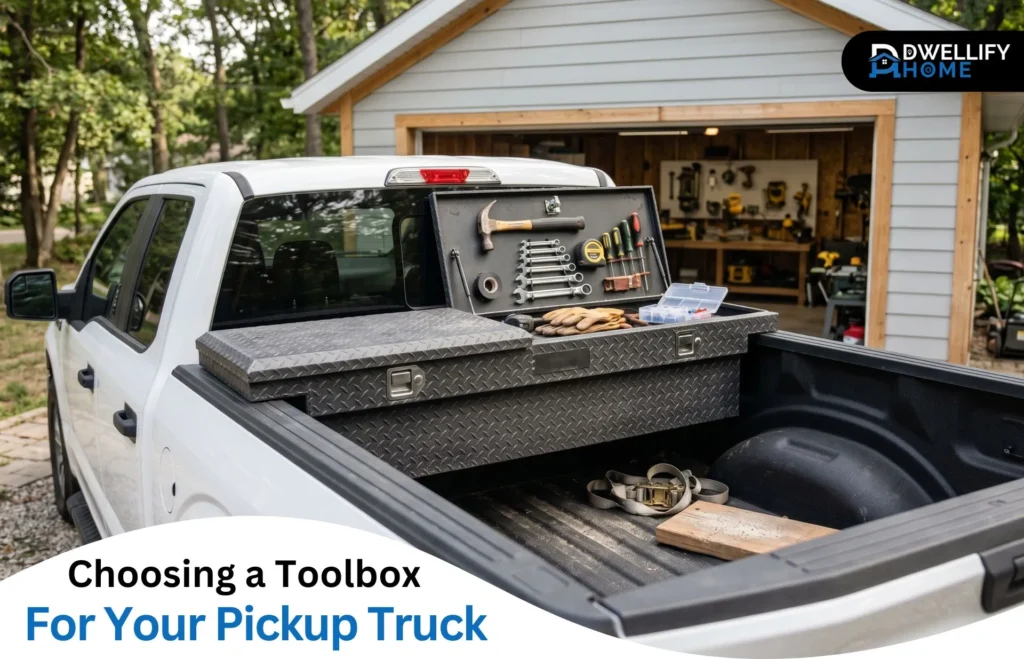
A pickup truck earns its value through daily use — hauling gear, managing job sites, handling weekend projects, or covering long stretches of rural road. But none of that works smoothly without a system to keep things organized. One of the first practical upgrades any truck owner should consider is a proper toolbox.
It’s not just about storage. A well-chosen toolbox changes how you work. Tools stay protected, accessible, and accounted for. The cargo bed becomes more functional. And whether you’re a contractor heading to a job site or someone who simply prefers being prepared on the road, having the right box in the right place makes a noticeable difference.
For truck owners who need serious hauling capability, a heavy-duty tool box for flatbed trucks takes that utility even further — giving you structured storage without compromising your bed’s load capacity.
Why Is It Important to Have a Toolbox in Your Pickup?
A toolbox keeps your tools organized, protected from weather, and secured against theft — all at once. Without one, tools left loose in the bed are at risk from rain, road vibration, and opportunistic theft. A dedicated box solves all three problems in a single, practical addition to your truck.
Most truck owners don’t think about this until they’ve lost a tool to weather damage or had something walk off from an unsecured bed. Once that happens once, the value of a locked, weather-resistant box becomes obvious.
Here’s why it matters day to day:
- Organization at the job site. When tools are scattered across the bed, finding the right wrench in the middle of a task wastes time. A toolbox puts everything in one predictable place.
- Weather protection. Rain, heat, and road debris shorten the life of tools quickly. A sealed lid keeps moisture and dust out, which is especially important for power tools and precision equipment.
- Security. Tools left in an open bed are an easy target. A locking toolbox adds a real barrier against theft — not a foolproof one, but a meaningful deterrent.
- Cab safety. Loose tools sliding around in the cab during a sudden stop can become projectiles. Keeping them in the bed, secured in a box, removes that risk entirely.
Advantages of Having a Pickup Truck Toolbox
The benefits go beyond the obvious. A good toolbox pays for itself in time saved, tools protected, and frustration avoided.
Organization is the first and most immediate gain. When every tool has a place, you spend less time searching and more time working. This matters most when you’re mid-task and need something specific without delay.
Protection extends the life of your equipment. Metal tools corrode, rubber grips crack, and precision tools lose calibration when repeatedly exposed to heat cycles and moisture. A toolbox acts as a first line of defense against all of that.
Security comes with most toolboxes that include a locking mechanism. This doesn’t just protect the tools — it protects the investment you’ve made in your kit over time.
Versatility is worth noting too. Toolboxes come in enough sizes, shapes, and mounting configurations that you can find one that works with your specific truck and workflow — rather than compromising either one.
Resale value is an often-overlooked benefit. A truck that arrives with a quality, fitted toolbox is more attractive to buyers who work with their vehicles. It signals that the truck has been maintained and used thoughtfully.
The Common Types of Toolboxes
The right toolbox type depends on how you work, what you carry, and how often you need to access your tools on the go.
Simple toolboxes are the most straightforward option. Usually built from aluminum or reinforced plastic, they open to reveal a single storage compartment. They’re well-suited for owners who carry a basic set of tools and don’t need elaborate organization — just reliable, weather-resistant storage.
Compartment toolboxes are built for those who work with a wide variety of tools and need them sorted efficiently. These typically include removable dividers, sliding trays, or tiered sections that make it easy to separate tools by type or frequency of use. They take slightly more time to set up, but they save considerably more time during actual work.
Tray toolboxes sit between the two above options. Stackable trays give you more organization than a single-space box without the complexity of a fully compartmentalized system. They’re a practical choice for someone who needs to grab specific tools quickly without digging through everything else.
Mobile carts are a different category altogether. Designed for workshop or large-site use, these wheeled units have multiple drawers and can hold a large volume of tools. They’re not mounted to the truck but can be loaded into it. If you regularly work between a shop and a field location, a mobile cart offers maximum flexibility and storage depth.
Choosing between these comes down to three practical questions: How many tools do you carry? How quickly do you need to access them? And how often does your tool selection change?
How to Choose the Best Tool Box for Your Pickup Truck
The right toolbox fits your truck, your workflow, and the conditions you work in. Four factors guide most decisions:
Material determines durability and weight. Aluminum boxes are popular because they’re lightweight and naturally resistant to corrosion — a strong combination for outdoor use. Stainless steel offers greater structural strength but adds weight. Reinforced plastic handles impact and weather well, often at a lower price point, though it’s generally less rigid than metal under heavy loads.
Size and capacity should match your actual needs, not your hypothetical ones. Think about the tools you use most often and how much space they realistically require. Oversizing your box wastes bed space; undersizing means tools still end up loose.
Mounting type affects both access and bed usage. Crossover boxes mount across the bed near the cab and are the most common style — they leave most of the bed open for cargo. Side-mount boxes run along the interior walls and keep the center of the bed completely free. Underbody boxes mount beneath the bed and don’t take up any cargo space at all, though they limit what you can store there.
Additional features can shift a functional box into a genuinely useful one. Adjustable compartments let you reconfigure storage as your tool set changes. A solid locking mechanism protects your investment. Gas-assisted lids make access easier when your hands are already full. These aren’t luxury additions — on a working truck, they matter every day.
Essential Tools to Put in Your Toolbox
Picking the right tools to keep in your truck depends on what you do, but certain items belong in nearly every working toolbox:
- Screwdrivers — both flat-head and Phillips. These cover the majority of fastening tasks you’ll encounter in field or roadside situations.
- Adjustable wrenches — one or two sizes handle most nut and bolt dimensions without needing a full wrench set.
- Pliers — needle-nose for detail work, cutting pliers for cables and wire, and standard slip-joint pliers for general gripping and bending.
- Hammer — a claw-head hammer covers both driving and pulling nails, making it one of the most dual-purpose tools you can carry.
- Tape measure — accurate measurements prevent costly mistakes on any project. A 25-foot tape handles most situations.
- Spirit level — essential for anyone doing installation or construction work. Even a short level catches alignment errors before they compound.
- Saw — a hand saw works for most field cutting tasks. If your work involves regular cutting of wood or metal, a compact circular saw or jigsaw adds real capability.
This isn’t a comprehensive kit — it’s a functional baseline. The tools you use most frequently should always be in the box. Everything else can be added as your work demands it.
Conclusion
Choosing a toolbox for your pickup truck is a practical decision that shapes how effectively you work on the road or at a job site. The right box protects your tools from weather and theft, keeps your workspace organized, and makes your truck more capable — not just more equipped.
The best approach is to match the box to your actual work: the tools you carry, the conditions you work in, and how often you need quick access. When those factors align with the right material, size, and mounting style, a toolbox stops being an accessory and becomes a core part of how your truck functions every day.
Before you leave, don’t forget to explore more of our helpful content across the site! Quick heads-up: some links featured in this article may be affiliate or sponsored links. If you click through and make a purchase, Dwellifyhome.com may earn a small commission at no extra cost to you — this helps us keep the lights on and the content flowing. All thoughts, opinions, and recommendations shared here are entirely our own and are not influenced by any brand or advertiser.