
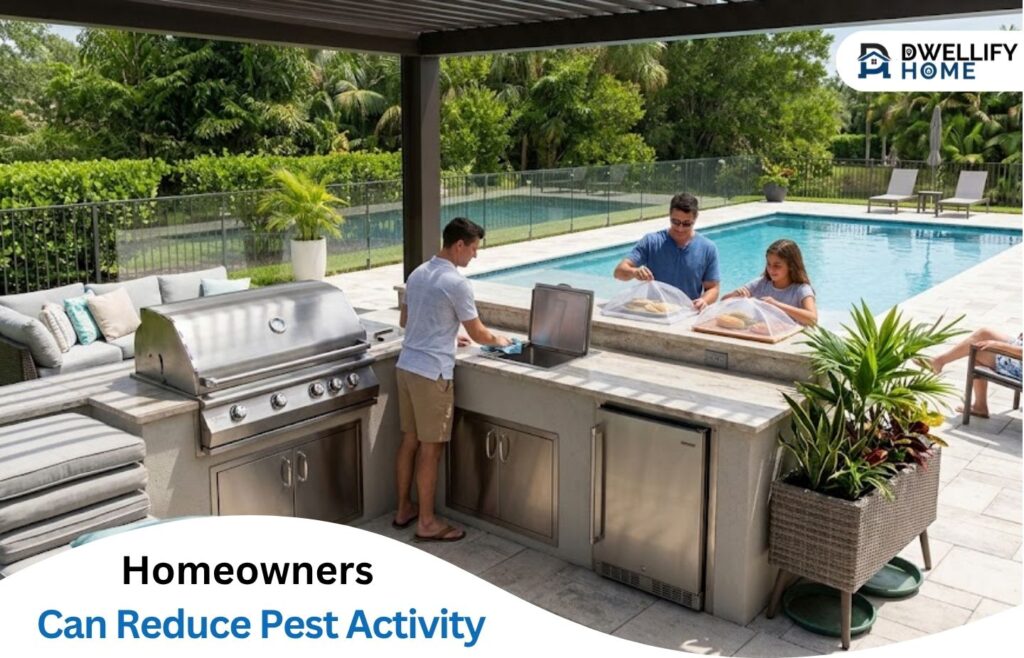
A well-designed outdoor kitchen is built for gatherings. There is a grill, a counter, a refrigerator, seating in the shade, and a pool deck a few steps away. The same features that make the space welcoming also make it attractive to pests, which look for exactly what guests do: food, water, and a comfortable place to settle. Spilled drippings, damp corners, stored cushions, and planters collecting runoff create small habitats that go unnoticed until ants stream across the counter or mosquitoes drive everyone indoors at dusk. In South Florida, the problem rarely takes a season off. The sections below explain what draws pests to outdoor living areas, why local conditions keep them active, and which habits make the biggest difference, including when persistent activity calls for a professional look.
What Draws Pests to Outdoor Living Spaces
Pests follow three basic needs, and outdoor entertaining areas can supply all of them. Food comes from grease on grill grates, crumbs under seating, sugary drink spills, pet bowls, and open trash cans. Moisture comes from irrigation overspray, wet towels, planter saucers, drains, and the pool itself. Shelter comes from cabana corners, cushion boxes, hollow umbrella poles, stacked pavers, and dense plantings against walls.
Different pests respond to different combinations. Ants find grease and sweet residue within hours and recruit nest mates along scent trails. Cockroaches favor warm, damp, dark places near food, such as the cabinet under an outdoor sink or the space behind a built-in refrigerator. Mosquitoes need only a small amount of standing water to lay eggs, and a forgotten bucket or plant tray qualifies. Paper wasps build open, umbrella-shaped nests under eaves, pergola beams, and the underside of furniture, and they are drawn to sugary drinks. Rodents, including roof rats common in South Florida, look for stored food, pet food, fruit from nearby trees, and quiet cavities to nest in.
Outdoor kitchens add a design twist. Built-in cabinetry, stucco or stone bases, and utility lines create voids and gaps that stay dark and undisturbed. A feature intended to look clean and finished on the outside can hide generous pest shelter on the inside, which is why periodic inspection matters as much as cleaning.
Why South Florida Pest Pressure Rarely Pauses
In colder climates, winter interrupts pest cycles. Insects go dormant, mosquitoes die back, and rodents move indoors only briefly. South Florida offers no such reset. Warm temperatures and high humidity persist for most of the year, which allows many species to keep feeding, breeding, and expanding through months when other regions have gone quiet.
Rainfall adds to the effect. The summer rainy season brings near-daily storms that refill containers, saturate soil, and flood ant nests, which pushes colonies to relocate into structures and outdoor features. Even the dry months bring irrigation, pool splash-out, and morning dew, so moisture stays available. Boca Raton’s canals, lakes, and lush plantings expand the supply of water and shelter nearby.
Mild winters also mean food sources keep producing. Fruit trees drop fruit, birds visit feeders, and outdoor dining continues in January. That steady supply supports larger and more persistent populations than a seasonal climate would. The practical lesson is that prevention in this region works best as an ongoing habit instead of a spring cleanup. A routine that fits a normal week, repeated consistently, prevents the buildup that makes problems hard to reverse. Homeowners who treat pest management as seasonal often find that the off season never arrives.
Cleaning, Food Storage, and Grill Habits
The grill is the most obvious attraction, and keeping it clean pays off quickly. After each use, brush the grates while they are warm, empty the drip tray and grease trap, and wipe splatter from the sides and the area beneath. Old grease turns rancid and carries a strong odor that draws ants, roaches, and rodents. A fitted cover keeps insects and small animals from moving in between uses.
Counters, side tables, and dining surfaces need a quick wipe after meals. Rinse drink cans and bottles before recycling, because sticky residue draws wasps and ants. Store charcoal, pet food, birdseed, and snacks in sealed containers made of metal or heavy plastic, not paper bags. Trash cans should have tight lids and sit away from seating, and liners should go out promptly after a gathering. Compost, if you keep it, belongs well away from the entertaining area.
Look under and behind built-ins from time to time. Crumbs and grease collect in places a quick wipe never reaches, and these hidden spots sustain colonies. If ants or roaches keep returning despite careful cleaning, a licensed provider such as Native Pest Management for Boca Raton pest control can inspect for nests and entry routes that surface cleaning will not reach. Persistent activity usually points to a source nearby, and finding it often matters more than treating the trails.
Standing Water, Drains, and Poolside Furniture and Storage
Mosquito control starts with water. Walk the space weekly and empty anything that holds it: plant saucers, buckets, toys, tarps, folded pool covers, and the bases of umbrellas. Refresh bird baths and pet bowls every few days. Check gutters, downspouts, and low spots in the pool deck where water pools after rain. A container no bigger than a bottle cap can support larvae, so thoroughness counts.
Drains deserve regular attention. Outdoor sink drains, deck drains, and planter drains can accumulate debris that traps moisture and supports flies and roaches. Flush them, clear leaves and sediment, and confirm that water leaves quickly. Slow drains often signal a blockage worth fixing before it becomes a breeding site. Irrigation heads that spray against walls or furniture should be adjusted, since constant dampness encourages ants, roaches, and termites.
Poolside furniture and storage need periodic inspection. Lift cushions and check the undersides of chairs, loungers, and tables for nests and droppings. Open storage benches, pool equipment cabinets, and cabana closets, and look for shredded material, gnaw marks, or droppings. Check hollow umbrella poles and furniture legs, which wasps and spiders use for shelter. When you find rodent droppings, repeated wasp nests, or mosquitoes that return even after water removal, a professional assessment from Native Pest Management for Boca Raton pest control can help identify the underlying cause and the safest way to address it, especially where nests are large or hard to reach.
A Simple Maintenance Routine
Consistency matters more than intensity. A schedule that fits into normal household habits keeps the work manageable:
- After each use: brush grill grates, empty drip trays, wipe counters, seal food, and close trash lids
- Weekly: empty standing water, rinse pet bowls, sweep debris, and check under cushions
- Monthly: flush drains, inspect cabinets and storage, trim vegetation touching furniture or walls, and look for nests
- Before the rainy season: clear gutters, repair irrigation leaks, check seals around built-ins, and fill gaps near utility lines
Landscaping choices help. Keep planters elevated on feet so water drains and nothing hides beneath. Trim shrubs back from cabana walls and pergola posts, and avoid heavy mulch against structures. Use lighting that is less attractive to insects, such as warm-toned bulbs, and place fixtures away from seating where possible.
Keep notes. A simple record of when you cleaned, what you found, and where activity appeared reveals patterns, such as a corner where ants return every June. Those details also help a professional diagnose problems faster if you eventually call for help. Small, steady actions keep the space usable without relying on emergency measures after pests have already settled in.
Key Takeaways
Outdoor kitchens, cabanas, and pool decks attract pests because they supply food, moisture, and shelter, and South Florida’s warm, wet conditions keep those pests active for most of the year. Grease control, sealed food storage, regular removal of standing water, working drains, and inspections of furniture and storage address the biggest causes.
Routine habits prevent most problems, while persistent ants, roaches, rodents, or wasps usually indicate a hidden source that deserves a trained inspection. Combining consistent upkeep with timely professional input keeps outdoor living areas comfortable for gatherings throughout the year.
Certain links in this article may lead to products, services, or resources through affiliate or sponsored partnerships. Dwellifyhome.com may receive a small commission from qualifying purchases made through these links.



