
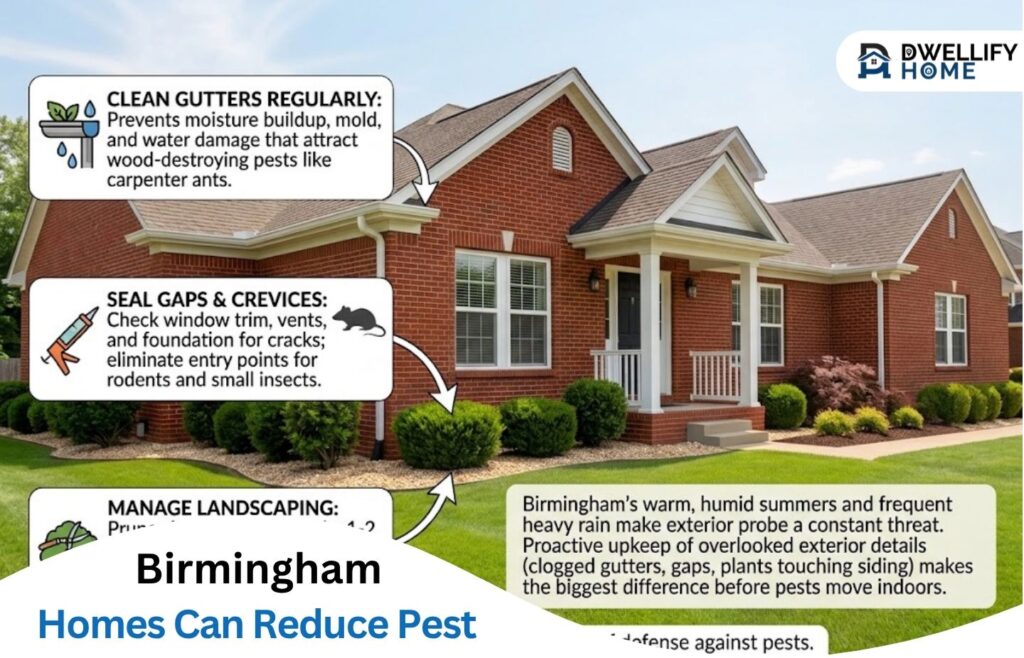
Most homeowners inspect the inside of a house when pests appear. The more useful clue often sits on the outside wall. Birmingham’s warm, humid summers and frequent heavy rain give insects, rodents, and wildlife plenty of reasons to probe a building’s exterior, and small maintenance lapses give them the openings they need. A clogged gutter, a gap beside a window trim, or a shrub resting against the siding can feed a pest problem for months before any droppings or webbing show up indoors. The following sections cover the exterior details that tend to get overlooked, how each one invites pests, and which upkeep tasks make the biggest difference over a year.
Gutters, Downspouts, and the Moisture They Control
Water is the first thing pests look for, and a gutter system either carries it away or hands it over. Leaves and pine needles packed into a gutter hold standing water, soften fascia boards, and create a damp bed where mosquitoes breed and carpenter ants scout for rotting wood. When overflow spills down the wall, the siding stays wet long enough for fungus to take hold.
Downspouts finish the job or undo it. A spout that ends right beside the foundation soaks the soil along the wall, which draws termites and moisture-loving insects toward the structure. Extensions or splash blocks that send runoff several feet away keep the ground near the home drier.
Alabama’s rain patterns make this more than a cosmetic concern. A short, intense storm can overload a partially blocked gutter in minutes. Clearing debris in late spring and again after leaf drop, then checking that the system drains freely during a hose test, catches most problems before they spread to the roofline and the framing beneath it.
Fascia, Siding Gaps, and Foundation Joints
Where two building materials meet, a seam forms, and seams widen with time. Fascia boards pull away from the rafters, trim shrinks from siding, and caulk cracks after a few seasons of heat and humidity. Each gap becomes an entrance for wasps, ants, mice, and squirrels, and even a quarter-inch opening can admit a young mouse.
Foundation joints deserve equal attention. Hairline cracks in masonry and expansion joints in slabs allow crawling insects to reach the wall cavity. Weep holes in brick veneer, designed to let moisture escape, may need a metal screen or specialty vent cover so they remain functional without becoming an open door.
A walk-around inspection works best in daylight with a screwdriver in hand. Probing the wood along the fascia and window trim shows whether it is soft, which signals moisture damage that insects exploit. Gaps in siding, soffits, and around utility lines should be sealed with a suitable material, such as exterior-grade sealant for small cracks or metal mesh for larger holes, since foam alone is easily chewed through.
Lighting, Vents, and Utility Penetrations
Exterior lighting changes pest behavior in ways many owners overlook. Bright white bulbs draw moths, beetles, and flies toward the walls, and the predators that follow them, such as spiders and wasps, set up nearby. Webs forming each morning around a porch fixture are a common sign. Warm-toned bulbs, placed slightly away from doors, attract fewer insects.
Vents form another quiet entry route. Dryer vents, attic louvers, crawl space vents, and exhaust fans each connect the interior to the outdoors. Flaps that no longer close, or screens with torn corners, welcome rodents and nesting birds. A metal vent cover or fine mesh screen, installed snugly, blocks access without restricting airflow.
Cable, gas, and plumbing lines that pass through the wall also leave gaps around the pipe or wire, and rodents follow these lines the way people follow a hallway. Sealing around each entry with steel wool backed by sealant closes a path that is easy to miss from indoors. If the same vent or line keeps showing fresh gnawing after repairs, the Magic City Pest Control pest control team is one local option for identifying where the animals are actually getting in.
When Exterior Conditions Keep Drawing Pests Back
Even careful owners see pest activity return when a structural or drainage condition remains unresolved. A property that sits low, collects runoff from neighboring lots, or has aging materials around the roofline may need more than seasonal cleanup. Recurring ants along one wall, mud tubes rising from the slab, or wasps rebuilding in the same eave each spring are good signs that a surface fix has not reached the cause.
A professional inspection offers something a weekend walk-around cannot. A technician can trace entry points, evaluate moisture patterns, and recommend treatments suited to the species involved. Homeowners in Birmingham who work with the Magic City Pest Control team on recurring exterior conditions still carry out the upkeep themselves, because treatment works best when the moisture and shelter feeding the problem are removed at the same time.
A short seasonal checklist keeps the work manageable:
- Clear gutters and test downspout flow in spring and fall.
- Reseal cracked caulk around windows, doors, and trim.
- Trim branches and shrubs back from the roof and walls.
- Inspect vents, screens, and utility penetrations for gaps.
- Pull mulch away from the foundation and keep the edge visible.
Vegetation, Mulch, and the Visible Foundation Edge
Plants make good neighbors until they touch the house. Branches resting on the roof offer a bridge for squirrels and ants, and vines climbing siding can hide gaps and hold moisture against the wall. Trimming limbs back from the roofline and keeping shrubs a foot or two away from the wall reduces both access and shade.
Mulch can quietly cause trouble. A thick layer piled against the foundation traps moisture and covers the soil line where termite activity would otherwise be visible. A thinner layer kept a few inches from the wall gives the soil room to dry and keeps the foundation edge in view. That visible strip is one of the most useful inspection zones, since mud tubes, damaged wood, and trailing ant lines show up most clearly there.
Firewood stacks, stored lumber, and leftover pavers resting against the home add another layer of shelter. Moving them to a raised rack away from the wall removes a convenient hiding place for rodents, termites, and spiders.
End Note
Exterior upkeep is rarely glamorous, but it is where pest prevention is won or lost. Water control, sealed seams, shielded vents, and a clear foundation edge address the conditions pests rely on before they reach the interior. Birmingham’s climate rewards homeowners who repeat these checks every season, and a house that stays dry and tightly sealed gives insects and rodents very little reason to stay.
To be transparent with our audience, some links included here may generate a commission for Dwellifyhome.com. These may include affiliate or sponsored links, and any qualifying commission helps us continue providing useful online content.



