
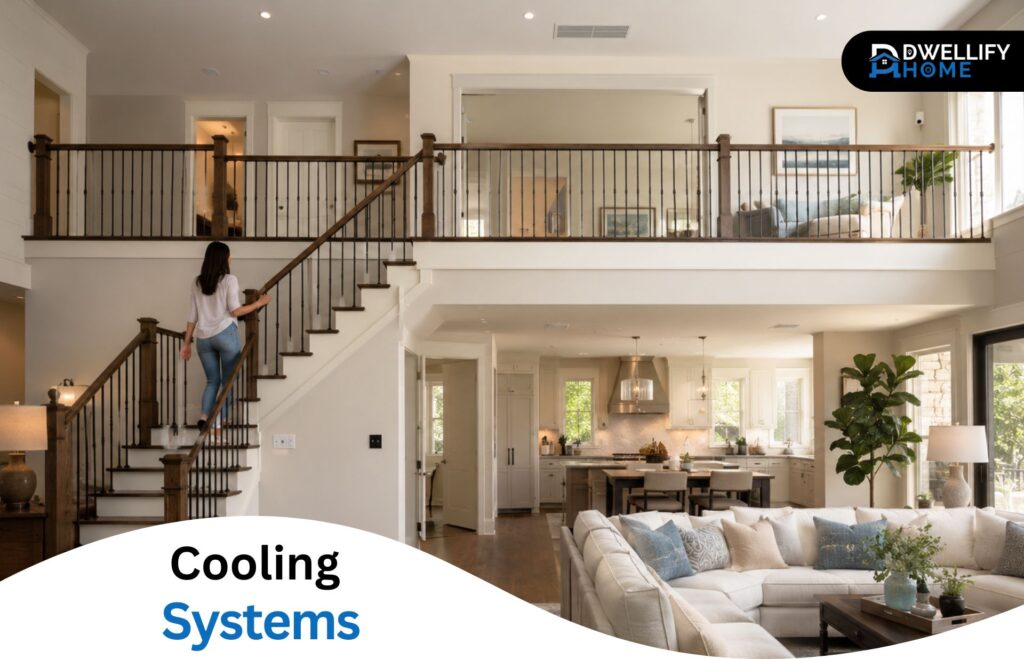
There is an inherent issue with multi-story homes, wherein there can be some uncomfortable warm spots due to the rising nature of heat, and the higher levels have more exposure to the roof and sunshine. Warm spots can occur in bedrooms, lofts, attics, and hallways, among other rooms, especially if the air conditioning unit is used frequently. A better cooling system can better cater to the needs of the different floors of your home.
Balanced Comfort Starts Here
1. Proper Sizing Matches Each Floor’s Cooling Demand
Another way a new system can help reduce hot spots in a home is through accurate sizing. A smaller unit could run for longer yet fail to sufficiently cool the top floor, while a larger one could easily cool the bottom floor but shut down before reaching the upper levels. Contractors should consider the following factors: the size of the space, the ceiling height, the design of each room, the orientation of the windows, the insulation, roof access, and the number of occupants per space. Careful cooling system installation gives homeowners equipment that matches the real demands of a multi-level layout rather than relying on rough estimates. This is even more crucial in cases with high or vaulted ceilings, attics under the upper floor, and when the upper floor receives heat from the afternoon sun.
2. Ductwork Design Directs Air More Evenly
Often, the duct system determines whether sufficient cool air reaches the upper levels of a building. In many multi-story houses, the second- or third-floor rooms will be positioned farther from the air handler unit, served by longer duct runs, or provided with ductwork not designed for high airflow volumes. If the aforementioned ductwork is undersized, damaged, leaky, or has insufficient insulation, the cool air may lose strength before reaching the target rooms. The new cooling system design enables the contractor to evaluate the ducting lines and make appropriate adjustments to address any delivery issues. It might involve repairing leaks, reconfiguring ductwork, adding extra returns, adjusting damper settings, or insulating ductwork in a hot attic. Properly designed ducts ensure smooth airflow, providing better distribution of cool air throughout rooms at various floor levels.
3. Zoning Helps Each Level Cool Separately
Zoning is one of the most effective measures for controlling hot spots in multilevel homes, since each floor requires a unique temperature setting. While the top floor may need more cooling in the evening, the bottom level may be cool enough with less air. The zoning system allows the use of two thermostats and dampers that can control airflow in the desired direction. Using zoning, homeowners will not be required to measure the temperature at every corner of the room. Using zoning allows homeowners to keep the upstairs sleeping quarters cool without having to chill other rooms. It can also help save energy by reducing waste when cooling occupied spaces. The strategy will be particularly effective in homes with people with different schedules, unused guest rooms, basements, and open staircases through which heat can move.
4. Return Airflow Removes Trapped Heat
In addition to insufficient supply air, hot spots can result from improper return air. Many multilevel homes have cool air supplied to their upper levels via vents but lack adequate return air. Once a door closes in such a situation, it increases pressure in the room and makes it harder for fresh, conditioned air to enter. As a result, warm air remains trapped in the room, making it increasingly difficult to lower the temperature. During an initial installation, one can review the location of return grills, hallway airflow, door undercutting, transfer grills, and the capacity of the return ducts. Proper airflow from the return side enables the extraction of warm air from the upper-level rooms for cooling.
5. Thermostat Placement Affects Temperature Balance
The location of the thermostat can significantly impact comfort across multiple levels. For instance, if a thermostat is installed downstairs, it will perceive that the house has reached the required temperature even though the upper floors are too warm. In such a case, the system will turn off prematurely, failing to provide sufficient comfort to the upper levels of the building. The alternative cooling approach could be improved through better installation, multiple sensors, and zoned control that measure temperatures at several locations. Such an adjustment will help the cooling system respond to actual temperature differences in the house. Smart thermostats and remote sensors also enable better temperature comfort balancing because the system learns when specific spaces need cooling. Thermostats must never be installed near windows, direct sunlight, airflow, the kitchen, or outside walls, as the temperature perception would be incorrect. With properly located controls, the cooling system receives the right data and operates more effectively.
6. Insulation and Air Sealing Support Cooling Results
However, a new system will be effective if the house can retain conditioned air. Upper floors tend to be warm due to attic heat, sun exposure, infiltration, and poor insulation, causing heat to enter faster than the system can remove it. At the planning stages, contractors may advise that one check the insulation of the attic, the insulation of the ducts, leaks in the ceiling, recessed lighting spaces, windows, and attic ventilation. Improving these features will enhance the cooling system’s operation by reducing heat transfer to the upper floors. Without such improvement, the new cooling system will experience some unnecessary stress. Insulation and sealing help keep cool air within ducts and ceilings. When the insulation and sealing are improved together with the cooling system, the upper floor stays cool longer.
7. Better Installation Planning Creates Lasting Comfort
Addressing hot spots in multi-level households requires more than just upgrading outdated equipment. Everything has to be reconsidered regarding the heat-exchange process, air movement, room use, and the placement of temperature sensors. An efficient solution should examine the current equipment, its size, condition of the duct system, supply register placement, return airflow, thermostat management, insulation, and zoning possibilities. All of those elements determine how much upper-floor space remains comfortable. Proper planning will help you avoid common problems such as short-cycling, poor air circulation in upstairs rooms, temperature imbalances, and increased power consumption. At the same time, efficient planning will help your AC system work without unnecessary stress caused by flaws of previous designs. As a consequence, your home will be more comfortable at all levels, especially on warm summer days, when it becomes extremely difficult to maintain good conditions in upper rooms.
Balanced Cooling Makes Every Level Usable
Improved cooling techniques help reduce hotspots in multilevel houses by optimizing sizing, ducting, zoning, ventilation, thermostat settings, insulation, and overall design. Upper stories tend to overheat due to greater exposure to sunlight, attics, and poor ventilation. The right approach is to tackle these issues rather than setting thermostats to low points to cool the whole building with excess energy. The result is proper cooling for each floor, tailored to its needs. Comfort will increase, and energy consumption will decrease.
Before you go, make sure to browse through our other valuable posts! Quick note — this article may contain affiliate links that earn us a small commission on qualifying purchases. This helps us keep creating content you love. The opinions stated here reflect only the views of the author and not those of Dwellifyhome.com as a whole.