
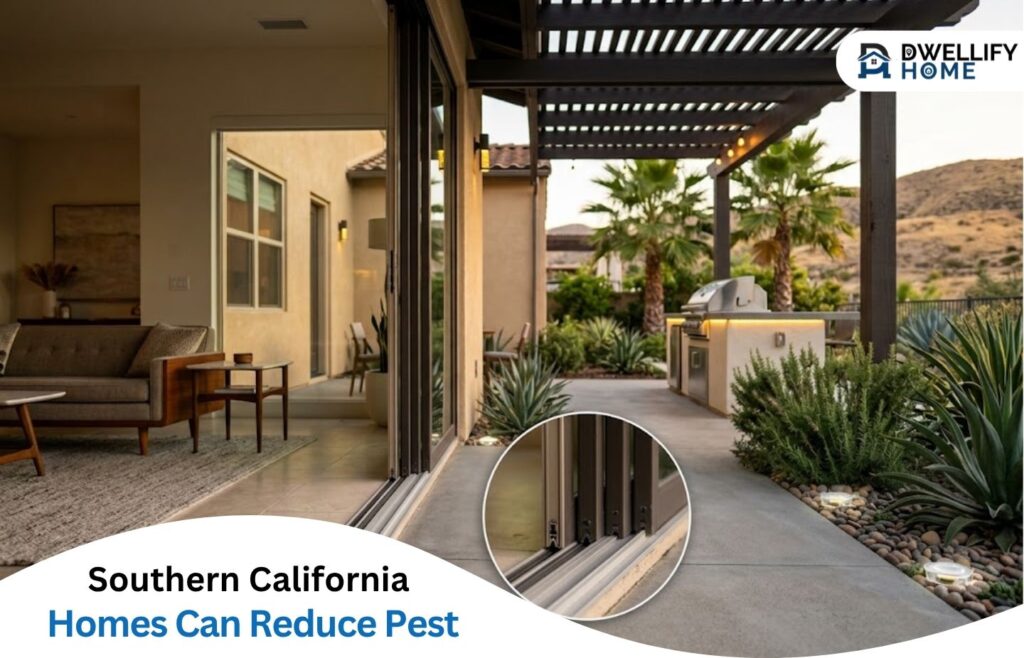
A sliding glass door left open on a warm evening invites more than a breeze. Southern California homes are designed to blur the line between living room and garden, and ants, spiders, moths, and cockroaches treat that blurred line as an open invitation. Covered patios, breezeways, outdoor kitchens, and attached garages all sit where landscaping meets living space, so they collect food smells, light, moisture, and shelter in one spot. Pests follow those resources. Fortunately, small changes to bulbs, door seals, plant placement, and cleaning habits can cut indoor activity sharply without giving up open-air living. The sections below explain why transition zones attract pests and what to adjust first.
Why Transition Zones Draw So Many Pests
Transition zones stack several attractions in a very small area. A patio table holds food residue, a nearby planter holds damp soil, a porch light draws insects after dark, and the wall behind them offers shade and cracks. Few other parts of a property combine all four.
The regional climate adds to the effect. Mild winters mean insects stay active for most of the year instead of going dormant, and irrigation keeps garden soil damp through long dry spells. Argentine ants, a common household ant in the region, are a good example. They nest in moist soil, travel in long trails guided by scent, and move toward kitchens and patios when conditions outside turn too dry or too wet.
Other visitors follow their own routes. Large American cockroaches hunt for food and water at night and hide in dark, humid gaps during the day. Spiders settle wherever flying insects gather. Roof rats climb along branches and fences. Because each pest responds to a different cue, a single fix rarely solves the problem, and the home benefits from several modest changes working together.
Lighting, Food, and Water Near the Sliding Door
Bright white bulbs beside a glass door act as a beacon. Moths, beetles, and midges circle the fixture, land on the frame and screen, and then attract spiders, including black widows, that build webs in the corners of door jambs. Warm-toned LED bulbs (often labeled yellow or amber) draw fewer insects, since many species respond more strongly to white and blue wavelengths. Moving fixtures a few feet away from the door and aiming them away from the glass pulls the traffic off the entry. Technicians, including those at Round The Clock Pest Services, commonly treat lighting as the first adjustment because it costs little and works the same night.
Food and water bring a second wave. Grease spatter from an outdoor grill, a sticky soda ring on the table, and a pet bowl left on the porch can feed ants and flies within minutes. Plant saucers and buckets matter as well, because mosquitoes can finish their early life stages in standing water in about a week. Emptying saucers weekly breaks that cycle. Wipe tables right after meals, bring pet dishes inside at night, and rinse grill surfaces before the next cookout.
Sealing Tracks, Sweeps, and Screens
Doors that slide, swing, and roll open dozens of times a day wear out faster than any other part of the building envelope. Rubber sweeps flatten, tracks fill with grit, and screens loosen in their frames. A gap the thickness of a credit card is enough for a young cockroach, and ants need far less.
A short seasonal checklist catches most weak points:
- Look for daylight under door sweeps and replace brittle or flattened rubber
- Vacuum and wipe sliding door tracks so the panel latches tightly
- Patch tears and straighten warped frames on retractable screens
- Seal expansion joints where patio slabs meet the foundation wall
Caulk finishes the job. Exterior-grade silicone or polyurethane caulk around door trim, utility pipe entries, and light fixture bases closes the hairline paths that ant trails follow. Garage doors deserve a look too, since the bottom gasket on a roll-up door often cracks under sun and heat. To find leaks quickly, shine a flashlight along the edges of a door from outside while someone watches from a dim room. Any light that shows through is a path an insect can use.
Plants and Pavers That Act as Pest Bridges
Vegetation touching the house works like a staircase. Climbing vines, dense shrubs, and ground cover pressed against a wall give ants, earwigs, and spiders sheltered routes to the doorframe. Branches that touch the roof or patio cover let roof rats skip the ground entirely, so trimming limbs to stay several feet away from the roofline removes that route.
A clear buffer helps. Keep a strip of gravel or bare soil about a foot wide along foundation walls, and pull mulch back from the stucco so it does not hold moisture against the wall. Thinning shrubs near the patio improves airflow and lets sunlight dry the soil where ants like to nest. Irrigation should water plants rather than the wall, since a leaking drip line against the foundation keeps the soil damp all year.
Landscape bridges are easy to overlook. A hose resting against a wall, a trellis fastened to siding, or a wooden planter touching a doorframe can each carry insects across the buffer. Licensed inspectors, such as those at Round The Clock Pest Services, often find these connections during a walk around the property, which shows how much a second set of eyes can catch.
Daily Habits That Keep Patios Unappealing
Cleaning habits decide whether the repairs last. Sweep or hose the dining area after every meal, and store trash cans with tight lids well away from the entrance. Rinse recycling before binning it, because sugary residue in cans draws ants and wasps.
Storage matters too. Damp towels on lounge chairs, cushion boxes that never get opened, and firewood stacked on a slab create dark, humid pockets where spiders and cockroaches rest during the day. Raise firewood off the concrete, shake out cushions before bringing them inside, and air out storage boxes now and then.
Irrigation is the last habit worth adjusting. Timers set for daily watering keep soil at the patio edge wet, which suits ants and earwigs. Watering deeper but less often lets the surface dry between cycles. A quick monthly walk around the patio, looking for new ant trails, webs, or droppings, catches changes before they reach the living room.
Final Analysis
Pest control at indoor-outdoor thresholds works best as a set of small habits rather than one big treatment. Warmer bulbs pull insects away from the glass, tight sweeps and caulked joints close entry paths, trimmed plants remove the bridges, and a clean patio gives foragers little reason to stay. Each change answers a different cue, which is why the combination holds up better than any single step. Homeowners who check these points each season can keep the open layout they chose and keep the living room insect-free. Where activity persists despite good upkeep, a licensed inspector can identify the species and recommend a targeted response.
We may benefit from certain affiliate or sponsored links included throughout this article. If you complete a qualifying purchase through one of these links, a small commission may be paid to Dwellifyhome.com at no extra cost to you.



