
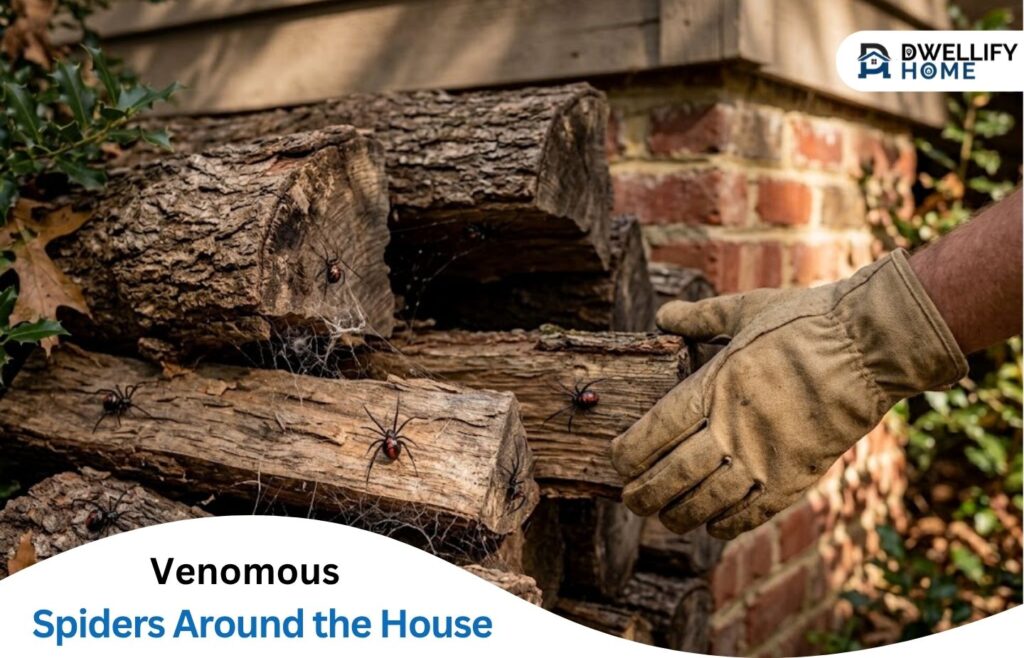
Most spiders do their work unnoticed, catching flies and mosquitoes and staying out of sight. A few species deserve more respect. In the Southeast, a reach into a stack of old boxes or a pile of firewood can bring a hand close to a spider that bites only when pressed or trapped.
Fear should not lead to panic or to wholesale spraying, but knowledge helps. Identification and habitat awareness do more to reduce risk than treating every spider as a threat. The sections below describe where spiders of concern tend to live, how to tell them from harmless species, and which habits reduce encounters.
Places Where Spiders Stay Undisturbed
Spiders choose quiet, dim, and sheltered spots with a steady supply of prey. Garages and sheds provide exactly that, with boxes, tools, and shelves that nobody touches for months. Crawl spaces, basements, and attics add darkness and calm. Woodpiles, stacks of bricks, and clutter along fences also give shelter, and exterior utility areas such as water meter boxes, electrical panels, and the space behind air conditioning units are popular too.
Indoors, spiders favor corners near the floor, the backs of closets, and gaps behind stored items. Outdoor shoes, gloves, and garden tools left on a porch can host a spider that moves in overnight.
Seasonal patterns also matter. Spiders often become more noticeable in late summer and autumn, when males wander in search of mates and when cooler nights push some species toward warm buildings. Walking into a web in a dark shed is rarely a sign of an infestation. It simply reflects a habitat that has been left alone.
Why Identification Beats Assumption
People often ask are there venomous spiders in the southeast, and the answer is yes, though serious bites are uncommon. Two groups matter most: widow spiders and brown recluse spiders. Black widows are glossy black with a rounded abdomen, and females usually carry a red hourglass marking on the underside. They build tangled, irregular webs close to the ground in dark corners. Brown widows, also present in the region, are tan to brown with orange markings underneath.
Brown recluse spiders are tan to brown, with a darker violin-shaped mark on the head region and six eyes arranged in three pairs. Their legs are uniformly colored, without spines or bands. They are found across much of the Southeast and Midwest, but many spiders reported as recluses turn out to be harmless species.
Most spiders have no medical significance. Wolf spiders, orb weavers, and cellar spiders are common and harmless to people. A photograph from a safe distance, shared with a local expert or extension office, is more reliable than a guess. Killing a spider without identifying it helps no one and can make the bite more likely if you handle it.
Reducing Clutter and Moving Stored Items Safely
Clutter is the most controllable factor. Every cardboard box and heap of fabric creates a hiding place. Replace loose boxes with clear plastic bins that have tight lids, keep items off the floor on shelves, and leave a gap between stored goods and the wall. Sort through garages, sheds, and attics once or twice a year, discarding what you no longer need.
Protective habits matter when moving stored materials. Wear gloves and long sleeves, shake out items before touching them, and use a flashlight to look inside boxes and behind objects. Never reach blindly into a pile of lumber, firewood, or old clothes. Shoes and boots stored in sheds or garages should be tapped out before use.
Firewood should be stacked off the ground and away from the house, and only brought inside for immediate use. Garden gloves and tools left outside can be stored in a closed container. A quiet routine of looking before reaching prevents most bites.
Limiting Prey and Checking Secluded Areas
Spiders follow food. A home with fewer insects will have fewer spiders, so reducing prey makes sense. Seal gaps around doors and windows, repair torn screens, and fix leaks that attract insects. Swap bright white outdoor bulbs for warm-toned ones, which draw fewer flying insects and the spiders that hunt them.
Regular checks help. Use a flashlight to scan corners, shelves, and the undersides of furniture in garages, basements, and sheds. Remove webs with a broom or vacuum, which also discourages rebuilding. Clear leaf litter, tall grass, and stacked debris from around the foundation, and keep plants trimmed away from the walls.
Cleaning under and behind stored items every season keeps surprises to a minimum. Egg sacs, which look like small papery or silky balls, can be vacuumed up and the vacuum emptied outdoors. If you find many webs or spiders in one area, it often signals abundant prey nearby, and the real issue may be the insects.
Which Encounters Deserve Extra Caution
Some situations call for greater care. A black widow or brown recluse in a high-traffic area, such as a child’s play space, a garage workbench, or a pantry, warrants attention. Repeated sightings of the same suspicious species suggest a population that is worth addressing.
Bites are rare and usually happen when a spider is pressed against skin, for instance inside a glove, a shoe, or bedding. Wash the area with soap and water, apply a cold compress, and watch for changes. Seek medical care promptly for severe pain, spreading redness, muscle cramping, difficulty breathing, or a wound that worsens. Children, older adults, and anyone with health conditions should be evaluated sooner. If possible, bring a photo or the spider itself in a sealed container.
When you find multiple spiders of concern, or are unsure what you have, a professional can identify the species, inspect crawl spaces and utility areas, and recommend a measured response.
Key Takeaways
Most spiders are harmless, and a few deserve respect. Garages, sheds, crawl spaces, woodpiles, and utility areas shelter the species of concern, and clutter gives them more places to hide. Identification replaces fear with facts. Gloves, a flashlight, sealed storage, and fewer insects cut encounters, and prompt care follows any suspicious bite. When sightings keep recurring, a professional inspection can confirm what is living around the house and how to manage it.
Dwellifyhome.com may include affiliate and sponsored links in selected articles. When you purchase through a qualifying link, we may receive a small commission that helps support our website and future content.



