Most people assume a great building starts with a great design. And sure, that helps. But talk to anyone who has actually lived through a construction project — a homeowner halfway through a gut renovation, a business owner waiting on a fit-out, or a school administrator watching a new wing rise — and they’ll tell you something different. The difference between a smooth build and a nightmare usually isn’t the sketch on day one. It’s the planning behind it. That’s why firms like HMA Architecture take such a thorough approach, handling everything from architectural design and structural engineering to feasibility studies, Interior Design for Custom Homes, project management, and the paperwork side of local planning approvals and building permits. They work across residential renovations, commercial developments, and institutional projects, and the reason their projects tend to land on time and on budget comes down to how much is sorted out well before anyone breaks ground.
Good Planning Starts Long Before the Design
A lot of clients arrive with a vision already half-formed. They’ve been pinning photos, scrolling through house tours on YouTube, maybe touring friends’ homes for inspiration. That’s fine — it’s actually a great starting point. But the first real job of an architectural team isn’t to draw. It’s to listen, ask questions, and figure out whether what you want is going to work on the site you have, within the budget you can live with, and under the rules your local council will accept.
This is where feasibility studies come in, and honestly, they’re one of the most underrated parts of the whole process. A feasibility study looks at the site, the zoning, the soil, the surrounding buildings, the sun angles, even the traffic patterns if it’s a commercial project. It tells you what’s possible before you spend real money on detailed drawings. I’ve seen clients save themselves from six-figure mistakes just by having a firm run a proper feasibility check first.
Design Is Where Vision Meets Reality
Once the numbers and the site make sense, design can start for real. But here’s something people don’t always realize — the architectural design phase isn’t just about picking a style. It’s about balancing what looks good with what works, what’s buildable, and what fits the way you actually live or run your business.
A residential renovation, for instance, has to respect the bones of the existing house. You can’t just plop a modernist box on top of a 1940s cottage and expect it to feel right. On the commercial side, a café needs a very different flow from a dental office, and both need to accommodate staff, customers, deliveries, and code requirements. Institutional projects — schools, clinics, community centers — add another layer because they often have to serve a lot of different user groups without getting in each other’s way.
This is also where interior design stops being an afterthought. In too many projects, interiors get treated as something you bolt on at the end. Smart architectural firms fold it in early. How a space feels to walk through, how light moves across a room at 4 p.m., where the furniture actually goes, what the acoustics will be like when the room is full — these aren’t decoration questions, they’re design questions, and they deserve to be answered while the walls are still lines on paper.
The Engineering Nobody Sees
Behind every livable space is structural engineering that quietly makes it all possible. Beams, columns, load paths, foundations — it’s the invisible framework. When structural engineering is coordinated tightly with the architectural design from the start, you end up with cleaner spaces, fewer ugly surprises during construction, and a build that’s genuinely safe for decades.
When it’s not coordinated — say, when the architect designs first and tosses it over the fence to an engineer later — you get the column sitting right in the middle of your open-plan kitchen, the beam you have to duck under, or the load-bearing wall nobody realized couldn’t come out. Integrated teams catch these problems while they’re still fixable.
The Permit Maze
Here’s the part of the process most clients dread: dealing with the local authority. Building permits, zoning approvals, heritage reviews if your property falls in a protected zone, environmental assessments for bigger sites — it can feel endless. Every municipality has its own quirks, its own forms, its own unofficial ways things get done.
Having a firm that knows the local process is worth its weight in gold. They know which officers to call, what documents to submit together, and how to present a scheme in a way that answers objections before they’re raised. A project that might sit in review for months can often move through in weeks when the paperwork shows up properly the first time. This is one of those behind-the-scenes services clients rarely appreciate until they’ve tried to navigate a council submission on their own.
Project Management Is the Glue
You can have the best design, the best engineering, and a perfect set of permits, and a project can still go sideways if nobody’s managing the moving parts. Contractors, suppliers, inspectors, deliveries, weather delays, client change orders — there’s a lot to juggle.
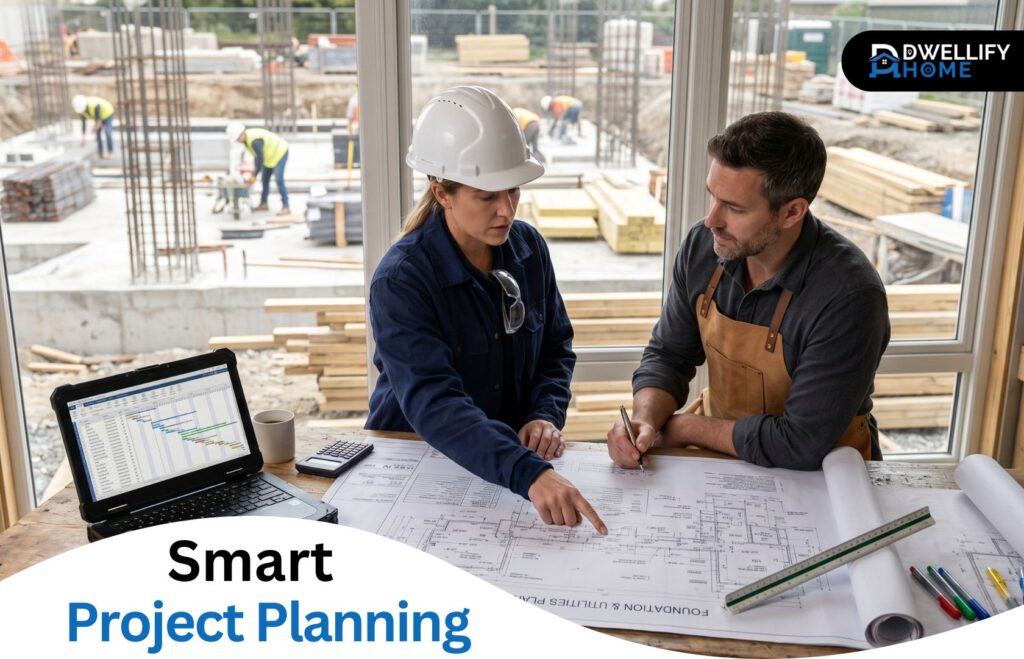
Good project management means someone is watching the schedule, checking invoices against the budget, coordinating trades so the plumber isn’t showing up the same morning as the drywall crew, and keeping the client informed without drowning them in technical detail. When the architectural firm also handles project management, you get a single point of accountability. There’s no finger-pointing between the designer and the builder because the same team owns the outcome.
Why Integration Beats Fragmentation
All of this points to one thing: integrated services tend to produce better results than piecemeal ones. When one firm handles feasibility, design, engineering, interiors, permits, and project management, the left hand always knows what the right hand is doing. Ideas don’t get lost in the handoff. Decisions made early actually carry through to the end.
That’s especially true for custom homes, where every inch is being designed specifically for the people who’ll live there. It’s why Interior Design for Custom Homes tends to work best when it’s part of the architectural conversation from day one — not a separate project handed off to a different team after the house is already framed.
From Concept to Completion
Bringing a project from the first sketch to a finished building is a long road. Things will change along the way. Budgets shift, materials run into delays, clients have second thoughts about the kitchen layout around month three. That’s normal. What makes the difference is working with a team that has seen it all before and has enough depth to absorb the surprises without losing the plot.
Whether you’re renovating a home, developing a commercial space, or planning an institutional build, look for a firm that covers the full arc — planning, design, engineering, interiors, approvals, and management. The work they do before construction starts, and the coordination they maintain once it does, is what determines whether the building you end up with is actually the one you wanted.
Thanks for reading! We invite you to check out more of our informative articles. Please note that this post may contain affiliate or sponsored links, meaning we may receive a small commission when you make a purchase through them. This commission supports our website at no additional cost to you. The views expressed are those of the author alone and do not reflect Dwellifyhome.com official stance.