
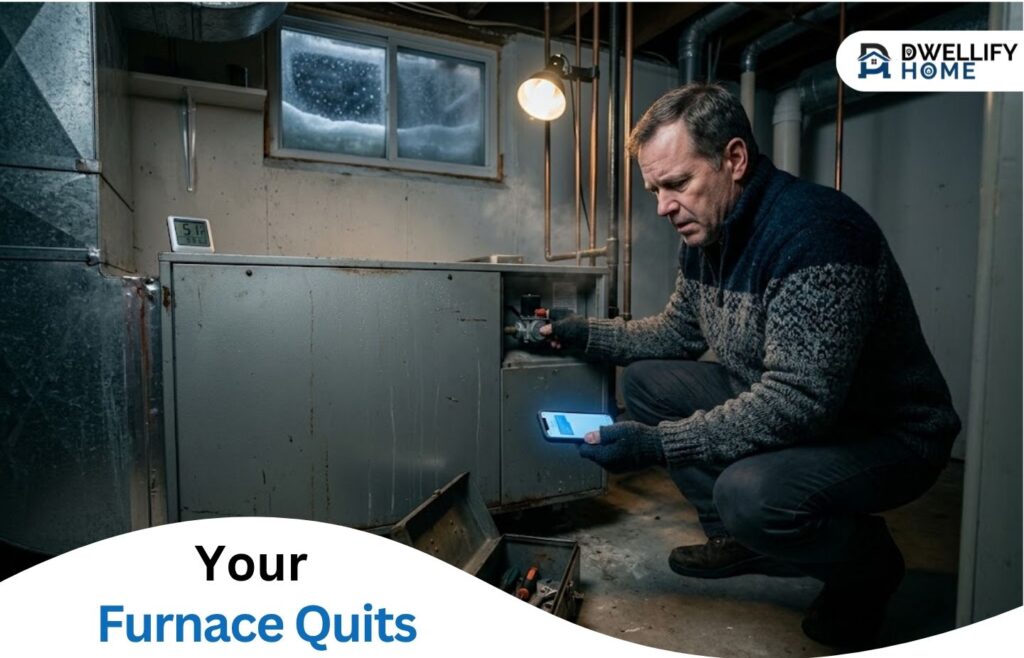
Every January, my neighbor Dale texts me the same message: “Heat’s out, house is 51, what do I do?” He’s texted it three years running, and he’s never once called a technician before the emergency. That’s the real pattern. Furnaces don’t fail randomly. They fail on the night you finally need them, usually after weeks of small warnings you walked right past on your way to the kitchen.
So here’s the honest version of what’s happening. Three failures cause most no-heat calls, and you can check all three yourself before you dial anyone. The order matters too. Diagnosis before panic saves you money and, on a 20 degree night in central Arkansas, a whole lot of misery.
If you’re outside a major metro and the repair list runs past a dirty filter, search for furnace repair little rock ar and get a local tech who knows the housing stock in your area. Otherwise, keep reading. You can probably fix the first one tonight.
The three failures behind almost every dead furnace
Cold air blowing from your vents means ignition failed, not that the furnace is dead. The blower still runs because the thermostat asked for heat and the fan doesn’t know the burners never lit. Think of it as a car that cranks but never catches.
What you can check in five minutes: the filter, the breaker, and the condensate line on a high efficiency unit. A clogged filter chokes airflow, which trips the limit switch and shuts the burner off. A tripped breaker usually means the blower drew too much current. A frozen condensate line on a 90 percent furnace is common in cold snaps, and thawing it with a hair dryer fixes the no-heat call more often than anyone admits.
What you shouldn’t touch: the gas valve, the ignitor, and anything behind the burner door. Carbon buildup on a flame sensor blocks the tiny current that tells the board a flame exists, so the unit lights, runs a few seconds, then quits. Cleaning that sensor is a five minute job for a tech and a bad idea for you if you don’t know what you’re looking at.
Diagnosing the noise your furnace makes
Your furnace is talking. It’s just doing it in bangs, squeals, and clicks you’ve been ignoring since October.
- Banging on startup points to delayed ignition. Gas builds up, then lights all at once. Get this looked at. It stresses the heat exchanger.
- Squealing is usually the blower motor bearing. It gets louder for weeks before it quits.
- Grinding means something metal is wearing against something else, and the repair only gets more expensive.
- Rhythmic pinging after shutdown is just metal cooling. That one’s normal. Relax.
I’d rather pay for a bearing swap in November than a motor replacement in February. If your furnace sounds like a shopping cart with a bad wheel, that’s your sign.
Why short cycling costs you more than a repair
A furnace that runs two minutes, shuts off, and repeats is overheating on purpose. The limit switch is doing its job, protecting the heat exchanger from a problem upstream. Filter, return duct size, gas pressure, or a flame sensor conducting weakly are the usual suspects.
Every short cycle wears the ignitor, the blower, and the board a little more. Compared with a properly sized and tuned system, a short cycling furnace burns through parts faster and never gets your house truly warm. Oversized equipment makes it worse. Contractors have installed plenty of furnaces that were too big for the ductwork, and those units short cycle from day one.
One detail worth knowing: manufacturers list a design service life for furnaces, and the U.S. Department of Energy’s Energy.gov publishes guidance on heating systems that echoes it. A unit past that range with a cracked heat exchanger usually gets replaced, not repaired. That’s not a sales pitch. It’s safety.
The cold night checklist you can run in ten minutes
Do these in order. Stop when you find the problem.
- Hold your hand over a vent. Cold air means ignition, warm air means airflow or thermostat.
- Swap the filter if it’s gray. A cheap filter is fine. A dirty one is a shutdown waiting to happen.
- Check the breaker at the panel, then the switch on the side of the furnace, which gets bumped more than you’d think.
- Look at the flame through the sight glass. Blue is healthy. Yellow or orange means call someone.
- Write down the error code if the board has a blinking light. Your tech will thank you, and the visit gets shorter.
If the gas smell is there, skip the list entirely. Get everyone out and call from outside. That part isn’t a judgment call, and the National Fire Protection Association treats gas appliance failures as a leading category of home heating incidents. Freezing pipes can be fixed. Families can’t.
Repair or replace? Here’s the math I actually use
Under ten years old with a single failed part? Repair it, no question. Same sensor swapped twice in two seasons? That’s a symptom of a deeper issue, and I’d start pricing a replacement.
Past 15 years with a cracked heat exchanger or a compressor level bill on the horizon? Replace. The parts get scarce, the efficiency gap widens, and you’re paying for comfort you’re not getting.
There’s also a workforce reality here. According to the Bureau of Labor Statistics, HVAC technicians are among the trades projected to see steady demand for years, which means good techs book out fast in a cold snap. Calling on a Tuesday afternoon in October gets you a same day appointment. Calling at 11 p.m. in a freeze gets you a spot in a long line and an after hours rate.
| Signal | Repair | Replace
|
| Age | Under 10 years | 15 years or older |
| Heat exchanger | Intact, no cracks | Cracked or corroded |
| Repair history | One or two visits | Three or more in two years |
| Comfort | Rooms heat evenly | Cold rooms, long run times |
Habits that keep you out of this mess next winter
Change the filter on the first of the month during heating season and you’ve solved a huge share of no-heat calls before they start. Have the system serviced in early fall, before the first cold front, when appointment slots are wide open. Keep the area around the furnace clear of paint cans, holiday boxes, and the random stuff that migrates to basements. And save your service records. A tech who can see the history diagnoses faster than one starting from zero.
The coldest night of the year is going to happen again. That part you can’t control. What you can control is whether it finds you on the couch with a flashlight and a phone number already saved, or standing in a 51 degree living room wondering where the last three months went. So do the filter today. Book the tune up this week. Your future self, the one in socks at midnight, will thank you for it.
A quick note for our readers: certain links in this article may generate a commission for Dwellifyhome.com. These may include affiliate or sponsored links, and any qualifying commissions help support our ongoing work.



