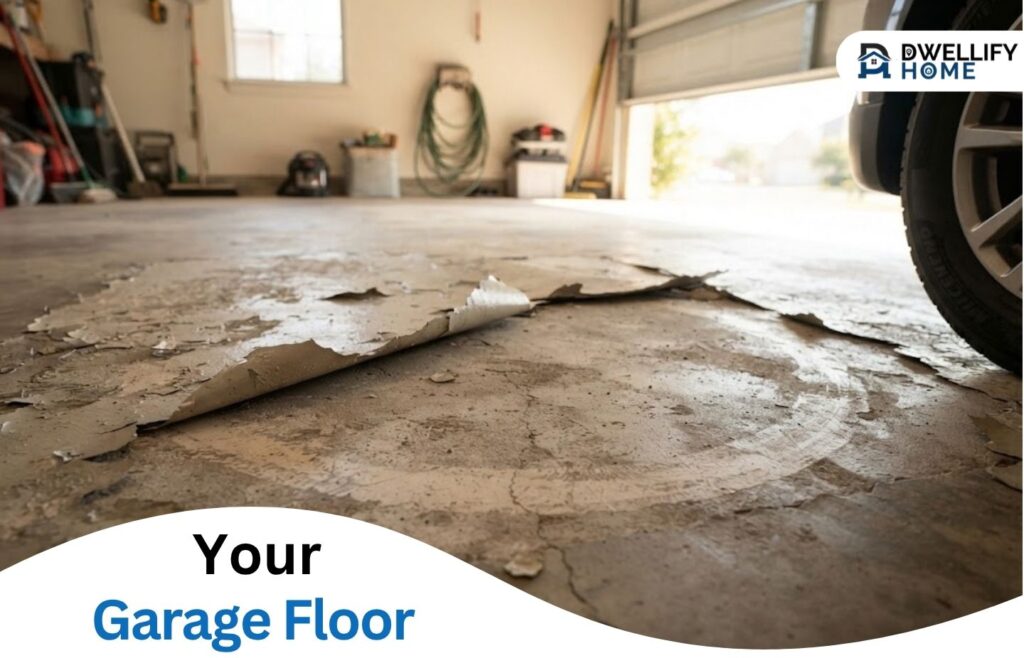
You pull into the garage on a July afternoon, and when you back out the next morning there’s a pale ring where your tire sat. A few weeks later, a corner of the floor coating starts to lift, then peel in sheets. By the end of summer the floor looks worse than bare concrete ever did.
This happens a lot in Texas. The coating wasn’t necessarily bad. It just wasn’t built for the job it was given.
Why Garage Floors Fail Faster Here
A Texas garage is a strange environment. It isn’t climate controlled, so it swings from mild winter mornings to summer afternoons that feel like the inside of an oven. Then you drive in on tires that have been rolling over hot asphalt, park, and leave them sitting on the same spot for hours.
That heat softens weaker coatings. The rubber grips the surface, and when the tire cools and pulls away, it takes some of the coating with it. Installers call this “hot tire pickup,” and it’s one of the most common complaints about cheap garage floor kits.
Add oil drips, road salt from a winter trip north, lawn chemicals and the occasional dropped wrench, and you can see why a garage floor needs more than a coat of paint.
Epoxy: Still a Solid Choice, With Caveats
Epoxy is the name most people know, and for good reason. A properly applied epoxy system bonds tightly to concrete, resists spills, and gives you a smooth, easy-to-clean surface. For a garage that sees light use, it can be a sensible, budget-friendly option.
Where epoxy struggles is ultraviolet light. Many epoxies yellow or chalk when sunlight hits them, which matters if you keep the door open while you work. It also takes longer to cure, so you may be parking on the driveway for several days.
Polyaspartic and Polyurea: Built for Punishment
Polyaspartic and polyurea coatings came along to solve those weaknesses. They handle temperature swings better, stand up to impact, and many are UV-stable, so they don’t fade near the door. They also cure quickly. On many residential jobs, the whole system goes down in about a day.
The tradeoff is that fast cure times leave little room for error. The installer has to work quickly and know the material. This isn’t a product for a Saturday afternoon with a roller and a playlist.
Many professional systems combine the two approaches: a base coat, a broadcast of decorative flakes for texture and grip, and a tough, clear topcoat that takes the abuse.
The Part Nobody Sees: Surface Prep
Ask anyone who has redone a failed garage floor, and they’ll tell you the coating wasn’t the real problem. The prep was.
Concrete has to be opened up so the coating can grab onto it. Professional crews typically use diamond grinding for this, which removes the smooth top layer, old sealers and contaminants, and leaves a profile the coating can lock into. Acid etching, the method in most DIY kits, is far less consistent. If oil has soaked into the slab over the years, it has to be dealt with too, or the coating will release right over the stain.
Cracks and pits need repair before anything goes on top. Coatings don’t hide structural issues; they highlight them.
Ventilation and Your Health
Garage coatings are chemicals, and some products release solvents as they cure. The U.S. Environmental Protection Agency lists paints, varnishes and other coatings among the common sources of volatile organic compounds in the home, and recommends maximum ventilation during application. That matters most with an attached garage, where fumes can drift into the house.
If you’re hiring out the work, ask what products will be used and how long the space should stay open and aired out. If you’re doing it yourself, don’t close the door and hope for the best.
What It Actually Costs
A professional coating is not cheap, but it’s rarely the most expensive part of a home project. Prices vary with the size of the garage, the condition of the slab and the system you choose. A floor with heavy oil staining or deep cracks will cost more than a clean, sound slab.
It helps to think in cost per year rather than upfront price. A kit that peels after two summers isn’t a bargain if you end up paying to grind it off and start over. A quality system installed on well-prepared concrete can last many years with little more than sweeping and the occasional mop.
Choosing Who Does the Work
Look for a company that does concrete work as its core business, not as a side line. Ask how they prepare the surface, what system they recommend for your garage specifically, and what kind of guarantee stands behind it. A good installer will ask how you use the space before recommending anything.
Texas homeowners comparing their options can look at firms such as Zion Outdoors, which handles epoxy garage flooring alongside a wider range of concrete and hardscape work. Whoever you choose, the questions above will tell you quickly whether they know what they’re doing.
The Floor You Stop Thinking About
The best garage floor is one you forget about. It doesn’t peel under your tires, it doesn’t stain when you change the oil, and it doesn’t look tired by next summer. Getting there comes down to matching the coating to your climate and refusing to cut corners on prep. Do both, and the floor will keep doing its job long after you’ve moved on to the next project.
For full transparency, certain links in this article may be affiliate or sponsored links. Dwellifyhome.com may earn a small commission from qualifying purchases, which helps us maintain the site and continue sharing useful information.