A sunshade for a patio is any cover that blocks direct sun over your outdoor seating area, and the right one for most homes is a patio umbrella or a shade sail with UPF 50+ fabric, because UPF 50+ blocks more than 98% of UV rays. Start with how much space you need to shade, how much wind your patio gets, and whether you want shade you can move or shade that stays put. This guide compares every type side by side, with real 2026 prices, so you can buy once and enjoy the patio all summer.
Shoppers get stuck because every product calls itself a sunshade. An umbrella, a sail, an awning, and a pergola cover all block the sun, but they fit different patios, budgets, and weather. Below you will learn what each type does best, what it costs, how to size it, and the wind and anchoring mistakes that ruin most shade setups.
What Is a Patio Sunshade?
A patio sunshade is a fabric or solid cover that sits above or beside a patio to block sunlight and cut heat. It can be as simple as a table umbrella or as fixed as a wall-mounted awning. The job is always the same: keep the seating area cool enough to use on a hot afternoon and protect your skin and furniture from UV rays.
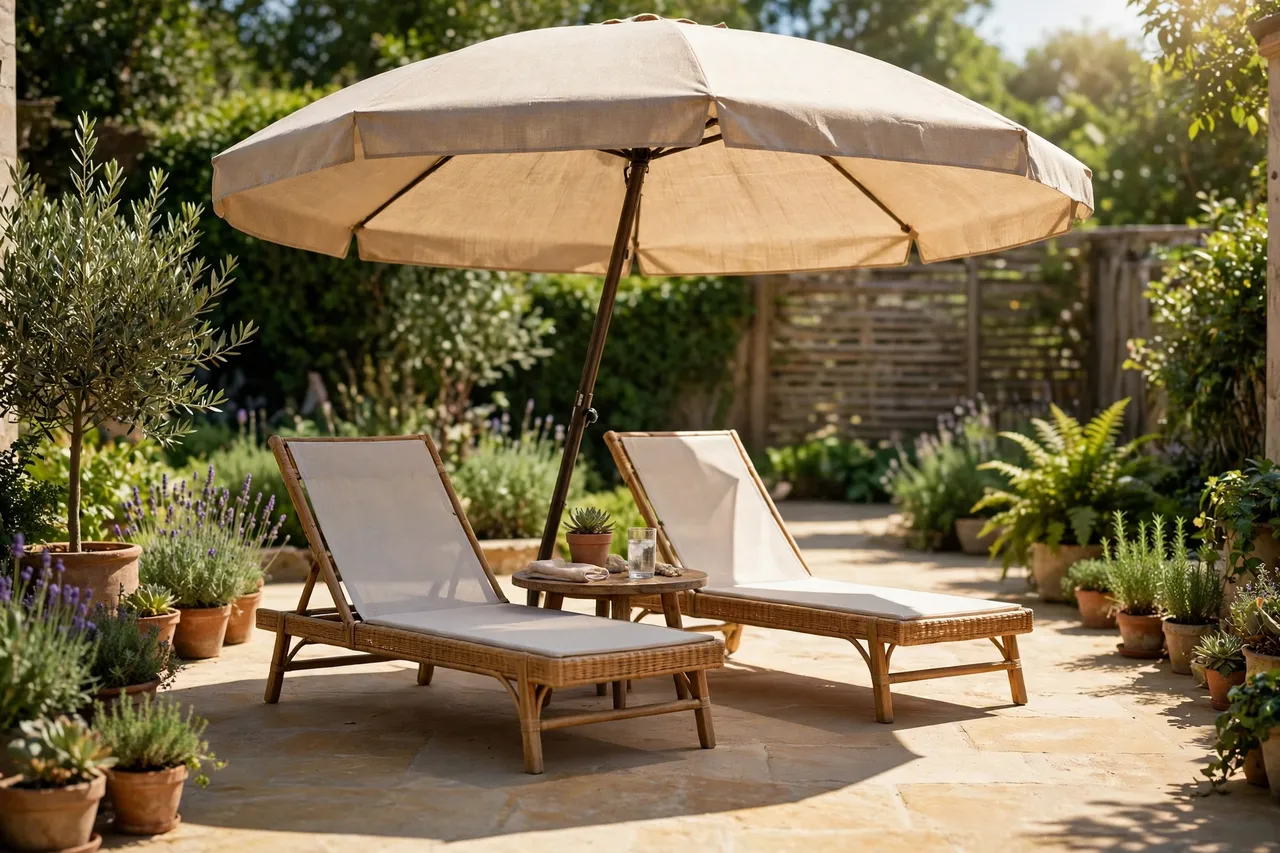
Shade also protects your health. The CDC explains that staying in the shade under an umbrella, tree, or other shelter lowers your risk of sun damage and skin cancer, and it still advises sunscreen and protective clothing even when you sit in the shade. Read the full guidance at the CDC’s sun safety facts. Shade helps a lot, but it does not replace sunscreen on a bright day.
People also call a patio sunshade a patio sun shade, an outdoor sunshade, or a shade cover. They all mean the same thing: a cover that turns a too-hot patio into a place you actually sit. The differences that matter are how it mounts, how much area it covers, and whether you can move it when the sun moves.
Buy shade for the hottest hour, not the prettiest photo. Check where the sun sits at 2 or 3 in the afternoon, when heat peaks, and make sure your shade covers the chairs at that hour, not just at noon.
The 6 Types of Patio Sunshades Compared
Every patio sunshade falls into one of six types. The table below gives you the short version, then each type gets a closer look so you can match one to your patio.
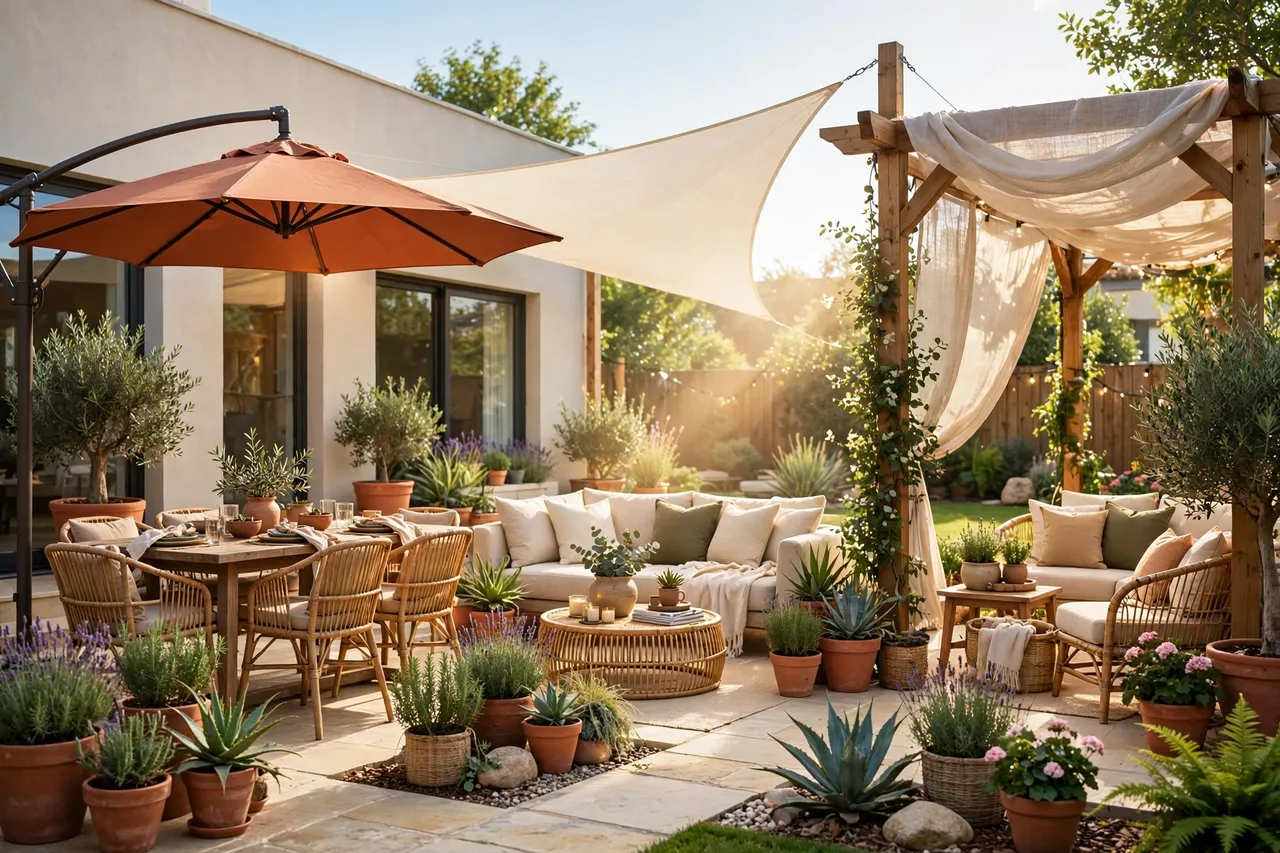
Patio sunshade types at a glance
| Type | Best for | Typical price | Moves easily? |
|---|---|---|---|
| Patio umbrella | Tables and small seating areas | $80 to $400 | Yes |
| Shade sail | Large or odd-shaped patios | $100 to $300 | No, fixed anchors |
| Retractable awning | Patios next to the house wall | $800 to $3,000+ | Extends and retracts |
| Pop-up canopy | Parties, renters, temporary shade | $50 to $120 | Yes |
| Outdoor roller screen | Low western sun, privacy | $400 to $1,200 per panel | Rolls up and down |
| Pergola cover | Permanent shade with style | $2,500 to $6,000 | No |
Prices in this table come from current buying guides checked November 13, 2026, and cover the product itself, not posts, bases, or installation. A sail that costs $150 still needs anchors, and an umbrella that costs $200 still needs a heavy base.
Patio umbrella: the simplest shade
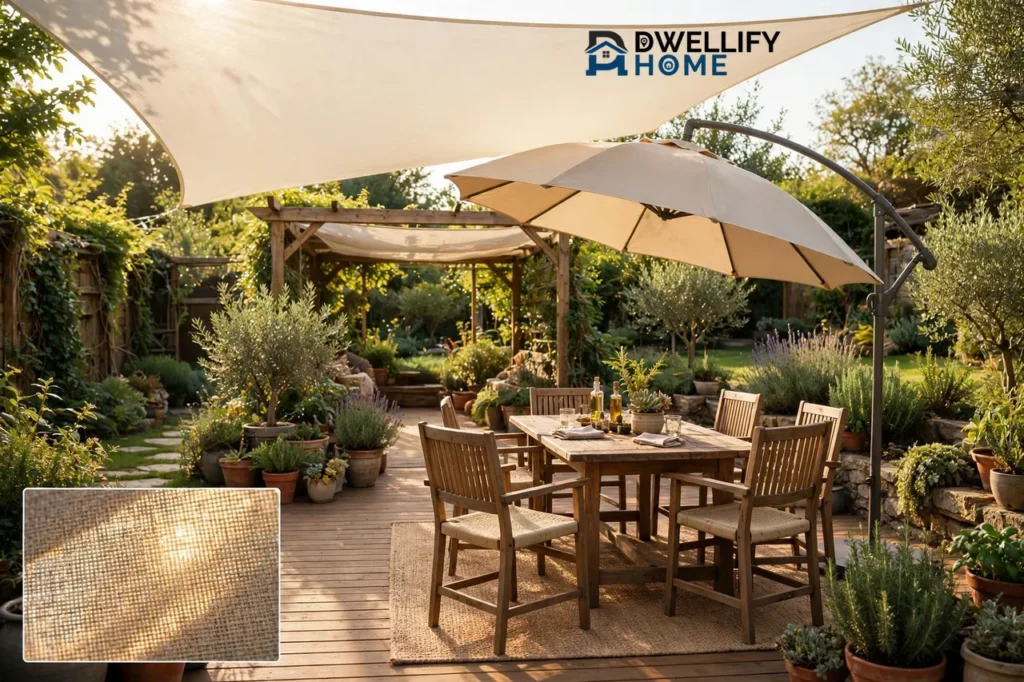
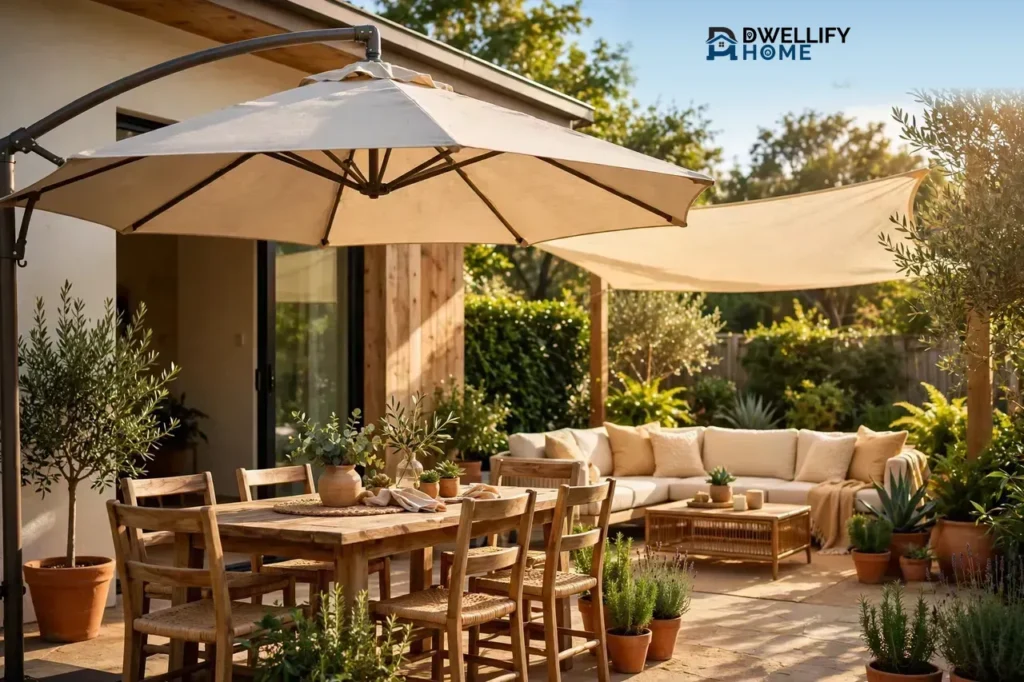
A patio umbrella is a fabric canopy on a pole, and it is the fastest way to shade a table or a small seating group. A center-pole umbrella runs through the table, while a cantilever (offset) umbrella hangs from a side pole so nothing blocks the middle of the seating area. Cantilever models tilt and rotate, so you can follow the sun without moving the base. Umbrellas suit small patios best, because one canopy covers one spot, not a whole patio.
Shade sail: big coverage, modern look
A shade sail is a triangle or rectangle of tensioned fabric stretched between posts or wall anchors. It covers a larger area than an umbrella for less money, and it suits odd-shaped patios that no umbrella fits. Most sails use breathable HDPE mesh that blocks up to about 95% of UV rays while letting hot air escape, but that mesh lets rain through. A waterproof sail needs a slope so water runs off instead of pooling. Sails stay in one place, so the shadow moves with the sun while the fabric does not.
Retractable awning: shade on demand
A retractable awning mounts to the house wall and extends over the patio when you want shade, then folds back when you want sun or a storm is coming. It is the best pick for a patio that sits right against the house, because it needs no posts and takes up no floor space. Motorized models can include a wind sensor that retracts the awning on its own.
Pop-up canopy: fast, cheap, temporary
A pop-up canopy is a folding frame with a fabric top that one or two people can set up in minutes. It works for parties, for renters who cannot drill into anything, and for anyone who wants shade this weekend without a project. The trade-off is wind: a pop-up canopy catches gusts like a kite, so stake it down or weigh the legs, and take it down before a storm.
Outdoor roller screen: shade from the side
An outdoor roller screen hangs from a beam or pergola edge and rolls down like a blind. It blocks low sun from the west or south, the angle where overhead shade fails, and it adds privacy from neighbors. Most panels cost $400 to $1,200 installed, and motorized versions sit at the higher end. Screens suit covered patios and pergolas best, because they need something solid to hang from.
Pergola cover: the permanent answer
A pergola cover is fabric, louvered panels, or a solid roof laid over a pergola frame. An open pergola alone gives only partial shade, since sun slips between the beams. Add a retractable fabric cover and you get real shade with airflow, or add solid panels and you get rain cover too. A wood pergola typically runs $2,500 to $6,000, and the cover adds to that, so this is the priciest type here and the one that adds the most to a home.
Match the type to the patio, not to the trend. A sail looks great in photos but needs strong anchors, and a pergola looks great in a yard but costs ten times an umbrella.
How to Choose the Right Sunshade for Your Patio
Choose a sunshade in this order: measure the space, watch the sun, check the wind, then pick the type. Shoppers who start with a product usually buy the wrong size or the wrong mount, and the return costs more than the shade did.
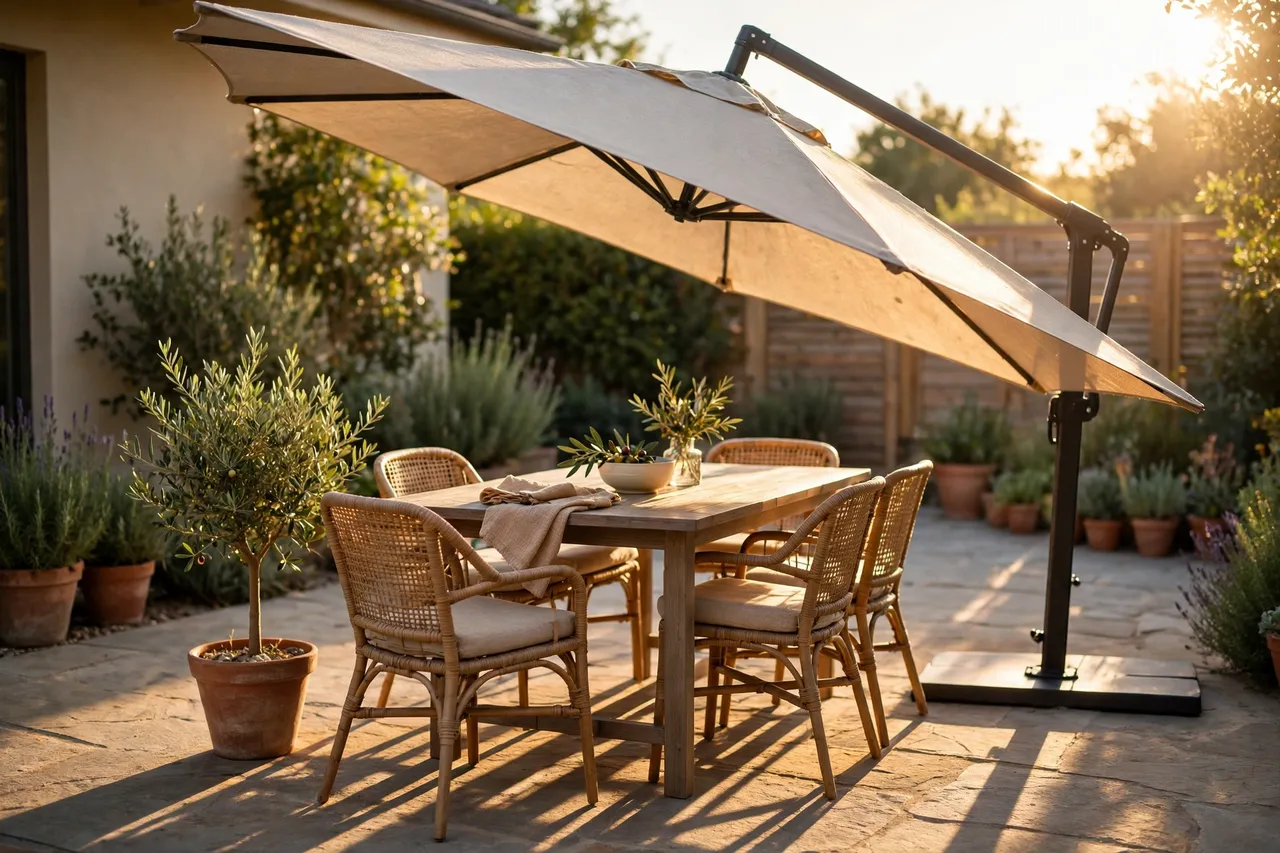
Step 1: Measure the seating area, not the patio
Measure the chairs and table you want in the shade, then add 2 to 3 feet on each side. Shade that ends exactly at the table edge leaves the people sitting in the sun, because the shadow shifts as the sun moves. A dining set that is 6 feet wide needs a canopy at least 9 to 10 feet across, and a lounge area needs the same extra room around every chair.
Step 2: Watch where the sun goes
Stand on the patio at 10 in the morning, at noon, and at 3 in the afternoon, and note where the shadows fall. A south-facing patio needs overhead cover at midday, while a west-facing patio needs side cover for the low afternoon sun that blinds you at dinner. If the worst sun comes from the side, an umbrella alone will not fix it, and a roller screen or a tall plant may matter more than a bigger canopy. For layout ideas that work with the shade, browse patio ideas to see how seating, sun, and cover fit together.
Step 3: Check the wind before you buy
Wind decides more sunshade purchases than sun does. An open patio on a hill or near the coast gets gusts that flip a light umbrella and tear a loose sail. Look at what your neighbors use: if every umbrella on the street is closed and strapped, your patio is windy, and you need a heavy base, strong anchors, or a type you can retract fast. The National Weather Service advises bringing in unsecured objects from patios and balconies and securing outdoor items that could blow away before high winds arrive. See their guidance at the National Weather Service wind safety page.
Step 4: Decide fixed or movable
Renters and anyone who rearranges furniture often should pick movable shade: a table umbrella, a cantilever umbrella, or a pop-up canopy. Homeowners who want shade every day without setup should pick fixed shade: a sail, an awning, or a pergola cover. Fixed shade costs more up front and needs anchors or a wall mount, but you never have to set it up or put it away.
Wind is the real test of a sunshade. Any shade can block sun on a calm day, but only a well-anchored one survives the first summer storm.
What Size Sunshade Do You Need?
Size is the most common buying mistake, and it is easy to get right with two rules. First, the canopy should reach at least 2 feet past the edge of your table on every side, so diners stay shaded when the sun shifts. Second, add 2 to 3 feet of extra coverage around any seating area beyond the furniture itself.
For tables, the numbers are simple. A table up to 42 inches wide, seating 2 to 4 people, needs a 6 to 7.5 foot umbrella. A table up to 60 inches wide, seating 4 to 6 people, needs an 8 to 9 foot umbrella. A table up to 72 inches wide, seating 6 to 8 people, needs a 10 to 11 foot umbrella. For a lounge area with a sectional or two chairs, measure the whole seating zone and pick a sail or canopy that covers it with the same 2 to 3 feet of spare room.
Shade sails follow a different rule because their edges curve inward. A sail’s curved edges hold the fabric tight, but they shrink the real shaded area below the listed size. Order a sail one size larger than your measured area, and set the corners at different heights so rain runs off instead of pooling in the middle.
On a small patio, a big shade can backfire. An 11 foot umbrella on a tiny balcony blocks the walkway and catches every gust, and a sail that spans wall to wall leaves no room for plants or a grill. If your patio is tight, a smaller canopy plus a roller screen for the low sun often beats one oversized shade. Our small patio designs show layouts where shade, seating, and walking space all fit.
When in doubt, size up the coverage, not the frame. A slightly larger canopy costs little extra, while a too-small one shades nobody.
Fabric, UV Protection, and What UPF Really Means
UPF stands for Ultraviolet Protection Factor, and it tells you how much UV radiation a fabric blocks. A fabric rated UPF 50+ blocks more than 98% of UV rays, which is the rating to look for on any patio sunshade. A fabric with no UPF rating may still cast a shadow, but a shadow alone does not mean strong UV protection.
Three fabrics cover most patio sunshades. Solution-dyed acrylic, sold under names like Sunbrella, holds its color best and resists fading, mold, and water, and it usually lasts 7 to 10 seasons or more. HDPE mesh, the standard sail fabric, breathes well, blocks up to about 95% of UV rays, and lets hot air escape, which keeps the shaded area cooler. Polyester is the budget pick: it works fine for a season or two, fades faster, and usually lasts 2 to 4 seasons before it looks tired.
Color matters too. Dark fabric blocks slightly more UV than pale fabric, but it also absorbs more heat and can make the air under it feel warmer. Light fabric stays cooler and brightens the patio, but it shows dirt faster. For most patios, a medium tone in a good fabric beats a dark tone in a cheap one.
Water resistance is a separate claim from UV protection, and sellers mix them up. A fabric can block UV and still soak through in rain. Breathable mesh sails let rain pass by design, while waterproof sails and acrylic canopies shed light rain when they are taut and sloped. Check the label for both claims, and never trust a vague phrase like sun-proof or weather-proof without a UPF number beside it.
Look for UPF 50+ on the label, not in the ad headline. The label rating is tested, while the headline is marketing.
How Much Does a Patio Sunshade Cost?
A patio sunshade costs anywhere from $50 to more than $3,000, and the gap comes from size, fabric, and whether it mounts to anything. The table below shows typical product prices checked November 13, 2026, with the hidden costs beside them so the first price you see is never the last one you pay.
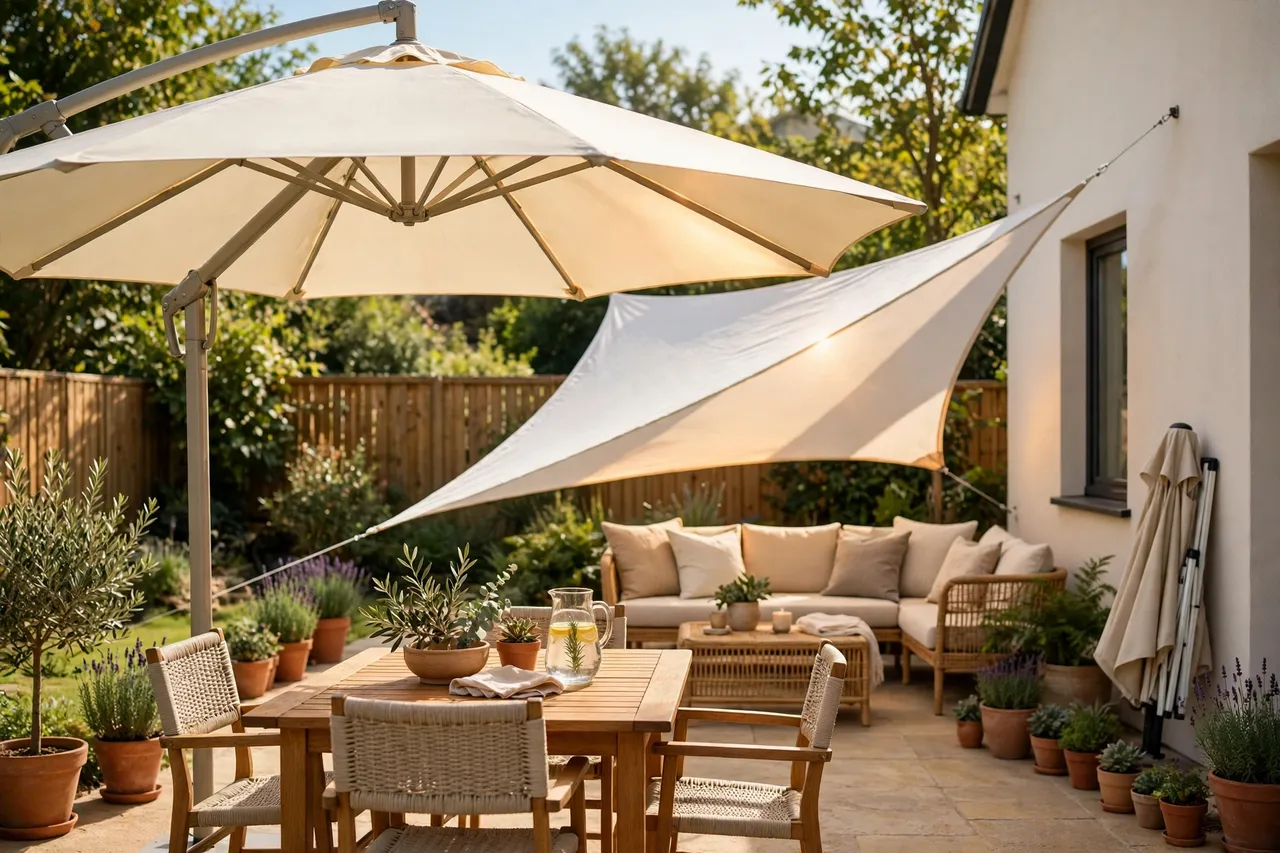
Patio sunshade costs by type, 2026
| Type | Product price | Extra costs to budget |
|---|---|---|
| Pop-up canopy | $50 to $120 | Stakes or leg weights |
| Shade sail | $100 to $300 | Posts, hardware, install $350 to $600 |
| Patio umbrella | $80 to $400 | Base, 50 lb or more |
| Retractable awning | $800 to $3,000+ | Install, motor, wind sensor |
| Roller screen | $400 to $1,200 per panel | Mounting, motor for large panels |
| Pergola + cover | $2,500 to $6,000+ | Footings, permits, cover |
The cheapest shade is rarely the cheapest year. A $60 pop-up canopy may last one or two seasons, while a $250 acrylic umbrella can last seven or more, which makes the umbrella cheaper per summer. A shade sail looks cheap at $150, but posts set in concrete and hardware can add $350 to $600 to the job, according to Bob Vila’s installation guide cited by Trew Landscape. Read the full cost comparison at Trew Landscape’s backyard shade solutions guide, which puts a basic patio roof at $1,000 to $15,000 and a wood pergola at $2,500 to $6,000.
Budget in this order: the shade itself, the base or anchors, and the install. An umbrella without a heavy enough base will tip in the first strong gust, and a sail without solid posts will sag and tear. Set aside 10% extra for hardware, fasteners, and one spare part, because a single broken crank or torn corner can sideline the whole shade.
If you are building a whole patio at the same time, the shade is a small part of the bill. A full patio project runs far more than any single sunshade, so pick the shade that fits the finished patio, not the cheapest one that fits today’s budget. Our paver patio renovation cost guide breaks down what the floor underneath costs, line by line.
The base and the anchors are part of the price, not optional extras. A shade with no ballast is a kite, not a sunshade.
How to Install and Anchor a Patio Sunshade Safely
Most sunshade failures are anchoring failures, not fabric failures. A canopy that rips free in wind can hit a window, a car, or a person, so treat the mount as seriously as the shade itself. Work on a calm day, keep the ladder steady, and never install a sail or an awning alone if the fabric can catch a gust while you hold it.
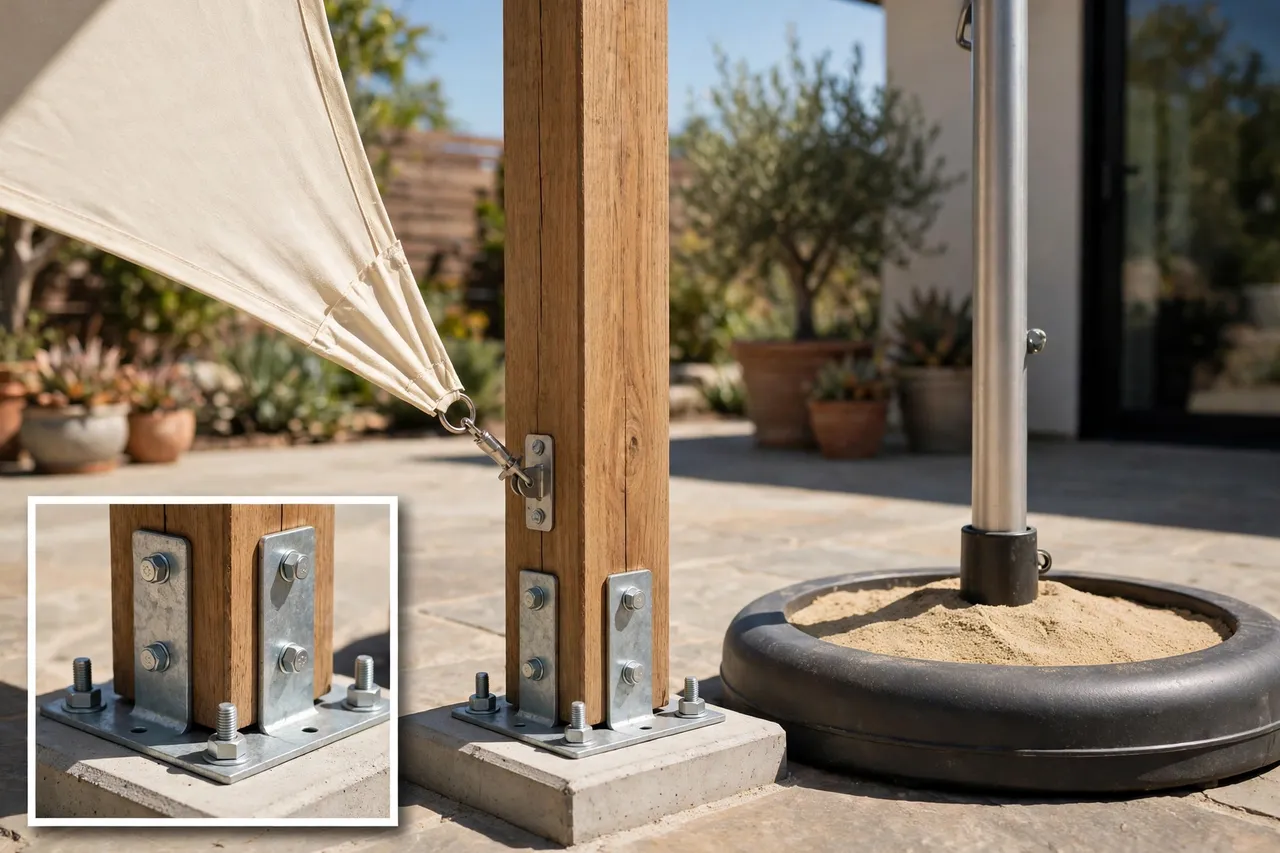
Umbrellas: weight beats looks
Use a base of at least 50 pounds for an umbrella under 7.5 feet, and go heavier for larger canopies. Fillable bases need sand or water, and sand is heavier and steadier than water. Close the umbrella whenever you leave the patio for the day and whenever the wind picks up, even if the sky looks fine.
Shade sails: tension is everything
Set posts in concrete, not just in soil, and let the concrete cure fully before you tension the fabric. Attach each corner with proper hardware, pull the sail taut until it drums lightly when tapped, and set the corners at different heights so water runs off. A sagging sail holds a puddle, and a puddle of water can weigh enough to rip the hardware out of a post.
Awnings and screens: mount to structure, not siding
Mount an awning or a roller screen to solid framing, brick, or concrete, never to vinyl siding or a hollow fascia board. If you are unsure what sits behind the wall, ask a pro to check before you drill. Awnings pull hard on their mounts in wind, and a mount that fails takes part of the wall with it.
Roof and ladder safety
Use a sturdy ladder on flat ground, keep three points of contact, and never lean past the side rails to reach an anchor point. Move the ladder instead. If the install needs roof work, a tall ladder, or drilling into the house structure, hire a pro. A fall or a bad anchor costs far more than the install fee.
Check your local rules before you build anything permanent. Many cities require a permit for a pergola, a roof, or posts set in concrete, and a homeowner association may limit sail colors or awning sizes. A quick call to the local building office before you buy saves a removal order after you build.
Close it, lower it, or take it down before a storm. No fabric sunshade is storm protection, and the five minutes it takes to close one beats a broken window.
Care and Storage: Make Your Sunshade Last
A sunshade lasts years longer with simple care. Brush off leaves and dust once a month, and wash the fabric with mild soap and water when it looks dirty. Let the fabric dry fully before you fold it or retract it, because a damp canopy grows mold and mildew in storage, and mold stains rarely wash out.
Keep the fabric out of standing water and off the ground. A sail that sags and holds a puddle stretches out of shape, and an umbrella left open in rain collects water in the canopy until the ribs bend. After a storm, open the shade in the sun, let it dry, and check the stitching and hardware for loose threads or rust.
Store fabric shade indoors for winter in cold climates. Take down sails and pop-up canopies, fold them loosely, and keep them in a dry shed or garage. Leave fixed awnings retracted and covered, and check the manufacturer’s care guide before you wash or treat the fabric with a spray, because the wrong cleaner can strip a waterproof coating.
Under the shade, soft furnishings last longer too. A rug under the seating area keeps feet cool and ties the space together, and our indoor outdoor rugs guide covers sizes, materials, and care for rugs that live outside.
5 Mistakes to Avoid When Buying a Patio Sunshade
Most sunshade regret comes from five avoidable mistakes. Check your plan against this list before you order.
- Buying too small. Shade that ends at the table edge leaves people in the sun, so add 2 to 3 feet on every side.
- Skipping the base or anchors. An umbrella with a light base tips over, and a sail on weak posts sags and tears.
- Trusting a shadow instead of a UPF rating. A dark shadow can still let UV through, so look for UPF 50+ on the label.
- Ignoring the low sun. Overhead shade fails at dinner time on a west-facing patio, so plan a screen or side cover too.
- Leaving it up in a storm. Fabric shade is not storm protection, so close it, lower it, or take it down before high winds.
A sunshade you have to fight is a sunshade you will stop using. Pick the type you will actually open, close, and care for, not the one that looks best in the store.
Related Guides
If you are planning the whole patio, these guides pick up where this one leaves off:
- Patio Ideas — layouts, styles, and features for every size of patio.
- Small Patio Designs — seven layouts that make a tiny patio feel bigger.
- Covered Patio Ideas — roofed patios where shade and furniture stay dry.
- Paver Patio Renovation Cost — what a paver project really costs, line by line.
- Indoor Outdoor Rugs — sizes, materials, and care for rugs under your shade.
- Patio Lighting Ideas — string lights and fixtures that work under shade after dark.
- Deck Shade Ideas — the same shade problem on a deck instead of a patio.
- Enclosed Patio Ideas — the permanent-enclosure alternative to fabric shade.
- Balcony Cover Ideas — shade on a balcony instead of a patio.
- Small Patio Decorating Ideas — decorating the shaded seating area.
- Outdoor Furniture for Small Spaces — furniture that sits under the sunshade.
Frequently Asked Questions
What is a sunshade for a patio?
A sunshade for a patio is a cover, usually fabric, that blocks direct sunlight over an outdoor seating area. Common types are patio umbrellas, shade sails, retractable awnings, pop-up canopies, roller screens, and pergola covers. It cuts heat, blocks UV rays, and makes the patio usable on hot afternoons.
Should I buy a shade sail or an umbrella?
Buy a shade sail when you need to cover a large or odd-shaped area and you have strong posts or wall anchors, since sails cover more space for less money but stay fixed. Buy an umbrella when you need shade over one table or seating spot and want to move or tilt it as the sun shifts.
How much does a patio sunshade cost?
A patio sunshade costs $50 to $120 for a pop-up canopy, $80 to $400 for a patio umbrella, $100 to $300 for a shade sail, and $800 to $3,000 or more for a retractable awning, based on prices checked November 13, 2026. Add the base, posts, hardware, or installation, which can add $350 to $600 for a sail.
Do patio sunshades block UV rays?
Yes, when the fabric carries a real UPF rating. Fabric rated UPF 50+ blocks more than 98% of UV rays, while unrated fabric may cast shade without blocking much UV. Look for UPF 50+ on the product label, and remember the CDC still advises sunscreen and protective clothing even when you sit in the shade.
Can a patio sunshade stay up in wind and rain?
Light rain is fine for most taut, sloped canopies, but no fabric sunshade should stay up in high wind. Close umbrellas, retract awnings, and take down pop-up canopies before a storm, as the National Weather Service advises for all loose outdoor items. A sail left up in a storm can tear free and damage the posts or the house.
What size sunshade do I need for my patio?
Measure the seating area, then add 2 to 3 feet on each side. For a dining table, the canopy should reach at least 2 feet past the table edge on every side, so a 60-inch table needs an 8 to 9 foot umbrella. For a shade sail, order one size larger, because curved edges shrink the real coverage.
Disclaimer: Homes, patios, and weather vary, and this guide gives general advice, not building or safety instructions. For mounting an awning or sail to your house, setting posts in concrete, or any work at height, hire a qualified pro if you are unsure, and always follow the product maker’s instructions and your local building rules.
The best sunshade is the one that fits your patio, your wind, and your habits. Measure the seating area, watch the sun at 3 in the afternoon, pick a type you will actually use, and anchor it like a storm is coming. Do that, and the patio stops being the hottest spot in the yard and becomes the place everyone gathers.