Weather resistant outdoor furniture made from teak, HDPE lumber, or powder-coated aluminum lasts 15 to 50 years outside, because none of these materials absorb water or rust, and each one shrugs off a different kind of weather. Teak carries natural oils that fight rot for 25 to 50 years, HDPE lumber never absorbs moisture at all, and powder-coated aluminum cannot rust. This guide compares every material that matters, shows what each one costs over its life, and helps you match the material to your climate before you spend a dollar.
One material on the list below looks weatherproof in the store and fails in the first hard winter, and it has nothing to do with how heavy or expensive it feels. The failure hides in the frame underneath the pretty surface, and the table in the middle of this guide shows you exactly where to look. Before that, you need to know what “weather resistant” really promises, because the label means less than you think.
What Is Weather Resistant Outdoor Furniture?
Weather resistant outdoor furniture is furniture built from materials and finishes that stand up to rain, sun, wind, and temperature swings without rotting, rusting, or falling apart in one or two seasons. It is not waterproof furniture, and it is not furniture you can forget about entirely.
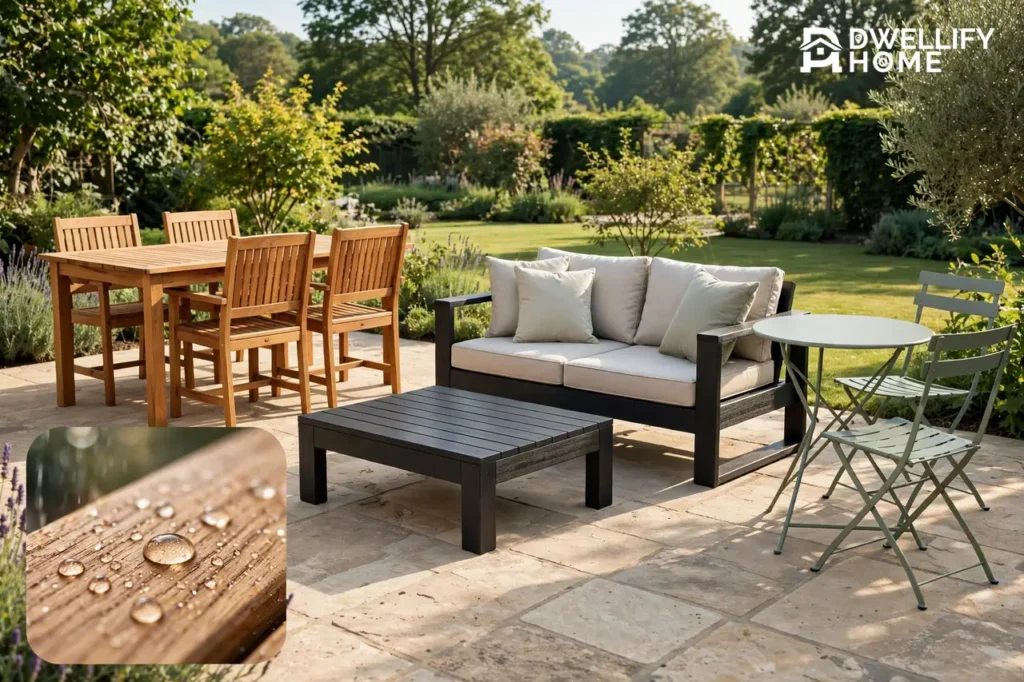
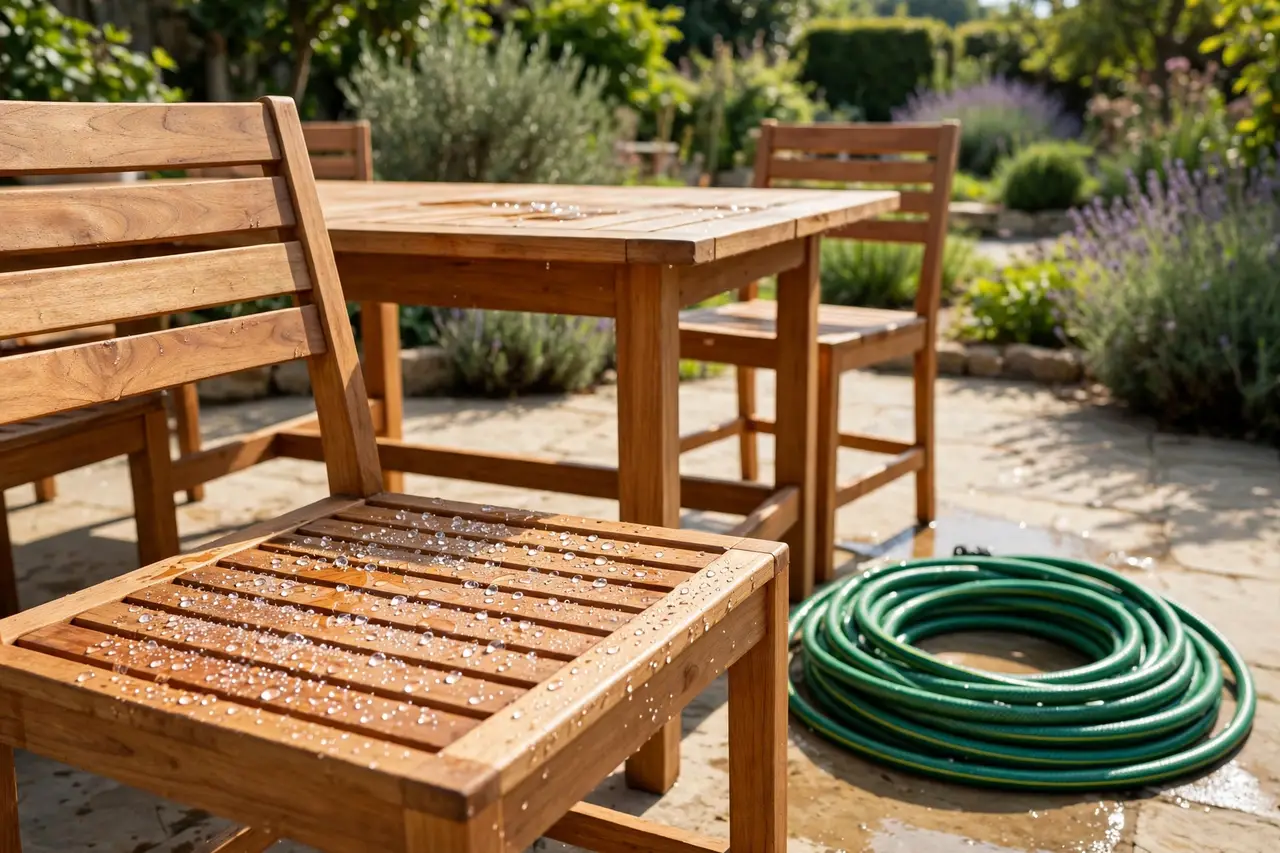
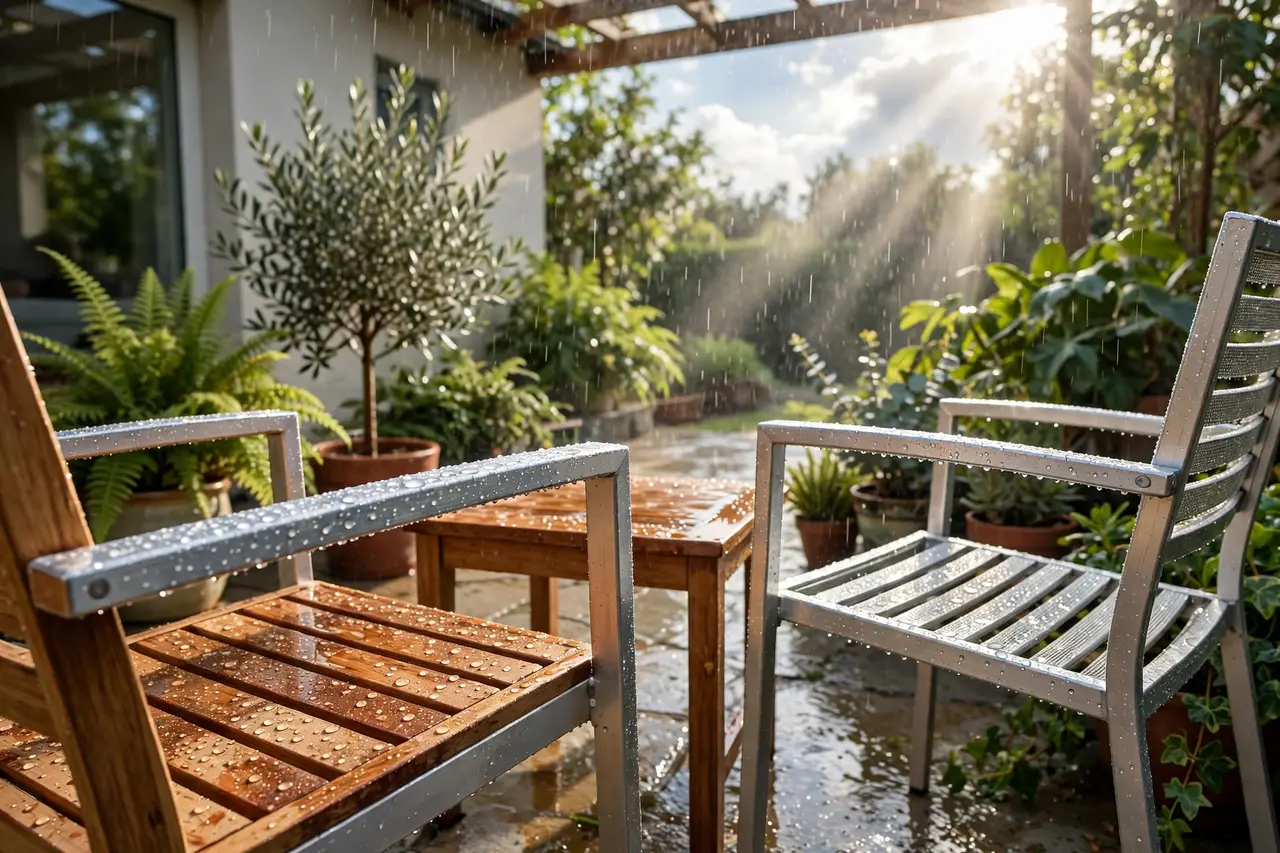 Patio furniture in light rain on a sunny patio, water beading on the seats, bright clear daylight” />
The label covers a spectrum, not a standard. A chair can call itself weather resistant because its frame is aluminum, even while its cushions soak up rain and its steel screws rust in the joints. Real weather resistance lives in every part of the piece: the frame, the fasteners, the fabric, and the finish. Backyard with Ben puts it plainly in their 2026 guide: the best outdoor furniture is the furniture whose material matches your weather, and two chairs that look nearly identical in a showroom can last many years or fall apart in a few seasons depending on what they are made of and how they are finished. Read their full material breakdown at Backyard with Ben’s guide to outdoor furniture for rain and sun.
Rain, sun, and freeze-thaw attack furniture in different ways. Moisture drives rot in wood, rust in iron and steel, and mold in cushions. UV light breaks down the polymers in plastic and resin a little more each week, which leads to fading, chalking, and eventually cracking. Temperature swings loosen joints and seams, and a freeze-thaw winter can crack a poorly finished frame wide open. A material that beats one threat can lose to another, which is why the comparison in the next section matters more than any single label on a tag.
Weather resistant means built for your weather, not for all weather. Match the material to your rain, sun, and winters first.
Which Material Holds Up Best Outdoors?
Powder-coated aluminum, HDPE lumber, and high-quality teak hold up best outdoors, because Homary’s 2026 material guide names exactly these three as the materials that outperform all others against sun, rain, snow, salt air, and temperature extremes. HDPE lumber lasts 20 to 30-plus years, teak 25 to 50-plus years, and powder-coated aluminum 15 to 20-plus years.
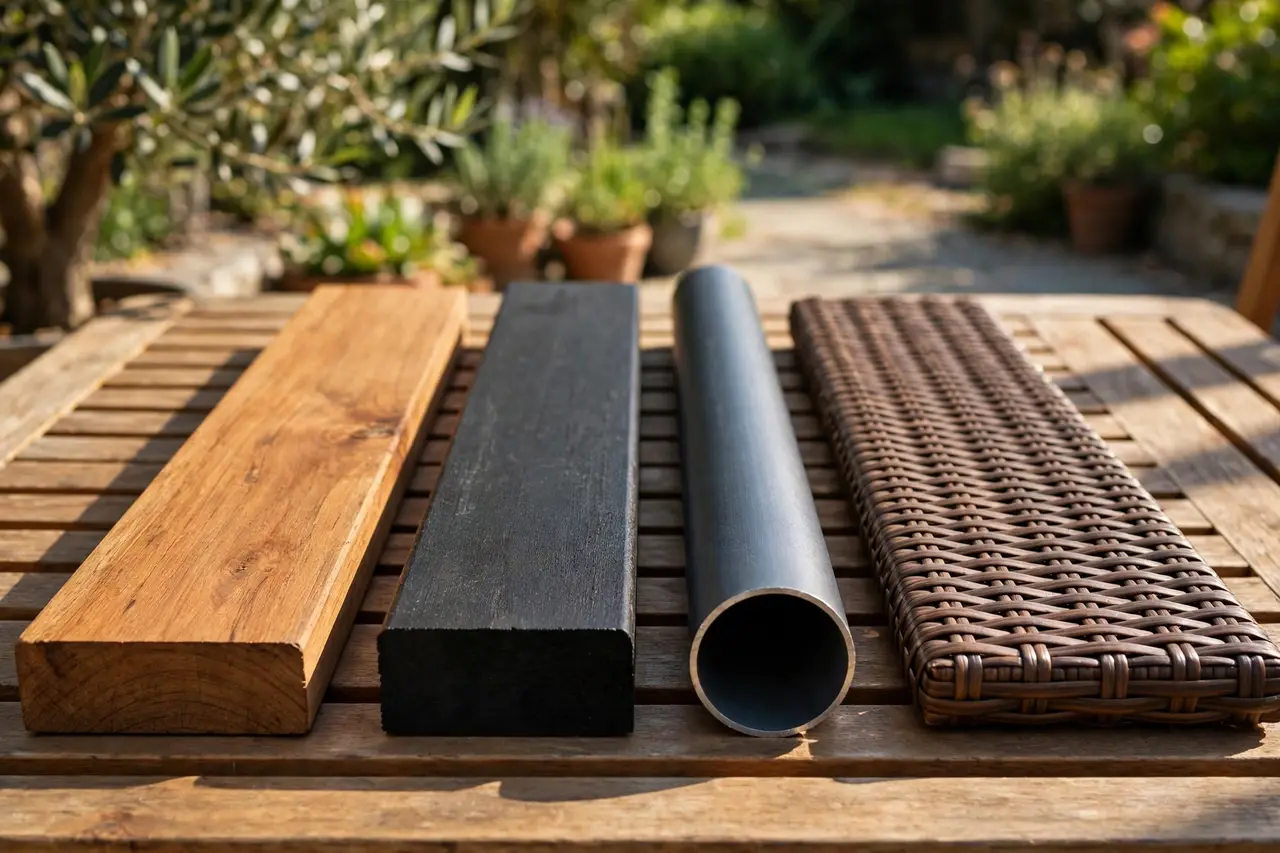
Here is the honest comparison in one place. Guess which material costs the least over twenty years: the teak set, the HDPE set, or the aluminum set? The answer sits in the lifespan column, and it surprises most buyers.
Weather resistance at a glance (lifespans from Homary’s 2026 material guide, checked November 16, 2026)
| Material | Rain | Sun and UV | Wind | Typical lifespan |
|---|---|---|---|---|
| Teak | Excellent | Excellent, grays | Excellent, heavy | 25–50+ years |
| HDPE lumber | Excellent | Excellent | Excellent, heavy | 20–30+ years |
| Powder-coated aluminum | Excellent | Good | Fair, light | 15–20+ years |
| Resin wicker (HDPE) | Good | Good | Fair, light | 10–15 years |
| Cast or wrought iron | Fair, rusts | Good | Excellent, heavy | 15–25 years with care |
| Sling and mesh fabric | Excellent, drains | Fair, fades | Depends on frame | 5–10 years per sling |
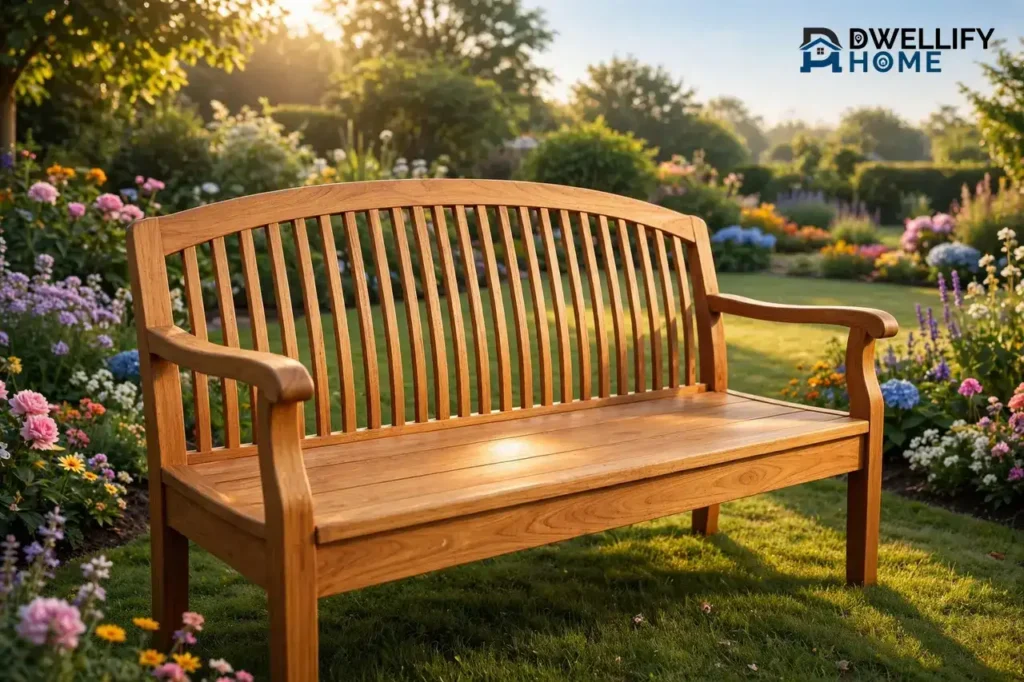
Teak wins on natural resistance. Its dense grain and natural oils push back water, insects, and rot with no finish at all, and it weathers to a silver-gray patina that is cosmetic, not decay. The catch is the price and the grade: only Grade A teak is truly weather resistant without regular sealing, and a teak bench runs $600 to $1,500 and more, checked November 16, 2026. Our outdoor bench with storage guide shows how teak and other woods behave in real gardens, and the pilot wood guide’s five-wood comparison explains why teak outlasts cedar, acacia, and pine by decades.
HDPE lumber wins on zero maintenance. It is high-density polyethylene, the same plastic used in food-grade containers, so it is non-porous, never absorbs moisture, never needs painting or sealing, and resists fading. A Polywood bench lists at $409 to $1,129 at Birch Lane, checked November 16, 2026, which is teak money for a plastic bench, but the five-year total tells a different story: no oil, no sealer, no replacement parts. The trade-off is heat and weight: dark HDPE runs hot in direct sun, and the pieces are heavy to move.
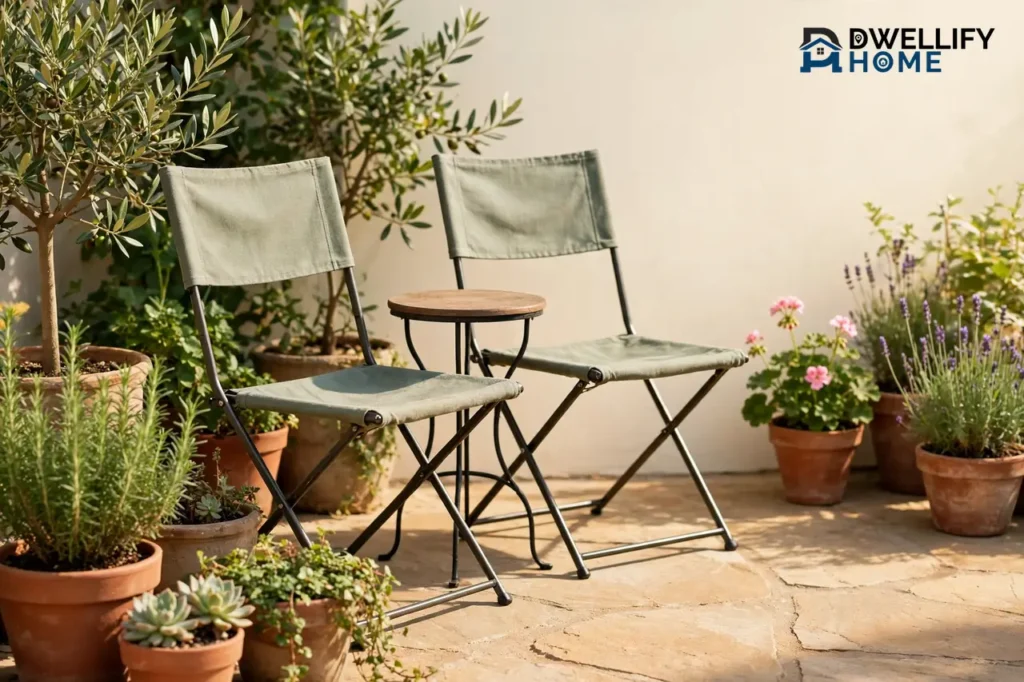
Powder-coated aluminum wins on value and rust-proofing. Aluminum never rusts the way steel or iron does, the powder coat adds color and a protective layer against moisture and UV, and the pieces stay light enough to move for cleaning or storms. The trade-offs are wind and dents: light pieces can tip or blow around in strong wind, and thin-walled tubing dents when knocked hard. Cast aluminum is heavier and more dent-resistant than thin tubular aluminum if you want a sturdier feel.
Teak, HDPE, and aluminum are the only three that beat every kind of weather. Everything else trades one weakness for another.
Resin wicker: the one to check twice
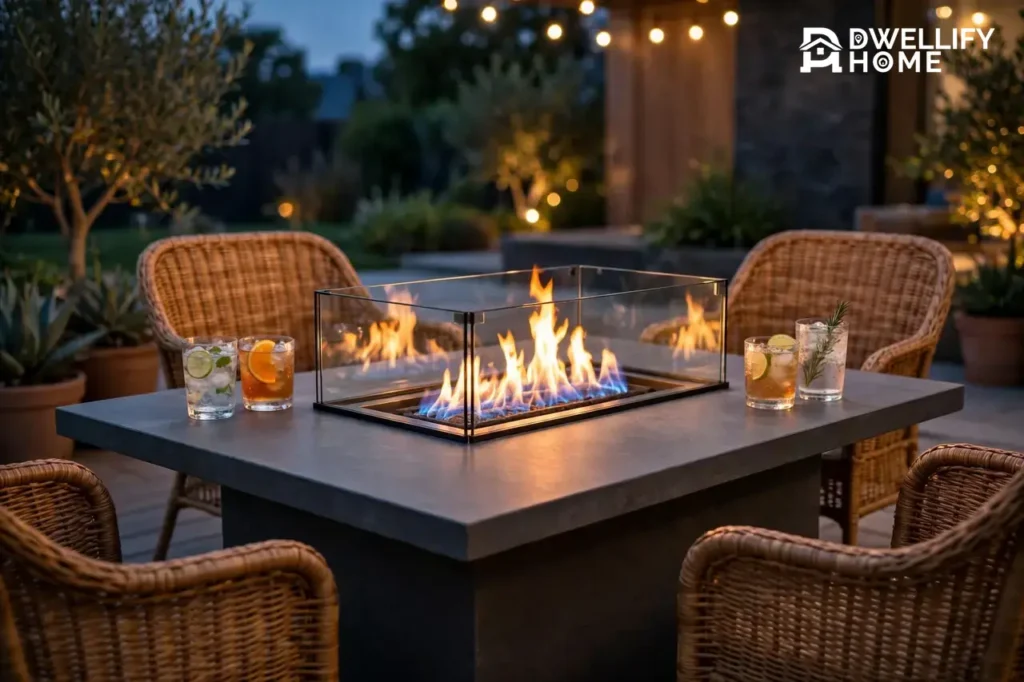
Resin wicker is the material most buyers get wrong, because the weave looks the same whether it is good HDPE or cheap PVC. Good HDPE wicker has UV inhibitors mixed into the plastic itself, not just sprayed on the surface, so it resists fading for years. Cheap PVC-based weaves can turn brittle and faded within a few summers. Always ask what the frame underneath is: resin wicker woven over a powder-coated aluminum frame lasts, while wicker over bare steel rusts from the inside out. A resin wicker set lasts 10 to 15 years when the weave and the frame are both right.
Iron and sling fabric: specialists, not all-rounders
Cast and wrought iron are the most stable furniture in wind, because their weight keeps them planted on an open patio. The price is rust: iron depends entirely on its powder coat or paint, and once a scratch exposes bare iron, rust starts fast in a humid climate and creeps under the coating until it bubbles and flakes. Inspect iron each spring, sand any rust spots, treat them with a rust-converting primer, and repaint with an outdoor-rated metal paint.
Sling and mesh fabric seats drain rain in minutes, so they resist mold better than any cushioned seat. The fabric is the weak point: even good solution-dyed acrylic fades and stiffens over years of sun, and the frame usually outlasts the sling. Check before you buy whether the sling can be replaced without buying a new frame, because many good chairs are designed for exactly that.
What Most People Get Wrong About “All-Weather” Furniture
Most people get weather resistant furniture wrong in the same three ways: they believe “all-weather” means leave-it-out-forever, they believe a heavy piece is automatically a durable piece, and they believe the cushions are a side issue. All three beliefs cost money, and the first one is the most expensive.
The “leave it out forever” myth is the big one. Even the toughest frame lasts longer when it is not sitting in snow and ice for months, and cushions should always come inside for winter. Covering or storing cushions extends furniture life more than anything else, because cushions are almost always the first thing to fail outdoors: foam holds water, fabric fades, and mildew can set in within days if a wet cushion stays closed up. Our how to store outdoor furniture guide covers the full winter routine, and our replacement cushions for patio furniture guide shows how to pick quick-dry foam and solution-dyed fabric when the originals give out.
The weight myth runs the other way. A heavy piece can still fail fast if its frame is bare steel under a pretty weave, or if its joints trap water. Check the underside of any chair or table before buying: exposed raw metal, unfinished wood, or seams where water can pool are usually the first spots to fail, no matter how nice the top surface looks. Weight helps in wind, but it says nothing about rot or rust.
The cushion myth is the quiet killer. Buyers compare frames and forget the part they actually sit on. Look for solution-dyed outdoor fabric and quick-dry, open-cell outdoor foam rather than standard indoor foam, which can hold water for days and start smelling musty. After rain, stand cushions on edge so water runs off instead of pooling in the center, where mildew starts.
Cushions fail first, frames fail second. Protect the cushions and the frame lasts twice as long.
How Much Does Weather Resistant Outdoor Furniture Cost?
Weather resistant outdoor furniture costs roughly $150 to $1,500 per piece depending on the material, with most good chairs landing between $150 and $400 and most dining sets between $800 and $2,500. Teak costs the most up front and the least over twenty years, HDPE sits in the middle with zero upkeep cost, and powder-coated aluminum costs the least up front.
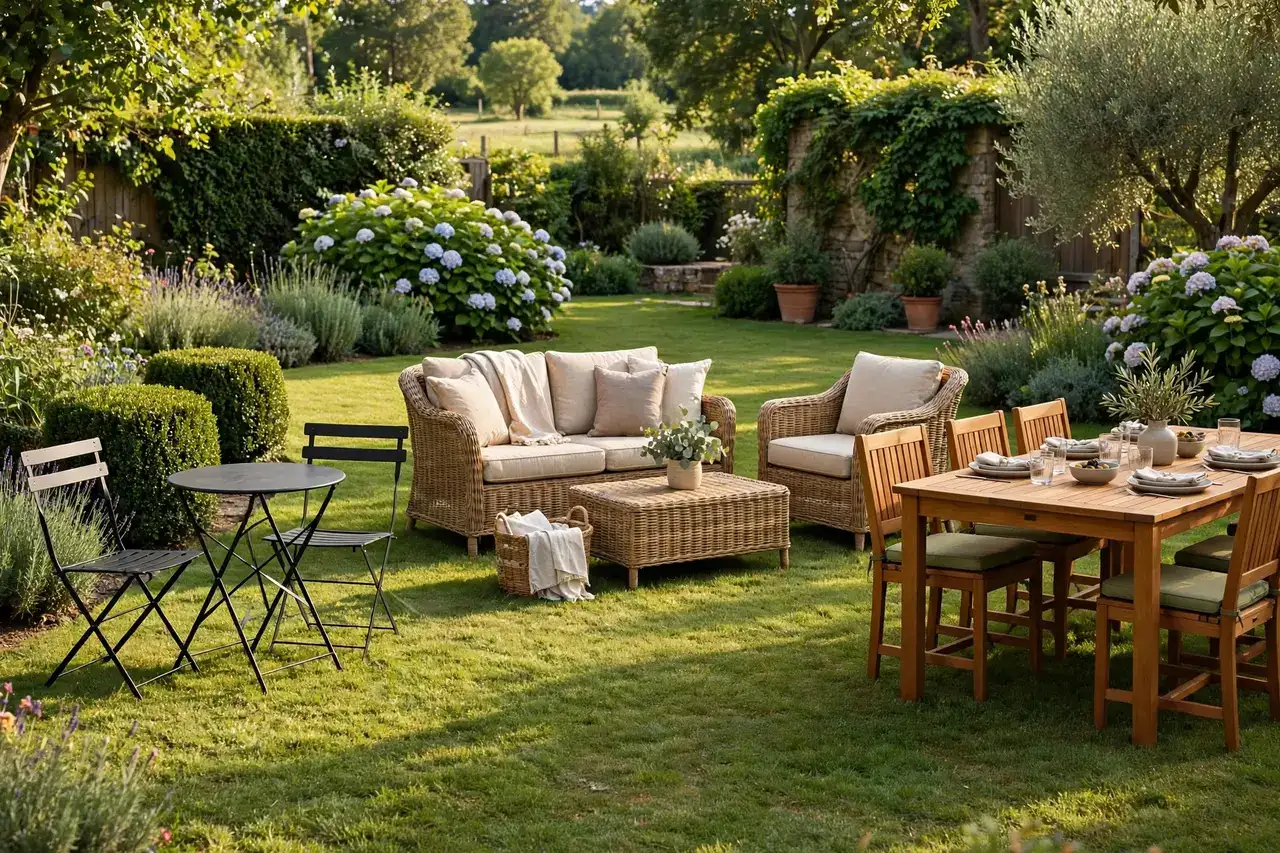
Real prices show the spread. A teak bench runs $600 to $1,500 and more, while a Polywood bench in the same size lists at $409 to $1,129 at Birch Lane, both checked November 16, 2026. The gap between a $150 resin wicker chair and a $400 HDPE chair is usually the frame and the weave: the cheap one hides bare steel under PVC weave, and the expensive one hides powder-coated aluminum under UV-stabilized HDPE. Homary’s 2026 guide makes the same point in its price bands: HDPE lumber and cast aluminum sit in the mid-to-high range, Grade A teak at the top, and all-weather resin wicker spans the widest range because quality varies so much. Read the full material-by-material price and lifespan comparison at Homary’s 2026 weather-resistant material guide.
Three things push the price up beyond the material. Size adds cost fast, because a six-seat dining set uses far more lumber or metal than a two-seat bistro set. Joinery and hardware add cost too: stainless steel fasteners and welded joints outlast screws and rivets through freeze-thaw winters. And a good finish adds cost: a thick powder coat, UV stabilizers mixed into the plastic, and solution-dyed fabric all cost more to make and last far longer.
Do not judge a set by its sticker price alone. A $250 aluminum chair that needs a new sling every five years and a $400 HDPE chair that needs nothing for twenty years cost about the same over a decade, and then the HDPE chair keeps going. Compare the ten-year total, not the tag: purchase price plus oil, sealer, slings, cushions, and the replacement you buy when the cheap set gives out.
Compare the ten-year total, not the tag. Oil, slings, cushions, and a replacement set all count.
How to Pick the Right Material for Your Climate
Pick the material by your climate, not by the showroom. In hot, sunny climates, choose UV-stabilized HDPE resin wicker or powder-coated aluminum. In humid or rainy regions, choose materials that do not absorb water, like resin, aluminum, and teak. In windy spots, choose heavier iron or cast aluminum.
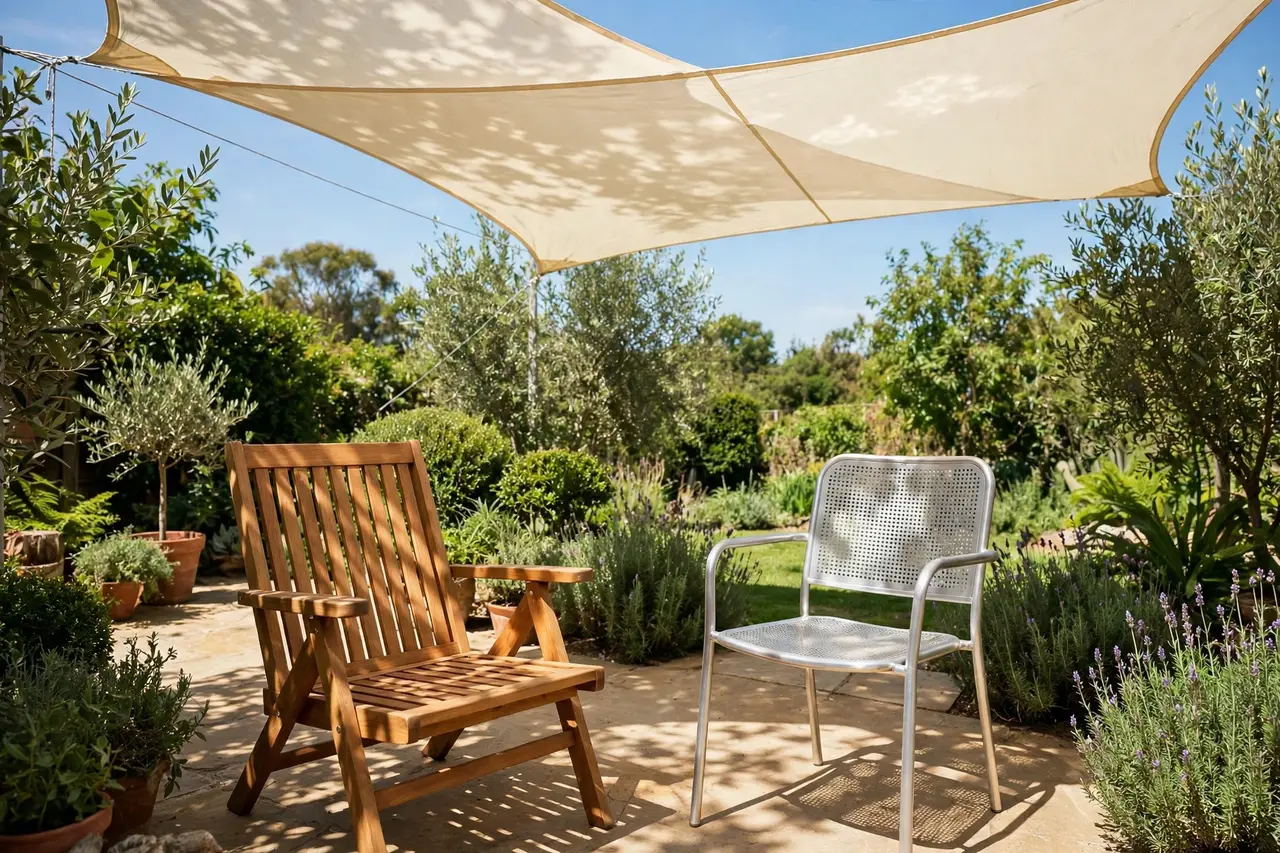
Hot and dry yards punish plastic and fabric first. Intense sun breaks down cheap resin and fades printed fabric, so HDPE lumber and teak are the best picks: HDPE will not fade or absorb heat the way metal does, and teak’s natural oils stop it cracking and drying out under UV. Dark metal and dark HDPE run hot to the touch by mid-afternoon, so lighter colors earn their keep in full sun.
Humid and rainy yards punish wood and iron first. Rain that never fully dries drives rot in softwoods and rust in iron, and morning dew is worse than rain because it sits in joints all day. Teak, HDPE, and powder-coated aluminum all shrug off damp, but check the joints: water that sits in a joint for days causes swelling, splitting, or rot even in a rot-resistant wood. A cover helps, and our balcony cover ideas guide covers breathable covers that keep rain off without trapping damp underneath.
Windy and coastal yards punish light furniture first. Salt air corrodes bare steel and cheap hardware fast, so powder-coated aluminum, teak, and HDPE wicker are the coastal picks, and heavy cast aluminum or iron anchors an exposed patio that catches the wind. If your patio sits open to the weather, our outdoor awnings for patio guide and our pergola shade ideas guide show how overhead cover cuts both sun and wind damage.
Cold yards with real winters punish everything that holds water. Freeze-thaw is the killer: water sits in small cracks, freezes, expands, and pries them wider all winter. Plan on storing or covering furniture rather than relying on the material alone, and bring cushions inside no matter what the frame is made of. A deck box or a covered store keeps the set dry, and our outdoor storage bin guide shows bins that hold cushions and covers through winter.
Your climate picks the material. The showroom picks the color.
How to Make Outdoor Furniture Last Longer
Make outdoor furniture last longer with a 30-minute routine each season: wash it with mild soapy water, rinse, let it dry fully, then oil wood, touch up chipped metal, and store the cushions. Teak needs an oil or sealer coat if you want to hold the honey color, HDPE needs only a wash, and aluminum needs a chip check.
Start each season by washing every piece with mild soapy water and a soft brush, then rinse and let it dry fully. For resin wicker, rinse with a hose every few weeks to clear dust and pollen, and never pressure-wash close up: the jet forces water into the weave and frame joints. For wood, use a two-step cleaner and brightener if the gray bothers you, then oil while the wood is still slightly damp from the rinse.
Fix small damage the season you find it. Touch up chipped powder coating with matching outdoor-rated paint before the bare metal underneath turns chalky or rusts. Tighten bolts and check the joints once a year, because the frame almost always fails before the material does. For iron, sand rust spots early, treat them with a rust-converting primer, and repaint: doing this early is far easier than refinishing a fully rusted frame later.
Winter care is where sets live or die. Clean everything first, then cover it with something breathable or tuck it under shelter. A plastic tarp traps condensation underneath and grows mold exactly where you cannot see it. If you have the space, a garage shelf from November to March doubles the life of a set in cold climates. And here is the frame-underneath trap from the intro: a resin wicker chair over a bare steel frame rusts from the inside out, and no cover or oil can save it, so check the frame material before you buy, not after the first winter.
One afternoon a season beats a new set every three years. Wash, dry, touch up, and store the cushions.
Related Guides
If you are planning the whole outdoor space, these guides pick up where this one leaves off:
- How to Store Outdoor Furniture — keep it clean, dry, and ready for spring.
- Replacement Cushions for Patio Furniture — get the fit, fabric, and price right the first time.
- Outdoor Bench With Storage — sit down, stash the clutter, and reclaim your patio.
- Outdoor Sectional Couch — deep seating for the lounge corner.
- Outdoor Storage Bin — a dry home for cushions and covers.
- Balcony Cover Ideas — stay dry and cool on a small balcony.
- Outdoor Awnings for Patio — shade that cuts sun damage too.
- Pergola Shade Ideas — structure, shade, and shelter in one build.
Frequently Asked Questions
What is the most weather-resistant outdoor furniture material?
HDPE resin wicker and powder-coated aluminum are generally the most weather-resistant options because neither absorbs water nor rusts. Teak is close behind among woods, since its natural oils resist rot even without regular sealing.
Does teak furniture need to be covered in winter?
Teak does not need a cover to survive winter, but covering it reduces staining and slows graying. If you want to preserve the original color, a cover plus a yearly oil or sealer treatment makes a bigger difference than the cover alone.
Will resin wicker furniture fade in the sun?
Lower-quality resin wicker without UV stabilizers can fade noticeably within a few summers. HDPE with UV inhibitors mixed into the plastic resists fading much longer, so confirm that detail before buying.
Is aluminum or wrought iron better for outdoor furniture?
Aluminum does not rust and is much easier to move, while wrought iron is heavier and more stable in wind but depends on its finish to avoid rust. Choose aluminum for low maintenance and iron for stability in an exposed, windy spot.
Should I bring outdoor furniture inside for winter?
You do not have to, but storing furniture in a garage or shed, or at least covering it, extends its life regardless of material. Months of snow and ice are harder on finishes and fabric than a single rainstorm, and cushions should always come inside.
Disclaimer: This guide gives general advice for choosing and caring for outdoor furniture, not professional woodworking, structural, or engineering instructions. Check weight limits before seating several people on one piece, and hire a qualified pro for any structural repair or custom build.
Pick the material for your weather first and the look second. Teak if you want to buy once and forget it, HDPE if you want zero maintenance, aluminum if you want the best value that never rusts. Check the frame underneath the pretty surface, protect the cushions, and give the set one afternoon of care each season. Do that, and the furniture you buy this year is still the best seat in the garden twenty years from now.