An outdoor bar cart is a rolling serving station built from weather-resistant materials, and the best ones cost $100 to $250, hold 150 pounds or more, and roll on locking wheels that keep the cart still on a sloped patio. Resin carts never rust, teak carts never need paint, and powder-coated metal carts split the difference on price. This guide compares the materials, shows real checked prices, and helps you pick a cart that survives rain, rolls straight, and still looks good after three summers.
One feature on the list below decides whether your cart ends up in the garage by August, and it is not the size or the style. It is the wheels, and most buyers check them last. The wheel section sits in the middle of this guide, and the cart that wins there is not the prettiest one on the page. Before that, you need to know what an outdoor bar cart actually is, because half the carts sold under the name belong indoors.
What Is an Outdoor Bar Cart?
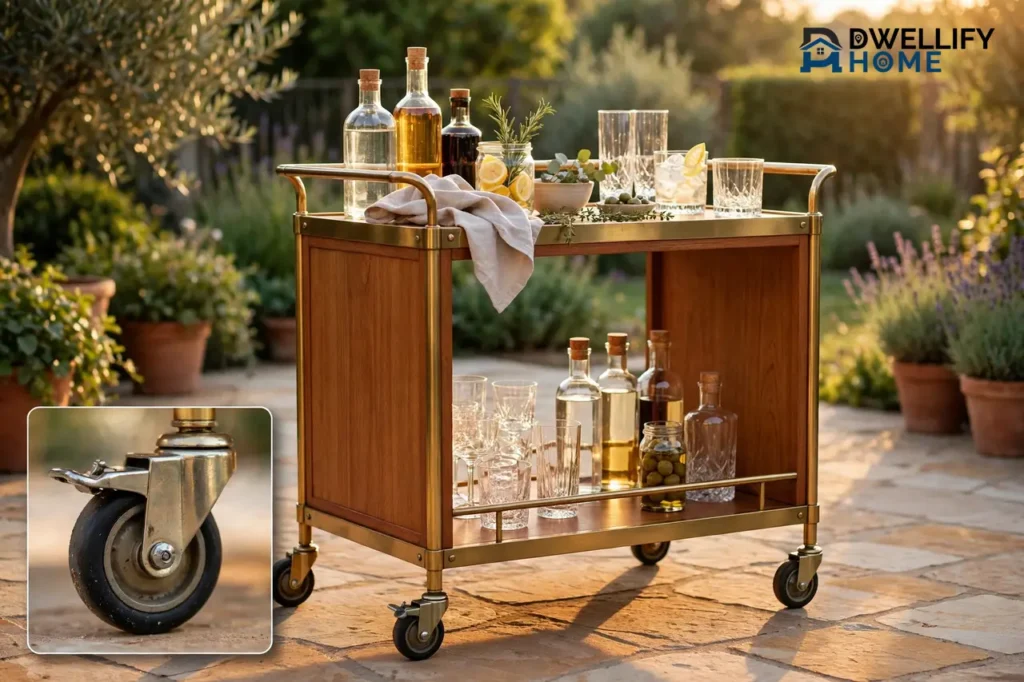
An outdoor bar cart is a mobile serving station designed for patios, decks, gardens, and balconies, built with weather-resistant materials so it can serve drinks and snacks outside and roll where the party moves. A real outdoor cart has locking wheels, a top that sheds rain, and storage for bottles, glasses, and bar tools.
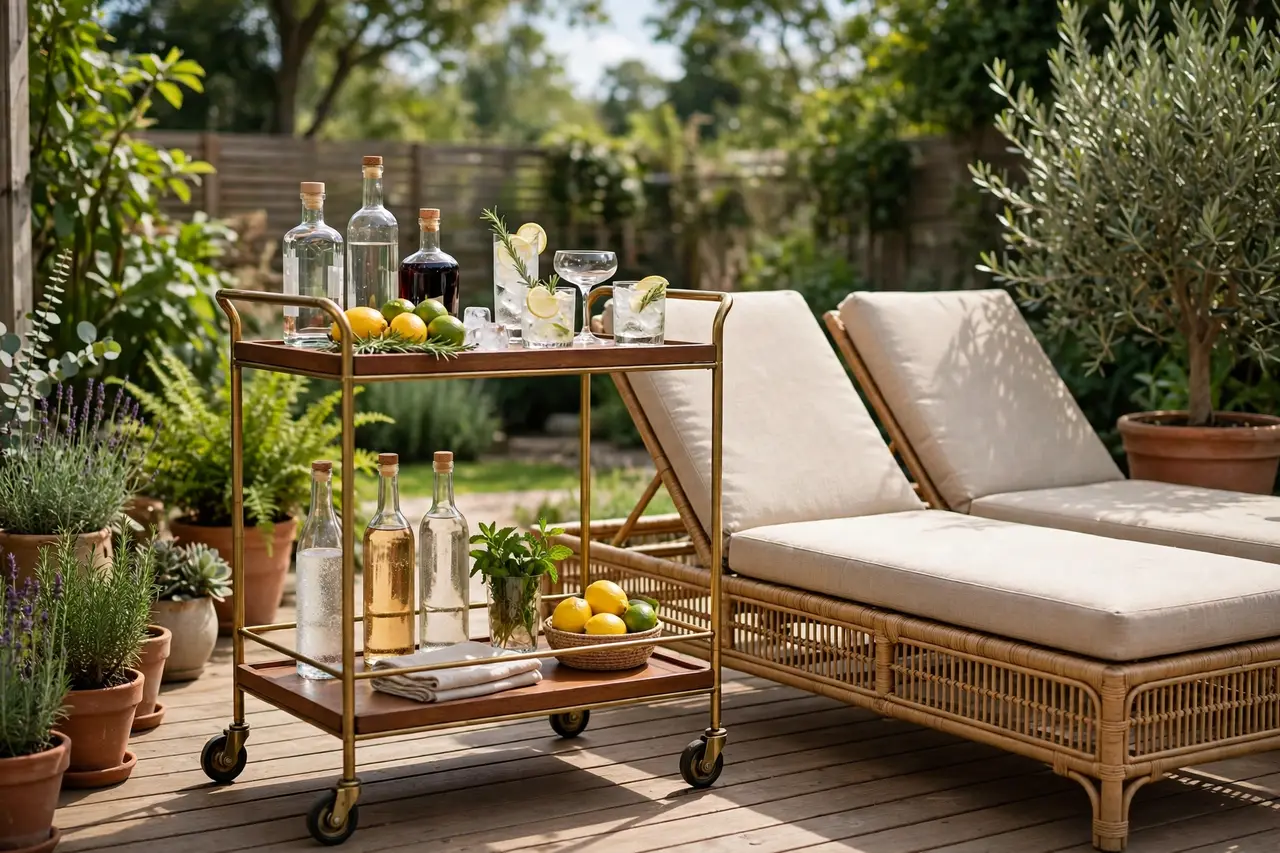
Indoor bar carts and outdoor bar carts look alike in a photo and fail differently in real life. An indoor cart uses chrome, untreated wood, and small hard wheels that rust, swell, and seize after one wet season. An outdoor cart uses resin, teak, powder-coated aluminum, or stainless steel, with wheels built for pavers, grass, and deck boards. BestReviews.guide’s 2026 buying guide puts the choice plainly: metal carts made from stainless steel or aluminum are durable and weather-resistant, wooden carts offer a classic look but need more maintenance, and wicker carts need weather-resistant finishes. Read the full buying guide at BestReviews.guide’s outdoor bar cart buying guide.
A good cart earns its place in three jobs at once. It serves drinks at the table, so nobody walks to the kitchen mid-conversation. It stores bottles, glasses, and tools between parties, so the patio stays tidy. And it moves, so the bar follows the shade in the afternoon and the fire pit at night. A cart that cannot do all three is a side table with wheels, not a bar cart.
A real outdoor cart rolls, locks, and survives rain. If it cannot do all three, it belongs indoors.
Which Material Should Your Outdoor Bar Cart Be?
Resin is the best material for most outdoor bar carts, because it never rusts, never rots, and never needs sealing, while teak is the best-looking material and powder-coated metal is the best value. The right choice depends on whether your cart lives outside all year or comes in after every party.
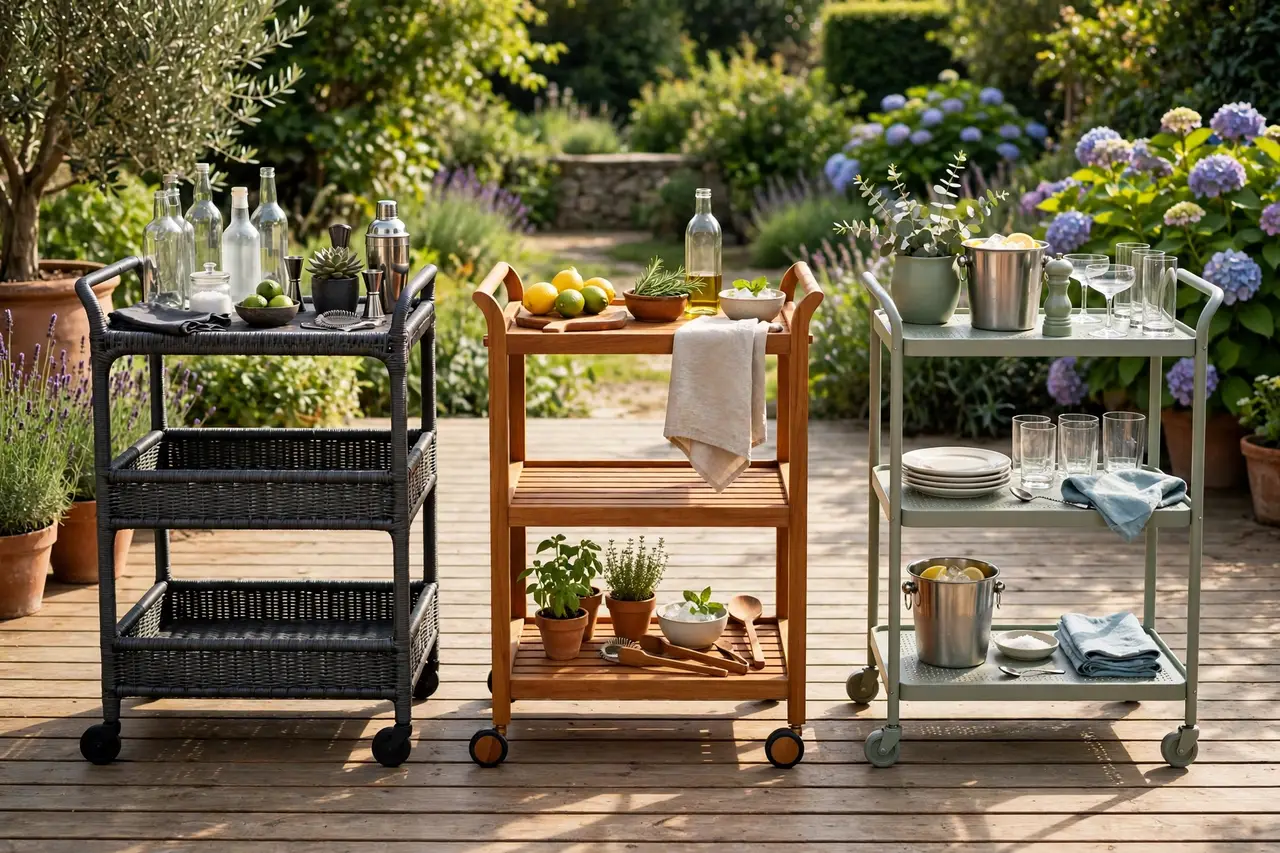
Resin carts win on durability. The Keter Unity XL, the best-known resin cart, uses weather-resistant resin with a wood-look finish, a stainless-steel top, and a 78-gallon hidden storage cabinet, and it lists at $259.99 at Target, checked November 16, 2026. Resin shrugs off rain, sun, and temperature swings with no maintenance at all. The trade-off is feel: resin never feels as premium as wood or metal, and a big resin cart can look like a storage box with a drinks tray on top.
Teak carts win on looks and longevity. Teak’s natural oils resist rot and insects with no finish, and a teak cart weathers to a silver-gray that most owners love. The Transformer Outdoor Bar Cart pairs teak wood with a corrosion-resistant aluminum frame, carries a 10-year warranty, and lists at $829, checked November 16, 2026. See the full spec sheet at Transformer Table’s outdoor bar cart with storage. The trade-off is price: teak carts cost three to four times a resin cart, and the wood still wants a wash and a sealer coat each spring if you want to hold the honey color.
Powder-coated metal wins on value. A Sunnydaze Decor metal bar cart runs $100 to $150, with a rust-resistant powder-coated frame, a two-tier design, and a removable wine rack. Steel carts are sturdy and stylish, but the powder coat is the whole defense: one deep chip exposes bare steel, and rust starts fast in a humid climate. Aluminum carts cost a little more and never rust, which makes them the smarter metal pick for a cart that lives outside.
Resin for zero care, teak for a lifetime, metal for the budget. Pick the material by how much care you will actually give it.
Wicker and glass: the pretty traps
All-weather wicker carts look wonderful on a covered patio and suffer on an open one. The weave itself is fine when it is HDPE, but the frame underneath decides everything: wicker over powder-coated aluminum lasts, while wicker over bare steel rusts from the inside. Glass shelves look elegant and show every water spot, fingerprint, and pollen grain, and a glass top in full sun turns the cart into a heat trap for bottles. If you love the look, keep a wicker or glass cart under cover and bring it in for winter.
How Much Does an Outdoor Bar Cart Cost?
Outdoor bar carts cost $80 to $1,880 depending on the material and the features, with most good carts landing between $100 and $300. Budget metal carts run $80 to $120, mid-range resin and metal carts $100 to $250, teak carts $300 to $900, and designer carts $1,100 and more.
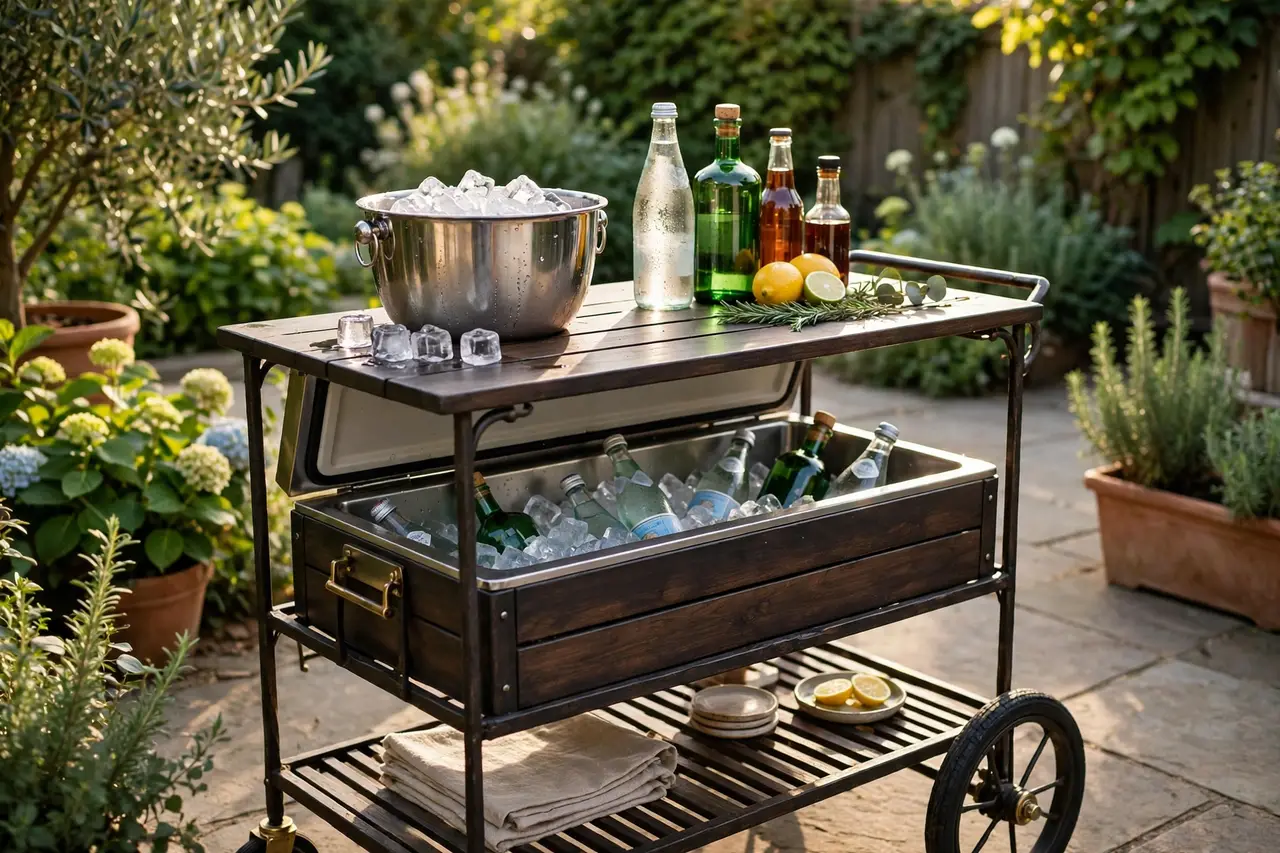
Real prices show the spread, all checked November 16, 2026. A Giantex wrought-iron cart with three tiers and a built-in bottle opener lists at $80 to $120. A Sunnydaze Decor metal cart lists at $100 to $150. The Keter Unity XL lists at $259.99 at Target, and price trackers show it at $237 on Amazon with a low of $99. The Transformer teak bar cart lists at $829. At the top end, a Cane-line Roll aluminum and teak trolley lists at $1,880, and a freestanding aluminum wicker bar table lists at $1,119.17 at Best Buy. The average sits near $180, and 55 percent of buyers spend $100 to $250, which is exactly where the best value lives.
Three things push the price up beyond the material. A built-in cooler or ice bucket adds $50 to $100 and saves a separate cooler on party day. Storage adds cost too: drawers, wine racks, stemware holders, and a 78-gallon cabinet all add parts and assembly. And wheels add cost when they are good ones: large rubber wheels with locks cost more than small plastic casters, and they are worth every dollar on grass and gravel.
Do not judge a cart by its sticker price alone. A $90 cart with small plastic wheels that seize in year two costs more than a $200 cart with locking rubber wheels that rolls for a decade, because the cheap cart gets replaced and the good one does not. Compare the three-year total, not the tag: purchase price plus the cooler, the replacement wheels, and the new cart you buy when the first one rusts through.
Compare the three-year total, not the tag. Wheels, cooler, and a replacement cart all count.
What Most People Get Wrong About Outdoor Bar Carts
Most people get outdoor bar carts wrong in the same three ways: they buy for the look and check the wheels last, they assume any cart can live outside all year, and they overload the top shelf. All three mistakes show up by the second summer, and the first one is the most common.
The wheel mistake is the big one. Small hard casters roll fine on a showroom floor and sink, seize, or snap on grass, gravel, and uneven pavers. About a quarter of negative reviews for outdoor bar carts cite poor wheel quality as the main issue, and the fix is simple: buy large rubber wheels, at least two of them locking, and test the roll on your own patio surface before the first party. A cart that cannot roll to the shade is a cart that stays in the garage.
The leave-it-out myth runs the other way. A resin cart can stay outside all year, but a steel cart with a chipped coat cannot, and a teak cart left under a sprinkler line will gray unevenly and check at the joints. Even the toughest cart lasts longer under a cover or in a shed for winter. Our how to store outdoor furniture guide covers the full winter routine, and our outdoor storage bin guide shows bins that hold bottles, glasses, and bar tools through the cold months.
The overload mistake is the quiet killer. A cart rated for 150 pounds sounds generous until you load it with a full ice bucket, twelve bottles, a stack of glasses, and a tray of food. The Keter Extendable cart supports up to 150 pounds, and that number covers the whole cart, not one shelf. Load the heavy bottles low, keep the top for glasses and garnish, and never push a loaded cart across a lawn by one corner: the frame twists, the wheels splay, and the cart never rolls straight again.
Wheels first, looks second, weight low. A cart that rolls straight and holds its load is a cart you actually use.
How to Choose an Outdoor Bar Cart for Your Space
Choose an outdoor bar cart by measuring your space first, then matching the size, the storage, and the wheels to how you entertain. A small balcony needs a narrow cart under 20 inches deep, a big patio earns a wide cart with a cooler, and a lawn party needs large wheels more than it needs a third shelf.
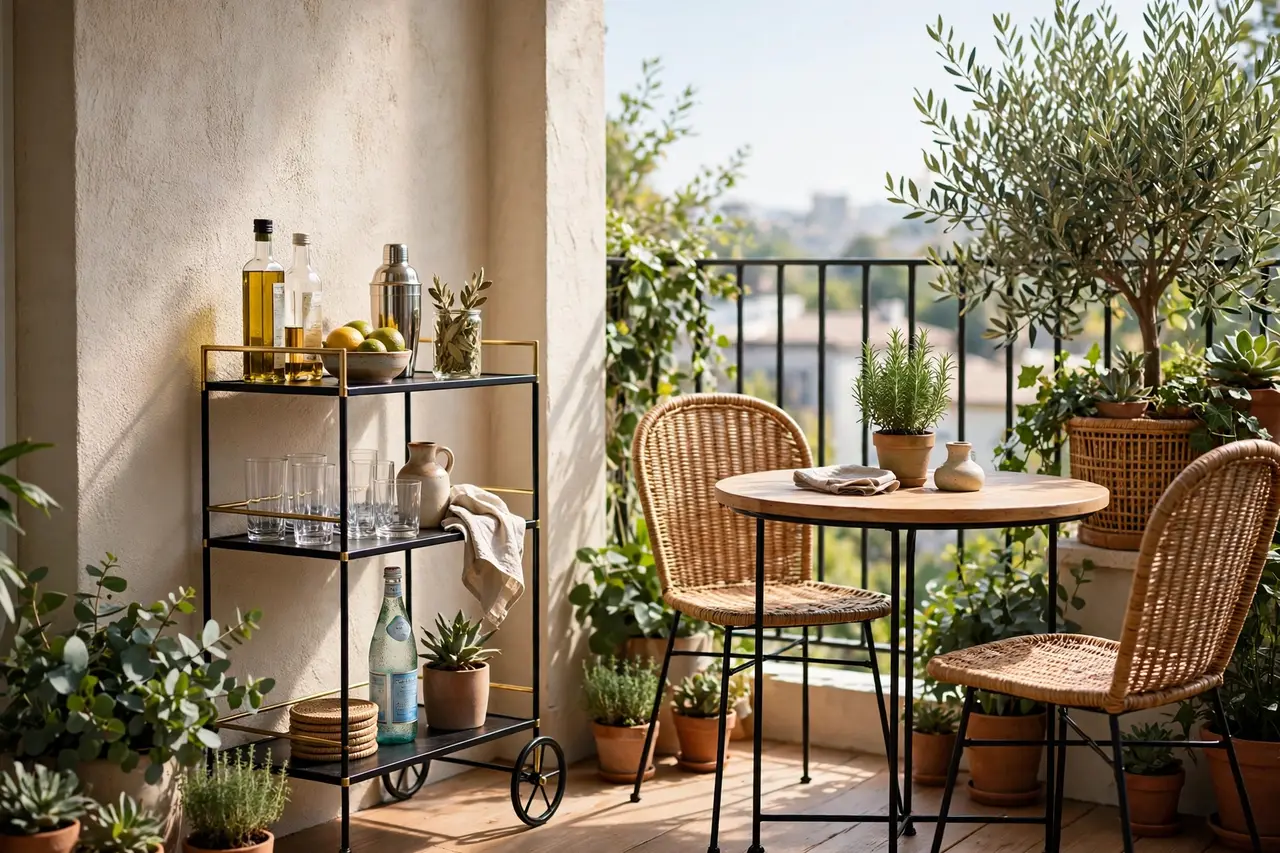
Measure the spot before you shop. A cart needs its own footprint plus room to roll: about 36 inches of clear path to move it, and a parking spot near the seating where it does not block the walkway. On a small patio, a slim cart under 20 inches deep tucks against the wall between parties, and our outdoor furniture for small spaces guide shows seven layouts where a rolling cart earns its footprint. On a wide deck, a 53-inch cart like the Keter Unity XL doubles as a prep station beside the grill.
Match the storage to what you actually serve. Wine drinkers need a rack that holds bottles on their side and a stemware rail that keeps glasses from sliding. Cocktail makers need a flat top for shaking, a drawer for tools, and a towel bar for the inevitable spill. Beer and soda hosts need a cooler or an ice bucket more than they need a third shelf. Buy the cart for the drinks you serve every weekend, not the ones you serve once a year.
Check the wheels on your own surface. Roll the cart across your pavers, your deck boards, and your grass before the first party, and lock the wheels on a slope to make sure they hold. Two locking wheels are the minimum; four locking wheels are better on a sloped patio. If the cart wobbles empty, it will tip loaded, so check the frame for cross-bracing and push it sideways: a cart that flexes in the store will rack and squeak after one season outside.
Measure the path, not just the parking spot. A cart that cannot roll to the party is furniture, not a bar cart.
How to Care for an Outdoor Bar Cart
Care for an outdoor bar cart with a ten-minute routine after every party and a thirty-minute routine each season: wipe the top, empty the cooler, dry the wheels, and tighten the hardware. Resin needs only a wash, teak needs a spring sealer coat, and metal needs a chip check.
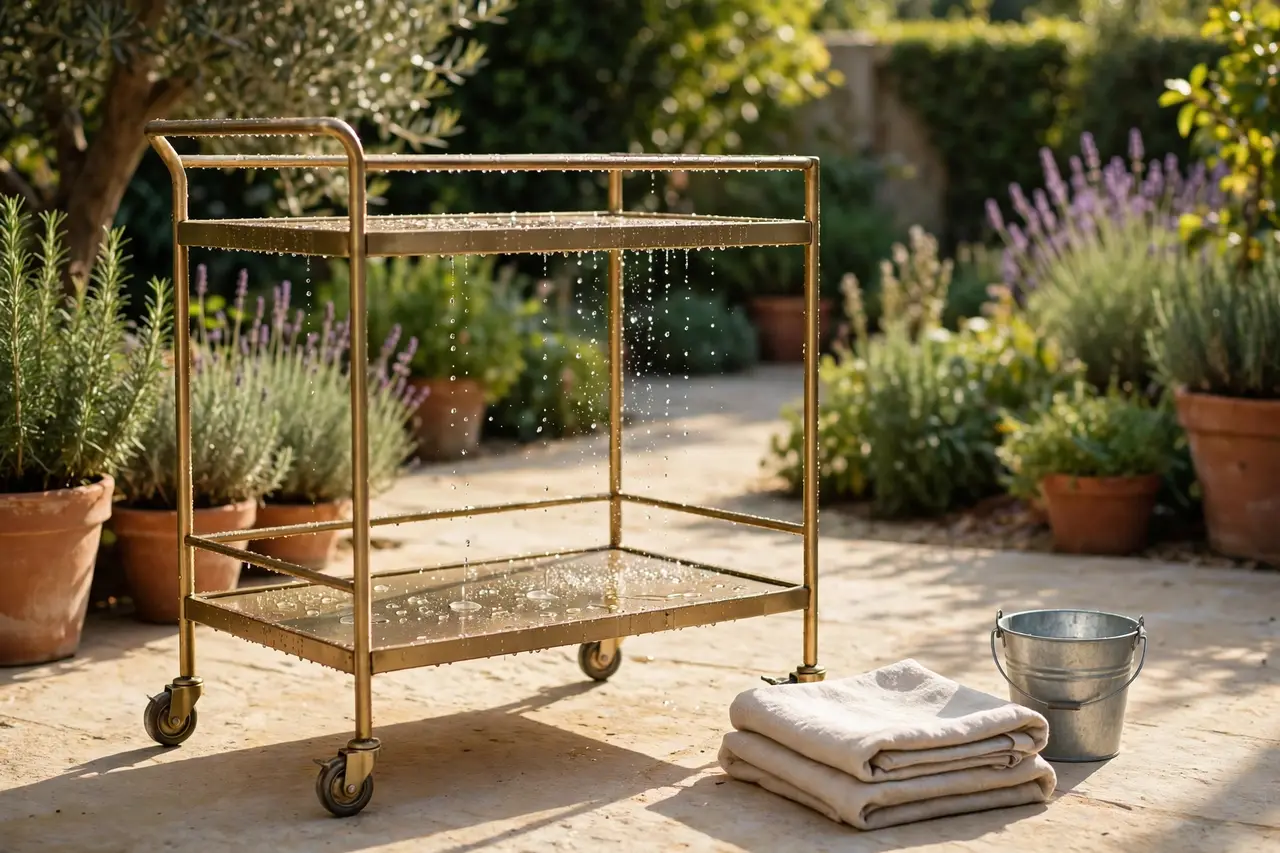
After every party, empty the cooler or ice bucket and wipe it dry, because standing water breeds mold and smells by the next weekend. Wipe the top with mild soapy water, rinse the wheels to clear grit, and dry the glass racks so they do not spot. Store bottles and glasses inside rather than leaving them on the cart, because sun heats the glass and rain fills the bottles.
Each season, wash the whole cart with mild soapy water and a soft brush, then rinse and let it dry fully. Check every bolt and wheel: tighten what is loose, oil the wheel axles with a drop of outdoor lubricant, and replace any wheel that wobbles or sticks. For metal carts, touch up chipped powder coating with matching outdoor-rated paint before rust starts. For teak carts, wash, dry, and apply one thin sealer coat in spring if you want to hold the honey color, or let it gray naturally.
Winter care decides whether the cart survives to next summer. A resin cart can stay outside under a breathable cover, but a metal or wicker cart should come into a shed or garage for the cold months. Never cover a cart with a plastic tarp: it traps condensation underneath and grows mold on the shelves. If you have no indoor space, our balcony cover ideas guide covers breathable covers that keep rain off without trapping damp underneath, and our outdoor awnings for patio guide shows how overhead cover cuts both sun and rain damage.
Ten minutes after the party beats an hour of repairs in spring. Dry the cooler, wipe the top, and check the wheels.
Related Guides
If you are planning the whole outdoor space, these guides pick up where this one leaves off:
- Patio Dining Set — size a table to your cart so everyone fits.
- Outdoor Furniture for Small Spaces — seven layouts that make a tiny patio feel big.
- How to Store Outdoor Furniture — keep it clean, dry, and ready for spring.
- Outdoor Storage Bin — a dry home for bottles, glasses, and bar tools.
- Patio String Lights Ideas — light the bar corner after dark.
- Outdoor Sectional Couch — deep seating for the lounge corner beside your cart.
- Balcony Cover Ideas — stay dry and cool on a small balcony.
- Electric Patio Heater — keep the party going after sunset.
Frequently Asked Questions
What are the best outdoor bar carts available?
Some of the top-rated outdoor bar carts include the Suncast Outdoor Bar Cart, Keter Outdoor Cooler, and Crosley Furniture Outdoor Bar Cart. These models are popular for their durability, design, and added features such as built-in coolers and storage spaces.
What materials are best for outdoor bar carts?
The best materials for outdoor bar carts are typically weather-resistant and durable, such as teak wood, stainless steel, aluminum, and all-weather wicker. These materials can withstand various weather conditions and require minimal maintenance.
What features should I look for in an outdoor bar cart?
Look for features such as ample storage space, built-in coolers, wheels for mobility, weather-resistant materials, and easy assembly. Additional accessories like bottle holders, towel racks, and glassware storage can also enhance functionality.
How much do outdoor bar carts cost?
The price of outdoor bar carts can vary significantly depending on the brand, materials, and features. Generally, prices range from $100 to $500, with high-end models with more features and durable materials costing towards the higher end.
How can I style my outdoor bar cart?
To style your outdoor bar cart, consider using decorative trays, colorful glassware, and potted plants. Add a stylish ice bucket, drink dispensers, and cocktail shakers. Personal touches like LED string lights and themed decorations can also enhance the overall aesthetic.
Disclaimer: This guide gives general advice for choosing and caring for outdoor furniture, not professional woodworking, structural, or engineering instructions. Check weight limits before loading a cart, keep glass away from pool edges, and hire a qualified pro for any structural repair.
Buy the wheels first and the look second. Resin if you want zero care, teak if you want a cart for life, powder-coated metal if you want the best value. Measure your path, load the heavy bottles low, and give the cart ten minutes after every party. Do that, and the cart you buy this year is still rolling drinks to the table three summers from now.