An outdoor hammock with a stand is the best backyard hammock for most homes, because a complete hammock-and-stand set costs $68 to $160, needs only a level spot 9 to 13 feet long, and holds 450 pounds with no trees at all. A stand set goes up in about 10 minutes with no tools, moves to follow the shade, and comes apart for winter storage. This guide compares stand sets, tree-hung hammocks, and chairs, shows real checked prices, and helps you pick the setup that fits your yard.
One number on the list below decides whether your hammock holds two people or dumps them on the lawn, and it is not the number printed biggest on the box. It is the lower of the two weight ratings — the hammock’s and the stand’s — and the capacity section in the middle of this guide shows exactly how to read it. Before that, you need to know which kind of hammock actually suits a backyard, because the camping guides at the top of the search results answer a different question than the one you asked.
What Is an Outdoor Hammock?
An outdoor hammock is a fabric or rope bed hung between two anchor points or on a freestanding stand, made for relaxing, napping, and reading outside. A backyard hammock uses a stand or two sturdy trees, while a camping hammock uses trees or posts and packs down small for the trail.
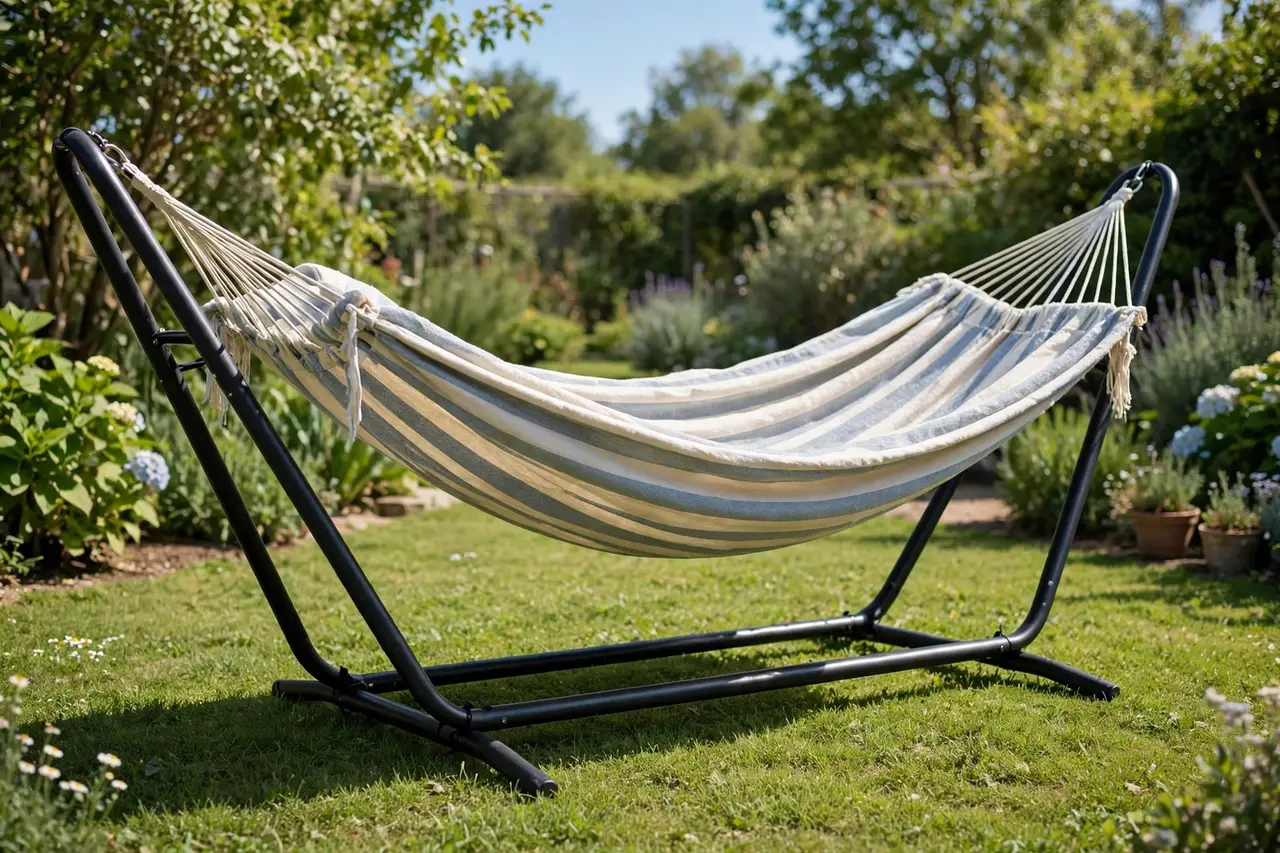
The search results for this keyword are full of camping advice, and camping advice answers the wrong question for a backyard. The strongest ranking article, The Inertia, is camping- and beach-focused, and the other two articles are a weak general guide and a low-DR affiliate roundup. A backyard hammock lives in one place all season, so weight does not matter, weather resistance does, and a stand matters more than pack size. WikiHome’s 2026 backyard guide makes the same point: freestanding hammocks with stands need a level spot about 9 to 13 feet long, and tree-hung hammocks need two trees or posts roughly 12 to 15 feet apart. Read the full backyard guide at WikiHome’s best backyard hammocks guide.
Three kinds of hammock suit a backyard. A gathered-end Brazilian hammock wraps around you like a cocoon, feels the most stable, and suits napping. A spreader-bar hammock lies flatter and more open, feels airier, and is easier to get in and out of, but it can tip if you sit on the edge. A quilted hammock adds padding and feels closer to a bed, which suits long reads and bad backs. A hammock chair hangs from one point and suits a small balcony or a single shady beam, but it seats one person only.
A backyard hammock is a stand set, not a camping kit. Buy for your yard, not for the trail.
Do You Need a Stand, Trees, or a Post?
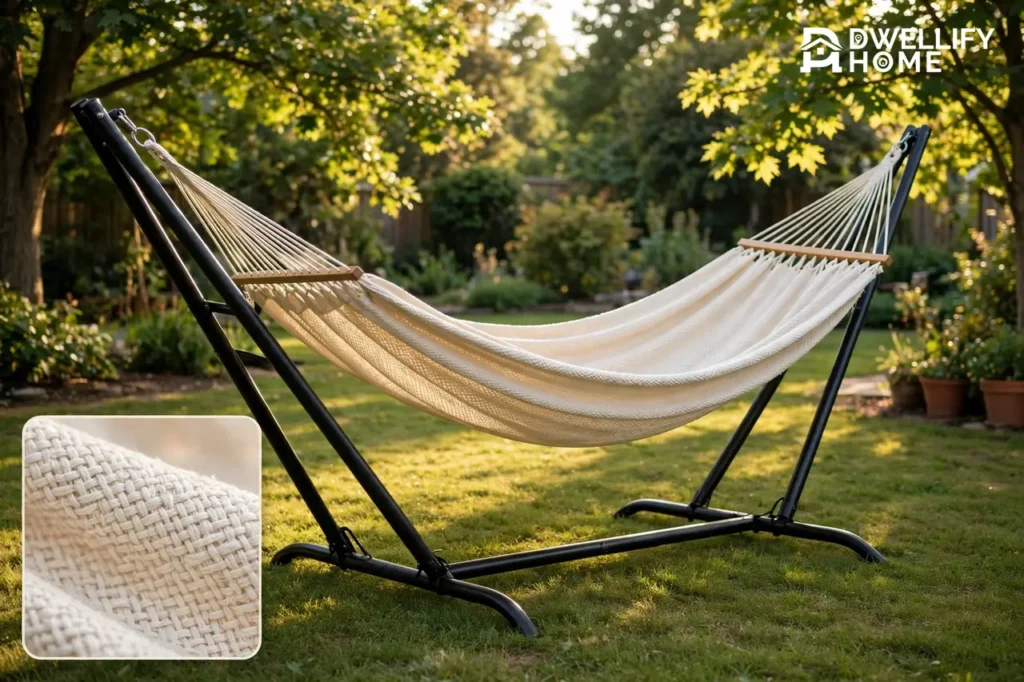
You need a stand if your yard has no two healthy trees 12 to 15 feet apart, and a stand is the best choice for most backyards because it needs only a level spot 9 to 13 feet long, goes up in about 10 minutes with no tools, and moves to follow the shade. Trees work when they are healthy and far enough apart, and posts work when you want a permanent spot.
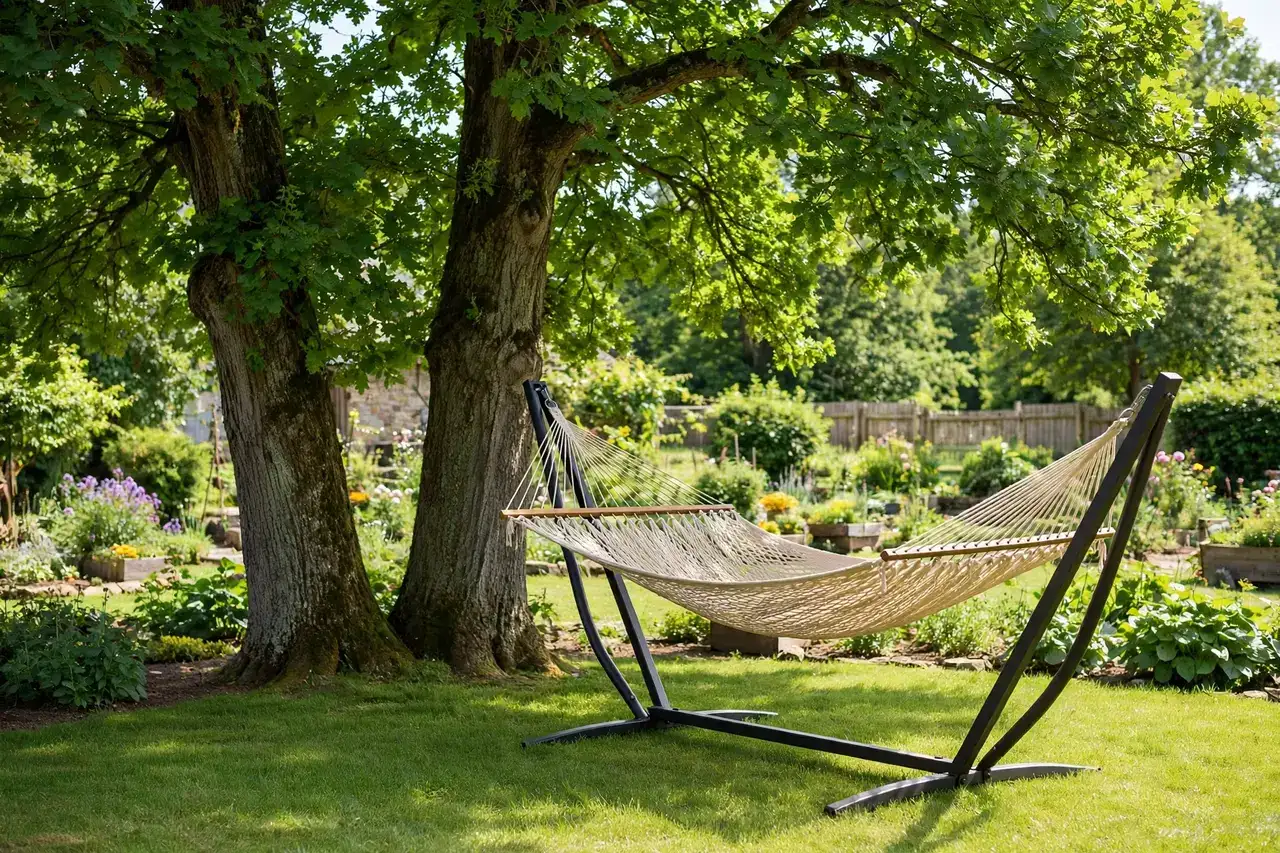
A stand set is the easiest backyard setup. The PNAEUT double hammock with a 9-foot stand costs around $68 to $80, holds 450 pounds, and assembles tool-free in about 10 minutes. The SZHLUX double hammock with a stand costs around $70, holds 450 pounds, and folds into a carry bag for travel. The SUNCREAT quilted hammock with a 12-foot stand costs around $159 and offers padded comfort. A stand also lets you place the hammock anywhere: under a tree in the morning, in full sun at noon, and beside the fire pit at night. The trade-off is weight: a steel stand weighs 25 to 35 pounds, so it is portable around the yard, not on a hike.
Trees are free and permanent, but they demand more than most yards offer. The trees must be healthy and mature, at least 12 inches across, with no dead limbs overhead, and they must stand 12 to 15 feet apart. Hang the hammock with wide tree straps, not thin rope, because rope cuts into bark and kills the tree. The hammock should hang about 18 inches off the ground when someone is lying in it: too high and it is hard to get into and risky if it tips, too low and it drags. Never hang from a dead branch, a deck rail, or a fence post that was never built to hold a swinging load.
Posts are the permanent answer when the trees are wrong. Two rated posts set in concrete, 12 to 15 feet apart, hold any hammock and never move. A pergola beam works too, if the beam is rated for the load and the hammock hangs from the beam, not from a decorative slat. Our pergola shade ideas guide shows pergolas strong enough to hang from, and our patio garden guide shows how to place a hammock among plants without crushing them.
A stand needs a flat spot, trees need health and distance, posts need concrete. Pick the anchor your yard actually has.
How Much Does an Outdoor Hammock Cost?
Outdoor hammocks cost $22 to $300 depending on the type and the build, with most good backyard sets landing between $68 and $160. A budget hammock-and-stand combo costs $68 to $90, a standalone hammock $70 to $160, and a premium handcrafted rope hammock around $300.
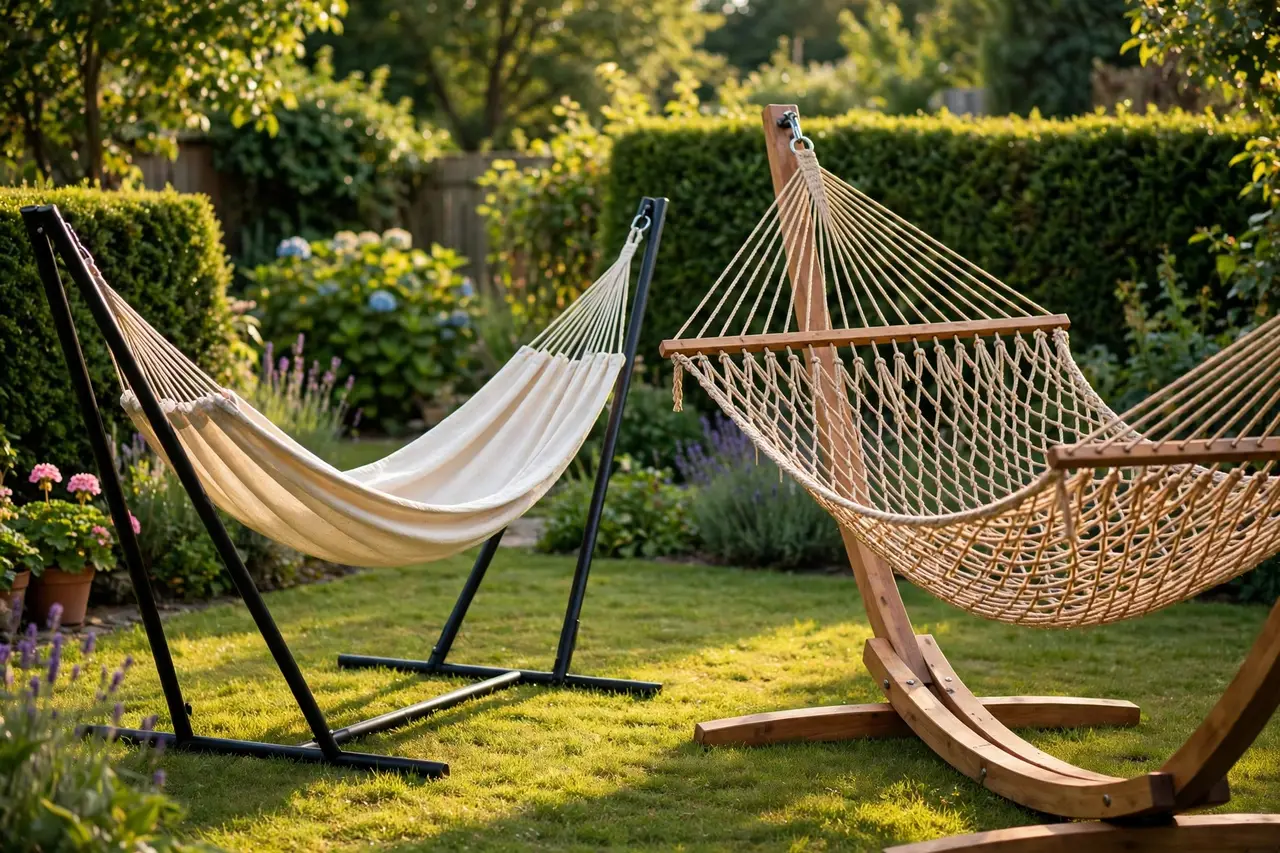
Real prices show the spread, all checked November 16, 2026. The PNAEUT double hammock with stand costs around $68 to $80, the SZHLUX double hammock with stand around $70, and the ONCLOUD spreader-bar set with a wheeled 9-foot steel stand around $90. The Vivere double cotton hammock with a 9-foot steel stand costs around $80 to $110 and carries a 450-pound rating with a 27.6-pound unit weight. The SUNCREAT quilted hammock with a 12-foot stand costs around $159. The Sunnydaze universal heavy-duty stand alone costs around $129, and its Brazilian double hammock with stand costs around $169. At the top end, an Original Pawleys Island DuraCord rope hammock costs around $300, with all-weather rope, oak spreader bars dipped in marine-grade varnish, and a 450-pound capacity, handcrafted in the Carolinas.
Three things push the price up beyond the fabric. A heavier stand costs more: a stand rated for 550 pounds uses thicker steel than a stand rated for 400, and the difference shows when two adults climb in together. Better rope costs more too: DuraCord rope feels like cotton but wears like polyester, resists weather and color shift, and outlasts plain cotton by years. And handcrafted details cost more: a double-latch weave without bulky knots, zinc-plated rings, and varnished hardwood spreader bars all add labor that a machine-made hammock skips.
Do not judge a hammock by its sticker price alone. A $70 cotton set that mildews in year two and a $159 quilted set that lasts five years cost about the same over three years, and then the good set keeps going while you buy your second cheap one. Compare the three-year total, not the tag: purchase price plus the replacement bed, the new stand hardware, and the tree straps you buy when the cheap ropes fray.
Compare the three-year total, not the tag. A mildewed bed and a rusted stand both count.
What Most People Get Wrong About Hammock Weight Limits
Most people get hammock weight limits wrong in the same three ways: they read the hammock’s number and ignore the stand’s, they trust the word “heavy duty” instead of the number, and they hang the hammock too high. All three mistakes end on the lawn, and the first one is the most common.
The two-number trap is the big one. A hammock and a stand each carry a weight rating, and the lower one is the one you are living with. On one Mayan hammock set, the hammock alone rates about 441 pounds for the Double and 617 pounds for the Family, yet the stand limits either complete set to 400 pounds. Sunnydaze sells a soft-spun rope hammock rated at 600 pounds, but its own heavy-duty steel stand prints 400 pounds for the 15-foot version and 350 pounds for the 12-foot version. Heavy-duty is in that stand’s name either way, so read the number, not the name. For two people, buy a set rated at least 450 pounds on both parts, and check the stand’s number on the stand’s own page, not on the hammock’s box.
The height mistake runs the other way. A hammock hung too high is harder to get into and riskier if it tips, and a hammock hung too low drags on the ground and wears through. Aim for about 18 inches off the ground when someone is lying in it, and adjust the chains or straps so the sag feels comfortable and the bed clears the ground. A hammock that sags too deep wraps too tight, and a hammock strung too flat swings like a board and flips when you sit on the edge.
The anchor mistake is the quiet killer. Hanging from weak branches or deck rails is the fastest way to end up on the lawn with a broken rail and a bruised back. Use healthy, mature trees or rated posts and beams, and never hang from a dead limb, a fence panel, or a pergola slat. OurGardenWorks’ 2026 backyard hammock roundup makes the same point in its buying guide: weight capacity matters most for couples and families, and a set with no stated weight limit is a set to skip entirely. Read the full roundup at OurGardenWorks’ best backyard hammocks for 2026.
The lower number rules, 18 inches is the height, and the anchor must be rated. A hammock that holds is a hammock you trust.
Which Hammock Material Lasts Longest Outdoors?
Synthetic rope and quilted polyester last longest outdoors, because they resist mildew and fading far better than cotton, while woven cotton feels softest and breathes best. Cotton lasts a few seasons outside, synthetic rope and polyester last many years, and DuraCord rope feels like cotton but wears like polyester.
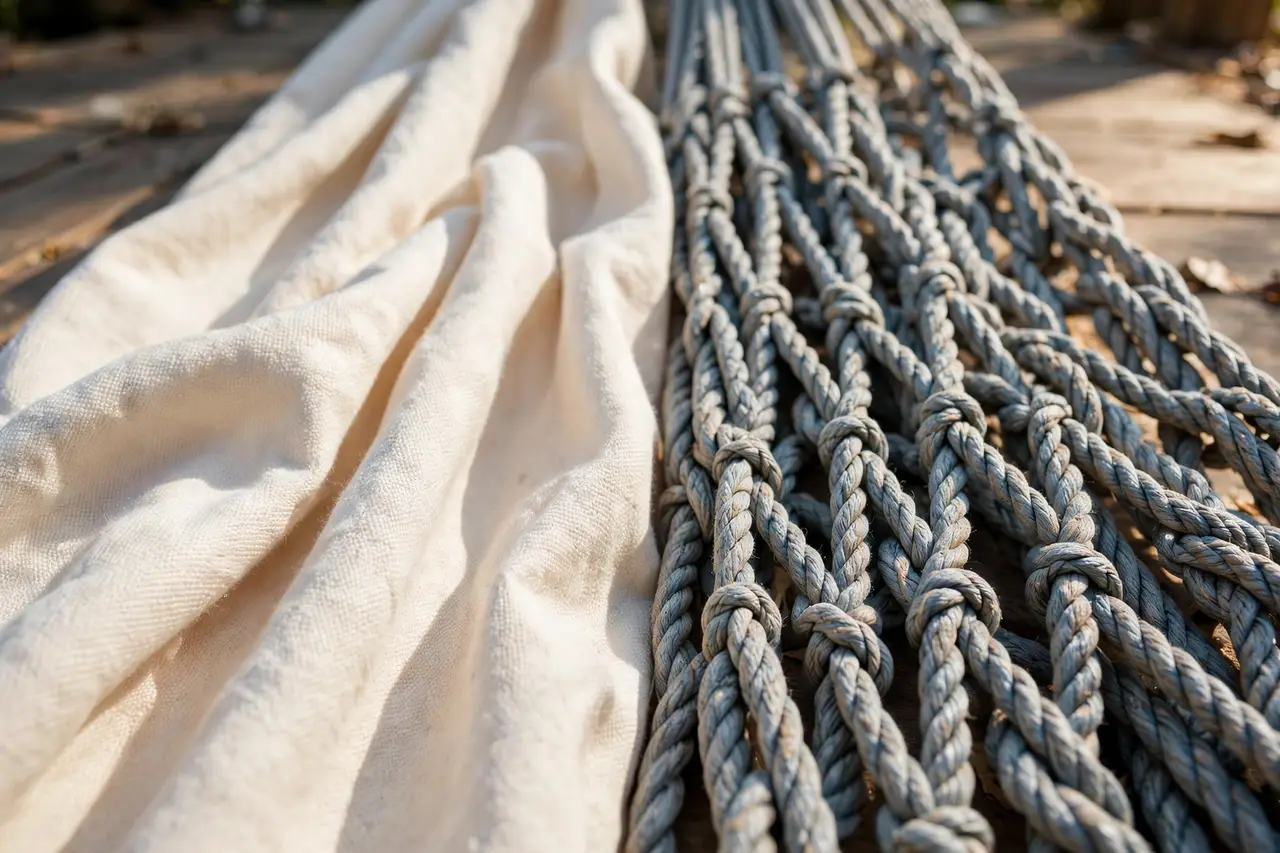
Woven cotton is the comfort pick. It is soft, breathable, and wraps around you, which is why the PNAEUT, SZHLUX, and Vivere Brazilian hammocks all use it. The trade-off is weather: cotton can mildew if left wet, so bring a cotton bed indoors during long rainy spells and let it dry fully before storing. A cotton hammock usually lasts a few seasons outdoors, and bringing it in during storms and winter extends its life a lot.
Synthetic rope is the durability pick. DuraCord rope feels like cotton but resists weather and color shift like polyester, and the Original Pawleys Island DuraCord hammock pairs it with oak spreader bars dipped in marine-grade varnish and zinc-plated rings, chains, and tree hooks. Quilted polyester is the comfort-and-durability middle ground: two layers of fabric with poly fiber filling resist fading, feel padded, and dry faster than cotton. Powder-coated steel stands resist rust, and zinc-plated or stainless hardware resists rust too, while thin unpainted steel rusts quickly and weakens.
The stand matters as much as the bed. A powder-coated steel stand with a clear weight rating lasts years, while a thin unpainted steel stand rusts in one wet season. Check the hardware every few months: wipe the stand, tighten the joints, and touch up chipped paint before rust starts. Re-varnish wooden spreader bars when they start to look dry, because untreated bars crack and splinter.
Cotton for comfort, synthetic for longevity. Bring cotton in for storms and the choice barely matters.
How to Care for an Outdoor Hammock
Care for an outdoor hammock with a ten-minute routine each month and a thirty-minute routine each season: bring the bed in during heavy rain, hand wash it with mild soap, air dry it fully, and wipe the stand and tighten the hardware. Store the bed indoors over winter and the stand covered or inside.
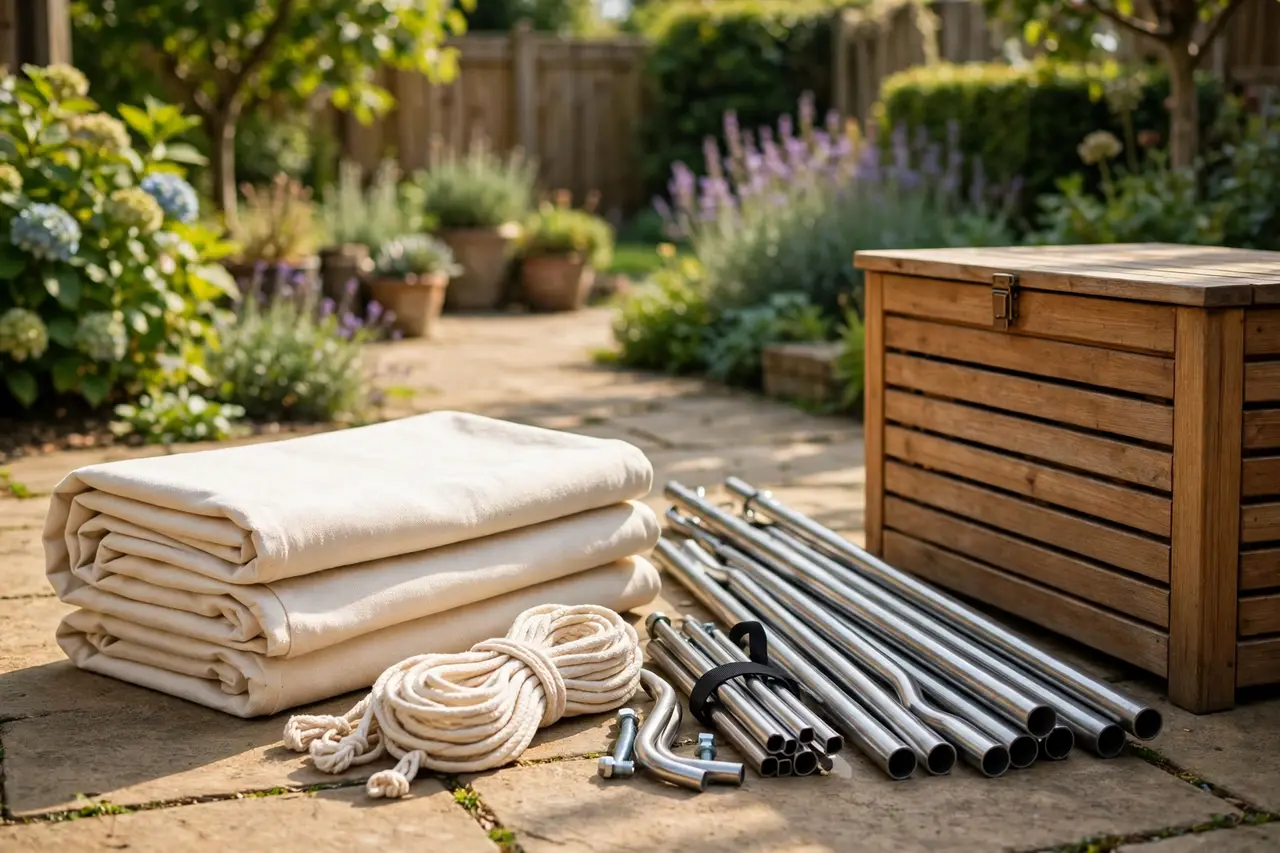
Bring cotton beds inside during heavy rain and let them dry fully before storing to prevent mildew. Hand wash fabric beds with mild soap and air dry them: never machine wash a rope hammock, because the ropes tangle and the spreader bars crack. Wipe the stand and tighten the hardware every few months, and touch up chipped paint to prevent rust.
Each season, check the whole setup before the first lie-down. Inspect the ropes and fabric for fraying, sun rot, and thin spots, and replace a bed that shows either: a frayed rope fails without warning, and a sun-rotted bed tears under weight. Check the chains, S-hooks, and carabiners for rust and wear, and replace any hardware that shows pitting or bending. Re-varnish wooden spreader bars when they start to look dry, and store the bed in a dry place over winter.
Winter care decides whether the hammock survives to next summer. Powder-coated steel stands can stay outside, but they last longer if covered or stored in winter. Store the fabric bed indoors during cold, wet months, and use wide tree straps rather than thin rope to protect tree bark. Our how to store outdoor furniture guide covers the full winter routine, and our outdoor storage bin guide shows bins that hold a folded hammock and its straps through the cold months.
Dry it, check it, store it. A hammock that dries fully and hangs on sound hardware is a hammock you trust.
Related Guides
If you are planning the whole outdoor space, these guides pick up where this one leaves off:
- Pergola Shade Ideas — structure, shade, and a beam strong enough to hang from.
- Patio Garden — place a hammock among plants without crushing them.
- How to Store Outdoor Furniture — keep it clean, dry, and ready for spring.
- Outdoor Storage Bin — a dry home for a folded hammock and straps.
- Outdoor Sectional Couch — deep seating for the lounge corner beside your hammock.
- Outdoor Furniture for Small Spaces — seven layouts that make a tiny patio feel big.
- Sunshade for Patio — shade the hammock corner without a tree.
- Deck Shade Ideas — cool the deck where the stand sits.
- How to Choose Outdoor Patio Furniture: 5 Decisions That Save You From a $1,000 Regret — five decisions that keep a patio set from becoming a $1,000 regret.
Frequently Asked Questions
How long does a backyard hammock last?
A cotton hammock usually lasts a few seasons outdoors, while synthetic rope and polyester hammocks can last many years. Bringing hammocks in during storms and winter, drying them fully and maintaining stands and hardware greatly extends their life.
How high should I hang a hammock?
Aim for about 18 inches off the ground when someone is lying in it. A hammock that hangs too high is harder to get into and riskier if it tips. Adjust chains or straps so the sag feels comfortable and the bed clears the ground.
Is a spreader bar or Brazilian hammock better?
Brazilian gathered end hammocks are more stable and cocooning, while spreader bar hammocks feel more open but can tip. Choose Brazilian for napping and stability, spreader bar for a flat, airy lounge and easy entry from the center.
Are expensive hammocks worth the price?
Premium hammocks are worth it if you leave them outside often and want them to last. All weather materials like DuraCord and varnished oak bars resist sun and rain much better than budget cotton. For occasional use, a $70 to $90 hammock and stand set is plenty.
Can I leave a hammock stand outside all year?
Powder coated steel stands can stay outside, but they last longer if covered or stored in winter. Check for rust spots, touch them up and tighten joints each season. Store the fabric bed indoors during cold, wet months.
Disclaimer: This guide gives general advice for choosing and using outdoor hammocks, not professional structural or engineering instructions. Never hang a hammock from a dead branch, a deck rail, or a fence, check weight limits on both the hammock and the stand, and hire a qualified pro for permanent posts or beams.
Buy the stand first and the bed second. A 9-to-13-foot level spot, a set rated 450 pounds on both parts, and a bed that matches your weather — cotton for comfort, synthetic for longevity. Hang it 18 inches off the ground, check the hardware each season, and bring the bed in for winter. Do that, and the hammock you buy this year is still the best seat in the yard five summers from now.