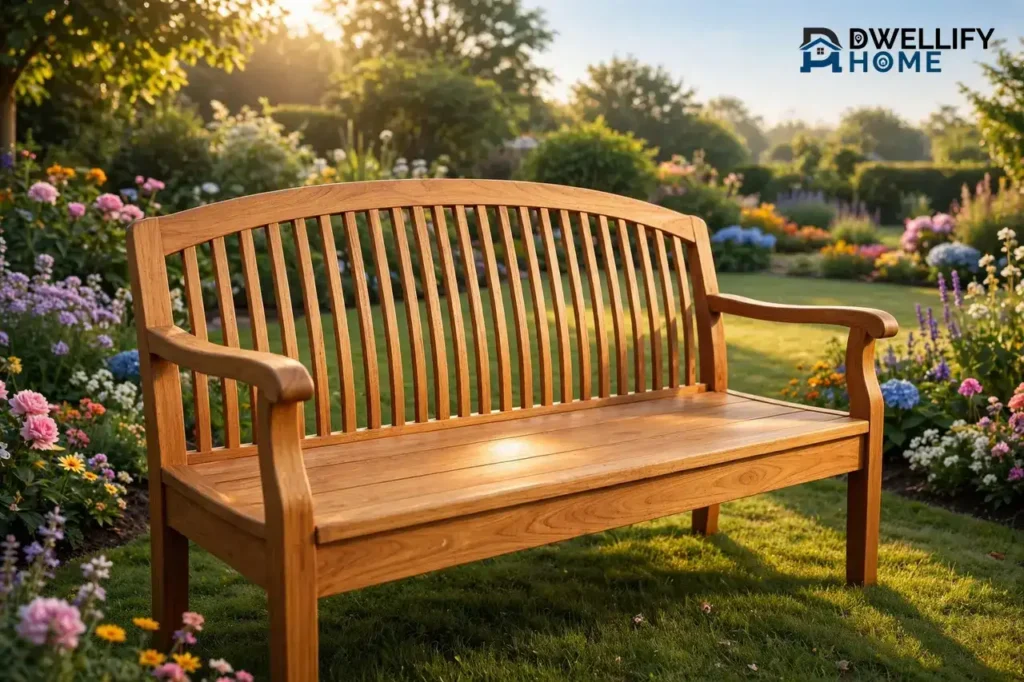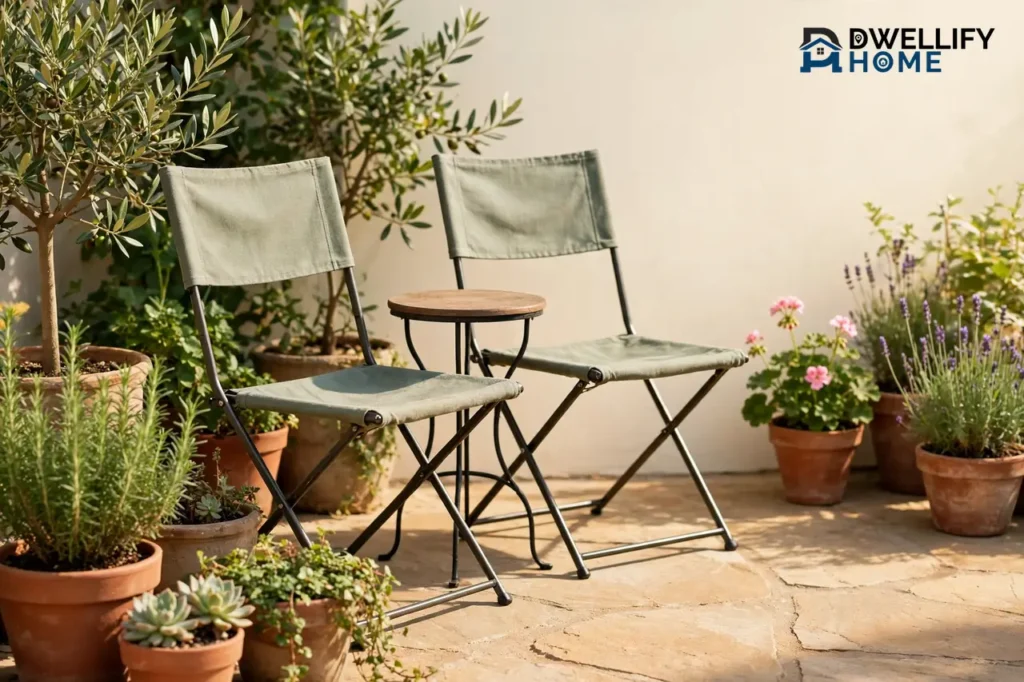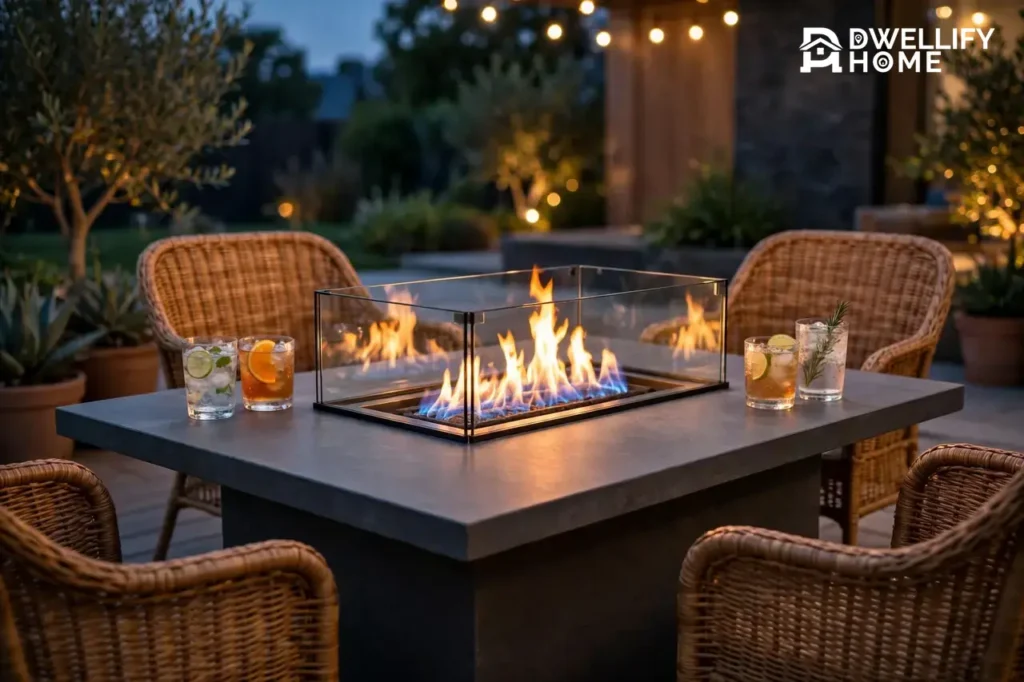
Modern outdoor chairs built on powder-coated aluminum frames last 15 to 20 years outside with almost no care, while cheap steel or untreated-wood chairs often rust or split within two summers, and the frame material decides the outcome far more than the style does. A modern chair earns its name from clean lines, slim profiles, and honest materials — aluminum, teak, HDPE wicker, or rope — not from a trendy color. This guide shows you which material fits your climate, which sizes actually feel good, what each style costs, and the one check that saves you from replacing chairs every other year.
One mistake in the table below costs owners more than any other, and it has nothing to do with the price tag. It sits in the material section, and most shoppers make it in the store before they ever sit down. Before that, you need to know what “modern” really means outdoors, because a chair that only looks modern will age faster than a plain one built right.
What Makes an Outdoor Chair “Modern”?
A modern outdoor chair is a chair with clean lines, a slim profile, and very little decoration, built from weather-proof materials such as powder-coated aluminum, teak, HDPE wicker, or outdoor rope. It skips the scrollwork and heavy ornament of traditional patio furniture and lets the shape and the material do the work.
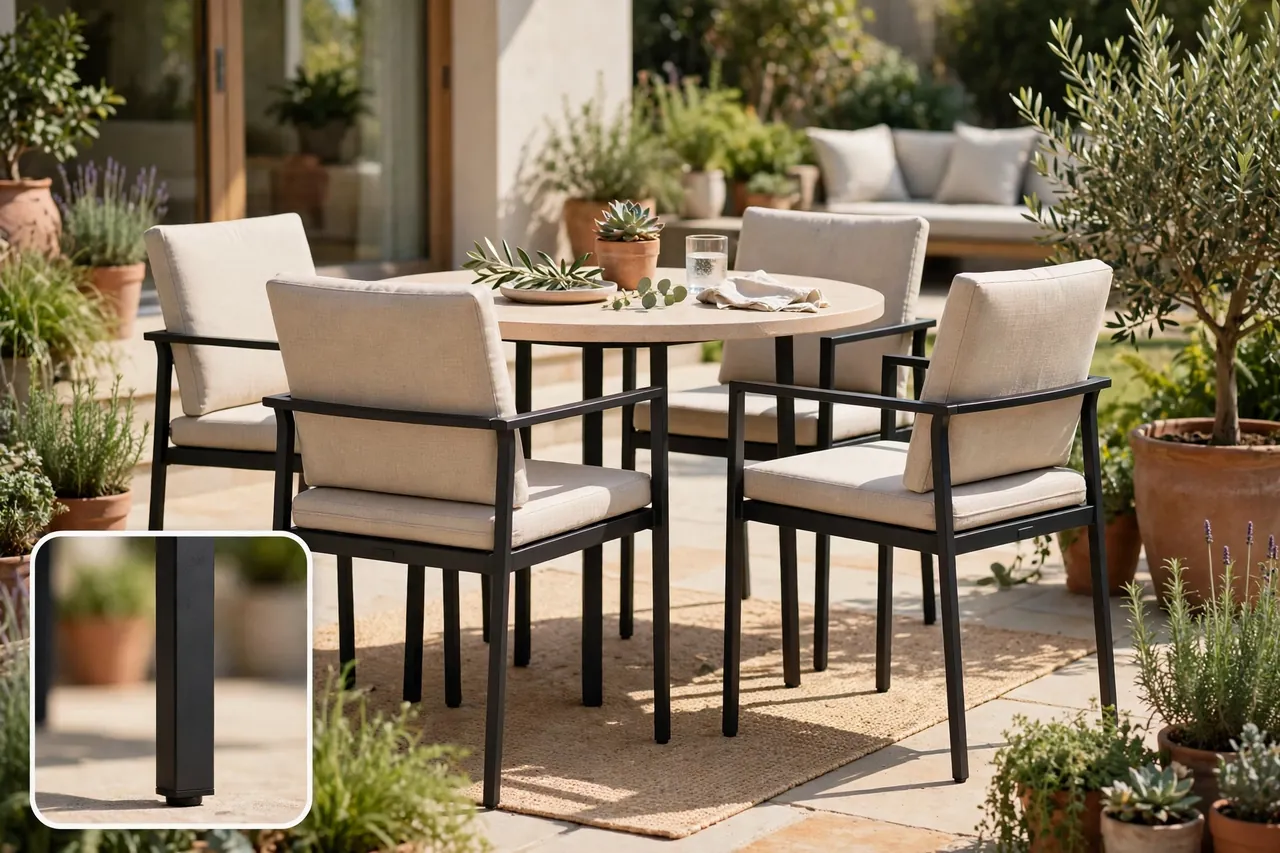
Modern does not mean uncomfortable. The best modern chairs pair that spare look with real ergonomics: a dining seat 17 to 19 inches high, a lounge seat 22 to 24 inches deep, and armrests 6 to 9 inches above the seat so your elbows rest without hunching. If a chair looks sleek but forces you to perch, it fails the only test that matters — whether you want to sit in it for an hour.
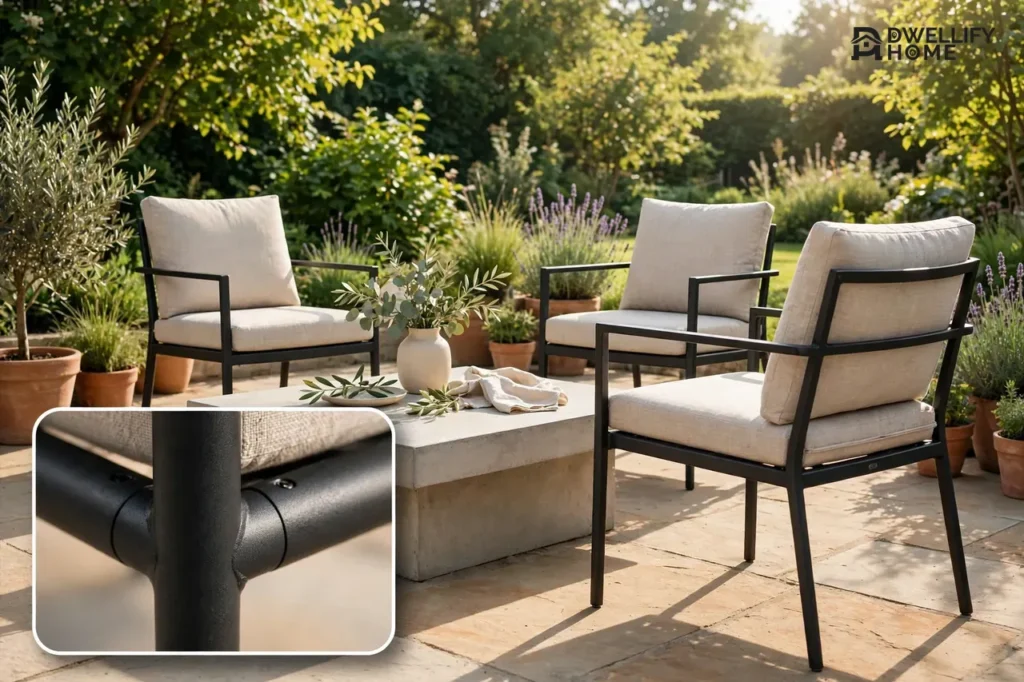
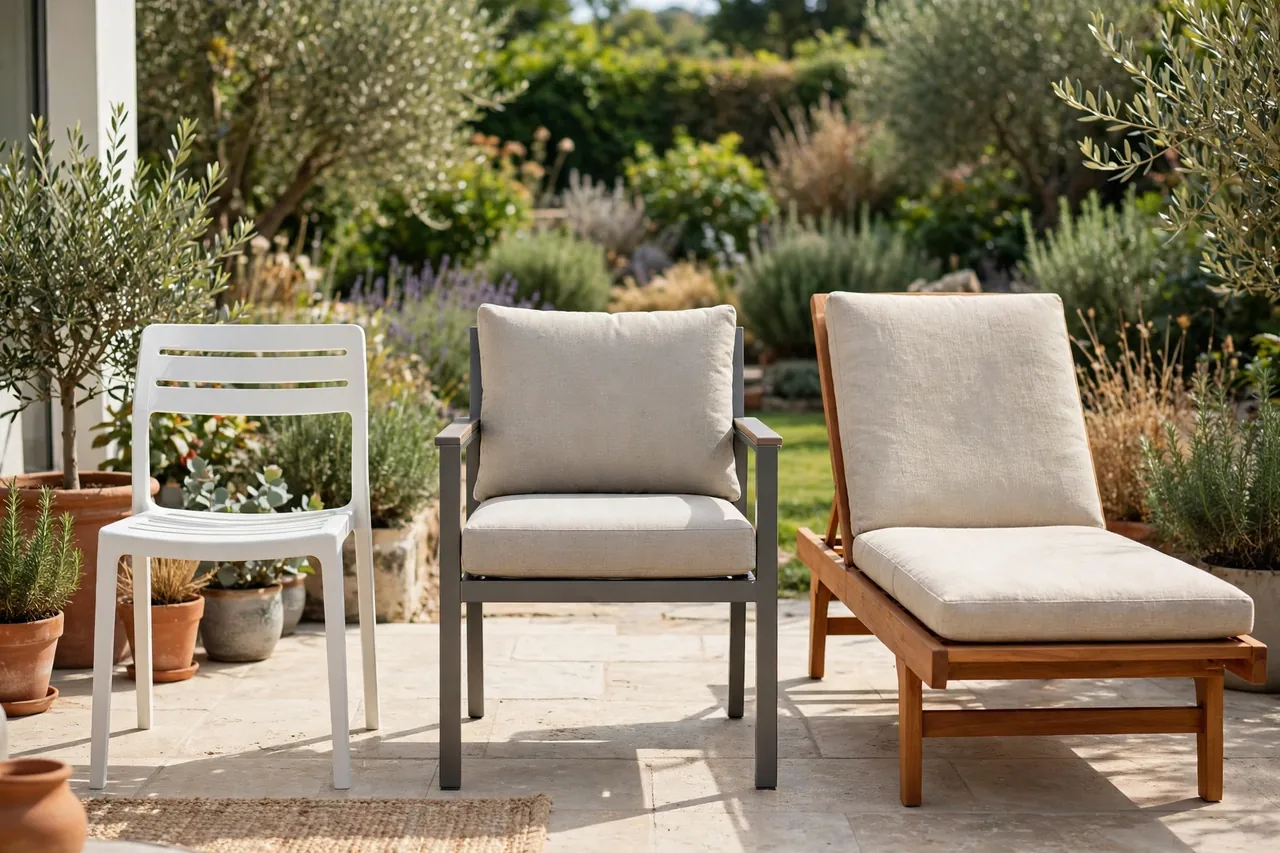
Three details mark the style. First, matte black or charcoal aluminum frames with slim legs. Second, natural teak with crisp, straight geometry instead of curves. Third, neutral cushions in sand, taupe, or gray, and rope or sling seats that breathe in the heat. Mix at most two chair types in one zone — one type reads uniform, two read designed, and three read cluttered.
Shape does the work. In a modern setup, the chair’s outline matters more than any cushion color or accessory.
Which Material Lasts Longest in a Modern Chair?
Powder-coated aluminum is the best all-round material for a modern outdoor chair because it cannot rust, it stays light enough to move with one hand, and it lasts 15 to 20 years with only soap-and-water cleaning. Grade A teak lasts longest of all at 25 to 50 years, while HDPE poly lumber needs the least care and runs 20 years or more.
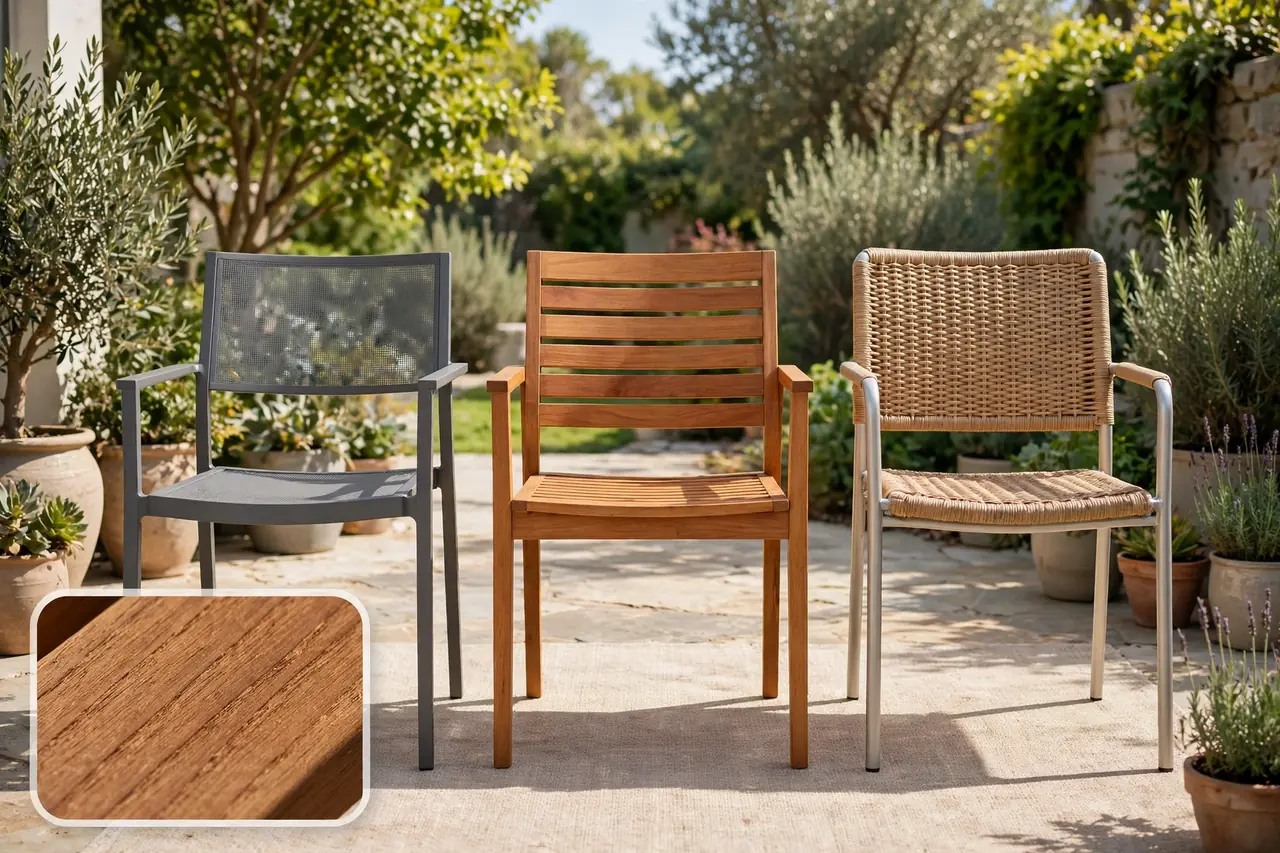
The material sets the maintenance load, the feel, and how the chair ages across seasons. Aluminum suits pools, coasts, and anyone who hates upkeep. Teak feels warm under your hand and weathers from golden brown to silver gray in 6 to 12 months, and it only needs mild soap and a soft brush. HDPE wicker gives you the woven look with a rinse-and-brush routine, and outdoor rope on an aluminum frame gives the softest seat with almost no upkeep.
| Material | Lifespan | Upkeep | Best for |
|---|---|---|---|
| Powder-coated aluminum | 15–20 years | Low | Coasts, pools, small spaces |
| Grade A teak | 25–50 years | Low to medium | Gardens, long-term value |
| HDPE wicker | 10–20 years | Low | Relaxed, textured look |
| HDPE poly lumber | 20+ years | Very low | Zero-maintenance buyers |
| Outdoor rope on aluminum | 10–15 years | Low | Modern lounge comfort |
| Acacia wood | 5–10 years | High | Budget wood look |
Watch the hardware as closely as the frame. Stainless steel screws and fittings resist rust far better than standard zinc-plated hardware, especially near the coast. And check for real testing: chairs tested to the ANSI/BIFMA X5.1 seating standard go through roughly 140,000 durability cycles, which simulates about a decade of regular use, according to the Kitchen Rank outdoor chair guide.
Aluminum wins for most buyers. Teak wins only if you want the longest life and the warmest feel — and you accept the price.
How Do You Pick the Right Modern Chair for Your Space?
Pick a modern outdoor chair by matching it to its job first: dining chairs stay upright at 17 to 19 inches high, lounge chairs sit deeper and lower, and accent chairs stay light enough to move. Then measure the space, because a beautiful chair that crowds the table is a chair you will stop using.
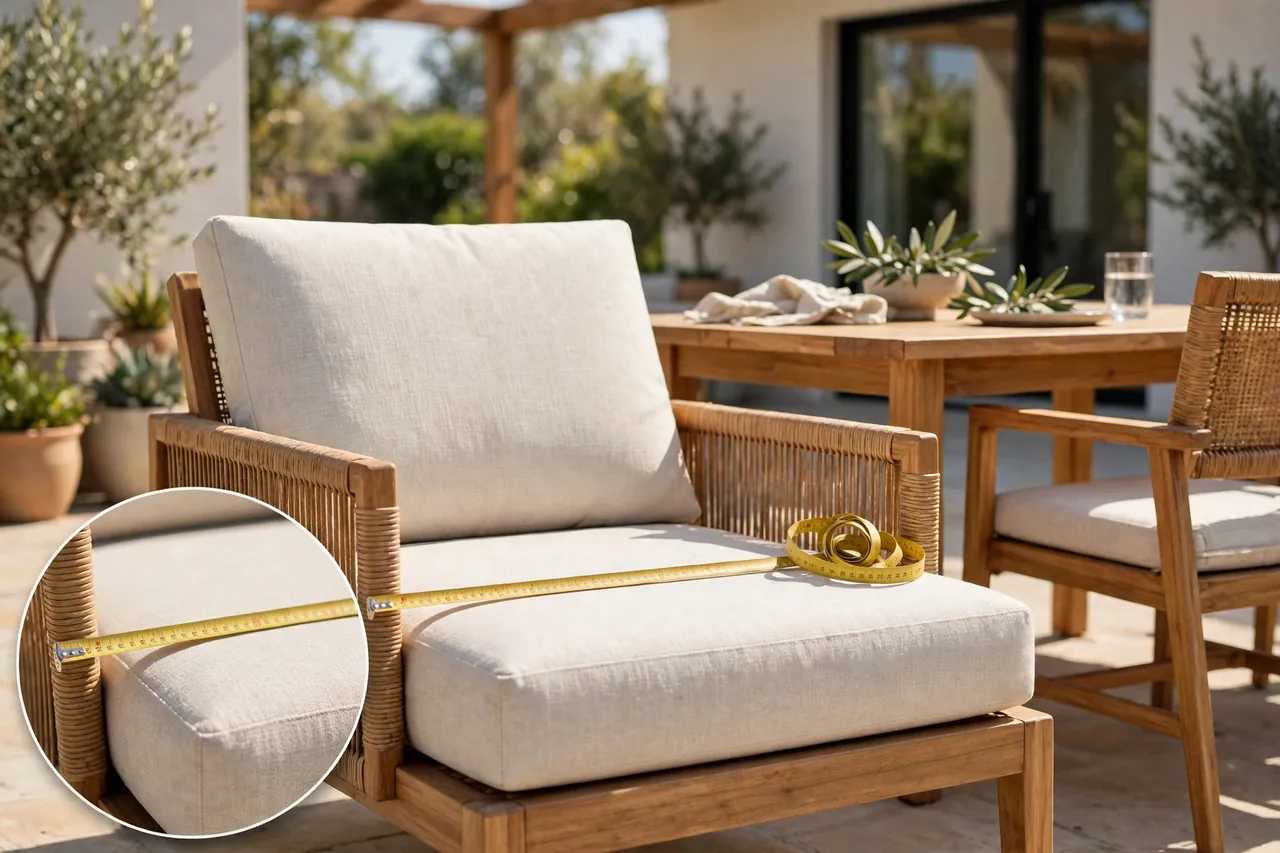
Use four numbers before you buy. Allow about 24 inches of width per dining chair, leave at least 36 inches of walkway behind a pulled-out chair, keep 30 inches between lounge chairs, and match the seat depth to the job — 18 to 20 inches for dining, 22 to 24 inches for lounging, and 26 to 30 inches for deep seating. A seat deeper than 24 inches reads as formal for dining, and a lounge seat shallower than 24 inches reads as stiff.
Small spaces reward different choices. Stackable dining chairs and folding chairs make off-season storage far easier, and our stackable chairs guide shows which designs fold flat without wobbling. For a balcony or a tight patio, our outdoor furniture for small spaces guide pairs slim modern chairs with the layouts that fit them. If you need chairs that move between the table and the fire pit, our outdoor chaise and lounger guides cover the lounge end of the same space.
The Outer patio chair buying guide gives the same sizing rules and adds one warning worth hearing: a chair without built-in cushion protection means hauling cushions inside after every use, while a chair with a built-in cover deploys in about 15 seconds — and that feature often decides whether the chair gets used daily or only on special occasions. Read it at Outer’s patio chair buying guide before you shop.
Always sit before you buy when you can. Slide in, lean back, stand up again, and check that the armrests meet your elbows instead of your shoulders. A chair that feels fine for ten seconds in a store can feel like a ledge after ten minutes at dinner.
Match the chair to the job. Dining, lounging, and accent chairs are three different tools, not three looks.
Which Modern Chair Styles Actually Work?
Five modern chair styles cover nearly every patio: the slim dining chair, the deep lounge armchair, the sling chair, the rope chair, and the modern Adirondack. Each one suits a different job, and the style that fails most often is the one bought for the wrong job.
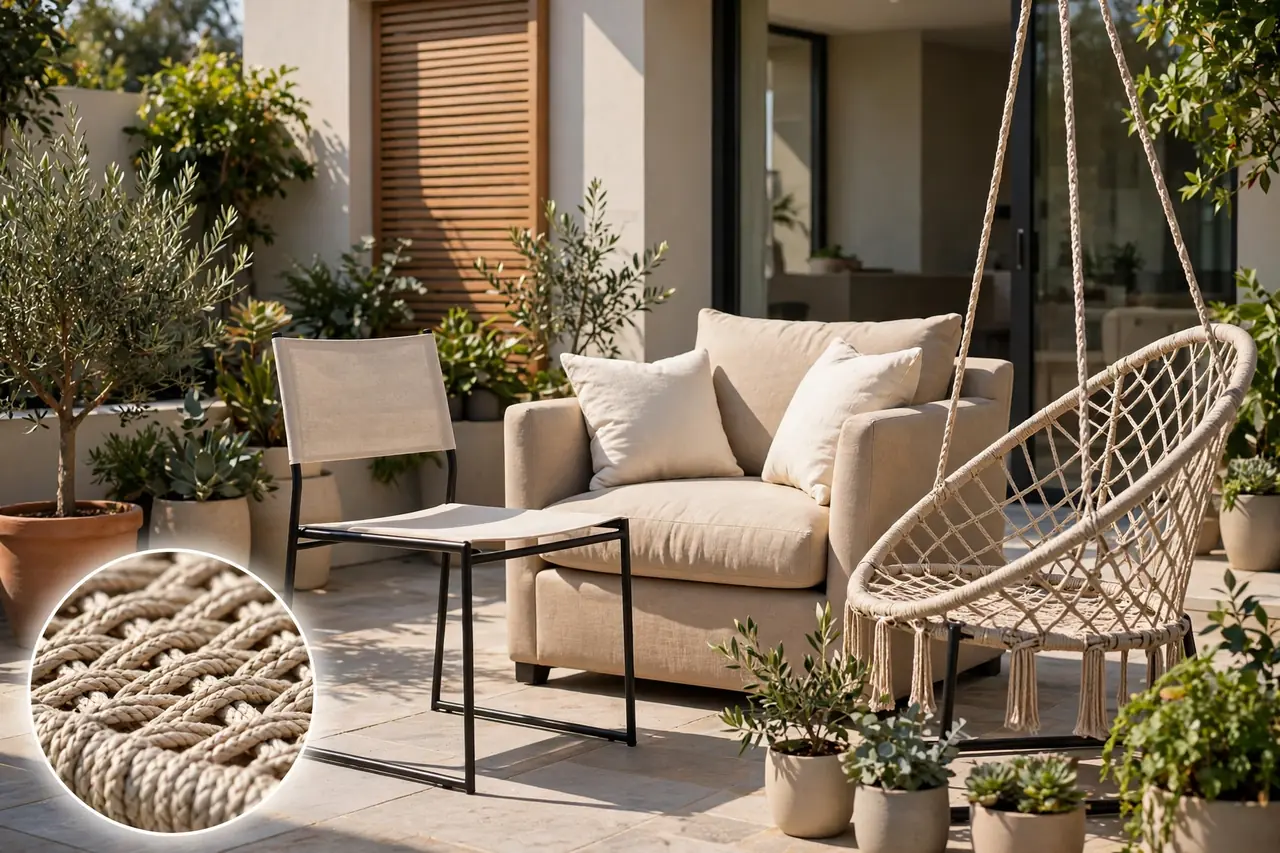
The slim dining chair is the workhorse. Armless or low-arm, easy to slide in and out, it tucks under the table and stacks when the season ends. The deep lounge armchair is the opposite: wide, low, with armrests, built for hours by the fire pit or the pool. A sling chair uses a taut fabric seat on an aluminum frame, dries fast after rain, and suits poolside use better than any cushioned chair. A rope chair wraps outdoor rope over a metal frame, giving a soft, breathable seat with a sculptural look — our rope chair guide covers it in full. The modern Adirondack keeps the classic slatted back but strips it to straight lines and HDPE lumber, so it never needs paint.
Color is the last decision, not the first, and it matters more than most buyers think. White and bright cream look stunning in catalog photos and demand constant cleaning in daily use, while oatmeal, taupe, gray-green, charcoal, warm beige, and muted blue age gracefully outdoors and hide pollen, dust, and the odd splash of sunscreen. Pick the frame and the fabric first, then choose a cushion color you will still like when it is a little dusty — because it will be, most days of the summer.
For mixed seating, follow the two-type rule. Pair lounge armchairs with one armless accent chair that moves between the sectional and the fire pit, and keep dining chairs as a single matching set. Our outdoor dining chair guide and our reclining patio chairs guide help you place each type where it earns its keep.
Two types read designed. Three types in one zone read like a yard sale, no matter how good each chair is alone.
What Most People Get Wrong About Modern Outdoor Chairs
Most people get modern outdoor chairs wrong by buying for the photo instead of the weather: they pick a pale cushion, a steel frame, or a chair rated only for occasional use, and then they blame the chair when it fades, rusts, or cracks. The fix is boring and it works — check the frame, the fabric, and the rating before the look.
The first mistake is the frame. Steel looks identical to aluminum on a showroom floor, but steel rusts, and near the coast it rusts fast. If the listing does not say powder-coated aluminum, ask. The second mistake is the fabric. Standard printed outdoor fabric fades far faster than solution-dyed acrylic, where the color runs through each fiber — Sunbrella is the best-known example, and the Kitchen Rank guide notes it often carries a multi-year warranty against fading. The third mistake is the rating: “outdoor-friendly” can mean occasional use on a covered porch, while a chair rated for year-round outdoor exposure is built to stay out in rain and sun.
Do not forget the cushion fabric, because it fails before the frame does. Solution-dyed acrylic fabric, such as Sunbrella, has the color woven into each fiber during production rather than printed on the surface, so it resists fading far longer than standard printed outdoor fabric and often carries a multi-year warranty. Pair it with quick-dry foam or ventilated inserts and removable covers, and the cushions dry after rain instead of holding water and growing mildew. A beautiful frame with cheap cushions is a chair you will re-cover within two years, and re-covering costs more than buying the right fabric once.
The fourth mistake is comfort math. A lounge chair with a seat shallower than 24 inches feels formal, a dining chair deeper than 20 inches pushes you too far from the table, and armrests outside the 6-to-9-inch range make your shoulders hunch or your elbows slide off. Measure the chair, not just the patio. Check the frame, the fabric, and the rating — never just the look.
That fixes the buying errors. The care errors are smaller but they add up, and they sit in the next section.
How Much Do Modern Outdoor Chairs Cost?
A modern outdoor chair costs $30 to $100 at the budget end, $100 to $400 in the mid-range, and $400 to $1,000 or more per chair at the premium end, according to the Kitchen Rank outdoor chair guide, checked November 16, 2026. The price follows the frame material more than the style, and the cheapest chair is rarely the cheapest over five years.
| Tier | Price per chair | What you get |
|---|---|---|
| Budget | $30–$100 | Resin or basic plastic, thin frames |
| Mid-range | $100–$400 | Aluminum or acacia with cushions |
| Premium | $400–$1,000+ | Teak, wrought iron, designer lounge |
A separate 2026 comparison of nine chair materials, from CNKingMake’s outdoor chair materials guide, agrees on the ranking: powder-coated aluminum is the best all-round material, Grade A teak lasts the longest, and HDPE poly lumber needs the least care of all. Use that ranking as your shortlist, then let comfort and price pick the winner.
Do the five-year math before you decide. A $60 resin chair replaced every two summers costs $150 over six years and looks tired by year two. A $250 powder-coated aluminum chair that lasts 15 years costs about $17 a year and still looks new. Teak costs the most up front — a premium teak lounge chair can pass $1,000 — but at 25 to 50 years it is the cheapest chair per year you will ever own. Our luxury outdoor furniture guide breaks down where premium prices actually pay off and where they do not.
Price per year beats price per chair. A $250 chair that lasts 15 years costs less than a $60 chair replaced three times.
How Do You Keep Modern Outdoor Chairs Looking New?
Keep modern outdoor chairs looking new with a monthly rinse and mild soap, covers or indoor storage through the worst winter weeks, and the right care for the material: oil teak every 6 to 12 months if you want the honey color, oil acacia every 2 to 3 months, and brush debris out of wicker weave before it packs in.
Aluminum needs the least work — a cloth and mild soap once a month, and a check that the powder coating has no chips where water can reach bare metal. Teak needs soap, a soft brush, and a garden hose; oiling is optional, and an unoiled chair simply weathers to silver gray without losing strength. HDPE wicker needs a brush for the weave and a rinse, and cushions need covers or a dry store — most cushions are water-resistant, not waterproof, and damp fill is how mildew starts.
Winter is where most chairs die. Aluminum and resin chairs usually tolerate winter outside, but wood and wrought iron last far longer stored indoors or covered during freezing, wet months, according to the Kitchen Rank guide. Our how to care for outdoor furniture guide and our how to store outdoor furniture guide walk through the full seasonal routine.
Monthly soap beats yearly rescue. Ten minutes a month prevents the deep clean that never quite brings a chair back.
Related Guides
If you are building a full seating plan, read our garden chairs for small spaces guide next for tight patios, then our egg chairs guide if you want one sculptural accent piece. For the lounge end of the patio, our outdoor chaise guide covers the chair you stretch out on.
Frequently Asked Questions
What is the best material for outdoor chairs?
Powder-coated aluminum is the best all-round choice for outdoor chairs: it does not rust, it stays light, and it needs little care. Grade A teak lasts longest and feels best to touch, and HDPE poly lumber is the lowest-maintenance option of all.
What is the most durable material for outdoor furniture?
Grade A teak and HDPE poly lumber have the longest lifespans, often 20 years or more. Quality powder-coated aluminum is close behind and much lighter, which makes it easier to move and store.
Can modern outdoor chairs stay outside all winter?
Aluminum and synthetic resin chairs generally tolerate winter weather well, but wood and wrought iron pieces last longer if stored indoors or covered during freezing, wet months. Cushions should always come inside for winter.
How do I keep outdoor chair cushions from fading?
Choose solution-dyed acrylic fabric, such as Sunbrella, over standard printed outdoor fabric. The color runs through each fiber instead of sitting on the surface, so it resists fading far longer, often with a multi-year warranty.
How often should I oil a teak outdoor chair?
Oil teak every 6 to 12 months if you want to keep its honey-brown color. If you skip oiling, the chair weathers to a silver-gray patina, which is normal and does not weaken the wood.
Start with the frame, not the photo. Pick powder-coated aluminum for easy living, teak for a chair your grandchildren will sit on, or HDPE wicker for the woven look without the work — then measure your space, sit in the chair, and buy the one that still feels right after ten minutes. That is the modern chair that will still look good in five years.