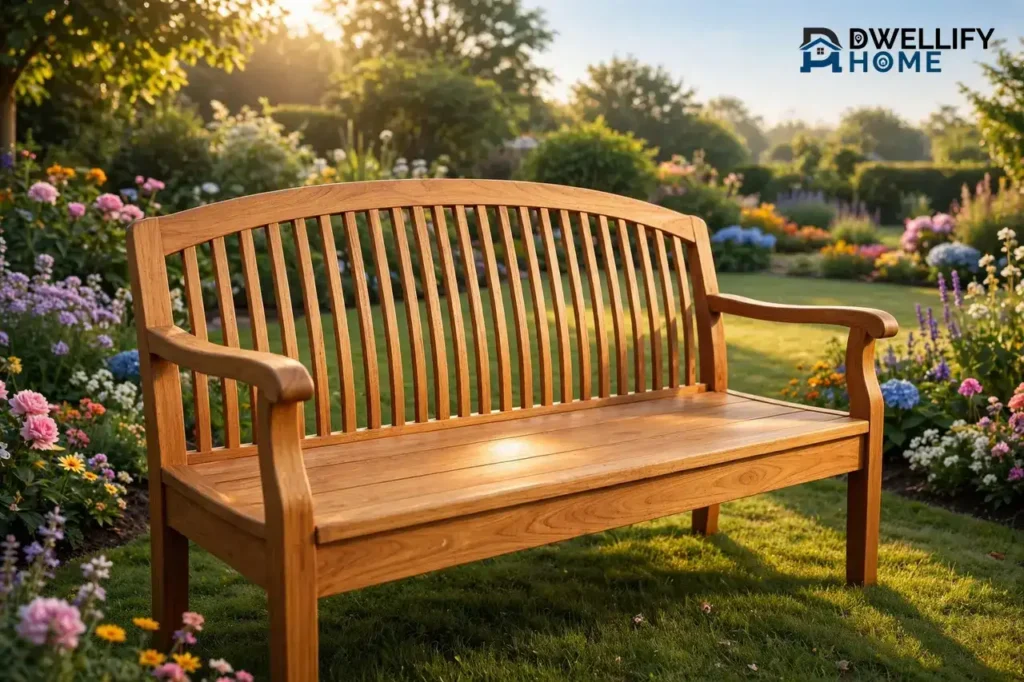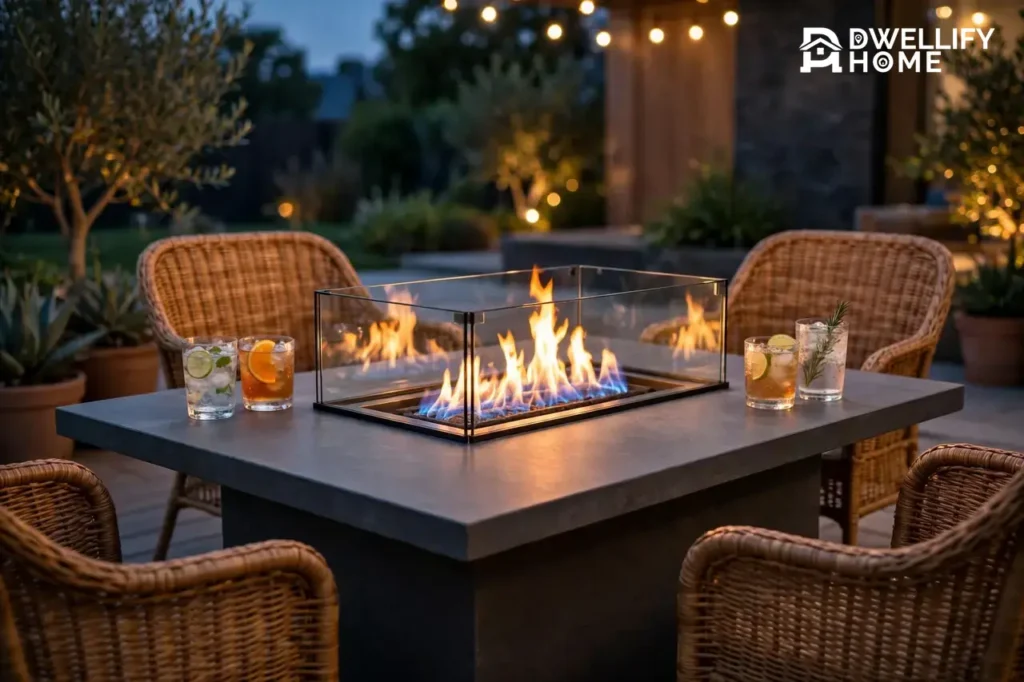
French patio furniture is outdoor furniture in the Parisian style: small folding metal bistro sets, wrought iron with scrollwork, weathered wood, and soft Provençal colors like sage green, cream, and French blue. The heart of the look is the bistro set — a round table 24 to 30 inches across with two folding chairs — and the most famous maker is Fermob, a French brand making outdoor furniture since 1889. This guide covers the pieces, the materials, the sizing rules, and the one mistake that makes a French patio feel like a showroom.
One mistake makes a French patio feel staged instead of lived-in, and it sits in the styling section below. Most shoppers buy every piece from one collection, which is exactly what a real French garden never does. First, the look itself needs a clear definition, because French patio furniture is two styles at once: the Paris bistro and the Provençal country garden.
What Is French Patio Furniture?
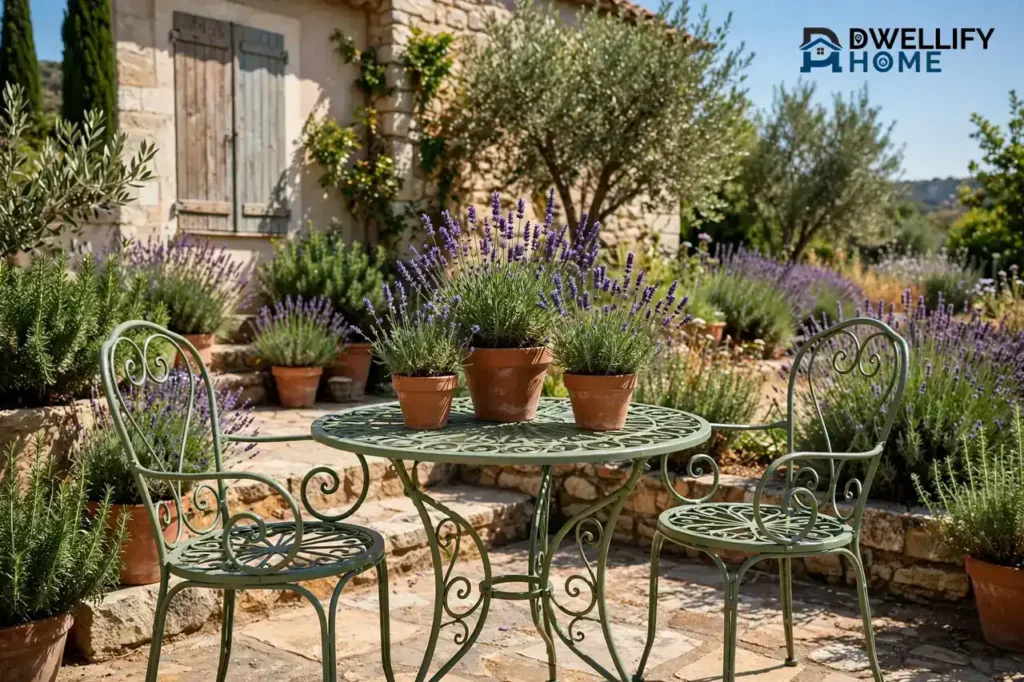
French patio furniture is outdoor furniture styled after France’s two outdoor traditions: the Parisian bistro, with small folding metal tables and chairs from cafe terraces, and the Provençal country garden, with wrought iron, weathered wood, zinc-topped tables, and lavender-blue colors. Both styles share the same idea: the patio is a living room, built for long slow meals outdoors.
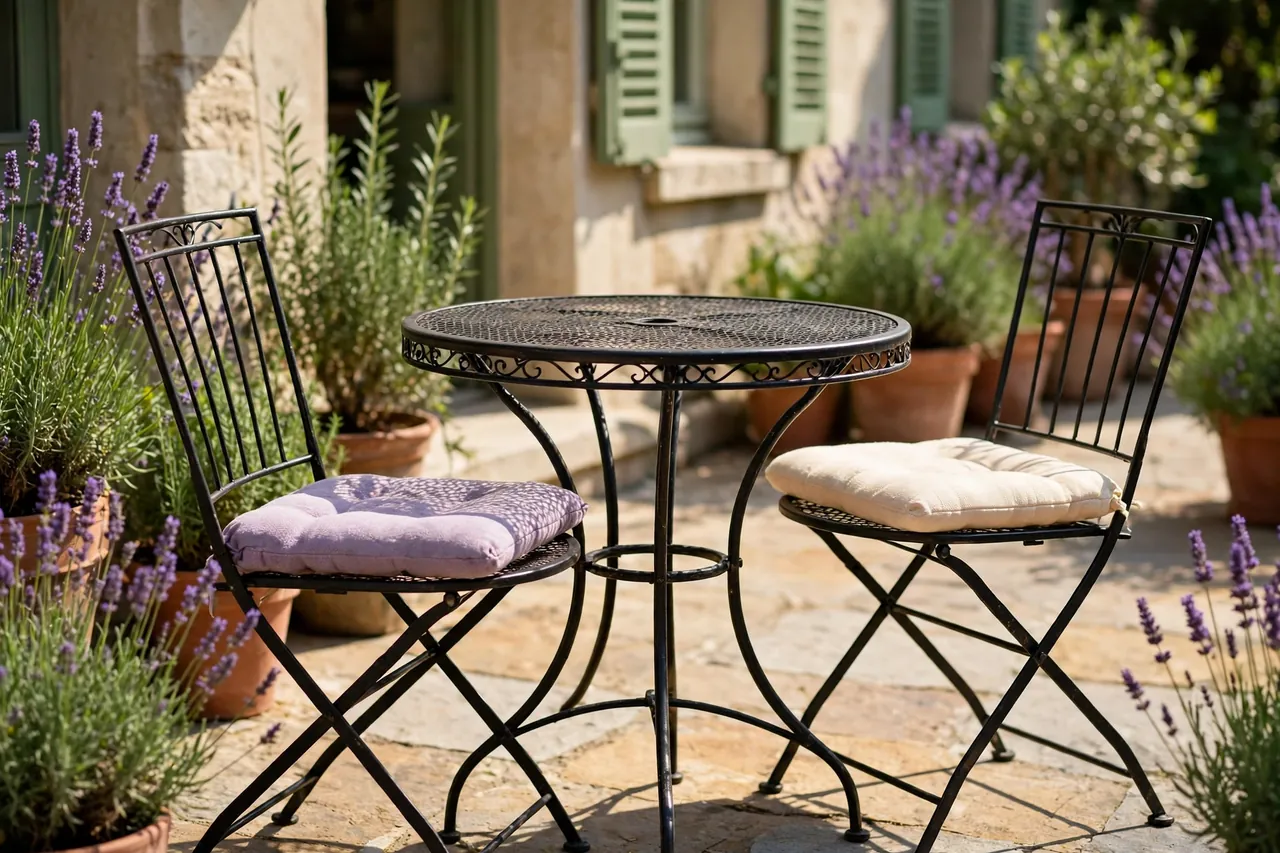
The French treat patios and gardens as true extensions of their living rooms, prioritizing durability, romance, and unhurried leisure, and creating the look at home needs no chateau in Provence — it relies on pieces that balance rustic textures with refined silhouettes. The bistro side is compact and urban: folding chairs, round tables, bright colors. The country side is romantic and slightly distressed: wrought iron, stone tops, gravel floors, and climbing plants.
Three things mark the style at a glance. The metal is curved, not straight: scrollwork on iron, slatted curves on bistro chairs, bent rattan frames. The colors come from the landscape: warm creams, soft sage greens, terra cotta, and classic French blue, with mustard yellow and blue as the traditional southern pairing. And the furniture looks weathered, not new: matte finishes, a little patina, wood that has greyed gracefully. A shiny, brand-new-looking set is the one thing a French patio never has.
French patio furniture is two looks, one idea. The patio is a living room, built for long meals.
The Bistro Set: The Heart of the French Patio
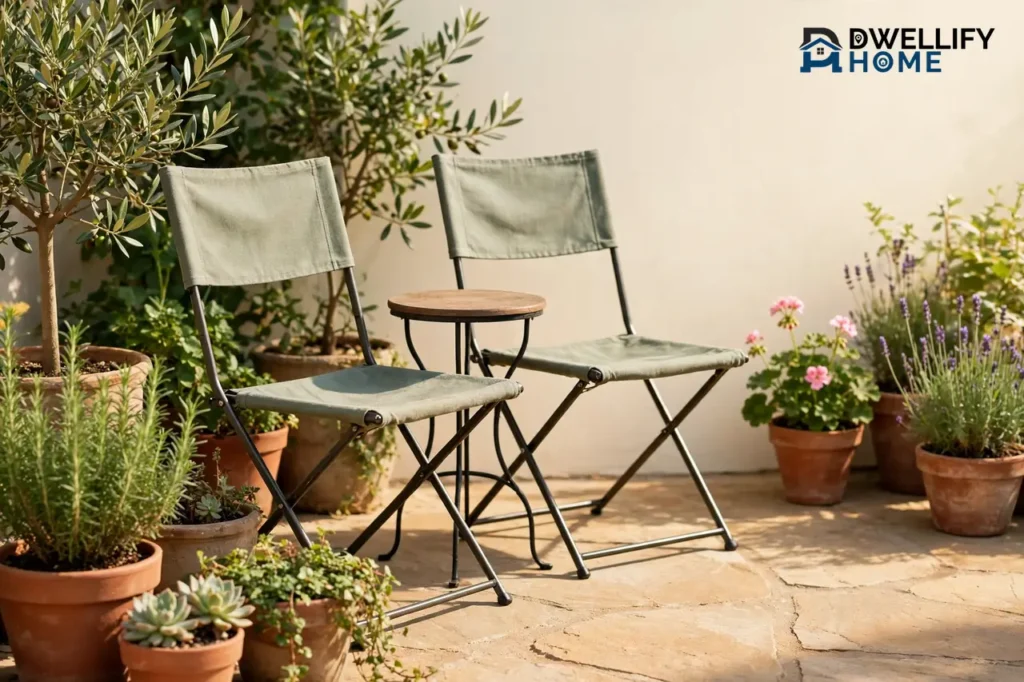
A bistro set is a small dining set with a round table and two chairs, designed for outdoor use on compact patios, balconies, and cafe terraces. The classic table is 24 to 30 inches across, the chairs fold flat, and the whole set needs a footprint of at least 6 feet by 6 feet so you can pull the chairs out comfortably. It is the single most French piece of outdoor furniture you can buy.
The design comes from the narrow streets of Paris, where tables had to be small enough for two people while leaving room for passersby on the pavement. The original sets had elegant marble tops and metal legs, and the most famous version is Fermob’s Bistro collection, first created at the end of the 19th century, made from powder-coated steel to keep its colors bright. Fermob has been manufacturing classic outdoor furniture in France since 1889, and its Bistro chairs and tables are still the reference for the style. Read the brand page at Swansons Nursery’s Fermob French patio furniture page.
Sizing is where bistro sets go wrong. A small bistro set needs at least 6 feet by 6 feet of open floor, and you need at least 24 inches of clearance behind a seated person so someone else can walk by. On a narrow balcony, measure the depth first: the table may fit while the chairs do not. Metal slat seats look authentic but hurt on long dinners, so add tie-on seat pads at least 2 inches thick. Our patio bistro set guide covers the full buying checklist, and our outdoor furniture for small spaces guide shows seven layouts for tiny patios.
A bistro set needs 6 by 6 feet of floor. Measure the chairs-out space, not just the table.
Fermob and the Paris Look: What Makes It Special?
Fermob is the French brand that defines the Paris patio look, with colorful powder-coated metal bistro and Luxembourg collections that have furnished Paris parks since 1923. The Luxembourg collection was designed in 1923 for the Jardin du Luxembourg and refreshed for home buyers in 2008, while the Bistro collection dates to the 1889 Paris Exposition. The draw is color: more than twenty shades, from soft pastels to bold brights.
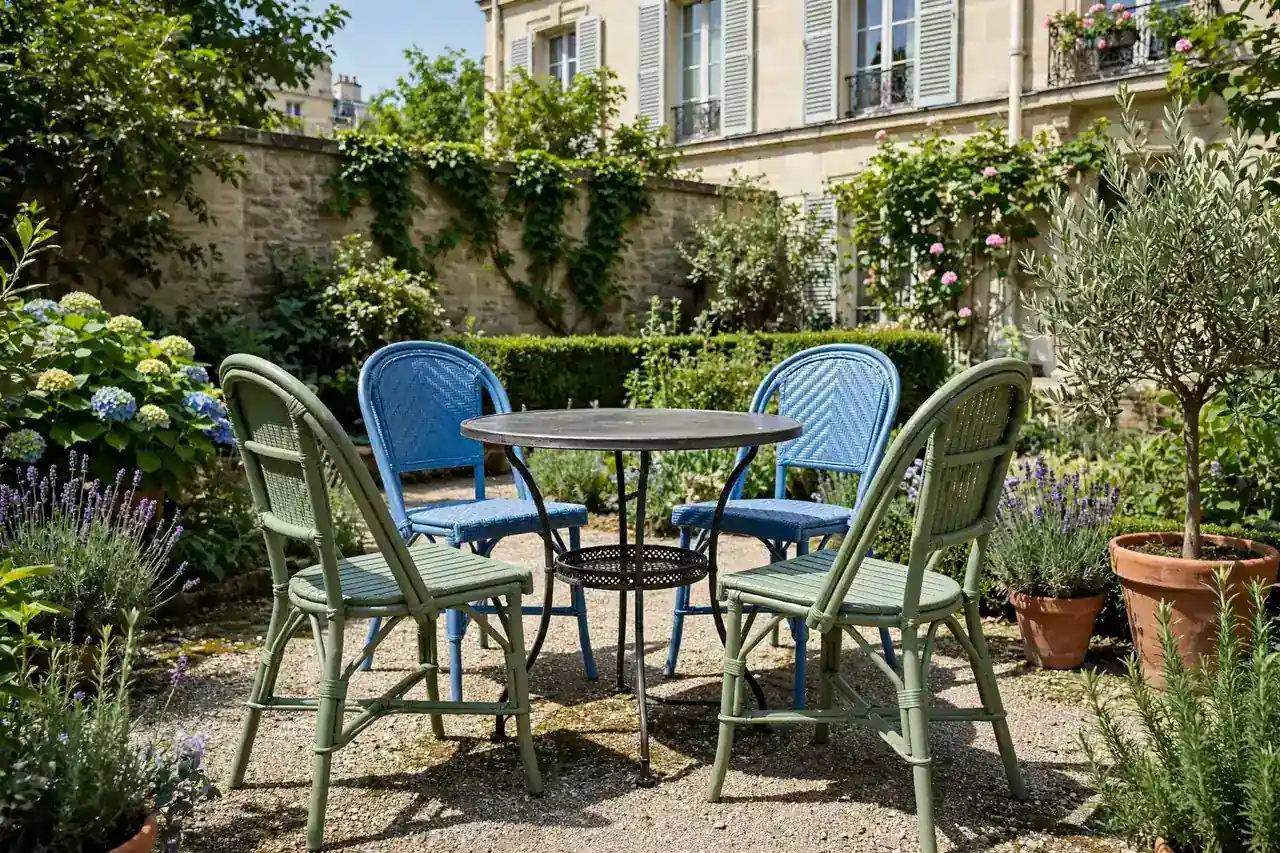
Fermob’s pieces are light, stackable, and rustproof, and no other brand matches the color range. The Bistro collection uses powder-coated steel, while the Luxembourg collection uses powder-coated aluminum, which is lighter and needs less care in wet climates. The furniture folds or stacks for easy storage, which is why one little bistro set can anchor a tiny balcony and still leave room to move. A brand guide names Fermob as the vintage-inspired choice for a Parisian park feel, with folding bistro sets in dreamy pastels and bold brights. Read the brand roundup at Outside Modern’s best patio furniture brands.
Price is the honest part. Fermob is mid-range to premium: a three-piece Bistro set runs a few hundred dollars, while a Luxembourg dining set of four chairs and a table runs well over a thousand. The value is the lifespan and the color: the powder coat is treated to bond hard to the metal, so it resists chipping, fading, and corrosion far longer than a budget painted set. Budget lookalikes exist — folding bistro sets in peacock blue and macaron blue from big-box brands cost under $100 — but their thinner steel and lighter coating show wear in two or three seasons.
Buy Fermob when the patio is small and the color matters. Buy a lookalike when the budget is tight and you accept replacing it sooner. Either way, pick one color and commit to it: a patio with three different bistro colors looks like a clearance rack, not Paris.
One color, committed fully. Three bistro colors look like a clearance rack, not Paris.
Which Materials Suit a French Patio?
A French patio suits four materials: powder-coated wrought iron, powder-coated steel or aluminum, weathered teak or acacia, and woven rattan or wicker. Iron gives the scrollwork and the weight, steel and aluminum give the color and the folding frames, weathered wood gives the country warmth, and rattan gives the cafe-chair curve. The material must match the climate, not just the look.
Wrought iron is the hallmark of the style: heavy, durable, with the curvature and scrolling details synonymous with French design, and excellent in high-wind areas because it will not blow over. The maintenance is real: look for powder-coated finishes to prevent rust, and if you buy vintage iron, be prepared to sand and seal it annually. Our wrought iron outdoor furniture guide covers the rust routine in full.
Weathered wood is the country half. Teak and acacia are great choices, but they should not look brand new: the French aesthetic embraces the greying process, so search for “weathered gray” or “driftwood” finishes, and avoid polished red-toned woods, which lean nautical or tropical. Our acacia wood vs teak comparison weighs the two woods on durability, care, and cost, and our teak outdoor dining table guide shows the premium wood buy.
Rattan is the cafe-chair material. A steamed rattan frame bends into a continuous curve from back to legs with no joint to break, and a woven seat ventilates, which is why a bistro chair stays comfortable on a terrace in summer. The rule is simple: natural rattan suits interiors and covered terraces, while aluminum frames with synthetic woven fiber suit permanent, fully exposed outdoor use. Our rattan outdoor furniture guide explains the natural-versus-resin choice.
Iron for scrollwork, wood for warmth, rattan for the curve. Mix at least two materials on every French patio.
How to Lay Out a French Patio
Lay out a French patio by zone: a bistro set for two in the sunniest corner, a lounge corner with facing seats 4 to 8 feet apart, and a dining table with 36 inches of clearance from the edge to the nearest wall. The layout rule that matters most is the walkway: keep a 30-inch path clear around the main furniture grouping, or the patio feels cramped no matter how pretty it is.
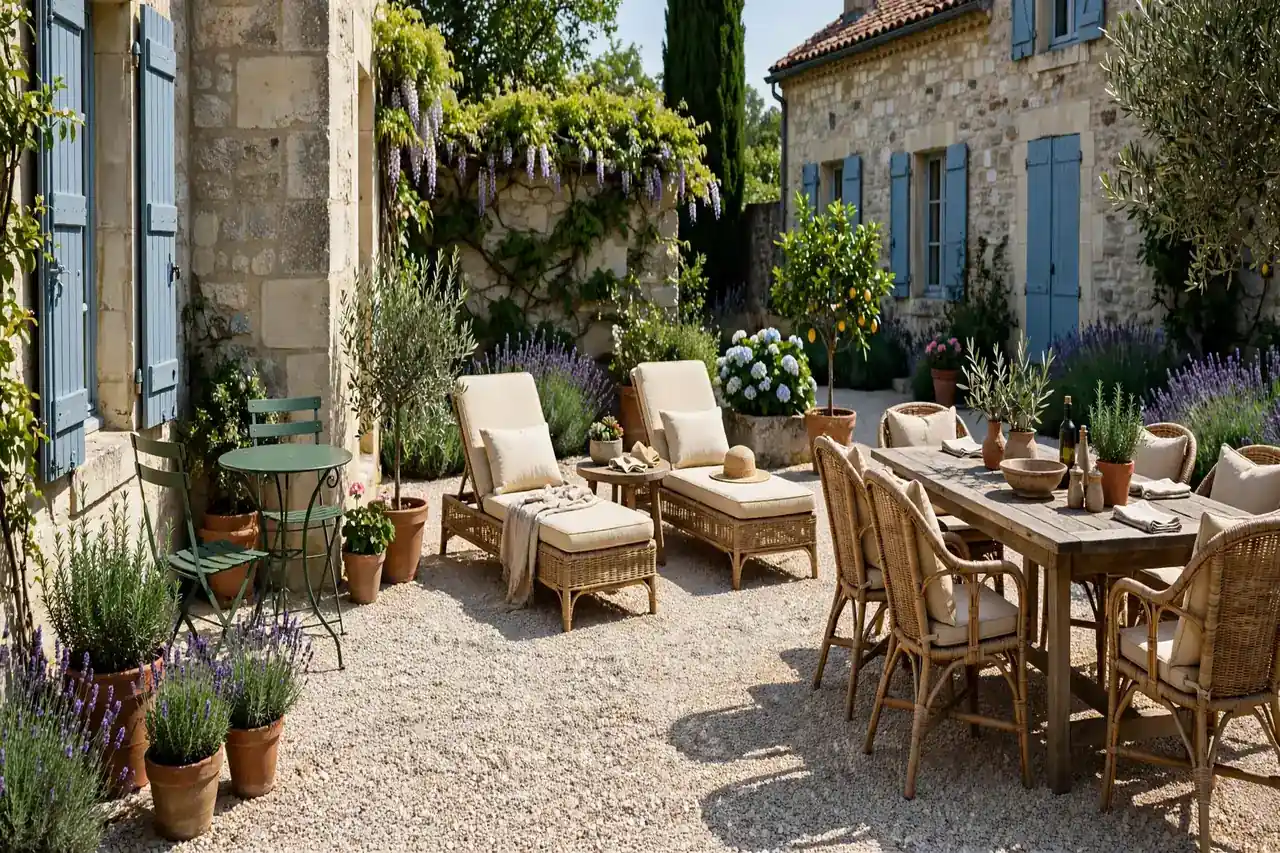
Scale is the most common mistake homeowners make outdoors. Furniture that is too large makes a patio feel cramped, while furniture that is too dainty gets lost in a large garden. For a dining table, keep 36 inches of clearance from the table edge to the nearest wall or obstruction, so guests can slide their chairs back to stand up without hitting anything. For a conversation area, place the sofa and chairs facing each other with 4 to 8 feet between them — the social zone where conversation flows without shouting.
Small patios follow the bistro rule: one round table, two chairs, and nothing else in the zone. Our outdoor dining sets for 6 guide covers the bigger table when the family grows, and our how to arrange outdoor furniture guide covers traffic flow, rug sizing, and the clearance numbers for the whole patio. A bench on one side of the dining table and chairs on the other is a chic French trick for families: the bench tucks under the table when not in use, saving floor space.
Ground the layout with the floor. Gravel is the quintessential French floor: crunchy, permeable, and charming, and pea gravel is the first choice if you can change the flooring. Stuck with a concrete slab? Cover it with a large flat-weave outdoor rug in a natural sisal look, big enough that the front legs of all seating pieces rest on it. That fixes the symptom of a bare slab. The part that actually makes the patio feel French is the styling, which is the next section.
Keep a 30-inch walkway clear around the main grouping. No walkway, no French patio, no matter how pretty the chairs.
How to Style a French Patio So It Feels Lived-In
Style a French patio by mixing materials, softening the metal with textiles, and letting the pieces age: at least two materials in the mix, solid cushions with patterned pillows, and nothing that looks like it came from one box. A French garden feels collected over years, not bought in an afternoon, and the fastest way to ruin it is matching everything.
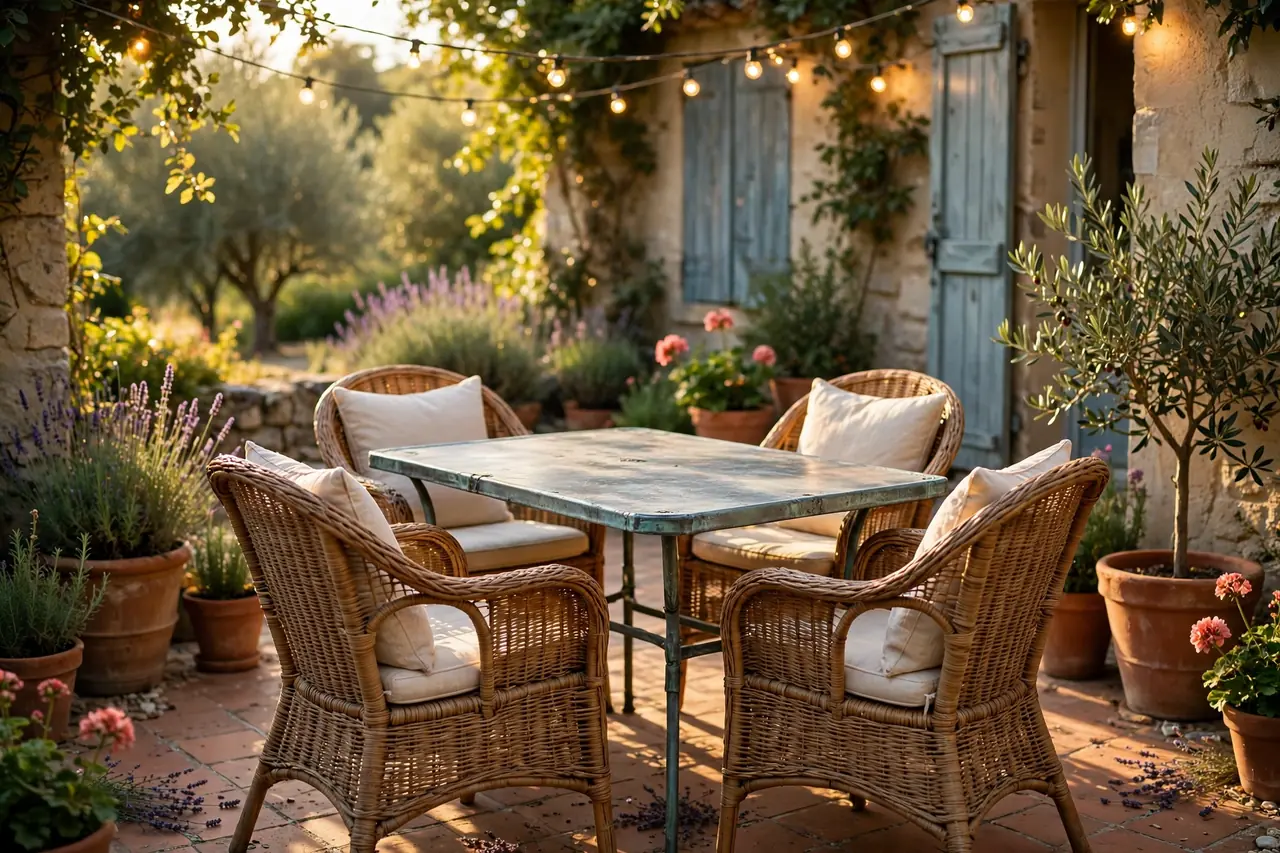
Mix materials on purpose. Instead of buying the table and chairs from the exact same collection, pair a heavy stone or zinc-top table with woven wicker chairs, which creates depth and makes the space feel organic rather than like a showroom floor. A zinc-topped table is the holy grail of French industrial style: zinc develops a patina over time, reacting to rain and spills, and it tells a story. Stone or concrete tops anchor the space visually, though a solid stone table may need three people to lift.
Soften the hard surfaces with fabric. Since French Country furniture relies on metal and stone, the space feels cold without textiles, and fabric is where the color palette lives. Keep the main seat cushions solid — cream or gray — and put the patterns on throw pillows, so you can change the look in five years without reupholstering. Ticking stripes and toile are the most recognizable French patterns, but a little toile goes a long way. Never sacrifice durability for style outdoors: use solution-dyed acrylics like Sunbrella, which resist fading and are bleach-cleanable. Our outdoor furniture fabric guide covers the fabric choice, and our patio pillows guide covers the cushion and pillow mix.
Finish with light and plants. Avoid harsh floodlights: use a warm amber glow from string lights or iron lanterns, with oversized lanterns on the ground near the patio corners in varying heights. Plant structured greenery — boxwoods, olive trees, or standard topiary — in classic Anduze urns or resin reproductions that look like glazed ceramic at a fraction of the weight. Climbing vines on a trellis and terracotta pots of lavender complete the picture.
Mix at least two materials, never one collection. A patio that looks collected beats a patio that looks bought.
How to Care for French Patio Furniture
Care for French patio furniture by material: wash iron and steel twice a year with mild soap and water, touch up paint chips at once, oil or seal wood annually, and wipe rattan with a damp cloth. The single most important habit is the paint-chip check, because rust on iron starts at one bare spot and spreads under the coating.
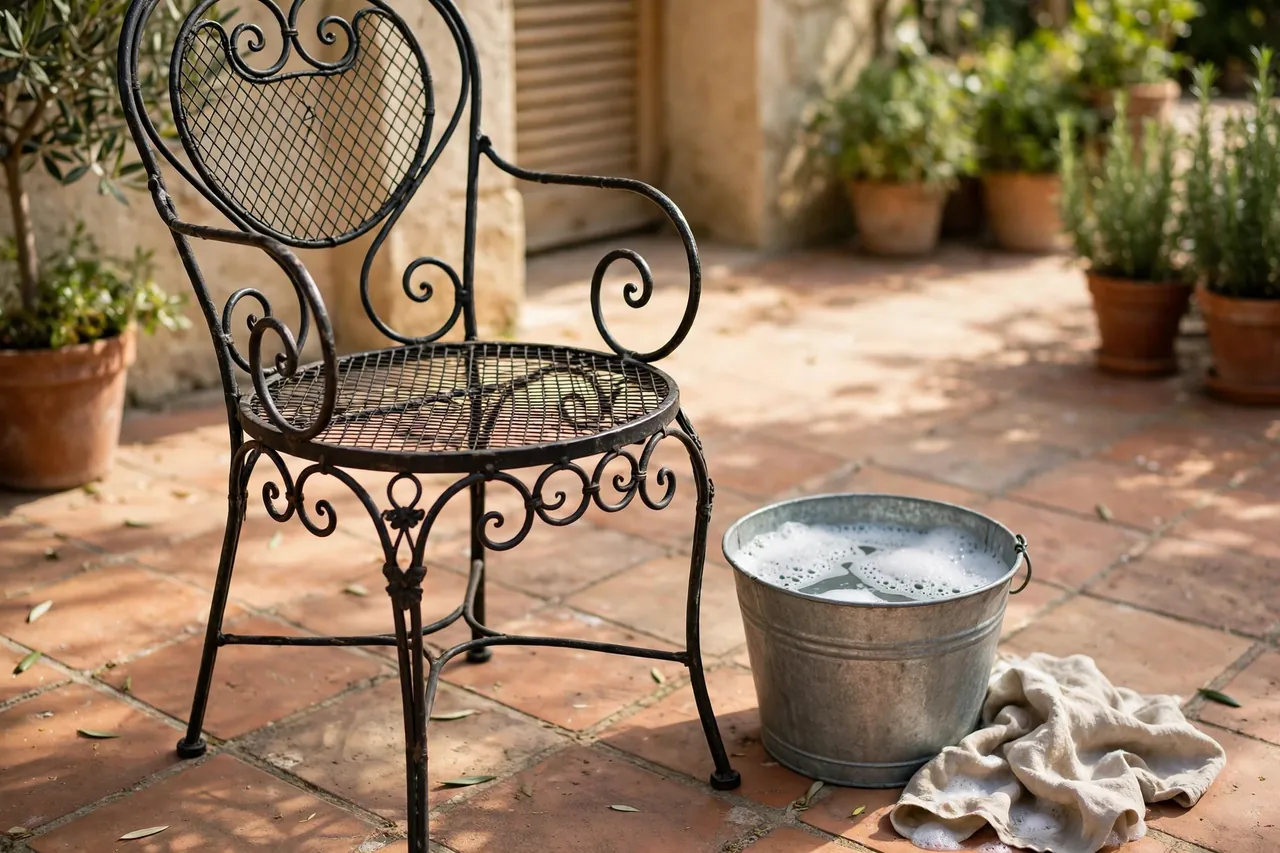
Iron care is proactive. Wash iron furniture with mild soap and water twice a year, and if you see a chip in the paint, sand it lightly and apply touch-up paint immediately. In coastal areas with salty air, apply a coat of clear automotive wax once a season to create a barrier against corrosion. For metal bistro chairs, regular cleaning with a damp cloth is usually enough, and any rust gets a gentle sanding and a touch-up with rust-inhibiting paint or sealant.
Wood and rattan need seasonal care. Apply a protective sealant to wood and rattan surfaces once every season, cover the set when not in use during harsh weather, and check and tighten screws and bolts monthly, since folding bistro chairs loosen with use. Aluminum chairs are low-maintenance, but a periodic cleaning prevents dirt and grime buildup. Store chairs indoors or under cover during harsh winter months to extend their lifespan. Our how to care for outdoor furniture guide covers the season routine for every material, and our outdoor covers for furniture guide shows which covers breathe.
Touch up iron chips the week you see them. Rust spreads under paint you cannot see.
What Most People Get Wrong About French Patio Furniture
Most people get French patio furniture wrong in three ways: they buy the whole set from one collection, they choose metal slat seats with no cushions, and they put a bistro set on a patio too small for its chairs. All three mistakes are easy to avoid, and the first one is the most common.
The matching-set myth is the big one. A French garden is built over years from pieces that found each other, not from a single catalog page. Buying the table, chairs, and lounger from one collection gives a showroom look that no real French patio has. Mix the materials and the makers: a zinc table here, wicker chairs there, a second-hand iron bench from an estate sale.
The comfort myth runs the other way. Metal slat seats look authentic and hurt after twenty minutes of dinner. Always add a seat pad, with tie-on cushions at least 2 inches thick, so guests linger instead of standing up. The sizing myth is the quiet one: the table fits, the chairs do not, and the set ends up blocking the door. Tape the 6-by-6-foot footprint before you order, and check the 24-inch clearance behind each seated person.
Budget is the good news. French Country is about character, not luxury price tags: scour estate sales or online marketplaces for second-hand wrought iron, which often just needs a can of matte black or dark green spray paint, and distress inexpensive pine with vinegar and steel wool for the weathered-wood look. Our best affordable patio furniture guide shows where the value sits when the budget is tight.
Buy the look piece by piece, never all at once. A collected patio beats a catalog patio every time.
Related Guides
If the French look is yours, these guides pick up where this one leaves off:
- Patio Bistro Set — the full buying checklist for the two-chair set.
- Wrought Iron Outdoor Furniture — scrollwork, weight, and the rust routine.
- Rattan Outdoor Furniture — natural versus resin rattan, and where each belongs.
- Acacia Wood vs Teak — the two weathered woods compared on durability, care, and cost.
- Teak Outdoor Dining Table — the premium wood buy for a French country table.
- Retro Outdoor Furniture — vintage styles making a comeback, including the bistro look.
- How to Arrange Outdoor Furniture — traffic flow, rug sizing, and clearance numbers.
- Outdoor Dining Sets for 6 — the bigger table when the family grows.
- Outdoor Furniture Fabric — Sunbrella, OEKO-TEX, and the fabric-safe choice.
- Patio Pillows — the cushion and pillow mix for metal chairs.
- How to Care for Outdoor Furniture — the season-by-season routine for every material.
- Outdoor Furniture for Small Spaces — seven layouts that make a tiny patio feel big.
Frequently Asked Questions
How do I protect wrought iron furniture from rust?
Wash iron furniture with mild soap and water twice a year. If you see a chip in the paint, sand it lightly and apply touch-up paint immediately. In coastal areas, apply a coat of clear automotive wax once a season to create a barrier against corrosion.
Can I pull off this look on a budget?
Absolutely. French Country is about character, not luxury price tags. Scour estate sales or online marketplaces for second-hand wrought iron, which often just needs a can of matte black or dark green spray paint to look new again.
What creates the “French” feel more than anything else?
Gravel. Pea gravel is the quintessential French floor: crunchy, permeable, and incredibly charming. If you are stuck with a concrete slab, cover it with a large flat-weave outdoor rug in a natural sisal look.
Is this style kid and pet-friendly?
Yes, because the materials are hardy. Iron frames will not be chewed through by a puppy. Metal edges can be hard on little knees, so add ample cushions and avoid glass-topped tables if you have active toddlers.
Can I leave a garden bistro set outdoors all year round?
It depends on the material and your climate. Most garden furniture is designed to stay outside, but bistro sets are smaller and lighter than other furniture, so bring them inside during storms and high winds, and cover them over winter to keep them in the best condition.
Start with one bistro set and one color. Tape the 6-by-6-foot footprint, add 2-inch seat pads, and let the zinc table and the lavender pots do the rest. A French patio is not bought in an afternoon — it is collected, one piece at a time, and it gets better every year it ages.