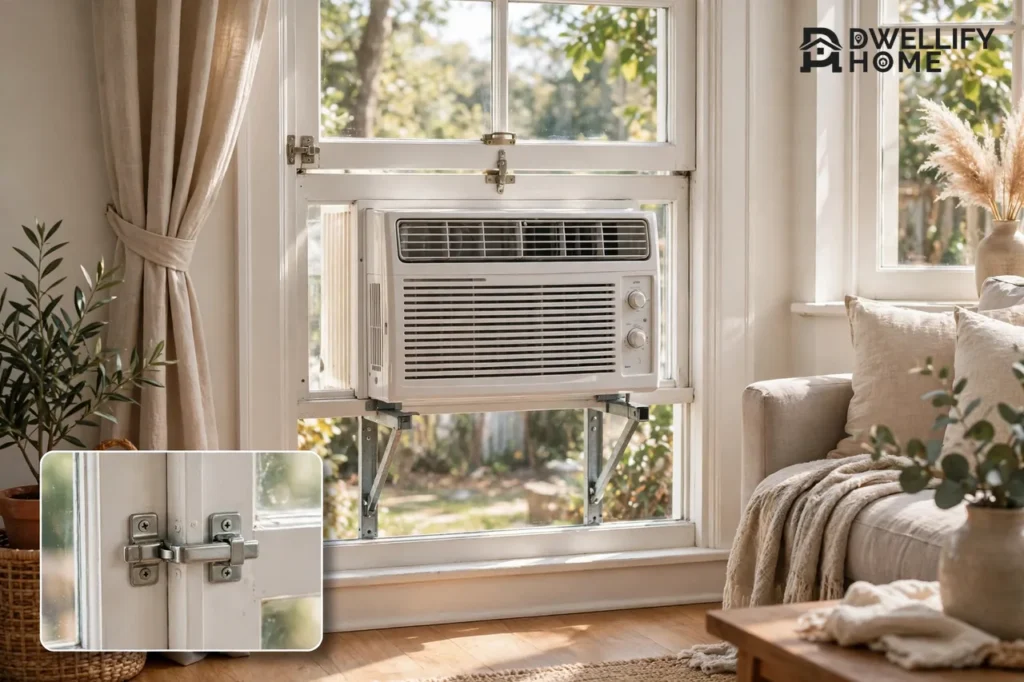
You can secure a window with an AC unit in about 30 minutes with three fixes: lock the sash so it cannot lift, brace the unit so it cannot be pushed in, and seal every gap around it. A window air conditioner lifts the lower sash off its lock, so the window stays open by design. Brown University’s Public Safety team warns that this gap lets a burglar slide the window up or push the unit inward, and it recommends a bracket, a sliding window lock, and a sensor alarm as the core fixes.
This guide walks you through each fix in order, from the free five-minute dowel trick to the stronger hardware worth buying. Every step works on a standard double-hung window, and most of them need no special tools.
Why a Window AC Unit Weakens Your Window
A normal double-hung window locks where the two sashes meet. The lower sash slides up, the upper sash slides down, and the latch joins them. A window AC unit sits in that meeting point, so the latch has nothing to grab. The window is open the whole summer, even when it looks shut.
That opening creates two risks. First, someone outside can lift the upper sash further or push the unit inward to climb through. Second, the heavy unit can fall. Window units often weigh 50 to 80 pounds, and gravity alone does not hold one safely in place. Both risks share one cause: nothing ties the unit, the sash, and the frame together.
Good security here is layered. One fix stops the sash from moving. A second fix anchors the unit. A third fix seals the gaps and adds noise if someone still tries. No single product does all three jobs, so plan on at least two layers.
Mount the Unit So It Cannot Be Pushed In
Start with the unit itself, because a loose unit defeats every lock you add later. Follow your AC maker’s install steps first, then add the bracing below.
Use the screws that came with the unit
Most window units ship with small screws that fasten the unit frame to the lower sash and the accordion side panels to the window casing. Use all of them. They look minor, but they tie the unit to the window so it cannot shift sideways. Check them again after the first week, because vibration can loosen a screw that felt tight on day one.
Add an exterior support bracket
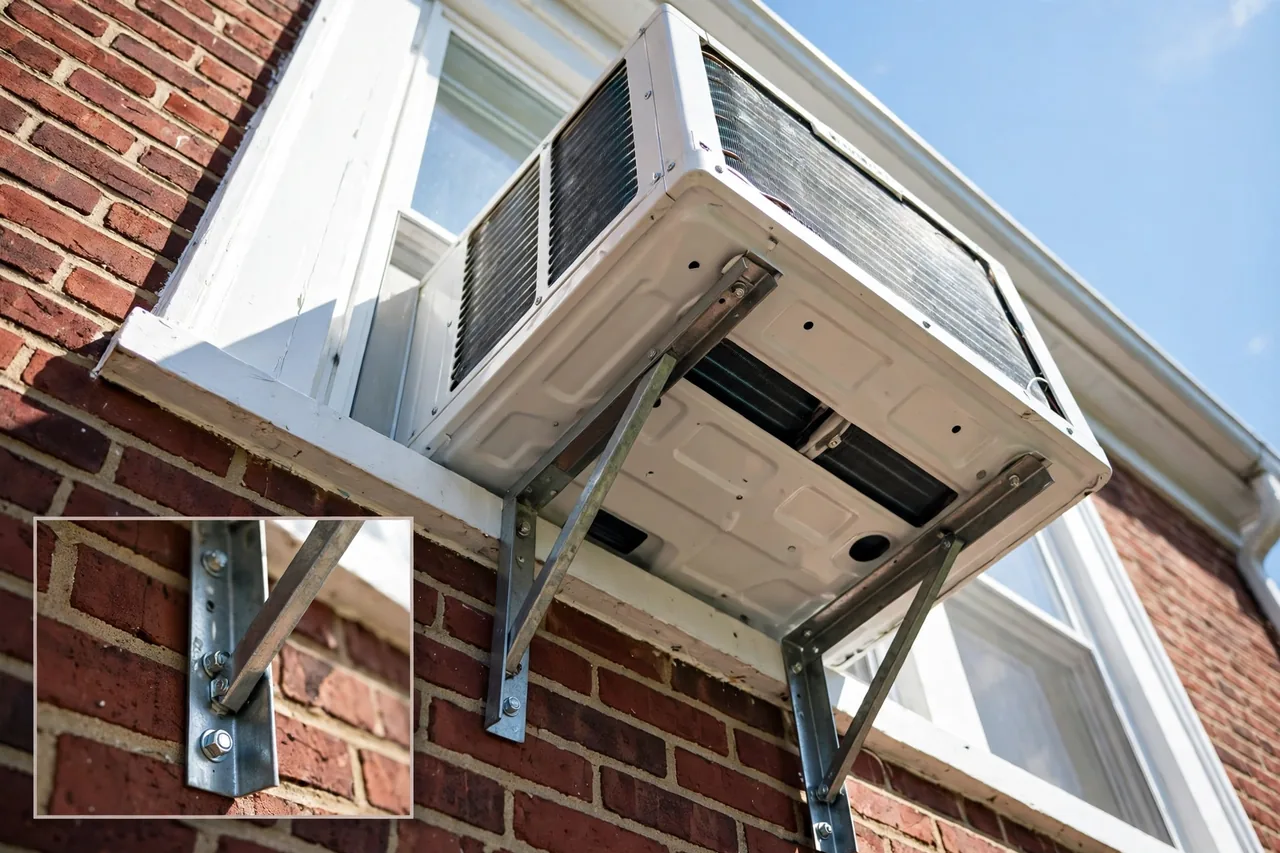
An exterior support bracket is a metal arm that bolts to the wall or sill outside and holds the unit from below. Brown University’s Public Safety team recommends installing an AC bracket because it both supports the unit and attaches it to the house, which makes the unit much harder to move from outside. A bracket carries the weight so the sash does not have to.
Pick a bracket rated above your unit’s weight, and check the rating on the box before you buy. Many cities require exterior brackets for window units, so this step also keeps you on the right side of local rules.
Keep the slight outward tilt
Set the unit with a small outward tilt, about one-quarter to one-half inch lower on the outside, so condensation drains out instead of pooling inside. Do not level the unit flat. A bracket or shim that blocks this tilt can cause water damage, so check the tilt with a small level after you fit any brace.
Lock the Sash So It Cannot Lift
With the unit braced, stop the sash from moving. This is the most important step, because a locked sash is what turns an open window back into a closed one.
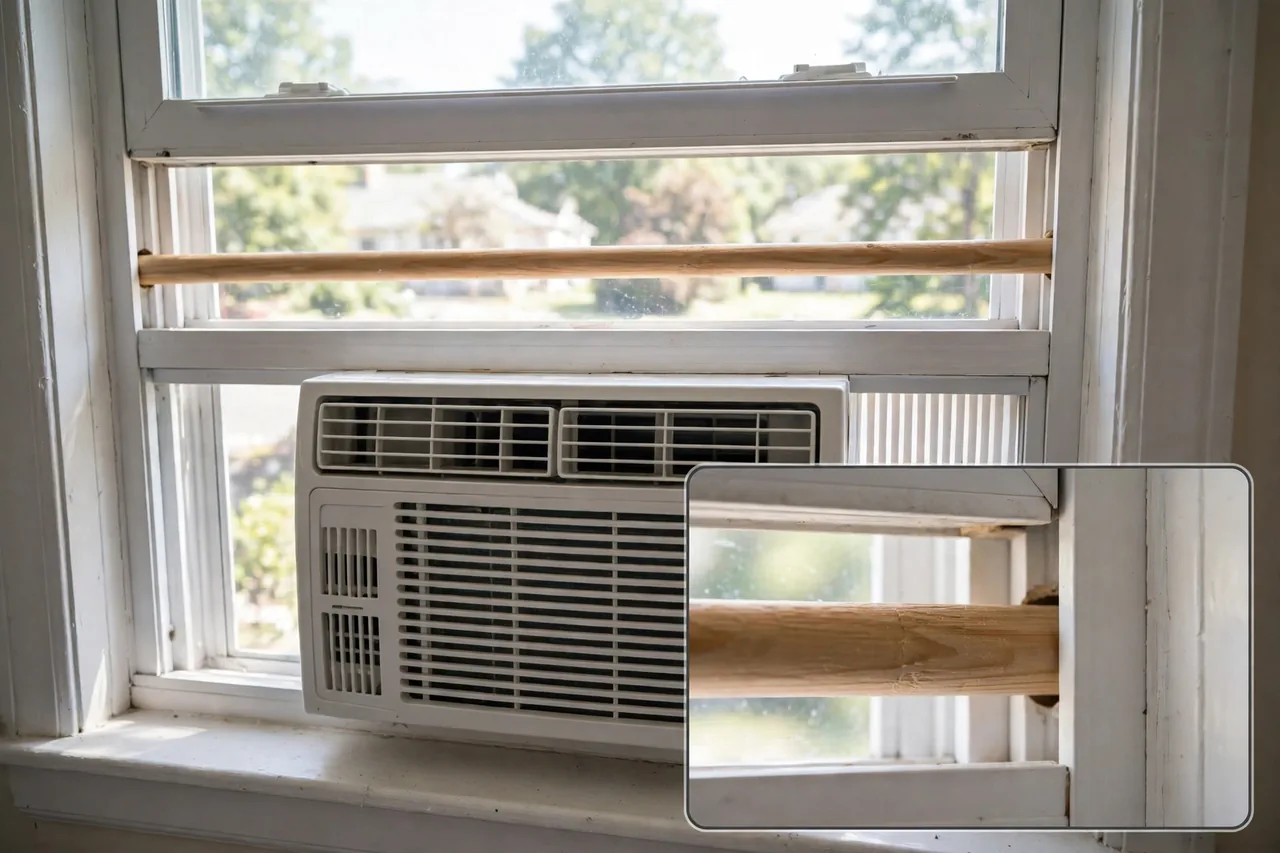
The five-minute dowel trick
Cut a wooden dowel or metal rod to fit snugly in the upper sash track, between the raised sash and the top of the frame. When the sash tries to rise, it hits the dowel and stops. Measure twice and cut once: a dowel even a quarter inch short leaves room to lift. This costs almost nothing, needs no drilling, and works in rentals. Engineer Fix’s guide to this exact problem recommends the dowel first, then a sash jammer or pin lock for a stronger permanent fix.
Add a sliding window lock
A sliding window lock clamps onto the track above the sash and tightens with a thumbscrew. Brown University’s Public Safety team advises adding one on each side of the frame and tightening it firmly. Two small locks beat one big one, because they block both sides of the sash.
Clamp-style locks suit vinyl and metal frames where you do not want to drill. For wood frames, a screwed sash lock holds even firmer.
Use a pin lock or a screw for a semi-permanent fix
A pin lock needs one small drilled hole through the inner sash and into the frame. Slide the steel pin in and the sashes cannot move apart. If you will not open the window until you remove the AC, a single screw driven through the overlapping sashes does the same job for free. Only drill where you own the window, and keep the screw short enough to miss the glass.
Do not forget the outer sash
On many double-hung windows, the outer sash can still be lifted from outside even when the inner sash is locked. If your unit sits in the inner track, drive a small angled screw through the inner sash into the outer sash where they overlap, or tie them with a small L-bracket. Test from outside: push up on the outer sash and confirm it does not move.
Seal the Gaps Around the Unit
Gaps are not just a draft problem. A gap beside the accordion panel is a handhold, and a loose panel is a pry point. Seal them well.
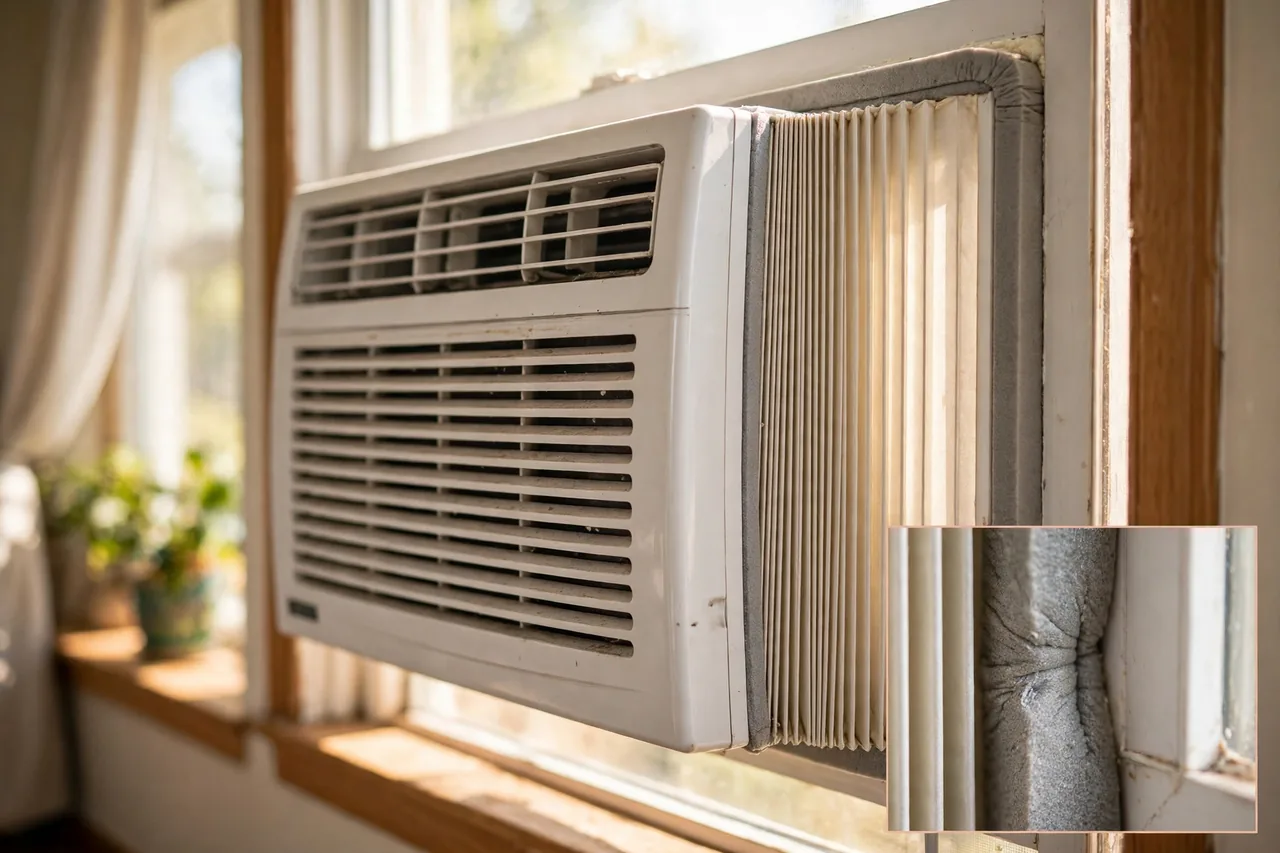
Extend and screw the accordion panels
Pull the accordion side panels fully wide so they fill the space between the unit and the window jambs, then drive the supplied screws through the panel frames into the casing. Panels left loose can be flexed inward. If the panel still leaves a gap because the unit is narrower than the window, screw a strip of plywood or rigid foam board over the opening from the inside.
Foam the edges, then screw the vent flaps
Press foam insulation strips into the seams where the panels meet the frame and along the top edge of the unit. This blocks drafts and removes the finger gap a burglar uses to work a panel loose. Brown University’s Public Safety team also recommends screwing plastic vent flaps directly to the frame with three or more screws where the unit leaves holes, because a loose flap is an easy entry point.
Check the seal from outside
Walk outside and look at the window. You should see the unit, the bracket, and tight panels, with no dark gaps and nothing that flexes when you press it. If you can fit a finger anywhere, seal it. If you can see in, someone can reach in.
Add an Alarm or Sensor
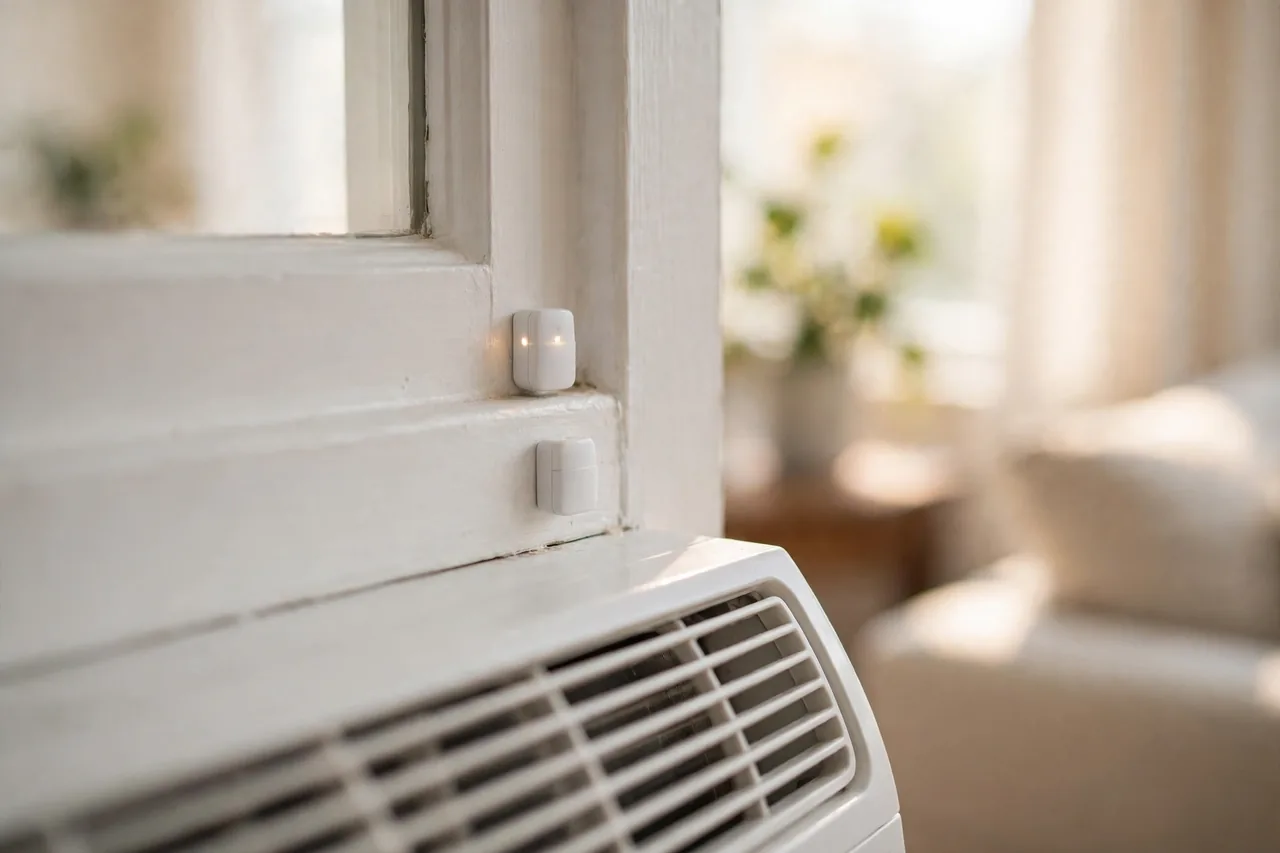
Alarms do not stop a break-in, but they make one loud and short. That matters, because most burglars leave when noise starts.
Stick a small magnetic window sensor on the sash above the AC unit, with the matching magnet on the frame. If the sash moves or the unit shifts, the contact breaks and the alarm sounds. Battery sensors cost little, need no wiring, and peel off cleanly when you remove the unit in fall.
For a stronger setup, add a vibration sensor tuned to ignore rain and wind. Place it on the glass near the unit, not on the unit itself, so normal AC vibration does not set it off. If you already own a home security system, check whether it sells a window sensor that joins it. Our guide to glass break alarms explains how sensors hear a break-in before it happens, and our wireless outdoor camera guide covers the camera that watches the same window from outside.
Renter-Friendly Fixes That Need No Screws
Renters can secure a window AC unit without drilling a single hole. The trick is to use friction and fit instead of screws.
- Dowel in the track: cut to fit, no tools, removes in seconds.
- Clamp-style sash locks: thumbscrew pressure holds them on vinyl or metal tracks.
- Foam board filler: cut a rigid foam panel to fill side gaps, then wedge it tight behind the accordion panel.
- Peel-and-stick sensor alarm: no wiring, no holes, and it moves with you.
- Security film on the upper sash: holds broken glass together and buys time, with no permanent change.
Ask your landlord before you drill anything, and keep the original hardware so you can restore the window when you move out. If your lease bans brackets, the dowel plus clamp locks plus a sensor still give you three solid layers.
Pick the Right Fix for Your Window
Method, cost, and strength at a glance. Use at least two rows together.
| Fix | Cost | Drilling | What it stops |
|---|---|---|---|
| Wooden dowel in track | Under $5 | No | Sash lifting |
| Clamp-style sash lock | About $10 | No | Sash lifting and sliding |
| Exterior support bracket | $20 to $40 | Yes | Unit pushed in or falling |
| Pin lock | About $10 | Yes | Sash lifting, firmly |
| Foam and panel screws | Under $10 | Small screws | Gaps and prying |
| Window sensor alarm | $10 to $25 | No | Silent entry attempts |
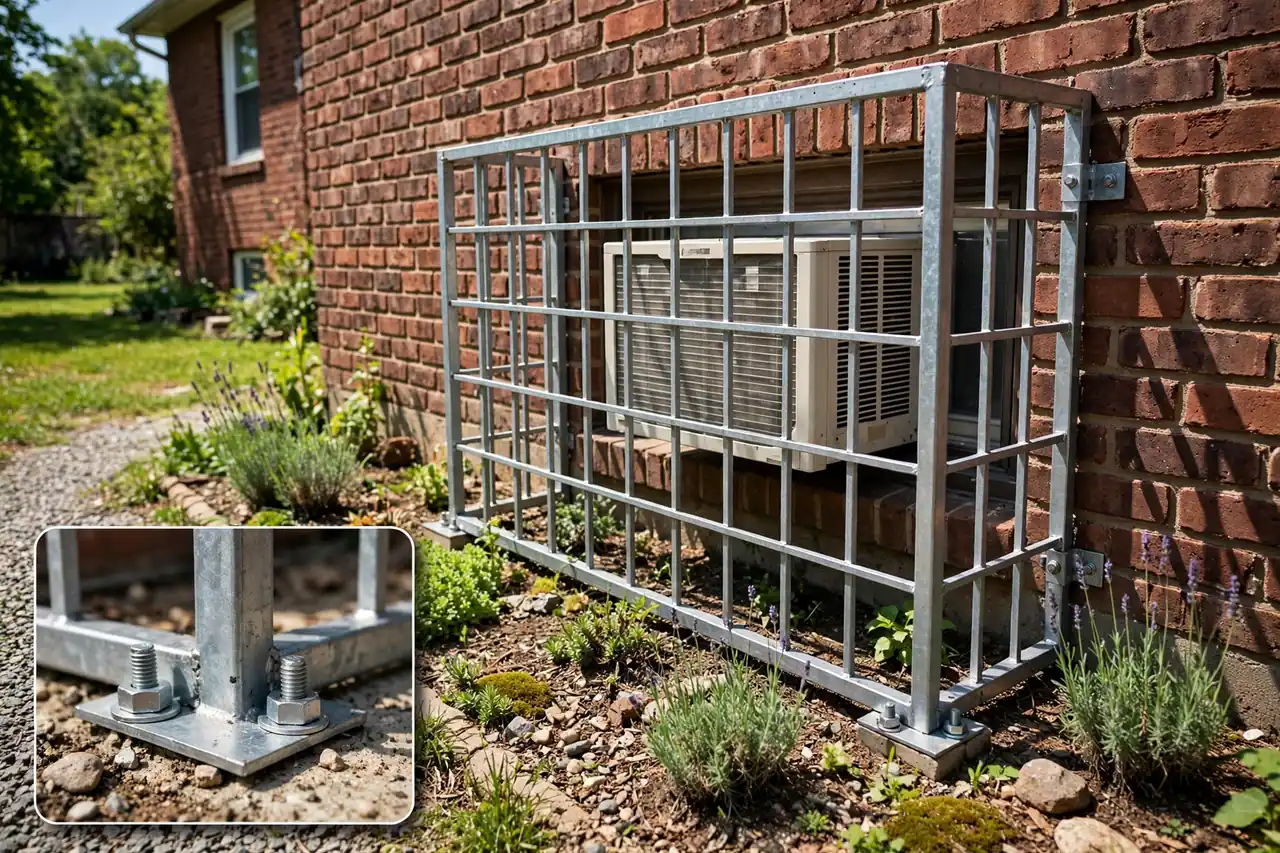
| Security cage (ground floor) | $60 and up | Yes | Unit theft and removal |
Common Mistakes That Leave the Window Open
Most window AC break-ins do not beat a good lock. They walk through a mistake.
- Relying on gravity alone: a unit held only by its own weight can be lifted out from outside in seconds.
- Locking only the inner sash: the outer sash still lifts on many windows.
- Leaving the accordion panels unscrewed: loose panels flex and give a handhold.
- Blocking the drain tilt with a brace: water pools inside and rots the sill.
- Skipping the sensor: locks delay entry, but only noise ends it fast.
- Forgetting ground-floor placement: a first-floor unit is within easy reach, so it needs the strongest setup, or a different window.
If you have a choice, avoid the first floor for a window unit. A second-floor window with a bracket and a sash lock is far harder to reach than a ground-floor one with the same hardware. When the first floor is your only option, add the security cage and the sensor as well.
What to Do When You Remove the Unit
Security does not end when summer ends. Pull the dowel and locks, remove the bracket if it is seasonal, and test the original sash lock. It should click shut and hold when you pull up on the sash. If it feels loose after a summer of holding the unit’s weight, tighten its screws or replace it before winter.
Check the sill for water stains and soft wood, which signal that the drain tilt failed. Patch small gaps with caulk so cold air and pests stay out. Store the dowel, locks, and bracket together in a labeled bag with the unit, so next summer’s setup takes minutes instead of a shopping trip.
Related Guides
- Glass Break Alarm: How the Sensor Hears a Break-In Before It Happens
- Wireless Security Cameras Outdoor: Placement, Wi-Fi Range, and the Best Picks for 2026
- Best Home Security Camera System: 6 Picks for 2026, With the Real 5-Year Cost
- Best Outdoor Landscape Lighting Ideas: Make Your Yard Safe and Beautiful After Dark
- How to Buy a New HVAC System: A Step-by-Step Guide to Getting It Right
Frequently Asked Questions
Can someone push in a window air conditioner from outside?
Yes, if the unit is held only by gravity and the sash. A unit with no bracket, no screws, and no sash lock can be pushed inward or lifted out in seconds. A support bracket bolted to the wall, the maker’s screws, and a locked sash together make that push far harder and much louder.
How do you burglar-proof a window air conditioner?
Use three layers: brace the unit with an exterior support bracket and its screws, lock the sash with a dowel or sash lock so it cannot lift, and seal the gaps with foam and screwed panels. Add a small window sensor alarm so any attempt makes noise. No one layer is enough on its own.
How can I secure a window AC unit without screws?
Use a wooden dowel cut to fit the upper sash track, clamp-style sash locks that tighten with a thumbscrew, rigid foam board wedged into side gaps, and a peel-and-stick sensor alarm. These four fixes need no drilling and suit rentals, though a screwed bracket is stronger where drilling is allowed.
Do window AC security cages work?
Yes, on ground-floor windows. A steel cage bolts to the ground or wall around the outside of the unit, so the unit cannot be pulled out or stolen. It costs more than locks and needs drilling, so it fits homes where the unit sits within easy reach and stays in place all season.
Should I remove my window AC unit in winter?
Yes, when you can. Removing the unit lets the sash lock shut again, which restores the window’s normal security and stops drafts. If you must leave it in, keep the sash lock, bracket, and sensor in place all winter and check the seal before the first freeze.
Stay Safe While You Work
Window units are heavy and awkward. Lift with a second person, keep your hands clear of the sash while it is raised, and never lean out of an upper-floor window to fit a bracket. If the window is above the first floor and you cannot reach the outside safely from a ladder, hire a handyman for the bracket. This guide gives general home advice, not professional security or structural advice, and a locksmith or installer can check anything that feels unsafe.
Set aside 30 minutes this weekend and fit the dowel, the sash lock, and the bracket. That small job turns your coolest window back into a locked window.