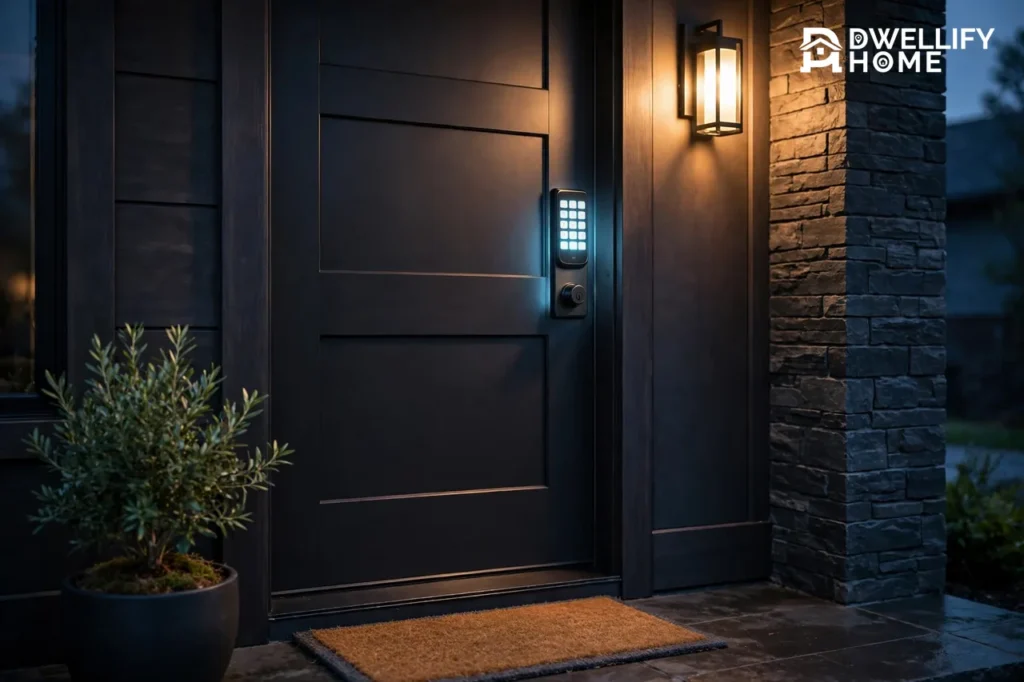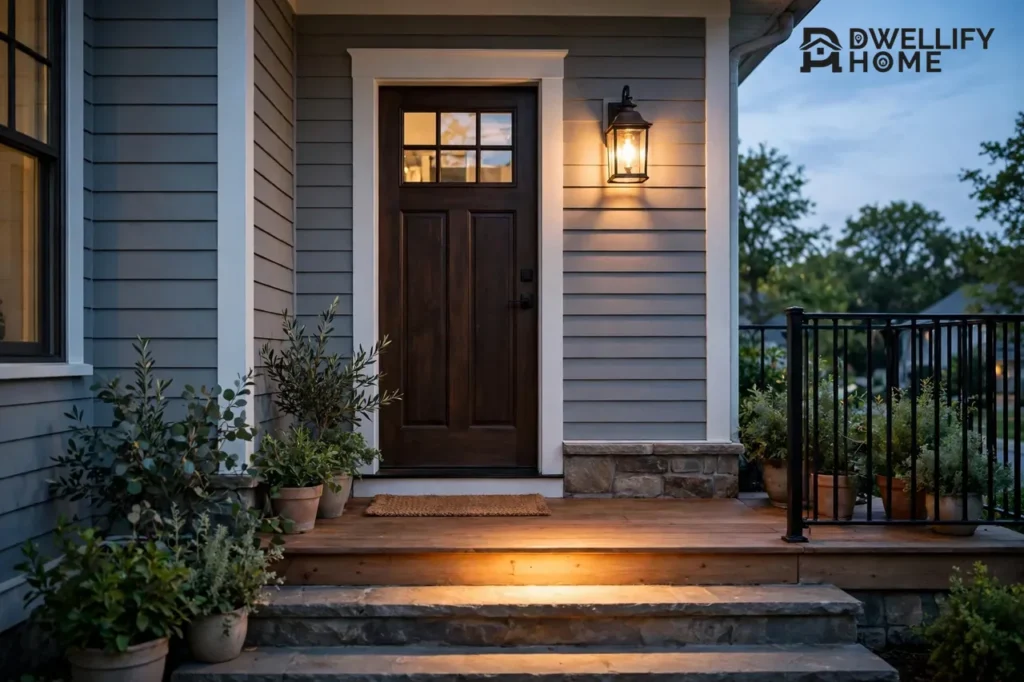
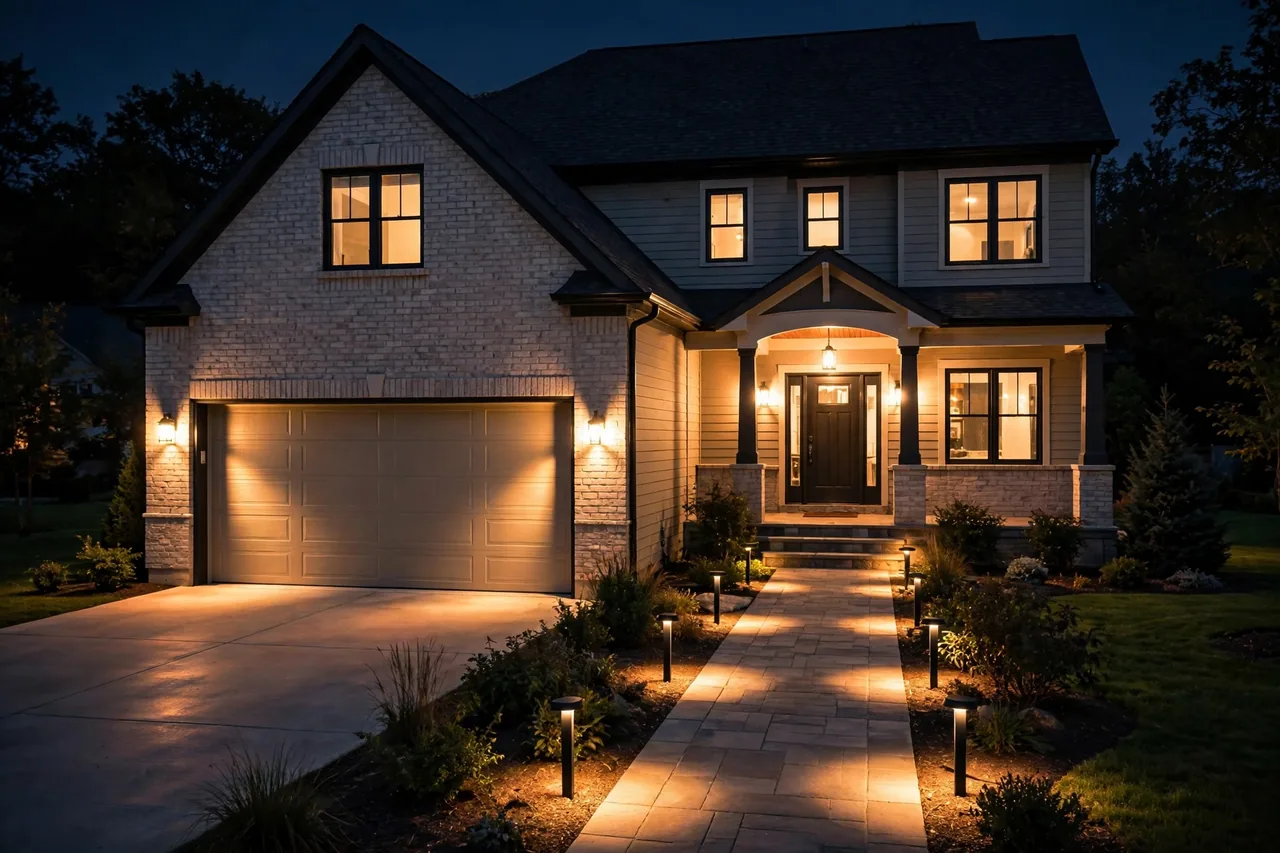
A dusk to dawn light is an outdoor light with a built-in photocell sensor that turns itself on at dusk and off at dawn, with no timer, no app, and no switch to flip. The sensor measures the daylight around it, and when the light level drops below a set threshold at sunset, it closes a circuit and powers the bulb. At sunrise, the rising light opens the circuit and the bulb turns off. It is the simplest automatic outdoor light you can buy.
You have seen these lights on porches, garages, and driveways: the porch light that is already on when you come home after dark, and dark again by morning without anyone touching it. A dusk to dawn light needs only power from the wall switch, which stays on all the time, and the sensor does the rest. One design detail decides whether yours works or flickers all night, and it is in the troubleshooting section below.
How a Dusk to Dawn Light Works
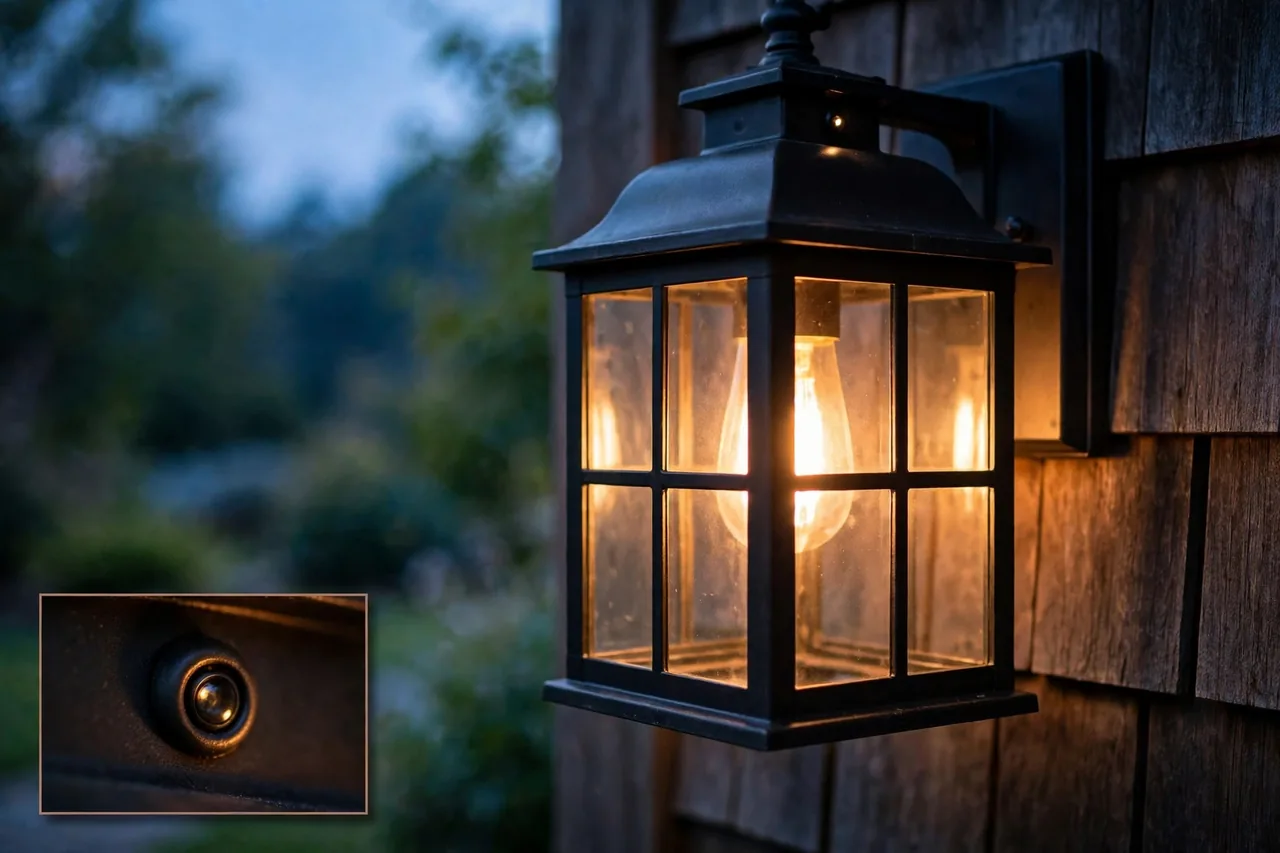
A dusk to dawn light works through a photocell, a small light-sensitive component that changes its electrical resistance as the light around it changes. In bright daylight, light hits the photocell and its resistance drops, which keeps the circuit open and the bulb off. As the sun sets and the light fades, the resistance climbs, and once it crosses a set threshold, the circuit closes and the bulb turns on. At dawn the process runs in reverse, and the bulb turns off.
The photocell is usually a light-dependent resistor made from a semiconductor material such as cadmium sulfide, and it reacts to the amount of light falling on it, not to the time of day. That is why a dusk to dawn light adjusts itself as the seasons change: it turns on earlier on a dark winter evening and later on a long summer evening, with no reprogramming. Most sensors also include a short delay, so a passing car’s headlights or a cloud do not flip the light on and off. An engineering guide to these lights explains the photocell mechanism in plain words, and notes that the sensor only knows what light reaches it, which is the key to every problem these lights develop.
Some bulbs use separate switch-on and switch-off thresholds, a design called hysteresis, so the bulb needs darker conditions to turn on than the brighter conditions that turn it off. That gap stops the light from flickering when the light level hovers near a single threshold at twilight. A detailed guide to how dusk to dawn bulbs work explains these separate thresholds and why the wall switch must stay on: turning the switch off stops the automatic operation completely, because the switch is the bulb’s power supply.
The Three Ways to Get Dusk to Dawn Lighting
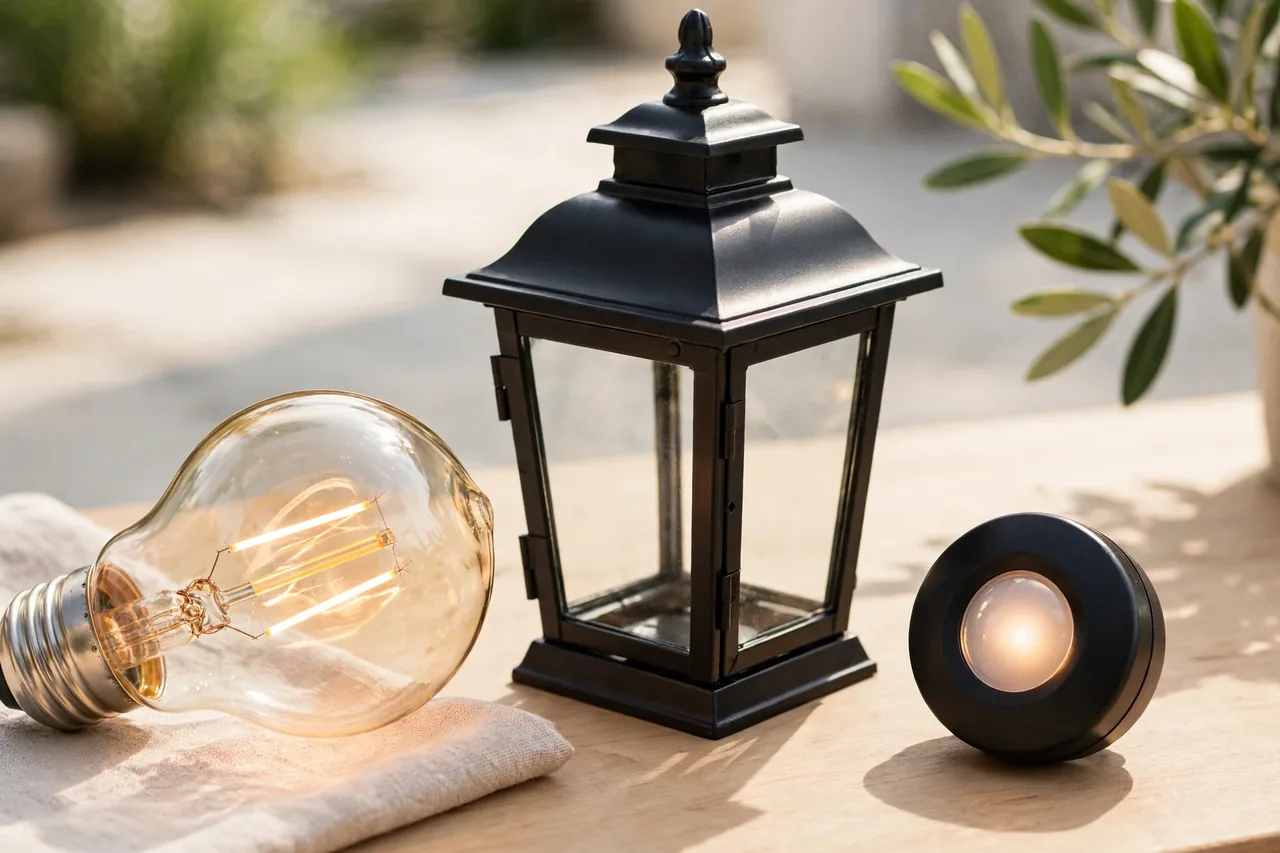
Dusk to dawn lighting comes in three forms, and the right one depends on what you already have. A dusk to dawn bulb screws into an existing socket, and its sensor sits in the bulb itself, so it is the cheapest and fastest upgrade. A fixture with a built-in photocell replaces the whole outdoor light, and its sensor sits on the fixture where it can see the sky. A screw-in photocell socket or a separate photocell sensor adds automatic control to any existing fixture and bulb.
The bulb is the best pick when your fixture is fine and you only want automatic control. It costs a few dollars, screws in like any bulb, and works in a porch lantern, a garage sconce, or a post lamp. The built-in fixture is the best pick when the old fixture is worn out or the sensor needs a clear view of the sky that the bulb cannot get. The separate sensor is the best pick when you want one sensor to control several lights, or when the bulb’s own light would shine back onto its sensor.
Solar dusk to dawn lights are a fourth option, and they work differently: a solar panel charges a battery by day, and the battery powers the light at night. They need no wiring at all, but they give less light and they fade on cloudy winter days. For a front porch or a driveway, a mains-powered bulb or fixture is the reliable pick.
Dusk to Dawn vs Motion Sensor vs Timer: Which One Wins?
A dusk to dawn light stays on all night, a motion sensor light turns on only when something moves, and a timer turns on and off at fixed clock times. The dusk to dawn light wins on steady visibility: your porch, driveway, and walkway stay lit from sunset to sunrise, so nobody walks into a dark step and a burglar never gets a dark approach. The motion sensor wins on energy use, because it burns power only for a few minutes at a time, and it startles intruders with a sudden bright light.
The timer loses to both, because it cannot follow the seasons. A timer set for 6 p.m. turns the light on an hour too early in summer and an hour too late in winter, and it needs resetting after every power cut and every daylight-saving change. A dusk to dawn light never needs resetting, because it reads the actual sky.
Caption: Dusk to dawn, motion sensor, and timer compared.
| Control | Light Pattern | Energy Use | Best For |
|---|---|---|---|
| Dusk to dawn | On all night | Low with LED | Porch, driveway, walkway |
| Motion sensor | On when movement is detected | Lowest | Back yard, side gate |
| Timer | On at fixed clock times | Low with LED | Holiday lights |
| Hybrid | Dim all night, bright on motion | Low | Front door, garage |
The hybrid is the best of both worlds for a front door: the light glows dim all night so the porch is never dark, then jumps to full brightness when someone approaches. Our best motion sensor lights guide compares the motion side of this choice, and our best floodlight cameras guide covers fixtures that combine a bright light with a camera.
Where to Use a Dusk to Dawn Light
A dusk to dawn light belongs anywhere you want light every night without thinking about it. The front porch is the first spot, because it lights the steps for family and guests and shows visitors the door is lived in. The garage door and driveway come second, because a lit driveway is safer to walk and harder to approach unseen. The back door, the side gate, and the walkway to a shed are the next spots, because those are the dark corners burglars prefer.
Use one on a barn, a detached garage, or a vacation home too, because those buildings sit dark for weeks at a time and a light that runs itself is the cheapest way to make them look occupied. Our patio lighting ideas show how to layer these lights with decorative lighting so the yard looks good as well as safe after dark.
Do not use a dusk to dawn light where you sleep near it. A bright light outside a bedroom window all night disturbs sleep, and a light that shines into a neighbor’s window will earn you a complaint. Aim the fixture at your own ground, pick a warm color temperature, and use a shielded fixture that throws light down, not out.
How Much Electricity Does a Dusk to Dawn Light Use?
A dusk to dawn LED light uses very little electricity, because the LED itself is efficient and the light is off all day. A typical 9-watt LED dusk to dawn bulb running about 12 hours a night uses roughly 0.1 kilowatt-hours a day, which costs only a few dollars a year in most of the United States. A practical guide to choosing dusk to dawn outdoor lights puts the same figure at about 0.1 kilowatt-hours a day for a 9-watt bulb, or less than $2 a year in most regions. The exact cost depends on your electricity rate and the wattage, but a modern LED bulb costs far less to run all night than an old 60-watt bulb cost for a few hours.
Do the math before you worry about the bill. A 9-watt bulb at 12 hours a night uses about 39 kilowatt-hours a year, and at 14 cents per kilowatt-hour, that is about $5.50 a year. A 9-watt LED dusk to dawn bulb costs about $5 a year to run all night, every night. An old 60-watt incandescent bulb in the same socket would cost about $37 a year for the same hours, which is why the LED upgrade pays for itself in months.
The light does use a tiny amount of power during the day, because the sensor stays awake to watch the light level, but that standby draw is a fraction of a watt. If your bill jumps after fitting a dusk to dawn light, the cause is almost always a high-wattage bulb or a second light on the same circuit, not the sensor.
What Most People Get Wrong About Dusk to Dawn Lights
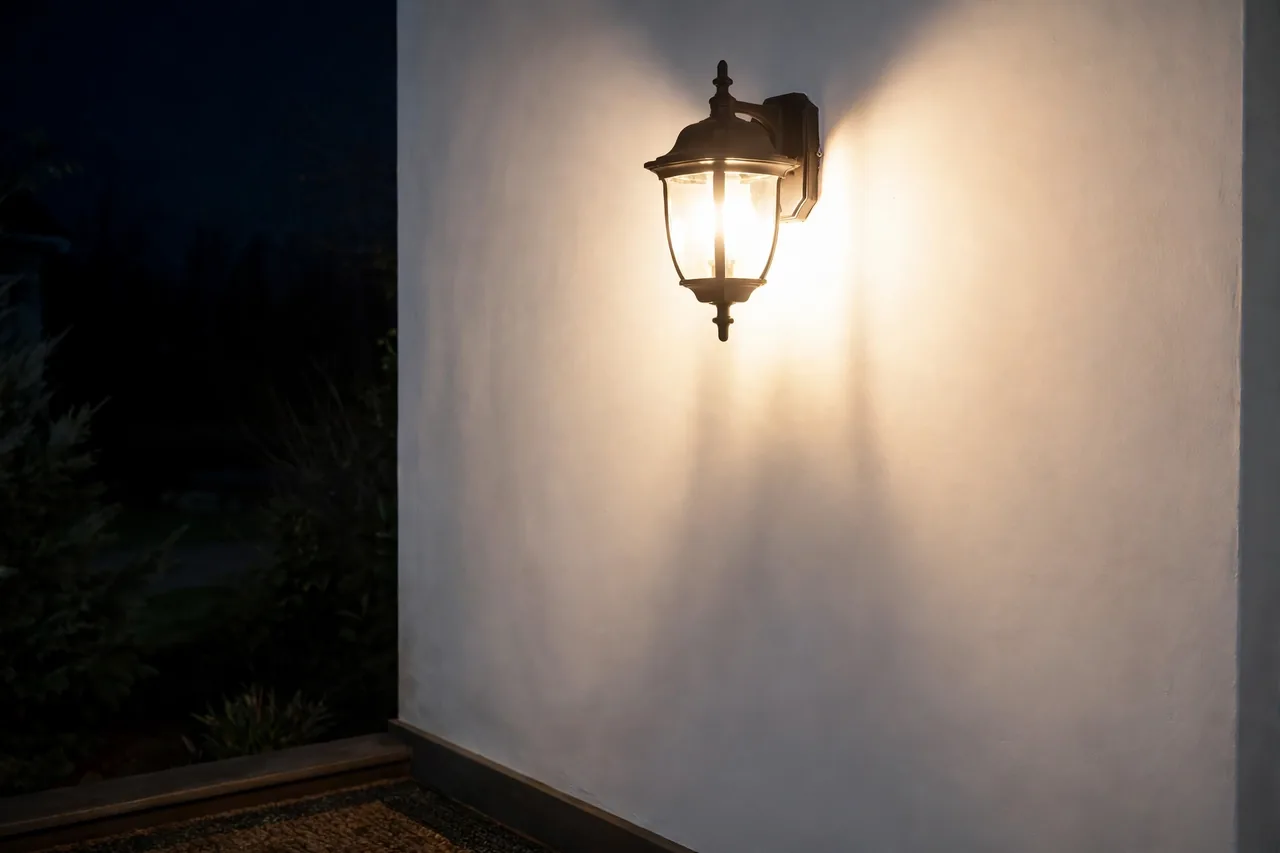
Most people get this wrong: they think a dusk to dawn light knows the time, so they blame the clock when it behaves oddly. It knows nothing about time. It only knows how much light reaches its sensor, so anything that changes the light at the sensor changes when the light turns on. A porch roof that shades the sensor makes the bulb turn on early and stay on late, a streetlight shining on the sensor keeps the bulb off all night, and the bulb’s own light reflecting off a white wall makes it cycle on and off.
The second mistake is screwing a sensor bulb into an enclosed fixture. In a frosted or enclosed fixture, the sensor can read the glass as bright from its own output and switch itself off, which produces the classic cycling problem. If your fixture is enclosed, use a fixture with a built-in sensor on the outside, or a separate photocell, instead of a sensor bulb.
The third mistake is putting the light on a dimmer. A dusk to dawn bulb needs full power from the wall switch to run its sensor and driver, and a dimmer starves it. Keep the switch fully on, and control the brightness by choosing the right bulb wattage instead.
Troubleshooting: Why Your Dusk to Dawn Light Stays On, Stays Off, or Flickers
A dusk to dawn light that misbehaves almost always has a sensor problem, not a bulb problem, and the pattern tells you which one. Work through the patterns below in order, and most lights are fixed without replacing anything. Our motion sensor light fix guide covers the same sensor logic for motion lights, and the same tests apply.
It stays on all day
A light that stays on all day means the sensor thinks it is dark. Check for a porch roof or deep eave shading it, a spider web or wasp nest over the sensor eye, paint overspray, or a sensor facing a north wall in deep shade. Cover the sensor with your finger or tape during the day as a quick test: if the light comes on after a short delay, the sensor works and simply is not seeing enough daylight, so move the fixture or the bulb to a brighter spot.
It never turns on at night
A light that never turns on usually means the sensor sees too much light. Check for a streetlight, a neighbor’s floodlight, or another porch light shining on the sensor, and check that the wall switch is fully on and not on a dimmer. If the sensor faces a bright light, shield it or move the fixture so the sensor faces the open sky.
It flickers or cycles on and off
Cycling is the most common complaint, and the cause is usually the bulb’s own light reaching its sensor. The lamp switches on, its light hits the sensor, the sensor reads daylight and turns the lamp off, then the cycle repeats. Fix it by moving to a fixture with the sensor shielded from the lamp, aiming a swivel sensor away from the bulb, using a less reflective globe, or switching from a sensor bulb to a fixture-mounted or remote photocell. A guide to photocell troubleshooting calls the sensor seeing its own light the most common cause of a light that turns on, then off, then on again through the night.
Before You Wire Anything: A Safety Note
Replacing a bulb is a safe do-it-yourself job, but replacing a fixture means working with your home’s mains wiring, and that work carries a real shock risk. Turn off the breaker before you touch any wire, and test with a voltage tester that the power is truly off. If your wiring is old, if there is no junction box, or if you feel unsure at any point, hire a licensed electrician. A short professional visit costs far less than a shock or a fire. This guide is general information, not electrical advice, and local codes may require a licensed installer.
Related Guides
To buy the right bulb or fixture, read our best motion sensor lights guide for the motion side of outdoor lighting, and our best floodlight cameras guide for fixtures that add a camera. To fix a light that misbehaves, read how to fix a motion sensor light. Dusk to dawn outdoor light picks are covered in a separate buying guide on this site, and our patio lighting ideas show how to layer these lights so the yard looks good after dark.
Frequently Asked Questions
Does a dusk to dawn light stay on all night?
Yes. These lights are designed to turn on at sunset and remain on until sunrise. They rely on ambient light levels, so they switch off automatically once enough daylight is detected the next morning.
Do dusk to dawn lights use a lot of electricity?
Not if they are LED. A typical 9-watt dusk to dawn bulb running 12 hours nightly uses about 0.1 kilowatt-hours per day, which costs only a few dollars a year in most regions. An old incandescent bulb in the same socket would cost about seven times more.
Do dusk to dawn lights work in winter?
Yes, as long as the sensor receives ambient daylight. The photocell reads the actual light level, so the light turns on earlier on dark winter evenings and later on long summer evenings, with no reprogramming and no timer to reset.
Why does my dusk to dawn light stay on during the day?
This usually means the sensor is obstructed, faulty, or shaded from daylight, or it is picking up light from a nearby source that confuses it. Check for a spider web, paint, or a deep eave shading the sensor, clean the sensor lens, and make sure the sensor faces the open sky.
Why does my dusk to dawn light keep turning on and off?
The bulb’s own light is reaching its sensor. The lamp turns on, its light hits the sensor, the sensor reads daylight and turns the lamp off, then the cycle repeats. Move to a fixture with a shielded sensor, aim the sensor away from the bulb, or switch to a fixture-mounted photocell.
A dusk to dawn light is the simplest automatic outdoor light you can buy: screw in a bulb or fit a fixture, leave the switch on, and the sensor handles every sunset and sunrise for you. Pick an LED bulb for an existing fixture, a built-in fixture when the old one is worn out, and keep the sensor facing the open sky. Then read our best motion sensor lights guide to decide where motion control beats all-night light.