The best outdoor motion sensor light for most homes is the Tuffenough Solar 3-head 2-pack, because it gives you 2,500 lumens, a 270-degree sensor, and a remote control with zero wiring — and the 2-pack costs $32.99 on Amazon, often on sale near $25 (checked 16 November 2026). If you need maximum brightness for a big driveway, the hardwired LUTEC 72W at 7,500 lumens is the stronger pick, and if you want phone alerts and a camera, the Ring Floodlight Cam Wired Pro is the smart choice. The right light depends on your power source, the size of the area, and whether you want a camera with it.
Outdoor motion sensor lights do two jobs at once: they light your way when you come home after dark, and they switch on suddenly when someone approaches, which makes your home a harder target. This guide compares the five best options for 2026 by brightness, power, sensor coverage, and price, so you can pick the one that fits your home instead of guessing from the box.
How to Pick the Right Motion Sensor Light
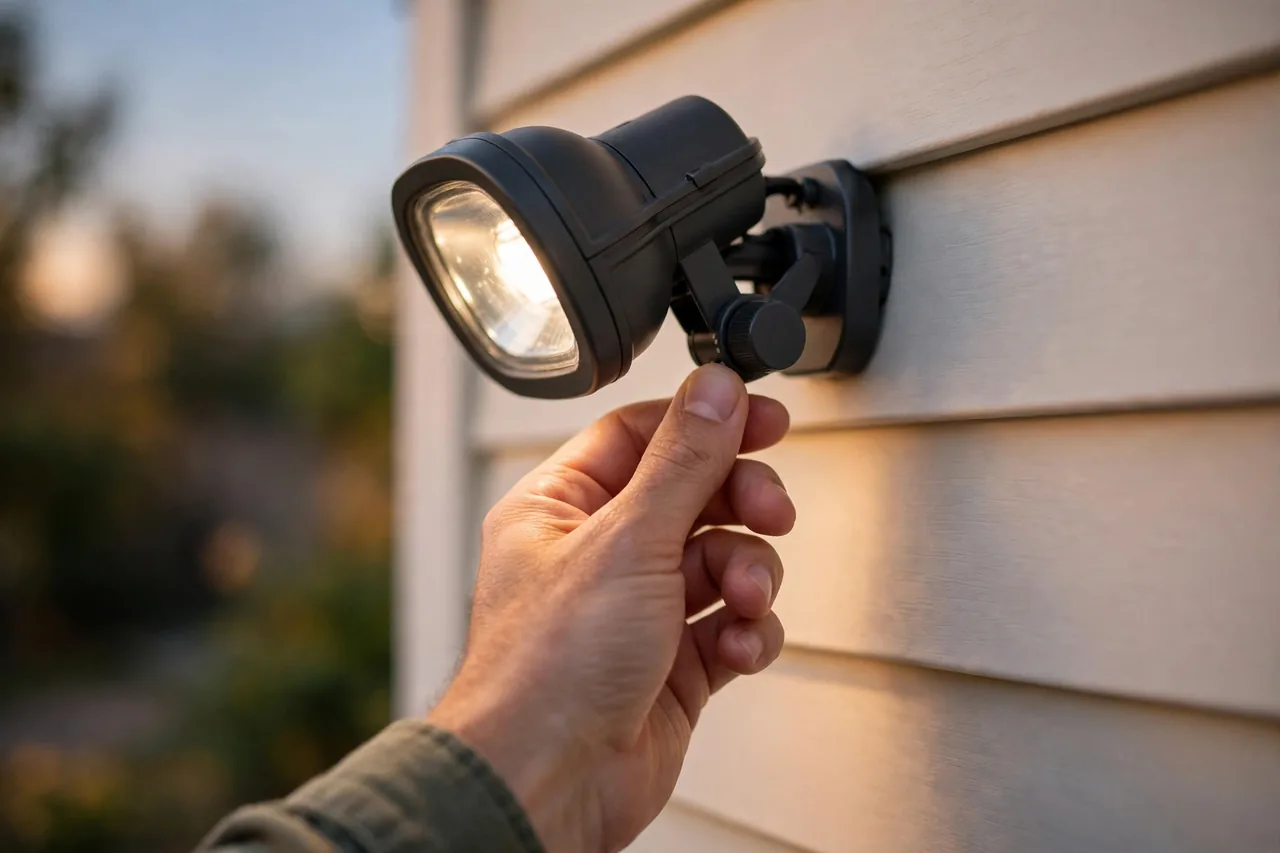
Start with the area, not the product. A light that is perfect for a front porch will look lost on a long driveway, and a 7,500-lumen floodlight over a small patio will blind your guests. Match the light to the space first, then worry about the brand.
How Many Lumens Do You Actually Need?
Lumens measure brightness, and the number you need grows with the size of the area. An entryway or stairwell needs only 200 to 400 lumens for safe, close-range light. A full driveway or backyard needs at least 1,000 to 1,300 lumens from one fixture, or two lights if the space is wider than about 40 feet. For a large yard or a long driveway, look for 2,500 lumens or more.
More is not always better. A very bright light aimed at eye level creates glare, and glare makes the dark areas around it harder to see. Aim bright fixtures down and across the area, never straight at the street or your neighbor’s windows.
Solar, Battery, or Hardwired?
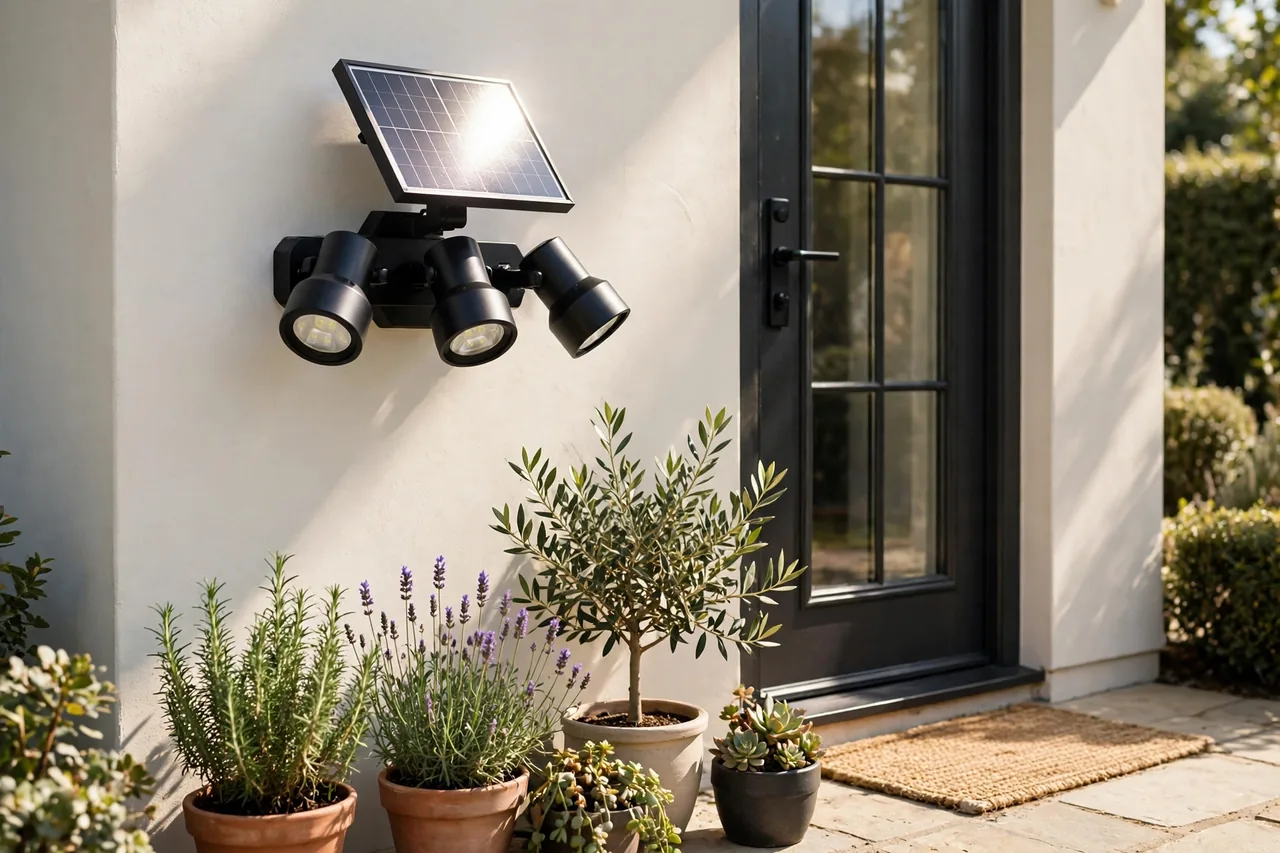
Your power source decides how easy the install is and how reliable the light will be. Solar lights need no wiring at all — you screw them to the wall and let the sun charge the battery. They work best on south-facing walls that get direct sun for most of the day, and they fade on cloudy winter weeks. Battery lights are just as easy to mount and work anywhere, but you must swap or recharge the batteries.
Hardwired lights connect to your home’s 120-volt wiring and give steady, weather-independent brightness every night. They cost more to install and usually need an electrician if no junction box exists, but they never run out of charge. If the spot has no wiring and no good sun, a battery light is the honest answer.
Sensor Range, Angle, and the Three Dials
Most outdoor motion lights use a PIR sensor, which sees moving body heat rather than motion itself. Two numbers matter: range, usually 20 to 70 feet, and angle, usually 180 to 270 degrees. A wide angle covers a whole yard from one corner, while a narrow angle suits a single doorway.
Most fixtures also have three small dials: SENS for sensitivity, TIME for how long the light stays on, and LUX for how dark it must be before the sensor wakes up. Set sensitivity to medium while you test, set the timer to one to three minutes, and set LUX so the light only fires after dusk. A sensor that fires all day wastes power and trains your neighbors to ignore it.
Weather Rating and Color Temperature
Look for an IP65 rating on any light that faces rain directly. IP65 means the fixture is dust-tight and protected against water jets, which is what an exposed wall light needs. Color temperature matters too: 5000K daylight white gives the sharpest detail for security, while 2700K to 3000K warm white feels friendlier near a patio or front door. For a landscape lighting plan that balances safety and curb appeal, warm white usually looks better, while driveways and side yards suit daylight white.
The 5 Best Outdoor Motion Sensor Lights Compared
Every pick below was chosen for a different job, so the best one is the one that matches your install. Prices were checked on the dates shown and change often, so confirm the current price before you buy.
Caption: Quick comparison of the five best outdoor motion sensor lights for 2026.
| Light | Brightness | Power | Sensor | Price checked | Best for |
|---|---|---|---|---|---|
| Tuffenough Solar 3-head 2-pack | 2,500 lumens | Solar | 26 ft, 270° | $32.99 (often ~$25 on sale) | No-wiring installs |
| LUTEC 72W 3-head floodlight | 7,500 lumens | Hardwired | 69 ft, 180° | $39.99 | Big driveways |
| Ring Floodlight Cam Wired Pro | 2,000 lumens | Hardwired | Radar + PIR | $149.99 | Camera + alerts |
| Wyze Cam Floodlight v2 | 2,600 lumens | Hardwired | PIR, 270° | About $70–$80 | Budget camera light |
| Mr. Beams MB360XT | 200 lumens | Battery | PIR | About $25 | Sheds and paths |
1. Best Overall (No Wiring): Tuffenough Solar 3-Head 2-Pack
The Tuffenough set is the easiest win in this guide: two lights, three adjustable heads each, a wireless remote, and no wiring at all. Each light puts out 2,500 lumens of 6500K daylight white across a 270-degree arc, with a motion range of about 26 feet and an IP65 weather rating.
Caption: Tuffenough Solar 3-head 2-pack specifications.
| Spec | Detail |
|---|---|
| Brightness | 2,500 lumens per light, 210 LEDs, 6500K |
| Power | Solar panel with built-in rechargeable battery |
| Sensor | PIR, about 26 ft, 270° |
| Weather rating | IP65 |
| Price | $32.99 list on Amazon; $24.67–$25 on sale (checked 16 November 2026) |
| Source | Amazon price history, checked 16 November 2026 |
The remote is the feature owners mention most: you can switch modes from the ground instead of climbing a ladder to reach a button on a fixture mounted eight feet up. The set also carries a 4.4-star average across more than 41,000 Amazon ratings, which is the strongest owner consensus of any solar light in this guide. Its limit is honest — on a shaded wall or a run of cloudy winter days, the battery charges slowly and the light runs shorter, so mount the panel where it sees real sun.
2. Best Hardwired and Brightest: LUTEC 72W LED Security Light
When a property genuinely needs to be lit up — a long driveway, a big backyard, or a wall in heavy shade that would starve a solar panel — the LUTEC 72W is the brightest pick here at 7,500 lumens, nearly triple the Tuffenough’s output. It is a hardwired three-head LED floodlight with dusk-to-dawn control, four modes, and a 180-degree sensor that reaches about 69 feet.
Caption: LUTEC 72W specifications.
| Spec | Detail |
|---|---|
| Brightness | 7,500 lumens, 5000K daylight, 72W LED |
| Power | Hardwired 120V |
| Sensor | PIR, up to 69 ft, 180° |
| Weather rating | IP65, 3-year warranty |
| Price | $39.99 on Amazon (checked 16 November 2026) |
| Source | Inspect and Test flood light guide, price as of 16 November 2026 |
At under $40 it is remarkable value for the output, and because it runs on house power it never dims on a cloudy week. The trade-off is the install: it replaces an existing outdoor fixture, so if no junction box exists you will need an electrician. Aim the heads down and across the yard, not at the street, or the brightness becomes a glare problem for everyone.
3. Best Smart and App-Connected: Ring Floodlight Cam Wired Pro
The Ring Floodlight Cam Wired Pro is a light and a security camera in one housing, and it is the pick for homes already in the Ring or Alexa world. It pairs 2,000 lumens of motion-activated light with a 1080p camera, two-way talk, a built-in siren, and 3D motion radar that maps zones so you get alerts for your driveway but not the sidewalk.
Caption: Ring Floodlight Cam Wired Pro specifications.
| Spec | Detail |
|---|---|
| Brightness | 2,000 lumens, two adjustable heads |
| Power | Hardwired |
| Camera | 1080p HD, color night vision, 3D motion radar |
| Smart home | Alexa, Ring app, motion alerts |
| Price | $149.99 at Target (checked 21 November 2026); 2nd Gen 4K version $199.99 |
| Source | Ring’s own product page |
Owner consensus is strong: the Floodlight Cam Wired Plus, the model below the Pro, holds a 4.7-star average across more than 42,000 Amazon reviews, and reviewers keep coming back to the reliable alerts and the bright light. The honest cost is the subscription — Ring Protect is needed for recorded video history, since there is no local storage. If you want the camera side without a monthly fee, read our best home security camera system guide before you decide.
4. Best Value Camera Light: Wyze Cam Floodlight v2
The Wyze Cam Floodlight v2 gives you the most light per dollar of any camera light here: 2,600 lumens, a 2K camera, and local microSD recording, for about $70 to $80. It is hardwired like the Ring, but it stores video on a memory card in the camera, so you are not forced into a monthly plan to keep your recordings.
Caption: Wyze Cam Floodlight v2 specifications.
| Spec | Detail |
|---|---|
| Brightness | 2,600 lumens |
| Power | Hardwired |
| Camera | 2K, color night vision, local microSD storage |
| Smart home | Alexa, Google Assistant |
| Price | About $70–$80 (comparison guides, November 2026) |
| Source | Top Home Security floodlight camera comparison, updated 19 November 2026 |
Reviewers consistently call it the value pick because the light is genuinely bright and the local storage removes the subscription worry. The app is the weak spot — it can feel cluttered next to Ring’s — and the camera’s motion zones are less precise than Ring’s radar. For a budget-first home that still wants video evidence, it is hard to beat.
5. Best Budget Battery Light: Mr. Beams MB360XT
Not every spot needs a floodlight. The Mr. Beams MB360XT is a small battery spotlight that mounts anywhere with two screws — a shed door, a gate, a stairwell, a dark corner of the garage — and gives 200 lumens of light for about $25. It runs on four D-cell batteries, so there is no wiring and no sun requirement at all.
Caption: Mr. Beams MB360XT specifications.
| Spec | Detail |
|---|---|
| Brightness | 200 lumens |
| Power | 4 D-cell batteries |
| Sensor | PIR motion sensor |
| Weather rating | Weather resistant |
| Price | About $25 (comparison guides, November 2026) |
| Source | Alarm Reviews outdoor motion light comparison |
Two hundred lumens will not light a driveway, and that is the point: it is a close-range light for the spots a floodlight cannot reach. Keep spare batteries on hand, because the light gives no warning when they fade — it just gets dimmer week by week until it stops.
Where to Mount Outdoor Motion Sensor Lights
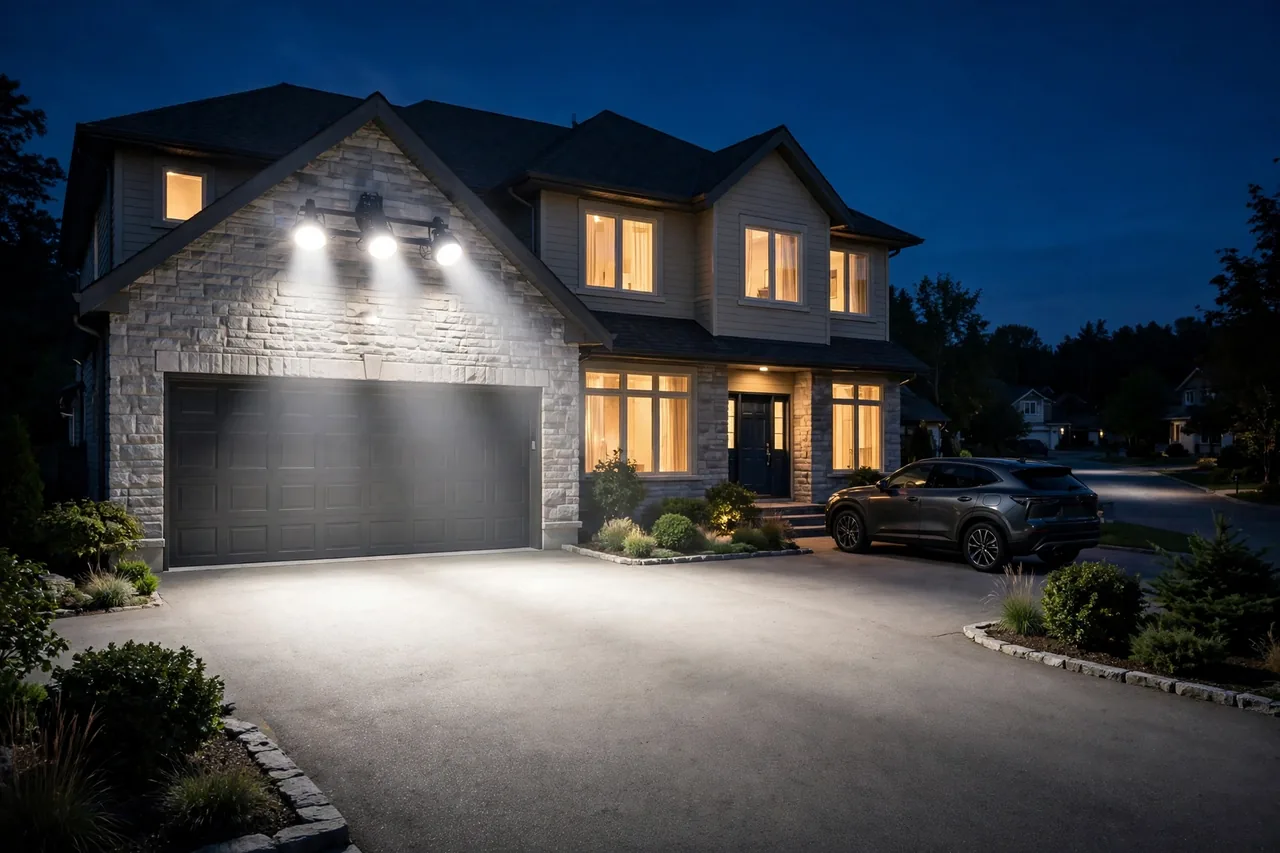
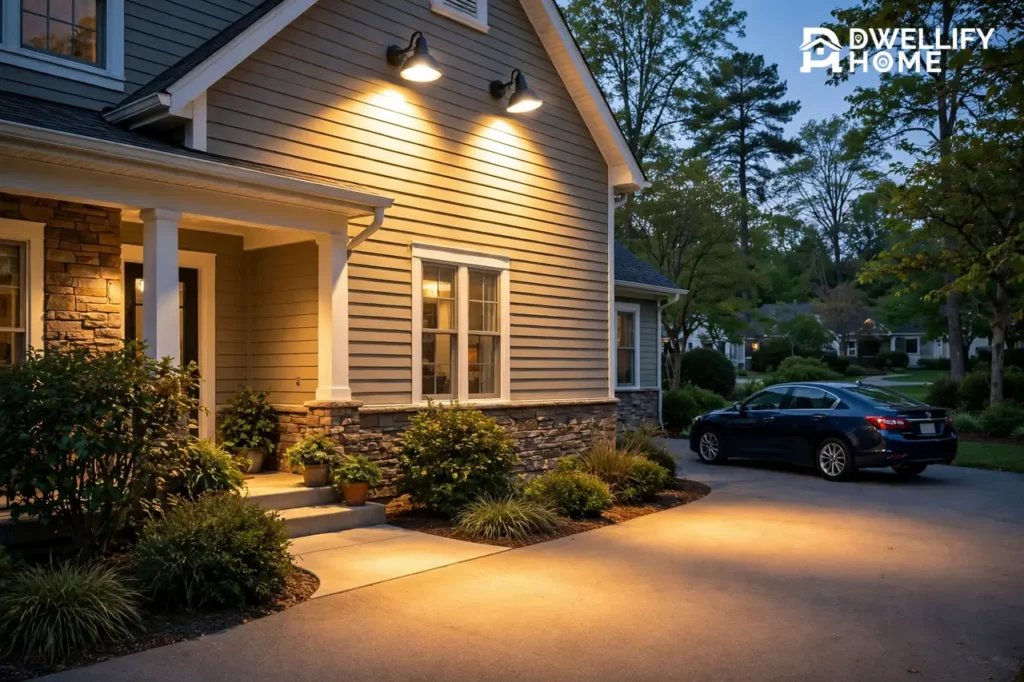
Placement matters more than brightness. Mount floodlights 8 to 10 feet high — high enough to stop casual tampering, low enough for the sensor to see people clearly. Angi’s security lighting guide puts professional installation of motion-sensor lighting at $350 to $500, and notes that aiming the sensor away from busy streets is what keeps false triggers down. Corners are the best spots because one fixture covers two walls, and the approaches matter more than the center of the yard: front door, back door, garage door, side gate, and any dark strip along a fence.
Point the sensor across the path people walk, not straight at it. A PIR sensor sees heat moving sideways across its view far better than heat walking straight toward it. Keep the sensor away from heat vents, dryer exhausts, and sun-baked pavement, which all cause false triggers. For driveways, pair the light with a camera placed to see faces — our driveway security camera guide shows how to place one so it actually records what the light reveals.
Motion Sensor Lights vs. Floodlight Cameras
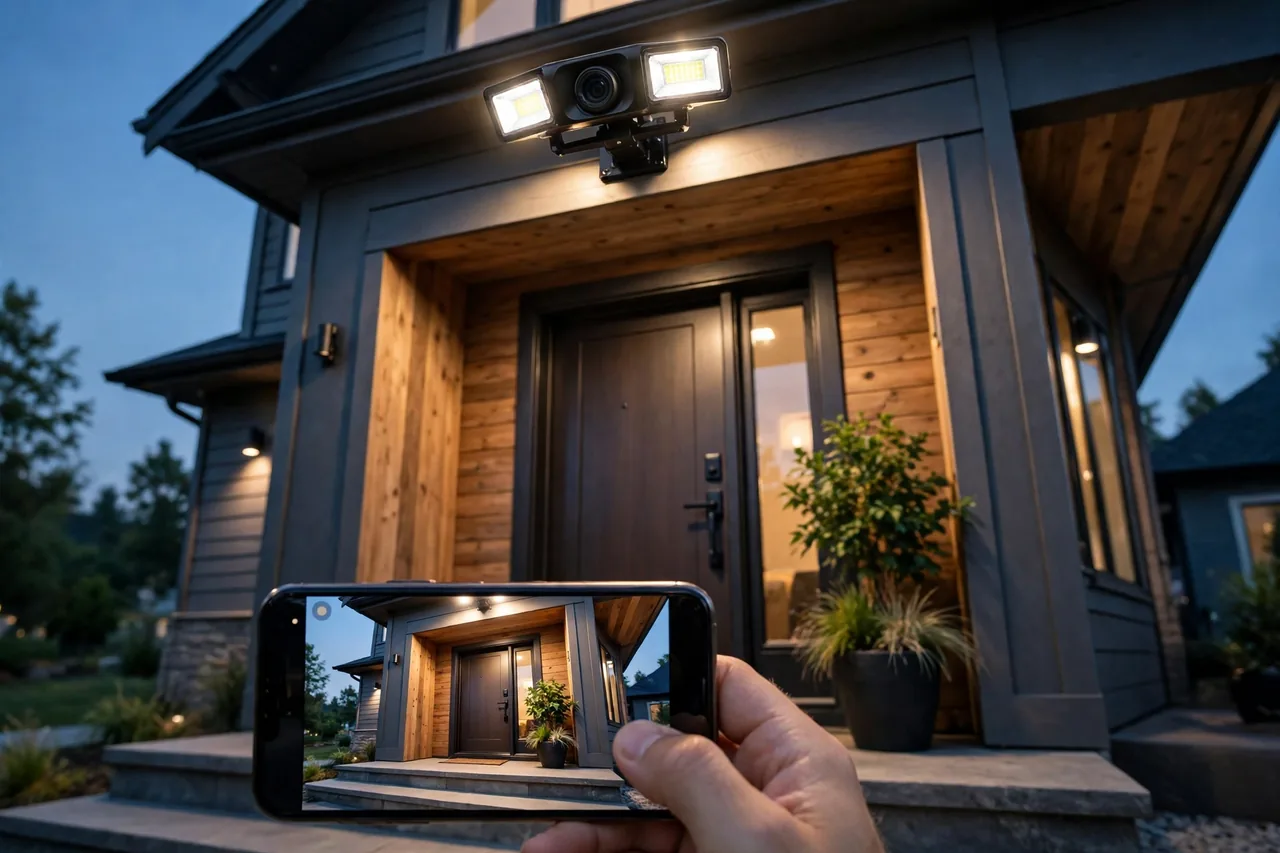
A motion light deters and reveals; a floodlight camera deters, reveals, and records. If your only goal is to see where you walk at night and startle a stranger, a plain light like the LUTEC or Tuffenough is enough and costs far less. If you want to know who was there after the fact — a package thief, a car prowler — you need the camera, and that means either the Ring, the Wyze, or a separate camera mounted near the light.
The smart middle ground is a bright motion light plus a separate wireless outdoor security camera aimed at the same spot. The light gives the camera the brightness it needs for usable night footage, and the camera gives you the evidence the light alone cannot. A front porch camera paired with a motion light over the door is the most common version of this setup, and it works because the two devices cover each other’s weak spots.
Common Mistakes to Avoid
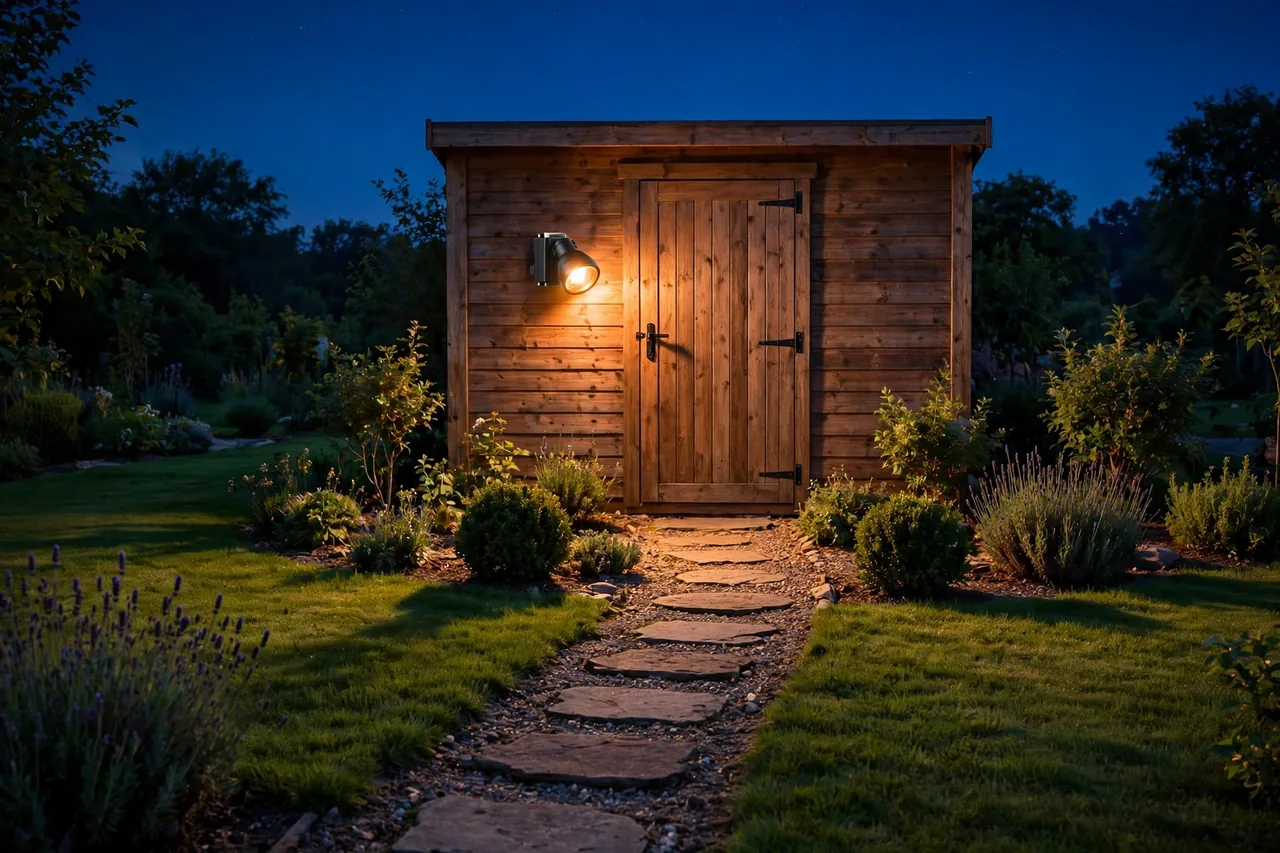
The most common mistake is mounting the light too high. Above 12 feet, most PIR sensors struggle to tell a person from background heat, so the light fires late or not at all. The second mistake is aiming the sensor at the street, which turns every passing car into a light show and trains you to ignore the alerts. The third is buying on lumens alone: a 7,500-lumen light in a small yard is glare, not security, and glare creates the deep shadows where someone can hide.
Finally, do not forget winter. Solar lights need their panels wiped clean of snow and dust, and batteries lose capacity in the cold. Check solar fixtures in late fall, and if a light starts firing weakly, clean the sensor lens first — dust and cobwebs cause both missed detection and false triggers, and a soft cloth fixes both in a minute.
Electrical safety note: hardwired lights connect to your home’s 120-volt wiring. Turn off the breaker and confirm the wires are dead with a non-contact voltage tester before you touch anything, and hire a licensed electrician if you are unsure or if new wiring is needed.
Frequently Asked Questions
How many lumens do I need for an outdoor motion sensor light?
For an entryway or stairs, 200 to 400 lumens is enough. For a driveway or backyard, look for at least 1,000 to 1,300 lumens from one fixture, or use two lights for spaces wider than about 40 feet. Large yards and long driveways need 2,500 lumens or more.
Are solar motion sensor lights good enough for security?
Yes, for most homes, as long as the panel gets direct sun for much of the day. A good solar light like the Tuffenough gives 2,500 lumens and needs no wiring. On shaded walls or cloudy winter weeks it runs shorter, so use a hardwired light where reliable all-night brightness matters most.
Do motion sensor lights deter burglars?
They help, but they are not a guarantee. A sudden bright light removes the cover of darkness and signals that someone may be watching, which pushes many opportunistic intruders to move on. They work best paired with a camera, good locks, and lighting that covers approaches rather than just the front door.
How long do outdoor motion sensor lights last?
LED fixtures typically last many years — most makers rate their LEDs for 25,000 to 50,000 hours. Solar lights usually need a battery replacement after two to three years, and any fixture lasts longer when its sensor lens and solar panel are kept clean.
Should I choose motion sensor or dusk-to-dawn lights?
Choose motion sensor lights for security, because the sudden switch-on startles and reveals. Choose dusk-to-dawn lights for steady, welcoming light at entrances and paths. Many homes use both: dusk-to-dawn at the front door and motion floods at the driveway, garage, and side yard.
Pick the light that fits your power source and your space, mount it 8 to 10 feet high, and aim the sensor across the path people actually walk. Start with the Tuffenough 2-pack if you want the easiest install, the LUTEC 72W if you need raw brightness, or the Ring Floodlight Cam Wired Pro if you want alerts and video too. And if your home still has dark corners after the lights go up, a garage security camera is the next step that turns light into evidence.