The best deadbolt lock type for most homes is a single-cylinder Grade 1 deadbolt. It locks with a key outside and a thumb turn inside, so you can always get out fast in a fire, and a Grade 1 bolt survives the toughest ANSI/BHMA cycle and impact tests. This guide explains all seven deadbolt types, what each one costs, and which one belongs on your front door.
A deadbolt is a solid steel bolt that slides into your door frame when you turn a key or a thumb turn. It has no spring, so unlike a doorknob latch, it cannot be pushed back with a credit card or a thin tool. That one difference is why every exterior door needs a deadbolt, and why the type you pick decides both your security and your safety. One type on this list can trap you inside during a fire, and it sits in the table below.
Deadbolt Lock Types at a Glance
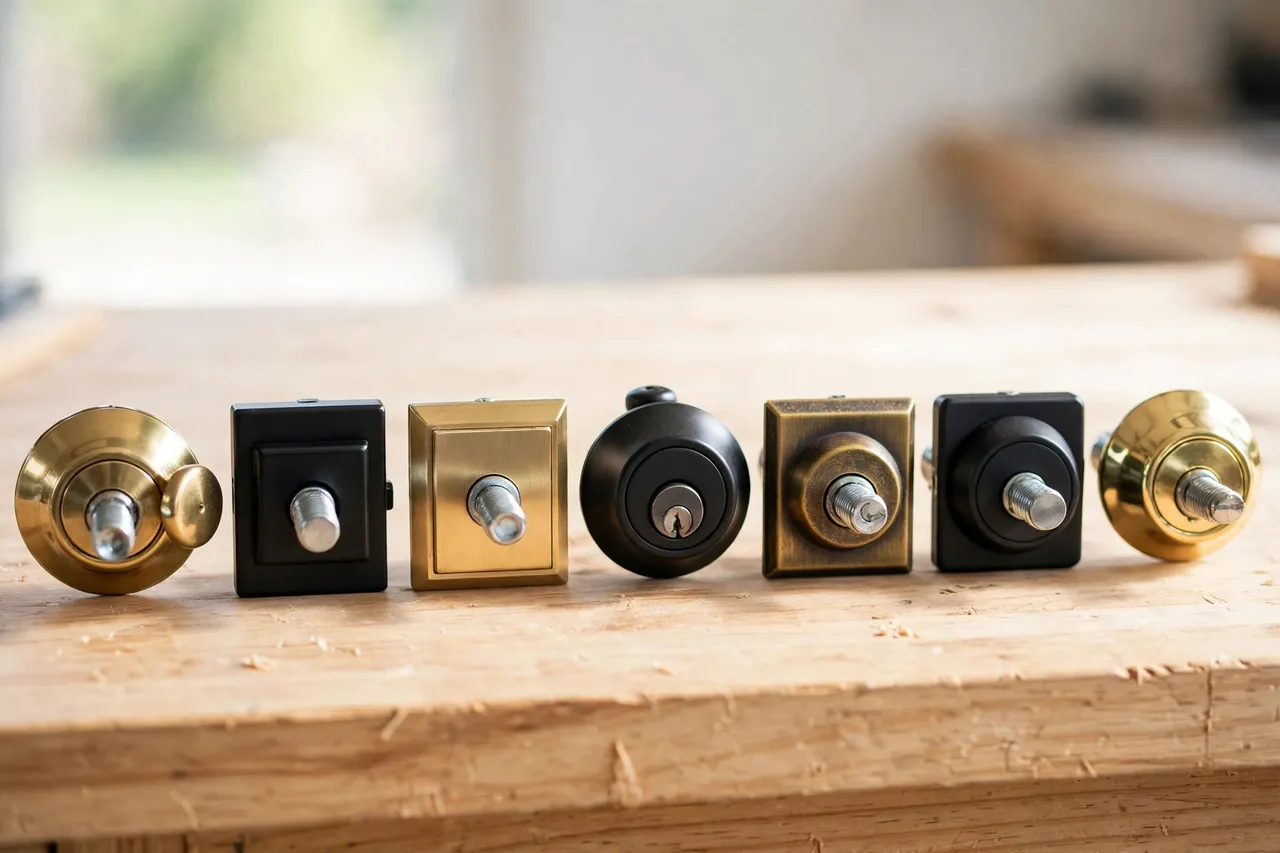
Deadbolt lock types split into two families: mechanical locks you open with a key, and electronic locks you open with a code, a fingerprint, or a phone. The mechanical family holds the single-cylinder, double-cylinder, rim, mortise, and vertical deadbolts, while the electronic family holds the keyless keypad and smart deadbolts. The table below compares all seven by how they work, what they cost, and where each one fits.
Caption: Deadbolt lock types compared — cost ranges from a home-improvement pricing guide, November 2026.
| Type | How It Works | Cost | Best For |
|---|---|---|---|
| Single-cylinder | Key outside, thumb turn inside | $20–$50 | Most front doors |
| Double-cylinder | Key on both sides | $30–$70 | Doors with glass nearby |
| Keyless keypad | PIN code, no key | $60–$150 | No spare keys to lose |
| Smart deadbolt | App, Wi-Fi, Bluetooth | $100–$250 | Remote guest access |
| Rim deadbolt | Surface-mounted on door face | $25–$60 | Thin or old doors |
| Mortise deadbolt | Lock body inside a door pocket | $80–$200 | Heavy or commercial doors |
| Vertical deadbolt | Bolt slides up into the frame | $30–$70 | Doors that get pried |
Cost ranges come from a home-improvement pricing guide that compares deadbolt types by mechanism, and prices shift with the ANSI grade inside each type. A Grade 1 lock costs more than a Grade 3 lock of the same type, and the grade matters more than the brand on the box.
What Is a Deadbolt, and How Does It Work?
A deadbolt is a lock with a solid steel bolt that extends a full inch into the door frame when you lock it. The bolt moves only when you turn the key or the thumb turn, and it stays put under pressure, which is what the word “dead” means here: the bolt is dead, not spring-loaded, so it cannot be pushed back into the door. A standard doorknob latch uses a spring, and that spring is the weakness a deadbolt removes.
Every deadbolt has three parts that matter: the cylinder where the key goes, the bolt that slides into the frame, and the strike plate the bolt slides into. The strike plate is the part most people ignore, and it is the part that fails first in a kick-in. A long strike plate held by 3-inch screws that bite into the wall stud behind the frame turns a weak door into a strong one, and our door reinforcement guide shows how to fit one. A guide to the seven common deadbolt types lists the same families this article covers, from the single cylinder to the vertical deadbolt.
The bolt throw is the distance the bolt slides out of the door edge. A proper deadbolt throws at least 1 inch, and Grade 1 deadbolts must meet that 1-inch minimum with a hardened steel pin that resists sawing. If your bolt throws less than an inch, the door is easier to force, whatever the lock cost.
1. Single-Cylinder Deadbolt: The Standard for Most Homes
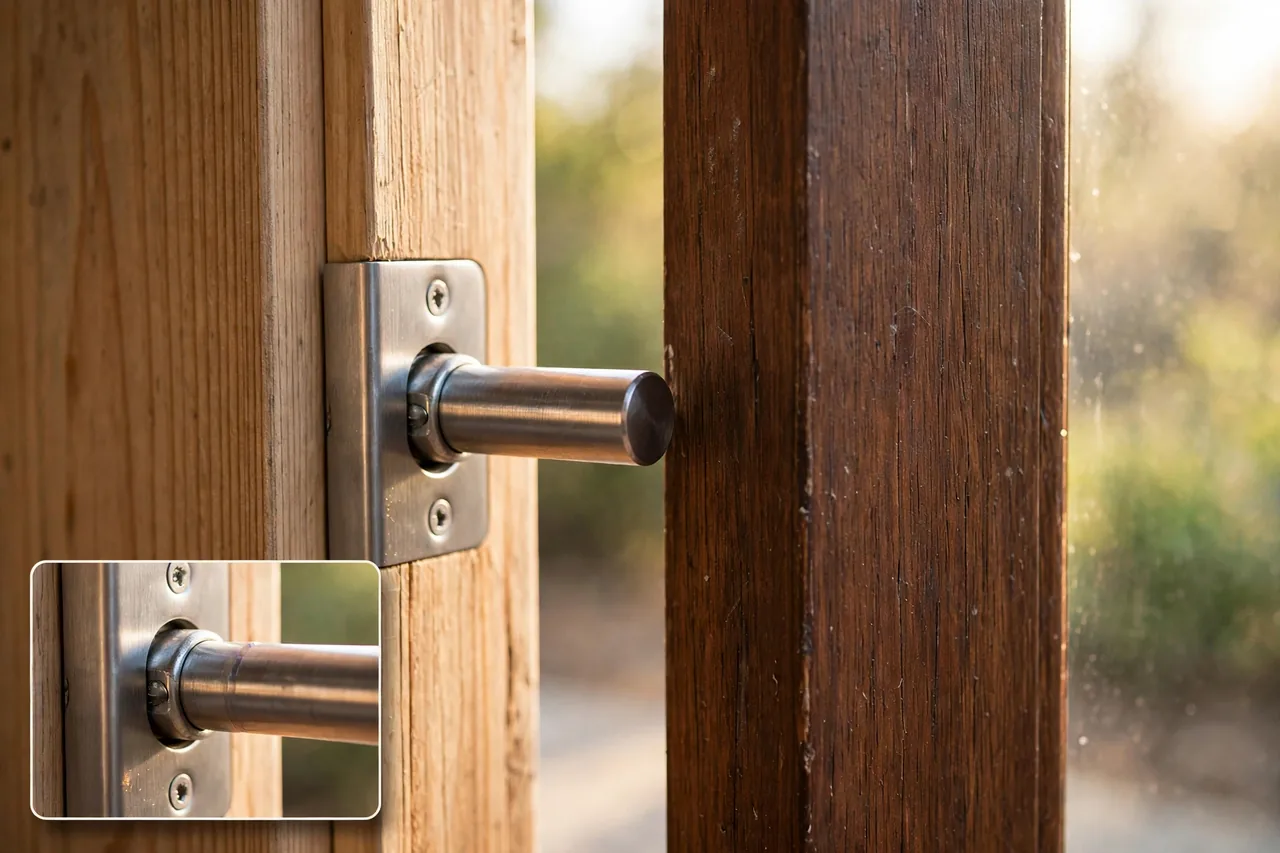
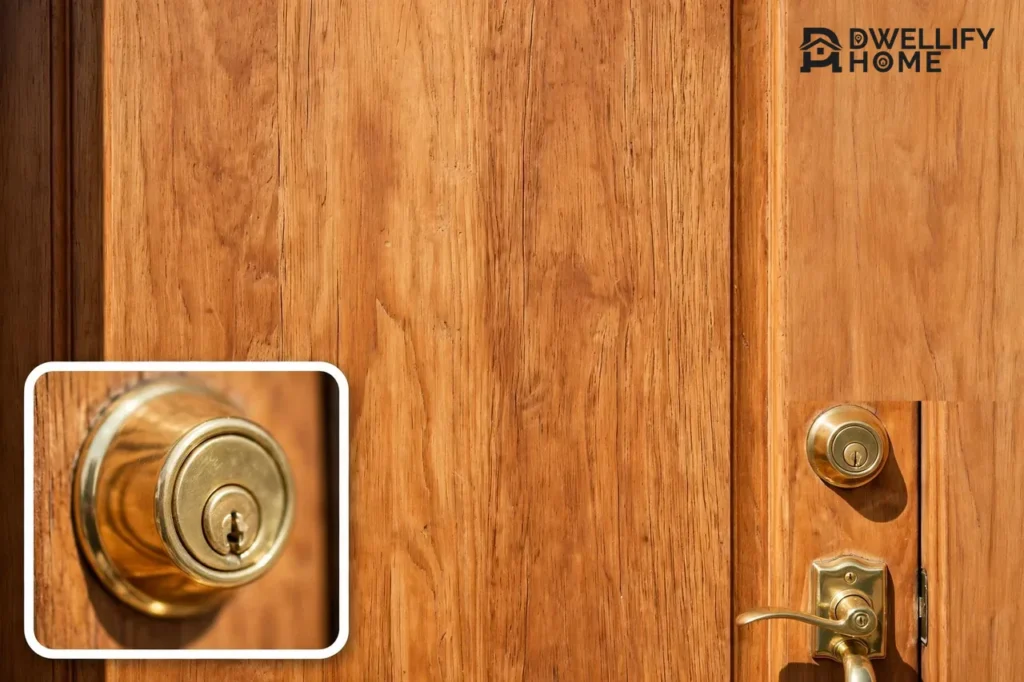
A single-cylinder deadbolt has a keyed cylinder on the outside of the door and a thumb turn on the inside. You unlock it from outside with a key, and from inside you twist the thumb turn by hand, with no key in your hand at all. It is the most common deadbolt type in American homes, and it is the right default for almost every front door.
The thumb turn is the whole point. In a fire or any emergency, anyone inside can leave without finding a key, which is why building codes in most places require key-free exit from the main doors of a home. A locksmith guide puts it plainly: a single-cylinder deadbolt usually gives you a better balance of security and safety for a home’s exit door, because you can leave without finding a key. See the single vs double cylinder deadbolt guide for the full safety comparison.
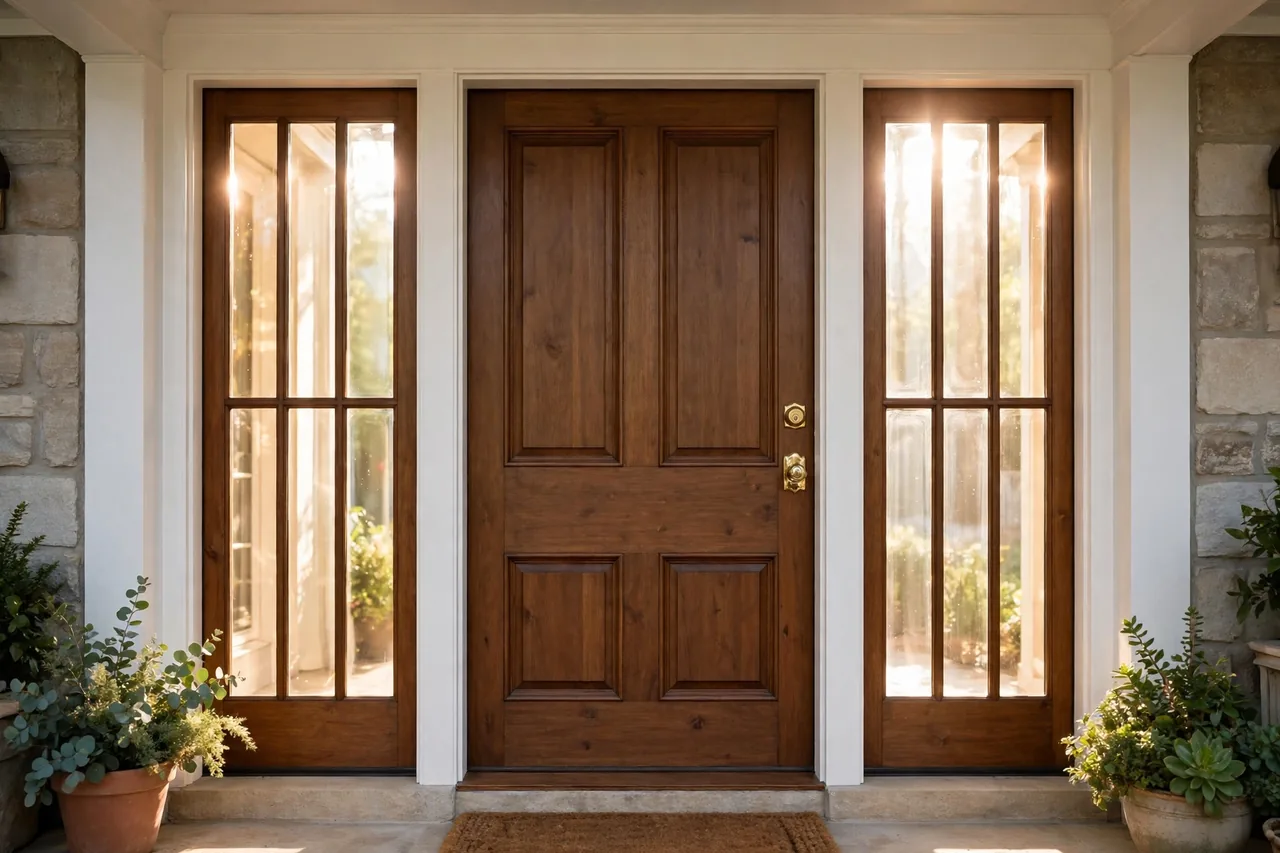
Single-cylinder deadbolts cost about $20 to $50 for the hardware, and they fit the standard door prep, a 2-1/8 inch cross bore and a 1-inch edge bore, that most exterior doors already have. Pair one with a Grade 1 rating and a long strike plate, and you have the best security most homes will ever need. The weakness is glass: if a burglar breaks a window beside the door, they can reach in and turn the thumb turn. That is the one case where the next type earns its place.
2. Double-Cylinder Deadbolt: For Glass Doors Only
A double-cylinder deadbolt has a keyed cylinder on both sides and no thumb turn at all. You need a key to lock or unlock the door from either side, inside or outside, and the same key normally works on both cylinders. The word “double” describes the two keyed cylinders, not two bolts or twice the strength: the bolt is the same as a single-cylinder lock.
The one advantage is glass protection. If your door has glass panels, sidelights, or a window within arm’s reach, a burglar who breaks the glass cannot simply reach through and turn a thumb turn. That is the only reason to buy one, and it is a real reason on a French door or a door with sidelights. Our sliding glass door security guide covers the same reach-through problem on patio doors.
The trade-off is serious, so read this before you buy one. A double-cylinder deadbolt can trap you inside during a fire if the key is not in the lock. Every exit from a locked house needs a key, and in smoke or panic, finding that key costs seconds you may not have. Many building codes ban double-cylinder deadbolts on required exit doors, so check your local code before you fit one, and never put one on the only exit from a bedroom. A safer middle ground is a lock with a keyed inside cylinder that switches to thumb-turn mode for daily use and key mode when you leave the house.
3. Keyless Keypad Deadbolt: No Keys to Lose
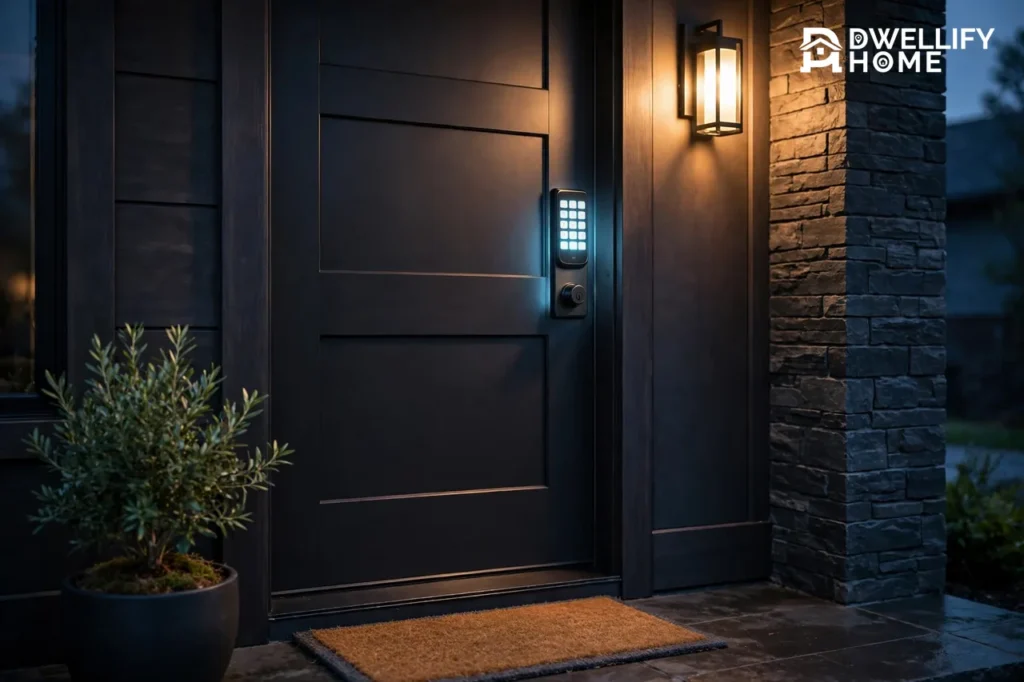
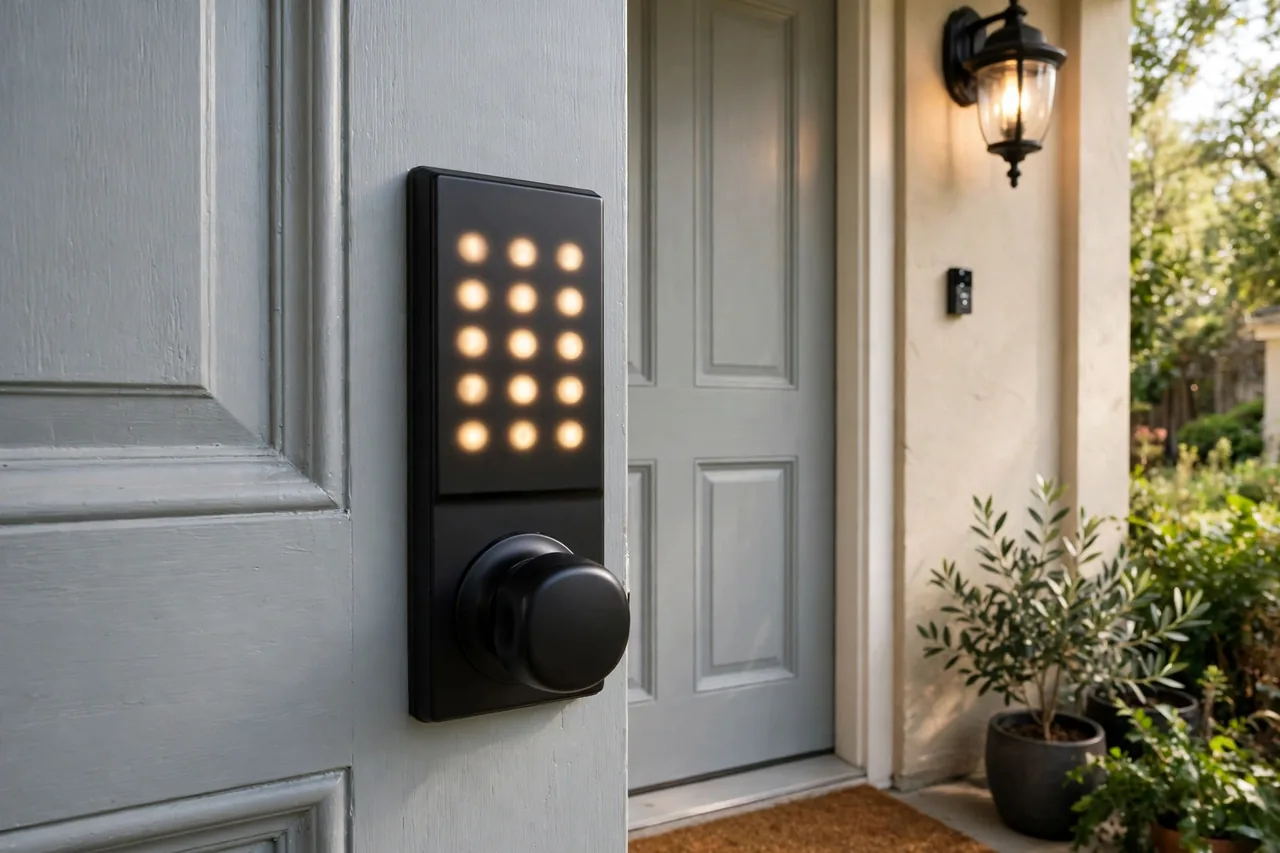
A keyless keypad deadbolt replaces the keyhole with a keypad, and you unlock the door by typing a PIN code. There is no key to lose, copy, or hide under the mat, and you can give a different code to a cleaner, a dog walker, or a guest, then delete that code when they no longer need it. The lock runs on batteries, and most models warn you for weeks before the batteries die.
A keypad deadbolt is different from a smart deadbolt, and the difference matters. A keypad lock is entirely local: no app, no Wi-Fi, no network to hack, and no account to breach. A smart deadbolt adds app, Bluetooth, and Wi-Fi control with remote access, which is convenient but adds a real attack surface if the Wi-Fi or app account is weak. If you want keyless entry without any network, the plain keypad deadbolt is the safer pick.
Keypad deadbolts cost about $60 to $150, and they fit the same standard door prep as a mechanical deadbolt. Our best door locks with keypad guide compares the best models, and our keypad code change guide shows how to set a new PIN when a code leaks or a guest leaves. Change the code the day anyone who had it stops needing it.
4. Smart Deadbolt: Remote Access and Activity Logs
A smart deadbolt is a keypad deadbolt with a radio inside: app control, Bluetooth, and usually Wi-Fi, so you can lock and unlock the door from anywhere, give a guest a temporary code, and see a log of who came and went. It is the best deadbolt type for a rental, an Airbnb, or a home where family members arrive at different times and nobody wants to carry keys.
The convenience has a price beyond the $100 to $250 hardware cost. A smart lock needs batteries, a strong Wi-Fi signal at the door, and an account you keep secure with a strong password and two-factor authentication. If the Wi-Fi drops, most smart locks still open with the PIN or the key, so you are never locked out, but remote features stop working until the connection returns. Check the Wi-Fi bars at your door before you buy one, the same way you would for a camera.
Smart deadbolts also carry an ANSI grade, and the grade still decides the physical strength. A Grade 1 smart deadbolt, like the Schlage Encode Plus, pairs a strong bolt with the electronics, while a cheap smart lock may have a weak bolt behind a clever app. Buy the grade first and the features second, because an app cannot hold a door shut.
5. Rim, Mortise, and Vertical Deadbolts: The Specialty Types
Rim, mortise, and vertical deadbolts solve problems the standard deadbolt cannot, and most homes need at most one of them. A rim deadbolt mounts on the inside face of the door instead of inside a bored hole, which makes it the right pick for a thin door, an old door, or a door that cannot take a standard cross bore. A mortise deadbolt sits in a deep pocket cut into the door edge, with the lock body hidden inside the door, which makes it the strongest and most expensive type, common on heavy doors and commercial buildings.
A vertical deadbolt is the specialist for pry attacks. Instead of sliding sideways into the frame, its bolt slides upward into a strike mounted above the door, so a pry bar that spreads the door frame cannot pop the bolt out. It mounts on the door face like a rim lock, and it is a good second lock on a door that has already been forced once.
Which specialty type do you actually need?
Most homes need none of them. A standard single-cylinder deadbolt with a Grade 1 rating and a reinforced strike plate beats a specialty lock on a weak frame every time, because the frame fails before the lock does. Buy a rim deadbolt only if your door cannot take a bored lock, a mortise deadbolt only if your door is built for one, and a vertical deadbolt only if prying is the real threat on that door. Spend the money on the frame first.
ANSI Grades: Grade 1, Grade 2, or Grade 3?
ANSI grades are the one number that predicts how strong a deadbolt really is. The Builders Hardware Manufacturers Association certifies deadbolts under the ANSI/BHMA standard, testing cycle life, impact resistance, and bolt strength, and it assigns three grades. Grade 1 is the highest, Grade 2 is the mid-tier, and Grade 3 is the builder-grade minimum. The grade applies to the individual lock model, not to the whole brand, so always check the specific model before you buy.
Schlage’s own product pages state that its B600 series deadbolt meets or exceeds ANSI/BHMA Grade 1 operational and security standards, and that every Schlage lock is tested for cycle life, impact resistance, and bolt strength to earn its grade. See the Schlage B600 Grade 1 deadbolt page for how the grading works. The practical rule is simple: buy Grade 1 for every exterior door, accept Grade 2 only on a low-risk secondary door, and leave Grade 3 for interior doors. Upgrading from Grade 3 to Grade 1 costs about $20 to $40 more per lock, which is the cheapest security upgrade a home can buy.
One more check matters as much as the grade: the bolt throw. Whatever type and grade you buy, the bolt must extend at least 1 inch into the frame when locked. A short throw is a weak lock, and no grade fixes it.
What Most People Get Wrong About Deadbolts
Most people get this wrong: they buy the most expensive lock and fit it to a weak frame. A Grade 1 deadbolt in a frame held by half-inch screws is a strong lock in a weak door, and a kick breaks the frame, not the lock. The strike plate screws matter more than the lock brand, so fit 3-inch screws that reach the wall stud, and the lock you already own gets dramatically harder to defeat.
The second mistake is putting a double-cylinder deadbolt on an exit door for security and forgetting the fire risk. Security that traps you inside is not security. If the door has glass nearby, use a keyed-inside lock that switches to thumb-turn mode, or fit security film on the glass, and keep the thumb turn. Our window security guide covers the same glass problem on windows.
The third mistake is never rekeying. A new home, a lost key, or a broken relationship all mean someone else may hold a key to your door. Rekeying a deadbolt costs far less than replacing it, and it makes every old key useless. Rekeying and lock replacement are covered in separate guides on this site.
How to Choose the Right Deadbolt for Each Door
Start with the door, not the lock. A solid front door with no glass nearby gets a single-cylinder Grade 1 deadbolt, a long strike plate, and 3-inch screws. That combination is the best value in home security, and it is where most homes should stop. A door with glass panels or sidelights gets the same Grade 1 lock plus security film on the glass, or a switchable keyed-inside cylinder, so the glass stops being the weak point.
A rental or a home with frequent guests gets a keypad or smart deadbolt, because codes are easier to change than keys are to collect. A back door that nobody watches gets the same Grade 1 treatment as the front door, because burglars prefer the door nobody sees. A garage entry door gets a Grade 1 deadbolt too, since it is the door intruders target most, hidden from the street.
Finally, match the lock to the people who use the door. A home with small children or older relatives needs a thumb turn inside, never a key, because everyone must be able to leave fast without hunting for a key. A smart lock with a code is easier for a child than a key, and a keypad with large buttons is easier for stiff hands than a small key. If you still cannot decide between the two cylinder types, a locksmith’s plain-words comparison of single and double cylinder deadbolts walks through the same choice. The best lock is the one everyone in the house can actually use in a hurry.
Related Guides
To pick a keypad model, read our best door locks with keypad guide, and to change a code, read how to change the code on a keypad door lock. To harden the door itself, read our door reinforcement guide and our sliding glass door security guide. Rekeying, French door security, and garage door security are covered in separate guides on this site.
Frequently Asked Questions
What is a single-cylinder deadbolt?
It has a key on the outside and a thumb turn on the inside. That is the style most homes use on an everyday entry door, because anyone inside can lock or unlock it by hand with no key.
What is a double-cylinder deadbolt?
It has a key cylinder on both sides and no thumb turn. The two sides are connected by a tailpiece, so either key throws or retracts the bolt. It stops reach-through break-ins on glass doors, but it needs a key to get out.
Why would someone want a key on the inside?
Usually because the door has glass nearby, and they want the inside to work with a key instead of a thumb turn. The trade-off is that you need that key to open the door from the inside, which is a fire risk.
Does a double-cylinder deadbolt need a key to get out?
Yes. There is no thumb turn, so you use the inside key to retract the bolt. That is why many building codes ban double-cylinder deadbolts on required exit doors, and why you should never fit one on the only exit from a bedroom.
What is the difference between a keyless deadbolt and a smart deadbolt?
A keyless keypad deadbolt unlocks with a PIN code and has no app, no Wi-Fi, and no network to hack. A smart deadbolt adds app, Bluetooth, and Wi-Fi control with remote access and activity logs, which is convenient but adds a real attack surface if the account is weak.
Which deadbolt grade should I buy?
Grade 1 for every exterior door. It is the highest ANSI/BHMA grade and the recommended standard for any door an intruder would target. Grade 2 is acceptable on a low-risk secondary door, and Grade 3 belongs on interior doors only.
Buy a single-cylinder Grade 1 deadbolt for your front door, fit a long strike plate with 3-inch screws, and you have done the single best thing for your door security. Add a keypad or smart lock only if keyless entry solves a real problem in your house, and never trade a thumb turn for a key on an exit door. Then read our door reinforcement guide to finish the job on the frame.