A house cleaning schedule is a simple plan that assigns each cleaning job to a daily, weekly, monthly, or seasonal slot, so every surface gets cleaned at the right time and nothing gets forgotten. The schedule that works for most homes is small: a 10- to 15-minute reset every day, one 2- to 4-hour pass each week, a few monthly jobs, and four seasonal deep cleans a year. That rhythm keeps a home healthy and comfortable without turning cleaning into a second job.
This guide gives you the full schedule — daily, weekly, monthly, and seasonal — plus room-by-room frequencies, laundry rules from the American Cleaning Institute, and a sample week you can copy as-is. One common habit makes the whole schedule fail, and it is in the section on what most people get wrong, so keep reading.
What Is a Good Home Cleaning Schedule?
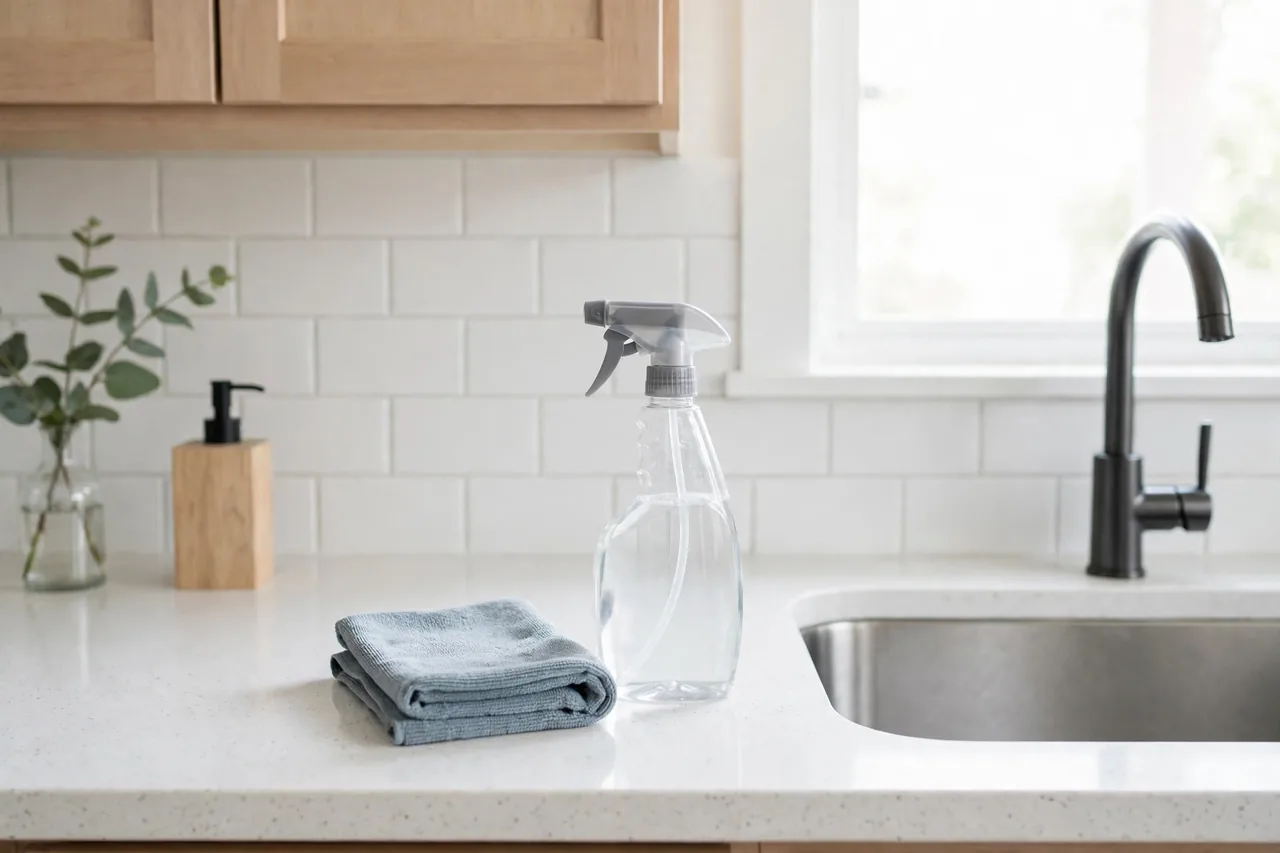
A good home cleaning schedule matches each job to how fast dirt builds up on that surface. Food surfaces need attention every day, because bacteria grow fast on them. Living areas need a weekly pass, because dust and crumbs build up over days. Appliances and hidden spots need monthly care, because grime builds slowly and shows up all at once. The schedule works when the frequency fits the surface — not when every job happens every day.
Cleaning schedules fall into three ranges. Light maintenance covers the daily tidying that takes 10 to 15 minutes: wiping kitchen counters after cooking, hanging up towels, loading the dishwasher, and sweeping high-traffic floors. Standard cleaning covers the weekly session lasting 2 to 4 hours that most people think of as “cleaning the house”: vacuuming, mopping, scrubbing bathrooms, dusting surfaces, and changing bed linens. Deep cleaning covers the quarterly or twice-a-year session that targets areas routine cleaning misses: oven interiors, behind appliances, grout lines, window tracks, and mattress surfaces.
Your schedule should flex with your household. A home with kids and pets needs more frequent vacuuming and bathroom cleaning than a single person’s apartment. A home where someone has allergies needs more dusting and more frequent sheet washing. A home where nobody cooks daily can move some kitchen jobs from daily to every other day. Match the frequency to your household, not to someone else’s chart. The chart below is a starting point — adjust it in the first month until it fits your life.
The Daily Reset: 10 to 15 Minutes That Prevent the Mess
The daily reset is the most important part of the whole schedule, and it is also the shortest. Ten to fifteen minutes, once a day, prevents the slow buildup that turns into a weekend-long deep clean. Do it after dinner, when the kitchen is already in use and the day’s mess is all in one place.
Follow the same order every night so it becomes automatic:
- Put food away and clear the dishes. Load the dishwasher or wash what you need, and take out food waste.
- Wipe the kitchen counters and stove top. Clean the work surfaces you used, and wipe up spills before they dry.
- Do a quick clutter sweep. Return stray items to their rooms, clear the dining table, and put shoes by the door.
- Hang towels to dry and wipe the bathroom sink. A quick wipe keeps soap scum manageable in busy bathrooms.
- Take out the trash if it is full, and set out anything needed for tomorrow morning.
Make the beds in the morning — it takes two minutes and makes every bedroom look finished all day. Sweep or vacuum high-traffic floors every other day if you have pets or kids, and wipe high-touch surfaces like fridge handles and light switches daily in busy households. Our guide to a daily cleaning schedule breaks the reset into a minute-by-minute routine you can follow without thinking.
The Weekly Clean: Room by Room in 2 to 4 Hours
Once a week, handle the jobs that need more than a quick reset. Pick one day — Saturday morning works for most homes — and work top to bottom, room by room, so dust falls onto floors you have not vacuumed yet. Our full room-by-room system in cleaning the house walks through every room in order, and it pairs perfectly with this schedule.
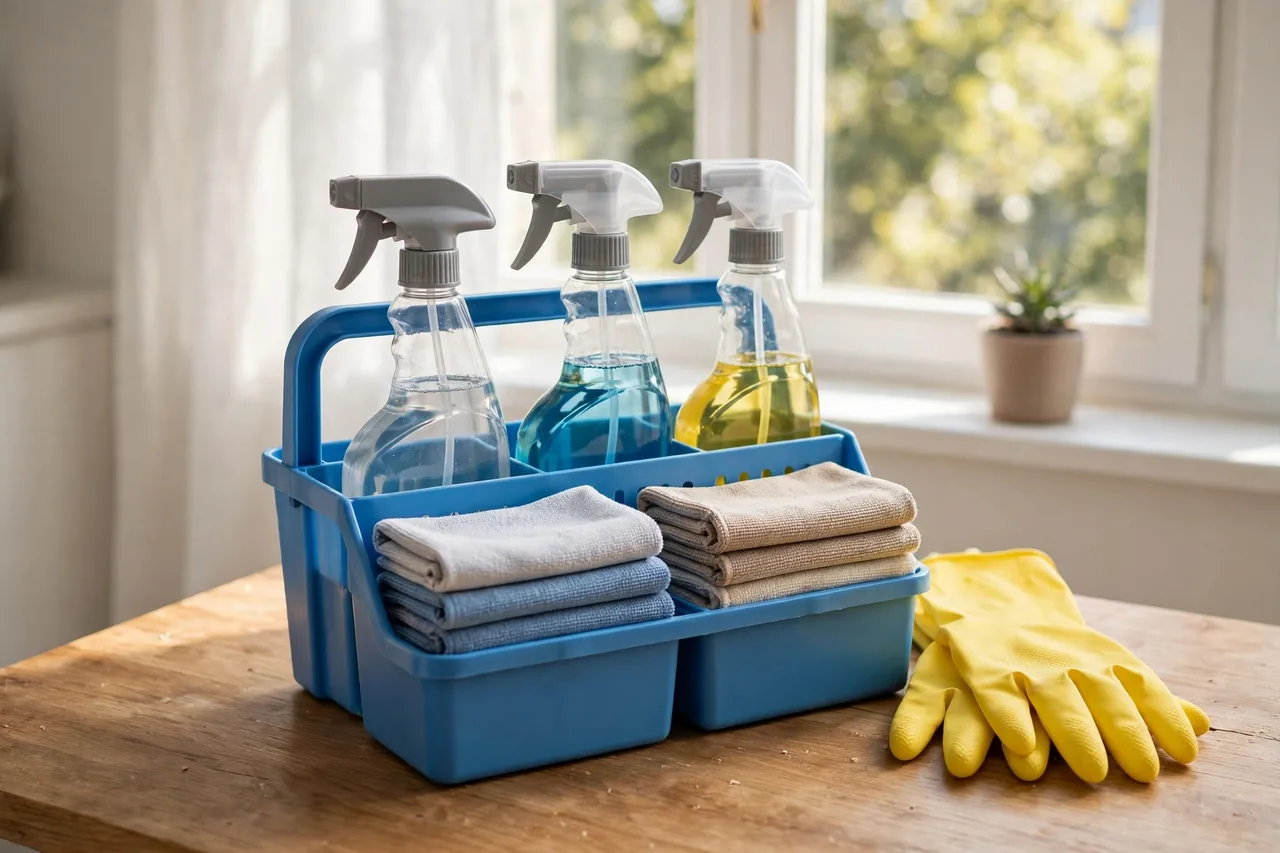
Keep one cleaning caddy stocked and ready, so the weekly clean starts in seconds instead of a half-hour hunt for supplies. A caddy holds an all-purpose spray, a glass cleaner, a bathroom cleaner, microfiber cloths, a scrub brush, and gloves. Carry it room to room, and put it back in the same spot every time. A caddy that lives in one place saves more time than any single cleaning product ever will.
Kitchen
Clean the sink, sanitize cutting boards that touched raw meat, wipe appliance exteriors, sweep and mop the floor, and empty the crumbs from the toaster. Check the fridge before grocery shopping and toss anything expired. If you cook rarely, some weekly kitchen jobs can move to every two weeks.
Bathrooms
Clean the toilet bowl, sink, mirror, and shower or tub. Change the towels, sweep and mop the floor, and use disinfectant on high-touch items like taps and flush handles. In a busy family bathroom, a midweek wipe of the sink and toilet keeps the weekly clean from becoming a deep clean.
Bedrooms and living areas
Vacuum floors and rugs, dust surfaces including electronics, change the sheets, and empty the trash cans. Dust high ledges and baseboards once a month, and vacuum upholstered furniture thoroughly — or brush off pet hair — at the same time. A living room that gets a weekly vacuum and a daily clutter sweep rarely needs anything more.
Floors
Hard floors need a sweep or vacuum every day or two in high-traffic areas and a mop once a week. Area rugs need a weekly vacuum and spot-cleaning for stains right away, with a deep clean or professional shampoo once a year — or every 6 to 12 months in a home with pets and children. After the floors are clean, you will see the walls again — and if a small room needs a lift, these paint color ideas for a small bathroom show how light colors open tight rooms.
The Monthly Jobs Everyone Forgets
Monthly jobs are the ones that are easy to forget, because nothing terrible happens when you skip them once. Eventually, however, they make their presence known — as a smell, a stain, or a broken appliance. Put them on the calendar for the first Saturday of each month, and rotate through them so no month carries all of them at once.
Clean inside the microwave, wipe fridge shelves and discard expired food, descale the kettle or coffee maker, and deep-clean the oven as usage dictates. Wash the shower curtain or liner, scrub grout lines, descale showerheads and faucets, and clean exhaust fan covers if they look dusty. Dust ceiling fans, light fixtures, and blinds, wipe cabinet fronts and door edges, and clean the trash cans and the dishwasher filter.
Do not forget the machines that clean for you. Clear the dryer lint filter after every load — it is a fire safety job, not a cleaning job — and run the washing machine’s cleaning cycle once a month with the drum empty. The washer makers Whirlpool and Samsung both recommend a monthly tub-clean cycle, and a washer that smells fresh washes clothes that smell fresh. The machines that clean your home need cleaning too.
Windows and mirrors belong on the monthly list too. Clean inside windows once a month with a squeegee and a microfiber cloth, and wipe mirrors with a damp cloth followed by a dry one to avoid streaks. Clean windows let in noticeably more light — in a small home, a monthly window clean is one of the cheapest ways to make every room feel brighter and bigger.
Seasonal and Yearly Deep Cleaning
Four times a year, go after the jobs the weekly and monthly passes never reach. Spring is for windows and screens, curtains, the oven, and the fridge and freezer. Summer is for the pantry, the mattress, and outdoor furniture. Fall is for closets, walls, and the space behind appliances. Winter is for carpets, upholstery, wood furniture, and the dryer vent.
Once a year, deep-clean or steam carpets every 12 to 18 months — more often with pets and children — and flip or rotate mattresses. Wash curtains, clean window tracks, and dust the tops of cabinets and wardrobes where a year’s worth of dust settles out of sight. Check the dryer vent for lint buildup once a year; a blocked vent is a fire risk and makes the dryer work twice as hard.
Seasonal cleaning is also the best time to declutter. A closet you empty for a seasonal swap is a closet you can sort in minutes, and our pillar guide on decluttering with a checklist makes the seasonal purge fast. If the room feels small after the deep clean, the Spruce’s tips to make a small house look bigger explain how light paint and clear sightlines open a tight home.
Pair each season with one room to declutter and one system to fix. Spring: the closet and the entryway hooks. Summer: the garage and the pantry shelves. Fall: the linen closet and the kitchen cabinets. Winter: the office and the kids’ rooms. Four small seasonal projects a year keep the whole house from ever needing a desperate, weekend-long purge again.
Cleaning Frequency by Room
Different rooms dirty at different speeds. Use this table as your starting point, then adjust for pets, kids, allergies, and how often each room is used.
| Room | How often | Key jobs |
|---|---|---|
| Kitchen | A little every day, thorough clean weekly | Counters, dishes, sink, floor, fridge check |
| Bathrooms | Weekly, with quick touch-ups between | Toilet, sink, shower, mirror, towels, floor |
| Bedrooms | Weekly dusting, floors, and sheets | Vacuum, dust, change sheets, clear surfaces |
| Living room | Weekly dusting and floors, daily clutter control | Vacuum, dust, cushions, trash |
| Entryway | Weekly, with daily shoe and coat control | Sweep, mop, hooks, shoe tray |
| Home office | Weekly dusting, monthly deep clean | Desk, keyboard, shelves, cables |
| Laundry room | Weekly wipe-down, monthly machine care | Surfaces, lint filter, washer cycle |
The biggest adjustment is household size. A single person in a small apartment can stretch some weekly jobs to every two weeks. A family of five with a dog needs the full weekly pass and a midweek bathroom wipe. Neither schedule is wrong — the right one is the one your household can keep for a year.
How Often to Wash Sheets, Towels, and Laundry
Laundry has its own schedule, and the numbers come from the American Cleaning Institute, the US association that sets household laundry guidance. Wash bed sheets at least every two weeks, and more often if you sweat a lot at night — Cleveland Clinic dermatologists advise at least once a week, especially when pets share the bed. Wash bath towels after three to five normal uses, and hang them to dry completely between uses, so they last the full interval without going sour.
Underwear, socks, T-shirts, and workout clothes go in the wash after every wearing. Jeans can go about three wears, dress shirts and khakis a few wears unless they are sweaty or dirty, and pajamas three or four wears. Hand towels and dish towels need washing every two days, and bath mats weekly. These intervals come from the American Cleaning Institute’s laundry guidance, as published by Utah State University Extension — read the full list at Utah State University Extension’s laundry guide and pin it near your washer.
Do not judge laundry by the sniff test alone. The American Cleaning Institute notes that smell does not always tell you when clothes actually need washing, and bacteria and sweat build up before odor does. When in doubt, wash it — clean clothes last longer than clothes washed late, because prompt washing or spot cleaning helps garments keep their shape and color.
Cleaning With Kids and Pets: Adjusting the Schedule

Kids and pets do not break a cleaning schedule — they change its shape. With kids, add a five-minute toy pickup to the daily reset and a weekly toy-bin sort. Give each child one labeled bin per toy type, kept low enough to reach, and make cleanup part of the bedtime routine instead of a weekend battle. Our guide on how to help kids stay organized shows routines that survive real families.
With pets, vacuum high-traffic areas daily or every other day, and mop hard floors twice a week instead of once. Wash pet bedding weekly, brush pets outside when you can, and keep a lint roller by the door for the last pass before guests arrive. A robot vacuum on a daily schedule handles the pet hair between weekly deep vacuums, and it earns its keep fastest in homes with shedding dogs.
For allergy-prone households, dust with a damp microfiber cloth instead of a dry duster, which just moves dust into the air. Vacuum with a HEPA-filter machine, wash bedding weekly in hot water where the label allows, and dust bedrooms first so allergens settle before you sleep. Keep windows closed on high-pollen days and run the vacuum a little more often during pollen season — small changes, but they make the weekly schedule work much harder for sensitive noses.
When someone is sick, the schedule changes again. The CDC’s household guidance says routine cleaning is usually enough, with disinfection particularly important when someone is sick or immunocompromised. During illness, disinfect high-touch surfaces — door handles, light switches, taps, and phones — every day until symptoms pass, and wash the sick person’s bedding and towels more often than the usual interval.
What Most People Get Wrong About Cleaning Schedules
The most common mistake is cleaning everything every day. A schedule that demands daily deep cleaning fails in the first week, because nobody has that much time. A schedule you cannot keep is worse than no schedule at all — it teaches you that cleaning always fails. The daily jobs are ten minutes. The weekly jobs are a few hours. Everything else waits its turn.
The second mistake is cleaning bottom to top. Dust falls down, so always work top to bottom: ceiling fans and shelves first, counters and furniture next, floors last. Cleaning the floor first and the shelves second means vacuuming twice — and a schedule that wastes time is a schedule you will quit.
The third mistake is using too much product. More cleaner does not mean cleaner surfaces — it means streaks, residue, and wasted money. Follow the label’s dosing, use a damp microfiber cloth instead of a soaking one, and let the product sit for the time the label says before you wipe. On hardwood floors especially, excess water and soap cause streaks and damage, so a lightly damp mop beats a wet one every time.
The fourth mistake is treating the schedule as a court order. A house cleaning schedule is a guide, not a test. If life gets in the way one week, do the daily reset, skip the deep jobs, and pick them up next week. The schedule works because it bends, not because it never breaks. What breaks a schedule is not one missed week — it is the belief that one missed week means the whole system failed.
Deep Cleaning vs. Regular Cleaning: Know the Difference
Regular cleaning keeps a home livable. Deep cleaning resets it. Regular cleaning covers the surfaces you see and touch every day — counters, floors, toilets, and sinks. Deep cleaning covers the places regular cleaning never reaches: the inside of the oven, the grout between tiles, the tracks of sliding windows, the filter in the dishwasher, and the dust on top of the wardrobe.
You need a deep clean when the regular clean stops working. If the shower still looks dull after a normal scrub, the grout needs a deep clean. If the kitchen smells faintly off after the counters are wiped, the fridge, the bin, and the dishwasher filter need attention. If dust returns to a shelf the day after you dust it, the ceiling fan above it is throwing dust back down — clean the fan first, then the shelf.
Do a deep clean four times a year, or twice a year at minimum, and always before a big event — guests for the holidays, a new baby, or a move-in. A deep clean takes a full day for a small home and a full weekend for a large one, so break it into rooms and spread it across a week if you cannot spare a whole day. Regular cleaning maintains the home; deep cleaning resets it. Both matter, and neither replaces the other.
Know when to call a professional. Carpet steam cleaning, duct cleaning, and mold removal are jobs where the right equipment and training matter more than effort. If you see mold covering more than a small patch, smell gas, or find water damage behind a wall, stop and call a qualified professional — those are safety jobs, not cleaning jobs, and getting them wrong costs far more than hiring help.
Build Your Own Schedule: A Sample Week
Here is a week that fits the schedule in this guide. Copy it as-is for the first month, then move jobs to the days that suit your life. The point is not the exact days — it is that every job has a day, so nothing depends on remembering.
| Day | Focus (30 to 60 minutes) |
|---|---|
| Monday | Bathrooms: toilets, sinks, mirrors, towels |
| Tuesday | Bedrooms and sheets: vacuum, dust, change linens |
| Wednesday | Living areas: vacuum, dust, cushions, clutter |
| Thursday | Kitchen: appliances, sink, floor, fridge check |
| Friday | Floors and catch-up: mop, trash, recycling |
| Saturday | Monthly job of the month, 30 minutes |
| Sunday | Rest — only the 10-minute daily reset |
Spread the week this way and no single day carries the whole house. Monday’s bathroom clean means the busiest room is done before the week gets away from you. Friday’s catch-up means the weekend starts clean. And Sunday stays free, because a schedule that never rests is a schedule nobody keeps.
Recycling fits into the same rhythm. Sort recycling as you go — paper, glass, metal, and plastic in the bin, and everything else out. Our guide on how to start recycling at home sets up a home recycling station in one evening, and the EPA’s recycling guidance explains what belongs in the bin and what never does — garden hoses, food-soiled paper, and propane tanks stay out, and batteries go to a drop-off, never the bin.
Cleaning works best when the home is already organized — a clear surface cleans in seconds, while a cluttered one takes an hour. Our three companion pillars complete the system: decluttering clears what you do not need, how to organize your home gives everything a place, and small space storage ideas fit it all into the space you have. Clean, organized, and stored — that is the whole system, and this schedule is how you keep it.
Cleaning safety note: cleaning products are chemicals, so follow the label every time. Never mix bleach with vinegar, ammonia, or any other cleaner — the mixture makes toxic gas. Open a window or run the fan when you clean a bathroom, wear gloves for strong products, and keep all cleaners out of reach of children and pets. Store products in their original bottles, never in food containers.
Related Guides
Go deeper with the guides in this family: cleaning the house, daily cleaning schedule, and how to start recycling at home. Start the whole job with our home organization hub.
Frequently Asked Questions
What is a good home cleaning schedule?
A home cleaning schedule is a structured plan that assigns specific cleaning tasks to daily, weekly, monthly, and seasonal intervals, so that every surface in the home receives attention at the right frequency. Daily jobs take 10 to 15 minutes, the weekly pass takes 2 to 4 hours, and monthly and seasonal jobs rotate through the year.
How often should you clean your house?
Start with food mess and spills as they happen, a short daily reset, a weekly pass through the main rooms, and a rotation for less urgent monthly and seasonal jobs. The exact frequencies are flexible housekeeping recommendations — visible dirt, food contamination, and wetness should never wait for a calendar square.
What are the types of cleaning frequencies?
Cleaning frequencies fall into tiers from daily upkeep through annual deep cleaning. Daily cleaning takes 5 to 15 minutes, weekly cleaning takes 2 to 4 hours, monthly jobs cover appliances and hidden spots, and seasonal or yearly jobs cover windows, carpets, and deep floor care.
How often should you wash sheets and towels?
Wash sheets every one to two weeks — the American Cleaning Institute sets the outer limit at every two weeks, and Cleveland Clinic advises at least weekly. Wash bath towels after three to five uses, hung to dry fully between uses, and washcloths at least twice a week.
A cleaning schedule does not make your home perfect. It makes your home livable, week after week after week, without heroic effort. Start with the daily reset tonight — ten minutes, same order, every night — and the rest of the schedule will follow.