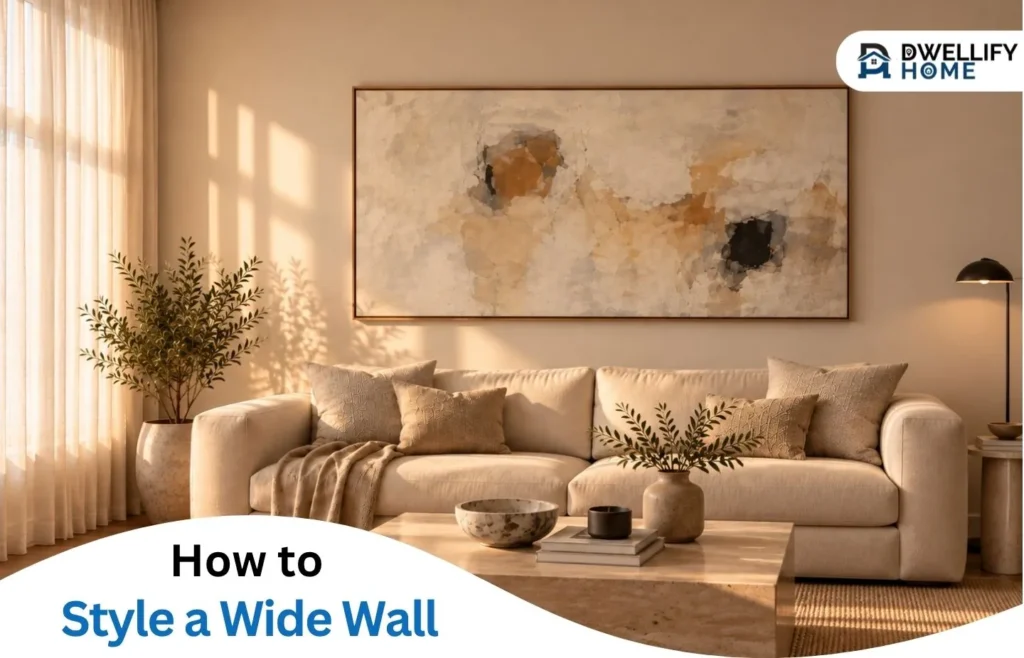
Large horizontal wall art centered above a beige sofa, showing balanced proportions between the artwork and furniture.
Some walls are just wide. The one above the sofa, the stretch behind the bed, the long blank run over a console in the hallway. Tall art looks stranded there, and a small frame gets lost. What these walls want is something that follows their shape.
That’s where horizontal pieces earn their keep. A long, low canvas echoes the furniture beneath it and makes a room feel calmer. Here’s how to choose one, hang it well, and keep the rest of the wall from competing.
Match the Art to the Width of the Furniture
Picture a living room with an eight-foot sofa and a gray wall that’s been bare since move-in. The usual mistake is buying something about three feet wide and watching it float. A better target is roughly two thirds to three quarters of the sofa’s width, so the art reads as part of the furniture group. For a wall like that, large wall art horizontal in shape gives the room a single, calm focal point. Look for a piece that has enough visual presence to fill the space without extending beyond the furniture beneath it.
The same rule works above a bed or a long console table. Start by measuring the furniture rather than the entire wall. A wide piece that lines up comfortably within those edges will usually look more intentional than one chosen just to fill every inch of empty space. Leave some breathing room on either side, especially if you have lamps, plants or other decorative pieces nearby.
Pay attention to the height of the artwork, too. A very narrow canvas might look undersized above a deep sofa, even if the width is right. Something with a little more height can give the wall enough presence without making the room feel crowded.
Cut a paper template and tape it up before you commit. Step back to the doorway, sit on the sofa and see how the proportions look from different angles. A two-day trial saves a lot of second guessing.
Hang It at the Right Height
A person hanging a wide abstract painting on a wall.
Height matters more than most people expect. The Trout Gallery at Dickinson College says “eye height” is about 60 inches from the floor, measured to the middle of the image, not the top of the frame. Its example is a horizontal 16 by 20 frame: with the image center at 60 inches, the top edge lands at 68 inches. The gallery also says it’s fine to hang a frame a handful of inches above the back of a couch, and that 60 inches is a general rule rather than an absolute.
Over a sofa, keep the lower edge close enough to the backrest that the two read as one group; a gap of a few inches works better than a foot. Over a bed, go a little lower, since you’ll mostly see the art from a seated or reclined position, and always check the view from the pillow before you drive the nail.
Balance the Wall Around It
Once the art is up, look at what’s beside and below it. A long horizontal piece wants symmetry. Two matching lamps, a pair of side tables, or a tall plant at each end give the wall weight on both sides. Keep the surface below fairly clear so the art doesn’t compete.
If the wall also needs to work harder, treat the furniture under the art as part of the plan. A low sideboard or shallow console can hold baskets and closed cabinets, and our guide to smart storage ideas has practical ways to do that without clutter. Then let the art stay the loudest thing on the wall.
Mind the Light
The canvas hangs on the wall beside the window, away from direct sun, with sheer curtains softening the light.
A wall that looks perfect at noon can look different by late afternoon, so check it at more than one hour before you commit to a spot.
Wide walls often face windows, and sun does real damage over time. The Canadian Conservation Institute says average daylight of about 30,000 lux can visibly fade highly sensitive paint in as little as a day to two weeks, and medium-sensitivity paints between two weeks and a year. Its figures also show that normal office lighting at 500 lux can fade the most sensitive pigments within a few months to two years.
You don’t have to live in the dark. Hang the piece on a side wall, close sheers during the brightest hours, or add UV-filtering film to the window. A reading lamp aimed at the canvas is fine; a bright spotlight on it all day isn’t.
Repeat the Shape in Other Rooms
The horizontal idea works beyond the living room. In a kitchen or bath, the long lines of a tile layout do something similar to a wide canvas: they stretch the eye along the wall.
In a bedroom, a long piece behind the headboard does the job a gallery wall of small frames can’t: it gives the bed one steady backdrop. This approach also works well with small bedroom interior design ideas that focus on keeping walls uncluttered and making limited space feel more open.
In a home office, a horizontal piece can fill the wall behind the desk without becoming a distraction on video calls. Choose artwork with soft colors and a simple composition to create a calm backdrop that feels professional without making the workspace look too formal.
Choose Color and Subject Last
Shape and size come first because they’re hard to fix. Color and subject are easier. Pull two or three tones from the room, such as the sofa, a rug or the curtains, and look for a canvas that repeats them without matching them exactly. Landscapes, seascapes and abstracts with a clear horizon suit horizontal walls well, because the composition already runs left to right and gives the eye somewhere to travel.
Texture matters too. A hand-painted canvas with visible brushwork catches light differently through the day, which a flat print can’t do. If you’re choosing between pieces, look at close-up photos to see how much texture each one has and whether it suits the room’s overall style.
A Quick Checklist Before You Hang
Measure the furniture width, tape the template, mark 60 inches to the center, and check the light. If the piece still feels right from the doorway and from the seat you use most, hammer the nail. If it doesn’t, move the tape rather than the furniture. Walls are forgiving when you plan on paper first, and unforgiving once there are four extra nail holes behind the sofa. Take ten minutes now and you’ll enjoy the result for years.
Thank you for supporting Dwellifyhome.com. Some links in this article may be affiliate or sponsored links that generate a small commission from qualifying purchases. These commissions help us maintain our website and continue making useful content available to our readers.