Cleaning the house gets easier when you follow a simple system: tidy each room first, work from top to bottom and dry to wet, finish one room before you move on, and repeat a short daily reset plus one weekly pass through every room. You do not need a perfect home, fancy tools, or a whole free weekend. You need the same order every time, so you stop deciding where to start and stop cleaning the same spot twice.
This guide gives you that order. You will learn what to keep in one cleaning caddy, how to clean each room in the weekly pass, which spots need extra care, and how to keep the system going when life gets busy. It covers regular cleaning only, the kind that keeps a home fresh week after week.
The Whole-House System in One Page
Think of regular cleaning as three layers. The daily reset stops small messes from piling up. The weekly pass cleans every room properly. The light monthly pass catches the spots that gather dust slowly, such as light fixtures and switch plates. None of these layers asks you to scrub a whole house in one day.
The table below sums up the full rhythm. Use it as your quick reference, then read the sections that follow for the room-by-room detail.
Table: The regular cleaning rhythm at a glance
| Rhythm | What You Do | Time Guide |
|---|---|---|
| Daily | Make beds, clear dishes, wipe kitchen counters after cooking, and run a short tidy-up | About 10 minutes |
| Weekly | Clean bathrooms, kitchen surfaces, dusting, floors, and fresh bedding in every room | One room at a time |
| Monthly | Dust light fixtures and fans, wipe handles and switch plates, and wash trash bins | Spread across the month |
Time guides vary with home size, pets, and how many people live in the home. A small, tidy home moves faster than a large home with kids and pets. The system stays the same either way. You simply give each room the time it needs and move on.
Gather Your Supplies First
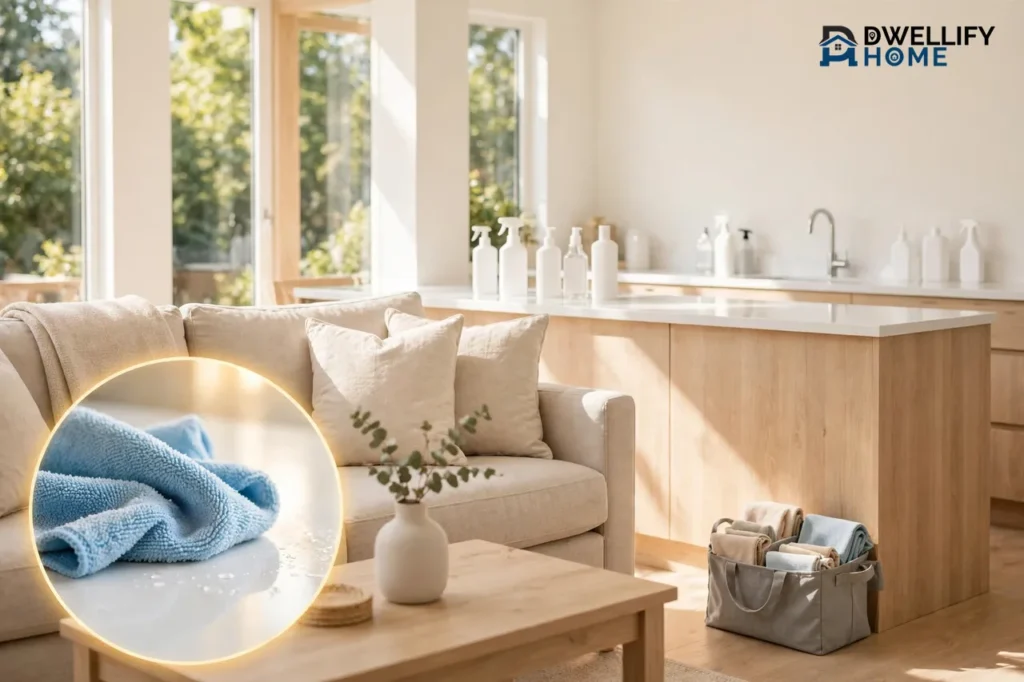
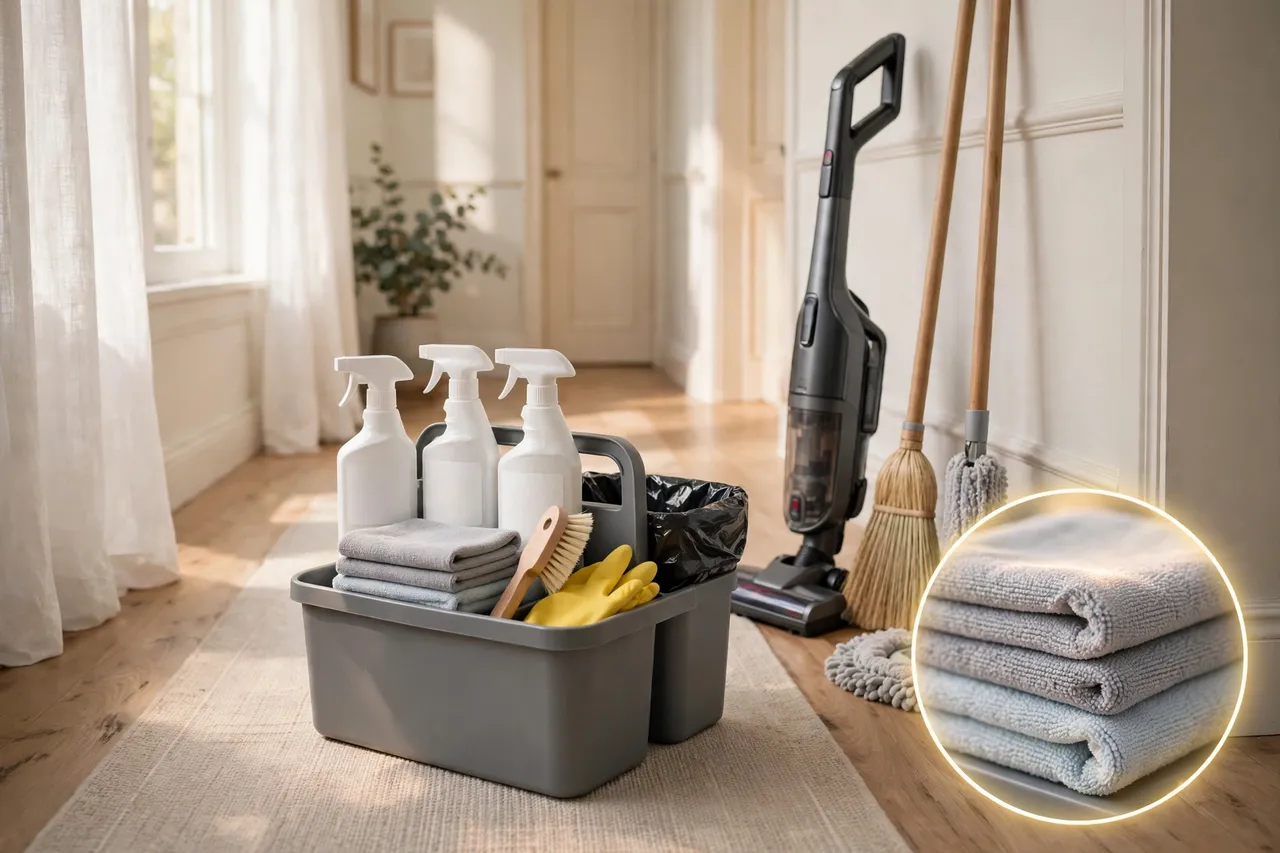
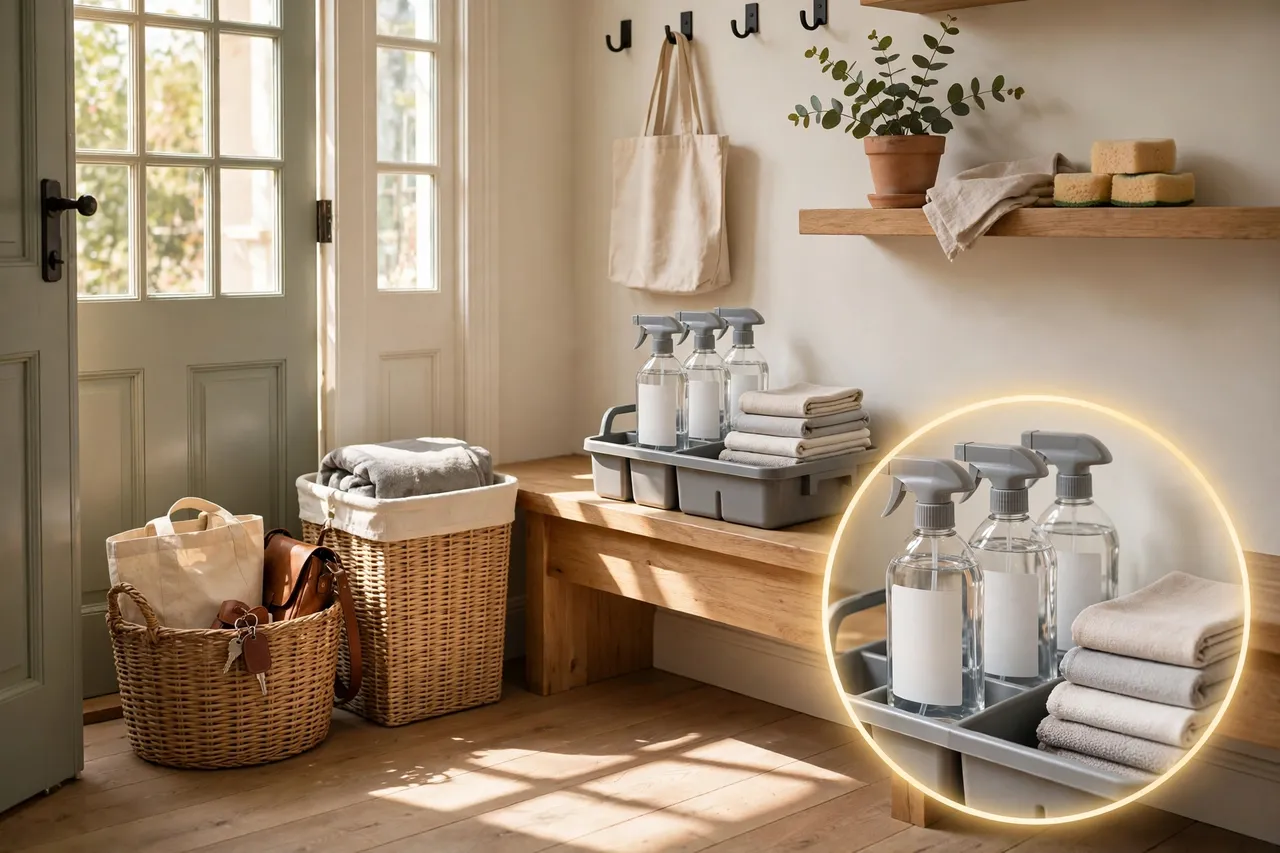
Carry your supplies with you in one caddy or bucket. You waste less time when you stop walking back to a cupboard for one more cloth or spray. Keep the kit small. Most regular jobs need only a few basics, and one product often covers many surfaces.
Check each product label before you use it. The label tells you which surfaces it suits, whether you need gloves, and how long it must stay wet on a surface. If a label does not name your surface, do not assume the product fits it. Pick a product made for that surface instead.
- Microfiber cloths, several clean ones, plus one dry cloth for dusting
- An all-purpose cleaner for washable hard surfaces
- A bathroom cleaner for sinks, tubs, and toilets
- A glass cleaner for mirrors and windows
- Dish soap for greasy spots and hand-washing
- A vacuum, a broom, and a mop for floors
- Rubber gloves and a small scrub brush for tight spots
- Trash bags and a laundry basket for pickups
Keep cloths for the bathroom apart from cloths for the kitchen. Wash reusable cloths after use and let them dry fully. A clean cloth picks up dirt. A dirty cloth just spreads it around.
Clean Every Room the Same Way
Use the same steps in every room. A fixed pattern keeps you from skipping corners, and it helps you finish faster because you never pause to plan the next move. Start at the door, work around the room in one direction, and finish at the door with the floor.
- Pick up first. Put away items that belong elsewhere, take out trash, and clear dishes and laundry from the room.
- Dust high to low. Dust ceiling fans, shelves, and light fixtures first, then furniture and lower surfaces, so falling dust lands where you still plan to clean.
- Work dry before wet. Dust and vacuum before you spray or mop, because a damp cloth on a dusty shelf leaves streaks.
- Wipe surfaces next. Clean counters, tables, and fixtures with the right product, and give spray cleaners a short dwell time while you work on another spot.
- Clean the problem spots. Give extra care to sinks, stovetops, toilet seats, and handles, which pick up the most daily use.
- Finish with the floor. Vacuum or sweep first, then mop hard floors, and work back toward the door so you do not walk over a clean floor.
Finish means finish. Before you leave a room, check that surfaces look clean, trash is out, and supplies are back in your caddy. Circling back later eats the time you just saved. If a room needs more work than your time allows, clean what you can, note the rest, and pick it up on the next pass rather than abandoning the whole system.
Room by Room: What to Clean Each Week
Rooms do not need the same care. Bathrooms and kitchens see water, food, and daily use, so they need the most attention. Bedrooms and living areas mostly need dusting, tidying, and floors. The order below starts with the hardest rooms, so you use your fresh energy where it counts most.
Kitchen
Start the kitchen by clearing the counters and putting dishes in the dishwasher or sink. Wipe counters and the backsplash, clean the sink and faucet, and wipe the stovetop once it cools. Then wipe appliance fronts and handles, take out the trash, and finish with the floor.
Wipe counters after cooking each day, not only on cleaning day. Food spills clean up fast while they stay soft, and they harden into extra scrubbing if you leave them. For floors, sweep loose crumbs first, then mop. If your home has vinyl plank floors, follow the flooring maker’s care guide for the right cleaner, because a waterproof plank does not mean every cleaning method suits it. Dwellify Home’s guide to luxury vinyl plank flooring explains how to match cleaning care to the exact product you own.
Bathroom
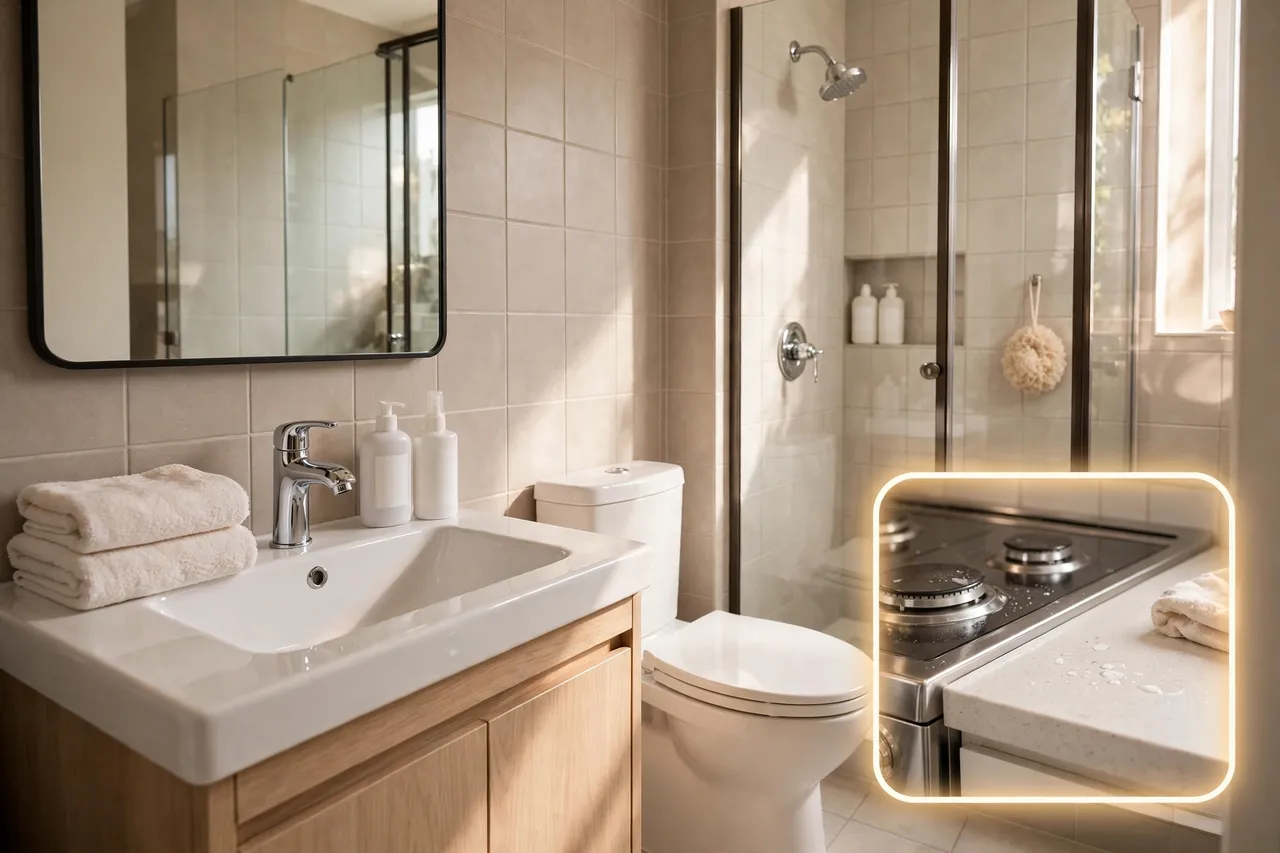
Spray the toilet, tub or shower, and sink early, then dust and wipe mirrors and shelves while the cleaner sits. Scrub the toilet inside and out, including the seat, lid, base, and handle. Clean the sink and faucet, wipe the tub or shower, hang fresh towels, and mop the floor last.
Keep a small daily habit here too. A quick rinse of the sink after the last person uses it takes seconds and stops rings from forming. Replace damp hand towels and bath mats when they stay wet, because damp fabric holds odor. If a bathroom sits unused for weeks, still flush the toilet and run the taps now and then so traps and pipes do not dry out.
Bedrooms
Make the bed first. A made bed makes the whole room look tidy at once, and it gives you a clear surface for folding clothes. Put clothes away, clear nightstands and dressers, empty the trash, dust furniture and mirrors, and vacuum or sweep the floor.
Change sheets and pillowcases each week. If pets sleep on the bed, change bedding more often. Keep a hamper in or near each bedroom so dirty clothes land in one place instead of on chairs and floors. At the end of the weekly pass, open the room for a moment of fresh air if the weather allows.
Living Areas, Entryway, and Laundry
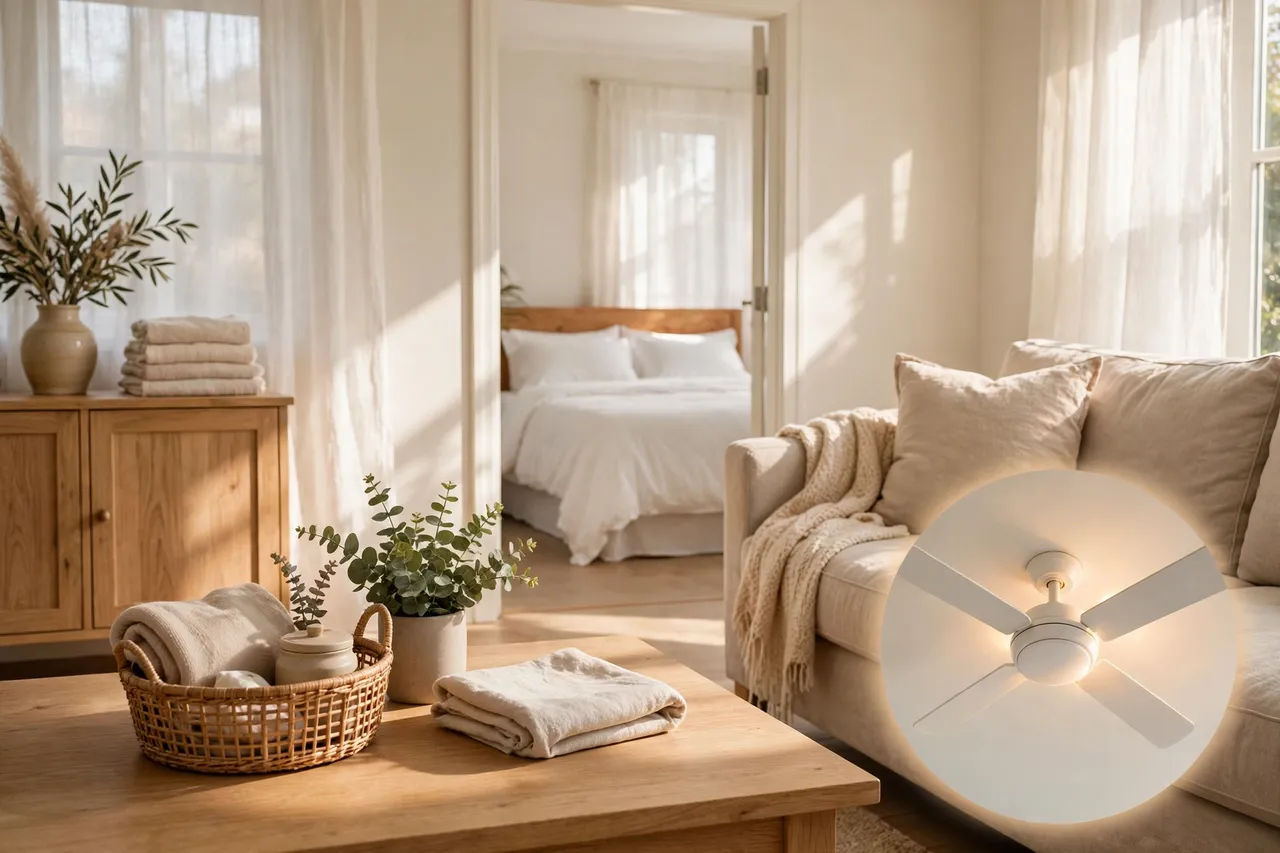
In living areas, clear tables, straighten cushions, dust shelves and media stands, and vacuum rugs and floors. Shake out small rugs outside when you can, and wipe remote controls and light switches as part of the weekly pass. In the entryway, put shoes and bags away, wipe the door handle, and sweep or vacuum the floor, since this room collects dirt from outside.
For laundry, wash bedding and towels on the weekly pass, and keep the laundry area itself tidy. Wipe the washer and dryer fronts, clear lint from the dryer filter after each load, and fold clothes promptly so clean laundry does not turn into a new pile. A well-planned laundry space makes this rhythm easier, and Dwellify Home’s guide to laundry room renovations shows how layout, storage, and ventilation support a smoother weekly routine.
Your Daily, Weekly, and Monthly Rhythm
A rhythm beats a marathon. Small daily habits keep the weekly pass short, and the weekly pass keeps the monthly pass light. When you miss a day, you simply pick the rhythm back up. You do not owe the house a punishment clean for one missed day.
The 10-Minute Daily Reset
Pick one short time each day, such as after dinner or before bed, and run the same reset. Make beds in the morning, clear dishes after meals, and wipe kitchen counters and the stovetop after cooking. Then walk through the main rooms with a basket, return items to their homes, and take out any full trash.
Keep the reset to about 10 minutes. Set a timer if it helps. The point is steady progress, not a perfect home each night. A room that stays picked up cleans in far less time, because you never move a dozen objects before you wipe one surface.
The Weekly Pass
Choose one day for the full pass, or split it across days if that fits your life better. One useful split gives each day one zone: kitchen one day, bathroom the next, then dusting, floors, and bedrooms across the rest of the week. Either way, cover every room each week, and keep the same room order so nothing slips through.
On weekly pass day, start with bathrooms and the kitchen, then move to bedrooms, living areas, and the entryway. Clean one room fully before the next. If time runs short, finish the room you started, then carry the remaining rooms to the next day rather than half-cleaning every room.
The Light Monthly Pass
Once a month, add a few light jobs to the weekly pass. Dust ceiling fans and light fixtures, wipe door handles, light switches, and cabinet fronts, and wash trash bins. Check your caddy too, and replace worn cloths and empty bottles before they slow you down.
Spread these jobs across the month if one long session feels like too much. Add one monthly job to each weekly pass, and the full list still gets done. This monthly pass stays light on purpose. It covers slow dust buildup and touch points, not a full overhaul of the home.
High-Touch Spots Most People Miss
High-touch spots are the surfaces hands reach for all day: door handles, light switches, faucet handles, toilet flush handles, fridge handles, remote controls, and stair rails. The Centers for Disease Control and Prevention (CDC) names tables, countertops, door handles, toilet flush handles, faucets, light switches, and floors among the surfaces people touch most often at home. Wipe these spots during the weekly pass, and more often when someone in the home feels sick.
Cleaning and disinfecting are two different jobs. The CDC explains that cleaning with soap and water removes germs, dirt, and impurities from a surface, while disinfecting uses chemicals to kill remaining germs on a surface. For most regular cleaning, soap and water do the job. Save disinfecting for times when someone feels sick, after raw meat spills in the kitchen, or when a product label directs you to disinfect a specific surface.
Clean visibly dirty surfaces before you disinfect them, because dirt blocks the disinfectant from reaching the surface. Then follow the product label for contact time, which means the surface must stay visibly wet for the stated time. Rinse food-contact surfaces with water after disinfecting when the label directs you to do so.
Clean Safely: Chemicals, Air, and Ladders
Read every product label before you mix, spray, or scrub. Use the product only for its stated purpose, wear gloves or eye protection when the label calls for them, and store products in their original containers where children and pets cannot reach them. The U.S. Environmental Protection Agency (EPA) advises following the directions on the product you use, opening windows for fresh air before, during, and right after cleaning, and choosing the least harmful product that still does the job. You can also look for the EPA’s Safer Choice label, which marks products whose ingredients meet the agency’s safety criteria.
Never mix bleach with other cleaners or disinfectants. The CDC warns that mixing bleach with other cleaners can release vapors that are very dangerous to breathe. The CDC also states that you should never mix household bleach with ammonia or vinegar, and you should keep good ventilation while you use bleach products indoors, for example by opening windows and doors for fresh air. If you use a diluted bleach solution, follow the label directions for mixing, and make a fresh solution each day, because a bleach solution mixed with water loses strength after 24 hours. The CDC’s guidance on cleaning and disinfecting with bleach gives the full safety steps.
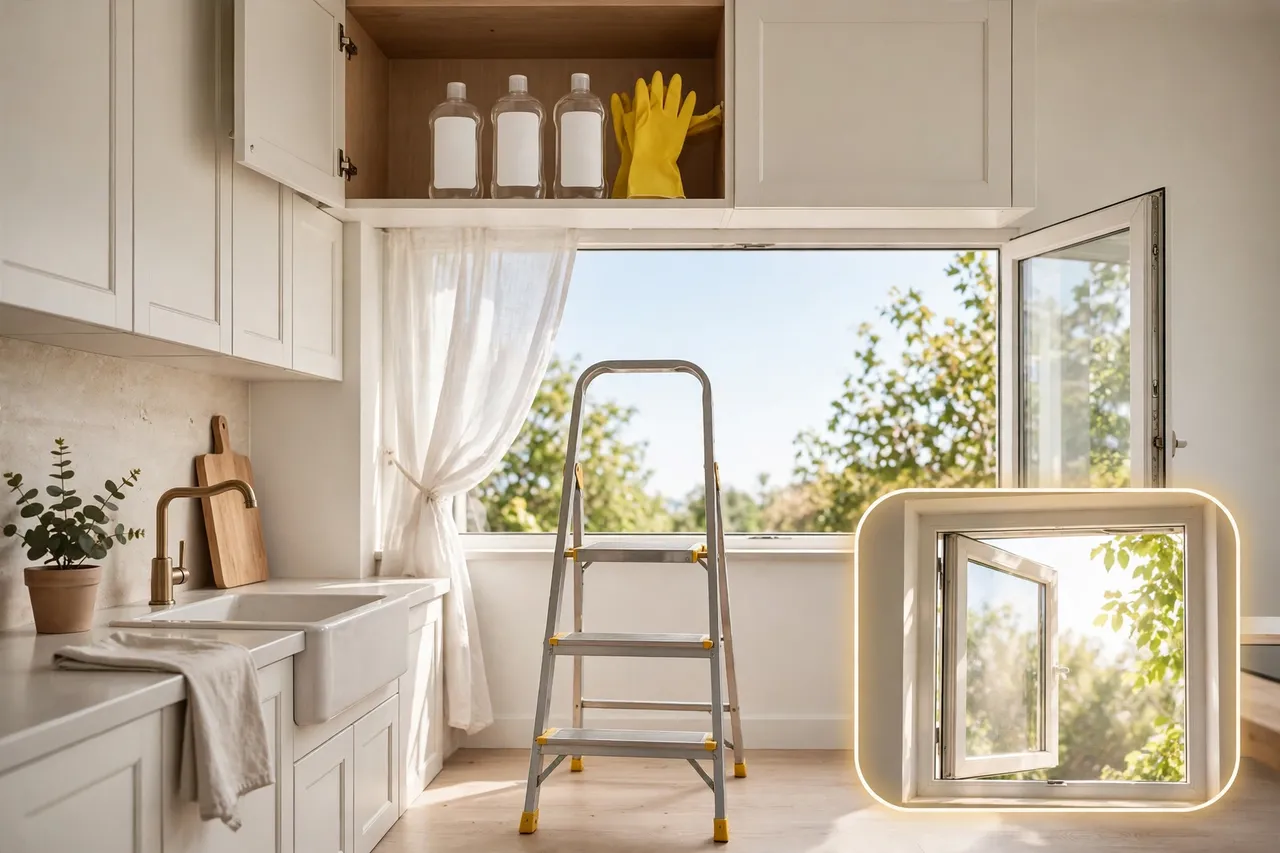
Before you climb a ladder to dust a fan or a high shelf, set the ladder on a flat, firm floor, face the work, and keep your body centered between the rails. Never lean far to one side, stand on the top step, or place a ladder on a rug or uneven floor. If the job sits too high or feels unsteady, skip it and ask another adult for help, or leave it for a safer day. A dusty fan can wait. A fall cannot.
Open windows or run a fan when strong smells build up, and step out of the room if fumes bother your eyes, nose, or throat. People with asthma or scent sensitivity should leave the room during and right after cleaning with strong products. Wash your hands after you finish cleaning or disinfecting, and change out of clothes that caught spray.
When Cleaning Feels Stuck
Most cleaning stalls come from clutter, not dirt. When a room feels too big to start, shrink the job until it feels doable. The numbered list below follows the safest, simplest fixes first, so you solve the stall without turning a regular clean into a whole-day project.
- Set a 10-minute timer and pick up only. When the timer ends, stop and judge the room again, because a picked-up room often looks half clean already.
- Clean one room, not the whole house. Finish that room fully, then rest before you decide on the next one.
- Move the clutter first. Fill one basket with items that belong elsewhere, deliver them, and return to cleaning with clear surfaces.
- Cut the list, not the system. Keep bathrooms, kitchen counters, and floors, and move dusting or monthly jobs to the next pass.
- Ask for help with one zone. One person on bathrooms and one on floors halves the weekly pass without changing the order.
- Reset the caddy. Restock cloths and products the night before, so cleaning day starts with supplies ready, not a shopping trip.
If a surface still looks dirty after a normal clean, check the product and the method before you scrub harder. A greasy stovetop may need dish soap and dwell time, while a dusty shelf needs a dry cloth first. Scrubbing a dry, dusty surface with a wet cloth only moves the dust into streaks.
Keep the System Going
Systems fail when they depend on motivation. Tie cleaning to habits you already keep. Run the daily reset right after dinner, start the weekly pass right after Saturday breakfast, or pair laundry with the weekly bedding change. A fixed trigger beats a vague plan to clean “sometime this week.”
Keep homes for everything you use often. A basket by the door for keys and bags, a hamper in each bedroom, and a caddy for supplies all cut pickup time. When an item has no home, it lands on a counter or chair, and counters full of items take twice as long to wipe.
Track what works for your home and adjust without guilt. A home with two dogs needs more vacuuming than a home with none. A home with one bathroom needs less bathroom time than a home with three. Change the frequency, never the order. The order is what keeps the system fast.
💡 Practical Home Tip: Keep one clean microfiber cloth in each bathroom and one in the kitchen, so a quick wipe never waits on a trip to the supply cupboard. Swap the cloths for fresh ones on weekly pass day, and the small habit quietly keeps sinks, faucets, and counters fresh between full cleans.
Related Guides
Decluttering Checklist: A Room-by-Room Guide for Your Whole Home · How to Organize a Junk Drawer That Stays Organized · Laundry Room Shelving: Practical Ideas, Heights, and Storage That Works
Frequently Asked Questions
How often should you clean your house?
Clean a little each day and run a full pass each week. A short daily reset of about 10 minutes covers beds, dishes, counters, and tidying, while the weekly pass covers bathrooms, kitchen surfaces, dusting, floors, and bedding. Adjust for pets, kids, and foot traffic.
What is the correct order to clean a house?
Pick up first, then work top to bottom and dry to wet, finishing one room before the next. Start with bathrooms and the kitchen, move to bedrooms and living areas, and finish each room with the floor as you head for the door. This order stops falling dust from undoing finished work.
How often should you clean your bathroom?
Clean a bathroom in daily use once a week, with a quick sink wipe between full cleans. Cover the toilet inside and out, the sink and faucet, the mirror, the tub or shower, fresh towels, and the floor. Clean more often when someone in the home feels sick or the room sees heavy use.
How long should weekly cleaning take?
Weekly cleaning time depends on home size, clutter, and how many people and pets live there. A small, tidy home may need about 20 minutes a day spread across zones, while a larger home needs more. The daily reset keeps the weekly pass shorter, because picked-up rooms clean much faster.
What should be on a weekly cleaning schedule?
A weekly schedule needs a short daily list plus one zone per day or one full pass day. Include beds, dishes, counters, and tidying each day, and cover the kitchen, bathroom, dusting, floors, bedding, laundry, and entry each week. Add one light monthly job per week so slow dust never piles up.
Cleaning the house stays simple when you trust one system and repeat it. Homes vary, and so do schedules, but the method holds: tidy first, clean top to bottom, finish one room at a time, and keep a short daily reset plus a weekly pass. If a product label, surface guide, or safety warning conflicts with a general tip in this article, follow the label and the maker guidance for your exact product and surface, and get qualified help for electrical, plumbing, or structural problems rather than guessing.
A Simple Way to Start This Week
Start tonight with the 10-minute reset, then pick one room tomorrow and clean it fully with the steps above. Add the next room the day after, and keep going until you cover the whole house. By the end of the week, you will hold a finished system, not just a cleaner room, and next week you simply run it again.