A flower bed is a defined patch of prepared soil where you plant flowers to add color, shape, and curb appeal to your yard, and the width rule that keeps it workable is simple: keep it no wider than 4 feet if you can reach it from both sides, and 3 feet if you can reach it from one side only, the width Proven Winners recommends for raised beds.
That one rule saves you from the most common beginner mistake: a bed so wide you have to step into it to weed, water, or deadhead, which packs the soil down and snaps stems. Everything else about flower beds — where to put one, what to plant, how to edge it — builds on that simple idea. A good bed looks planned, not random, and it stays easy to care for because you can reach every plant without climbing in.
This guide walks you through the whole thing: where to place a bed, how to design one that looks like a pro planned it, how to build it step by step, which flowers actually thrive, and how to keep it looking good with very little work.
What Is a Flower Bed?
A flower bed is any shaped area of soil set aside for flowers, separate from the lawn around it. It can sit against the house, run along a walkway, wrap around a tree, or stand alone in the middle of the yard as an island bed. Some beds sit flat on the ground. Others are raised beds with wood, stone, or brick walls that hold the soil up.
Beds are different from borders and planters. A border is usually a long, narrow strip along a fence or wall, and a planter is a container. A flower bed is bigger and more flexible than both: it has real depth, real soil, and room for layers of plants at different heights, and it guides the eye toward your front door or a pretty view.
Where to Put Your Flower Bed
Start with the sun. Most flowering plants need at least 6 hours of direct sun a day to bloom well, so watch your yard through a full day before you dig. Note which spots get morning sun, which get hot afternoon sun, and which sit in shade. That one day of watching saves you from planting sun-lovers in a shady corner where they will sulk all summer.
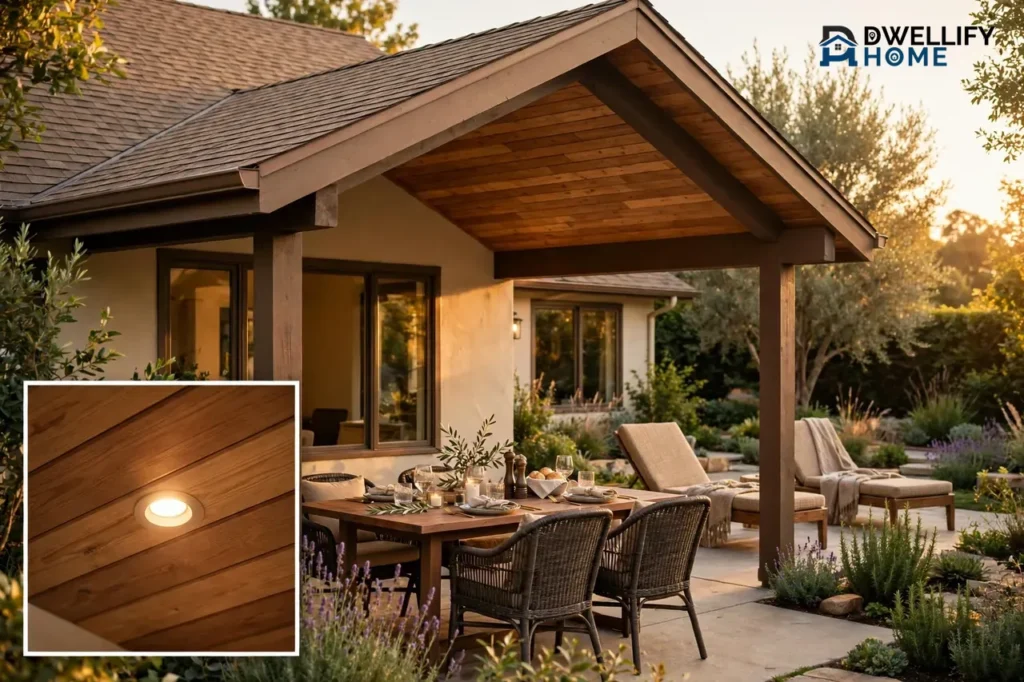
Next, think about where you will actually see the bed. The front of the house is the classic spot because it lifts curb appeal the moment someone pulls up. A bed along the walkway welcomes guests, and a bed near the patio gives you color where you sit and eat.
Also think about water and reach. Put the bed where a hose reaches easily, and keep it where you can walk up to every side you need to tend. Test-drive any curved edge with your mower before you build, as HGTV advises in its beginner flower bed guide — curves look soft and natural, but only if your mower can follow them without scalping the edge.
Finally, check what sits underneath. Avoid planting over a septic field or buried utility lines. If you are unsure where lines run, call 811 before you dig. It is free, and it keeps a fun weekend project from turning into a repair bill.
How to Design a Flower Bed That Looks Planned
A bed that looks good follows a few simple design rules. You do not need a design degree. You just need height, color, and repetition in the right places.
Layer Plants by Height
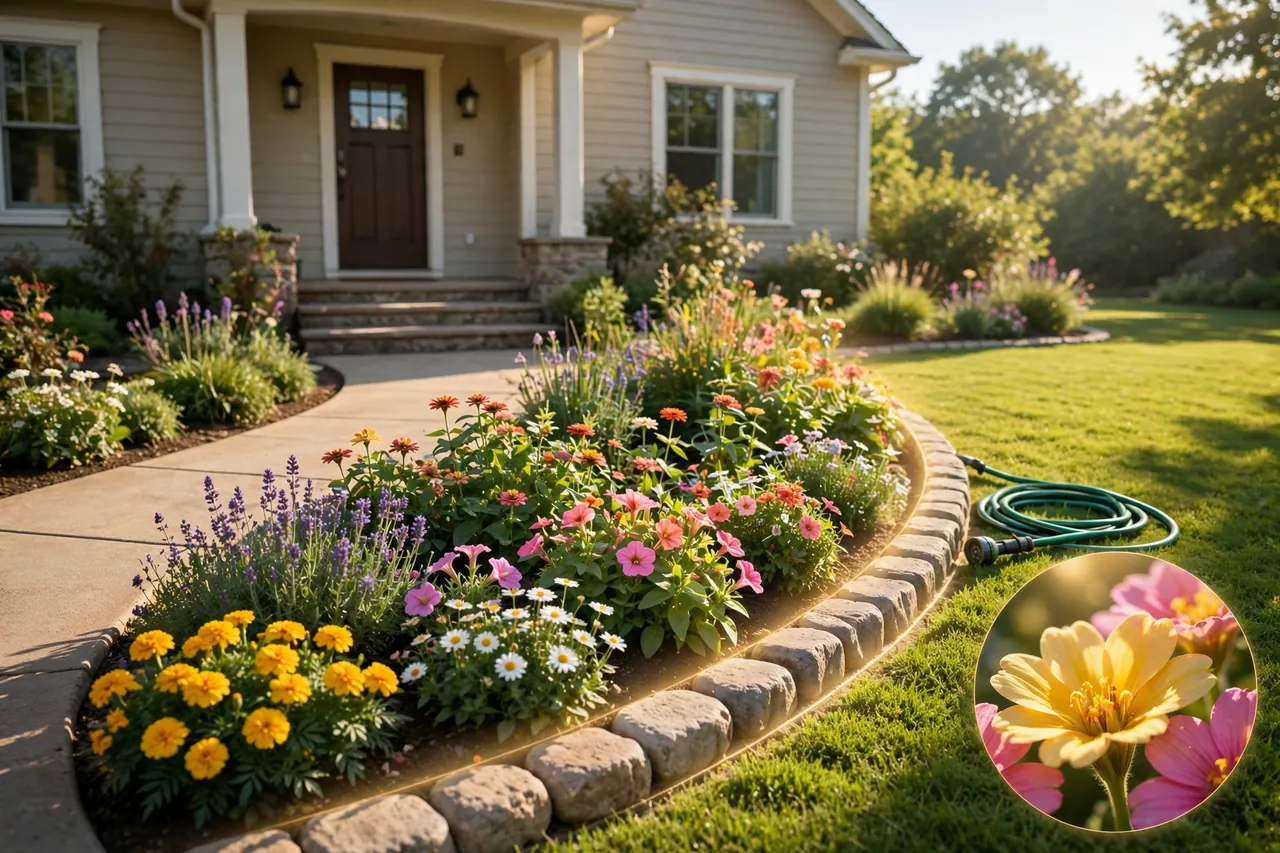
Arrange flowering plants by height, with the tallest bloomers at the back of a bed you view from one side, or in the center of a bed you view from all sides. Put medium plants in the middle and the shortest ones at the front. This is the rule HGTV lays out for front yard beds, and it works every time because no plant hides another.
Keep walkways skirted with knee-high or shorter bloomers so sprawling plants do not turn the path into an obstacle course. And do not place tall flowers in front of windows, or you will block the view from inside the house.
Repeat One Color to Lead the Eye
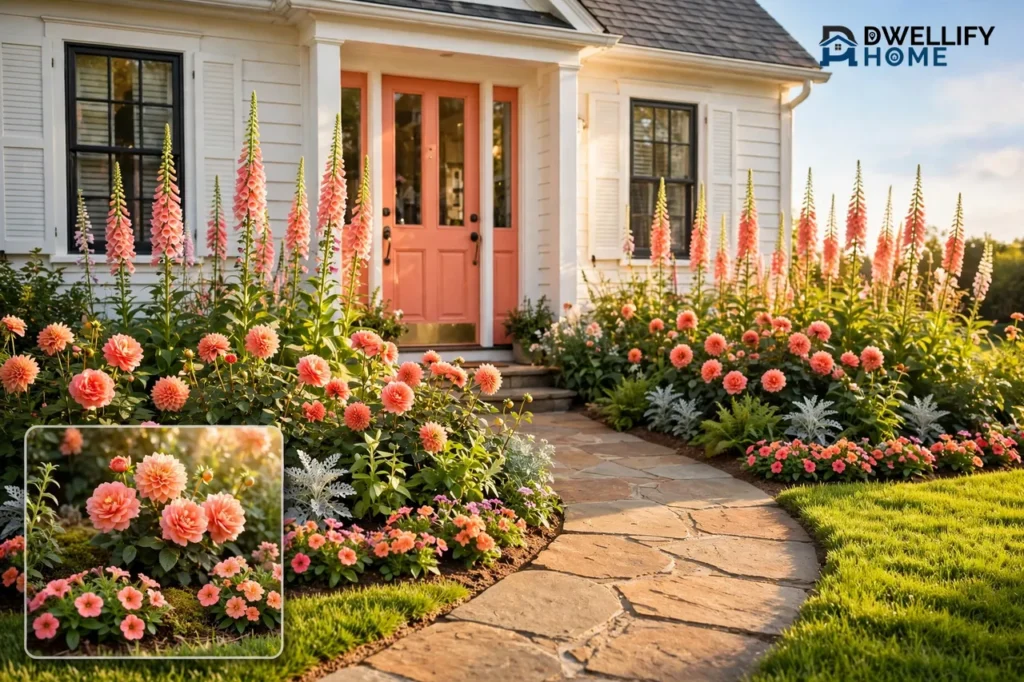
Pick one main color and repeat it through the bed. That repeated hue pulls the eye along the bed and toward your front door. You can repeat the same color in porch planters or hanging baskets too, and the whole front of the house starts to feel tied together.
Choose that color from your home itself — a door color, a shutter color, or a brick tone. Flowers that echo the house always look like they belong there, while a random mix of every color can look busy and restless.
Mix Thrillers, Fillers, and Spillers
Good beds mix three plant jobs. Thrillers are tall, bold plants that give the bed its shape. Fillers are medium, bushy plants that fill the middle with color and leaves. Spillers trail over the front edge and soften the border. Foliage matters as much as flowers: leaves in different greens, silvers, and deep purples keep the bed interesting even when nothing is in bloom.
Pick a Shape That Fits the Yard
Curved beds soften hard angles between sidewalks, driveways, and the house. Straight beds look neat and formal, and they suit modern homes. L-shaped beds work well around corners, and island beds suit big open lawns. Start small if you are new to this. A bed you can finish and care for beats a giant bed that turns weedy by July, and you can always make a good bed bigger next year.
How to Make a Flower Bed Step by Step
Building a new flower bed is a weekend job for most yards. Work through these steps in order, and do not skip the soil work — it is the part that decides whether your flowers thrive or struggle.
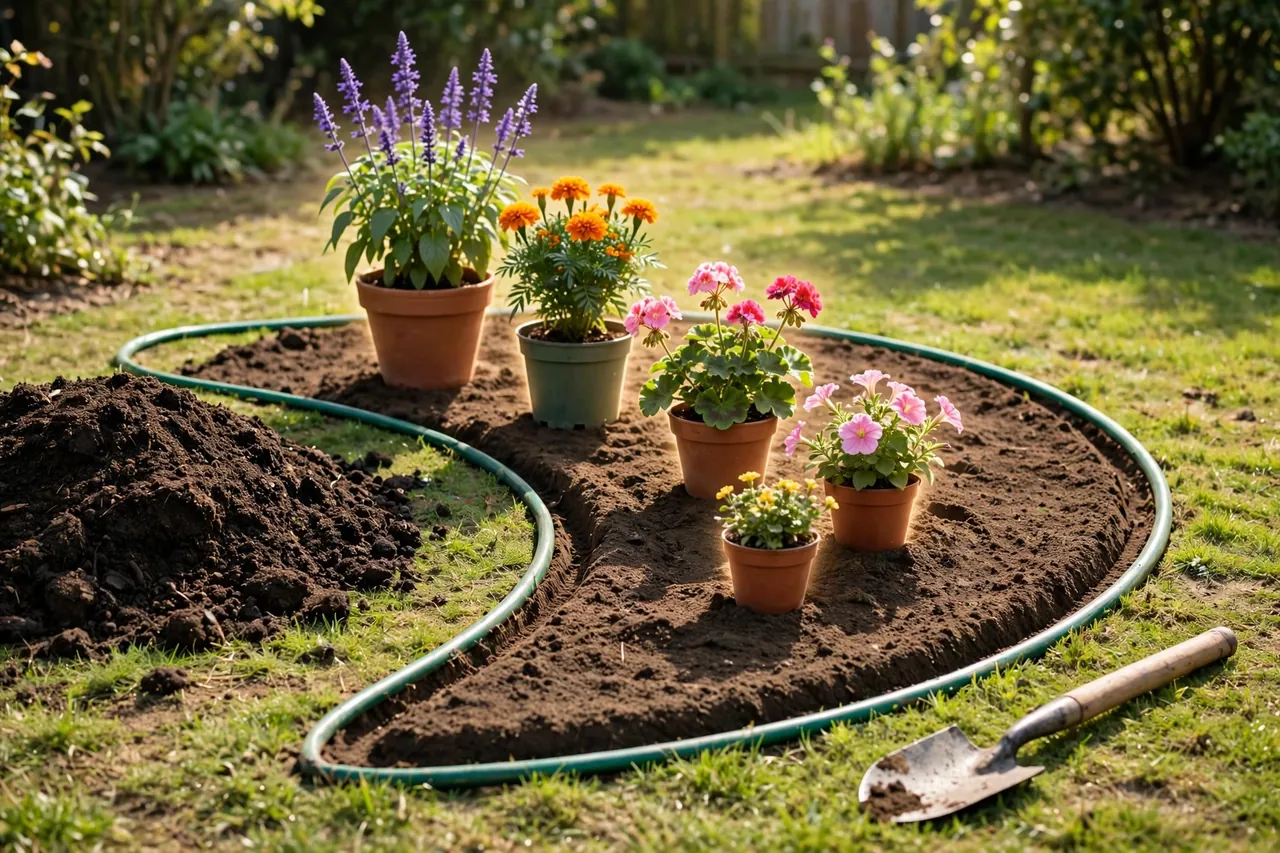
- Mark the shape. Lay a garden hose on the grass to outline the bed. Curve it until the shape looks right, then step back and look from the street and from the house. Adjust until you like it from both views.
- Cut the edge. Use a spade or half-moon edger to cut along the hose line, about 4 to 6 inches deep. A clean cut now makes a crisp edge that is easy to keep later.
- Remove the grass and weeds. Dig out the grass inside the outline, roots and all. Pull every weed you see. Grass left behind will poke through your flowers all summer.
- Loosen the soil. Dig and loosen the soil to a depth of about 8 to 12 inches. This gives roots room to grow down and lets water drain instead of pooling on top.
- Add compost. Mix in 2 to 3 inches of compost or aged manure. Compost feeds the soil, holds moisture, and helps heavy clay drain better. If your soil is very poor, a raised bed filled with good soil mix is the faster fix.
- Set the plants out first. Place every plant, still in its pot, on top of the soil. Move them around until the heights and colors look right. This dry run takes ten minutes and saves you from digging up a plant you placed in the wrong spot.
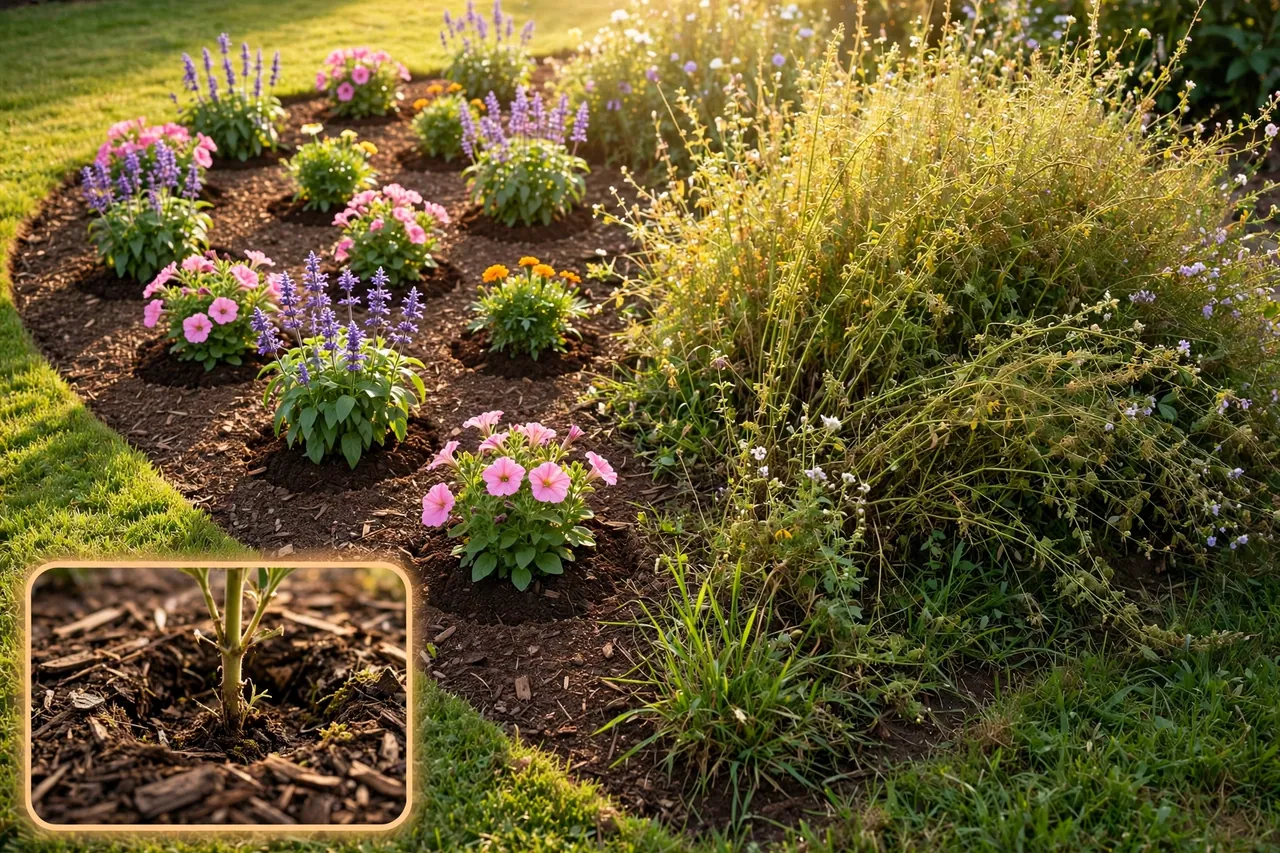
- Plant, water, and mulch. Dig each hole twice as wide as the root ball and no deeper than the root ball. Set the plant in, fill the soil back around it, press gently, and water well. Then spread 2 to 3 inches of mulch, keeping it an inch or two away from the stems.
Water new plants deeply every few days for the first few weeks, then ease off as they settle in. New roots need steady moisture, but soggy soil rots them, so check the soil with your finger before you water again.
Raised Flower Beds vs In-Ground Beds
Both styles grow great flowers. The right pick depends on your soil, your back, and your budget.
Raised beds sit above the ground in a frame of wood, stone, brick, or metal. They warm up faster in spring, drain better, and save your knees because you do not bend as far. They also give you full control over the soil, which is a big win if your yard has clay, gravel, or rocky fill. Proven Winners notes that raised beds can be as little as 8 inches tall or several feet tall, but the width matters most: about 4 feet wide if you can reach from both sides, about 3 feet if you can reach from one side only. If you build the frame yourself, Lowe’s step-by-step raised bed guide walks through cutting, joining, and filling it.
In-ground beds cost less and look more natural, because they blend into the yard with no frame to build or buy. They suit big, sweeping designs and large shrubs that need deep roots. Their weakness is your existing soil — if the soil is bad, you have to fix it in place, which takes more digging and compost.
| Feature | Raised flower bed | In-ground flower bed |
|---|---|---|
| Cost to start | Higher, frame plus soil | Lower, soil and plants only |
| Soil control | Full control, you fill it | Depends on your yard soil |
| Drainage | Usually better | Varies with soil type |
| Best for | Poor soil, small spaces, easy reach | Large beds, shrubs, natural look |
| Effort to build | A day of building | A few hours of digging |
If your yard stays soggy after rain, fix the drainage before you plant anything. A bed in a wet spot will drown flowers no matter how good the soil is. For help finding the cause, read our guide on how to find the cause and fix poor yard drainage.
Best Flowers for Flower Beds
The best flowers for your bed are the ones that match your sun, your soil, and how much care you want to give. Start with that match, and the color choices get easy.
Flowers for Sunny Beds
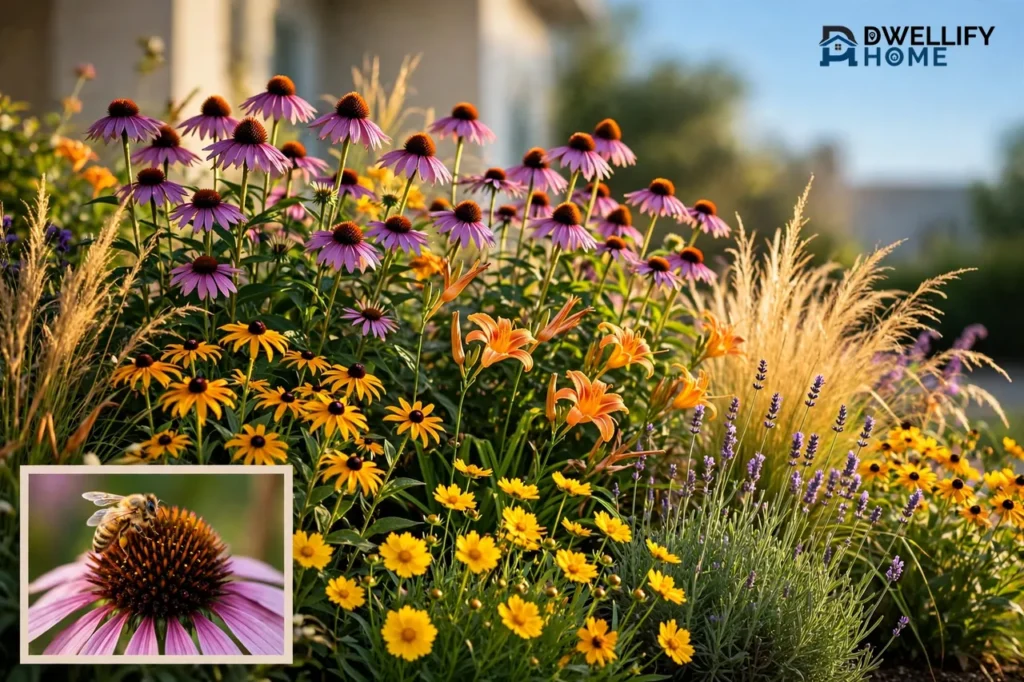
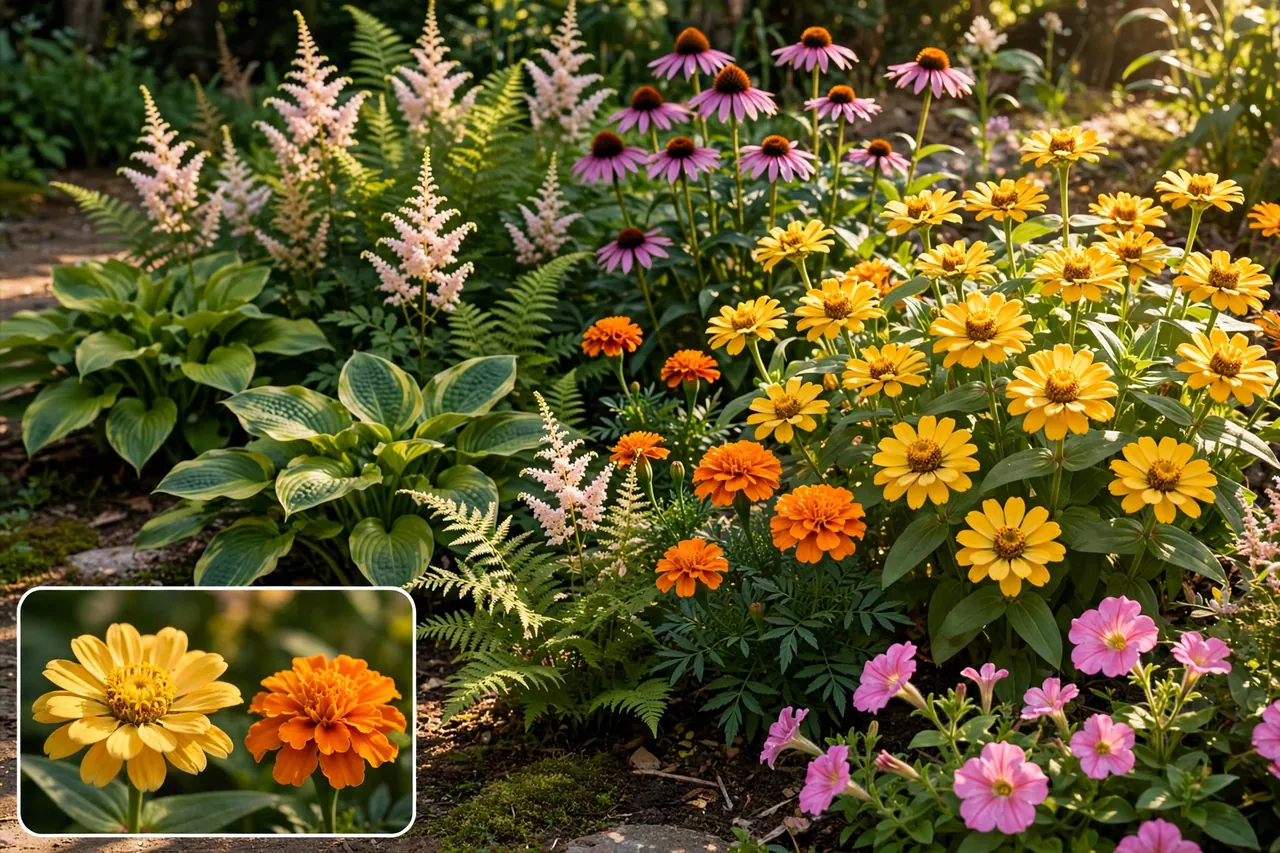
Sunny beds, with 6 or more hours of direct sun, suit zinnias, marigolds, coneflowers, black-eyed Susans, petunias, and daylilies. These are tough, cheerful bloomers that keep going through summer heat, and zinnias and marigolds grow fast from seed, so they are a cheap way to fill a new bed in its first year.
Flowers for Shady Beds
Shady beds need a different crew: hostas for bold leaves, impatiens for bright color, ferns for soft texture, and astilbe for feathery plumes. Shade flowers often bloom less than sun flowers, so lean on leaf color and shape to carry the bed.
Annuals vs Perennials
Annuals live for one season, bloom hard all summer, and die with frost. Perennials come back year after year from their roots, but most bloom for a few weeks at a time. A smart bed mixes both: perennials for the backbone that returns each spring, and annuals to fill gaps and keep color going between perennial blooms.
| Feature | Annuals | Perennials |
|---|---|---|
| Life span | One season | Many years |
| Bloom time | All season long | A few weeks each |
| Cost over time | Buy again each year | Pay once, returns yearly |
| Best use | Fast color, fill gaps | Bed backbone, structure |
When you shop for plants, buy from a seller with clear shipping and guarantee terms so a weak plant gets replaced instead of becoming your problem. Our list of the best places to buy plants online compares shipping and guarantees to help you pick.
Flower Bed Ideas for the Front of the House
Front yard beds do the hardest job in the garden: they make the whole house look cared for. Keep the design simple, neat, and tied to the house.
Foundation beds run along the base of the house and anchor it to the yard. Fill them with plants in layers — taller shrubs or flowers at the back, medium flowers in the middle, and low edging plants at the front — so the bed has depth instead of a flat wall of green.
Walkway beds run along the path to your door and guide visitors in. Keep them low near the path, repeat one color along the whole walk, and leave room for people to pass without brushing wet leaves. A driveway bed works best when it connects to the foundation bed instead of standing alone, so the eye travels along the planting toward the door rather than stopping at the garage.
For the front of the house, roses, hydrangeas, petunias, and marigolds are popular picks because they bloom big and read well from the street. Hydrangeas suit shady or partly shady fronts, while petunias and marigolds love sun and give fast color for little money. If your home sits under HOA rules, check what your association allows before you plant, since some HOAs limit bed size or plant types in the front yard.
Small Flower Bed Ideas
A small bed can look just as good as a big one, and it is far easier to keep tidy. The trick is to keep the plant list short and the design tight.
Pick three to five plant types and repeat them instead of buying one of everything. Repetition makes a small bed look full and planned, while a dozen different plants in a tiny space looks crowded and messy.
Use a corner bed where two paths meet, a narrow bed along a fence, or a small round island bed around a tree or mailbox. Add one taller plant as a focal point — a small ornamental grass, a compact hydrangea, or a tall zinnia clump — and keep the rest low around it. For edging on a small bed, low groundcovers do double duty: they hold the edge, smother weeds, and add flowers of their own.
Cheap Flower Bed Ideas
A pretty flower bed does not need a big budget. It needs smart choices and a little patience.
Grow from seed where you can. Zinnias, marigolds, cosmos, and sunflowers are cheap as seed and grow fast. Ask friends and neighbors for divisions — many perennials need splitting every few years, and gardeners are usually glad to share the extra pieces.
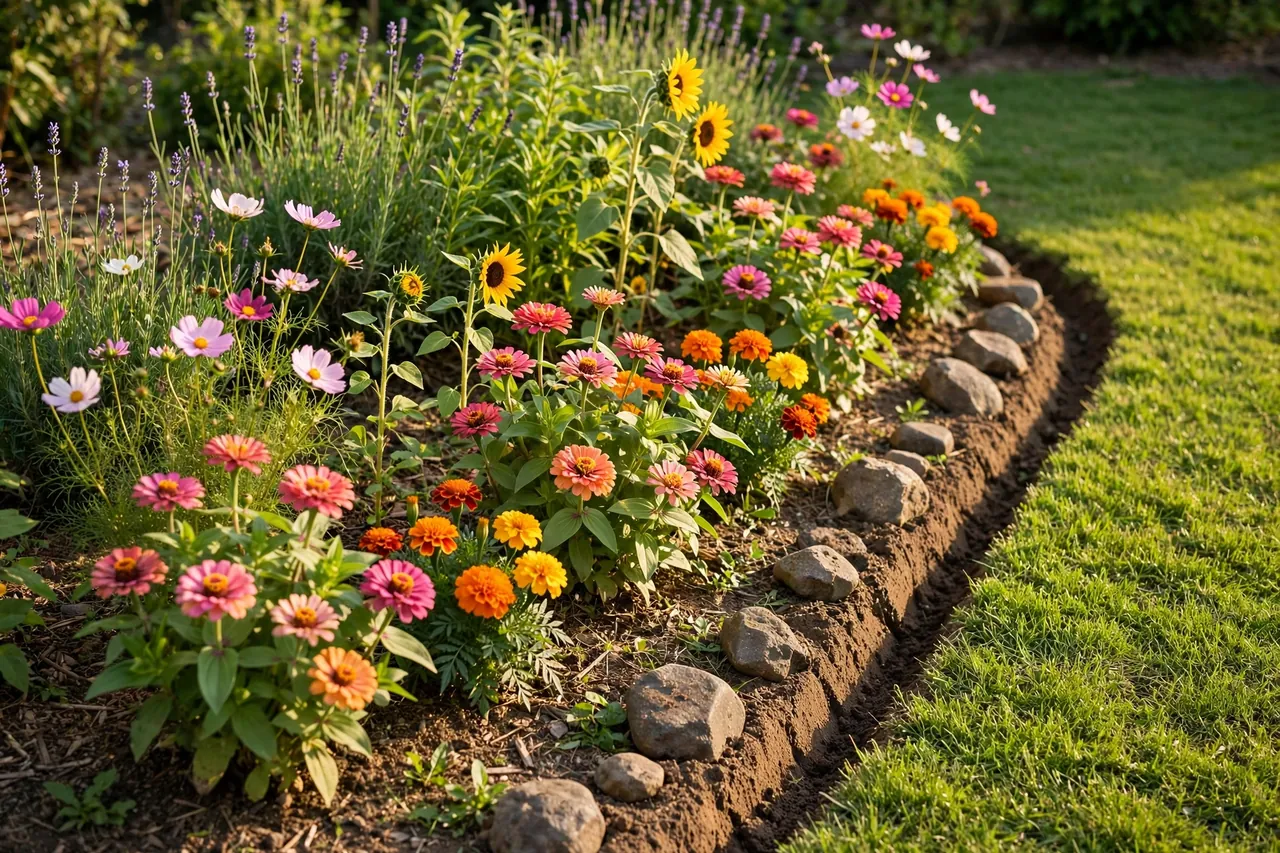
Use free or low-cost edging: stones you already have, reclaimed brick, or a simple cut edge with no bought edging at all. A clean spade-cut edge looks neat and costs nothing but a few minutes with the edger each month.
Build the bed in stages. Put in the backbone plants this year — the perennials and shrubs that will grow bigger each year — and fill the gaps with cheap annuals. Next year the perennials will have spread, and you will need fewer annuals to fill the same space.
How to Keep a Flower Bed Looking Good
A flower bed is not a plant-it-and-forget-it project. But the upkeep is small if you do a little, often, instead of a lot, rarely.
Water deeply and less often, so roots grow down instead of staying near the surface. Early morning is the best time to water: leaves dry fast in the sun, which cuts down on disease, and less water evaporates than at midday.
Weed little and often. Ten minutes of weeding once a week beats an hour of weeding once a month, because young weeds pull out easily and never get the chance to set seed. Mulch does most of the work for you, but check the edges, where grass loves to creep in.
Deadhead spent blooms — pinch or snip off faded flowers — and many annuals and perennials will bloom again instead of putting their energy into seed. Cut back plants that flop over their neighbors, and divide crowded perennials in spring or fall when the clump gets too big for its spot.
Mistakes That Ruin Flower Beds
Most flower bed failures come from the same few mistakes, and all of them are easy to avoid once you know them.
- Planting too close together. Small plants grow. Always space them by their mature size, not their size in the pot, or you will be digging up crowded plants by year two.
- Ignoring the sun. A sun-lover in shade grows leggy and blooms little. A shade-lover in full sun scorches. Match the plant to the spot, not to the picture on the tag.
- Skipping the soil work. Flowers cannot thrive in hard, poor soil. Compost and loosening matter more than any fertilizer you buy later.
- Mulching against stems. Mulch piled on stems holds moisture and rots them. Keep a small gap around every stem.
- Building too wide to reach. If you cannot reach the middle without stepping in, the bed is too wide. Keep to the 4-foot and 3-foot width rules from the start of this guide.
- Forgetting the edge. Without a clear edge, grass creeps in and the bed blurs into the lawn. Cut the edge clean and check it every few weeks.
On a slope, a bed needs a little extra thought. Soil and mulch wash downhill in heavy rain, so a low stone or timber edge holds everything in place. If your slope is steep, our guide on how to build a retaining wall on a slope shows the steps for a sturdy wall that keeps a bed where you built it.
Related Guides
soggy yard drainage fix · best places to buy plants online · creeping myrtle vs periwinkle comparison · retaining wall guide · Landscaping Ideas with Rocks and Stones · Low Maintenance Landscaping Plants · Front of House Landscaping
Frequently Asked Questions
How deep should a flower bed be?
Loosen and amend the soil in a flower bed to a depth of 8 to 12 inches, so roots have room to grow and reach nutrients. If you build a raised bed, aim for at least 6 inches of soil depth, though 12 inches is ideal for deeper-rooted plants.
What’s the best edging for a flower bed?
Popular edging options include metal landscape edging for a durable, clean line, natural stone for an attractive but labor-heavy edge, brick for a classic look, and plastic for a budget-friendly edge. Pick based on your style, your budget, and how much work you want to do.
What flowers grow best in flower beds?
Choose plants that suit your sunlight. Perennials like coneflowers and black-eyed Susans come back year after year, while annuals like marigolds give steady color all season. Match the flower to the sun and soil in your bed, and it will grow far better than a pretty plant in the wrong spot.
What is the best flower for the front of the house?
There is no single best flower for the front of the house, because it depends on your taste and climate. Popular choices include roses, hydrangeas, petunias, and marigolds. Pick for your sun, your soil, and a color that suits your home.
How do I keep grass from growing into my flower bed?
Install a physical barrier like metal or plastic edging that extends 4 to 6 inches into the ground, and keep mulch thick at the edges. Edge the bed regularly with a half-moon edger to keep the line clean and stop grass from creeping back in.
A flower bed is one of the fastest ways to make a yard feel loved. Pick a spot with the right sun, build the soil well, plant by height with one color repeated, and keep up with a few minutes of care each week. Start with one small bed, get it right, and let it grow from there — your yard will thank you every time you pull into the driveway.