A paver patio renovation costs $8 to $25 per square foot installed, and Angi puts the 2026 national average at $3,800 for a typical job, with most homeowners spending $2,400 to $7,000. That range covers new pavers, base work, and labor, but a renovation adds one more line to the bill: taking out the old patio first.
Renovating a paver patio means fixing or replacing a patio that already exists. You might lift sinking pavers and rebuild the base, swap cracked pavers for new ones, or tear the whole patio out and start fresh. The right choice depends on what sits under the pavers. A solid base means a cheap repair. A failed base means a full rebuild, and that changes the price a lot.
Every price in this guide is a real US figure from a named cost source, checked Nov 9, 2026. Prices are planning ranges, not quotes. Your final number depends on patio size, paver material, site access, and local labor rates, so compare at least three written quotes For the full picture across every kind of yard project, see our guide to how much landscaping costs.
How Much Does a Paver Patio Renovation Cost?
For a full renovation, plan on $8 to $25 per square foot for the new paver work, plus $1 to $8 per square foot to remove the old surface, according to Angi and HomeGuide figures checked Nov 9, 2026. A small 100-square-foot patio often lands between $1,000 and $3,500 all in. A mid-size 300-square-foot patio often lands between $3,500 and $9,000. A large 400-square-foot patio often lands between $4,500 and $12,000.
Three things decide where you fall in those ranges. First, the paver material: plain concrete pavers cost far less than natural stone. Second, the state of the old patio: a sound base needs only new pavers on a re-leveled bed, while a failed base needs full excavation and a new gravel base. Third, access: a backyard a truck can reach costs less than one where every load moves by wheelbarrow.
One warning about the numbers you see online: national guides and local contractors often quote very different rates. Angi lists $8 to $25 per square foot installed, while full-service contractors such as Elevate Outdoor list $30 to $40 per square foot for concrete pavers in their markets. The gap comes from scope. National guides often reflect basic installs, while contractor rates bundle design, premium base work, and warranty. Ask every bidder what their per-square-foot price includes before you compare.
Paver Patio Renovation Cost by Size
Size is the biggest driver of total cost. The per-square-foot rate drops a little on big patios because delivery and setup spread across more area, but the total still climbs fast.
| Patio size | Square feet | Typical cost |
|---|---|---|
| 10 by 10 feet | 100 | $800 to $2,500 |
| 10 by 16 feet | 160 | $1,280 to $4,000 |
| 10 by 20 feet | 200 | $1,600 to $5,000 |
| 14 by 20 feet | 280 | $2,240 to $7,000 |
| 20 by 20 feet | 400 | $3,200 to $10,000 |
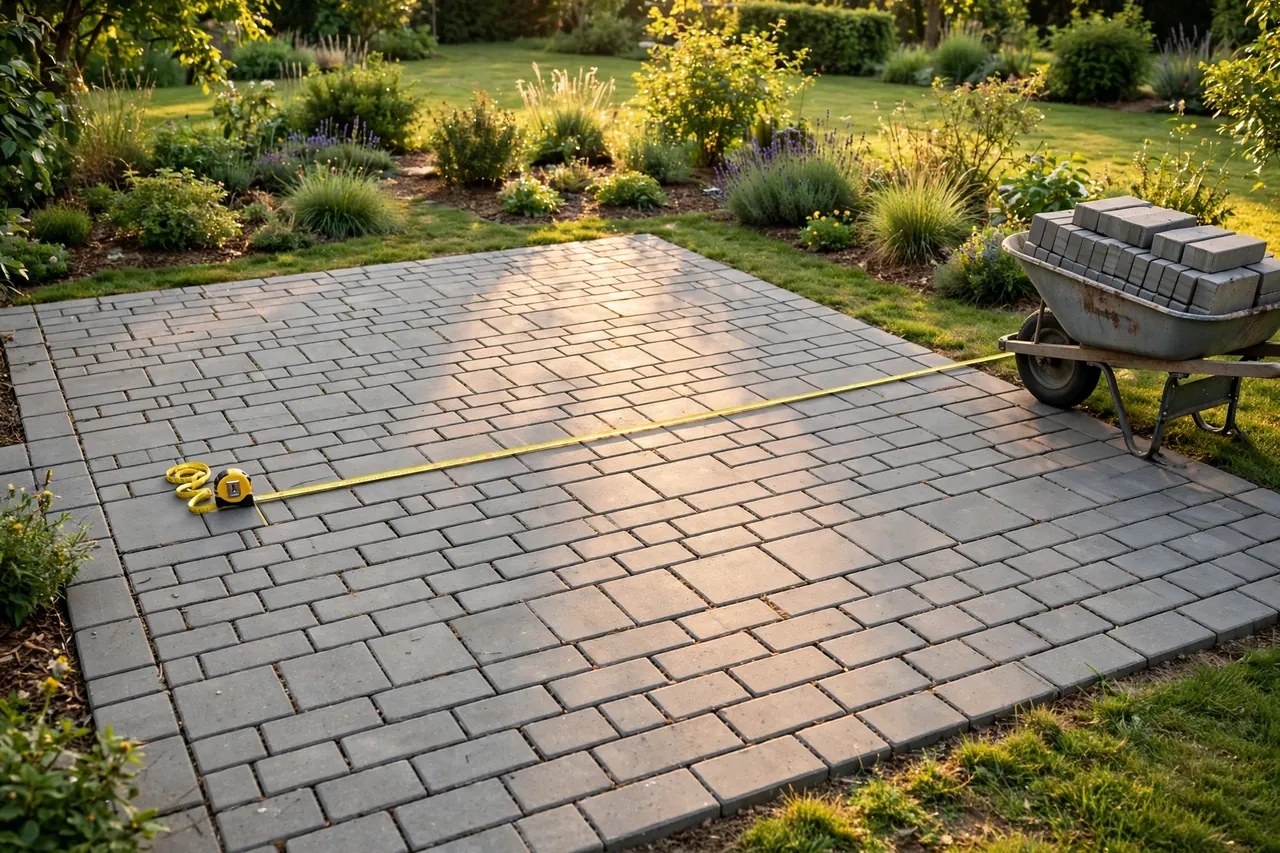
These Angi figures cover new paver installation. For a renovation, add removal costs on top. Removing an old paver patio costs $1 to $5 per square foot, and removing an old concrete slab costs $3 to $8 per square foot, according to HomeGuide, checked Nov 9, 2026. On a 300-square-foot patio, that adds $300 to $1,500 for old pavers, or $900 to $2,400 for old concrete.
Cost by Paver Material
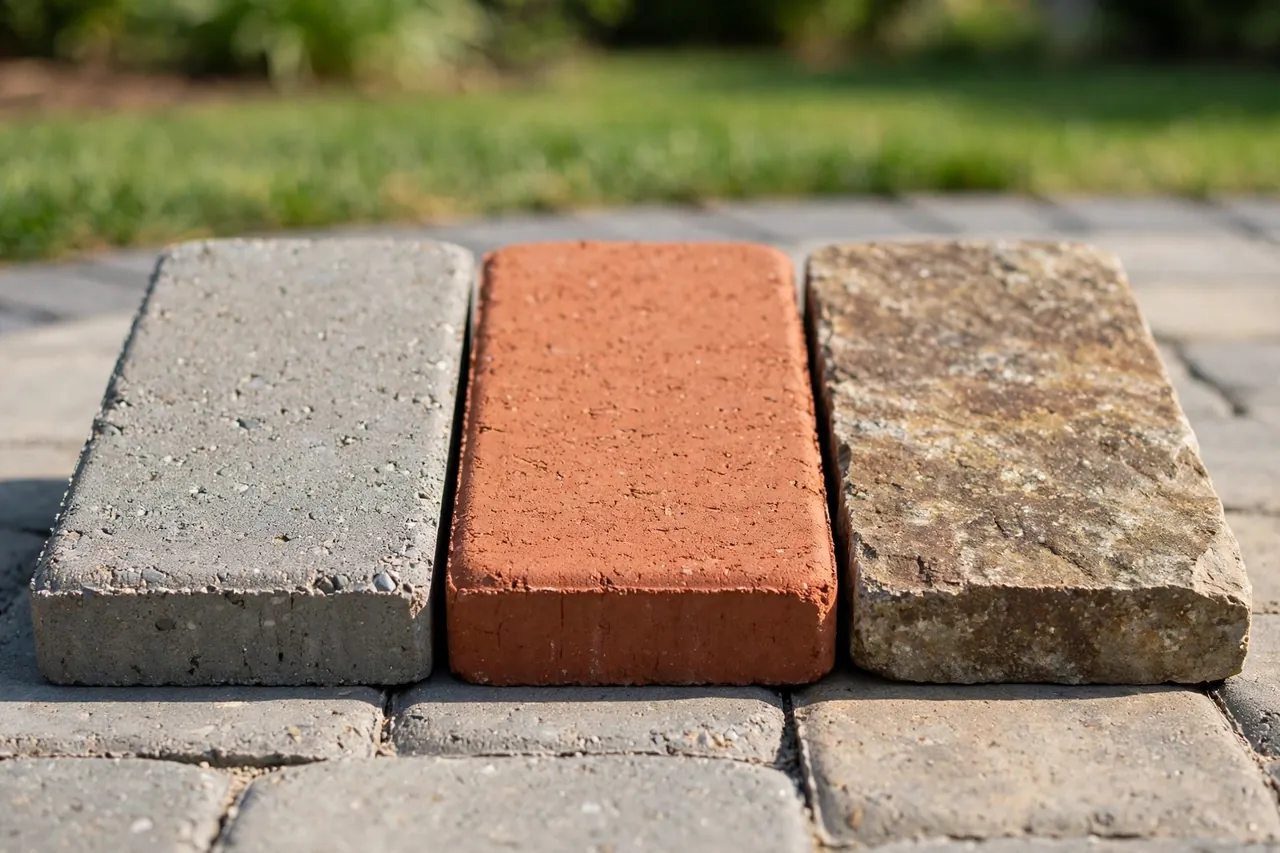
Material choice is the second-biggest budget lever. Concrete pavers are the cheapest and the most common choice. Brick costs a little more and brings a classic look. Natural stone costs the most and brings a premium finish, but it needs more care.
| Material | Cost per square foot | What to know |
|---|---|---|
| Concrete pavers | $8 to $15 | Most styles and colors, easy to repair |
| Brick or clay pavers | $10 to $20 | Classic look, can chip or crack |
| Natural stone | $15 to $50 | Unique look, long lasting, hard to clean |
HomeGuide breaks the same job down a different way, and the split helps with budgeting. Pavers alone cost $2 to $4 per square foot on average, with a range of $1 to $15 depending on material, while base materials run $1.40 to $2.20 per square foot. Labor adds $6.25 to $10.90 per square foot. That split shows why labor matters so much: on most jobs, the crew costs more than the pavers.
Think about repairs when you pick a material. Concrete pavers are easy to match and replace one at a time. Natural stone is harder to match, so buy 10 percent extra and store the spares. That small upfront cost saves a visible patch later.
What Drives the Price Up or Down?
Two patios of the same size can cost very different amounts. Site access changes labor hours fast: a patio a truck can reach costs less than one where pavers, gravel, and sand move by wheelbarrow through a narrow side gate. Steep slopes, tree roots, and tight corners all add time. Tell each bidder about access problems upfront so the quote reflects them.
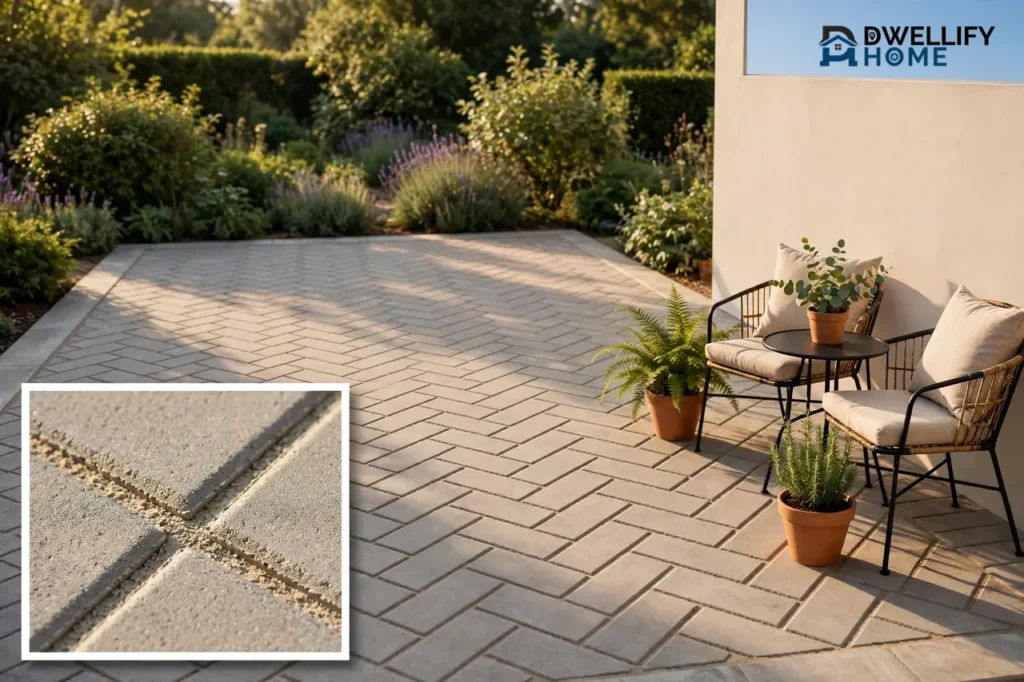
Design complexity adds cutting and waste. A simple running-bond or herringbone pattern costs the least. Curves, borders, and mosaic insets need more cuts, more skill, and more spare pavers. Keep the pattern simple if the budget is tight, and spend the savings on a better base.
Soil and slope decide how much digging the job needs. Soft, level soil is cheap to excavate. Clay, rock, roots, or a slope that needs regrading adds cost. HomeGuide puts excavation at $1 to $5 per square foot and regrading at $0.40 to $2.00 per square foot, checked Nov 9, 2026. Permits can surprise you too: a plain patio often needs no permit, but rules vary by town and homeowners association, so check before you dig. Angi lists landscape design fees of $1,930 to $7,230 when you hire a designer separately, though many installers bundle basic design into the quote.
Removing the Old Patio: What Demolition Adds
Demolition is the cost that separates a renovation from a new build. Old pavers are the cheapest to remove: a crew lifts them, stacks the good ones, and hauls the broken ones away. HomeGuide puts old paver removal at $1 to $5 per square foot, checked Nov 9, 2026. Save any pavers in good shape for a garden path or a small landing, and that cuts waste fees.
Old concrete costs more to remove because it must be broken up first. HomeGuide puts concrete removal at $3 to $8 per square foot, and Elevate Outdoor lists $2 to $6 per square foot for demo and haul-away. On a 300-square-foot concrete patio, expect $600 to $2,400 just for removal. A jackhammer rental alone runs $40 to $140 per day if you do it yourself, according to HomeGuide, and that does not include hauling or dump fees of $40 to $60 per ton.
An old wood deck is a different job again. Deck demolition and disposal vary with size and construction, and Elevate Outdoor notes the switch to pavers usually pays off over ten years because you stop paying for staining, sealing, and board replacement. Get the deck removal priced as its own line item. Watch for what hides under any old surface: a thin base, buried roots, old footings, or soil that holds water. Ask each bidder how they handle surprises and whether they charge extra for them.
Base, Drainage, and Edging: The Costs You Cannot Skip
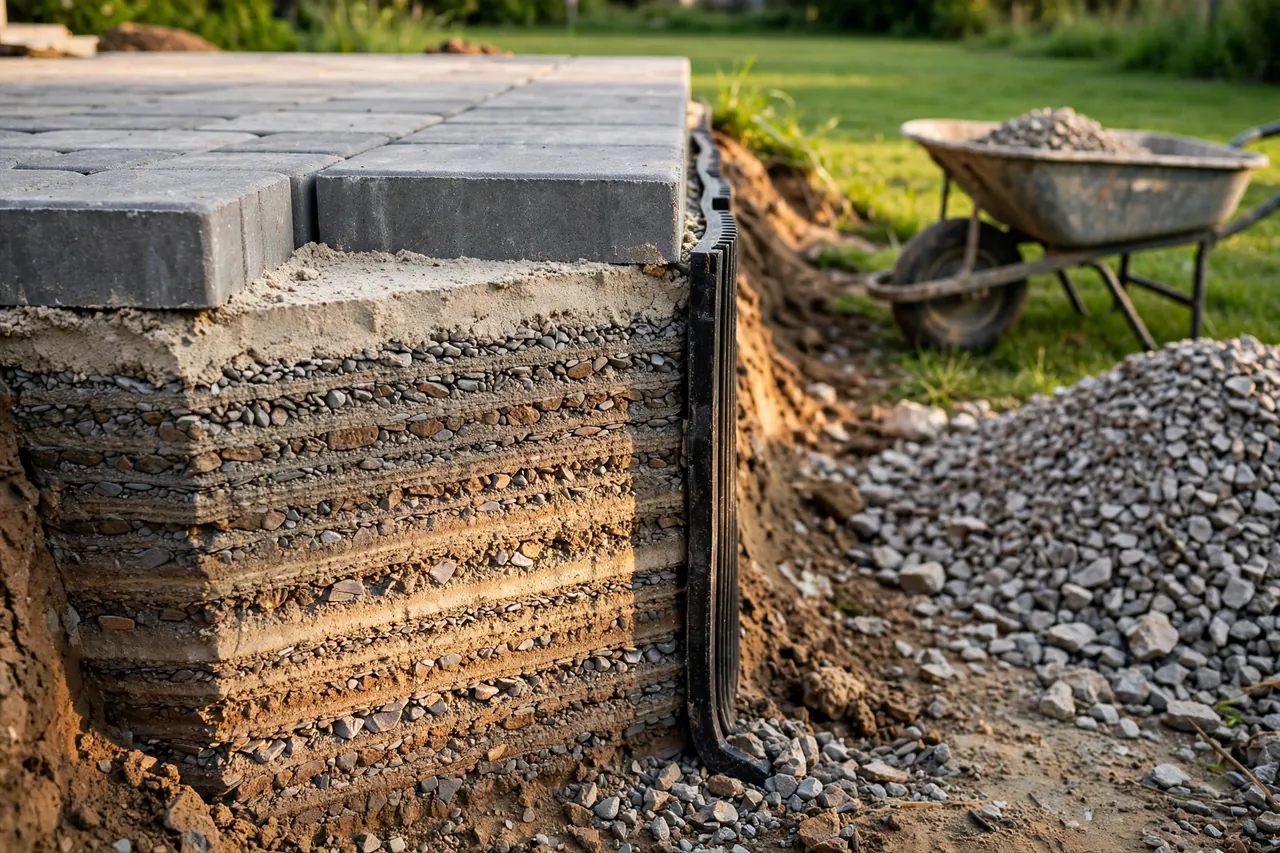
The base decides whether your patio lasts 25 years or starts sinking in three. Skimp here and you pay twice: once for the cheap job, and again for the rebuild. A proper base is a compacted gravel layer, usually 4 to 6 inches deep, topped with about 1 inch of bedding sand, with edge restraints holding the pavers in place. The gravel should go down in thin layers, each one compacted, not dumped in all at once.
Base materials cost $1.40 to $2.20 per square foot, according to HomeGuide, checked Nov 9, 2026. That covers crushed gravel base, geotextile fabric, bedding sand, edging, and joint sand. Drainage materials such as geotextile fabric, bedding sand, and gravel typically cost $0.10 to $1 per square foot, according to Angi. These are small numbers next to the pavers, but they do the most important work in the whole job.
Drainage deserves its own line in the quote. A patio must slope away from the house so rain runs off instead of pooling against the foundation. If your yard already holds water, fix the drainage before you lay pavers, not after. Our guide to fixing a soggy yard walks through the drainage fixes that pair well with a patio rebuild, from regrading to French drains.
Edging is not optional, even though it looks minor. HomeGuide states plainly that paver edging is required to keep the area restrained, or the pavers slowly shift and large gaps open at the edges. Edging materials add about $2 to $4 per linear foot, and a concrete bond beam runs about $1.25 per linear foot. Check that your quote lists edging and polymeric joint sand as included, not as extras.
Labor vs DIY: What You Save and What You Risk
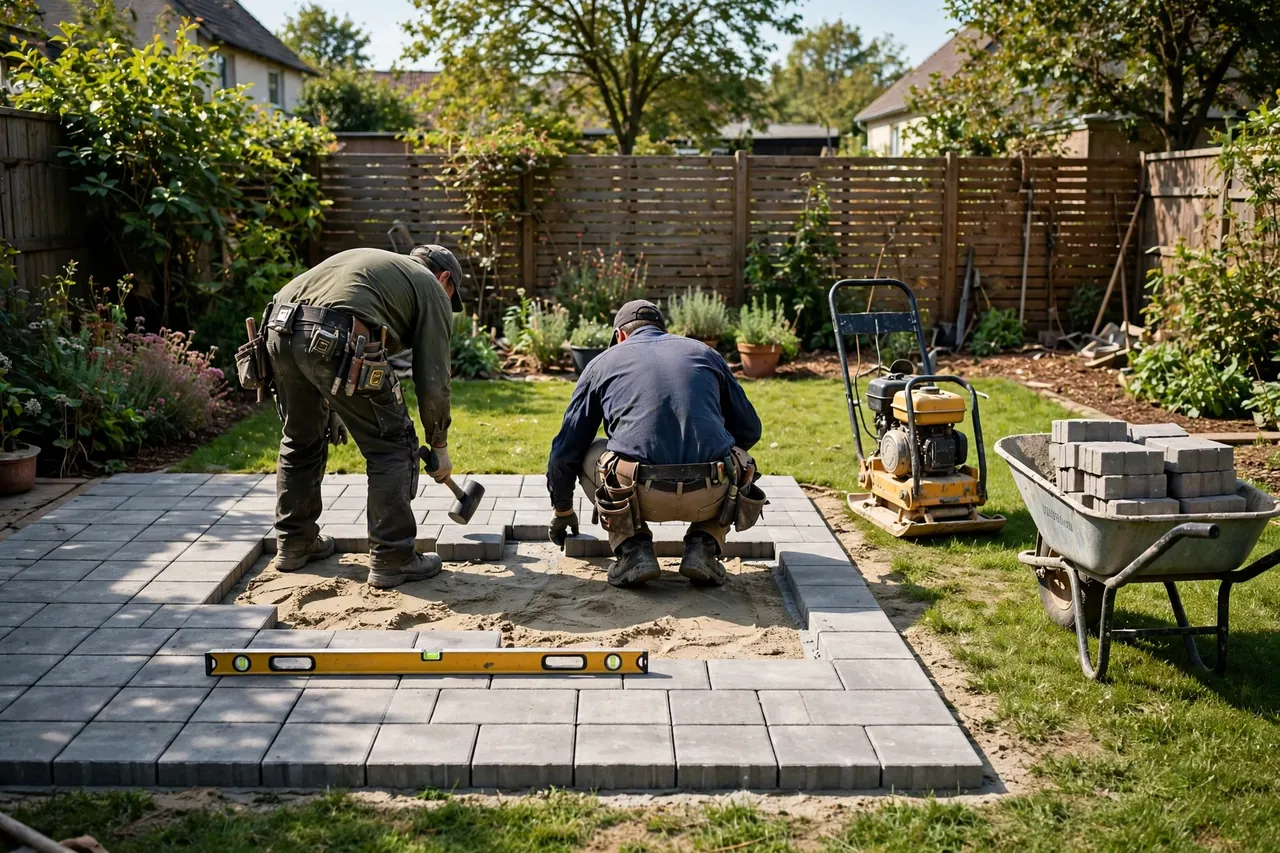
Professional labor is the biggest single line on most paver patio bills. Angi puts pro installer rates at $50 to $80 per hour, or $4 to $11 per square foot, and notes that a 300-square-foot patio takes a pro crew about 35 to 40 hours. HomeGuide puts labor higher, at $6.25 to $10.90 per square foot, with landscaping companies charging $50 to $100 per hour for install and prep work. All figures checked Nov 9, 2026.
Doing it yourself cuts the bill roughly in half. HomeGuide puts a DIY paver patio at $5 to $10 per square foot, or about 50 percent less than hiring a pro. That covers pavers, base gravel, sand, edging, sealer, delivery, and tool rental. Equipment rental adds up fast, though: a Bobcat runs $165 to $425 per day, a power compactor $70 to $250 per day, and a wet masonry saw $50 to $180 per day, according to HomeGuide.
| Option | Typical cost | What you get |
|---|---|---|
| Pro install | $1,600 to $5,000 | Crew, equipment, warranty, faster finish |
| DIY | $1,000 to $2,000 | Materials and rentals only, your labor free |
DIY only saves money if the base is right. Elevate Outdoor warns that improper base installation is the most common DIY mistake, and it leads to shifting, sinking, and weed growth within a few years. Many of the patios they rebuild started as DIY jobs. If you DIY, rent a real plate compactor, compact the gravel in thin lifts, and do not rush the leveling. If the base work feels beyond you, hire a pro for excavation and base prep, then lay the pavers yourself.
Call 811 before you dig, whether you DIY or hire a crew. The free service marks buried gas, electric, water, and cable lines so nobody hits them. A cut gas line or power cable turns a patio job into an emergency, and a pro crew should confirm the marks are in place before the first shovel hits the ground.
Sealing and Long-Term Care Costs
Sealing is optional, and opinions differ on whether it pays. A sealer deepens color and slows staining, but it needs reapplying every few years and can make the surface slippery when wet. Many owners skip it entirely. If you do seal, budget for it as a repeat cost, not a one-time fix.
Sealing prices vary by source and scope. Angi lists sealing at around $200 to cover up to 1,000 square feet. HomeGuide puts sealing higher, at $1.50 to $3.25 per square foot including pressure washing, re-sanding the joints, and applying the sealant. Thumbtack lists concrete cleaning and sealing services at $1 to $3 per square foot. The gap reflects what is included, so ask whether cleaning and joint sand are part of the price.
Routine care is cheap. Pressure washing costs $0.35 to $0.77 per square foot, according to HomeGuide, checked Nov 9, 2026. A bag of polymeric joint sand runs $20 to $40. The real long-term saving of pavers is repair: a cracked paver swaps out one at a time for a few dollars, while a cracked concrete slab needs patching or full replacement.
Pavers vs Concrete: Which Costs Less Over Time?
Pavers cost more upfront than poured concrete, and the gap is wide. HomeGuide puts a plain concrete slab at $4 to $8 per square foot, against $10 to $17 per square foot for pavers. Thumbtack puts the same comparison at $6 to $30 per square foot for a patio overall, with pavers at $10 to $25 per square foot. A 200-square-foot patio in concrete might cost $800 to $1,600, while the same patio in pavers might cost $2,000 to $5,000.
The long-term math narrows the gap. Concrete cracks, and a cracked slab shows every patch. Pavers flex slightly with soil movement and freeze-thaw cycles, and a damaged paver swaps out invisibly. Elevate Outdoor notes that poured concrete in four-season climates almost always needs costly crack repairs or full replacement within 10 to 15 years. Over that span, pavers often cost less in total, even though they cost more on day one.
Looks matter too. Pavers come in far more colors, shapes, and patterns than a plain slab. If you like a patterned surface but want the lower price of concrete, read our guide to modern stamped concrete patterns before you decide. If you already have a concrete patio and want the paver look without a full tear-out, ask a contractor about a paver overlay, but only if the slab is sound and level.
Add-Ons That Change the Budget
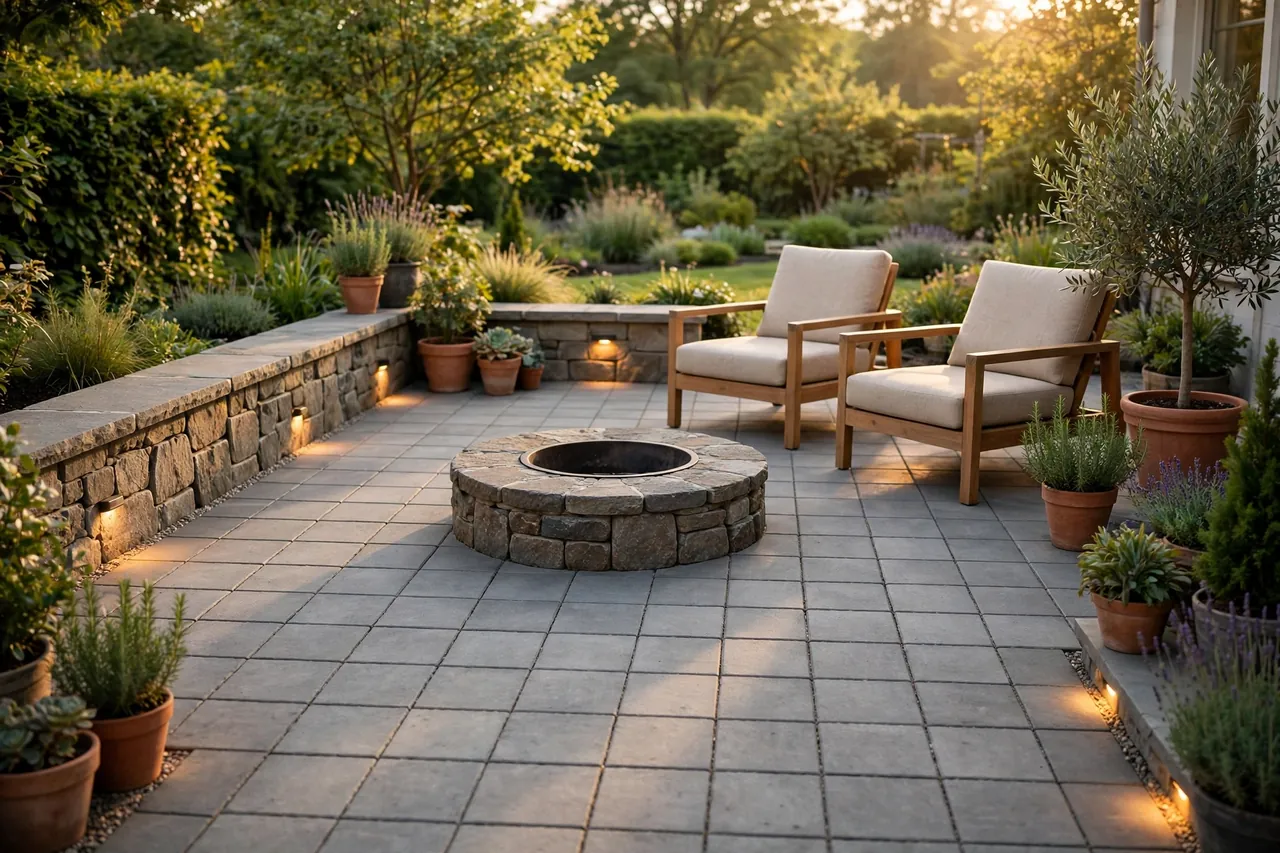
Add-ons turn a plain patio into an outdoor room, and they can double the budget fast. Price them as separate lines so you can cut one without redoing the whole quote.
| Add-on | Typical cost |
|---|---|
| Fire pit, paver or stone | $2,500 to $8,000 |
| Seat walls | $150 to $300 per linear foot |
| Outdoor kitchen or built-in grill | $5,000 to $30,000 |
| Retaining wall | $50 to $125 per square foot |
| Landscape lighting | $300 per fixture |
| Pergola or shade structure | $13,000 to $25,000 |
All figures above come from Elevate Outdoor, checked Nov 9, 2026, and reflect their Midwest and Northeast market. A seat wall adds seating without buying furniture, and a fire pit adds the feature most buyers notice first. An outdoor kitchen adds the most cost and the most complexity, because gas and electric lines need licensed pros. See our outdoor kitchen ideas for layouts that keep the cooking mess off the patio itself.
A retaining wall often joins a patio job when the yard slopes. If your patio sits on a slope, the wall holds the grade and the base in place. Our guide to building a retaining wall on a slope covers the build, and walls over 4 feet tall need an engineer, not just a contractor. Planting softens the hard edges of any patio: use trusted online plant sellers to compare prices on shrubs and grasses, and check current landscape design trends for planting ideas that suit a paver patio.
How to Get Quotes You Can Actually Compare
Three quotes only help if they cover the same work. Ask every contractor for an itemized written quote, and make sure each one lists the same lines: demolition and haul-away, excavation depth, base material and depth, paver brand and color, edging type, joint sand, sealing, cleanup, and warranty.
Ask these questions before you sign:
- Are you licensed, bonded, and insured, and can I see proof?
- How deep will the base be, and how will you compact it?
- Does the price include removal of the old patio and all haul-away fees?
- What happens if you find bad soil, roots, or an old footing under the patio?
- Do you offer a warranty on the base and the pavers, and for how long?
- Will you handle permits, and are permit fees included?
- Can I see two recent patio jobs like mine, and talk to those homeowners?
Be skeptical of a bid far below the others. A low bid often hides a thin base, no edging, no joint sand, or no haul-away. HomeGuide advises getting estimates in person, checking licensing and insurance, and never paying cash. Pay a deposit that covers materials only, and tie the rest to finished work you have inspected. Spring and early summer are the busiest seasons, so late summer and fall often bring shorter waits and keener quotes.
Ways to Cut the Cost Without Cutting Corners
You can trim a paver patio renovation bill without trimming quality, but only if you cut the right things. Never cut the base, the edging, or the joint sand. Those three decide whether the patio lasts.
Pick concrete pavers over natural stone and keep the pattern simple. That one choice can cut the per-square-foot price nearly in half. Buy pavers in bulk from a brickyard or factory-direct supplier, and ask about leftover lots or discontinued colors, which often sell at a discount.
Do the easy work yourself. Clear the site, move furniture and pots, and handle light cleanup if the contractor allows it. Seal the pavers yourself later, since sealing is a simple job with a sprayer or roller. Phase the project too: build the patio now and add the fire pit, seat wall, or lighting next year. If the budget is tight, shrink the patio by a foot on each side rather than shrinking the base. A smaller patio built well beats a big patio built badly. Reuse sound old pavers for a cheap garden path beside the new patio instead of paying to haul them away.
Is a Paver Patio Renovation Worth It?
A paver patio renovation is worth it when the old patio fails you: it sinks, holds water, cracks, or looks tired enough that you avoid using it. A renovation fixes the base problem that caused the failure, and a patio built on a proper base lasts 25 to 50 years with little care, according to Elevate Outdoor.
Home value is a real but modest bonus. HomeGuide reports that pavers provide a 69 percent return on investment, and Angi reports that hardscaping returns 20 to 30 percent, rising to 80 percent for a patio built right at a house entry. Treat those figures as rough guides, not promises. The real return is use: a patio you sit on every week pays you back far faster than one that only impresses a future buyer. Skip a full renovation when the problem is small: a few sunken pavers, weeds, or faded color usually needs a lift-and-relevel repair, not a rebuild.
Before You Dig: Safety Notes
A patio renovation is heavy, dusty work with real risks. Call 811 at least a few days before digging so buried utility lines get marked. Never dig where lines are unmarked, and stop work if you hit anything unexpected. Wear gloves, eye protection, and a dust mask when cutting pavers, and keep children and pets away from open trenches and equipment.
Hire a licensed pro for anything beyond the patio surface itself: gas lines for a grill or fire pit, electrical lines for lighting, and any wall over 4 feet tall. Check local permit rules before you build, and follow your homeowners association rules on patio size and placement. This guide gives planning ranges, not building advice for your specific yard, and local soil, slope, and drainage conditions can change what your patio needs.
Related Guides
modern stamped concrete patterns · fixing a soggy yard · building a retaining wall on a slope · outdoor kitchen ideas · cheap DIY garden path ideas · modern landscape design trends · How Much Does Landscaping Cost · Retaining Wall Pavers · Driveway Landscaping Ideas
Frequently Asked Questions
How much does a paver patio cost per square foot?
Concrete paver patios typically cost $30 to $40 per square foot installed, including labor, base preparation, and materials, according to Elevate Outdoor. Natural stone pavers run $40 to $50 per square foot installed. National guides list lower ranges: Angi puts installed paver patios at $8 to $25 per square foot. Always compare quotes on the same scope.
How much does a 20×20 paver patio cost?
A 20 by 20 paver patio covers 400 square feet and typically costs $10,000 to $14,000 installed using concrete pavers, according to Elevate Outdoor. Natural stone would run $16,000 to $20,000 for the same size. Angi lists a lower national range of $3,200 to $10,000 for a 400-square-foot patio, before any demolition costs.
How much does it cost to replace a patio with pavers?
Replacing an existing concrete patio with pavers adds $2 to $6 per square foot in demo costs, according to Elevate Outdoor. A 300-square-foot replacement project would typically run $8,100 to $12,300 total, including demo and new paver installation. HomeGuide lists old paver removal at $1 to $5 and concrete removal at $3 to $8 per square foot.
Is a paver patio cheaper than concrete?
No, not upfront. Poured concrete costs $16 to $30 per square foot installed, while concrete pavers cost $30 to $40 per square foot, according to Elevate Outdoor. HomeGuide puts the gap the same way: a concrete slab runs $4 to $8 per square foot against $10 to $17 for pavers. Over time pavers often cost less because single pavers swap out cheaply while cracked concrete needs patching or replacement.
How long does a paver patio last?
A properly installed paver patio can last 25 to 50 years with minimal maintenance, according to Elevate Outdoor. The key is proper base installation: a compacted gravel base, correct slope for drainage, and solid edge restraints. A patio laid on a thin or uncompacted base can start sinking and shifting within a few seasons.
Do pavers increase home value?
Yes. Adding a paver patio or walkway increases your home’s value and curb appeal and makes it more attractive to potential buyers, according to HomeGuide, which reports a 69 percent return on investment for pavers. Angi reports a 20 to 30 percent return for freestanding hardscaping, rising to 80 percent for a patio built directly beside a house entry.
A paver patio renovation is a base job first and a beauty job second. Price the removal, the base, and the drainage before you fall in love with a paver color, get three itemized quotes, and build it once, built right. Your future self, sitting on a level patio that drains well after rain, will thank you.