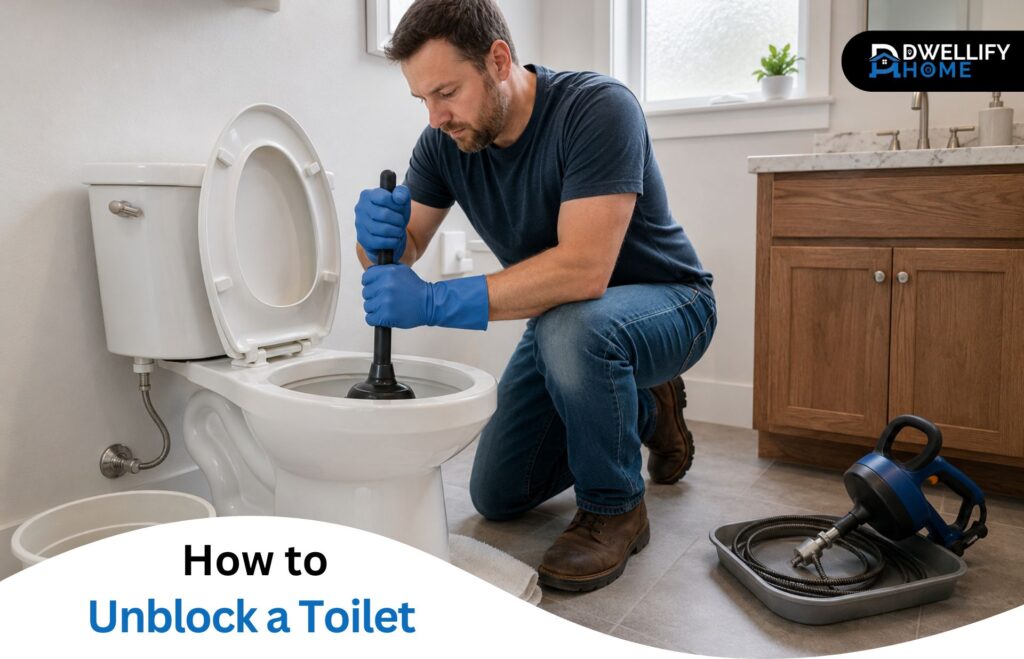
A blocked toilet can move from inconvenient to messy in one extra flush. Learning how to unblock a toilet safely starts with stopping the water, identifying the likely blockage, and using the least aggressive suitable method. Ordinary paper or waste clogs often respond to a flange plunger, while solid objects and recurring backups require a different approach.
Short Definition
To unblock a toilet means clearing waste, paper, or another obstruction from the toilet trapway or drain so water can flow normally without overflowing the bowl.Mission Statement
DwellifyHome helps homeowners, renters, and home lovers make practical, stylish, comfortable, and informed choices for living spaces that work better every day.
Quick Unblocking Checklist:
- Stop flushing and close the flapper or shutoff valve.
- Identify whether the clog is soft waste or a solid object.
- Use a flange plunger with a tight seal.
- Reserve household methods for likely paper or waste clogs.
- Use a closet auger for an appropriate stubborn blockage.
- Call a plumber for leaks, lodged objects, recurring clogs, or multiple affected fixtures.
Stop the Toilet From Overflowing Before You Start
Stop flushing as soon as the bowl water rises. Close the tank flapper to stop water already leaving the tank, then close the toilet’s shutoff valve to prevent the tank from refilling. Put on rubber gloves, protect the floor with old towels, and create enough space in the bowl to work safely.
Turn Off the Water or Close the Tank Flapper
Remove the tank lid and locate the rubber flapper at the bottom. Press it closed if water is still flowing into the bowl. The flapper stops the current flush, while the shutoff valve behind or beside the toilet prevents additional water from refilling the tank.
Turn the valve clockwise until it closes. Don’t force a stiff or corroded valve; keep the flapper closed and contact maintenance or a plumber if the valve won’t move safely.
Make Room When the Bowl Is Near the Rim
Don’t insert a plunger or add water while the bowl is dangerously full. Wait to see whether the level slowly falls. If necessary, use a disposable cup to transfer some contaminated water into a stable bucket.
Keep enough water in the bowl to cover the plunger head later, but leave sufficient room for movement without splashing. Keep the bucket away from children and pets until its contents can be handled hygienically.
Identify the Type of Toilet Blockage
The right method depends on what is blocking the toilet. A soft clog made from waste or toilet paper may loosen with time and plunging. Plastic, wipes, toys, and other solid objects won’t dissolve. Gurgling or backups in nearby fixtures may indicate a problem beyond the toilet.
| What you notice | Likely situation | Best next step |
| Water rises and then slowly falls after excess paper was flushed | Soft paper or waste clog | Wait briefly, then use a flange plunger |
| The toilet suddenly clogs repeatedly after an object may have been flushed | Solid object in the trapway | Avoid pushing it deeper; use a toilet auger carefully or call a plumber |
| The toilet drains but blocks again when paper is added | Partial blockage remains | Use a plunger or closet auger and test the drain carefully |
| A sink, tub, or another toilet gurgles or backs up | Possible deeper drainage problem | Stop repeated DIY attempts and contact a plumber |
Toilet Paper or Organic Waste
A toilet-paper clog often allows water to drain slowly instead of remaining completely stationary. Waiting may give the paper time to soften, but don’t test it by repeatedly flushing.
Waste and paper clogs are the best candidates for a flange plunger. Household methods may sometimes help, but they should remain secondary to proper plunging.
Plastic, Toys, or Other Solid Objects
Soap, hot water, and waiting won’t remove a plastic toy, hygiene product, or other solid object. Retrieve it by hand only when it is clearly visible and safely within reach while wearing gloves.
Avoid pushing an unseen object farther into the trapway. A closet auger may retrieve some objects, but removing the toilet or accessing the drain should be left to someone with suitable plumbing experience.
Signs the Problem May Be Deeper Than the Toilet
A blockage may extend beyond the toilet when several fixtures drain poorly, a nearby sink or tub gurgles, sewage appears in another drain, or the problem returns soon after clearing.
These symptoms can have several causes, including a branch drain, vent, sewer, or septic problem. They cannot be diagnosed reliably from the toilet alone, so professional inspection is the responsible next step.
How to Unblock a Toilet With a Flange Plunger
A flange plunger is the best first tool for most ordinary toilet clogs. Its fold-out rubber extension fits inside the drain opening, creating a better seal than a flat sink plunger. Effective plunging depends more on water, sealing, and controlled movement than on extreme force.
Choose the Right Plunger and Set the Water Level
Use a flange, funnel-cup, or beehive-style plunger designed for toilets. A flat cup plunger is intended mainly for sinks and may not seal against the curved toilet bowl.
There should be enough water to cover the rubber plunger head. Add clean water slowly if the level is too low. Remove some water first if the bowl is close to overflowing.
Form a Seal and Plunge Without Splashing
- Lower the plunger into the bowl at an angle so its cup fills with water rather than air.
- Place the flange inside the drain opening and press the cup firmly against the bowl.
- Make the first downward push gently to release trapped air without splashing.
- Use several firm, controlled up-and-down strokes while maintaining the seal.
- Finish with a controlled upward pull, then watch whether the bowl begins draining.
Both the downward pressure and upward suction help loosen a clog. Rapid, uncontrolled pumping usually creates more splashing without improving the seal.
What to Try If the Plunger Does Not Work
Check whether the plunger is the correct type and whether enough water covers its head. Reposition it and try another controlled cycle.
Don’t continue plunging for an extended period without progress. Move to a toilet auger if the clog appears deeper. Stop and seek help if a solid object is suspected or chemicals have already been poured into the bowl.
How to Unblock a Toilet Without a Plunger
Without a plunger, allow a likely toilet-paper clog time to soften before trying a cautious household method. Dish soap with hot tap water may help lubricate some soft blockages, but it won’t remove solid objects. Manufacturer guidance varies, so avoid boiling water, forceful pouring, and improvised tools that could damage the toilet.
Let a Toilet-Paper Clog Soften
Keep the water supply closed and wait for the bowl level to fall. Paper and organic waste may soften while sitting in water, making the blockage easier to clear later.
Waiting is unsuitable when a toy, wipe, plastic item, or other non-dissolving material may be trapped. It also won’t resolve a deeper drain or sewer problem.
Dish Soap and Non-Boiling Water: When It May Help
For a likely soft clog, add a modest amount of plain liquid dish soap and let it move toward the blockage. If the toilet manufacturer permits it, follow with hot tap water—never boiling water—and allow the mixture time to sit.
Don’t add water to a nearly full bowl or pour it with enough force to cause splashing. This method is conditional, not guaranteed, and shouldn’t be combined with chemical drain cleaners.
What to Do When You Have No Safe Equipment
Avoid replacing a plunger with a coat hanger, plastic-wrapped mop, pressure device, or other improvised object. These methods can scratch porcelain, create contamination, or push the obstruction deeper.
In a rental, guest bathroom, or house-sitting situation, stop the water and contact the owner or maintenance provider. That is safer than attempting invasive work without appropriate tools or permission.
How to Clear a Stubborn Clog With a Toilet Auger
A toilet auger, also called a closet auger, reaches farther into the toilet’s curved trapway than a plunger. It is useful for stubborn blockages, but it should be advanced gently. Forcing the cable can scratch the bowl, lodge an object more firmly, or damage the toilet.
Use a Closet Auger Instead of an Exposed Drain Snake
A closet auger has a protective guide that shields the porcelain from its metal cable. A standard uncovered drain snake lacks this protection and may leave permanent scratches.
Position the protective guide at the drain opening before extending the cable. Use a tool specifically designed for toilets and follow its manufacturer’s instructions.
Feed, Turn, and Retract the Auger Safely
- Place the auger’s protected end inside the bowl’s drain opening.
- Turn the handle while advancing the cable slowly into the trapway.
- When resistance is felt, continue turning gently instead of forcing the cable.
- Work the cable carefully to break up a soft clog or catch a retrievable object.
- Retract the cable slowly and inspect what comes back with it.
Stop if the auger becomes stuck, the toilet leaks, or a solid object cannot be retrieved. Those conditions may require the toilet to be removed by a plumbing professional.
How to Check That the Clog Is Completely Gone
A falling water level doesn’t always mean the entire obstruction has cleared. Keep the water supply off and test the drain gradually. Normal drainage should be prompt and consistent, without a prolonged rise, slow fall, unusual gurgling, or another backup when a small amount of paper is introduced later.
Test the Drain Without Triggering Another Overflow
Wait until the bowl returns to its normal level. Add a small amount of clean water slowly and observe how it drains. If the water rises or stalls, the blockage remains.
When the water drains normally, turn the supply back on and perform one supervised flush. Keep the tank lid accessible so the flapper can be closed immediately if the bowl begins rising again.
Signs a Partial Blockage Remains
The toilet may still be partially blocked when:
- The bowl fills unusually high before draining.
- Water drains slowly or leaves an abnormal bowl level.
- The flush sounds weak or incomplete.
- Paper causes another immediate clog.
- Nearby drains gurgle during flushing.
Repeated symptoms deserve further auger work or professional diagnosis rather than stronger chemicals or repeated flushing.
Clean and Disinfect the Tools and Work Area
Clean the plunger, auger, bucket, floor, and nearby surfaces using products suitable for those materials. Follow each product label and never mix cleaning chemicals.
Remove gloves carefully, wash your hands thoroughly, and allow tools to dry before storage. Keep cleaning products and contaminated tools away from children and pets.
Mistakes That Can Make the Blockage Worse
Most avoidable damage comes from reacting too aggressively. Repeated flushing can overflow the bowl, boiling water may damage toilet components, harsh chemicals can remain trapped in the bowl, and exposed metal tools can scratch porcelain. Start with controlled mechanical methods and escalate only when the blockage requires it.
Repeated Flushing, Boiling Water, and Excessive Force
A second or third flush adds water without removing the obstruction. Close the water supply and address the clog first.
Never pour boiling water into a toilet. Also avoid slamming a plunger or forcing an auger through resistance. More force can compact a blockage, push a solid object deeper, or damage the bowl.
Chemical Drain Cleaners and Mixed Cleaning Products
Many conventional drain cleaners are not labeled for toilets and may remain trapped in the bowl’s curved passage. Use a product only when its label specifically permits toilet use and it is compatible with the plumbing or septic system.
Never mix cleaners. Poison Control warns that combining household products can release dangerous fumes. If a chemical is already in the bowl, don’t plunge or insert an auger because the liquid may splash onto skin or eyes.
Coat Hangers, Exposed Snakes, and Other Risky Hacks
A metal hanger or uncovered snake may scratch the porcelain and become stuck. Pressure devices, wet/dry vacuums, plastic-wrap methods, and covered mops can create sanitation, equipment, or overflow problems.
A proper flange plunger and closet auger are safer choices. When neither is available, stopping the water and arranging help is better than improvising with an unsuitable tool.
When to Stop and Call a Plumber
Call a plumber when a solid object cannot be reached, plunging and careful auger use fail, the toilet leaks, or the blockage keeps returning. Professional help is also appropriate when several fixtures are affected, sewage appears in another drain, or strong gurgling and sewer odors suggest a problem beyond the toilet.
A Solid Object, Leak, or Recurring Clog
A toy or plastic item may need to be retrieved from the underside of the toilet. Continued plunging can drive it farther into the drainage system.
Stop DIY work if water appears around the toilet base or the bowl becomes unstable. Recurring clogs also deserve diagnosis because a partial obstruction, weak flush, or deeper plumbing issue may remain.
Gurgling, Sewage, or Problems in Other Fixtures
A simple toilet clog should not normally make multiple fixtures back up. Stop using affected plumbing and contact a professional if flushing causes wastewater to rise in a tub, shower, floor drain, or another toilet.
Avoid direct contact with sewage and keep children and pets away from the area until it has been cleaned safely.
Guidance for Renters, Guests, and House Sitters
Turn off the water, prevent floor damage, and report the problem promptly. Don’t remove the toilet, use aggressive chemicals, or alter the plumbing without the owner’s or property manager’s approval.
Document any overflow or leak so the responsible party understands what happened and can arrange suitable repairs.
How to Prevent Future Toilet Clogs
Prevention mostly comes down to controlling what enters the bowl and addressing weak or recurring flushing early. The toilet isn’t a general waste-disposal system, even when an item’s packaging suggests it can be flushed.
What Should and Should Not Be Flushed
The U.S. Environmental Protection Agency recommends flushing only human waste and toilet paper. Put wipes, paper towels, hygiene products, cotton items, dental floss, diapers, grease, and household waste in the trash.
Use reasonable amounts of toilet paper, and teach children not to place toys or other objects in the bowl. Keeping the lid closed can also prevent accidental drops.
Address a Weak Flush or Repeated Blockage
A toilet that regularly struggles with normal waste and paper may have a partial obstruction, restricted water flow, worn tank components, or another plumbing problem.
Clearing each new clog without identifying the recurring cause only postpones the issue. Have the toilet and drainage system inspected when the pattern continues.
Frequently Asked Questions
How Do You Unblock a Badly Blocked Toilet?
Stop the water and remove enough bowl water to work safely. Use a flange plunger with a complete seal, then move to a closet auger if controlled plunging fails. Don’t add chemicals or keep flushing. Call a plumber when a hard object, leak, recurring blockage, or wider drainage problem is suspected.
What Can You Pour Down a Toilet to Unclog It?
For a likely soft paper or waste clog, plain dish soap followed by hot—not boiling—water may help when permitted by the toilet manufacturer. Don’t use this method in a full bowl or for a solid object. Avoid unapproved chemical drain cleaners, and never combine different cleaning products.
How Do You Unclog a Toilet Quickly?
The quickest responsible approach is to stop incoming water and use a flange plunger correctly. Fill its cup with water, form a tight seal, begin gently, and use controlled push-and-pull strokes. No method can guarantee an exact clearing time, and a solid object or deeper blockage may require an auger or plumber.
Does Pouring Hot Water Down a Toilet Help?
Hot tap water may help soften some toilet-paper or organic clogs, especially when paired with dish soap, but guidance varies among toilet and plumbing manufacturers. Never use boiling water, don’t add water to a nearly full bowl, and don’t expect heated water to remove wipes, plastic, toys, or other solid objects.
How Do You Unblock a Toilet Full of Toilet Paper?
Turn off the water and allow the paper time to soften. Remove excess bowl water if it is near the rim, then use a flange plunger with a watertight seal. Avoid repeated flushing. If the toilet drains but clogs again when paper is added, a partial blockage may remain and require a closet auger.
Can You Use Chemical Drain Cleaner in a Toilet?
Only use a product when its label explicitly approves toilet use and confirms compatibility with the plumbing or septic system. Many conventional drain openers aren’t designed for toilet trapways. If cleaner is already in the bowl, don’t plunge or use an auger because corrosive liquid could splash onto the user.
Clear the Clog Safely and Know When to Stop
Begin by stopping the water, then match the method to the blockage. Use a flange plunger for ordinary paper or waste clogs, a closet auger for suitable stubborn obstructions, and professional help for solid objects, recurring problems, leaks, or multi-fixture backups. Controlled steps are safer than repeated flushing, harsh chemicals, or improvised tools.
Disclaimer
DwellifyHome provides general informational content only. Homes, needs, preferences, budgets, and circumstances vary; consult a qualified professional for safety, installation, repair, legal, structural, electrical, plumbing, HVAC, or major property decisions.