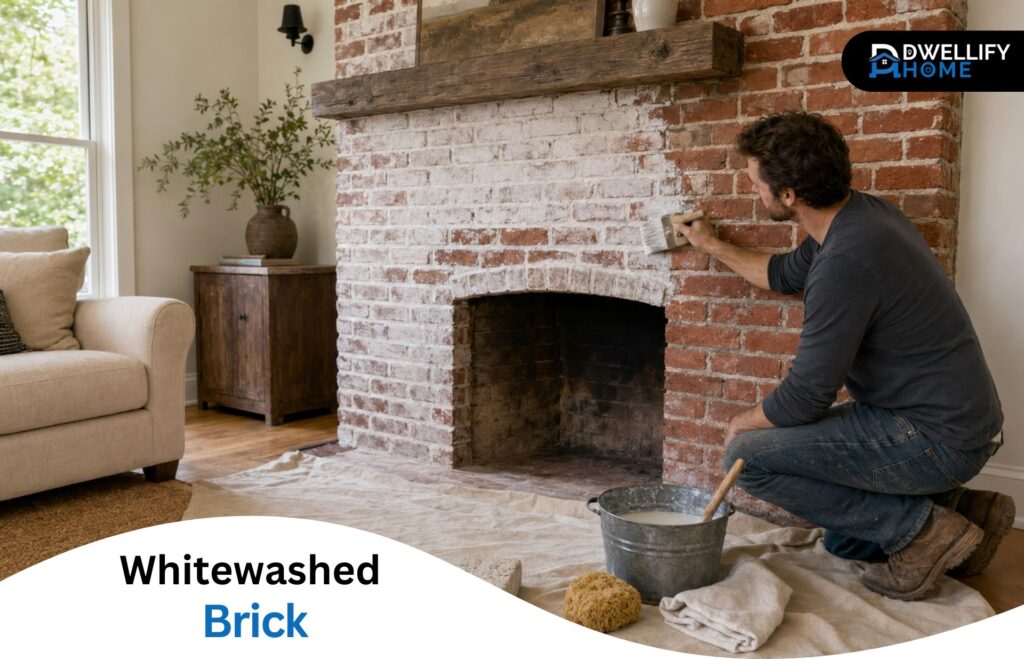
Dark red brick can add warmth and character, but it can also make a fireplace wall or exterior feel heavier than the rest of the home. Whitewashed brick softens that color while preserving enough variation and texture for the surface to remain visibly masonry.
The result depends on three early decisions: which finish you mean by “whitewash,” whether the brick can accept it, and how much original color you want to show. Diluted paint, authentic limewash, solid masonry paint, and mortar wash can look similar in photographs, but they behave very differently after application.
Short Definition
White washed brick is brick coated with a translucent paint- or lime-based finish that softens its original color while preserving texture, creating a lighter look without the flat coverage of solid paint.
Mission Statement
DwellifyHome helps homeowners, renters, and home lovers make practical, stylish, and informed choices for more comfortable and functional living spaces.
What Is Whitewashed Brick?
Whitewashed brick has a translucent or semi-opaque light finish that allows some of the original brick color, mortar, and texture to remain visible. The term commonly describes diluted white paint, although traditional whitewash is lime-based. Coverage can range from a faint haze to an almost-solid white appearance.
Traditional Whitewash vs. Modern Paint-Based Whitewash
The search phrase “white washed brick” can refer to two different treatments:
- Traditional whitewash or limewash is made with lime and water. It creates a mineral, matte finish that bonds with porous masonry and weathers naturally.
- Modern paint-based whitewash uses diluted water-based acrylic or latex paint. It forms a thinner version of a painted surface while allowing more brick color to show.
The Brick Industry Association describes diluted acrylic paint more precisely as a semi-opaque faux limewash or whitewash. Keeping these terms separate makes it easier to compare durability, appearance, and maintenance.
What the Finished Brick Should Look Like
A successful wash doesn’t have to be perfectly uniform. Slight changes in color and opacity help preserve the brick’s natural character.
Light coverage creates a faded, weathered look. Medium coverage softens most of the red or brown while preserving variation. Heavy coverage appears closer to painted brick but still reveals some texture and occasional color.
SERP Enhancement Elements
| Finish | Best For | Main Consideration |
| Paint-based whitewash | Controlled, translucent coverage | Difficult to remove after curing |
| Limewash | A breathable, naturally weathered look | Requires porous, compatible masonry |
| Solid masonry paint | Uniform, opaque color | Hides more texture and needs maintenance |
| Masonry stain | Lasting color with visible texture | Generally difficult to reverse |
| German smear | A heavily textured, rustic finish | More permanent than a light wash |
Whitewashed Brick Ideas for Different Homes and Spaces
The best finish should respond to the brick, architecture, lighting, and surrounding materials rather than follow one decorating formula.
Fireplace and Interior Feature Wall Ideas
A light wash can brighten a large fireplace without turning it into a flat white block. Pairing the brick with a natural oak, walnut, or reclaimed-wood mantel keeps the room warm and prevents the fireplace from feeling overly pale.
Medium coverage works well when dark red brick competes with light walls or flooring. In rooms with limited daylight, a warm off-white usually feels softer than a blue-white finish.
An interior brick wall can also be washed lightly to create a weathered backdrop. Because mortar and brick absorb differently, leaving a little variation often looks more convincing than chasing perfect uniformity.
Exterior Ideas for Ranch, Tudor, Colonial, and Modern Homes
A subtle wash can make a low ranch exterior feel lighter while retaining enough color to suit an informal architectural style. Natural wood doors, charcoal trim, or muted siding can keep the result grounded.
Tudor homes generally benefit from visible contrast between pale brick and dark timber details. Traditional and colonial exteriors can handle more even coverage, particularly when paired with restrained shutters and trim.
For a modern exterior, a neutral wash with black windows or simple metal accents can create sharper contrast. Test the combination against the roof, permanent stonework, and siding before changing the brick.
Mantel, Trim, Siding, and Accent Color Combinations
Consider these pairings as starting points:
- Light whitewash with a medium or dark wood mantel
- Warm off-white brick with cream, greige, or muted green siding
- Heavier white coverage with charcoal or black trim
- Soft gray-white brick with natural wood and bronze accents
- Varied whitewash with a front door that repeats a color already present in the roof or landscape
Whitewash, Limewash, Paint, or German Smear?
The right finish depends on the desired texture, coverage, permanence, and condition of the masonry.
| Finish | Typical appearance | Brick texture | Main trade-off |
| Paint-based whitewash | Translucent to semi-opaque | Mostly visible | Broad color choice, but cured paint can be difficult to remove |
| Authentic limewash | Matte, chalky, naturally varied | Clearly visible | Breathable and naturally weathering, but limited colors and less uniformity |
| Solid masonry paint | Opaque and even | Softened or partly hidden | Predictable color with ongoing coating maintenance |
| Masonry stain | Natural-looking color change | Preserved | Usually more permanent and requires an absorbent surface |
| German smear | Rustic, mortar-heavy texture | Partially obscured | Durable and distinctive but difficult to reverse |
Which Finish Best Matches Your Goal?
Choose paint-based whitewash when you want controlled translucency and a wide choice of colors, particularly for a small interior feature.
Consider authentic limewash for porous, unpainted masonry when a mineral finish and natural weathering suit the project. Solid masonry or mineral paint is more appropriate when you want consistent, opaque coverage.
Masonry stain works when preserving texture matters more than achieving a washed look. German smear is better suited to a heavily textured, Old-World effect than a soft color change.
Is Whitewashed Brick Right for Your Project?
Whitewashing is most suitable when the brick is stable, clean, reasonably absorbent, and free from active moisture problems. It may be a poor choice for glazed, sealed, deteriorated, or historically significant masonry unless the treatment has been evaluated by an appropriate professional.
Check the Existing Surface and Brick Condition
Identify what is already on the surface. Raw brick offers the most finish options. Previously painted or sealed brick may not accept limewash or masonry stain because those treatments depend on access to the brick’s pores.
A small water-drop check can flag a nonabsorbent surface: water that beads rather than darkening the brick may indicate a sealer, coating, or dense surface. This quick check does not replace the compatibility test required by the product manufacturer.
Pause the project if you find:
- Loose or crumbling brick
- Missing or badly cracked mortar
- Recurring efflorescence, the white salt deposit associated with moisture
- Damp patches or previous water staining
- Peeling coatings
- Signs of spalling, where the brick face flakes or breaks away
Choose the Right White, Undertone, and Coverage Level
A translucent white doesn’t completely cancel the brick underneath. Red and orange tones can show through as pink, peach, tan, or warm gray.
Cool white over warm red brick may appear harsher than expected. A warm or neutral off-white can produce a softer transition, but it still needs to be tested against the actual brick, mortar, and room or exterior lighting.
Make a sample large enough to include several bricks and mortar joints. Evaluate it only after it dries completely and view it at different times of day.
When Another Brick Finish Is the Better Choice
Leave the brick natural when its variation is an important architectural feature or when changing the mantel, trim, lighting, siding, or landscaping could solve the visual problem.
Choose limewash or another compatible mineral treatment when exterior breathability is a priority. Use masonry stain when you want to retain texture while making a more permanent color adjustment. Select solid paint only when you genuinely want uniform coverage and accept the future maintenance.
Prepare the Brick, Workspace, and Test Area
Preparation affects both appearance and adhesion. Whitewash won’t hide failed mortar, active moisture, greasy residue, or heavy soot for long.
Tools and Materials for Your Chosen Method
A paint-based project commonly requires:
- Compatible water-based paint
- Clean water and a measured mixing container
- Wide brush or masonry brush
- Cotton rags or sponges
- Stirring stick
- Painter’s tape and drop cloths
- Soft or medium-stiff nonmetallic cleaning brush
- Mild detergent or an appropriate masonry cleaner
- Gloves and eye protection
- Spray bottle when required by the selected method
Authentic limewash and premixed masonry products have their own dilution, dampening, temperature, and application requirements. Follow those instructions instead of substituting a general DIY formula.
Clean and Protect the Work Area
Vacuum or dry-brush loose dust first. Clean ordinary dirt with mild detergent and water, rinse away residue, and allow the masonry to dry as directed by the coating manufacturer.
Soot, grease, biological growth, and efflorescence may require different cleaners. Begin with the gentlest suitable method, test it in an inconspicuous area, and avoid aggressive acids or abrasive cleaning on soft or historic brick.
Protect floors, trim, mantels, windows, furniture, siding, and plants. Repair defective mortar and correct the source of moisture before applying any decorative treatment.
Create and Evaluate a Fully Dried Test Patch
Test more than one isolated brick. A useful sample includes multiple brick colors, several mortar joints, and enough area to reveal whether the finish will become streaky or overly uniform.
Write down the mixture ratio and application method. Let the sample dry completely before changing the formula. Wet whitewash often looks much more opaque than the final result.
How to Whitewash Brick Step by Step
Paint-based whitewashing involves cleaning and testing the brick, diluting a compatible water-based paint, brushing it onto a small section, and wiping back the wet coating to control opacity. Work gradually, maintain consistent batches, and evaluate the fully dried finish before adding another thin coat.
Mix the Whitewash for the Desired Transparency
A mixture of equal parts paint and water is a common starting point for paint-based whitewash, but it isn’t suitable for every paint or surface. Confirm that the manufacturer permits dilution and that the product is approved for the intended interior or exterior location.
Measure rather than estimate. Use more water for greater transparency and more paint for heavier coverage. Record the ratio, mix enough for a consistent section, and stir regularly during application.
Authentic limewash requires a different formula. Use the dilution and surface-dampening instructions supplied with that product.
Apply in Small Sections and Wipe Back the Finish
- Begin at the top so drips can be blended as you move downward.
- Brush the mixture over a small group of bricks and mortar joints.
- Dab or wipe the wet surface with a clean rag to expose the desired amount of brick.
- Feather the edge before it dries.
- Repeat the same brush pressure and wiping method across the next section.
- Stir the mixture frequently and watch for drips in mortar recesses.
Mortar may absorb faster than the brick faces. Don’t keep adding product simply because the two look different while wet.
Let It Dry Before Adjusting the Coverage
Allow the first pass to dry for the time specified by the product manufacturer. Add another thin wash only after judging the dry color and opacity.
A thin second pass is easier to control than trying to remove an overly heavy first coat. Keep the original sample and mixture notes available for future touch-ups.
How the Method Changes Indoors, Outdoors, and Around a Fireplace
Location affects cleaning, product choice, exposure, maintenance, and safety. A method that performs well on a dry interior accent wall may not be suitable for an exterior façade or a heat-exposed fireplace component.
Interior Brick Walls and Veneer
Interior surfaces avoid rain and freeze–thaw exposure, but they may encounter grease, splashes, soot, or frequent touching. Use a product approved for indoor masonry and provide the ventilation and protective equipment listed by the manufacturer.
Confirm whether thin brick veneer is factory-finished or sealed before applying a wash. Test cleaning and coating products carefully because some veneers have a less absorbent face.
Fireplace Surrounds vs. Functional Fireboxes
The decorative brick facing around a fireplace is different from the firebox where flames and extreme heat occur. Don’t apply ordinary latex paint, limewash, or another decorative coating inside a functioning firebox unless the manufacturer specifically approves that exact use.
Remove soot from the surround and confirm that the selected product is appropriate for the surface and expected temperature. Have recurring heavy soot or chimney-draft problems evaluated rather than covering the evidence.
Exterior Brick, Weather Exposure, and Historic Masonry
Exterior work requires careful attention to moisture, mortar, flashing, sealant joints, drainage openings, weather, and coating breathability. Avoid applying a finish just before rain or outside the manufacturer’s temperature and humidity range.
Large façades also magnify color and batch differences. Prepare a representative sample, record every ratio, and plan natural stopping points.
Historic brick may be softer or behave differently from modern masonry. The National Park Service warns that unsuitable cleaning and coating methods can permanently damage historic masonry, so preservation guidance is appropriate before changing it.
Common Whitewashing Mistakes and How to Fix Them
The Brick Looks Too White, Pink, or Opaque
Wipe back excess immediately while a paint-based wash is still workable. Once it cures, removal becomes much harder.
A pink or peach result usually comes from the original brick showing through a translucent white. Test a warmer neutral, alter the opacity, or compare a different treatment on a new sample rather than covering the entire surface with another untested coat.
The Finish Is Patchy, Streaky, or Mismatched
Patchiness can result from inconsistent cleaning, different absorption rates, changing mixture ratios, or letting section edges dry.
Stir the mixture, keep measured ratios consistent, maintain a wet edge, and use the same wiping pressure. After the finish dries, a carefully blended thin coat may soften minor variation. Do not use another coat to conceal suspected moisture.
The Coating Is Peeling, Staining, or Drying Unevenly
Peeling suggests that the product may not have bonded properly due to dirt, moisture, a previous sealer, an incompatible coating, or heavy application.
Stop and identify the cause before touching up. Persistent stains, efflorescence, damp patches, loose mortar, or spalling need masonry or moisture correction rather than more paint.
Cost, Durability, Maintenance, and Reversibility
What Does Whitewashing Brick Cost?
Cost depends on surface area, brick condition, cleaning, repairs, access, finish choice, local labor, and whether scaffolding or lifts are required.
As a dated planning reference, a 2026 national cost guide places professionally whitewashing a brick exterior at roughly $1.50 to $5.00 per square foot. A small DIY fireplace may cost considerably less, particularly when suitable tools are already available. Obtain local quotes for an exterior rather than applying a national average to every house.
How Long Does Whitewashed Brick Last?
There is no single lifespan for every whitewashed surface. Interior finishes usually avoid weather exposure, while exterior performance depends on the material, preparation, climate, wall condition, and desired amount of weathering.
The Brick Industry Association notes that authentic limewash may last approximately five to ten years or longer, depending on exposure and coat count. Paint-based faux whitewash is generally less durable on exteriors and may eventually peel, flake, or require reapplication.
How to Clean and Touch Up the Finish
Use the mildest cleaning method approved for the coating. A soft brush, cloth, and mild detergent may be sufficient for many interior surfaces. Abrasive scrubbing and high-pressure washing can damage the finish or the brick underneath.
Keep the original color, ratio, and application notes. A touch-up made with a different mixture may remain visible even after drying.
Can Whitewash Be Removed From Brick?
Fresh material may be adjustable while it remains wet, and some limewash products offer a short removal window. Fully cured acrylic paint, masonry stain, and mortar wash are much harder to reverse.
Don’t assume pressure washing or aggressive scraping is safe. Test an appropriate removal system in an inconspicuous area and consult a masonry-cleaning professional when the brick is historic, soft, damaged, or extensively coated.
When to Call a Mason or Professional Painter
Professional help is appropriate when the project involves active water intrusion, widespread efflorescence, loose or deteriorated brick, substantial mortar failure, unknown coatings, historic masonry, or a functioning firebox.
A painter or masonry specialist is also sensible for tall exteriors requiring scaffolding or lifts. Ask how the proposed product works with the existing brick and wall assembly, how the surface will be prepared, and what future maintenance or removal will involve.
Frequently Asked Questions About Whitewashed Brick
Does Whitewashing Damage Brick?
Whitewashing doesn’t automatically damage sound brick. Problems are more likely when an incompatible coating is applied over damp, sealed, deteriorated, or poorly prepared masonry. Heavy film-forming coats can also change how an exterior wall releases moisture. Inspect the surface and choose a treatment designed for that brick and location.
Can Painted or Sealed Brick Be Whitewashed?
Painted brick can sometimes receive a compatible decorative paint treatment, but it won’t behave like raw brick because the original surface is already covered. Authentic limewash and penetrating stains generally need porous, unsealed masonry. Identify the existing coating and follow the new product manufacturer’s compatibility and preparation instructions.
What Kind of Paint Should You Use to Whitewash Brick?
Use a water-based acrylic or latex product that its manufacturer approves for the specific masonry surface, location, and planned dilution. Interior and exterior requirements differ, and not every paint is designed to be thinned. Authentic limewash is a separate mineral product and should be mixed and applied according to its instructions.
Does Whitewashed Brick Need to Be Sealed?
Whitewashed brick doesn’t automatically need a sealer. A sealer can change color, sheen, cleanability, future adhesion, and vapor movement. It may also be incompatible with authentic limewash. Only add a protective coating when the finish manufacturer recommends a compatible product for that exact interior or exterior application.
Can Whitewashing Brick Affect Resale Value?
There is no universal resale effect. Some buyers appreciate a lighter, updated surface, while others prefer natural brick and may view a difficult-to-remove coating as future maintenance. The home’s architecture, finish quality, neighborhood, brick condition, and permanence of the treatment matter more than the trend alone.
What Is White Washing Brick Also Called?
Traditional lime-based whitewashing is often called limewash. Modern DIY articles may use “whitewash” for diluted latex or acrylic paint, while masonry references may describe that method as semi-opaque paint or faux limewash. German smear is different because it uses mortar to create a thicker, more textured finish.
Conclusion: Choose the Finish Before You Change the Brick
Whitewashed brick works best when the treatment fits both the desired appearance and the masonry beneath it. Decide whether you want paint-based whitewash, authentic limewash, stain, solid paint, or mortar texture before preparing the surface.
Inspect the brick carefully, resolve moisture or mortar problems, and approve a fully dried sample. Those steps provide more control over the result—and reduce the chance of turning a cosmetic update into a difficult masonry repair.
Disclaimer
DwellifyHome content is for general informational purposes only. Every home, need, preference, budget, and situation is different. Consult a qualified professional for safety, installation, repair, legal, structural, electrical, plumbing, HVAC, or major property decisions.