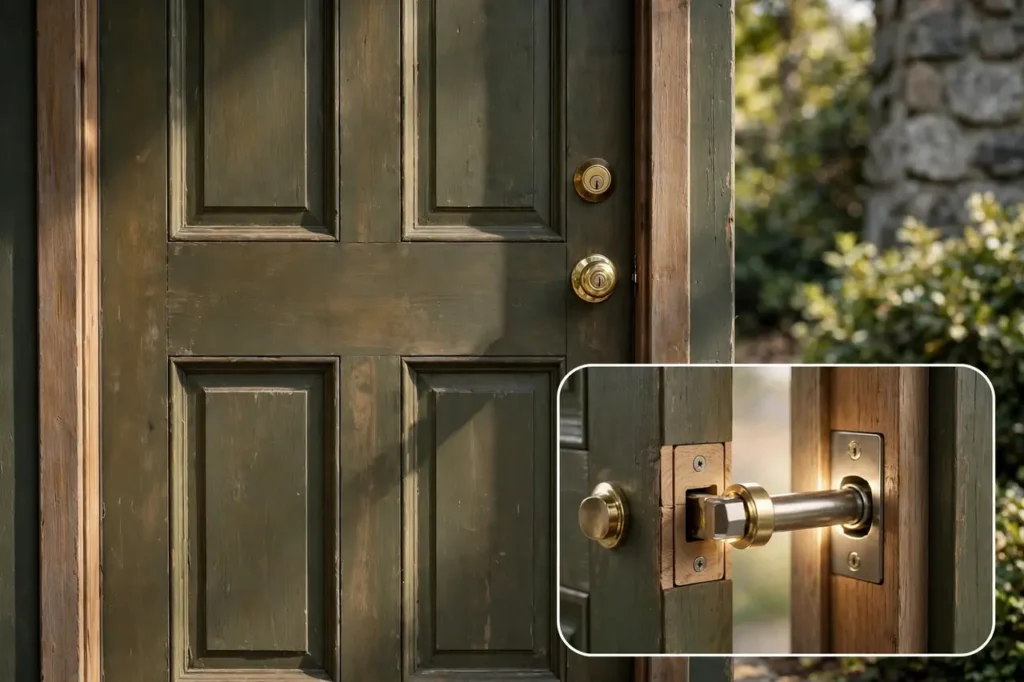
A deadbolt door lock is a lock built around one simple idea: a solid metal bolt with no spring behind it. The bolt only moves when you turn a key or a thumb turn, so no one can push it back, slip it open with a card, or shake it loose. When you lock it, the bolt slides about a full inch into a metal plate set into the door frame, which ties the door and the frame together.
That is why most exterior doors carry two locks. The knob or lever keeps the door pulled shut, and the deadbolt above it does the actual securing. This guide explains how a deadbolt works part by part, what its strength grades really mean, and where even a good deadbolt can quietly let you down.
💡 Practical Home Tip: Test your deadbolt with the door open. Turn the thumb turn and watch the bolt slide out. It should extend a full inch and stop with a solid clunk. If it stops short, scrapes, or only locks when you push the door hard, the strike needs adjusting — forcing the key will not fix it.
What Is a Deadbolt Door Lock?
A deadbolt is a separate lock fitted into the door, usually a few inches above the knob or lever. It works on its own, apart from the latch in the knob. People in the trade also call it a deadlock, and the name explains the design: the bolt is “dead,” meaning no spring keeps it live and moving. It stays exactly where you put it until someone turns the key or thumb turn.
Most home deadbolts are bored locks, which means the lock body sits in round holes drilled through the door. Keypad and smart deadbolts look modern on the outside, but inside they drive the same kind of solid bolt with a small motor instead of your hand. The bolt is the security. Everything else is just a way of moving it.
The Parts of a Deadbolt, in Plain Words
You do not need many part names to understand this lock. These are the pieces that matter:
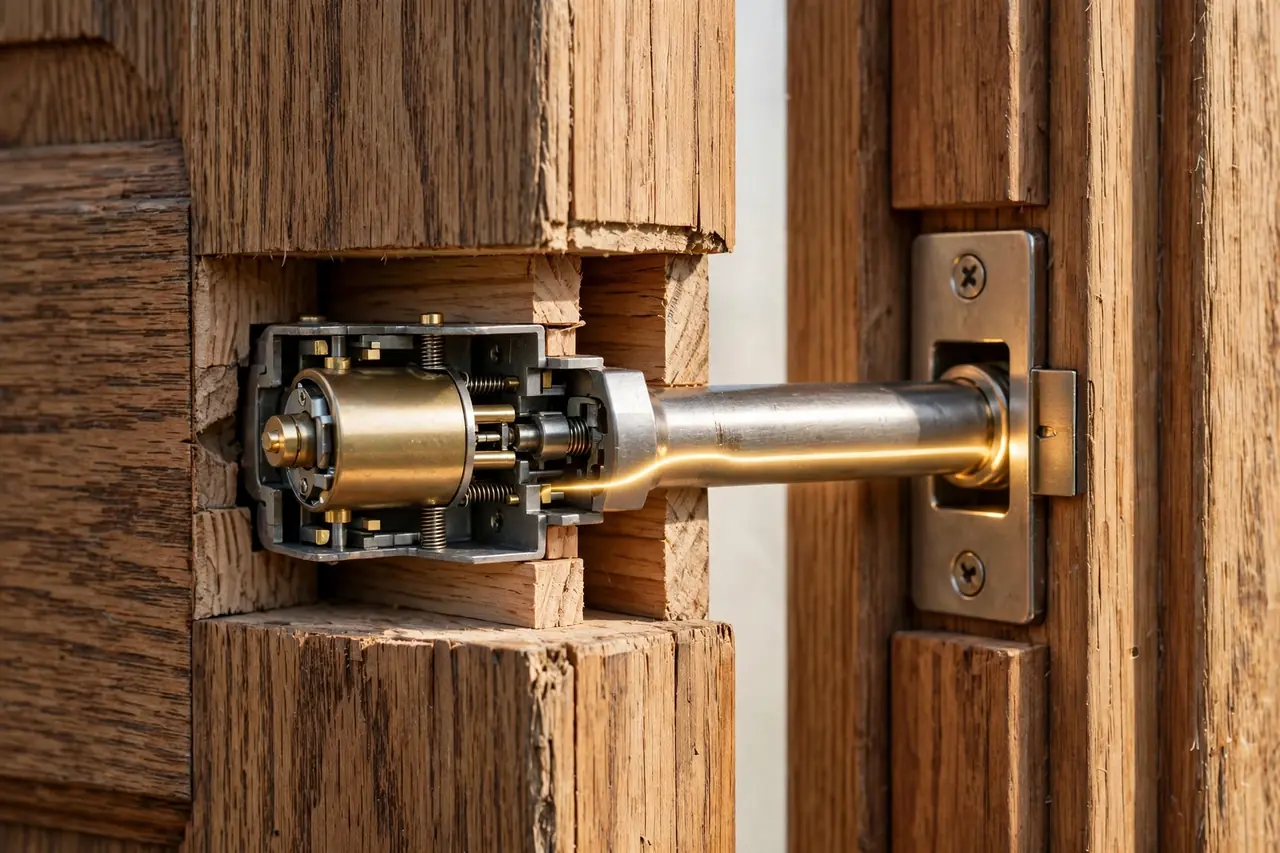
- The bolt — the thick metal bar that slides out of the door edge and into the frame. It has a flat, square end, not a slanted one.
- The cylinder — the round part on the outside of the door where the key goes in. Inside it sits a rotating core called the plug.
- The pins and shear line — inside the plug are two stacked rows of tiny pins. The right key lifts them level at a gap called the shear line, and only then can the plug turn.
- The thumb turn — the small lever on the inside face of the door that you twist by hand to lock or unlock without a key.
- The tailpiece — a flat metal bar that passes through the door and links the cylinder to the bolt, so turning the key or thumb turn drives the bolt.
- The strike plate — the metal plate screwed to the door frame. The bolt slides into the hole in this plate. Better setups add a heavy strike box behind the plate for the bolt to seat into.
- The faceplate — the small plate set into the edge of the door, where the bolt comes out.
How a Deadbolt Works, Step by Step
Locking a deadbolt takes about two seconds, but six small things happen in that moment:
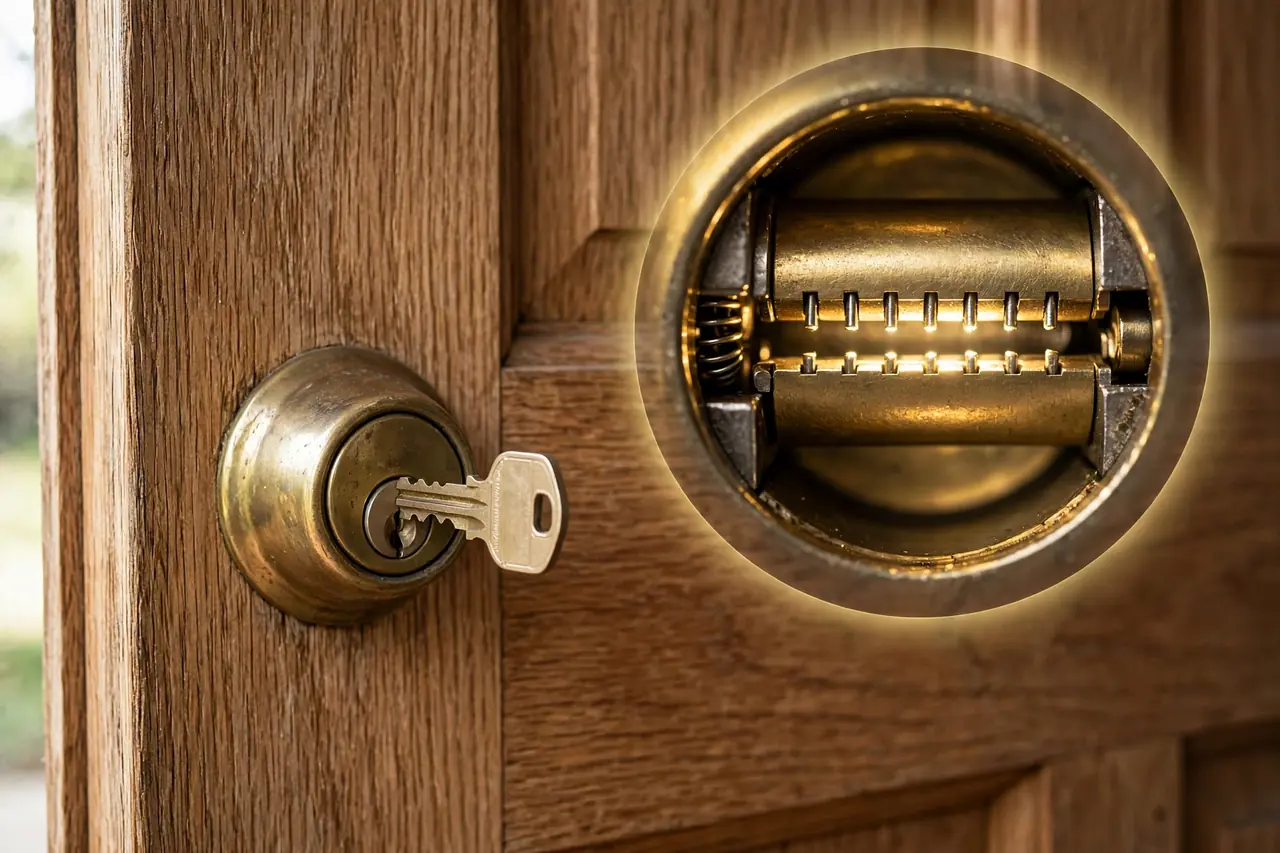
- You push the key into the cylinder. The cuts along the key lift the small pins inside.
- If it is the right key, every pin stack lines up at the shear line, the gap between the plug and its housing.
- With the pins level, the plug is free to turn, and you rotate the key.
- The turning plug spins the tailpiece behind it.
- The tailpiece drives the bolt straight out of the door edge.
- The bolt crosses the small gap at the frame and seats into the strike plate — a full inch of it, on a quality lock.
From inside, the thumb turn skips the pins entirely. It connects to the same tailpiece, so one twist throws or pulls back the bolt. And because there is no spring anywhere in this chain, the bolt cannot drift, bounce, or be pushed back in. It stays thrown until a person turns it back on purpose.
Bolt Throw: Why a Full 1 Inch Matters
“Throw” is the distance the bolt sticks out of the door once it is locked. On a quality deadbolt, the throw is 1 inch. Manufacturer spec sheets for mainstream deadbolts, such as Schlage’s B-Series, list a 1″ throw as standard, and it is the figure locksmiths look for.
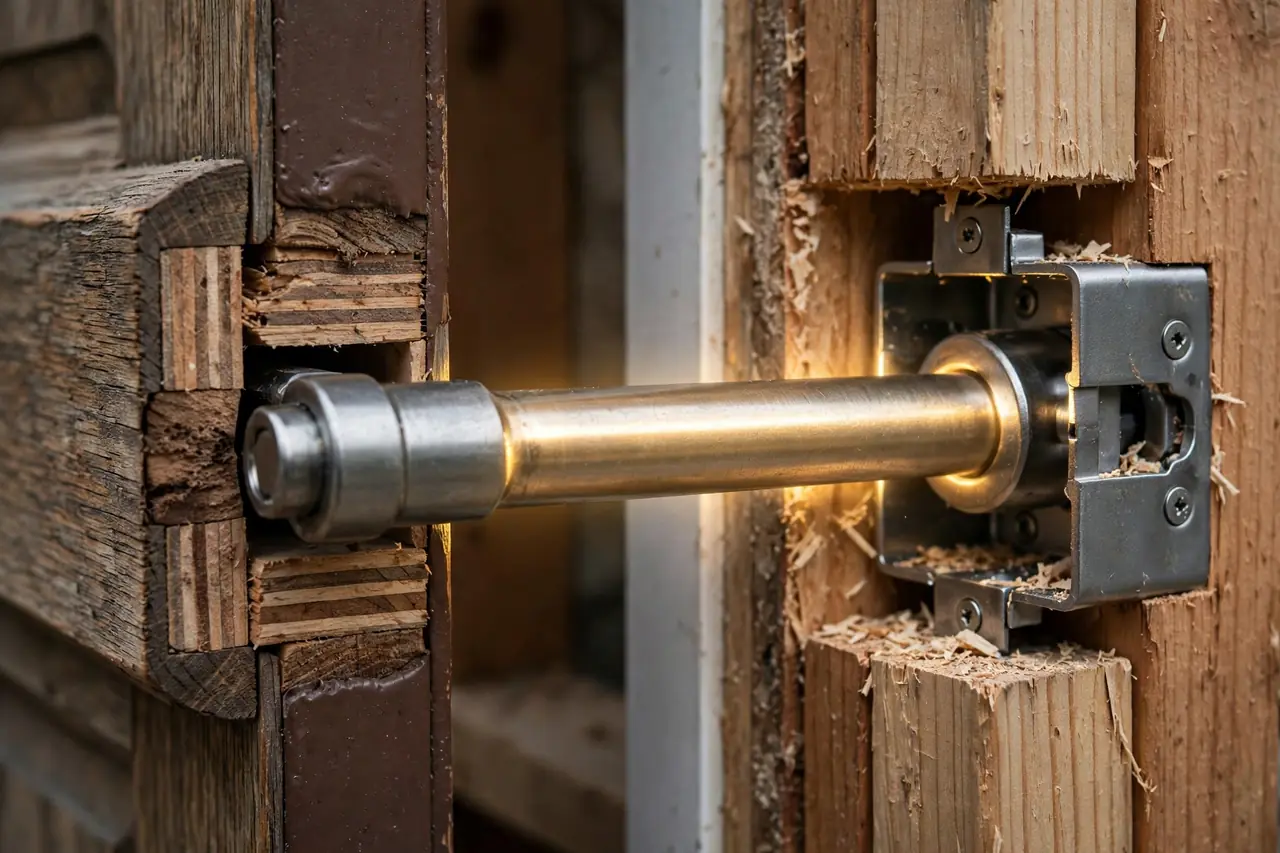
The reason is simple leverage. The deeper the bolt sits inside the frame, the more the door and frame have to spread apart before the bolt can slip free. A bolt that only reaches halfway in gives a kick or a pry bar a much easier job. More steel in the frame means more force is needed to separate the door from the jamb.
You can check your own lock in under a minute. Open the door, turn the thumb turn, and measure how far the bolt sticks out of the door edge — it should be about 1 inch. Then look at the hole in the strike plate. If that hole is shallow, the bolt may be stopping against wood instead of seating fully, and your “locked” door is weaker than it looks.
Deadbolt vs. Spring-Latch Knob Lock: The Security Difference
The lock inside your door knob works very differently. It uses a spring latch: a small bolt with a slanted face. When you close the door, the slant slides over the strike plate and the spring snaps the latch into its hole. That slant is handy — and it is also the weakness. A thin card or tool slipped into the door gap can press the slanted latch back and open the door, a trick often called shimming or loiding.
Turning the little button or lock on a knob does not change this. It stops the knob from turning, but the latch holding your door is still the same spring latch, poking only about half an inch into the frame. A knob lock’s real job is privacy and keeping the door shut against the wind. It was never built to resist force.
Deadbolt vs. spring-latch knob lock, side by side
| Feature | Deadbolt | Spring-latch knob lock |
|---|---|---|
| What holds the door | A solid bolt with no spring | A small slanted latch held by a spring |
| How it moves | Only by key or thumb turn | Slides in on its own when the door closes |
| How far it reaches into the frame | About 1 inch | About 1/2 inch |
| Card or shim attack | Does not work — the bolt cannot be pushed back | Often works in seconds |
| Main job | Security against forced entry | Privacy, and keeping the door pulled shut |
So the two locks are a team, not rivals. The latch keeps the door closed and lined up. The deadbolt is the lock you count on when someone tries to force their way in.
ANSI/BHMA Grades 1, 2, and 3 in Plain Terms
Deadbolts sold in North America are often tested and graded by ANSI (the American National Standards Institute) and BHMA (the Builders Hardware Manufacturers Association). Deadbolts fall under their standard A156.36, which covers auxiliary locks. The grade tells you how the lock scored in lab tests for endurance and impact — how many times it can open and close before wearing out, and how many hard hammer blows it can take.
ANSI/BHMA deadbolt grades at a glance (A156.36 test minimums)
| Grade | Open-and-close cycles it must survive | Hammer blows it must take | What it means in plain terms |
|---|---|---|---|
| Grade 1 | 250,000 | 10 | The strongest rating — commercial-grade strength, the best choice for a main entry door |
| Grade 2 | 150,000 | 5 | Solid mid-level strength — a sensible minimum for an exterior door |
| Grade 3 | 100,000 | 2 | Basic builder grade — fine for low-risk doors, the weakest of the three outside |
These test figures are the published minimums for the standard, listed in ANSI grade references for deadbolts. The cylinder inside the lock is graded under its own related standard, BHMA A156.5 for lock cylinders.
Two warnings come with the grades. First, an ungraded lock can look exactly like a graded one on the shelf — check the packaging for “ANSI/BHMA A156.36” and the grade before you trust it. Second, the grade rates the lock, not your door. A Grade 1 deadbolt screwed into a weak frame is still a weak door, which brings us to the failure points below.
Single Cylinder vs. Double Cylinder: The Short Version
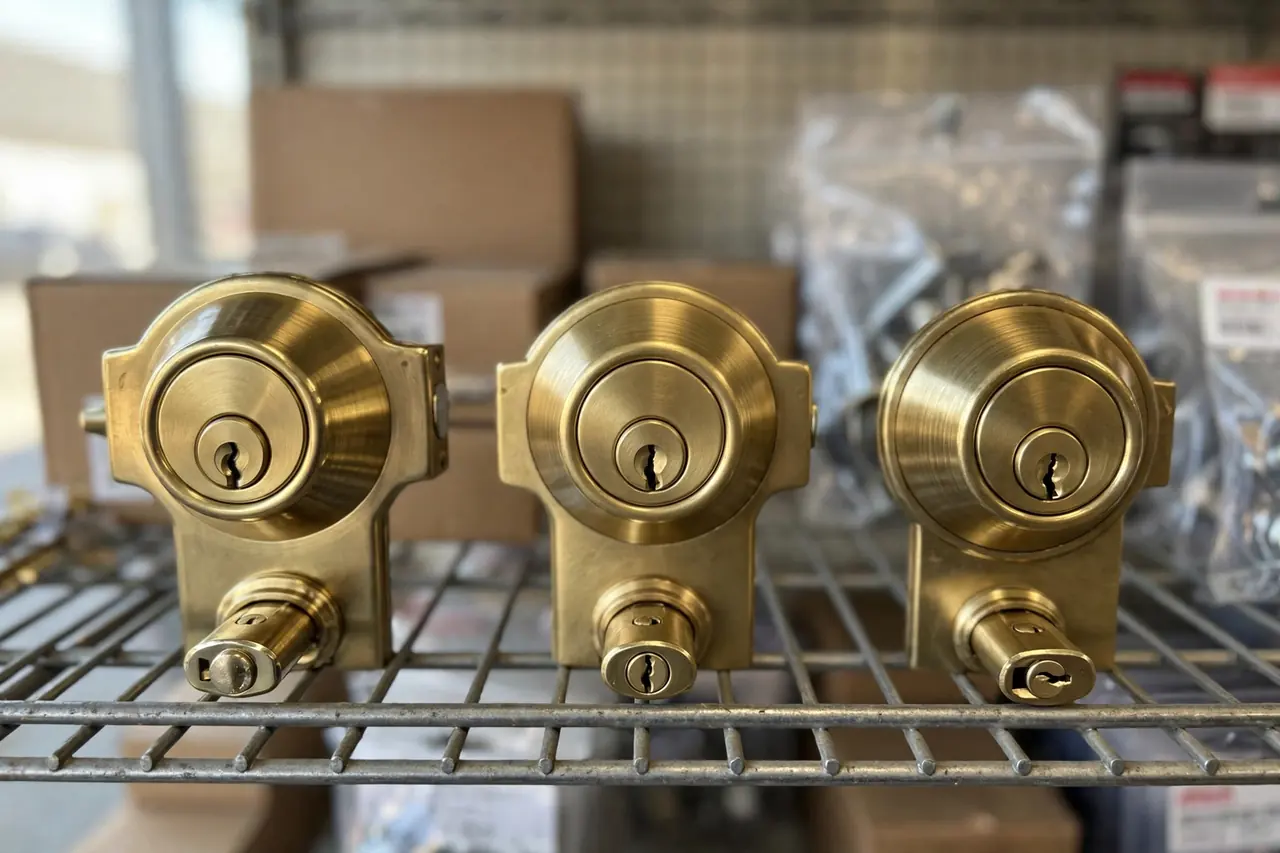
Deadbolts come in two main setups. A single cylinder deadbolt has a key hole outside and a thumb turn inside — this is what most homes use. A double cylinder deadbolt needs a key on both sides, inside and out.
The double cylinder exists for one situation: a door with glass in or beside it, where someone could break the glass, reach in, and flip a thumb turn. A key-only inside face blocks that trick. The trade-off is serious, though. In a fire or emergency, you need the key in hand to get out, and fire-safety guidance generally favors thumb-turn locks on doors you use as exits. Many local codes restrict double cylinder locks on exit doors for exactly this reason, so check your local rules before choosing one. Our full guide to the single cylinder deadbolt walks through the safety and code side in detail.
Where Deadbolts Are Weak: The Failure Points Nobody Mentions
A deadbolt rarely fails in the middle of the door. It fails at the edges — the small parts around the bolt that nobody thinks about. Here are the weak points that matter most:
Short Strike Screws
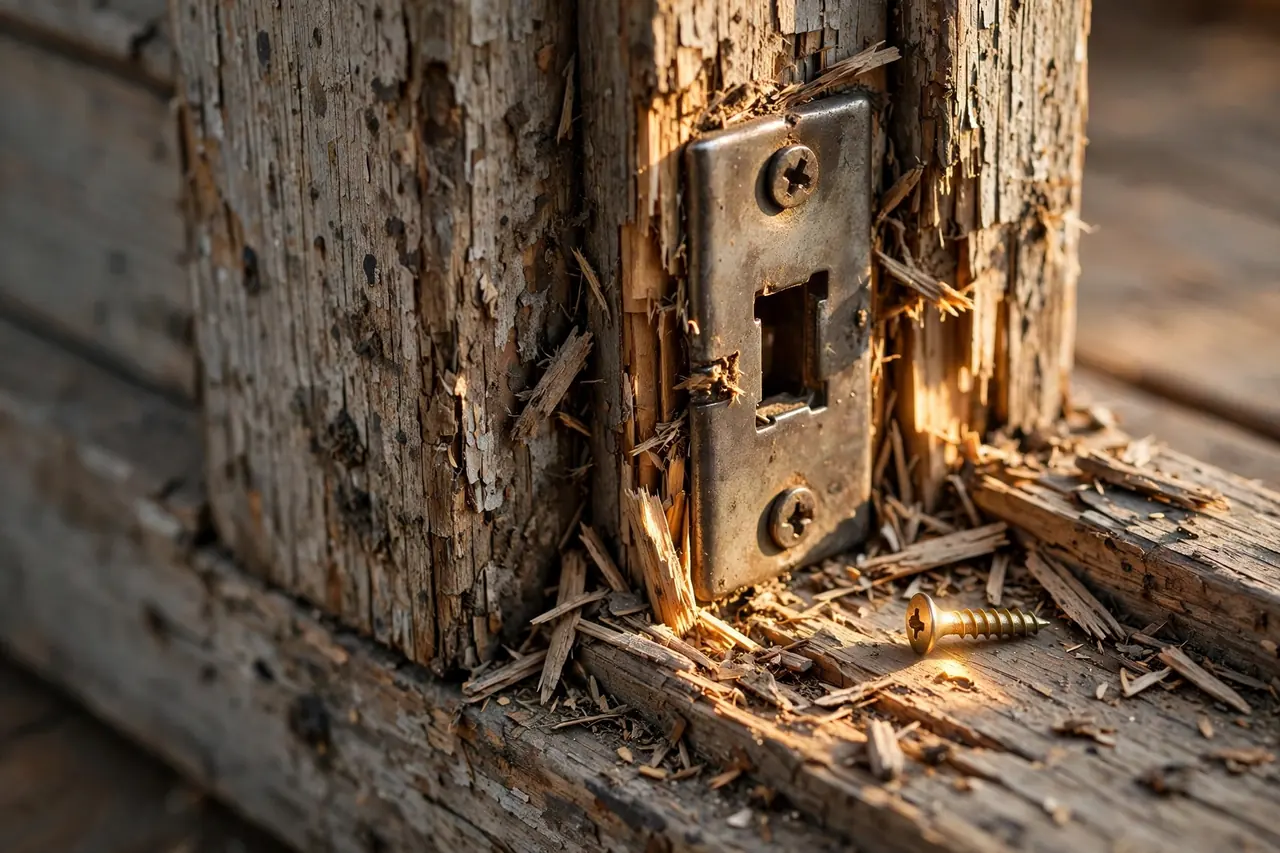
Many strike plates are held by screws only about 3/4 inch long. Those screws bite into the soft door jamb and nothing more, so a hard kick can tear the plate out of the frame while the lock itself stays perfect. Screws around 3 inches long reach through the jamb into the wall stud behind it, and that is what spreads the force of a kick into the structure of the house.
A Misaligned Strike
Houses settle and doors sag a little over the years. When the bolt no longer lines up with the hole in the strike plate, it rubs, scrapes, and stops short of a full throw. A half-thrown bolt holds far less than a fully seated one. The classic sign is having to lift or push the door to get the lock to turn.
A Worn Cylinder
Years of keys wear the pins inside the cylinder. The key starts to stick, needs a jiggle, or turns with a gritty feel. A worn cylinder is also easier to manipulate. Standard cylinders can be picked or bumped by someone skilled, which is why high security locks use hardened, pick-resistant cylinders tested to tougher standards.
The Frame Around It
When a door is kicked, the wooden jamb usually splinters before a decent bolt bends. That is why the strike plate, its screws, and the strike box behind it are half the security system. The strongest bolt in the world cannot help if the frame holding it gives way first.
What Fitting a Deadbolt Involves
If your door has no deadbolt yet, fitting one means drilling a large round hole through the face of the door and a smaller one into its edge, then chiseling two shallow pockets — one for the faceplate and one for the strike plate in the frame. Getting the bolt and strike to line up exactly is the fiddly part, and it is the step that decides whether the lock feels smooth or fights you for years. This article explains the lock itself rather than the fitting steps; the point to take away is that the alignment work matters as much as the lock you buy, and it is a job many homeowners hand to a locksmith or handyperson.
Quick Checks: Is Your Deadbolt Doing Its Job?
Five minutes and no tools beyond a tape measure will tell you where you stand:
- The thumb turn throws the bolt fully, with a firm, smooth stop — no grinding and no forcing.
- With the door open, the extended bolt measures about 1 inch from the door edge.
- The bolt slides into the strike with the door hanging naturally — you do not lift or push the door to lock it.
- The key slides in and turns cleanly, with no jiggling or sticking.
- One strike screw, taken out, is around 3 inches long — not a short 3/4 inch screw.
Frequently Asked Questions
What are the parts of a deadbolt lock?
The main parts are the bolt, the cylinder with its pins, the thumb turn, the tailpiece that links them, the faceplate on the door edge, and the strike plate on the frame. The bolt does the holding; the cylinder and thumb turn are just the two ways of moving it.
What is the difference between a deadbolt and a regular door lock?
A regular knob lock holds the door with a spring latch that has a slanted face. It slides shut on its own, but it can also be slipped back with a card. A deadbolt uses a solid bolt with no spring, so it only moves when a key or thumb turn moves it — a far stronger hold.
Can a deadbolt be kicked in?
Sometimes, yes — but the bolt is rarely what breaks. The door frame usually splinters first, especially when the strike plate is held by short screws. A full 1-inch throw, a reinforced strike, and screws around 3 inches long that reach the wall stud make a kick-in far harder.
What does ANSI Grade 1 mean for a deadbolt?
It means the deadbolt passed the toughest tests under the ANSI/BHMA A156.36 standard: 250,000 open-and-close cycles and 10 hammer blows, without failing. Grade 1 is the strongest of the three grades and the best choice for a main entry door. Grade 2 is a sensible minimum outside.
Is a double cylinder deadbolt safer than a single cylinder?
Only in one case: a door with glass a burglar could break to reach the inside thumb turn. Everywhere else, the double cylinder adds risk, because you need a key to get out in an emergency. Fire-safety guidance favors single cylinder locks on exit doors, and some local codes require them.
How often should I rekey or replace my deadbolt?
Rekey when you move in, lose a key, or someone who had a key no longer should have one — you cannot know how many copies exist. There is no fixed expiry date for the lock itself. Replace it when the key sticks or needs jiggling, the bolt grinds or stops short, or the cylinder feels loose and worn.
The Bottom Line
A deadbolt door lock earns its place on your door for one reason: a solid bolt, a full inch of throw, and no spring to fool. Pick a graded lock — Grade 2 at minimum, Grade 1 if you want the strongest — and then make sure the parts around it do their share: a strike the bolt can seat fully into, and screws long enough to reach the stud. Do that, and the lock on your door is doing the job its design promises.
Note: This guide explains how deadbolts work, for general home knowledge. Lock choices and exit-door rules vary by area and by door, and a deadbolt is only one layer of home security. For a high-risk door or a code question, a licensed locksmith or your local building office is the right call.