Crawl spaces hide a lot. Most homeowners never look inside theirs until something goes wrong — a musty smell drifting up through the floor, a soft spot in the hallway, or a flashlight scan after a storm that turns up something nobody wants to see.
After years of working under hundreds of homes, the truth is that water in crawl space areas is rarely a one-time thing. It almost always points to a deeper issue — drainage, plumbing, grading, or groundwater — that won’t fix itself.
This guide walks through how to know if you actually have a problem, what’s causing it, what to do today, and what to do permanently. No fluff. Just what works.
The Short Answer
Water in a crawl space is moisture or standing water that collects under a home, usually from poor drainage, plumbing leaks, or groundwater. Left untreated, it causes wood rot, mold, pest issues, and costly structural damage.
Mission Statement
At Dwellify Home, we help homeowners make practical, stylish, and informed decisions about their living spaces — from everyday home solutions and outdoor living to property care that protects long-term value. Our goal is clear, honest guidance you can actually use.
How to Tell If You Have a Water Problem in Your Crawl Space
Not every damp crawl space is a five-alarm situation. But knowing the difference between minor moisture and real trouble can save you thousands.
A small amount of moisture vs. standing water
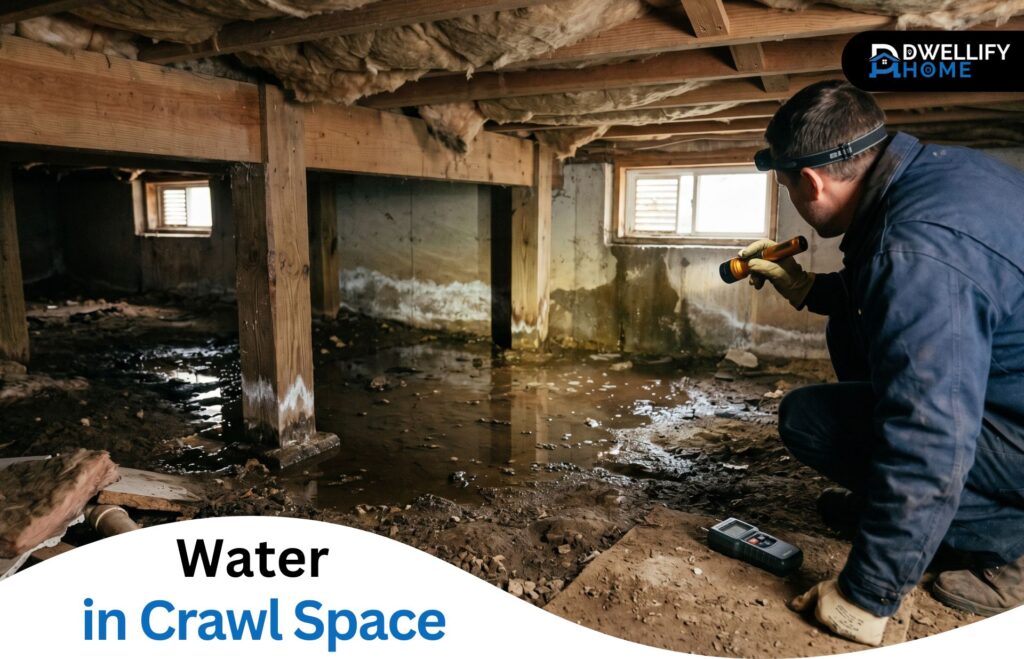
A little dampness on the soil after a heavy storm isn’t unusual, especially if the space has a dirt floor and no vapor barrier. What you don’t want to see is pooled water sitting on top of the plastic, around piers, or anywhere the ground stays wet for more than a day or two.
Persistent wetness, multiple puddles, or water that comes back every time it rains — that’s a problem. Standing water means moisture is finding its way in faster than it can leave.
Key Takeaways
- Standing water in a crawl space is never normal and almost always points to drainage, plumbing, or groundwater issues.
- Mold can begin growing within 24 to 48 hours, so quick drying matters as much as removing the water.
- Permanent fixes usually combine proper grading, a sump pump, and a quality vapor barrier — rarely just one of them.
- Most crawl space water problems cost between $1,500 and $7,000 to fix properly, depending on the cause.
- Catching the issue early can prevent thousands in joist, insulation, and foundation repairs later.
Quick Reference: Water Severity Guide
| Situation | What It Means | What to Do |
| Slightly damp soil after a storm | Usually normal short-term | Monitor, check humidity |
| Small puddle that dries in 1–2 days | Minor drainage issue | Fix gutters and grading |
| Standing water for 3+ days | Active intrusion | Pump out, find source |
| Water returning after every rain | Drainage failure | Call a waterproofing pro |
| Water bubbling up from soil | High groundwater | French drain + sump pump |
Is water after heavy rain normal?
Some short-term moisture after a major storm can happen even in a well-built crawl space. But standing water in crawl space areas after rain is not normal. If the puddles are still there 48 hours later, the home has a drainage or seepage issue that needs attention.
Warning signs from inside your home
You don’t have to crawl under the house to spot trouble. Some of the clearest red flags show up upstairs:
- A musty, damp smell that won’t go away, especially on the first floor
- Floors that feel soft, bouncy, or sloped in spots
- Indoor humidity that stays high even with the AC running
- Allergy or breathing issues that get worse at home
That stale smell isn’t just unpleasant. It’s air rising from below, and it’s telling you something.
Visible signs in the crawl space itself
When you do go down for a look, watch for dark spots on joists, white efflorescence on foundation walls, rusted ductwork, soaked fiberglass insulation hanging loose, and condensation beading on cold pipes. Any of those mean moisture has been around longer than you’d like.
Common Causes of Water in a Crawl Space
Water doesn’t appear under a house out of nowhere. In nearly every case I’ve inspected, the cause traces back to one of these issues — sometimes a combination of two or three.
Poor yard grading and surface runoff
When the ground around your foundation slopes toward the house instead of away from it, rain has nowhere to go but down. The fix isn’t complicated — you want at least a 6-inch drop over the first 10 feet — but most homes settle over time, and that grade quietly fails.
Clogged gutters and short downspouts
This is the most common cause I see, and the easiest to fix. Gutters packed with leaves dump water straight down the foundation. Downspouts that end right at the house do the same thing. Extending them 6 to 10 feet out solves more crawl space problems than people realize.
Plumbing leaks and pipe condensation
A slow drip from a supply line or drain can soak a crawl space for months before anyone notices. In humid weather, cold water pipes also sweat heavily, and that condensation drops onto insulation and joists below.
High groundwater and hydrostatic pressure
After long, heavy rain, the water table can rise enough to push moisture through the crawl space floor or foundation walls. You’ll see it bubbling up from the ground itself, not running in from the side. That’s a different problem and a different fix.
Foundation cracks and settled concrete
Hairline cracks in block or poured walls let water seep in during storms. Larger cracks usually mean the foundation has shifted, and that should be looked at by someone qualified, not patched and ignored.
A failed or undersized sump pump
If your home already has a sump pump and you’re still finding water, the pump may be stuck, undersized, or simply worn out. Most pumps last 7 to 10 years. A backup battery system is worth every penny in storm-prone areas.
HVAC condensation and trapped humidity
Air ducts running through a humid crawl space can sweat heavily in summer. Combine that with a tightly sealed house, and moisture has nowhere to go. The result is a damp, musty space that breeds mold even without a single drop of rain getting in.
Why Water in a Crawl Space Is Dangerous
Out of sight is the worst place for water damage. By the time you smell it or feel it through the floor, things have usually been wrong for a while.
- Wood rot in joists, beams, and the subfloor — the structure literally holding your house up
- Mold and mildew growth that affects indoor air quality and triggers allergies, asthma, and headaches
- Termites, carpenter ants, and rodents drawn to damp wood and warm shelter
- Higher energy bills as wet insulation loses its R-value and HVAC works harder to dry the air
- Foundation settlement, sloped floors, and a noticeable drop in resale value if left unresolved
I’ve seen homes where untreated moisture caused $20,000 in joist replacement that started as a $300 drainage fix. The damage compounds quietly.
What to Do Right Now When You Find Water in Your Crawl Space
Quick action protects the structure. Here’s the right order to handle it.
Cut power and check for hazards first
Before you climb in, kill the breakers feeding the crawl space. Water and live wiring don’t mix. Watch for sewer odors too — that’s a sign of a broken drain line, and you don’t want to be breathing it in.
Identify the source before pumping anything out
This is where most homeowners go wrong. Pumping water before you know where it’s coming from just resets the clock. Look for the obvious first: a wet pipe, a clogged downspout, a recent storm, or water bubbling up through the soil.
Remove the standing water
For a small puddle, a wet/dry vac is enough. For anything more, a portable utility pump is the right tool. Run the discharge hose well away from the foundation so the water doesn’t loop right back in.
Dry the space thoroughly
Set up box fans and a dehumidifier sized for the square footage. The goal is to get relative humidity down to 45 to 55 percent and keep it there. Pull out wet insulation and any soaked debris. Mold can start growing within 24 to 48 hours, so speed matters.
Document everything
Take photos and short videos of the water, the source, the damaged materials, and the time stamps. If you end up filing an insurance claim, this is the evidence that gets it approved.
Long-Term Fixes That Actually Keep Water Out
Drying the space is only step one. If you don’t fix the cause, the water comes back. These are the solutions that hold up over time.
- Regrade the soil around the foundation and extend all downspouts at least 6 feet from the house
- Seal foundation cracks with hydraulic cement for small ones; bring in a pro for anything wider than a hairline
- Install a quality sump pump with a battery backup so it keeps working when the power goes out
- Lay a heavy-duty vapor barrier across the floor and up the walls, sealed at every seam
- Add an interior French drain along the perimeter footing if groundwater is the main culprit
- Consider full crawl space encapsulation when humidity is a year-round issue — it pays back in energy savings and peace of mind
- Run a dedicated crawl space dehumidifier to keep humidity stable through the seasons
A vapor barrier alone won’t stop active water, and a sump pump alone won’t stop humidity. The right answer is usually two or three of these working together.
DIY or Call a Pro? How to Decide
DIY makes sense when the water is shallow, the source is obvious (like a clogged gutter), and you’re comfortable working in a tight space with proper safety gear. Stick to surface cleanup, basic drying, and small fixes you can verify yourself.
Call a professional when water is deep, when it’s coming from below, when you spot mold covering large areas, when wiring or sewage is involved, or when the same problem keeps coming back after you’ve tried to fix it. Underestimating the source is the most expensive mistake homeowners make.
Who to Call for Water in a Crawl Space
Picking the right specialist saves time and money. Here’s how the trades break down:
- A plumber for active leaks, supply line drips, broken drain pipes, and water heater failures
- A waterproofing contractor for drainage systems, sump pumps, vapor barriers, and encapsulation
- A water damage restoration company for serious flooding, mold remediation, and insurance-related cleanup
- A foundation specialist when you see cracks wider than a quarter inch, bowing walls, or sinking floors
When you’re not sure where the water is coming from, start with a waterproofing contractor. They usually have the broadest view of the system and can refer you to the right specialist if it turns out to be plumbing or structural.
How Much Does It Cost to Fix Water in a Crawl Space?
Costs vary widely by region and severity, but here are realistic ranges based on what I see in practice.
- Basic DIY cleanup: $100 to $400 for a wet/dry vac, dehumidifier rental, fans, and a fresh roll of vapor barrier
- Sump pump installation: $1,200 to $3,500 for a quality pump with a basin, battery backup, and a discharge line
- Vapor barrier replacement: $1,500 to $4,000 depending on square footage and materials
- Full crawl space encapsulation: $5,000 to $15,000, sometimes more for larger or complicated spaces
- Interior French drain with sump system: $3,000 to $8,000
- Foundation crack repair: $500 for hairlines to $10,000 or more for major structural work
Always get at least three quotes for anything over $2,000. Pricing in this trade can vary a lot from one contractor to the next.
Does Homeowners Insurance Cover Crawl Space Water Damage?
Most standard homeowners policies cover water damage that’s sudden and accidental — like a burst pipe. They typically don’t cover damage from gradual leaks, poor maintenance, groundwater seepage, or flooding from outside. Flood damage usually requires a separate flood insurance policy.
Document everything the moment you find water. Take photos with timestamps, save receipts for emergency cleanup, and call your insurer before you start tearing anything out. What looks routine to you might be a covered loss — but only when you can prove the cause and the timeline.
How to Prevent Water in Your Crawl Space From Coming Back
Prevention is mostly maintenance. The homeowners who never have problems are the ones who handle these small tasks every season.
- Clean gutters in spring and fall, and after every major storm
- Check downspout extensions — they get knocked loose more than you’d think
- Walk the foundation after heavy rain to look for pooling, soggy soil, or new cracks
- Test your sump pump twice a year by pouring a bucket of water into the pit
- Keep crawl space humidity between 45 and 55 percent year-round
- Have a contractor inspect the space every two to three years in wet climates
The pattern I see again and again: the homes that stay dry are the ones with owners who pay attention.
Buying or Selling a Home With a Crawl Space? What to Check First
For buyers, get a separate crawl space inspection beyond the standard home inspection. General inspectors often glance under for ten minutes; a specialist will spot soft joists, mold, failed barriers, and drainage issues a buyer needs to know about.
Ask the seller for any waterproofing receipts, sump pump warranties, or encapsulation paperwork. No documentation usually means no maintenance.
For sellers, address visible water issues before listing. Buyers and their agents notice musty smells immediately, and an unresolved crawl space problem is one of the most common reasons deals fall apart or get renegotiated downward by 5 to 10 percent.
Frequently Asked Questions
How much water in a crawl space is okay?
None, ideally. A little soil dampness after a major storm can be acceptable for a day or two, but standing water, multiple puddles, or wet conditions that last more than 48 hours all point to a real problem. Persistent moisture is what causes rot, mold, and structural damage over time.
Is water in a crawl space dangerous?
Yes. It threatens the structural wood holding your house up, creates ideal conditions for mold and pests, lowers indoor air quality, and raises energy bills. Even small amounts of standing water cause serious damage when left untreated for months. The earlier you address it, the less expensive the repair becomes.
Is it normal to have water in a crawl space after heavy rain?
A trace of moisture or a damp patch of soil can happen after an unusually heavy storm. Standing water is not normal. If puddles remain longer than a couple of days, return after every rain, or appear with no rain at all, the home has a drainage, grading, or groundwater issue that needs to be diagnosed.
How fast can mold grow after a crawl space floods?
Mold can begin forming within 24 to 48 hours under warm, humid conditions, and crawl spaces hit those conditions easily. That’s why drying the space quickly matters as much as removing the water itself. Once mold takes hold on wood and insulation, remediation gets considerably more expensive.
How long does it take to dry out a wet crawl space?
For a minor amount of water, expect 2 to 3 days with fans and a dehumidifier running continuously. Deeper flooding or saturated insulation can take a week or longer. Any structural wood that absorbed water should be tested with a moisture meter before you assume drying is complete.
Will a dehumidifier alone fix the problem?
No. A dehumidifier controls humidity, but it can’t stop water from entering. When active water is coming in, drainage, grading, or plumbing has to be fixed first. The dehumidifier handles what’s left in the air after the source is sealed off — it’s a finishing tool, not a solution by itself.
What’s the average cost to fix standing water in a crawl space?
Most homeowners spend between $1,500 and $7,000 to properly resolve a wet crawl space, depending on the cause. Simple drainage and gutter fixes sit at the low end. Sump pumps, vapor barriers, and encapsulation push the total higher. Foundation or structural repairs can exceed $10,000 for severe cases.
Who should I call first when I find water in my crawl space?
When you can see a clear plumbing leak, call a plumber. If the water is coming from outside or below, call a waterproofing contractor first — they can diagnose the system and bring in other trades as needed. For major flooding or visible mold, a water damage restoration company should be your first call.
Conclusion
Water in crawl space areas is one of those problems that gets exponentially worse the longer it sits. The good news is that almost every cause is fixable, and most homes only need a thoughtful combination of drainage, a sump pump, and a proper vapor barrier to stay dry for decades.
Catch it early, find the real source, and don’t settle for a fix that only treats the symptom. A dry crawl space is the foundation of a healthy, valuable home — and it’s worth the effort to get right.
Disclaimer
This article is intended for general informational purposes only. Crawl space conditions, repair needs, and costs vary based on home design, climate, and local building codes. For situations involving structural damage, mold, or major flooding, consult a qualified professional in your area before taking action.