
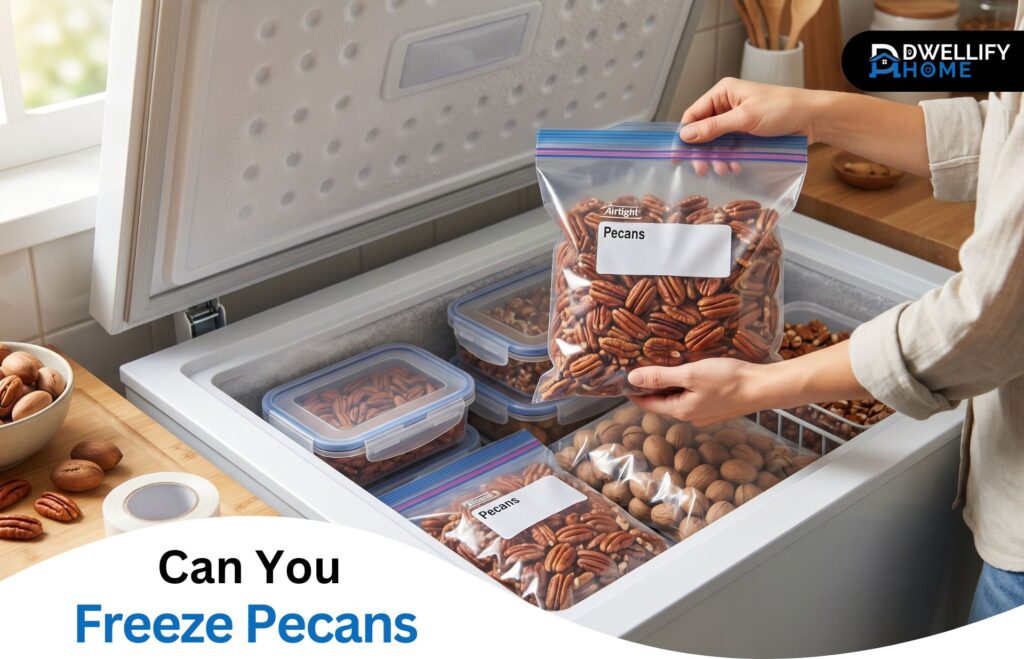
So, Can You Actually Freeze Pecans?
Yes — and freezing is genuinely the best way to store them long-term. Frozen pecans stay fresh for up to two years when properly sealed, with no meaningful loss of flavor or texture. Whether they’re shelled, unshelled, raw, or roasted, the freezer handles them well. This guide covers everything you need to do it right.
Most people buy a bag of pecans, use a handful, and leave the rest in the kitchen cabinet. Within a few weeks, those pecans taste flat, slightly bitter, or just off. That’s not a coincidence — it’s chemistry. The good news is that a proper freeze stops that process almost completely.
Snippet-Ready Definition
Yes, you can freeze pecans. Freezing halts oxidation of their natural oils, preserving flavor and texture for up to two years. It solves the problem of pecans going rancid quickly at room temperature.
Mission Statement
At Dwellify Home, we help homeowners make practical, confident decisions about their living spaces — from kitchen storage habits to garden choices and everything in between. Our goal is straightforward: give you reliable, well-researched information so your home works better for the way you actually live.
Why Pecans Go Bad So Quickly Without Proper Storage
The Role of Natural Oils in Pecan Freshness
Pecans contain around 70–75% fat by weight, most of it unsaturated. That’s what gives them their rich, buttery flavor. But those same oils are what make pecans one of the more perishable nuts available. Unsaturated fats are chemically unstable — they react with oxygen, light, and heat over time. The higher the oil content in a nut, the faster that reaction moves.
How Oxidation Turns Good Pecans Rancid
When pecan oils oxidize, the result is rancidity. You’ll notice it first as a sharp, slightly paint-like smell, followed by a bitter aftertaste that wasn’t there when the bag was fresh. It’s not dangerous in small amounts, but once it sets in, there’s no fixing it.
Heat and light speed this process up considerably. A bag sitting near the stove or on a sunny counter can go from fresh to stale in under a month. Cold temperatures — especially freezing — slow oxidation dramatically, which is exactly why the freezer works so well for long-term pecan storage.
Quick Reference: Pecan Storage Times
| Storage Method | Shelled | Unshelled |
| Room Temperature | 3–4 weeks | 3–6 months |
| Refrigerator | Up to 9 months | Up to 18 months |
| Freezer | Up to 2 years | Up to 3 years |
Key Benefits of Freezing Pecans
- Preserves natural oils and prevents rancidity long-term
- No flavor or texture loss when sealed and frozen correctly
- Pecans can be used directly from frozen — no thawing required for baking
- Safe to refreeze after thawing due to low moisture content (~4%)
- Works equally well for raw, roasted, and flavored varieties
How Long Do Pecans Last? Storage Times at a Glance
Pecans at Room Temperature (Pantry)
Shelled pecans stored in a sealed container at room temperature will stay fresh for roughly three to four weeks. Unshelled pecans do better — the shell provides natural protection — and can last three to six months in a cool, dry pantry.
Room temperature is fine for short-term use. A week on the counter won’t hurt them. Beyond that, quality starts to decline noticeably.
Pecans in the Refrigerator
A refrigerator set between 34–40°F slows oxidation significantly. Shelled pecans in an airtight container will stay fresh for up to nine months. Unshelled pecans can hold for up to 18 months under the same conditions.
The fridge is a solid middle-ground option — convenient for regular use, with no thawing required, and reliable for most home cooks who go through pecans steadily.
Pecans in the Freezer
At 0°F in a properly sealed container, shelled pecans stay fresh for up to two years. Unshelled pecans can last even longer — up to three years — because the shell adds an extra barrier against oxidation and moisture.
There’s very little quality loss at this temperature. The natural oils essentially go dormant, and oxidation slows to almost nothing.
Shelled vs. Unshelled — Does It Make a Difference?
| Storage Method | Shelled Pecans | Unshelled (In-Shell) Pecans |
| Room Temperature | 3–4 weeks | 3–6 months |
| Refrigerator | Up to 9 months | Up to 18 months |
| Freezer | Up to 2 years | Up to 3 years |
The shell provides real, measurable protection. If you buy in bulk and don’t plan to use them right away, leaving the shells on until you’re ready is worth the extra cracking step later.
How to Freeze Pecans the Right Way
What You’ll Need Before You Start
You don’t need any special equipment. A heavy-duty freezer bag, a permanent marker, and your freezer is all it takes. A vacuum sealer is a worthwhile investment if you freeze nuts regularly, but it’s not required for good results.
Step 1 — Sort and Portion Your Pecans
Before anything goes in the freezer, spend a few minutes sorting through your batch. Remove any pecans that look shriveled, overly dark, or have an off smell. There’s no benefit to freezing nuts that are already past their best.
Then divide them into practical amounts — one to two cups per bag works well for most baking and cooking. The goal is to avoid opening the same bag repeatedly, since every time you do, air and moisture get in.
Step 2 — Choose the Right Container or Bag
Heavy-duty freezer bags are the most practical choice. They’re flexible, take up less space, and make it easy to press out excess air. Glass jars with tight-fitting lids also work well if you prefer not to use plastic.
Avoid thin sandwich bags or loosely sealed containers. They won’t protect the pecans adequately over months of freezer storage.
Step 3 — Remove the Air Before Sealing
This step is where most people cut corners, and it makes a real difference. Air inside the bag means oxygen in contact with your pecans — which means oxidation continues in the freezer, just more slowly.
Press out as much air as possible before sealing. For freezer bags, seal the bag almost completely, then press from the bottom up to push remaining air out before closing it fully. A vacuum sealer eliminates this concern entirely.
Step 4 — Label with the Date
Write the date on the bag before it goes in. After a few months with multiple batches stored, you’ll be grateful you did. All frozen pecans look identical once bagged. Knowing when they went in lets you use older stock first.
Step 5 — Store in the Coldest Part of the Freezer
The back of the freezer maintains a more stable temperature than the door or front shelves. Temperature fluctuations — which happen every time the freezer opens — are more pronounced near the door. Consistent cold is what preserves pecans best over time.
Can You Freeze Pecans in the Shell?
Yes, you can freeze pecans in the shell, and they actually last longer that way. In-shell pecans stored in the freezer can stay fresh for up to three years, compared to two years for shelled. The shell acts as a natural barrier against oxidation and moisture. For long-term bulk storage, leaving the shell on is a practical choice — the cracking step later is a small trade-off for meaningfully better shelf life.
Can You Freeze Roasted or Flavored Pecans?
Roasted and flavored pecans — honey-roasted, salted, candied, spiced — freeze just as well as raw ones, and the process is identical. Seal them in a heavy-duty freezer bag, remove the air, label the date, and freeze.
One thing to keep in mind: sugar-coated pecans can clump together if any moisture was present before sealing. Portioning into small, single-use amounts before freezing helps avoid this. After thawing, the flavor holds well, though candied varieties may soften slightly in texture compared to fresh.
How to Thaw Frozen Pecans Properly
The Best Way to Thaw — Room Temperature
Take the sealed bag out of the freezer and leave it on the counter for one to two hours. Keep the bag sealed while it thaws — this prevents condensation from forming directly on the pecans, which can introduce moisture and soften the nut meat.
Once they’ve reached room temperature, open the bag and use them as you normally would.
Can You Use Pecans Straight from the Freezer?
For most cooking and baking, yes. Frozen pecans can go directly into batters, cookie dough, granola, salads, and grain dishes without any thawing. The heat from baking handles the rest, and the final texture is indistinguishable. This is one of the more practical things about freezing pecans — there’s no mandatory waiting period when you’re in the middle of cooking.
What to Avoid When Thawing Pecans
Don’t thaw pecans in warm water. Moisture exposure softens the nut meat and creates uneven texture. Microwaving is also worth skipping — it heats unevenly and can partially cook the pecans or make them rubbery. Room-temperature thawing with the bag still sealed is the simplest and most reliable method.
Can You Refreeze Pecans After Thawing?
Yes, pecans can be refrozen after thawing without significant quality loss. Because pecans have a very low moisture content — around 4% — they don’t experience the same cell damage that high-moisture foods suffer when frozen and thawed repeatedly. That said, each freeze-thaw cycle causes a small, gradual reduction in quality over time. Portioning before the first freeze makes refreezing mostly unnecessary.
Tips for Keeping Frozen Pecans Fresh Longer
A few consistent habits make a real difference over a long storage period:
- Double-bag for long storage. Place your sealed freezer bag inside a second bag. This adds protection against freezer odors and air exposure — especially important if your freezer holds strong-smelling foods like fish or onions.
- Keep pecans away from strong-smelling foods. Pecans absorb odors easily. Even through a sealed bag, prolonged exposure to powerful freezer smells can affect the flavor.
- Portion before freezing. Bag them in quantities you’ll use in one session. Opening and resealing the same bag repeatedly introduces air and moisture each time.
- Label every bag. Knowing when a batch was frozen helps you work through older stock first.
- Avoid the freezer door. The door shelves experience temperature fluctuations every time the freezer is opened. The back shelf stays more consistent.
How to Tell If Your Pecans Have Gone Bad
What Fresh Pecans Should Look, Smell, and Taste Like
Fresh pecans have a mild, slightly sweet, buttery aroma. The nut meat is firm, light cream to golden in color, and has a clean, rich flavor without any bitterness or lingering sharpness.
Clear Signs Your Pecans Have Spoiled
- A sharp, paint-like, or sour smell — the most reliable indicator of rancidity
- A bitter or unpleasant aftertaste that doesn’t go away
- Shriveled, darkened, or oily-looking nut meat
- Visible mold — discard the entire batch without attempting to salvage any of it
Rancid pecans won’t cause serious harm in small amounts, but they taste genuinely unpleasant. Trust your nose first. If something seems off before you even taste one, it likely is.
Are Slightly Soft Pecans Still Safe to Eat?
Soft texture in a thawed pecan isn’t always a sign of spoilage. If they smell clean and taste normal, soft pecans are generally still fine — they may have absorbed a small amount of moisture during storage or thawing. Check the smell and flavor before deciding. If both pass, they’re safe to eat.
Can You Freeze Pecan Pie?
Yes, pecan pie freezes well. Because it contains less water than fruit pies and is higher in fat and sugar, it handles the freeze-thaw cycle better than most baked desserts. Let the pie cool completely before wrapping it tightly in plastic wrap, then in aluminum foil. Stored this way, it keeps well in the freezer for up to two months. Thaw it overnight in the refrigerator before serving.
Can You Freeze Walnuts the Same Way?
The process is essentially the same. Walnuts are also high in unsaturated fats — slightly higher than pecans — which makes them equally prone to rancidity at room temperature. Use the same method: portion into freezer bags, remove the air, seal tightly, label, and freeze. Walnuts stay fresh in the freezer for up to one year. The main difference is shelf life — pecans hold up a bit longer under proper freezer conditions.
Frequently Asked Questions About Freezing Pecans
How long can you freeze pecans before they lose flavor?
Properly sealed shelled pecans stay fresh in the freezer for up to two years without noticeable flavor loss. Beyond that, quality gradually declines, though they may still be edible. For the best flavor and texture, use them within two years. In-shell pecans stored in the freezer can maintain quality for up to three years.
Do frozen pecans lose their crunch after thawing?
Not significantly, provided they’re thawed correctly — bag sealed, at room temperature. The low moisture content of pecans means they don’t become waterlogged when thawing. Any slight softness typically firms back up within a few minutes at room temperature. For baking, there’s no perceptible difference at all.
Should I freeze pecans before or after shelling them?
Either approach works. Leaving them unshelled provides a longer freezer shelf life — up to three years versus two. If you use pecans regularly, shelling before freezing is more convenient. For bulk long-term storage where the bag won’t be opened for many months, keeping the shell on is the better call.
Can you freeze pecans in their original store packaging?
For very short-term freezer storage — a month or two — the original packaging may be adequate if it’s resealable. For longer storage, transfer to a heavy-duty freezer bag and remove as much air as possible. Most store packaging isn’t thick enough to reliably prevent freezer burn over many months.
How long can you keep pecans in the refrigerator?
Shelled pecans stored in an airtight container in the refrigerator stay fresh for up to nine months. Unshelled pecans can last up to 18 months under the same conditions. The refrigerator is a practical option if you use pecans regularly and don’t need the extended shelf life that freezing provides.
How long do unshelled pecans last at room temperature?
Unshelled pecans stored in a cool, dry place at room temperature will typically last three to six months. The shell provides natural protection against oxidation and pests. Once the shell is removed, room temperature storage shortens to just three to four weeks before quality noticeably declines.
Is it better to freeze or refrigerate pecans?
For storage beyond nine months, the freezer is the better option. The refrigerator works well for regular, ongoing use — convenient and no thawing needed. But it can’t match the two-year shelf life that a properly sealed freezer bag provides. If you buy in bulk or want to stock up after harvest season, freeze them. If you’re going through them steadily week to week, the fridge is fine.
Is it better to freeze pecans shelled or unshelled?
Both work well, but unshelled pecans last longer in the freezer — up to three years compared to two years for shelled. The shell provides a natural barrier against oxidation. If long-term storage is the goal, leave the shells on until you’re ready to use them.
How long will pecans last in the refrigerator?
Shelled pecans stored in an airtight container in the refrigerator stay fresh for up to nine months. Unshelled pecans can last up to 18 months under the same conditions. The fridge is a practical option for regular use, but the freezer extends shelf life significantly further.
Are pecans good for high triglycerides?
Pecans contain predominantly unsaturated fats, which research generally associates with improved cholesterol and triglyceride levels as part of a balanced diet. However, portion control matters — pecans are calorie-dense. Anyone managing high triglycerides should consult a healthcare provider before making significant dietary changes.
Can I eat pecans with diabetes?
Pecans are low in carbohydrates and high in healthy fats and fiber, which means they have a minimal effect on blood sugar. Many nutrition guidelines consider them a suitable snack for people with diabetes when eaten in moderate portions. Always check with a doctor or registered dietitian for advice tailored to your individual health situation.
The Bottom Line on Freezing Pecans
Freezing pecans is straightforward, reliable, and by far the most effective way to preserve them long-term. When sealed properly and stored at a consistent 0°F, shelled pecans hold their flavor and texture for up to two years — and in-shell pecans even longer.
The most common mistakes are simple ones: not removing enough air before sealing, storing near the freezer door where temperatures fluctuate, or using one large bag that gets opened and resealed repeatedly. Fix those habits, and your pecans will taste just as good coming out of the freezer as they did going in.
Whether you’re buying in bulk after harvest season, preserving a bag you won’t finish quickly, or planning ahead for holiday baking — the freezer is the right call.
Disclaimer
The content published on Dwellify Home is intended for general informational purposes only. While we aim to provide accurate and helpful guidance, individual results, storage conditions, and circumstances may vary. This article does not constitute professional nutritional, medical, or food safety advice. Please consult a qualified professional for guidance specific to your situation.