
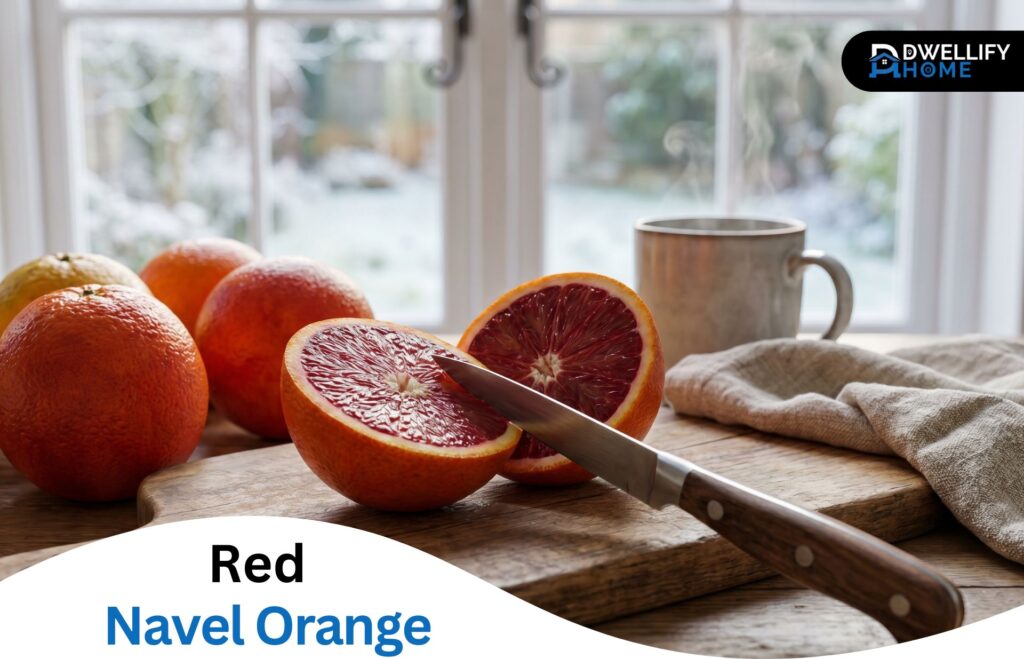
Cut one open in the middle of winter and the inside stops you — not the orange you expected, but something closer to a ruby grapefruit, with flesh ranging from soft salmon-pink to a deep, warm red. That’s the red navel orange. Most people have walked past them in the produce aisle without realizing they’re something genuinely different from the standard citrus on the shelf beside them.
This guide covers everything worth knowing: what sets this fruit apart from regular navels and blood oranges, what the nutrition actually looks like, when to buy one at peak quality, and — for anyone thinking about planting a tree — exactly what it takes to grow one at home.
Snippet-Ready Definition
A red navel orange — also called a Cara Cara orange — is a naturally occurring, seedless citrus variety with pinkish-red flesh, a sweet low-acid flavor, and higher Vitamin C than standard navels. It is chosen for its mild berry-like taste and impressive nutritional profile.
Mission Statement
At Dwellify Home, we help homeowners make confident, well-informed decisions — whether that means improving a living space, tending a garden, or understanding what to grow and eat at home. Our content is built on practical research, honest guidance, and a genuine respect for the reader’s time.
What Is a Red Navel Orange?
A red navel orange — most commonly known as the Cara Cara orange — is a naturally occurring, seedless variety of the Washington navel orange. It is distinguished by its pinkish-red interior flesh, which gets its color from lycopene, and its exceptionally sweet, low-acid flavor with subtle notes of berry and cherry. It is not a blood orange and it is not genetically engineered.
Where This Orange Actually Comes From
In 1976, on a plantation called Hacienda Cara Cara in Valencia, Venezuela, a grower noticed something unusual on one of his Washington navel trees. The fruit looked ordinary on the outside — same bright orange skin, same familiar shape — but when he cut it open, the flesh was distinctly pink. It was a spontaneous bud mutation, which in botanical terms means a natural, random change in a single branch that causes the fruit it produces to express different characteristics.
Nobody engineered this. Nobody crossed two varieties in a lab. The tree simply produced something new on its own, the way citrus occasionally does. By the 1980s, growers had propagated the variety through grafting, and California-grown Cara Caras began reaching U.S. specialty markets before eventually becoming the mainstream fruit they are today.
Why It’s Called a “Red” Navel Orange — and What Other Names You’ll See
The “red” refers entirely to the interior flesh, not the rind. The outside looks identical to any other navel orange — you genuinely cannot tell from the skin alone. The names “red navel orange,” “Cara Cara orange,” “pink navel orange,” and “Power Orange” all refer to the same variety. If you see any of those labels at a market or nursery, you’re looking at the same fruit.
Quick Comparison Table
| Feature | Red Navel Orange | Regular Navel Orange | Blood Orange |
| Flesh Color | Pink to reddish | Yellow-orange | Deep ruby to maroon |
| Flavor | Sweet, low-acid, berry notes | Sweet, moderately tart | Tart, slightly bitter |
| Pigment Source | Lycopene | Beta-carotene | Anthocyanins |
| Seedless | Yes | Yes | Yes |
| Vitamin C | ~20% higher than standard navel | Standard baseline | Comparable |
| Lycopene | Yes | No | No |
| Season | November – April | November – January | December – April |
| Best For | Fresh eating, juicing, salads | Snacking, general use | Cocktails, reductions, savory dishes |
Key Benefits at a Glance
- Contains lycopene — a rare antioxidant in citrus, also found in tomatoes
- Approximately 20% more Vitamin C than a standard navel orange
- Sweet, low-acid flavor that is gentle on sensitive stomachs
- Seedless and easy to peel — no prep friction
- Juice stays sweet longer after squeezing, unlike standard navel juice
- Self-pollinating tree that grows well in containers for home gardeners
- Available in most grocery stores from December through March
What Does a Red Navel Orange Look Like and Taste Like?
The Outside Looks Like Any Other Orange
The rind is bright orange, slightly pebbly in texture, and medium to large in size — typically 3 to 4.5 inches in diameter. Like all navel oranges, it has the characteristic indentation at the blossom end that gives the variety its name. There’s nothing about the exterior that signals what’s inside.
The Inside Is Where It Gets Interesting
Slice it open and the flesh ranges from soft salmon-pink to a deeper reddish tone, depending on the growing region and how far into the season the fruit was harvested. California fruit tends toward the deeper end; earlier-season South American fruit is often a lighter pink.
The flesh is seedless, minimally pithy, and separates cleanly from the rind. The segments are juicy and firm without being dry. Color depth can vary batch to batch, but the flavor stays consistent.
The Flavor — Sweet, Low-Acid, and Distinctly Berry-Like
The Cara Cara tastes noticeably sweeter and less tart than a standard navel. It carries subtle flavor notes of cherry, blackberry, and cranberry — sometimes a faint floral quality. The low acidity makes it gentler on the stomach than most citrus, which is why people who find regular oranges too sharp often take to Cara Caras immediately. The eating experience is softer and more layered, not sharp or one-dimensional.
Red Navel Orange vs Regular Navel Orange: What’s Actually Different?
Both are seedless, medium-sized winter oranges with bright orange rinds. Both peel and segment the same way. But the differences are real and worth knowing:
- Flesh color: Standard navels are yellow-orange inside; Cara Caras are pink to reddish
- Flavor: Standard navels are sweet with noticeable tartness; Cara Caras are sweeter, lower in acid, and berry-forward
- Vitamin C: Cara Caras contain approximately 20% more than standard navels
- Vitamin A: Cara Caras contain approximately 30% more
- Lycopene: Absent in standard navels; present in red navels at 2,500–5,000 µg per 100g
- Season: Both are winter fruits, but Cara Caras typically debut a few weeks later in the season
For most people, the flavor difference is the deciding factor. Side by side, the Cara Cara is noticeably rounder and less sharp — a meaningful distinction if you eat citrus regularly.
Red Navel Orange vs Blood Orange: How to Tell Them Apart
Both fruits have red-toned interiors, which is where most of the confusion starts. A red navel orange gets its color from lycopene, a carotenoid pigment. A blood orange gets its deep ruby-to-maroon color from anthocyanins — a completely different class of pigment. They are distinct varieties with different flavor profiles and different growing requirements.
The Science Behind the Color Difference
Lycopene produces a warm, salmon-pink to reddish tone that stays consistent throughout the flesh. Anthocyanins, the pigment in blood oranges, tend to appear in irregular streaks or patches — the flesh often looks marbled rather than evenly colored.
The intensity of a blood orange’s color is also strongly influenced by temperature. Blood oranges need cold nights to develop their deep red interior, which is why the same variety can look dramatically different depending on where it was grown. Cara Cara’s color comes from lycopene present regardless of nighttime temperature — it’s more stable.
How They Differ at the Table
Cara Caras are sweet, mild, and easy to eat fresh. They work well in salads, juices, and anywhere you want color without an aggressive flavor.
Blood oranges are more complex — tart, slightly bitter, with a distinct berry edge that holds up well in reductions, cocktails, and savory preparations where you want the orange to assert itself. Both are worth having in season, but they serve genuinely different purposes in the kitchen.
Are Cara Cara Oranges Genetically Modified?
No. Cara Cara oranges are not genetically modified. They originated as a spontaneous natural mutation on a standard Washington navel orange tree in Venezuela in 1976. There was no genetic engineering, no laboratory intervention, and no deliberate cross-breeding to produce them. The fruit is entirely natural.
A spontaneous bud mutation is simply a random change in cell division that causes one branch — and the fruit it produces — to express different characteristics. It happens in citrus more often than most people realize, and it’s how many widely grown orange varieties came to exist.
It’s also worth clearing up a common misunderstanding: seedlessness does not indicate genetic modification. All navel oranges are seedless, and they’ve been propagated through grafting for over two centuries. Grafting is a traditional agricultural practice with no genetic component.
Nutrition and Health Benefits of Red Navel Oranges
What One Red Navel Orange Actually Contains
Per 100g, a Cara Cara orange provides approximately:
- Vitamin C: 68–135 mg (75–150% of daily value)
- Fiber: 2.4–3g (9–11% DV)
- Potassium: 174–260 mg
- Vitamin A: 225 IU
- Folate (B9): 30–40 mcg
- Lycopene: 2,500–5,000 µg
- Calories: 47–52 kcal
These are honest, reference-based figures — no inflation. It’s a nutrient-dense, low-calorie fruit that earns its reputation without needing exaggeration.
Why Lycopene Makes This Orange Nutritionally Unusual
Lycopene is the same antioxidant compound responsible for the red color in tomatoes. It’s rare in citrus — the Cara Cara is one of the very few orange varieties that contains meaningful amounts of it.
As a carotenoid antioxidant, lycopene helps neutralize free radicals in the body. Research has linked consistent lycopene intake to reduced inflammation and lower risk of certain cardiovascular conditions. The exact benefit depends on overall diet, but its presence in this fruit is genuinely notable — not a marketing claim.
Key Health Benefits Worth Knowing
The nutrition translates to several practical health supports:
- Immune function: High Vitamin C content helps support immune response and can reduce the duration of common colds
- Heart health: Fiber, potassium, and antioxidants work together to support healthy blood pressure and reduce chronic inflammation
- Skin and tissue repair: Vitamin C is essential for collagen synthesis, which affects skin elasticity and wound healing
- Digestion: Soluble fiber feeds healthy gut bacteria and supports regularity
- Eye health: Vitamin A and carotenoids contribute to healthy vision and may help reduce age-related eye degeneration
- Iron absorption: Vitamin C significantly improves the body’s ability to absorb non-heme iron from plant-based foods
When Are Red Navel Oranges in Season?
Red navel oranges are an early-to-midseason citrus variety. South American sources begin supplying markets from around August. Venezuelan fruit arrives in October. California-grown Cara Caras make their seasonal debut in late November and remain available through April. In most U.S. grocery stores, peak availability falls between December and March.
Buying early in the season — December through February — gives you the best flavor and deepest color. Late-season fruit can still be decent, but it’s often drier and less vibrant. At the store, feel for weight before anything else; a fruit that feels heavier than expected for its size is almost always the juicier one.
How to Choose, Store, and Get the Most Out of Them
What to Look for When Buying Red Navel Oranges
Pick it up first. A good Cara Cara should feel heavier than you’d expect for its size. The skin should be smooth, firm, and slightly shiny, with no soft spots or wrinkled patches. A fresh citrus scent at the stem end is a reliable sign of quality.
Avoid fruit with loose, puffy skin — it often means the flesh has dried out inside. Visible mold, a fermented smell, or a dull, overly rough texture are signs of poor storage or late-season decline.
How to Store Them at Home
Whole fruit kept at room temperature lasts about one week. Refrigerated, they’ll stay fresh for two to three weeks — store them loose in the crisper drawer rather than sealed in a bag, which can trap moisture and accelerate spoilage.
Once peeled or cut, refrigerate in a sealed container and use within three to four days. Freshly squeezed juice keeps well for up to two days before the flavor starts to fade.
The Best Ways to Use Them in the Kitchen
Cara Caras are excellent for fresh eating — the low acidity makes snacking easy, without the sharp bite some citrus leaves behind. They’re also one of the better juicing oranges available in winter, and there’s a practical reason for that.
Unlike standard navel oranges, Cara Cara juice doesn’t turn bitter when exposed to air. Standard navels contain limonin in the flesh, which oxidizes and causes bitterness. In Cara Caras, the limonin is concentrated in the rind, not the flesh — so the juice stays sweet longer. That makes it a good choice if you’re preparing juice ahead of a meal.
Beyond fresh and juiced, they’re well-suited to winter salads with arugula, fennel, and goat cheese; citrus vinaigrettes; roasted poultry and grilled fish; baked goods like muffins and quick breads; and cocktails or mocktails where the pink color adds visual appeal. The zest is also fragrant and worth using when a recipe calls for orange peel.
Can You Grow a Red Navel Orange Tree at Home?
Yes. Cara Cara orange trees can be grown at home in USDA hardiness zones 9–11 in the ground, or in containers in cooler climates where they can be moved indoors during winter. They are self-pollinating, which means a single tree is enough to produce fruit. In the right conditions, they’re manageable, productive, and genuinely attractive as garden or patio trees.
What Climate and Growing Zone Does It Need?
In-ground growing works reliably in USDA zones 9–11, where winters stay mild. The tree prefers temperatures between 60–85°F and can handle brief cold snaps, but hard frost will damage both foliage and developing fruit.
If you’re in zone 8 or below, container growing is the practical route — and it works well. You lose some size potential, but you gain the ability to control the tree’s environment through the year.
Sunlight, Soil, Water, and Feeding
- Sun: At least 6–8 hours of direct sunlight daily — this is the single most important factor for fruit production
- Soil: Well-draining loamy or sandy mix, pH 6.0–7.0; heavy clay or compacted soil causes persistent root problems
- Water: Deep watering once or twice weekly; let the top inch of soil dry out before the next session; overwatering is the most common mistake home growers make
- Fertilizer: Use a citrus-specific, balanced N-P-K formula (6-6-6 or 8-8-8), applied 3–4 times per year during active growth; include micronutrients — iron, zinc, and manganese; stop fertilizing by late summer to avoid pushing frost-vulnerable new growth before winter
Growing in a Container — The Practical Option for Most Home Gardeners
Choose a container at least 15–20 gallons in size with strong drainage. Use a well-draining citrus or cactus mix rather than standard potting soil, which tends to compact over time and retain too much moisture.
Container trees can be maintained at 6–8 feet with regular pruning, making them workable for patios and covered outdoor areas. In fall, begin moving the tree to a sheltered location before overnight temperatures drop below 40°F. Do this gradually — over one to two weeks — rather than all at once. Sudden environment changes cause leaf drop, which stresses the tree heading into winter.
Indoors through the colder months, position the tree near the best available window. South-facing is ideal. Supplemental grow lights help noticeably if natural light is limited.
When Will the Tree Start Producing Fruit — and How Do You Know It’s Ready?
A grafted Cara Cara tree typically begins fruiting within two to three years of planting. Trees grown from seed take considerably longer and often don’t produce fruit that matches the parent variety. Always buy a grafted tree if reliable, predictable fruit is the goal.
Fruit matures December through February in most growing regions. Ripe Cara Caras have deep orange skin, feel firm with a very slight give under gentle pressure, and carry a noticeable fragrance at the stem end.
The most reliable test is tasting one fruit first. Citrus doesn’t continue to ripen after it’s picked — unlike stone fruit or bananas — so sampling before harvesting the full crop is worth the extra few seconds.
Common Problems to Watch For
The issues that come up most consistently with home-grown citrus:
- Spider mites: Cause stippling and pale patches on leaves; treat with insecticidal soap or neem oil
- Aphids: Cluster on new growth; knock off with a firm stream of water or apply neem oil
- Citrus leafminer: Produces curling, silver-streaked tunnels on young leaves; more cosmetic than fatal but worth managing on young trees
- Scale insects: Look for bumpy, waxy patches on stems and undersides of leaves; horticultural oil applied in spring handles most infestations
- Root rot: The most common and preventable cause of container tree failure; almost always triggered by overwatering or poor drainage
If the soil is still wet two to three days after watering, something in your drainage setup needs to change before root rot takes hold.
Frequently Asked Questions About Red Navel Oranges
Q1: Are red navel oranges and Cara Cara oranges the same thing?
Yes, completely. “Red navel orange,” “Cara Cara orange,” “pink navel orange,” and “Power Orange” are all names for the same variety — Citrus sinensis ‘Cara Cara.’ The different labels come from different markets and suppliers, but the fruit is identical.
Q2: Why is the inside of a Cara Cara orange pink or red?
The color comes from lycopene, a carotenoid pigment that this variety produces naturally. It’s the same compound that gives tomatoes their red color. The Cara Cara is one of the rare citrus varieties that produces lycopene, which is also why its color is even and consistent rather than streaky or patchy.
Q3: How do red navel oranges compare to blood oranges nutritionally?
Both are nutritious, but they contain different antioxidants — Cara Caras have lycopene while blood oranges have anthocyanins. Cara Caras are generally higher in Vitamin C and Vitamin A than standard navels. In terms of calories, fiber, and potassium, the two fruits are broadly comparable.
Q4: Can you grow a red navel orange tree indoors?
You can, but fruit production indoors is limited without consistent, strong light. Most home growers get better results keeping the tree outdoors in warm months and moving it inside only for winter. A south-facing window with supplemental grow lights is the most practical indoor setup if you want the tree to remain productive.
Q5: Is red navel orange juice better for you than regular orange juice?
It has some advantages. Cara Cara juice contains more Vitamin C and Vitamin A than standard navel juice, plus lycopene, which standard navels don’t provide. It also stays sweet longer after squeezing, because the limonin that causes bitterness in standard navel juice is confined to the Cara Cara’s rind rather than its flesh.
Q6: How do red navel oranges compare to grapefruit?
The pink interior color causes confusion, but these are entirely different fruits. Red navels are sweet, low-acid, and mild. Grapefruit is bitter, more astringent, and considerably lower in natural sugar. Nutritionally, grapefruit contains naringin — the compound behind its distinctive bitterness — which Cara Caras don’t. They belong to different species and behave very differently in the kitchen.
Q7: What is the difference between a red navel orange and a blood orange?
A red navel orange gets its pink-red flesh from lycopene, a carotenoid pigment. A blood orange gets its deep ruby color from anthocyanins — a different antioxidant class. Red navels are sweet and mild; blood oranges are more tart with a bitter edge. They are distinct varieties despite both having red-toned interiors.
Q8: What is the difference between an orange and a red orange?
A standard orange has yellow-orange flesh and a moderately tart, sweet flavor. A red orange — such as a Cara Cara or blood orange — has reddish interior flesh due to specific pigments not present in common varieties. Red oranges also tend to carry more complex flavor notes and, in the case of Cara Caras, higher levels of certain nutrients like Vitamin C and lycopene.
Q9: Are red navel oranges healthy?
Yes. Red navel oranges provide 75–150% of the daily recommended Vitamin C per 100g, along with fiber, potassium, Vitamin A, folate, and lycopene — a carotenoid antioxidant rare in citrus. They support immune function, heart health, digestion, and skin repair, all in a low-calorie fruit.
Q10: Which navel oranges are the sweetest?
Cara Cara navel oranges are widely considered the sweetest of the navel varieties. Their lower acidity compared to standard Washington navels allows the natural sweetness to come through more clearly, accompanied by subtle notes of cherry and blackberry. Late-season California-grown Cara Caras, harvested between January and March, tend to express the deepest sweetness.
Conclusion
The red navel orange is one of those fruits that earns more attention the closer you look. It has a flavor that’s genuinely softer and more layered than a standard orange, a nutritional profile with a few real advantages, and a tree that’s manageable for home gardeners willing to meet its basic requirements.
Whether you’re picking one up at the grocery store this season or thinking about adding a Cara Cara tree to your patio or garden, the decisions aren’t complicated. Buy heavy, fragrant fruit early in the season. Store it cool. Give the tree full sun, good drainage, and room to establish — and it will produce reliably for years.
Disclaimer
The content published on Dwellify Home is intended for general informational purposes only. While we work to ensure accuracy, individual results, growing conditions, and nutritional needs may vary. This content does not substitute for professional horticultural, medical, or dietary advice. Always consult a qualified professional for guidance specific to your circumstances.