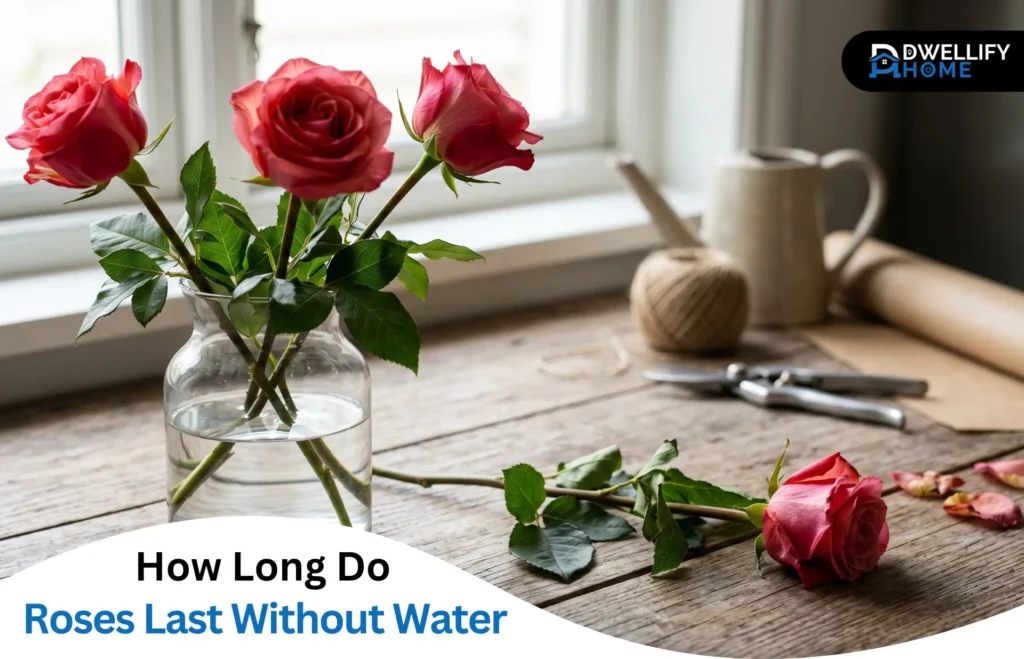
Roses are surprisingly tough for something so delicate-looking. They can hold themselves together for a few hours after being cut, even with no water in sight. But there’s a tipping point most people don’t see coming, and once it passes, the bouquet is usually gone for good. The honest answer to how long do roses last without water depends on a handful of small things most people never think about — the room they’re sitting in, how fresh they were to begin with, and what’s happening to the stem at that exact moment.
This guide walks through everything that actually matters, in plain language, based on what really happens to roses in real homes, real cars, and real wedding setups.
Snippet-Ready Definition
Cut roses typically last 4 to 6 hours without water before they start wilting. In cool, humid conditions, they may stay fresh up to 12 hours, while heat or direct sun shortens that window to 1–3 hours.
Mission Statement
At Dwellify Home, we help homeowners make practical, stylish, and well-informed decisions about modern living — from everyday home solutions and garden care to thoughtful lifestyle choices that turn any space into a place that truly feels like home.
The Short Answer — How Long Do Roses Last Without Water?
Most cut roses last around four to six hours without water before they start to wilt in a noticeable way. In a cool, humid room, you can sometimes stretch that to ten or twelve hours. In direct sun or a warm car, you’re looking at one to three hours before the heads start drooping.
That window is short, and it’s the single most important thing to remember. Roses don’t slowly fade — they hold up fine and then collapse fairly fast. The faster you can get them back into water, the better your chances of saving them.
Quick Reference Guide — Roses Without Water
| Condition | How Long They Last |
| Cool, humid room | 8–12 hours |
| Normal room temperature | 4–6 hours |
| Hot car or direct sun | 1–3 hours |
| Inside a fridge | Up to 24 hours |
| Wrapped bouquet (paper/cellophane) | 6–8 hours |
| Plucked rose petals (cool, dry) | Up to 3 days |
Quick Takeaways
- Roses don’t fade slowly — they hold up, then wilt fast once the tipping point hits
- Heat doubles moisture loss for every 10°F rise in temperature
- Wrapping stem ends in a damp paper towel adds 4–6 hours of safe time
- Fridge storage slows wilting more than any other home method
- Recutting stems at a 45° angle is the single most effective revival step
What Happens to Roses Without Water — An Hour-by-Hour Timeline
Roses don’t die all at once. There’s a quiet stretch where they look perfectly fine, then a middle phase where things shift, and then a point of no return. Knowing where your bouquet sits on this timeline helps you decide whether to act fast or accept that they’re done.
First Few Hours — Internal Moisture Reserves Hold
For the first hour or two, a freshly cut rose looks unchanged. The petals stay firm, the head sits upright, and the stem feels strong. That’s because the flower still has water inside its tissue from before it was cut, and it’s living off that reserve.
This is the safest window. Roses transported during this period — say, from the shop to your home — almost always recover fully once they hit a vase.
4 to 12 Hours — Wilting Becomes Visible
Somewhere around the four-hour mark, things start to change. The neck of the rose, just below the bloom, is usually the first part to soften. You’ll see the head tilt slightly, almost like it’s tired.
By the eight-to-twelve-hour mark, the petals lose their tightness, the outer ones may curl, and the whole bouquet starts to look heavy and sad. Recovery is still possible at this stage, but it takes some work.
12+ Hours — Damage Becomes Permanent
Past twelve hours without water, most roses cross into damage that won’t fully reverse. The stems form air pockets at the base, blocking water from being absorbed even if you put them in a vase. Petals turn translucent or papery, and brown edges show up.
You can sometimes revive a few stems, but the bouquet won’t look the way it did. After a full day with no water, most roses are beyond saving.
Key Factors That Decide How Long Roses Last Without Water
Two bouquets cut on the same day can behave completely differently depending on where they end up. The conditions around them matter just as much as the rose itself.
Temperature, Sunlight, and Air Circulation
Heat is the fastest killer. Every ten-degree increase roughly doubles how quickly a rose loses moisture. A rose that lasts six hours at seventy degrees might collapse in two hours at eighty-five.
Direct sun is worse than ambient heat because it warms the petals directly. Strong drafts — from open windows, fans, or air conditioning vents — also pull moisture out faster than people expect.
Humidity and Surrounding Conditions
Dry air is rough on cut flowers. In a humid room, roses release moisture slowly because the surrounding air is already saturated. In dry, air-conditioned spaces, they dehydrate much faster.
This is why roses survive longer in a bathroom than in a living room with the heater running. The shower steam from earlier in the day actually helps.
Rose Variety and How Fresh They Were Before Cutting
Hardier varieties like Ecuadorian roses and spray roses tend to handle dry time better than soft, ruffled garden roses. Thicker stems and tighter petals simply hold moisture longer.
The other half of this is freshness. A rose that was cut yesterday and kept cool will outlast one that’s been sitting in a shop bucket for five days. The starting condition you can’t see is often the biggest factor in how long they survive once they leave water.
How Long Do Roses Last Without Water in Different Situations?
Real life rarely matches “ideal conditions.” Most people are dealing with a specific scenario — a forgotten bouquet, a long drive, a fridge experiment. Here’s what actually happens in each case.
Roses Left Out Overnight
A bouquet left on the counter overnight in a normal room usually shows clear wilting by morning. If the room is cool, between sixty and sixty-five degrees, you might find them looking tired but salvageable. In a warm room, they’re often past the point of full recovery.
The trick with overnight situations is to lay them flat on a kitchen towel rather than leaving them upright with no support. It slows down moisture loss from the head.
Roses Inside a Hot or Cold Car
A car in summer becomes a death trap for roses within thirty minutes. Interior temperatures climb past 100°F quickly, and the flowers wilt visibly in under an hour. Even with the windows cracked, summer car transport without water is brutal.
A cool, air-conditioned car ride is much kinder, and so is a winter ride if the temperature stays above freezing. But never leave a bouquet in a freezing car — that’s its own kind of damage, and the petals turn brown and translucent within hours.
Roses Stored in the Fridge Without Water
The fridge slows everything down. Cold temperatures lower the rose’s metabolism, so it loses moisture much more slowly. A rose that would last six hours on a counter can sometimes last a full day in a fridge, even without water.
Just keep them away from fruit drawers — fresh produce gives off ethylene gas, which ages flowers faster. And don’t let petals touch the back wall, where temperatures dip lower.
Wrapped Bouquets and Plucked Rose Petals
A bouquet still in its paper or cellophane wrap holds up better than bare stems. The wrap traps a small amount of humidity around the flowers and slows transpiration.
Plucked rose petals are different. Once separated from the stem, they can last up to three days if kept somewhere cool and dry. That’s why florists store petals in flat, ventilated trays rather than sealed containers.
Cut Roses vs. Roses in the Ground — Why the Difference Is Huge
This is where searches often get mixed up. Cut roses and garden roses live in completely different worlds.
A rose still rooted in the ground can go several days, sometimes a couple of weeks, without watering — depending on soil moisture, weather, and the maturity of the plant. They have an entire root system pulling residual water from deep in the soil. They’ll wilt in a heatwave, but they bounce back when watered.
Cut roses have no such backup. The moment the stem leaves the plant, it’s running on borrowed time. So when someone asks how long roses last without water, the answer depends entirely on whether the roots are still attached.
Roses With Water vs. Without Water — A Quick Comparison
The gap between watered and dry is dramatic. Here’s how it stacks up:
- In water with proper care: 7 to 14 days, sometimes longer for premium varieties
- In water without recutting or refreshing: 4 to 6 days before serious decline
- Out of water in a cool room: 6 to 12 hours
- Out of water at room temperature: 4 to 6 hours
- Out of water in heat or direct sun: 1 to 3 hours
That’s why florists keep roses in water at every single stage — from the farm to delivery to your hands. Even a one-hour stretch out of water cuts into total vase life later.
How Roses Compare With Tulips and Other Cut Flowers
Roses are actually one of the more durable cut flowers when it comes to handling dry time. Other species behave differently.
Tulips are surprisingly fragile out of water. They start wilting within an hour or two, and tulips in a car during summer often go limp before you reach your destination. Hydrangeas are even more sensitive — sometimes thirty to sixty minutes is all it takes.
Carnations are the toughest of the common bouquet flowers, often lasting up to twelve hours without water. Lilies sit in the middle, around six to eight hours. So when you’re transporting a mixed bouquet, the weakest flower sets your time limit, not the strongest.
How to Keep Roses Alive Without Water — Emergency Care Tips
When you can’t get them in a vase right away, a few small steps make a real difference:
- Wrap the stem ends in a damp paper towel and secure with a rubber band. This is the single most effective thing you can do.
- Slip the wrapped stems into a plastic bag to lock in humidity, but leave the bouquet head exposed to airflow.
- Find the coolest spot you can — a basement step, a tiled bathroom floor, the shaded side of a room. Avoid windowsills.
- Keep them away from heat vents, ovens, and direct sunlight. Even brief exposure speeds up wilting.
- Don’t store them near a fruit bowl. Apples, bananas, and avocados release ethylene gas as they ripen, which makes flowers age faster.
Done well, this can buy you another four to six hours of viability easily.
How to Revive Roses That Have Already Wilted
A drooping rose isn’t always a lost cause. The recovery rate is higher than most people expect, as long as you act before too much time passes.
Recut the Stems and Try the Warm Water Method
Take each stem out, hold it under running water, and snip off about an inch at a forty-five-degree angle. This removes the dried, sealed end that’s blocking water from moving up.
Fill a clean vase with warm water — somewhere between 100 and 110°F. Warm water travels through the stem faster than cold water. Place the recut stems in immediately and leave them somewhere cool for thirty to sixty minutes. A lot of roses perk up visibly within the hour.
When a Rose Is Truly Beyond Saving
Some signs mean the rose isn’t coming back. If the petals feel slimy or papery, if the stem has gone soft and mushy, or if the bloom head is fully bent at a sharp angle and feels limp to the touch, recovery is unlikely.
Brown, translucent petals that have started shedding are also a clear end-of-life signal. At that point, save the healthy stems, dry the rest as decoration, and let the bouquet go.
Common Mistakes That Shorten How Long Roses Last Without Water
A lot of bouquets die earlier than they should because of small mistakes that feel harmless. The ones that come up most often:
- Standing them upright with stems exposed to air. Lay them flat on a damp towel instead — gravity pulls moisture out of upright cut stems faster.
- Sealing them entirely in plastic. This traps heat and condensation, leading to mushy petals.
- Setting them on a kitchen counter near fruit. Ethylene damage happens quietly and quickly.
- Placing them under a ceiling fan or AC vent. Constant airflow drains moisture out of the petals.
- Packing them too tightly. Squashed petals bruise and brown. Roses need a little space to breathe.
- Forgetting to recut the stems before putting them in water later. A dried-out stem end won’t drink, no matter how fresh the water is.
Frequently Asked Questions About Roses Without Water
How long do roses last without water overnight?
Usually six to ten hours in a cool room, less in a warm one. Most roses survive an overnight stretch but show clear wilting by morning. Recutting the stems and placing them in water often brings them back.
Can roses last 24 hours without water?
Some can, especially in a fridge or a very cool, humid space. At room temperature, twenty-four hours is past the point where most roses recover fully.
Do roses last longer in the fridge without water?
Yes — significantly longer. Cold slows transpiration, which is why florists refrigerate roses overnight. Just keep them away from fresh produce.
How long do roses last in the ground without watering?
Garden roses can typically go several days to a couple of weeks without watering, depending on soil quality, weather, and how established the plant is. They’ll wilt in droughts but recover with a deep watering.
Can wilted roses come back to life?
Often, yes, if you catch them within twelve hours. Recut the stems at an angle, use warm water, and give them an hour. Roses past twenty-four hours without water are harder to save.
How long can flowers and tulips go without water in a car?
Tulips wilt the fastest, often within an hour or two. In a hot car, that drops to thirty minutes. Roses do slightly better — two to three hours in moderate heat — but no flower handles a warm parked car well.
How long can I leave my roses without water?
Most roses safely handle 4 to 6 hours without water at normal room temperature. In a cool room, you can stretch that to 10 or 12 hours. After the 12-hour mark, recovery becomes uncertain and quality drops fast.
Can roses survive 2 days without water?
At room temperature, no — most roses are past saving after 24 hours dry. In a fridge, they sometimes hold up close to two days because the cold slows moisture loss, but the bouquet quality usually drops noticeably.
What is the 3-5-8 rule in flower arrangement?
It’s a basic composition guideline used by florists: three focal blooms (like roses), five secondary flowers for support, and eight accents or fillers for balance. It applies to arrangement design, not flower lifespan or water care.
How long should a bouquet of roses last?
With clean water, fresh angled cuts, and a cool spot, a rose bouquet typically lasts 7 to 10 days. Premium varieties like Ecuadorian or spray roses can stretch to 12 to 14 days with consistent care.
Do roses last longer in the fridge without water?
Yes. Cold lowers transpiration, so roses can survive nearly twice as long in a fridge compared to a counter. Just keep them away from fresh produce, since ethylene gas from fruit ages flowers faster.
Conclusion
The full story behind how long do roses last without water comes down to three things: the temperature around them, how fresh they were when they left water, and how quickly you act when you spot the first signs of wilting. Most roses have a four-to-six-hour window in normal conditions, and that stretches or shrinks based on heat, humidity, and handling.
If there’s one habit that makes the biggest difference, it’s getting them back into clean water with a fresh angled cut as soon as possible. Roses are forgiving when you give them a chance — and most of the time, they just need water and a cool spot to look like new again.
Disclaimer
This article is for general informational purposes only. Results may vary based on flower variety, environmental conditions, handling, and individual care routines. Always use your own judgment when caring for fresh flowers and delicate household items.