
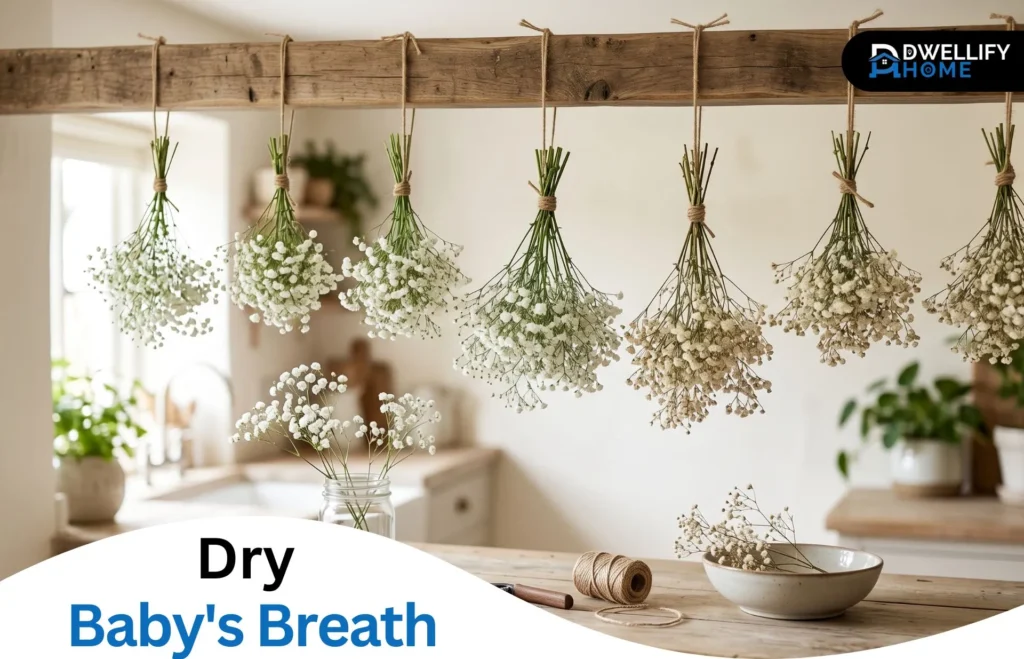
Baby’s breath is one of those flowers that almost begs to be preserved. The tiny white blooms hold their shape long after most other flowers have wilted, and with the right approach, you can keep a bunch looking soft and beautiful for a year or more. That’s exactly why drying baby’s breath has become such a quiet favourite among brides keeping a piece of their bouquet, and homeowners who want low-maintenance decor that still feels alive.
What most beginners don’t realise is that getting it right comes down to small details. The room you choose, the size of your bunches, and even the time of day you cut the stems all affect how the final result looks. Get those right and the flowers practically dry themselves.
This guide walks through everything that actually matters, based on what works in real homes and real conditions.
The Short Answer
Drying baby’s breath is the process of preserving fresh gypsophila stems by removing their moisture, usually through air drying, silica gel, or microwave methods. It keeps the delicate white blooms intact for long-lasting home decor, wreaths, and keepsake arrangements.
Mission Statement
At Dwellify Home, we help homeowners make practical, stylish, and informed decor decisions through clear, well-researched guides built around how people actually live, decorate, and care for their spaces.
Why Baby’s Breath Is Ideal for Drying and Preservation
Most flowers struggle to dry well because they hold too much water in their petals. Baby’s breath is different. The blooms are tiny, the stems are wiry, and the flower already has a slightly papery quality even when it’s fresh. That’s a head start most flowers can’t match.
You also get to keep its character. Roses flatten, hydrangeas turn crispy, and tulips lose their colour completely. Baby’s breath dries with its cloud-like volume mostly intact, which is why it works so well in dried bouquets, wreaths, and minimalist vase arrangements. A single dried bunch on a shelf still looks soft and full from across the room.
There’s a practical bonus too. It’s affordable, easy to find, and forgiving. Even if your first attempt isn’t perfect, you’ll usually still end up with something worth keeping.
Quick Method Comparison
| Method | Time Needed | Best For |
| Air Drying | 2–3 weeks | Natural shape and softness |
| Vase Drying | 2–4 weeks | Upright, arrangement-ready stems |
| Silica Gel | 4–7 days | Preserving color and shape |
| Microwave | 2–4 minutes | Quick craft projects |
| Pressing | 2–4 weeks | Flat decor, frames, resin |
Key Benefits of Drying Baby’s Breath
- Lasts one to three years with simple care
- Keeps its soft, cloud-like shape after drying
- Works for wreaths, vases, gift wrap, and keepsakes
- Affordable, low-maintenance home decor option
- Easy enough for first-time beginners to try
When to Harvest or Buy Baby’s Breath for Drying
The freshness of the stems at the start decides almost everything that comes after. If you’re cutting your own from the garden, early morning is best, after the dew has lifted but before the sun heats up the blooms. The flowers hold the right amount of moisture at that point, not too much, not too little.
Look for stems where roughly half the florets are open and the rest are still tight buds. Fully bloomed bunches will shed heavily once dried. And anything already showing brown tips won’t recover, that browning will only deepen during the drying process.
When buying from a florist or supermarket, the same rule applies. Skip bunches that look tired or have any yellowing. A fresh, bright white bunch dries into a bright white dried bunch. A dull one dries into a dull one. There’s no fixing it later.
What You’ll Need to Get Started
You don’t need anything fancy. A pair of sharp scissors or pruning shears for clean cuts, some twine or a few rubber bands to bundle stems, and a hook, hanger, or string to hang them from.
A bottle of unscented hairspray or a clear floral sealant is useful at the end to control shedding, though it’s optional. If you’re planning to try silica gel or microwave drying later in the process, you’ll also want fine silica gel crystals and an airtight container.
That’s it. The rest comes down to choosing the right spot in your home, which matters far more than any tool you buy.
Step-by-Step Guide to Air Drying Baby’s Breath at Home
Air drying is the method I recommend to almost everyone starting out. It’s reliable, it costs nothing, and it produces the most natural-looking result. The whole process takes around two to three weeks, but most of that is just waiting.
Prepare and Trim the Stems
Start by stripping off any leaves along the lower part of the stems. Leaves hold moisture, and moisture is what causes mould to develop in the middle of a bunch. This step takes a couple of minutes and saves a lot of frustration later.
Then re-cut the stem ends at a slight angle with sharp scissors. A clean cut matters because crushed stems can trap dampness inside, slowing the drying process unevenly.
Bundle and Secure Small Bunches
Gather five to seven stems together, no more. This is the single mistake I see most often, people make giant bundles thinking it’ll save time, and the flowers in the centre stay damp for weeks while the outer ones dry too fast.
Wrap the base tightly with a rubber band rather than twine. As stems shrink during drying, a rubber band keeps tightening with them. Twine slowly loosens, and you’ll come back to find half your bundle on the floor.
Hang Upside Down in a Dark, Dry Spot
The drying location matters more than people realise. You want somewhere dark, dry, and well-ventilated. Sunlight bleaches the flowers and turns them yellowish brown. A humid room invites mould.
A spare wardrobe, a quiet corner of a guest room, or even a clean attic works well. Hang the bundles upside down with enough space between them so air moves freely around each one. If they touch, they don’t dry evenly.
One thing worth knowing: baby’s breath releases ethylene gas as it dries. It’s harmless to people, but it can cause nearby fresh flowers to wilt faster. So don’t dry it in the same space as cut flowers you’re trying to keep alive.
Check for Dryness and Apply a Light Finish
After about two weeks, gently touch the blooms. They should feel papery and crisp, not soft or flexible. The stems should snap rather than bend. If anything feels even slightly damp, give it a few more days.
Once fully dry, a light mist of unscented hairspray held about 30 cm away helps reduce shedding without making the flowers look sticky or stiff. One quick pass is enough. Spraying too heavily will dull the texture and weigh the blooms down.
Other Effective Methods to Dry Baby’s Breath
Air drying isn’t the only option, and depending on what you’re trying to achieve, another method might suit you better.
Vase Drying (The No-Water Method)
This is the laziest method, and I mean that as a compliment. Put fresh baby’s breath in a vase with about an inch of water and just leave it there. The flowers slowly drink the water, and as it evaporates, they dry in place while still standing tall.
The result keeps a more natural, upright look compared to hanging. It works best in a dry indoor room, and yes, you really can dry baby’s breath in a vase, even without water at all if humidity is low.
Silica Gel for Color Preservation
When colour retention matters, silica gel is the better option. It’s especially worth using for dyed baby’s breath or any sentimental bunch where you want the original shade to stay sharp.
Place the stems in an airtight container, pour fine silica crystals around and gently over the blooms until they’re fully covered, and seal the lid. After four to seven days, lift them out carefully and brush off any leftover crystals with a soft brush. The result looks remarkably close to fresh.
Microwave Drying for Quick Results
This is the fastest method and the one to use when patience isn’t on your side. People often ask about drying baby’s breath overnight or even quicker, and microwave drying is the only real answer.
Place a few sprigs between two sheets of paper towel, microwave in 30-second bursts on medium, and check between each round. Most bunches finish in two to four minutes total. The flowers come out fragile, so handle them gently. This method isn’t ideal for large quantities, but for a small craft project, it’s hard to beat.
Pressing and Glycerin for Specialty Uses
Pressing works beautifully when you want flat baby’s breath for cards, frames, or resin work. Lay the stems between sheets of parchment paper inside a heavy book and leave them undisturbed for two to four weeks.
Glycerin preservation is a different approach altogether. Mix one part glycerin with two parts warm water and stand the stems in the solution for one to two weeks. Instead of becoming brittle, the flowers stay soft and pliable, almost lifelike. It’s a slower method, but the texture is closer to fresh than any other technique.
How to Care for Fresh Baby’s Breath Before Drying
If your flowers arrive a few days before you plan to dry them, a little care now affects how well they dry later.
Trim the stem ends at an angle, remove the lower leaves, and place them in clean water with a small amount of flower food. Change the water every two days. Keep them away from direct sunlight and any fruit bowls, ripening fruit gives off ethylene that ages flowers faster.
Don’t mist the blooms, even though it’s tempting. Misting baby’s breath causes the tiny florets to brown at the edges. Just let them sit, drink, and stay fresh until you’re ready.
How to Store and Maintain Dried Baby’s Breath the Right Way
Once your baby’s breath is fully dry, where you keep it matters as much as how you dried it. The two enemies are sunlight and humidity. Sunlight fades the white into a tired beige within months, and humidity can soften the petals or invite mould.
For storage, a breathable cardboard box in a cool cupboard works better than airtight plastic, which can trap any leftover moisture. If you’re displaying the bunch, keep it away from windows, bathrooms, and kitchen steam.
For cleaning, never use water. A soft makeup brush or a hairdryer on the cool, low setting is enough to remove dust. A quick dust every couple of months keeps the bunch looking crisp.
How Long Does Dried Baby’s Breath Last?
With proper drying and storage, dried baby’s breath can last one to three years comfortably. The shape and structure hold up well across that time, but the colour is the first thing to change.
Pure white tends to stay bright for the first two to three months, then slowly shifts toward a soft cream or ivory. After about a year, you’ll notice a faint warm tone setting in. That’s normal, and many people actually prefer the aged look for rustic interiors.
If absolute white matters, plan to refresh the arrangement every six months or so. Otherwise, just enjoy the way it changes over time, that gentle ageing is part of why dried flowers feel so different from artificial ones.
Common Mistakes to Avoid When Drying Baby’s Breath
A few small errors are responsible for most failed batches I’ve seen over the years.
- Bundles that are too thick. Five to seven stems is the right size, anything bigger leads to mouldy centres.
- Drying near other fresh flowers. The ethylene gas baby’s breath releases will speed up wilting in nearby cut flowers.
- Skipping the leaf-removal step. Leaves trap moisture and rot before the flowers finish drying.
- Choosing a humid bathroom or kitchen. Even with ventilation, humidity ruins the result.
- Spraying too much hairspray at the end. A light mist helps; a heavy coat ruins texture and adds shine.
Avoid these and you’ve already done better than most first-time attempts.
Is Baby’s Breath Toxic? Safety Around Pets and Children
This is something most drying guides skip, but it’s worth knowing. Baby’s breath contains compounds called saponins, which can cause mild irritation if eaten. For dogs, cats, and young children, ingestion may lead to vomiting or an upset stomach.
It’s not life-threatening in small amounts, but worth keeping out of reach if you have pets that nibble on plants or toddlers who explore with their mouths. Once dried, the risk doesn’t disappear, dried fragments can still be chewed and swallowed.
Place dried arrangements on higher shelves, mantelpieces, or wall-mounted displays, and you’ll have nothing to worry about.
Creative Ways to Use Dried Baby’s Breath at Home
Once you’ve got a few dried bundles, the styling options open up considerably.
A tall, simple vase with two or three loose bunches makes a quiet statement on a side table. Wreaths are a natural fit for front doors or above beds, and the lightweight stems make them easy to hang. For weddings or anniversary keepsakes, a small framed sprig under glass keeps the memory protected for years.
Smaller pieces work wonderfully tucked into gift wrapping, woven into garlands across a mantelpiece, or set into clear resin for jewellery and coasters. The same dried bunch that gave a wedding its dreamy backdrop can quietly age into a piece of home decor that lasts long after the day itself.
Frequently Asked Questions About Drying Baby’s Breath
Can you dry baby’s breath that’s already in a bouquet?
Yes, and it’s one of the most common reasons people dry it in the first place. Untie the bouquet, separate the baby’s breath stems from the other flowers, and treat them as their own bundle. Drying mixed flowers together rarely works because each type needs different conditions.
Why is my baby’s breath turning brown instead of white?
Browning usually means the flowers were either harvested too late, dried in too much light, or exposed to humidity. Once the colour shifts, it doesn’t come back. Start fresh next time with brighter stems and a darker, drier room.
Do you need to wash baby’s breath before drying?
No, and you shouldn’t. Adding water to flowers you’re about to dry only slows the process and increases mould risk. If there’s visible dust, give the bunch a gentle shake outside instead.
What is the best way to dry baby’s breath?
Air drying is the most reliable method. Bundle five to seven stems, hang them upside down in a dark, dry, well-ventilated room, and wait two to three weeks until the blooms feel papery to the touch.
How do you dry out gypsophila?
The same way you dry baby’s breath, since gypsophila is its botanical name. Strip the lower leaves, tie small bundles, and hang them in a dim, low-humidity space until fully crisp.
What are common mistakes when drying flowers?
The biggest ones are making bundles too thick, drying in humid rooms, leaving leaves on the stems, and exposing the flowers to direct sunlight. All four cause browning, mould, or uneven drying.
Does baby’s breath flower dry well?
Yes, very well. Its tiny blooms and naturally papery texture mean it holds shape and colour better than most flowers, which is why it’s one of the easiest options for beginners.
How long does dried baby’s breath last?
With proper storage away from sunlight and humidity, dried baby’s breath stays beautiful for one to three years. The white slowly softens to cream after a few months, but the shape holds up far longer.
Conclusion
Drying baby’s breath is one of those small skills that pays off for years. Once you’ve done it a couple of times, you stop thinking about it as a project and start treating it as a natural extension of bringing flowers home. A bouquet you’d otherwise toss in a week becomes something you keep on a shelf for two years.
The whole craft really comes down to three things: start with fresh stems, choose the right spot, and don’t rush the process. Get those right, and the flowers will reward you with a soft, lasting beauty that’s hard to find in anything else you can buy.
Disclaimer
The content on Dwellify Home is provided for general informational purposes only. Results, preferences, and individual situations may vary depending on environment, materials, and personal style choices. Always use your own judgement when applying any tips or methods shared in our guides.