A hot water bottle looks simple: add hot water, tighten the stopper, and enjoy the warmth. Yet water temperature, fill level, bottle condition, and placement all affect whether it feels comfortable or creates a leak or burn risk.
This guide explains how to choose a suitable design, fill it correctly, use it safely, and recognize when an old bottle should be replaced.
Short Definition
A hot water bottle is a flexible, sealed container filled with hot water to provide localized warmth for bedding, cold hands or feet, and temporary comfort from minor aches or cramps.Mission Statement
DwellifyHome helps homeowners, renters, and home lovers create practical, comfortable, and stylish living spaces through clear, trustworthy guidance.
SERP Enhancement Elements
| Option | Best For | Main Consideration |
| Mini bottle | Feet, neck, or small areas | Lower capacity and lighter handling |
| Standard two-liter bottle | Beds, laps, and broader areas | Heavier when filled |
| Long bottle | Spreading warmth across a larger area | Requires careful filling and support |
| Covered bottle | Gentler surface warmth | Remove the cover when inspecting for damage |
What Is a Hot Water Bottle and What Is It Used For?
A hot water bottle is a flexible, sealed container designed to hold hot water and provide localized warmth. The bottle absorbs heat from the water and gradually transfers it to nearby bedding, clothing, or the body. Traditional versions are commonly made from rubber, PVC, or another thermoplastic material.
Common Uses for Warmth and Temporary Comfort
Common hot water bottle uses include:
- Pre-warming sheets before bedtime
- Warming cold hands, feet, or a lap while awake
- Providing temporary comfort for minor aches, stiffness, or menstrual cramps
- Adding portable warmth without an electrical cord
Heat may temporarily soothe discomfort, but it doesn’t diagnose or treat its underlying cause. Severe, recurring, or unexplained pain should be discussed with a healthcare professional.
Benefits and Practical Limitations
A traditional bottle is reusable, quiet, portable, and easy to move between rooms. It also provides focused warmth instead of heating an entire room.
However, it gradually cools and requires careful filling, regular inspection, and proper storage. It isn’t suitable for unattended overnight heating, and misuse can cause leaks, scalds, or slower-developing skin damage.
How to Choose the Right Hot Water Bottle
The right choice depends on where you’ll use it, how much weight you can handle, and whether you have sensitivities to certain materials.
| Material | Practical characteristics | What to check |
| Rubber | Flexible and widely available; may have a noticeable odor | Latex content, temperature instructions, seams, and stopper quality |
| PVC | A thermoplastic option that may be latex-free | Material labeling, flexibility, and maximum water temperature |
| Other thermoplastics | May feel smoother or slightly firmer than rubber | Manufacturer directions, construction quality, and replacement guidance |
A standard two-liter bottle covers a relatively broad area but becomes noticeably heavier when filled. A mini bottle may be easier to position near the feet, neck, or another small area. Long designs cover more space but can be awkward to fill and support.
Choose a cover that fits securely and can be removed for washing and bottle inspection. A thick cover softens the heat against your skin, but it cannot protect you if the bottle leaks or splits.
A wider opening can make pouring easier. Just as importantly, check that the screw stopper sits straight, turns smoothly, and creates a secure seal. Clear filling, temperature, care, and replacement instructions matter more than color or decorative style.
How to Fill a Hot Water Bottle Safely
Read the instructions supplied with your bottle before filling it. Temperature limits and filling methods can differ between products, so the label should take priority over general advice.
Check the Bottle Before Adding Water
Remove the cover and examine the entire bottle, including its neck, seams, and stopper. Don’t use it if you find cracks, fading, brittle areas, thinning, distortion, or moisture around the closure.
A new bottle can be filled with cool water first and checked over a sink. This helps reveal an imperfect seal or leak before hot water is introduced.
Fill, Vent, Seal, and Test It Correctly
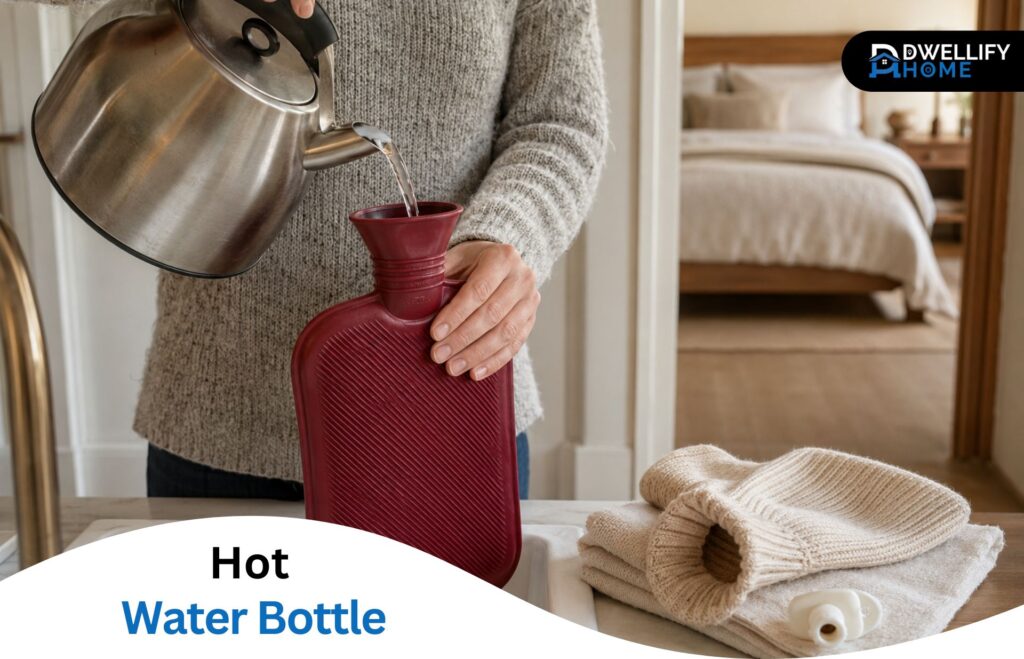
- Heat the water according to the manufacturer’s directions. Never pour boiling water directly into a traditional bottle. Some products permit boiled water after it has cooled, while others provide different instructions.
- Hold the bottle upright over a sink, supporting it around the neck.
- Pour slowly to reduce splashing.
- Stop at the marked fill limit. Many safety guides recommend no more than about two-thirds full, but follow the limit printed on your bottle.
- Carefully press out excess air until the water rises toward the opening.
- Insert the stopper straight and tighten it securely without cross-threading or forcing it.
- Dry the bottle and stopper area.
- Keep it over the sink while checking for moisture around the seal. Don’t squeeze it aggressively.
How to Use a Hot Water Bottle Safely at Home
Keep a protective cover, towel, or layer of clothing between the bottle and your skin. Move it occasionally rather than leaving it against one area for a prolonged period. A covered bottle can still become too hot for comfortable or safe contact.
Never sit, lie, stand, or rest substantial body weight on it. Pressure can stress the seams and stopper, especially when the bottle is aging or overfilled.
Use It to Warm a Bed—Then Remove It Before Sleep
Place the covered bottle beneath the bedding shortly before bedtime, then remove it before lying down or falling asleep. This warms the sheets without leaving a sealed container of hot water beneath a sleeping person.
Don’t use a hot water bottle and an electric blanket together. Guidance from Mencap and Product Safety Australia also advises against direct skin contact, pressure on the bottle, and leaving it in bed during sleep.
Who Should Take Extra Care with a Hot Water Bottle?
An adult should fill and handle a bottle used to pre-warm a child’s bed, and it should be removed before the child gets in. It should never be placed in a baby’s sleep space.
Older adults and people with delicate skin, poor circulation, diabetes-related nerve problems, or reduced heat sensation may not recognize excessive heat quickly. A healthcare professional can advise whether another warming method would be safer.
Check the material label if latex sensitivity is a concern. A fabric cover doesn’t make a natural-rubber bottle latex-free.
Repeated heat on the same area can cause erythema ab igne, often called toasted skin syndrome. It may appear as persistent, net-like red or brown discoloration. Cleveland Clinic recommends avoiding direct and repeated heat exposure and seeking medical advice for lasting skin changes, thickened areas, or sores.
How Long Does a Hot Water Bottle Stay Warm?
There is no reliable duration that applies to every bottle. Heat retention depends on its capacity, material, cover, starting water temperature, room conditions, and surroundings.
A large covered bottle placed beneath bedding may remain warm longer than a mini bottle used in an open room. Don’t exceed the product’s temperature instructions to extend its warmth. Safer options include using an insulating cover, warming the bed in advance, or switching to another approved heating product when longer-lasting heat is needed.
How to Tell When a Hot Water Bottle Needs Replacing
Replace the bottle immediately if you notice:
- Splits, cracks, pinholes, or leaking seams
- Fading, brittleness, stickiness, or thinning
- A distorted neck or damaged stopper
- A stopper that no longer seals securely
- Damage from sharp objects, heat, chemicals, or improper storage
- An unknown history that makes its condition difficult to judge
The flower-shaped mark found on many bottles is commonly called a daisy wheel. It normally identifies when the bottle was manufactured: the center indicates the year, while the surrounding segments and dots represent the production month and week. It shouldn’t automatically be treated as an expiry date.
General replacement advice varies. Australian consumer-safety guidance recommends annual replacement, while Mencap suggests two to three years. NHS burns specialists have recommended replacing bottles two years after first use.
Because no single interval covers every product, record the purchase or first-use date, follow the manufacturer’s replacement instructions, and inspect the bottle before every use. Damage always overrides age.
How to Clean, Dry, and Store a Hot Water Bottle
Empty the bottle after use once it can be handled safely. Allow it to drain and dry completely instead of storing it filled with water.
Clean the bottle only as its manufacturer recommends. Strong cleaning products may damage some materials. Wash the removable cover separately according to its care label.
Store the bottle in a cool, dry, dark place with the stopper removed. Keep it away from direct sunlight, radiators, oils, grease, sharp objects, and pet claws. Don’t fold or sharply crease it during storage.
Common Hot Water Bottle Mistakes and Limitations
The most common mistakes come from trying to get more heat or longer use than the product is designed to provide. These include using excessively hot water, filling to the top, leaving trapped air inside, forcing the stopper, sleeping with the bottle, and continuing to use an aging bottle because it hasn’t leaked yet.
A cover reduces direct heat but doesn’t make unsafe filling or overnight pressure harmless. Temporary comfort also shouldn’t delay medical attention for persistent pain.
Traditional, electric, rechargeable, and microwavable products are not interchangeable. A conventional rubber or PVC bottle should never be placed in a microwave unless it is specifically designed and labeled for that purpose.
Cold use is also product-specific. The Child Accident Prevention Trust warns that freezing may degrade rubber. A bottle that has been frozen shouldn’t later be assumed safe for hot water.
What to Do if a Hot Water Bottle Leaks or Causes a Burn
Remove the heat source and any wet clothing that isn’t stuck to the skin. Cool the affected area under cool—not cold or icy—running water. Don’t apply ice, butter, oil, or thick creams, as these can worsen damage or trap heat.
The American Burn Association recommends cooling a scald under running water for 10–20 minutes and covering it loosely with a clean, non-stick cloth or gauze.
Seek urgent medical help for a large or deep burn, white or charred skin, or an injury involving the face, hands, feet, genitals, or a major joint. Burns affecting babies, older adults, or someone with reduced sensation also deserve prompt medical assessment.
Frequently Asked Questions
Can You Put Boiling Water in a Hot Water Bottle?
No. Boiling water can damage the bottle’s material and seams while increasing the severity of a spill or leak. Use the water temperature and preparation method stated by the manufacturer. A recommendation for one rubber, PVC, or thermoplastic bottle may not apply to another.
How Full Should a Hot Water Bottle Be?
Follow the marked fill limit on the bottle. Many safety instructions recommend filling no more than approximately two-thirds full. Leaving the required space allows excess air to be removed and reduces stress on the stopper and seams.
Can You Sleep with a Hot Water Bottle?
A hot water bottle should be used to pre-warm the bed and removed before you lie down or fall asleep. During sleep, prolonged heat and accidental body pressure can go unnoticed, increasing the risk of skin damage, leakage, or bottle failure.
Can You Use It with an Electric Blanket?
No. Don’t use a hot water bottle and electric blanket at the same time. Choose one heating method and follow its instructions. Combining water, electricity, and additional heat introduces unnecessary risks.
Can You Freeze or Microwave a Hot Water Bottle?
Only use the product in those ways when its manufacturer explicitly permits them. Traditional rubber and PVC bottles generally aren’t designed for microwaving. Freezing may damage rubber, so a bottle that has been frozen shouldn’t automatically be returned to hot-water use.
What Are the Disadvantages of Using a Hot Water Bottle?
It requires careful filling, gradually loses heat, needs regular inspection, and can leak or cause burns when damaged or misused. It also isn’t suitable for unattended overnight warmth. People with reduced heat sensation may need a safer alternative recommended by a healthcare professional.
Final Safety Takeaway
A well-chosen hot water bottle can provide simple, targeted warmth without cords or complicated controls. Safe use depends on the less-visible details: following its instructions, leaving the correct fill space, checking the stopper and seams, protecting your skin, avoiding pressure, and replacing the bottle before deterioration turns into a leak.
Disclaimer
DwellifyHome content is for general informational purposes only. Homes, needs, preferences, budgets, and circumstances vary. Seek qualified professional advice for safety, installation, repairs, legal, structural, electrical, plumbing, HVAC, or major property decisions.