
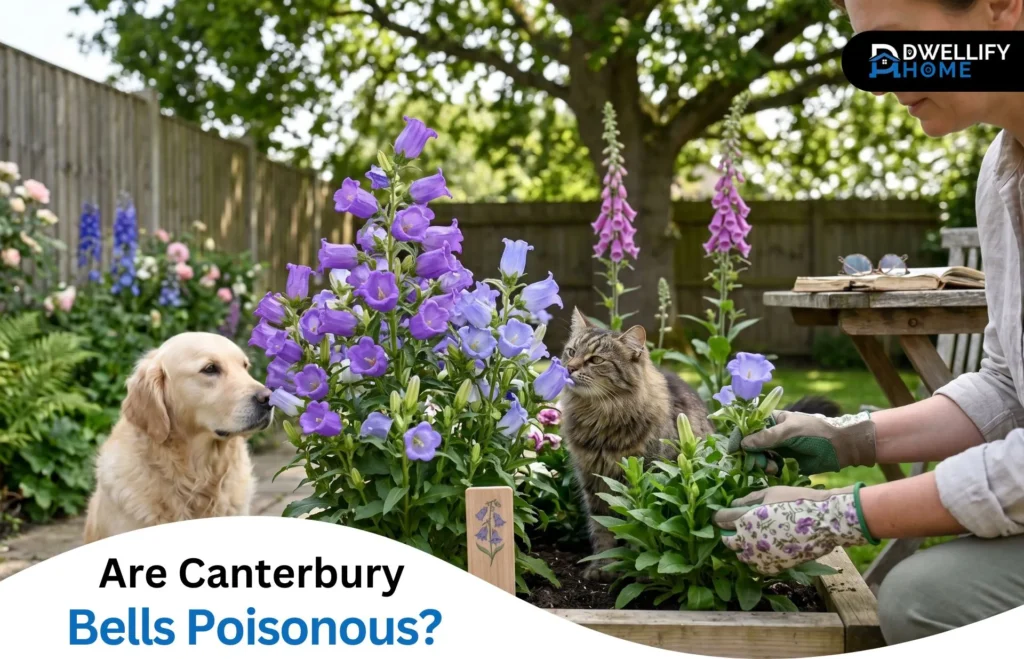
Every spring, the same kind of question lands in my inbox. Someone has just planted a row of those tall, bell-shaped beauties in their cottage border, then noticed their dog sniffing around the leaves — or their toddler trying to “ring” one of the flowers like a real bell. The worry kicks in fast, and the search begins.
So let’s clear this up properly. The question of whether Canterbury bells are poisonous comes up far more often than most people realise, and the answer isn’t quite as fuzzy as a quick Google glance suggests. Across years of helping pet-owning families plan safe, beautiful gardens, I’ve seen this exact concern come up again and again — and the honest news is, you can relax more than you think.
About Dwellify Home
Dwellify Home is built around one simple idea — helping homeowners create practical, stylish, and informed living spaces. From modern home solutions to garden and outdoor living, every guide we publish is meant to make real-world decisions easier, clearer, and more confident.
The Quick Answer — Are Canterbury Bells Poisonous?
No, they’re not. Canterbury bells (Campanula medium) are listed as non-toxic to humans, dogs, cats, and horses by major plant-safety authorities including the ASPCA. The flowers, leaves, and stems don’t contain any compounds known to cause serious poisoning.
That said — and this is where most articles stop too early — non-toxic doesn’t mean a pet can munch through an entire plant without consequence. Mild stomach upset is still possible if a curious cat or dog eats a large amount, simply because their digestive systems aren’t built to process leafy garden material. More on that shortly.
Quick Safety Reference Table
| Audience | Safety Status | Notes |
| Humans | Non-toxic | Young shoots historically edible |
| Dogs | Non-toxic (ASPCA) | Mild stomach upset possible if eaten in large amounts |
| Cats | Non-toxic (ASPCA) | Sensitive cats may still vomit briefly |
| Horses | Non-toxic | No known toxicity concerns |
| Chickens | Safe | No reports of harm to backyard flocks |
| Bees & Pollinators | Beneficial | Excellent nectar source |
Key Things to Know at a Glance
- Listed as non-toxic by the ASPCA for cats, dogs, and horses
- Belongs to the Campanulaceae family, a generally non-toxic plant group
- Often confused with foxglove, which is highly toxic — always check before planting
- Mild digestive upset is still possible if pets eat large quantities
- Safe to grow in family gardens, around children, and near pets
Getting to Know Canterbury Bells
Before we go deeper into safety, it helps to know what you’re actually looking at. A surprising number of plant-poisoning scares I’ve handled turned out to be misidentification — someone thought they had Canterbury bells, but they actually had something far more dangerous growing nearby.
Botanical Background — Campanula medium and Its Family
Canterbury bells belong to the Campanulaceae family — the bellflowers — which contains over 300 species. The botanical name Campanula medium comes from the Latin “campana,” meaning bell, which is exactly what the flower looks like.
The genus as a whole has a reputation among plant historians as gentle and largely harmless. Many Campanula species are actually classified as edible, with bland-tasting leaves and roots that have been eaten in parts of Europe for centuries.
How to Recognise the Plant in Your Garden
A mature Canterbury bell stands tall — usually two to three feet — with sturdy stems crowded with cup-shaped or bell-shaped blooms. Colours range from soft white and pink to lavender, blue, and deep purple. The leaves are slightly hairy, lance-shaped, and form a low rosette in the first year before the flowering stalk shoots up in year two.
That hairy leaf texture is one of the easiest ways to tell them apart from look-alikes. If the leaves feel smooth and glossy, you’re probably looking at something else.
Canterbury Bells Meaning and Symbolism
In Victorian flower language, Canterbury bells stood for gratitude, constancy, and faithful affection. The name itself traces back to the bells of Canterbury Cathedral, which medieval pilgrims heard as they travelled the old roads through Kent.
It’s a small detail, but worth knowing — gardeners often plant them as memory flowers or as a quiet tribute, which is one reason they remain such a fixture in cottage gardens.
Are Canterbury Bells Poisonous to Humans?
Short version — no, they aren’t. The plant doesn’t contain any harmful alkaloids, cardiac glycosides, or known toxins. People have brushed against them, picked them, and arranged them in vases for centuries with no widespread reports of harm.
What the ASPCA and Plant Databases Say
The ASPCA classifies Canterbury bells as non-toxic. The Plants For A Future database goes further, listing the leaves, young shoots, and roots as edible — historically eaten raw or cooked in some European traditions.
This kind of cross-source agreement is what gives me confidence when I tell clients these are genuinely safe to grow. It’s not just one source making the call.
Are Canterbury Bells Edible?
Technically, yes — the young shoots and roots have a mild, slightly grassy flavour and have been used in traditional cooking. The flowers themselves aren’t a culinary highlight, but they’re occasionally tossed into salads as edible decoration.
That said, I’d never encourage anyone to start nibbling on garden plants without proper identification. The risk isn’t Canterbury bells themselves — it’s mistaking them for something else. Always be certain before eating anything from the garden.
Should You Worry About Children Around the Plant?
Not in any serious way. A small child who chews on a petal or sucks on a leaf isn’t in danger from the plant itself. The most likely outcome is a bitter taste, a face-pulling moment, and that’s usually the end of it.
What I do tell parents — keep an eye out for general garden curiosity habits. If a child is regularly putting plant material in their mouth, that’s a behaviour worth redirecting, regardless of which plant it is.
Are Canterbury Bells Poisonous to Dogs?
No. Dogs and Canterbury bells are a safe combination, and I’ve never had a single client report a serious incident involving the two.
What the ASPCA Confirms About Dog Safety
The ASPCA’s plant database, which is generally the gold-standard reference for pet plant safety in North America, lists Canterbury bells in the non-toxic-to-dogs category. UK-based pet retailers like Pets at Home echo the same conclusion in their plant guides.
Mild Reactions That Can Still Happen
Here’s where realistic expectations matter. Even non-toxic plants can cause an upset stomach if a dog eats a lot of them. Vomiting, loose stools, or a bit of drooling are possible if your dog goes on a leaf-eating spree.
This isn’t poisoning. It’s the same reaction a dog might have to eating too much grass — their gut just isn’t built to handle a stomachful of plant material.
When to Contact Your Vet
Ring the vet if symptoms last more than 24 hours, if your dog seems lethargic, or if there’s blood in the vomit or stool. That’s true regardless of which plant they ate. Most cases involving Canterbury bells, though, resolve on their own with rest and access to water.
Are Canterbury Bells Poisonous to Cats?
Same answer — no. They’re listed as non-toxic to cats and they appear on multiple cat rescue and shelter “safe plant” lists.
Vet-Backed Safety Verdict for Cats
I had a client last summer call me in a panic — her indoor cat had escaped into the conservatory and chewed half a flower off a Canterbury bell arrangement she’d brought inside. After a quick check with her vet, she was reassured the same way I’m reassuring you now. The cat was fine within hours.
Why Some Cats Still React to Non-Toxic Plants
Cats have notoriously sensitive stomachs. Some are simply prone to vomiting after eating any plant material, toxic or not. Long-haired breeds and cats with existing digestive issues seem more affected.
A cat that tends to react badly to grass or other safe greenery will likely react the same way to Canterbury bells — even though the plant itself is doing no harm.
Signs Your Cat May Need Attention
Brief vomiting or one episode of loose stool is usually nothing to worry about. Persistent vomiting, refusal to drink, hiding behaviour, or signs of pain warrant a vet call. Trust your instincts — you know your cat better than any plant database.
Are Canterbury Bells Safe for Other Animals?
This is one area most safety guides skip past, so let’s cover it properly.
Horses and Livestock
Horses fall under the same non-toxic ruling from the ASPCA. They’re unlikely to seek the plant out, but if a horse grazing near a garden takes a bite, there’s no toxic risk involved.
Are Canterbury Bells Poisonous to Chickens?
Chickens and Canterbury bells get along just fine. I’ve kept a small flock myself for years and grown Campanula varieties in their general area without a single problem. Hens are usually pretty good at avoiding plants that don’t agree with them, and Canterbury bells aren’t on any reputable poultry-toxic list I’ve come across.
Bees, Pollinators, and Garden Wildlife
These flowers are excellent for bees and bumblebees in particular — the bell shape is practically designed for them to crawl into. Beekeepers in some regions even prize Canterbury bell honey for its sweetness. So planting them is a positive for your local pollinator population.
Toxic Plants Often Mistaken for Canterbury Bells
Here’s the part of the article that genuinely matters more than any safety verdict — knowing what you actually have.
Foxglove (Digitalis) — The Dangerous Look-Alike
Foxglove is the most common confusion. Both grow tall, both have bell-shaped flowers along a vertical stem, and both pop up in cottage gardens. But foxglove is highly toxic to humans, dogs, cats, and horses — every single part of it contains cardiac glycosides that can cause serious heart problems.
The easiest way to tell them apart — foxglove flowers are tubular and elongated, often with spotted throats. Canterbury bells are wider, cup-shaped, and more open.
Bluebells and Lily of the Valley
Bluebells are mildly to moderately toxic to dogs and cats. Lily of the valley is far more dangerous, with cardiac toxins that can be fatal in small amounts. Both have bell-shaped flowers, which is why people confuse them.
A flower that hangs in tight clusters of small bells along an arching stem is almost certainly not a Canterbury bell.
How to Tell Canterbury Bells Apart at a Glance
Three quick checks. First — height and structure. Canterbury bells are tall and upright with chunky, cup-shaped blooms. Second — leaves. Theirs are hairy and lance-shaped, not smooth. Third — flower size. Canterbury bell blooms are noticeably bigger than most other bell-shaped flowers in the garden.
When in doubt, snap a photo and check it against a trusted plant-ID source before assuming.
What to Do If Your Pet or Child Eats Canterbury Bells
Even though the plant is safe, I always walk clients through a basic response plan — because peace of mind is worth more than any guarantee.
Immediate Steps to Take
Remove any remaining plant material from your pet or child’s mouth. Offer water. Note roughly how much was eaten. Stay calm — panic spreads quickly, and there’s no reason for it here.
Symptoms Worth Monitoring
Watch for vomiting, diarrhoea, drooling, or general lethargy in pets. In children, look for nausea, repeated coughing, or reluctance to eat. These are usually mild and short-lived.
When to Call a Vet, Doctor, or Poison Control
Ring your vet if symptoms persist beyond 24 hours, worsen, or seem out of proportion to what was eaten. For children, contact your local poison helpline or paediatrician if you have any genuine concern. The ASPCA Animal Poison Control Center is also available around the clock if you’re in the US.
Growing Canterbury Bells in a Pet-Friendly Garden
This is where the conversation usually shifts from worry to excitement.
Why They’re a Smart Choice for Family Gardens
You get height, presence, and rich colour without the safety trade-off you’d worry about with foxglove or delphinium. For families with curious kids and roaming pets, Canterbury bells deliver the cottage-garden look without the anxiety.
Pairing Them With Other Non-Toxic Flowers
I often pair them with snapdragons, roses, sunflowers, hollyhocks, and zinnias — all pet-safe and visually complementary. Avoid pairing them right next to lilies, foxgloves, or autumn crocus if pets roam freely.
Are Canterbury Bells Easy to Grow?
For beginners, yes — with one caveat. They’re biennials, which means year one is just leaves, and year two is the show. People give up on them too early, thinking they’ve failed. Stick with them, mulch through winter, and the second-year bloom is genuinely worth the wait.
Clearing Up Common Misconceptions Online
A handful of plant-info sites will tell you Canterbury bells are mildly toxic. This causes a lot of unnecessary worry, so it’s worth addressing.
Why Some Sources Wrongly Label Them Toxic
Most of those claims trace back to AI-generated articles or content that confuses Canterbury bells with other Campanula relatives or with similar-looking toxic plants. They tend to lack proper sourcing and contradict every veterinary and horticultural authority I trust.
How to Identify Reliable Pet-Safety Sources
Look for sites that cite the ASPCA, recognised veterinary organisations, or established botanical gardens. Be cautious of plant-care apps and AI-driven blogs that don’t show their references. When in doubt, ring your vet — they have access to professional toxicology databases that the public doesn’t.
Frequently Asked Questions
Are Canterbury bells toxic if touched?
No. The plant doesn’t contain any skin irritants. Some people with very sensitive skin might notice mild itching from the fine hairs on the leaves, but that’s mechanical, not toxic.
Can rabbits safely eat Canterbury bells?
Pet rabbits generally tolerate them well, though I’d still limit quantities. Wild rabbits often leave them alone, which is a small bonus if rabbits raid your garden.
Are dried Canterbury bells safe around pets?
Yes. Drying doesn’t introduce toxins. They’re often used in dried arrangements without any safety issue.
Does the pollen or sap cause any reactions?
Not commonly. Some Campanula species ooze a harmless milky sap when stems are cut, and pollen levels are light. Heavy seasonal allergies can flare from any flower, but Canterbury bells aren’t notorious for it.
Are Canterbury bell seeds harmful if ingested?
No reports of seed toxicity exist. As with any plant material, large quantities could upset a small pet’s stomach, but there’s no known poison risk.
Do Canterbury bells attract hummingbirds?
Yes. Their bell-shaped, nectar-rich blooms attract hummingbirds, bumblebees, and butterflies, making them a reliable pollinator plant during summer.
What is the most toxic garden plant?
Lily of the valley, oleander, and foxglove are among the most dangerous garden plants. All three contain cardiac toxins that can be fatal in small amounts to pets and children.
Do Canterbury bells smell?
They have a very mild scent, almost unnoticeable. Some white varieties carry a faint sweet note, but they aren’t grown for fragrance — their appeal is purely visual.
Are Canterbury bells invasive?
Not in most regions. They’re biennials that self-seed politely without overtaking garden beds, though casual self-sowing in nearby spots is common.
Can Canterbury bells grow in pots?
Yes. They do well in deep containers with rich, well-draining soil, though they’ll need staking once the second-year flower spikes shoot up.
Conclusion
After years of helping families plant gardens that everyone — including the pets and the kids — can enjoy safely, I can say with confidence that the answer to whether Canterbury bells are poisonous comes down to a clear no. They’re non-toxic to people, dogs, cats, horses, chickens, and the wildlife that visits your garden. The biggest risk isn’t the plant itself; it’s mistaking it for a genuinely toxic look-alike like foxglove.
Plant them, enjoy them, and let your dog sniff around without losing sleep over it. That’s exactly what these old cottage-garden flowers were meant for.
Disclaimer
The content in this article is provided for general informational purposes only. While we aim to share accurate and helpful guidance, individual situations, pets, and gardening conditions can vary. For specific medical, veterinary, or safety concerns, always consult a qualified professional.