
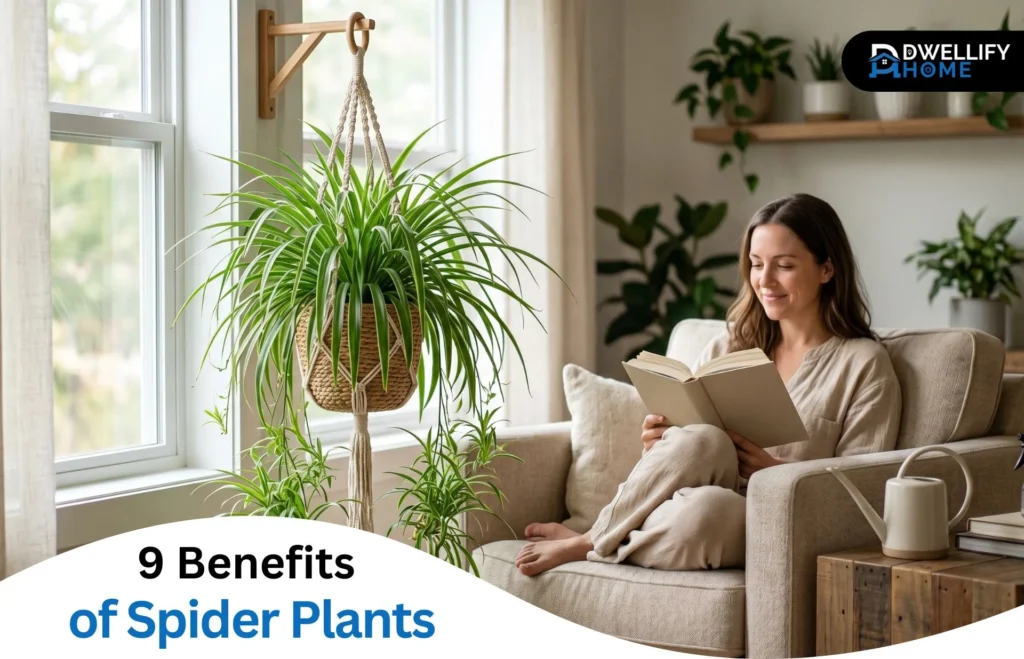
Walk into almost any plant-friendly home, office, or first apartment, and there’s a good chance a spider plant is tucked somewhere — usually with a few baby plants dangling off the side. They’ve held their spot in modern homes for solid practical reasons, not just nostalgia.
This guide walks through the real benefits of spider plants, what they actually do for your air and wellbeing, and a few honest things about owning one that most articles skip.
The Short Answer
Spider plants (Chlorophytum comosum) are low-maintenance houseplants valued for filtering indoor air toxins, boosting humidity, releasing oxygen at night, and staying safe around pets — making them a practical choice for cleaner, calmer modern homes.
About Dwellify Home
Dwellify Home is built to help homeowners and renters make practical, stylish, and informed décor decisions. We focus on clear, real-world guidance across modern home design, garden and outdoor living, home solutions, and lifestyle — so every choice you make for your space feels confident, comfortable, and right for the way you actually live.
What Is a Spider Plant?
Spider plant is the everyday name for Chlorophytum comosum, a clump-forming evergreen native to coastal South Africa. You’ll also hear it called airplane plant, ribbon plant, spider ivy, or St. Bernard’s lily depending on where you grew up.
The nickname comes from the small plantlets — called spiderettes or pups — that dangle from long arching stems. They look a bit like baby spiders hanging from a web, which is exactly how the plant reproduces. Indoors, it grows about 12 to 15 inches tall with strappy green or variegated leaves.
Key Benefits at a Glance
- Filter common indoor air toxins like formaldehyde and benzene
- Safe and non-toxic for cats, dogs, and children
- Tolerate neglect, low light, and inconsistent watering
- Naturally raise indoor humidity for drier rooms
- Release small amounts of oxygen at night
- Support better mood, focus, and reduced stress
- Multiply themselves through baby plants (spiderettes)
- Fit any décor style with their cascading green leaves
The 9 Real Benefits of Spider Plants for Your Home and Health
1. They Help Filter Common Indoor Air Toxins
NASA’s Clean Air Study from the late 1980s tested several houseplants for their ability to absorb indoor pollutants. Spider plants made the list as one of the more effective ones for filtering formaldehyde, xylene, benzene, and carbon monoxide.
A quick honest note though — those tests were done in sealed chambers. In a regular home with open windows and air movement, one plant won’t transform your air. But a small cluster of them on shelves or in hanging baskets genuinely helps, especially in newer apartments where furniture, paint, and cleaners constantly off-gas chemicals.
2. They’re Genuinely Safe Around Pets and Kids
This is one of the few houseplants you can keep without quietly worrying about your dog, cat, or curious toddler. Spider plants are listed as non-toxic to cats and dogs by the ASPCA, which is a real comfort if you’ve ever scrambled to figure out what your pet just chewed.
One thing to know — cats are oddly drawn to spider plant leaves because they have a mild catnip-like effect. It’s not dangerous, but if a cat eats a big mouthful, expect some throwing up. Hanging it high keeps everyone happy.
3. They’re Almost Impossible to Kill
Spider plants store water in thick tuberous roots, so they handle the kind of neglect that kills most houseplants. Forget to water for two weeks? They’ll forgive you. Move them to a darker corner for a month? They’ll dim a little and bounce back.
I’ve seen them survive cold drafts, dry radiators, long vacations, and the rough handling of toddlers. That forgiving nature makes them ideal for first-time plant owners and busy renters who’ve killed a few plants and lost confidence.
4. They Naturally Boost Indoor Humidity
Spider plants release moisture through their leaves through a process called transpiration. In a dry room, that small amount of added humidity makes a real difference, especially in winter when heaters strip the air dry.
This is where the benefits of spider plants for skin actually come in. Dry indoor air pulls moisture from your skin, eyes, and nasal passages. Higher ambient humidity reduces that dryness. You’ll want three or four good-sized plants in one room to feel it clearly, but the effect is genuine.
5. They Release Oxygen at Night for Better Sleep
Most plants stop producing oxygen once the sun sets. Spider plants keep exchanging gases in low light, adding small amounts of oxygen to the room overnight.
That’s why so many people put them in bedrooms. It won’t replace good sleep habits, but breathing slightly fresher air supports deeper rest. Combined with the humidity boost, the spider plant benefits at night are subtle but real — especially if your bedroom feels stuffy by morning.
6. They Help Reduce Stress and Improve Mood
Several studies on indoor plants have linked them to lower stress, sharper focus, and better mood. The effect isn’t dramatic — it’s the steady presence of something living and growing in your space.
Anyone who’s worked from home long enough knows the difference between a bare desk and one with a plant nearby. Spider plants are especially good for this because they don’t demand attention. They just sit there growing while you work.
7. They Adapt to Almost Any Light Condition
Bright indirect light is the sweet spot. Place a spider plant a few feet from a window and it’ll grow fast and full. But they also tolerate dim corners that defeat most houseplants.
I’ve seen spider plants survive on bookshelves far from windows and in offices lit only by overhead lights. Growth slows in low light and variegation fades a little, but the plant lives on. That makes them one of the few options for hallways, basements, and apartments with one small window.
8. They Multiply Themselves Through Spiderettes
Once a spider plant matures, it sends out long stems with miniature versions of itself dangling from the ends. Snip a pup off, set it in a glass of water for a week or two, and roots appear. Pot it up and you have a new plant for free.
A single grocery-store spider plant can become a dozen new plants over a couple of years — gifts for friends, replacements for ones that didn’t make it, and a few for your own collection. It’s one of the most satisfying ways to learn propagation.
9. They Add Effortless Style to Modern Interiors
Spider plants look natural in almost any space. The arching ribbon-like leaves drape elegantly from hanging baskets, cascade off shelves, and soften the harsh lines of modern minimalist rooms.
For renters who can’t drill or paint, a spider plant in a macramé hanger transforms a corner instantly. For mid-century or boho interiors, the plant fits the aesthetic without effort.
The Spiritual and Feng Shui Meaning of the Spider Plant
In feng shui, spider plants are tied to the wood element, which represents growth, vitality, and steady forward movement. Their continually multiplying pups are seen as a symbol of abundance, renewal, and resilience.
Practitioners often place them in the east or southeast corner of a home — areas linked to health and prosperity. The arching leaves are believed to soften sharp energy and disperse stagnant chi. The spider plant spiritual benefits go beyond air quality for anyone who pays attention to how a space feels.
Best Places to Keep a Spider Plant in Your Home
In the Bedroom
Bedrooms benefit from the quiet oxygen exchange spider plants offer overnight. Place one on a nightstand, a dresser, or hanging from the ceiling near the bed. Combined with the humidity boost, the air feels noticeably less dry by morning — which often helps with stuffy noses and dry throats.
In the Bathroom
Bathrooms are warm, humid, and often dimly lit — exactly what spider plants love. The benefits of spider plant in bathroom setups include faster growth from steady moisture, fresher air, and a green spot in a room that’s usually overlooked. Hang one near a window or set it on a shelf away from direct shower spray.
In the Kitchen and Living Room
Kitchens see a lot of cooking fumes, smoke, and cleaning product residue. A spider plant on top of a fridge or beside a window helps soften that buildup. In living rooms, place one on a high shelf or in a hanging basket where the trailing leaves frame the space without taking up floor room.
In Home Offices and Workspaces
A plant within eyeshot of your desk is one of the simplest ways to reduce screen fatigue. Spider plants do well under office LEDs and don’t need pampering. Set one beside your monitor or on a shelf where your eyes naturally land between tasks.
Spider Plant Disadvantages You Should Know
Spider plants aren’t perfect. The most common issue is brown leaf tips, usually caused by fluoride or chlorine in tap water. Switching to filtered or rainwater fixes it for most people.
They also grow fast, which means repotting every year or two to keep them looking their best. Roots can quickly become tightly bound and start pushing through drainage holes.
Other things to watch for include occasional pests like aphids, mealybugs, and spider mites, root rot from overwatering, and a slightly untidy look if you skip pruning. Cats may also vomit if they eat large amounts of leaves, even though the plant isn’t classified as toxic.
How to Care for a Spider Plant the Right Way
Light and Temperature
Bright indirect light gives the best growth and the most pups. Avoid direct afternoon sun, which scorches the leaves. Indoor temperatures between 60°F and 80°F suit them well — keep them away from cold drafts and heating vents.
Watering and Water Quality
Water when the top inch of soil feels dry. Stick a finger in to check rather than guessing. The tip most people miss is to use filtered, distilled, or rainwater. Tap water with fluoride and chlorine causes those frustrating brown leaf tips that make the plant look neglected.
Soil, Pot, and Drainage
A standard well-draining potting mix works fine. Avoid heavy garden soil, which holds too much water. Always use a pot with drainage holes — sitting in soggy soil is one of the fastest ways to rot the roots and lose the plant.
Fertilizer and Repotting
Feed every two to four weeks during spring and summer with a balanced houseplant fertilizer at half strength. Skip fertilizing in winter. Repot every one to two years when roots crowd the pot, choosing a container only an inch or two larger.
How to Propagate Spider Plants from Spiderettes
Wait until a spiderette has small nubby roots starting at its base. Snip it off the runner and set it in a glass of room-temperature water with the base submerged but leaves above the surface. New roots appear in one to two weeks. Pot it up once roots reach about an inch long.
Popular Spider Plant Varieties to Choose From
The classic Variegatum has wide green leaves edged in white — what most people picture when they hear “spider plant.” Vittatum is similar but reversed, with a creamy white stripe down the center of green leaves.
Reverse Variegatum flips that again, with green leaves edged in white. Bonnie is a compact, curly-leaved cultivar perfect for small spaces. Hawaiian starts variegated and matures to solid green, while Zebra has bright yellow edges that gradually fade to white. Pick whichever suits your light, space, and aesthetic.
Frequently Asked Questions
Are spider plants good for the skin?
Spider plants don’t directly heal skin, but they raise indoor humidity through transpiration, which helps reduce the dry, flaky skin caused by dry air. The effect is most noticeable in winter or in air-conditioned rooms. Two or three plants in a single room give a more noticeable benefit than one alone.
Do spider plants have any medicinal uses?
Spider plants have been used in some traditional African herbal practices for minor wound and burn care, but modern clinical research is very limited. There’s no reliable scientific evidence supporting medicinal use. Treat the plant as a houseplant rather than a remedy, and see a doctor for any real health concern.
Are spider plants safe for cats and dogs?
Yes, spider plants are non-toxic to cats and dogs and are listed as safe by the ASPCA. Cats may chew the leaves due to a mild catnip-like effect, which can cause vomiting if they eat a lot. Hang the plant or place it on a high shelf to prevent overindulgence.
Do spider plants actually purify indoor air at home?
Spider plants do absorb some indoor toxins like formaldehyde and benzene, based on NASA’s Clean Air Study. The real-world effect is modest because homes aren’t sealed chambers. A few plants together help noticeably, but they don’t replace proper ventilation or air purifiers for serious air quality concerns.
How many spider plants do I need to feel a difference?
Research suggests around three large plants in 10-inch pots, or roughly 25 small ones, are needed to noticeably raise humidity in a single room. For air-purifying and visual benefits, two to four well-placed plants per room usually create a real difference without crowding the space.
Why are the tips of my spider plant turning brown?
Brown leaf tips usually mean fluoride or chlorine buildup from tap water, low humidity, or salt buildup from over-fertilizing. Switch to filtered, distilled, or rainwater for two to three weeks. Trim the brown tips at a natural angle for a cleaner look, and feed the plant only at half strength.
Can a spider plant survive in a windowless bathroom?
A windowless bathroom isn’t ideal but a spider plant can survive there if the lights are switched on regularly. Growth will slow and variegation may fade. A better option is rotating the plant weekly with one in a brighter spot, or adding a small grow light on a timer.
Do spider plants attract good luck?
In feng shui and several cultural traditions, spider plants symbolize renewal, growth, and abundance — all qualities linked to good luck and positive energy. They’re often given as housewarming gifts for that reason. The belief is rooted in symbolism rather than proof, but the meaning still resonates with many.
Conclusion
Spider plants earn their reputation honestly. They clean the air a little, calm the mind a little, look natural on any shelf, and forgive almost every mistake a beginner makes. The benefits of spider plants don’t come from one dramatic feature — they come from the steady, low-effort presence the plant brings to a home. Get one, hang it somewhere you’ll see it daily, and let it do its quiet work.
Disclaimer
This content is provided for general informational purposes only. Individual results, plant care outcomes, home conditions, and personal preferences may vary. Always consider your own space, lifestyle, and any specific health or safety needs before making décor or plant-related decisions.