someone in Ohio has one growing eight feet tall in their backyard — and suddenly the questions start pouring in. Cold hardy banana trees are one of the most talked-about plants among homeowners who want a bold tropical look without living in a tropical climate. And for good reason. With the right variety and a bit of seasonal care, these plants can absolutely thrive in climates that get real winters.
This guide walks you through everything you need to know: which varieties actually hold up in the cold, how to plant and care for them through the growing season, and how to protect them once temperatures start to drop. Whether you’re just getting started or you’ve already tried one and want better results, there’s something practical here for every situation.
Snippet-Ready Definition
A cold hardy banana tree is a frost-tolerant banana plant, most commonly Musa basjoo, that survives freezing winters in USDA zones 5–10. Gardeners choose it to bring bold tropical foliage to cold-climate landscapes without needing a tropical environment.
Mission Statement
At Dwellify Home, we help homeowners make practical, well-informed decisions about their living spaces — from garden design and outdoor living to home solutions and everyday lifestyle choices. Our goal is straightforward: give you reliable, experience-grounded information so every decision you make at home feels confident, not guesswork.
What Is a Cold Hardy Banana Tree?
Is It Actually a Tree?
Here’s something that surprises most first-time growers: a banana tree is not a tree at all. It’s technically an herbaceous perennial — the largest one in the world. What looks like a trunk is actually a tightly wound stack of leaf bases called a pseudostem. The real plant lives underground as a rhizome, also called a corm. Every spring, new growth pushes up from that underground structure, not from any permanent woody trunk.
This distinction matters practically. When the pseudostem freezes and collapses in winter, the plant hasn’t died. The underground rhizome is where all the survival happens. Once the soil warms back up in spring, new shoots push through again — sometimes startlingly fast.
How Cold Can It Actually Survive?
The most cold-hardy banana available — Musa basjoo, the Japanese fiber banana — can handle rhizome temperatures down to -10 degrees Fahrenheit when properly mulched. The foliage and pseudostem will die back after the first hard frost, but the underground corm survives and reliably sends up new growth each spring in USDA zones 5 through 10.
Other varieties are less tolerant. Most edible types start struggling below 28 to 32 degrees Fahrenheit at the pseudostem level, though their corms can often survive colder ground temperatures with insulation. Knowing this layered cold tolerance — leaves, pseudostem, and corm each with different thresholds — is key to managing your plant through winter correctly.
Quick Comparison Table — Top Cold Hardy Banana Varieties
| Variety | USDA Zones | Edible Fruit | Max Height | Best For |
| Musa Basjoo | 5–10 | No | 12–15 ft | Cold-climate ornamental |
| Dwarf Orinoco | 7–10 | Yes | 8–10 ft | Zones 7–8 fruit growers |
| Raja Puri | 8–10 | Yes | 8–10 ft | Edible + compact spaces |
| Blue Java | 8–10 | Yes | 10–15 ft | Flavor-focused growers |
| Musa Velutina | 7–10 | Seedy | 5–6 ft | Small gardens, ornamental |
Key Benefits of Growing Cold Hardy Banana Trees
- Delivers a genuine tropical look in temperate and cold-climate gardens
- Musa basjoo rhizomes survive down to -10°F with proper mulching
- Grows 10–15 feet in a single season — one of the fastest ornamental plants available
- Low pest and disease pressure compared to tropical growing conditions
- Works in-ground or in containers, giving flexibility across all zones
- Spreads naturally via pups, allowing you to expand a planting without repurchasing
Best Cold Hardy Banana Tree Varieties
Musa Basjoo — The Gold Standard for Cold Hardiness
When growers in zone 5 or 6 ask me what to plant, Musa basjoo is almost always the answer. It’s the most cold-tolerant banana available, survives reliably in USDA zones 5 through 10, and grows fast — often reaching 12 to 15 feet in a single growing season under good conditions. The leaves are classic broad banana foliage that deliver an immediate tropical impression.
The honest caveat: Musa basjoo is grown for its ornamental value, not its fruit. It does produce small green bananas, but they’re filled with seeds and not palatable. For cold-climate gardeners who want the look more than the harvest, this variety is the clear first choice.
Raja Puri — Best Cold-Hardy Variety That Produces Edible Fruit
Raja Puri is the variety I recommend most often to zone 8 and 9 growers who want to actually eat their bananas. Native to India, it’s a compact cultivar that typically reaches 8 to 10 feet — manageable enough to fit in tighter spaces or large containers. It flowers within roughly nine months and produces sweet, creamy fruit that most people find genuinely good.
It handles cold snaps better than most edible varieties and is relatively wind-resistant, which matters because exposed pseudostems are often what finish a banana before winter does. If you’re in zone 8 and want fruit, Raja Puri is worth the investment.
Dwarf Orinoco — Top Pick for Zones 7 and 8
Dwarf Orinoco is widely regarded among serious banana growers as the most cold-tolerant edible variety available. It handles temperature swings well, comes out of dormancy reliably, and produces fruit with good flavor — especially when cooked, though it’s fine fresh too. In zone 7 and zone 8, it gives growers a realistic shot at fruit production with proper timing and winter care.
Its compact size also makes it a reasonable container candidate for growers in colder zones who want to bring it indoors each winter. If you’re specifically researching cold hardy banana trees for zone 7, Dwarf Orinoco belongs near the top of your list alongside Musa basjoo.
Blue Java — The Ice Cream Banana Worth Growing
Blue Java has developed a loyal following among banana enthusiasts, largely because of its flavor — often described as vanilla-like with a creamy, ice cream texture. It handles cold snaps better than standard Cavendish types and grows well in zones 8 through 10. The unripe fruit has a distinctive silvery-blue color that also makes it an interesting ornamental choice.
It’s not as cold-tolerant as Musa basjoo or Dwarf Orinoco, so growers in zone 7 or colder should approach it cautiously unless they have container flexibility. In zones 8 to 10, though, it’s a genuinely rewarding plant to grow.
Other Varieties Worth Knowing
A few others deserve a mention for specific situations:
- Musa velutina (Pink Banana): A smaller ornamental variety that blooms early and actually sets fruit in cooler climates — though the fruit is seedy. The pink flowers and upright fruit are visually striking.
- Musella lasiocarpa (Dwarf Chinese Yellow Banana): Not a true Musa, but related. Produces unusual yellow, artichoke-shaped flowers and is surprisingly cold-tolerant down to about zone 7.
- Dwarf Namwa: A productive edible variety that performs well in lower temperatures and is particularly popular with west coast growers in mild coastal zones.
- Praying Hands: A unique variety where the fingers grow fused together. Cold-hardy enough for zone 8 and well-regarded for both flavor and appearance.
Choosing the Right Variety for Your USDA Zone
Zones 5 and 6 — Primarily Ornamental, Still Rewarding
In zones 5 and 6, Musa basjoo is your best — and honestly, your safest — option. Fruit production at these latitudes is unlikely. The growing season simply isn’t long enough for most varieties to complete a full fruit cycle before the first frost arrives. That said, the foliage impact is real and substantial. A well-grown Musa basjoo in zone 6 can still reach 10 feet by late summer and creates a genuinely tropical visual statement in a landscape.
The key in these zones is mulching depth. Skimp on the winter insulation and you’ll lose the corm. Get it right and the same plant will come back bigger and faster every spring as the rhizome matures and expands.
Zone 7 — Where Edible Options Start to Open Up
Zone 7 is where things get more interesting. The pseudostem of a well-protected banana may partially survive a mild zone 7 winter, which means the plant doesn’t have to start completely from scratch in spring. That extra head start can push a plant closer to fruit production. Dwarf Orinoco and Raja Puri are both worth trying here.
Timing matters a lot in zone 7. A pup that starts growing in late May or early June will be large enough to overwinter successfully and may flower the following summer. Growers who’ve been doing this for a few seasons tend to develop a feel for the timing rhythm — it takes a year or two, but it clicks.
Zones 8, 9, and 10 — Maximum Reward with Minimal Effort
In zones 8 through 10, the conversation shifts from survival to optimization. Most cold-hardy varieties behave as near-evergreens, the pseudostem often survives winter intact, and fruit production is realistic across a much wider selection of varieties. In zone 9 and 10, some growers never need to think about overwintering at all — they simply remove dead leaves and let the plant grow continuously.
If you’re in this range, the decision tree is less about cold hardiness and more about size, flavor preference, and how much space you have. The variety options are wider, and the learning curve is gentler.
How to Plant a Cold Hardy Banana Tree
Picking the Right Spot
Full sun is non-negotiable for strong growth — aim for at least 6 to 8 hours of direct sunlight per day. In cooler zones, more sun means faster growth, which means more size before the first frost arrives. One thing that gets overlooked constantly: wind protection. Those broad leaves are visually impressive, but they shred easily in exposed, windy spots. A fence line, a building corner, or a natural windbreak can make a real difference in how the plant looks by late summer.
Spacing matters if you’re planning a grove effect. Give plants 6 to 10 feet between them. They’ll spread via pups anyway, so starting too close just creates a management headache later.
Soil Preparation
Banana plants are heavy feeders and they’re particular about drainage. They want moisture, but standing water around the roots will cause rot quickly. The target soil pH is between 5.5 and 6.5 — moderately acidic. Before planting, work in a generous amount of well-rotted compost or aged manure. This improves both fertility and drainage, particularly in heavier clay soils.
When to Plant
For outdoor ground planting, wait until 3 to 4 weeks after your last expected frost date. The soil needs to be warming up, not just thawed. Container plants can be started at any point and brought outdoors once nighttime temperatures stay above 50 degrees Fahrenheit consistently.
Step-by-Step Planting Instructions
- Dig a hole twice as wide as the root ball and roughly the same depth.
- Mix well-rotted compost into the excavated soil before backfilling — a 50/50 blend is a reasonable starting point.
- Set the plant in the hole so the crown sits at or just slightly above the surrounding soil level.
- Firm the soil around the root ball with your hands, removing any large air pockets.
- Water deeply immediately after planting — enough to saturate the root zone completely.
- Apply a 3 to 4 inch layer of mulch around the base, keeping it a few inches away from the pseudostem itself.
Cold Hardy Banana Tree Care Guide
How Much Water Does It Need?
Banana plants are thirsty. During the active growing season, aim for deep watering one to three times per week depending on your climate and soil type. The goal is consistent moisture without waterlogging. A reliable method: push your finger two to three inches into the soil near the plant. If it feels dry at that depth, it’s time to water. If it still feels damp, hold off.
In containers, you’ll need to water more frequently since pots dry out faster than in-ground soil. Yellowing lower leaves are often the first sign of either overwatering or underwatering — check the soil moisture before assuming either direction.
Fertilizing for Strong, Fast Growth
These plants put on a lot of size in a short time, and they need consistent nutrition to do it well. During the growing season, apply a high-nitrogen fertilizer every two to four weeks — a balanced formula like 8-10-10 works well for young plants. As the plant matures or approaches flowering, shift toward something higher in potassium to support pseudostem strength and fruit development.
Organic options like compost tea or aged manure work well too and reduce the risk of over-fertilizing. Stop feeding entirely in late summer or early fall — pushing new growth before winter sets the plant up for damage.
How Fast Does a Cold Hardy Banana Tree Grow?
Musa basjoo banana tree growth rate is one of the things that genuinely surprises new growers. Under good conditions — adequate sun, consistent water, regular feeding — Musa basjoo can add a new visible leaf every five to seven days during the peak of summer. By the end of a single growing season, a plant started in spring can reach 10 to 15 feet in height.
Newly planted specimens grow more slowly in their first year as the root system establishes. By the second and third year, when the underground rhizome has expanded and matured, growth accelerates noticeably. This is why experienced growers say the second season is when the plant really starts to perform.
Pruning and Basic Maintenance
Banana plants don’t need heavy pruning, but routine maintenance keeps them looking their best and directs energy where you want it. Remove browning or tattered leaves by cutting them cleanly at the base of the petiole. Leave healthy green leaves in place — they’re still photosynthesizing.
Manage pups by allowing one or two strong offshoots to develop as succession plants while removing weaker ones. This keeps the planting focused and prevents the clump from becoming unmanageable. Cutting suckers when they’re young is much easier than trying to remove a large, established pup later.
Common Pests and Problems to Watch For
In temperate climates, banana plants actually face fewer pest and disease issues than they do in tropical growing regions — one of the underappreciated advantages of growing them outside the tropics. That said, a few issues do show up:
- Aphids, spider mites, and mealybugs can colonize leaves, particularly in hot, dry conditions. A strong spray of water handles minor infestations; neem oil works for more persistent cases.
- Yellowing leaves are often a water issue — check drainage and soil moisture before reaching for fertilizer.
- Shredded or tattered leaf edges are almost always a wind problem, not a disease. Relocating the plant or adding windbreak protection is the real fix.
- Banana wilt and leaf spot are occasional concerns, particularly in wet conditions. Remove affected leaves promptly and avoid overhead watering.
Growing Cold Hardy Banana Trees in Containers
Why Container Growing Makes Sense for Colder Zones
For growers in zones 5 through 7 who want to experiment with edible varieties — rather than sticking strictly to ornamental Musa basjoo — containers are a practical solution. The plant spends summer outdoors, contributes to the garden’s tropical feel, then comes inside before the first frost. Done consistently, this approach can eventually yield fruit from varieties that would otherwise never have enough season to complete a fruit cycle.
The minimum container size is 24 inches in diameter. Go larger if you can — banana plants in small pots stay small. Make sure the container has adequate drainage holes. Root rot from sitting water is one of the most common ways container-grown bananas fail.
Container Care vs. In-Ground Growing
Container plants need more attention than in-ground ones. The limited soil volume dries out faster, nutrients deplete more quickly, and the roots have nowhere to expand naturally. Plan to water more frequently — sometimes every day in peak summer heat — and fertilize on the higher end of the recommended schedule.
Watch for the plant becoming root-bound: roots circling visibly at the drainage holes or pushing out the top of the soil are a sign it’s time to move up a container size. Repotting is best done in spring before active growth begins.
Winter Care for Cold Hardy Banana Trees
What Actually Happens in Winter?
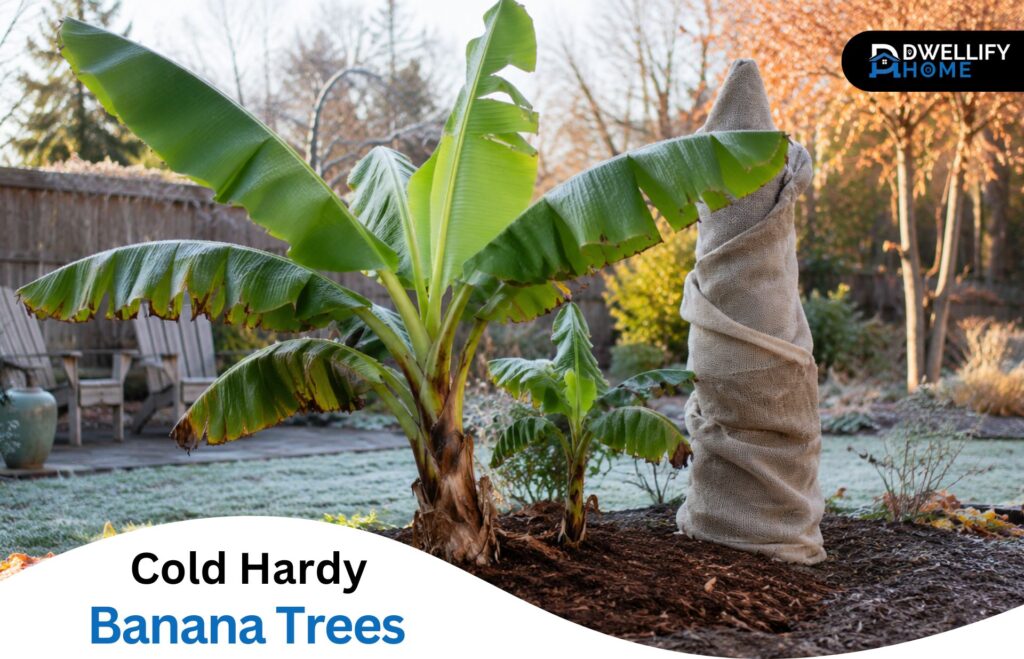
When the first hard frost arrives, the foliage will blacken and collapse. The pseudostem typically softens and dies back as well. For first-time growers, this looks catastrophic — it isn’t. The plant is doing exactly what it’s designed to do. The underground rhizome is dormant but alive. As long as the corm doesn’t freeze completely, the plant will return in spring.
The mistake most beginners make is assuming the plant is dead and either removing it entirely or giving up on protection. Leave the corm in place, insulate it properly, and give it time.
How to Prepare Your Banana Tree for Winter
- Wait for the first frost to fully brown and collapse the foliage — there’s no benefit to cutting early.
- Cut the pseudostem back to 1 to 3 feet above ground level.
- Pile 6 to 12 inches of mulch, straw, or dried leaves directly over the root base and remaining stub.
- In zones 5 and 6, consider wrapping the remaining stub with burlap before adding the mulch layer for extra insulation.
- A chicken wire cage placed over the crown before mulching makes spring removal far easier — just lift the cage and mulch comes out cleanly.
Overwintering in Zones 5–7
In zones 5 through 7, the goal is protecting the corm from ground freeze. The rhizome of Musa basjoo can withstand soil temperatures down to around -10 degrees Fahrenheit with sufficient mulch insulation — but that protection depends entirely on mulch depth and quality. Six inches is the minimum; eight to twelve is more reliable in true zone 5 conditions.
Cut the pseudostem close to ground level before mulching in the coldest zones. This reduces wind exposure and concentrates the insulation directly over the corm where it matters most. Don’t be in a rush to remove the mulch in spring — wait until consistent nighttime temperatures are staying above 40 degrees Fahrenheit before uncovering.
Overwintering in Zones 8–10
In zone 8, a well-protected pseudostem may survive a mild winter intact, giving the plant a head start on the following season. In zones 9 and 10, overwintering is largely a non-issue — plants behave as near-evergreens, and the primary winter task is removing dead or damaged leaves as they appear.
Even in the warmest zones, a late cold snap can catch growers off guard. Keep an eye on forecast lows in early spring and late fall, and be ready to throw a frost cloth over younger or more cold-sensitive plants if temperatures drop unexpectedly.
No New Growth in Spring? Here’s What to Check
Every spring, some growers panic when their banana shows no signs of life by April. In colder zones, this is often completely normal. Banana rhizomes don’t start pushing new growth until the soil temperature reaches approximately 60 degrees Fahrenheit — and in a cold spring, that can take until May or even early June.
If growth still hasn’t appeared by late spring, carefully check the corm. A healthy corm is firm and pale to cream-colored inside. A dead or rotted corm will be soft, mushy, or dark throughout. Firm means wait. Soft means the plant didn’t make it and it’s time to replant.
How to Propagate Cold Hardy Banana Trees from Pups
What Are Banana Pups?
Banana pups — also called suckers — are offshoots that emerge from the base of the rhizome. They’re how banana plants naturally expand, and they’re also the primary way to propagate new plants. As a planting matures, it’ll typically push out multiple pups each season. The rhizome colony gradually spreads outward, which is how a single plant eventually becomes a grove.
The best time to separate a pup is when it reaches about 3 feet tall and has begun developing its own root system. Smaller pups can be separated but take longer to establish. Pups that are allowed to grow too large become harder to remove without disturbing the parent plant significantly.
How to Divide and Replant a Banana Pup
Use a sharp spade or shovel to sever the pup from the parent rhizome, cutting as cleanly as possible to minimize damage to both plants. Try to retain as much of the pup’s root system as you can during the separation. Some growers dust the cut surface with powdered sulfur or cinnamon to reduce infection risk, though this isn’t strictly necessary in most garden conditions.
Plant the pup immediately in prepared soil at the same depth it was growing, water thoroughly, and keep the soil consistently moist for the first two to three weeks while the root system re-establishes. Avoid heavy fertilizing right after transplanting — give it a few weeks to settle before resuming a regular feeding schedule.
Using Cold Hardy Banana Trees in Your Garden Design
Best Companion Plants for a Tropical Garden Look
The broad, bold leaves of a banana plant create a natural backdrop that makes companion planting almost effortless. Plants with contrasting textures and bright colors tend to work best. Canna lilies are a classic pairing — their upright form and vibrant flowers complement banana foliage without competing for visual attention. Elephant ear plants (Colocasia) add another layer of large tropical foliage and thrive in similar moisture conditions.
For seasonal color and a more layered look, bright annuals like zinnias, dahlias, or tropical salvia planted at the base create a cottage-meets-jungle effect that works surprisingly well in suburban garden settings. The key is layering — tall banana at the back, mid-height companions in the middle, low-growing color at the front.
Privacy Screens, Shade, and Focal Points
A mature clump of Musa basjoo can spread 10 to 20 feet wide over several seasons, making it genuinely useful as a natural privacy screen along a fence line or property edge. The foliage canopy also creates real shade — useful for understory plants that prefer protection from afternoon sun in warmer climates.
As a focal point, a single well-placed banana plant at the corner of a bed or at the end of a sight line in a garden draws the eye and anchors the design. It’s one of those plants that elevates the look of everything around it simply by existing.
Buying a Cold Hardy Banana Tree — What to Know First
Where to Find Cold Hardy Banana Trees for Sale
Cold hardy banana trees are widely available at garden centers and online nurseries from spring through mid-summer. Local nurseries in zones 6 through 9 typically stock Musa basjoo reliably; for less common varieties like Raja Puri, Dwarf Orinoco, or Blue Java, online specialty nurseries are usually the better source.
If you’re searching for cold hardy banana trees near me at a local level, call ahead before making a trip — availability varies significantly by region and season, and smaller nurseries sometimes carry more interesting variety selections than big-box stores.
What to Look for Before You Buy
A healthy banana plant should have firm, green pseudostem tissue and active leaf growth. Avoid plants with yellowing lower leaves paired with soft stem tissue — that combination often signals root rot from overwatering during shipping or nursery storage. Bare corms are a cost-effective option for online purchases, but confirm the corm is firm, not shriveled or soft, before planting.
Always verify the variety name and cross-check it with your USDA zone before buying. A Dwarf Cavendish labeled vaguely as ‘tropical banana’ is not the same as a true cold-hardy type. Ask specifically for the botanical name — Musa basjoo, Musa ‘Raja Puri’, and so on — so you know exactly what you’re getting.
Frequently Asked Questions
Can a cold hardy banana tree survive frost?
Yes. Cold hardy banana trees can survive frost, though what survives depends on the severity of cold and the variety. The foliage and pseudostem typically die back after the first hard frost, but the underground rhizome survives in most zones with proper mulching. Musa basjoo rhizomes can withstand temperatures as low as -10 degrees Fahrenheit when insulated with 6 to 12 inches of mulch.
Do cold hardy banana trees produce edible fruit?
It depends on the variety and your climate. Musa basjoo, the most cold-hardy type, produces small bananas that are seedy and not palatable — it’s grown primarily for its ornamental foliage. Varieties like Raja Puri and Dwarf Orinoco do produce edible, good-tasting fruit, but they require a long enough growing season and warmer winters to complete a full fruit cycle.
How tall does a cold hardy banana tree get?
Most cold hardy banana trees reach between 10 and 15 feet in height when grown in the ground. Musa basjoo can occasionally push beyond 15 feet under ideal conditions. Container-grown plants stay smaller, typically reaching 6 to 8 feet depending on pot size.
Can I grow a cold hardy banana tree in a pot indoors?
Yes, and it’s a practical approach for growers in colder zones who want to experiment with edible varieties. Use a large container — at least 24 inches in diameter — with good drainage. The plant needs a spot with bright, direct light indoors, such as a south-facing window or supplemental grow lighting. Growth slows considerably indoors, but the plant will survive and resume fast growth when moved outside in spring.
How long does it take to reach full size?
Under good growing conditions, a Musa basjoo started from a young plant in spring can reach near-full height — 10 to 15 feet — within a single growing season. Bare corm plantings typically take slightly longer to show vigorous above-ground growth in the first year, as energy goes into root establishment before shoot development.
Is Musa basjoo the same as the Japanese fiber banana?
Yes. Musa basjoo is commonly called the Japanese fiber banana, a name that refers to its historical use in Japan — the fiber from its shoots was used for weaving textiles and making paper. Despite the name, it’s native to the Ryukyu Islands and parts of China. In the garden, it’s simply the most cold-tolerant banana species widely available to home growers.
What is the best cold hardy banana tree for zone 7?
For zone 7, Dwarf Orinoco is typically the first recommendation for growers who want a shot at edible fruit. It handles cold snaps well and can fruit with proper seasonal timing. Musa basjoo is the reliable fallback for guaranteed overwintering success, even in colder parts of zone 7. Raja Puri is also worth trying in the warmer end of zone 7, particularly in protected microclimates.
Which banana trees are cold-hardy?
The most cold-hardy variety is Musa basjoo, which survives in USDA zones 5 through 10. Other reliably cold-hardy options include Dwarf Orinoco, Raja Puri, and Blue Java. Most standard edible banana varieties are not cold-hardy and struggle below 32°F.
Are cold-hardy bananas edible?
Musa basjoo, the most popular cold-hardy variety, produces fruit that is seedy and not palatable — it’s grown purely for ornamental value. However, varieties like Raja Puri and Dwarf Orinoco are both cold-hardy and produce genuinely edible, good-tasting fruit in zones 7 and warmer.
Do cold-hardy banana trees spread?
Yes. Cold hardy banana trees spread naturally by producing offshoots called pups or suckers from the underground rhizome. A single plant can gradually develop into a multi-stem clump over several seasons. Pups can be left to form a grove or separated and replanted elsewhere.
How cold is too cold for a banana plant?
For most edible varieties, the pseudostem suffers damage around 28–30°F and the corm can die if soil freezes deeply without insulation. Musa basjoo is the exception — its rhizome tolerates soil temperatures down to around -10°F when mulched with 6–12 inches of straw or leaves.
Final Thoughts
Growing a cold hardy banana tree in a temperate garden is genuinely achievable — but it rewards preparation more than luck. The growers who get the best results are the ones who match their variety to their zone honestly, plant in the right spot, keep up with watering and feeding through the season, and take winter protection seriously.
Start with Musa basjoo if you’re in zone 6 or colder and want reliable results. Move toward Dwarf Orinoco or Raja Puri once you’ve got a feel for how these plants behave in your specific conditions. The first year teaches you a lot. By the second or third season, most growers wonder why they waited so long to plant one.
The tropical impact these plants bring to a cold-climate garden is entirely real — no exaggeration needed.
Disclaimer: The content on Dwellify Home is provided for general informational purposes only. Growing conditions, climate variables, and individual results will vary. Always consider your specific USDA hardiness zone, local soil conditions, and regional climate when making planting decisions. Information here should not replace advice from a qualified horticulturist or local extension service.