
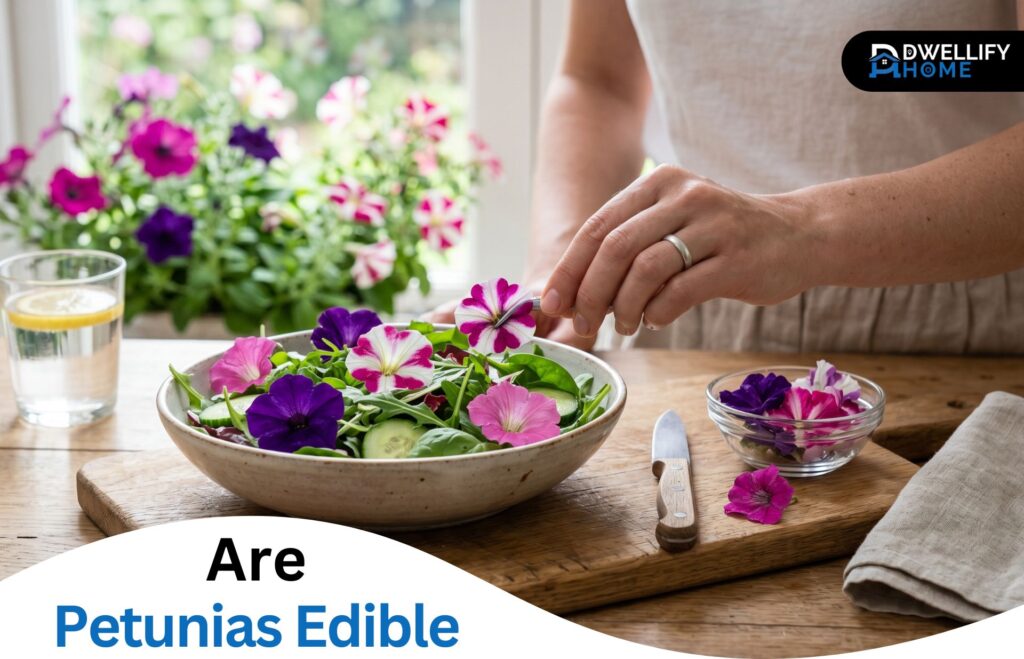
The first time I dropped a handful of pink petunia petals on top of a summer salad, my guest hesitated and asked the obvious question — was she actually supposed to eat that? It’s a fair reaction. Petunias spend most of their lives in hanging baskets and window boxes, not on dinner plates, so the idea of using them as food feels strange until you’ve done it once or twice.
Over the years, I’ve grown petunias for both display and the kitchen, and I’ve sorted out the answers to nearly every concern that comes up. So let’s walk through whether petunias are edible, which ones are safe, what they taste like, and how to actually use them without making the small mistakes that trip people up.
Snippet-Ready Definition
Yes, petunias are edible. The petals of Petunia × hybrida are safe for humans, with a mild, lightly sweet, sometimes peppery flavor. They’re commonly used as garnish in salads, drinks, and desserts when grown pesticide-free.
Mission Statement
At Dwellify Home, we help homeowners make practical, stylish, and informed décor decisions — from modern interiors and outdoor gardens to everyday home solutions that bring comfort, beauty, and confidence to the spaces you live in.
Are Petunias Edible? The Direct Answer
Yes — the common garden petunia, known botanically as Petunia × hybrida, has edible flowers. The petals are safe for humans to eat and have been used as a colorful garnish in salads, drinks, and desserts for years.
That said, there’s a catch worth knowing upfront. Edibility depends on two things: the right type of petunia and the way it was grown. A petunia from your own pesticide-free garden is a very different thing from one bought as decoration at a big-box store. I’ll cover both sides as we go.
Quick Edibility Guide
| Petunia Type | Edible? | Best Use |
| Petunia × hybrida (garden) | Yes | Petals as garnish |
| Grandiflora | Yes | Salads, desserts |
| Multiflora | Yes | Crystallized, ice cubes |
| Mexican Petunia (Ruellia) | No | Ornamental only |
| Store-bought ornamental | Avoid | Likely pesticide-treated |
Key Benefits of Edible Petunias
- Adds natural color to salads, desserts, and drinks
- Mild flavor that pairs with both sweet and savory dishes
- Safe for households with dogs, cats, and horses
- Easy to grow at home from seed
- Works fresh, frozen in ice cubes, or sugared for cakes
Why There’s Confusion About Eating Petunias
Petunias belong to the Solanaceae family — the nightshade family. That single fact causes most of the doubt online. Some plants in this family are everyday foods, like tomatoes, potatoes, eggplants, and peppers. Others are genuinely toxic, like deadly nightshade and jimsonweed.
Because of that mix, some gardening sources say petunias shouldn’t be eaten at all, while flower-foraging experts and chefs use them regularly. Both views come from the same family connection, just interpreted differently.
The practical truth sits in the middle. Petunia petals themselves are not poisonous, and the flowers have a long track record of culinary use. The caution most reliable sources mention is really about pesticides on ornamental plants, not the petals themselves.
Edible vs Non-Edible Petunia Varieties
This is where many people get tripped up, so let’s keep it simple.
Petunia × hybrida is the common garden petunia — the kind you see in baskets, beds, and balcony pots. The flowers are edible. Within this group, there are two main types worth knowing:
- Grandiflora — large, showy blooms, sometimes trailing
- Multiflora — smaller flowers but more of them, on bushier plants
Some gardeners also point to specific cultivars favored for kitchen use, including Superbissima Cosmic Cherry, Balcony Mix, and Giant Alba. Honestly, in my own kitchen, I’ve used standard supermarket varieties grown from seed and they’ve been perfectly fine. Cultivar matters less than how the plant was grown.
What you do want to avoid is Mexican Petunia (Ruellia simplex). Despite the name, it isn’t a true petunia at all — it’s a different genus entirely. It’s not classified as edible, and most sources recommend keeping it strictly ornamental. If you only remember one thing from this section, let it be that.
What Do Petunias Taste Like?
Don’t expect a strong flavor. Petunia petals are mild — light, faintly sweet, and sometimes a touch peppery on the finish. The texture is delicate, almost tissue-thin, which is why they work better as a finishing garnish than a main ingredient.
Color seems to influence flavor a little. The deeper purples and reds tend to taste slightly more peppery to me, while the pinks and whites lean sweeter. The differences are subtle, though. Anyone expecting a bold floral hit, like rose or lavender, will probably feel underwhelmed. Petunias are more about visual impact than taste.
Are Petunias Safe to Eat? Key Safety Factors
Here’s where most people go wrong, and it has nothing to do with the flower itself.
Pesticide-free sourcing is the single biggest factor. Most petunias sold at nurseries and garden centers are treated with systemic pesticides, fungicides, and growth regulators. Those chemicals don’t just sit on the surface — they work through the whole plant. Washing won’t remove them. This is why ornamental petunias from a store should never be eaten, even if the variety is technically edible.
If you want to eat petunias, grow them yourself from seed or buy from a grower who confirms they’re food-safe. That single decision protects you from nearly every real risk.
A few other things worth keeping in mind:
- People with sensitivities to other nightshade plants may react to petunias too
- Pollen allergies can sometimes flare up with any flower-eating
- Petunias offer almost no nutritional value, so they’re a garnish, not a vegetable
- A small first taste is always smart with any new edible flower
Are Petunias Safe for Dogs and Other Pets?
Petunias are listed by the ASPCA as non-toxic to dogs, cats, and horses. So if your dog grabs a mouthful from a hanging basket, you don’t need to panic.
That said, “non-toxic” doesn’t mean it’s a snack. Pets eating large amounts of any plant can get an upset stomach simply because their digestive systems aren’t built for plant matter. Mild vomiting or loose stools can happen, and that’s not the plant being poisonous — it’s just too much of an unfamiliar thing.
The bigger pet-safety note is the Mexican Petunia issue again. Ruellia is a different plant with different toxicity profiles in some sources, and pets shouldn’t be allowed to graze on it. If your “petunias” are actually Ruellia, treat them as decorative-only.
Which Parts of the Petunia Are Edible?
Stick to the petals. That’s the rule I’ve always followed and the one I’d recommend to anyone starting out.
The stems, leaves, and roots aren’t part of any traditional culinary use, and there’s no good reason to test them. The petals are where all the color and mild flavor sit anyway.
When prepping a flower, I usually pinch off the white base where the petal attaches to the stem — gardeners call this the heel. It can taste slightly bitter and isn’t worth keeping. The inner reproductive parts (the stamens and pistil) are also better removed for both flavor and to avoid loose pollen on plates.
How to Prepare Petunias for Eating (Step by Step)
The process is short, but each step matters. Skipping the rinse, in particular, is how people end up with a tiny aphid in their salad.
- Pick in the morning. Flowers are crispest right after the dew lifts. Mid-day blooms wilt faster.
- Inspect each bloom. Look inside the trumpet for tiny insects, spider webs, or damaged petals.
- Rinse gently in cool water. A shallow bowl works better than running tap water, which can bruise the petals.
- Air-dry on a soft towel. Lay them flat in a single layer. Don’t pat them — they’ll tear.
- Remove the white heel and inner parts. A small pinch with your fingers does the job.
Use them the same day you pick them. Petunias don’t store well, and even a few hours in the fridge takes the life out of them.
Creative Ways to Use Edible Petunias in Food and Drinks
The fun part. Once you’ve got fresh, clean petals, the uses are mostly limited by your imagination — but here are the ones I actually keep coming back to.
- Fresh garnish on salads — toss them in at the very end so they don’t wilt under dressing
- Frozen ice cubes — drop a single petal into each cube tray section for cocktails or lemonade
- Crystallized (sugared) petals — brushed with egg white and dusted with fine sugar, these top cakes beautifully
- Petunia jelly — a soft floral jelly using petals steeped with sugar, lemon, and pectin
- Floral vinegars — petals steeped in white wine vinegar take on the bloom’s color
- Vitamin water — petals infused with cucumber, mint, or citrus for a colorful pitcher
- Cocktail garnish — a single bloom floated on a gin or vodka cocktail looks elegant
The crystallized version is the one I get asked about most often. It keeps for weeks in a sealed jar and turns ordinary cupcakes into something people remember.
Can You Eat Petunias in Winter?
In most climates, no — at least not from outdoors. Petunias are warm-season annuals and don’t survive frost.
Two practical workarounds exist. The first is preserving summer petals: dry them on a screen in a warm, airy spot away from direct sun, then store in an airtight jar. They lose some color but stay safe to use as a garnish or in baked goods. Crystallized petals also last well into winter if sealed properly.
The second option is growing petunias indoors or in a greenhouse during cold months. They need bright light and steady warmth, but they’ll bloom out of season under the right conditions. Most people don’t bother — it’s easier to enjoy them as a summer treat and switch to other flowers, like indoor herbs or microgreens, in the off months.
Petunias vs Pansies, Geraniums, and Other Edible Flowers
If you’re building a little edible flower repertoire, here’s how petunias compare to a few common neighbors:
- Pansies — Sweet and slightly minty. Fully edible, and one of the easiest starter flowers. The flavor is more pronounced than petunias.
- Scented geraniums — Edible petals with surprising flavor range, from citrus to rose to mint depending on the variety. Stronger than petunias by far.
- Nasturtiums — Both flowers and leaves are edible, with a distinct peppery, watercress-like bite. The most versatile of the group.
Petunias sit at the gentle end of the flavor spectrum. They’re more about color and presentation than taste. If someone asks me what to grow first for cooking, I usually steer them toward nasturtiums or pansies. Petunias come later, when they want a wider color palette on the plate.
Who Should Avoid Eating Petunias
Even with a safe, well-grown flower, a few people should sit this one out:
- Young children, especially those under four, who can react unpredictably to new plants
- Anyone with known pollen, ragweed, or nightshade-family allergies
- Pregnant or breastfeeding individuals, simply because there’s no need to introduce something untested
- Anyone unsure of where the petunias came from or how they were grown
There’s no shame in being cautious. Edible flowers are a small, optional pleasure, not something anyone needs to eat.
Traditional and Folk Uses of Petunias
Petunias are originally from South and Central America, and there are records suggesting the Maya and Inca used them in beverages — sometimes for ceremony, sometimes to ward off bad spirits. Folk references also mention petunia preparations for minor skin irritation and coughs.
These traditional uses are interesting context, but I want to be clear: they aren’t backed by modern clinical research. I mention them because they show up in the plant’s history, not because anyone should treat petunias as medicine. As food and garnish, yes. As a remedy, no.
Common Myths About Petunia Edibility
A few claims circulate online that deserve a quick correction.
“All petunias are poisonous because they’re in the nightshade family.” Not true. The nightshade family includes both common foods and toxic plants. Family membership alone doesn’t determine edibility — the specific species does.
“Mexican petunias are the same as garden petunias.” Also not true. Mexican Petunia (Ruellia simplex) isn’t even in the same genus. They share a common name and nothing more.
“Any petunia from the garden center is safe to eat.” Definitely not. Most ornamental petunias are treated with chemicals that make them unsafe regardless of variety. Always grow your own or source from a verified food-safe grower.
Frequently Asked Questions
Are petunias edible for humans?
Yes. The petals of Petunia × hybrida are safe for human consumption when grown without pesticides.
Are petunias poisonous?
No. Petunia petals are not poisonous to humans, dogs, cats, or horses. The main risk comes from chemical treatments on ornamental plants, not the flower itself.
Are petunias edible for dogs?
They’re non-toxic, according to the ASPCA, but dogs shouldn’t eat plants in large amounts. A nibble is fine; a whole basket is not ideal.
Are petunia leaves edible? The leaves aren’t part of traditional culinary use and are best avoided. Stick to petals.
Are petunias edible in the winter?
Fresh outdoor petunias aren’t usually available in winter, but dried, crystallized, or indoor-grown blooms can extend their use into the cold months.
Are pansies and petunias the same?
No. They’re different plants from different families. Both are edible, but pansies have a stronger flavor and are often preferred for cooking.
Are geraniums edible like petunias?
Scented geraniums have edible petals with stronger flavors, ranging from citrus to rose. They’re edible like petunias, but more flavorful.
Which petunias are edible?
The common garden petunia (Petunia × hybrida) is edible, including its Grandiflora and Multiflora types. Mexican Petunias (Ruellia simplex) are not recommended for eating.
Are petunias poisonous to humans?
No. Petunia petals are not poisonous. The real concern is pesticide treatment on store-bought ornamental plants, not the flower itself.
Are petunias hallucinogenic?
No. Despite belonging to the nightshade family, common garden petunias have no known hallucinogenic properties and are safe in normal culinary amounts.
Conclusion
So, are petunias edible? Yes — when you stick to Petunia × hybrida, grow them without chemicals, and prepare the petals properly. Skip Mexican Petunias, skip anything from a treated nursery basket, and you’ve handled the only real risks worth worrying about.
Use them as a garnish, sugar them for desserts, drop them into ice cubes — there’s no shortage of small, lovely ways to bring them into the kitchen. Just remember that edible flowers are a finishing touch, not a main course. Treat them that way, and petunias will always feel like a small, colorful gift from the garden.
Disclaimer
This content is provided for general informational purposes only. Individual results, preferences, and growing or sourcing conditions may vary. Always verify plant identification and safety with a qualified expert before consuming any flower or plant from your garden.