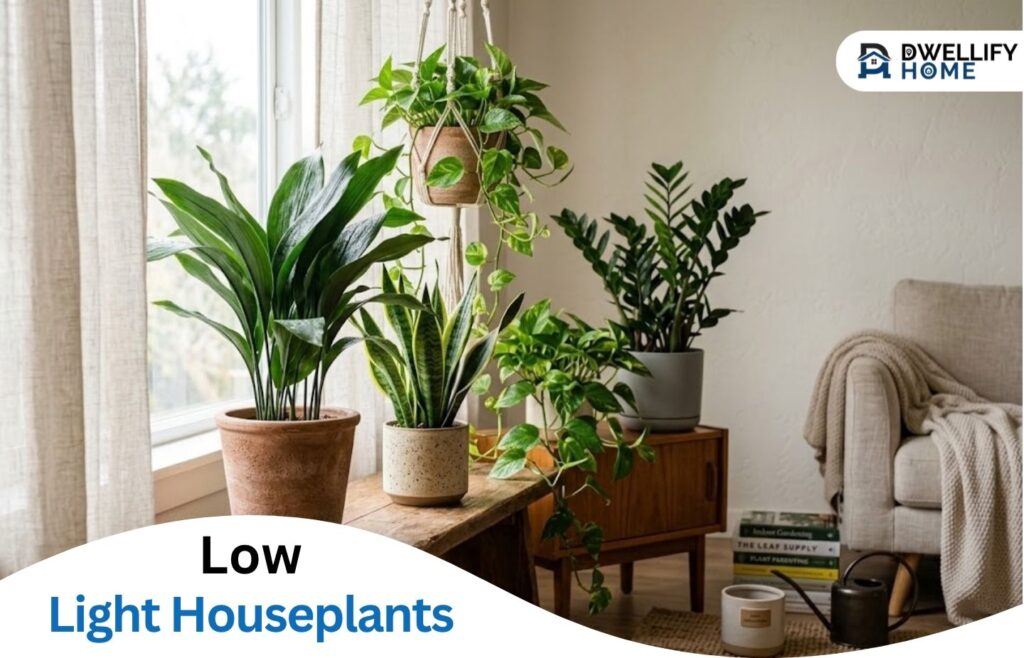
Low light houseplants such as cast iron plant, ZZ plant, snake plant, and pothos can suit rooms with limited daylight. Choose according to the light reaching the leaves, your watering habits, and whether pets can reach the plant. Every option still needs usable natural or artificial light to grow.
A plant can look perfect beside a sofa and struggle in that exact spot. The window may be across the room, a porch may block daylight, or the pot may stay wet much longer than expected. Choosing well starts with the location you actually have.
These eight options offer different shapes and care demands. A little planning will help you choose one that fits both your home and your routine.
Check the light before choosing a plant
Low light usually means limited indirect daylight, without much direct sun reaching the leaves. It does not mean a room kept dark all day. Plants use light to make the energy they need; without enough, their stored reserves eventually run down. University of Minnesota Extension explains the distinction.
Look at the proposed spot in the morning, around midday, and later in the afternoon. Open the blinds as you normally would. Judge conditions where the plant will sit, including whether a shelf, curtain, or neighboring building blocks its view of the window.
In many US homes, a north-facing window offers a useful starting point for shade-tolerant foliage plants. However, direction alone cannot tell you whether the location is suitable. A large unobstructed window and a small window under a deep porch provide very different conditions.
There is no dependable rule that every low-light plant belongs a fixed number of feet from glass. Start with a position that receives daylight, then adjust according to growth and the plant’s specific needs.
For a windowless room, plan suitable artificial lighting. A bathroom light switched on briefly during daily use is not a dependable growing setup. Follow the grow-light manufacturer’s placement guidance and use a timer for a consistent daily schedule.
Reassess placement as seasons change. Winter daylight can be shorter and weaker, while a summer sunbeam may reach leaves that previously stayed shaded. Chicago Botanic Garden discusses these seasonal conditions.
Compare the plants by space and care needs
Check pet access before choosing. Cast iron plant and parlor palm are listed by ASPCA as non-toxic to cats and dogs. The other six selections carry toxicity concerns. Even non-toxic plants can cause stomach upset when eaten, so discourage chewing. ASPCA plant-safety guidance.
| Plant | Useful shape or placement | Watering approach | Cats and dogs |
| Cast iron plant | Broad upright leaves; floor accent | Allow some drying | Non-toxic |
| ZZ plant | Upright, arching growth | Let mix dry between waterings | Toxic |
| Snake plant | Narrow upright leaves | Let mix dry between waterings | Toxic |
| Pothos | Trailing shelf plant | Allow drying between waterings | Toxic |
| Heartleaf philodendron | Soft trailing or climbing growth | Light moisture; avoid saturation | Toxic |
| Chinese evergreen | Bushy tabletop foliage | Allow partial drying | Toxic |
| Parlor palm | Arching fronds; needs side clearance | Let mix dry slightly | Non-toxic |
| Peace lily | Broad leafy clump | Light moisture; avoid prolonged dryness | Toxic |
These are starting points, not identical watering instructions. Pot size, mix, light, and indoor conditions affect how quickly each plant dries. Check the botanical name on the label because common names can be confusing.
Eight plants worth considering
1 Cast iron plant for a broad leafy accent
Cast iron plant (Aspidistra elatior) is a useful first choice when you want substantial green leaves in a shaded location. Its upright clump works beside furniture where trailing stems would get in the way.
It grows slowly, so choose a specimen reasonably close to the size you want. Allow room for the leaves to spread without being repeatedly brushed by people walking past. Shade tolerance does not protect foliage from harsh direct sun.
Use a draining potting mix and allow some drying between waterings. Avoid keeping the root ball constantly saturated. NC State Extension’s cast iron plant profile supports its suitability for shade and containers.
For households with cats or dogs, its ASPCA non-toxic classification makes it a practical candidate.
2 ZZ plant for a routine with less frequent watering
ZZ plant (Zamioculcas zamiifolia) has glossy leaflets and thick underground stems called rhizomes that store water. It suits someone comfortable checking a pot and leaving it alone when the mix is still damp.
Let the potting mix dry between waterings. Giving it a little extra water whenever you pass is an easy way to undermine its drought tolerance.
Although ZZ tolerates low light, brighter indirect light supports better growth. Its arching leaves also take up more width than a small nursery plant might suggest. Choose it for its shape and forgiving moisture needs, while accepting slow development in a dimmer spot.
Keep it away from chewing pets and children; the plant contains irritating compounds. NC State’s ZZ plant guidance.
3 Snake plant for limited floor space
Snake plant (Dracaena trifasciata, formerly Sansevieria trifasciata) provides vertical foliage without a broad canopy. Upright varieties can fit beside a desk, while compact varieties suit smaller surfaces.
Check the cultivar label before buying. A photograph of a tall specimen does not tell you how a dwarf variety will develop.
Allow the mix to dry between waterings and use a container with drainage holes. Its tolerance of dry conditions makes frequent watering unnecessary, especially when growth is slow. Low-light tolerance also should not be mistaken for a preference for the darkest available corner. NC State’s snake plant profile.
It is toxic to cats and dogs if ingested, according to ASPCA’s snake plant record.
4 Pothos for a shelf with trailing greenery
Pothos (Epipremnum aureum) offers trailing stems that can soften the edge of a cabinet or shelf. Place the pot where light reaches the foliage rather than deep inside a bookcase.
A greener variety is a sensible starting point for lower light. Variegation, the contrasting pale pattern on leaves, may become less pronounced in dim conditions. Bright indirect light generally produces better results.
Allow the mix to dry between waterings. If vines become sparse, review the light before relying on pruning to improve fullness. Trimming can change the shape, but it cannot supply missing light. NC State’s pothos guidance.
Keep trailing stems beyond pets’ reach; pothos is toxic to cats and dogs.
5 Heartleaf philodendron for soft trailing growth
Heartleaf philodendron (Philodendron hederaceum) has green, heart-shaped leaves and flexible stems that trail or climb. It suits a small starting footprint if you can accommodate the vines as they lengthen.
It tolerates low light, although moderate light is preferable. A shelf near available daylight is more promising than a high shelf shadowed by the ceiling.
Keep the mix lightly moist with good drainage, avoiding prolonged saturation. Check before watering instead of giving it the same treatment as a nearby ZZ plant. They may share a shelf while needing different moisture conditions. NC State’s heartleaf philodendron profile.
Like pothos, it contains insoluble calcium oxalate crystals that can irritate the mouth if chewed. ASPCA’s toxicity record.
6 Chinese evergreen for a fuller tabletop plant
Chinese evergreen (Aglaonema species and cultivars) offers a bushier outline than trailing vines. It can work on an end table where you want leaves clustered above the pot.
Choose a variety with documented shade tolerance, such as ‘Maria’, rather than assuming every colorful cultivar has identical requirements. Ask for the cultivar name if the label simply says “assorted foliage.”
Let the mix dry partly between waterings without leaving it parched for extended periods. Keep it away from cold drafts, including a frequently opened exterior door. NC State’s Aglaonema profile identifies cold sensitivity, watering concerns, and cultivar differences.
This is a toxic plant choice for cats and dogs. For example, ASPCA lists Aglaonema modestum as toxic.
7 Parlor palm for a softer upright shape
Parlor palm (Chamaedorea elegans) brings fine, arching fronds to a room. Although a young plant can sit on furniture, leave room around it so the fronds are not pressed against a wall.
It tolerates low light but benefits from brighter indirect light. Allow the mix to dry slightly between waterings, keeping it from remaining waterlogged. Protect it from cold drafts. NC State’s parlor palm profile.
Inspect the foliage during routine care. Fine webbing or persistent speckling deserves a closer look for pests rather than an automatic increase in water.
ASPCA lists this specific species as non-toxic to cats and dogs. Confirm the identity before buying; the word “palm” alone is not enough.
8 Peace lily for foliage with the possibility of flowers
Peace lily (Spathiphyllum) offers broad leaves and distinctive white flower structures. It can tolerate lower light, but choose a brighter indirect position if flowering matters to you.
Keep the mix lightly moist, allowing slight drying between waterings. Avoid repeatedly letting the entire plant collapse before watering. If it droops while the soil is wet, adding more water may worsen the underlying problem.
Check the variety’s expected size because compact and large forms differ considerably. NC State’s peace lily profile describes the range and care requirements.
Peace lilies are toxic to cats and dogs. If you prefer a vase display, our guide to growing a peace lily in water explains that separate care method.
Build a care routine around the plant and pot
Check moisture before adding water
Set a reminder to inspect your plants, then decide which ones need watering. Feel below the surface and compare the pot’s weight with how it feels after watering. A dry surface can hide damp mix farther down, especially in a deep container.
Use the plant’s moisture preference alongside these checks. ZZ and snake plants need a more substantial dry interval than a peace lily. When watering is due, wet the mix thoroughly, let excess water drain, and empty the saucer or decorative outer pot. University of Georgia’s watering guidance explains why conditions matter more than a fixed calendar.
Make drainage easy to inspect
A nursery pot inside a decorative cover is convenient if you can lift it out and remove collected water. Choose a waterproof saucer or protective tray for furniture, and check underneath it occasionally.
Use a potting mix appropriate to the plant rather than dense soil dug from the yard. Our pumice versus perlite guide explains two common amendments if you need to understand drainage and aeration options.
Avoid moving a small plant into a much larger container purely for appearance. Choose the decorative cover separately from the growing pot.
Match feeding to growth
Fertilizer will not correct inadequate light. Follow a suitable houseplant fertilizer’s label, consider any fertilizer already in the potting mix, and reduce or pause feeding when growth slows. Excess fertilizer can damage roots. University of Georgia’s nutrition guidance.
Wipe dust gently from accessible leaves with a damp cloth. While doing so, inspect leaf undersides and the growing tips. This turns a simple cleaning task into a useful opportunity to notice changes early.
Respond to problems in a sensible order
Yellow leaves, drooping, or slow growth do not identify a single cause. Check moisture, drainage, recent changes, and light before choosing a remedy.
| What you notice | What to check first | A sensible next step |
| Long, sparse stems leaning toward light | Light reaching new growth | Move to brighter indirect light or add suitable lighting |
| Yellowing with persistently wet mix | Collected water and drainage | Empty runoff and delay further watering while checking the roots |
| Drooping with dry mix and a light pot | Whether watering is overdue | Water appropriately and monitor recovery |
| Drooping despite wet mix | Possible root stress | Investigate drainage and roots before adding water |
| Little growth but otherwise firm foliage | Species, season, and light | Compare over time before changing several care factors |
These patterns guide investigation; they do not confirm a diagnosis. Weak, stretched growth is a recognized sign of insufficient light, but other symptoms need context. University of Minnesota’s lighting guidance.
Take a dated photo after changing placement and compare the next leaves or shoots. Existing damaged leaves may not recover their appearance. If deterioration continues or roots are soft and collapsing, seek help from a local extension service or knowledgeable plant nursery.
Frequently asked questions
Can houseplants grow in a windowless bathroom
Yes, with adequate artificial lighting suited to the plants. Humidity cannot replace light. Consider whether you can provide a consistent lighting schedule and position the fixture according to its instructions. Choose equipment appropriate to the room’s moisture conditions.
Does no direct sunlight mean low light
No. A room can receive plenty of bright, indirect daylight without sunbeams landing on the leaves. That distinction matters because plants described as needing indirect light may still struggle far from a window.
Are low light houseplants suitable for cats and dogs
Some are. Cast iron plant and parlor palm are the two non-toxic options in this shortlist. That does not make them suitable snacks. If a pet may have eaten a toxic plant, contact a veterinarian or animal poison service promptly. Keep the plant label or a clear identification photo.
Will a peace lily flower in a dim corner
It may maintain foliage without flowering well. Move it toward brighter indirect light if flowers are a priority, while protecting it from harsh sun. More fertilizer is not a dependable solution to poor light.
Start with one suitable plant
Choose the location first, then match a plant to the available light and your care habits. Start with one specimen and learn how its pot dries before adding more. Healthy, stable foliage and appropriate new growth will tell you more about the match than the words “low light” on a plant tag.