
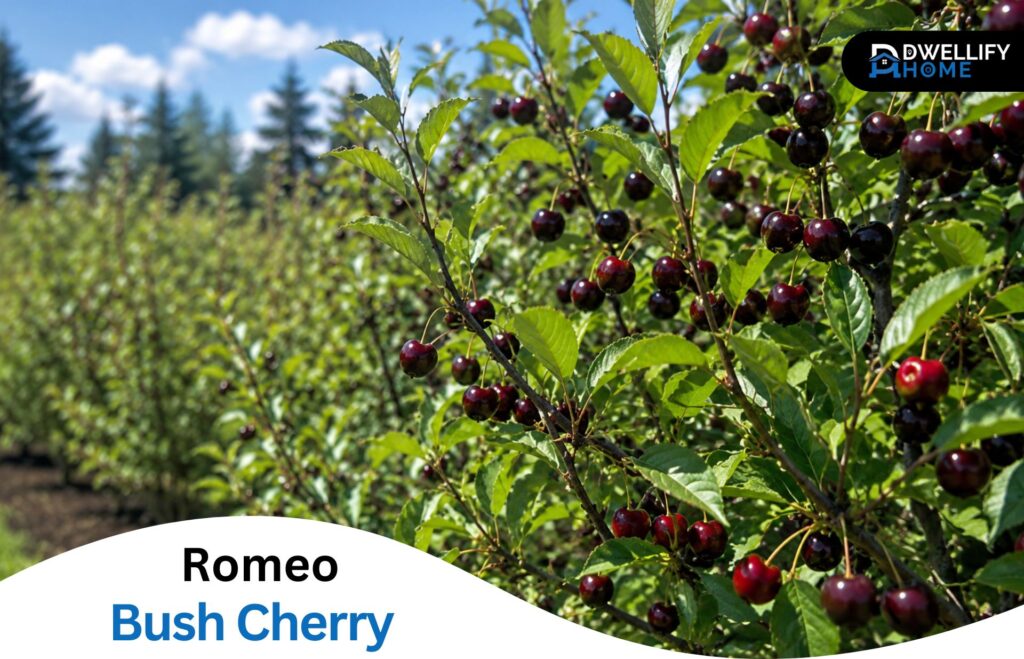
Plant a row of these and you learn fast that the Romeo bush cherry rewards patience more than almost any fruit I’ve grown in a cold climate. It’s a dwarf sour cherry from the University of Saskatchewan’s Romance Series — hardy to Zone 2, self-fertile, topping out around six to eight feet, with dark, sweet-tart fruit that most people misjudge on their first bite. Anyone weighing one for the yard is really asking three things: is the fruit worth eating, will it survive the winter, and can I grow it well? The short answers are yes, almost certainly, and yes — with a few honest caveats worth knowing before you dig the hole.
SHORT DEFINITION
The Romeo bush cherry is a compact, cold-hardy sour cherry shrub chosen for sweet-tart dark fruit, small-space growing, and reliable cold-climate harvests for fresh eating, juice, jam, pies, and wine.OUR MISSION
Dwellify Home helps people make practical, stylish, and informed decisions about their homes, gardens, and properties.
What Is the Romeo Bush Cherry?
Romeo is a compact, cold-hardy shrub grown for its tart-sweet cherries, though it’s handsome enough to earn a spot in an ornamental bed. Before you decide whether to plant one, it helps to know where it came from and what you’re actually getting.
The Romance Series and Its Saskatchewan Roots
Romeo is one of five cherries in the Romance Series, released in 2004 by the University of Saskatchewan’s fruit program. Its siblings are Juliet, Cupid, Crimson Passion, and Valentine, with the earlier Carmine Jewel (1999) usually grouped alongside them.
The series is the product of decades of prairie breeding. Les Kerr began crossing European sour cherries with hardy Mongolian cherries back in the mid-20th century. That work passed through researchers like Stewart Nelson and Cecil Stushnoff before Rick Sawatzky and Dr. Bob Bors carried it to release at Saskatchewan. The heritage is the whole point — every trait Romeo has traces back to breeding a real cherry that could shrug off a prairie winter.
Sweet Cherry or Sour Cherry?
Romeo is a sour (tart) cherry, not a sweet one — though it sits on the sweeter, richer end of the sour-cherry range. It’s an interspecific hybrid of the European sour cherry (Prunus cerasus) and the hardy Mongolian cherry (Prunus fruticosa), sometimes written as Prunus × kerrasis. That cross is what makes it dwarf, cold-hardy, and tart.
Don’t trust every plant tag on this point. Plenty of retailers label Romeo a “sweet cherry,” which sets people up to be let down. It’s roughly three-quarters sour cherry and one-quarter Mongolian cherry by parentage, and the Mongolian side is where the dwarf habit and the brutal hardiness come from. Think of it as the best-tasting tart cherry you can grow, not a stand-in for a Bing.
What Romeo Cherries Taste Like
Ripe Romeo cherries taste like sweet-tart cherry lemonade — bright acidity balanced by real sugar, deepening to a rich, almost wine-like sweetness once the fruit turns dark. Picked too early at bright red, they’re sharp and disappointing. Left to hang until nearly maroon, they’re one of the better fruits a cold-climate garden can produce.
Here’s where the numbers get interesting. Romeo’s sugar reads around 18 on the brix scale straight off the bush, but pressed into juice it climbs to roughly 25 or 26 — among the highest in the series. It also carries more acid than most of its siblings, and that sugar-acid tension is exactly what gives it the lemonade snap. The flesh and juice run deep red without the heavy staining you’d get from some darker cherries, which is part of why they’re easy to work with in the kitchen.
SERP ENHANCEMENT ELEMENTS
| Decision Point | Best Answer |
| Best use | Juice, jam, pies, wine, and fully ripe fresh eating |
| Garden fit | Cold-climate yards, edible hedges, and smaller spaces |
| Pollination | Self-fertile, but crops better with another Romance Series cherry nearby |
| Main caution | Wait until fruit turns dark maroon; bright red cherries are usually too tart |
| Better alternative | Juliet for larger fresh-eating fruit; Valentine for slightly more cold hardiness |
Key benefits and uses:
- Compact shrub form that is easier to net, prune, and harvest than a standard cherry tree.
- Strong cold hardiness for northern gardens.
- Sweet-tart dark cherries with excellent juice, jam, pie, and wine potential.
- Self-fertile growth, with better fruit set when paired with another compatible bush cherry.
Is the Romeo Bush Cherry Right for Your Garden?
This is the part most buying guides skip. Romeo is a good plant, but it isn’t the right plant for every yard or every use. Run through these before you buy.
How Cold-Hardy Is Romeo — and Where It Falls Short
Romeo is reliably hardy to USDA Zone 2, surviving winter lows around −40 degrees. That said, it’s one of the two least cold-hardy cherries in the Romance Series, so in the harshest zones it can take some winter dieback where Juliet or Valentine wouldn’t. Ignore any tag claiming “Zones 4 to 9” — that overstates its heat side and undersells its real strength.
In the coldest winters, the breeding program itself has recorded Romeo taking noticeable tip dieback while hardier siblings came through clean. It recovers, but it’s worth knowing if you garden in Zone 2 or 3. One practical rule from experience: grow Romeo as a multi-stemmed shrub, not trained up as a single-trunk tree. A single trunk is a single point of failure in a hard freeze, and tree-form plants lose hardiness in exactly the climates where you need it most.
How Big Does a Romeo Cherry Bush Get?
A mature Romeo bush cherry reaches about six to eight feet tall and five to seven feet wide. It grows as a rounded, multi-stemmed shrub rather than a tree. Left completely unpruned in milder climates it can push taller, but most growers keep it in that six-to-eight-foot range for easy picking.
That compact size is a big part of the appeal. You can net it, pick it standing on the ground, and fit two or three in the space one standard cherry tree would demand.
Do You Need Two Plants to Get Fruit?
No — Romeo is self-fertile and will set fruit on its own. But planting a second Romance Series cherry nearby noticeably improves fruit set, and in practice self-fertility can be inconsistent on young plants. If you have the room, two different varieties is the more reliable path to a full crop.
I’ve seen a lone Romeo crop perfectly well, and I’ve seen one flower heavily and set almost nothing in its first bearing year. The bushes bloom early, sometimes before pollinators are fully active on the prairies, so anything that improves pollination helps. Pairing Romeo with Juliet or Carmine Jewel covers you and stretches your harvest window at the same time.
Sun, Soil, and Spacing Needs
Romeo wants full sun — at least six hours a day — and sharp drainage. It’s forgiving about soil type but hates wet feet, so heavy, soggy ground is the one thing that will genuinely shorten its life. Aim for a slightly acidic to neutral pH, somewhere around 6 to 7, and space plants five to seven feet apart. Tighter spacing works for a hedge; wider spacing gives each bush better airflow, which matters for disease.
What You Can Make with Romeo Cherries
This is a workhorse kitchen cherry. It’s good fresh once fully ripe, but it truly shines processed — pies, jam, cordials, and especially juice and wine, where its high juice sugar pays off. The fruit holds together well and doesn’t stain hands and counters the way darker cherries do, which makes it friendly for picking with kids and easy to put up in quantity.
Can You Grow Romeo in a Container?
You can grow a Romeo bush cherry in a large container for a few years, but it’s not a long-term patio plant in cold climates. Roots in a pot lose the ground’s insulation, so a Zone-2 shrub effectively becomes far more tender. Plan to sink the pot in the ground or move it to an unheated garage over winter.
A watch-out here: some sellers pitch Romeo as a patio plant and then void the warranty if you grow it in a container. If you go the pot route, use the biggest container you can manage, keep it watered, and take winter protection seriously. This is a plant that would rather be in the ground.
How to Plant and Grow a Romeo Bush Cherry
None of this is complicated. Romeo is low-maintenance once established — the trick is getting it through the first couple of years and then mostly staying out of its way.
When and How to Plant
Plant in spring once the ground is workable, which is how most Romeo cherries ship — as dormant bare-root plants or in pots. Set the plant at the same depth it grew at the nursery, keep the crown at soil level, water it in well, and mulch. Bare-root stock is cheaper and establishes fine; potted plants give you a small head start on fruiting.
Watering, Feeding, and Mulching
For the first two to three years, water deeply and regularly — this is the single biggest factor in how fast the plant establishes and starts bearing. After that, Romeo is fairly drought-tolerant. Feed lightly with a balanced fertilizer in spring if your soil is poor; over-feeding just pushes soft growth. A few inches of mulch keeps roots cool, holds moisture, and saves you weeding.
How and When to Prune
Prune Romeo in late winter or very early spring while it’s dormant. Use renewal pruning — remove a few of the oldest, thickest canes each year and let younger ones take over, taking no more than about a quarter of the wood annually. This keeps the bush productive, open, and airy without shocking it.
For the first few years, do almost nothing beyond removing dead or crossing wood. Once the bush is established, that steady renewal cut — thinning old canes at the base rather than heading everything back — is what keeps fruiting wood young and air moving through the center. An open structure is your best cheap defense against the fungal problems that hit cherries.
Should You Remove the Suckers?
Not all of them. Romeo suckers less than most Romance cherries, but the suckers it does send up aren’t only a nuisance — in extreme cold they can be the part of the plant that survives a winter that kills the main stems. Remove suckers to keep a tidy shrub, but in Zone 2 or 3 it’s worth leaving a few.
This is something you rarely see mentioned. In the coldest gardens, those low suckers are insurance: if a brutal winter kills back the top, the plant can regenerate from the base. So the right answer depends on where you live. Prune them off for neatness in milder zones, but keep a couple in reserve if you’re on the hardiness edge.
How Many Years Until It Fruits?
Expect a small first crop around year three, a meaningful harvest by year four or five, and full production somewhere between years five and seven. The size of plant you buy shifts this — a larger potted plant may fruit a year or two sooner than a small bare-root whip.
Patience is the whole game with Romeo. The temptation is to give up on a slow young plant, but these bushes put their early energy into roots and structure. Water well, prune lightly, and the fruit comes. A plant that looks unimpressive in year two is often loaded by year five.
Harvesting Romeo Cherries at Peak Ripeness
Here’s the single most important thing in this whole guide: don’t rush the harvest. Romeo cherries turn red weeks before they’re ready. Red means “getting there,” not “ripe.”
Romeo ripens in late summer — roughly early to mid-August across much of North America, and about two weeks behind Carmine Jewel. Wait until the fruit is dark, deep red heading toward maroon or nearly black, and hangs long enough that a gentle tug pulls it free. That’s when the sugar has caught up with the acid and the flavor is at its best. The University of Saskatchewan even publishes color cards for judging ripeness, and the lesson is always the same: darker is sweeter. Taste one every few days near the end and let the fruit tell you.
One honest drawback — the pits don’t release cleanly. Romeo isn’t a freestone cherry, so pitting takes work. A handheld cherry pitter handles the fruit fine for jam and juice, but don’t expect the stones to fall out on their own.
Romeo vs Juliet: Which One Should You Grow?
This is the comparison that trips up most buyers, because Romeo and Juliet look almost identical on paper and get sold as a matched pair. They’re close — but they’re not the same plant, and which one you want depends on what you’re growing cherries for.
Romeo vs Juliet at a Glance
The short version: Romeo ripens a little later, yields a touch more, and makes richer juice; Juliet has larger fruit, ripens slightly earlier, and is a bit hardier. In a multi-year Montana State University trial, the two stacked up roughly like this:
| Trait | Romeo | Juliet |
| Ripening | Slightly later (mid-August) | Slightly earlier |
| Fruit size | Smaller (~3 g young, ~4 g mature) | Larger (~4–5 g) |
| Sugar off the bush (brix) | ~18 | ~17 |
| Juice sugar (brix) | ~26 | ~22 |
| Yield over five years (trial) | ~40 lb | ~34 lb |
| Cold hardiness | Good; some tip dieback in extreme cold | Slightly hardier |
| Best for | Juice, wine, processing | Fresh eating, bigger fruit |
Neither is a wrong choice. Bob Bors, who helped breed them, has named Romeo his top pick for flavor, while Saskatchewan’s own listings call Juliet the best-flavored in the series. Grow both if you can — they pollinate each other.
How Romeo Stacks Up Against the Whole Romance Series
Zoom out to the full lineup and Romeo’s niche gets clearer:
| Cultivar | Released | Height | Fruit size | Sugar (brix) | Ripens | Notes |
| Carmine Jewel | 1999 | ~6 ft | ~3.5 g | ~12–14 | Earliest (late July) | Heaviest cropper; smallest pit; most tart |
| Romeo | 2004 | ~6–8 ft | ~4 g | ~18 off the bush | Mid-August | Best for juice; deep flavor; slightly less hardy |
| Juliet | 2004 | ~6–8 ft | ~4–5 g | ~17 | Early–mid August | Larger fruit; hardy; great fresh |
| Valentine | 2004 | ~8 ft | ~4.5 g | Mid-range | Mid-August | Most productive; bright red; Montmorency-style |
| Crimson Passion | 2004 | ~5–6 ft | ~6 g | Up to ~22 | August | Sweetest and firmest; least reliable cropper; most tender |
| Cupid | 2004 | ~8 ft | ~6.5 g | High | Latest (late Aug–Sept) | Biggest fruit; too large for standard pitters |
Carmine Jewel and Romeo are the classic juice-and-processing pair. Crimson Passion is the sweetest but the fussiest. Cupid gives the biggest fruit but ripens last.
How to Tell Romeo and Juliet Apart
When the nursery labels fade — and they always fade — you can still tell young Romeo and Juliet apart by growth. Juliet tends to arrive and establish as the larger, more vigorous plant; Romeo is often smaller and slower out of the gate, with somewhat smaller leaves.
It’s a common headache: you plant a matched pair, the tags disintegrate in two seasons, and you’ve got two near-identical shrubs. Leaf size and overall vigor are the most reliable early tells — Juliet bigger and faster, Romeo more restrained. Once they fruit, timing and juice give it away, since Romeo ripens later and presses sweeter.
Which Bush Cherry Is Best for You?
For fresh eating, choose Juliet or Crimson Passion for larger, sweeter fruit. For juice, wine, jam, and baking, Romeo and Carmine Jewel are hard to beat. For the coldest gardens, lean on Valentine or Juliet for hardiness. And for the biggest cherries, Cupid — if you can wait until late summer.
“Best-tasting bush cherry” has no single answer, and anyone who gives you one is selling something. Match the plant to the job. My default for most cold-climate growers who want to put a harvest to use is a Romeo and a Juliet together: you get juice and fresh eating, cross-pollination, and a harvest that stretches over a few weeks instead of hitting all at once.
Common Problems and How to Avoid Them
Romeo is a tough, low-fuss plant, and on the prairies it suffers remarkably few problems. The picture changes as you move into warmer, wetter regions, where the usual cherry troubles show up. Here’s what to watch for.
Pests and Diseases to Watch For
The big ones are brown rot, cherry leaf spot, bacterial canker, cherry fruit fly, and spotted-wing drosophila. In dry, cold climates most of these stay minor. In humid regions, brown rot and leaf spot become the main fungal threats, and spotted-wing drosophila can be seriously destructive to ripening fruit. Good airflow from proper pruning, cleaning up dropped fruit and leaves, and not crowding your plants prevents most of it. Where spotted-wing drosophila is established, timing your harvest and picking promptly matters more than any spray.
Keeping Birds and Deer Off Your Cherries
Birds are the number-one reason growers lose a Romeo crop. The fruit ripens over weeks, and birds will strip it as fast as it colors. Netting is the only fully reliable answer; reflective flash tape helps and is easier to manage on a small planting. Deer browse the foliage and can do real damage to young bushes — they’ll “prune” a plant hard — so fencing or a repellent is worth it while plants are getting established.
Are Romeo Cherries Toxic to Pets or Children?
The ripe cherry flesh is safe to eat. But like all cherries, Romeo’s leaves, stems, pits, and roots contain cyanogenic compounds that are toxic if chewed or eaten in quantity. The fruit around the pit is fine; the concern is crushed or swallowed pits and plant parts, which matters most with young children and pets.
No need to be alarmed — this is true of every cherry, plum, peach, and apricot. Teach kids to spit the pits, keep dogs from chewing fallen branches or gnawing pits, and you’re fine. Whole swallowed pits generally pass without harm; the real risk is crushing or chewing them.
What Plant Labels Often Get Wrong
After enough seasons around these plants and their marketing, a few recurring label claims are worth correcting:
- “Sweet cherry.” Romeo is a sour cherry — a good one, but tart. Expect cherry lemonade, not Bing.
- “Hardy in Zones 4–9.” Its strength is cold, not heat. Zone 2 is the real story; the high end is overstated.
- “Up to 30 pounds per plant.” That figure belongs to Carmine Jewel at full maturity. A realistic mature Romeo yields closer to 10 to 20 pounds.
- “22 brix.” That’s the top of a seasonal range and closer to Crimson Passion’s number. Romeo reads around 18 off the bush.
- “Great for containers.” Fine short-term, but not a long-term cold-climate patio plant.
None of this means Romeo is oversold. It’s a very good cherry — it’s just often sold with sweet-cherry expectations it was never meant to meet.
Frequently Asked Questions
What do Romeo bush cherries taste like?
Sweet-tart, like rich cherry lemonade. They’re a sour cherry on the sweeter end of the range, with bright acidity and deep flavor once the fruit ripens to dark maroon. Picked early at bright red they taste sharp; fully ripe they’re excellent fresh and for juice.
How big does a Romeo cherry bush get?
About six to eight feet tall and five to seven feet wide at maturity, growing as a rounded, multi-stemmed shrub rather than a tree. In milder climates, unpruned plants can grow somewhat larger.
What’s the difference between Romeo and Juliet bush cherries?
Both are Zone-2, self-fertile Romance Series cherries released in 2004. Juliet has slightly larger fruit, ripens a little earlier, and is marginally hardier. Romeo ripens later, yields a bit more, and makes richer juice.
What is the best-tasting bush cherry?
It depends on use. Juliet is often called the best-flavored for fresh eating and Crimson Passion the sweetest, while Romeo is a top pick for juice and processing. Carmine Jewel is the most tart of the group.
Is the Romeo cherry self-pollinating, or do I need two plants?
Romeo is self-fertile and will fruit alone, but a second Romance Series cherry nearby improves fruit set and makes cropping more reliable, especially on young plants.
When do Romeo cherries ripen?
Late summer — roughly early to mid-August across much of North America, and about two weeks after Carmine Jewel. Wait for the fruit to darken well past bright red before picking.
How many years until a Romeo bush produces fruit?
A small first crop around year three, a meaningful harvest by year four or five, and full production by years five to seven. Larger nursery plants fruit sooner than small bare-root stock.
What hardiness zone is Romeo suited to?
USDA Zone 2 through about Zone 7, surviving lows near −40 degrees. Labels claiming Zones 4 to 9 overstate its heat tolerance; its real strength is extreme cold.
Are Romeo cherries sweet or sour?
Sour — but on the sweet, rich end of the sour-cherry range. It’s a tart cherry with high sugar, not a sweet cherry like Bing.
Do Romeo bush cherries send up suckers?
Yes, but fewer than most Romance Series cherries. In very cold climates, leaving a few suckers is useful insurance, since they can regenerate the plant if a harsh winter kills the main stems.
The Bottom Line
The Romeo bush cherry earns its place in a cold-climate garden — a compact, hardy shrub that turns out dark, sweet-tart fruit ideal for juice, jam, and pies, with enough sweetness to enjoy fresh once you let it ripen fully. It’s the right pick if you want a low-fuss cherry for putting up a harvest and you garden somewhere winters run hard. For the largest fresh-eating fruit, Juliet or Crimson Passion may suit you better, and in the very coldest gardens Juliet or Valentine give you a little more hardiness to lean on. Plant it, be patient through the slow early years, wait for the fruit to go dark before you pick, and Romeo will pay you back for a long time.
DISCLAIMER: This content is for general informational purposes only. Growing results, plant performance, and suitability vary by climate, soil, care, and individual garden conditions. For site-specific planting, safety, or property decisions, confirm details with a qualified local professional.