Most pruning mistakes don’t start with bad technique. They start with the wrong tool. I’ve seen it happen on hundreds of residential properties — someone grabs whatever is hanging in the garage, forces it through a branch that’s twice too thick, and wonders why the tree looks worse a month later.
Choosing the right tree clippers isn’t complicated, but it does require a basic understanding of what each tool is actually designed to do. This guide walks you through everything — the types, the key features, and exactly how to match the tool to your specific situation.
Snippet-Ready Definition
Tree clippers are handheld or pole-mounted pruning tools used to cut and shape tree branches cleanly. They help gardeners maintain tree health, control growth, and remove dead or damaged wood without causing unnecessary harm to the tree.
Mission Statement
At Dwellify Home, we help homeowners make practical, well-informed decisions about their living spaces — indoors and out. From garden tools to home solutions, our goal is to give you clear, honest guidance so every choice you make for your home is one you’ll feel confident about.
What Are Tree Clippers — and Why Does the Right One Actually Matter?
Tree clippers are handheld or pole-mounted cutting tools designed to prune, trim, and shape tree branches with precision. Also called pruning shears, secateurs, or pruners depending on size and design, they work by making clean, controlled cuts that allow the tree to heal properly. Using the wrong tool — or a dull one — leaves torn, crushed, or jagged wounds that slow healing and invite disease.
Tree Clippers, Pruning Shears, Loppers, and Secateurs — Are They All the Same Thing?
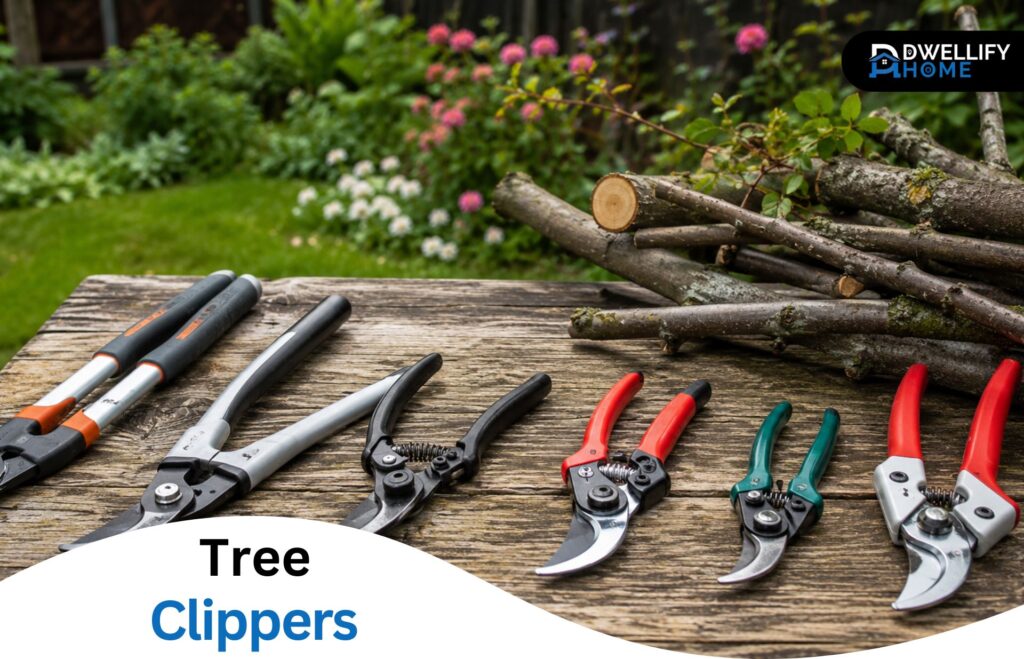
Not exactly, though the terms do overlap. “Secateurs” is the traditional name for one-handed pruning shears — the compact tool most people picture. “Pruning shears” and “hand pruners” are used interchangeably and refer to the same tool. “Loppers” are the two-handled, long-reach version designed for thicker branches. “Tree clippers” is the broader term that covers all of them.
Understanding this matters because when you’re searching for or buying a specific tool, using the right name helps you find the right product. A search for “loppers” and a search for “hand pruners” will return completely different tools.
What Tree Clippers Can Handle — and Where They Stop Being Enough
Most handheld clippers are designed for branches up to about ¾ inch in diameter. Loppers extend that range to roughly 2 to 2.5 inches. Beyond that, you’re looking at pruning saws. No clipper — regardless of price or brand — should be forced through a branch that exceeds its rated capacity. When that happens, the cut is poor, the tool suffers, and the tree takes damage it didn’t need to.
Quick Comparison Table — Tree Clipper Types at a Glance
| Tool Type | Best For | Max Branch Size | Power Source |
| Hand Pruners | Light trimming, small branches | Up to ¾ inch | Manual |
| Loppers | Thicker branches, added leverage | Up to 2.5 inches | Manual |
| Pole Pruners | Overhead branches, no ladder | Up to 1.25 inches | Manual / Electric |
| Electric Clippers | High-volume or orchard pruning | Up to 1.5 inches | Corded |
| Cordless Clippers | Flexible home garden use | Up to 1.5 inches | Battery |
| Pruning Saw | Heavy branches, mature trees | 1.5 to 5+ inches | Manual |
Key Benefits of Using the Right Tree Clippers
- Produces clean cuts that heal faster and reduce disease risk
- Reduces hand and wrist fatigue during longer pruning sessions
- Allows safe overhead cutting without the need for a ladder
- Extends the lifespan of trees through proper wound management
- Saves time by matching tool size to branch size from the start
The Main Types of Tree Clippers — What Each One Is Built For
The right type depends on three things: the size of the branch, how high up it is, and how much cutting you plan to do. Here’s a clear breakdown.
Hand Pruners — Everyday Precision for Small Branches
Hand pruners are one-handed tools built for branches up to ¾ inch thick. They’re the tool you’ll use most often — for shaping, deadheading, removing small crossing branches, and general tidying. Good secateurs fit comfortably in one hand, spring open automatically after each cut, and allow precise work in tight spots that larger tools can’t reach.
Brands like Felco and Corona have been trusted by working arborists for decades. They’re not cheap, but the blades are replaceable, which means a decent pair can last twenty years with proper care.
Loppers — Two-Handed Cutting Power for Thicker Branches
When a branch is too thick for hand pruners, loppers take over. Their long handles give you the leverage needed to cut branches from 1 inch up to about 2.5 inches in diameter without straining. The extra handle length also adds a bit of reach — useful when a branch is awkward to get to at shoulder height.
As a tree branch trimmer tool, loppers come in bypass and anvil styles (more on that shortly). For general use, Fiskars loppers are a solid mid-range choice that performs consistently in real garden conditions.
Pole Pruners — Reaching High Branches Without a Ladder
A tree pruner pole lets you cut branches well above your head while keeping both feet on the ground. Basic models use a rope-and-pulley mechanism to close the blade. Extendable pole pruners can reach anywhere from 8 to 16 feet depending on the model — and purpose-built versions like a 27 foot pole saw tree pruner extend even further for tall, mature trees.
For most homeowners with standard-sized garden trees, a 12 to 14 foot extendable pole pruner covers the majority of jobs cleanly. Going longer adds weight and makes the tool harder to control accurately.
Electric Tree Clippers — When Speed and Volume Take Over
Electric tree clippers run off a corded power supply and are designed for high-volume cutting — orchards, commercial landscapes, and situations where you’re pruning for hours rather than minutes. They reduce hand fatigue significantly and can cut through branches that would wear out a manual pruner quickly.
The trade-off is that you’re tethered to a power source, which limits where you can work.
Cordless Tree Clippers — The Balance Between Power and Portability
Tree clippers cordless models give you electric cutting performance without the cable. Battery technology has improved enough that a good cordless pruner will handle a full garden session on a single charge. For homeowners who want speed and convenience without dealing with an extension cord, cordless is currently the most practical middle ground.
Battery life and blade size vary significantly between models, so check the rated cutting diameter before buying.
Pruning Saws — When Clippers Simply Aren’t the Right Tool
Once you’re dealing with branches above 1.5 inches — and especially anything over 2 inches — a pruning saw is the more appropriate tool. Pruning saws cut on the pull stroke, which gives you clean control and reduces the risk of slipping. Folding pruning saws are compact and safe to carry; fixed-blade versions are better for sustained heavy work.
Knowing when to put down the clippers and pick up a saw is one of the most important things a homeowner can learn. Forcing clippers through oversized wood doesn’t save time — it wastes it.
Bypass, Anvil, or Ratchet — Which Blade Mechanism Should You Choose?
For live, green wood, bypass pruners are the correct choice — always. They cut cleanly with a scissor-like action that minimizes damage to surrounding tissue. Anvil blades work better on dry, deadwood. Ratchet mechanisms cut in stages and are ideal for anyone with limited hand strength or wrist issues.
Bypass Blades — The Better Choice for Live, Green Wood
Bypass pruners have two curved blades that pass each other as they close — exactly like scissors. This action produces a sharp, precise cut with minimal crushing. On a live branch, that clean edge heals noticeably faster than a crushed wound. Professional arborists almost universally prefer bypass tools for this reason.
Anvil Blades — More Crushing Power for Deadwood and Dry Branches
Anvil pruners have a single sharp blade that closes onto a flat surface. This gives them more force per cut, which makes them effective on dry, woody, or dead material. The problem is that same force crushes rather than slices on live tissue — which is why they’re not recommended for active pruning on healthy trees.
Use anvil tools for cleanup work on deadwood. Keep bypass tools for anything living.
Ratchet Mechanism — The Wrist-Friendly Option Worth Knowing About
Ratchet pruners work in stages — each squeeze advances the cut incrementally rather than requiring full compression in one motion. This dramatically reduces the strain on your hand and wrist, making them a practical choice for gardeners who prune frequently or who have arthritis or limited grip strength. They’re slower than standard bypass pruners, but for the right user, they’re a much more comfortable daily tool.
What to Look for Before Buying Tree Clippers
A good pair of clippers doesn’t need to be expensive. But a cheap pair that fails after a season isn’t a bargain either. These are the features that actually matter.
Blade Material — What Actually Holds an Edge
High-carbon steel holds a sharp edge longer and resharpens easily — it’s the preferred blade material for professional-grade tools. Hardened steel is durable and rust-resistant, making it reliable for general home use. Titanium-coated blades reduce sap adhesion and friction during cuts. Avoid unspecified “stainless steel” blades on budget tools — they often feel sharp out of the box but dull quickly.
Cutting Capacity — Match the Tool to the Branch, Not the Other Way Around
Every pruning tool has a rated maximum cutting diameter. Treat it as a real limit, not a suggestion. Working within that limit keeps cuts clean and extends the life of the tool considerably.
| Tool Type | Cutting Capacity |
| Hand Pruners | Up to ¾ inch |
| Loppers | 1 inch to 2.5 inches |
| Pole Pruners | Up to 1.25 inches |
| Pruning Saws | 1.5 to 5+ inches |
Handle Design, Grip, and Ergonomics
Ergonomic pruning shears with cushioned, contoured handles reduce hand fatigue significantly over a long session. If you’re left-handed, it’s worth confirming the tool is ambidextrous or has a left-hand version — most standard designs are right-hand biased. Angled blade designs on some models reduce wrist rotation, which matters more than you’d think after an hour of cutting.
Weight, Balance, and Long-Session Comfort
A heavier tool isn’t always more durable — sometimes it’s just heavier. For handheld tools, weight below 8 ounces is generally comfortable. For loppers, forged aluminum handles offer a good balance of strength and lightness. With pole pruners, every extra ounce at the end of an extended pole is amplified significantly at your wrists.
Replaceable Parts and Long-Term Value
The best tree trimming tools aren’t designed to be thrown away. Look for models with replaceable blades, springs, and bolts. Felco pruners, for example, have been built on this principle for decades — you can buy individual replacement parts for almost every component. A tool you can service costs more upfront but far less over time.
How to Choose Tree Clippers for Your Specific Situation
Light Home Maintenance — What Most Homeowners Actually Need
For a typical suburban garden with a few trees and shrubs, a quality pair of bypass hand pruners and a set of loppers will cover the vast majority of jobs. You don’t need electric tools, pole extensions, or professional-grade hardware for occasional seasonal pruning.
Fruit Tree Pruning — Why Precision Matters More Here Than Anywhere Else
Fruit trees need clean, precise cuts that heal quickly and don’t introduce disease. Bypass hand pruners and bypass loppers are the go-to tools here. Avoid anvil blades on fruit trees entirely — the crushing action leaves wounds that take longer to seal, which creates an opening for fungal issues. If you’re managing apple, pear, or stone fruit trees, this distinction makes a real difference in long-term tree health.
Large Properties and Mature Trees — When to Scale Up
One tool won’t cover a large property with established trees. A practical toolkit for this situation includes bypass loppers for mid-range branches, a reliable extendable pole pruner for overhead work, cordless electric clippers for high-volume sessions, and a pruning saw for anything substantial. Building this toolkit gradually is smarter than buying a bundle of average tools all at once.
Professional Use vs. Home Use — Knowing Where the Line Is
Professional tree clippers are built to handle daily, heavy-duty use across multiple properties. They have higher-grade steel, tighter tolerances, and better ergonomics for sustained use. For home gardeners pruning a few times a year, mid-range tools from established brands are more than sufficient. The best tree pruner for a professional arborist and the best one for a weekend gardener are genuinely different tools.
How to Use Tree Clippers Safely and Correctly
The Right Cutting Angle for Clean, Healthy Wounds
Always cut at roughly a 45-degree angle, sloping away from the nearest bud. This angle allows water to run off the wound rather than pooling, which reduces the risk of rot. Cut just outside the branch collar — the slightly raised ring where a branch meets the trunk — and never flush against the trunk itself. Removing the collar slows healing significantly.
Common Mistakes That Quietly Damage Your Trees
The most common mistake is cutting too close to the collar or leaving too long a stub. Stubs don’t heal — they die back and become entry points for disease. Another frequent error is using clippers on branches that are clearly too large for the tool, which results in torn bark and ragged wounds. Removing more than a third of a tree’s canopy in one season is also a mistake that puts the tree under serious stress.
Basic Safety Habits That Experienced Gardeners Never Skip
Always wear safety glasses when cutting overhead — bark fragments fall unpredictably. Make sure your footing is solid before making any cut. Use a pole pruner rather than a ladder for high branches whenever possible — ladders and pruning don’t combine well. Never reach directly overhead with loppers; the force required and the angle of the tool make it difficult to control safely.
How to Clean, Sharpen, and Store Your Tree Clippers
Clean the Blades After Every Use — Here’s Why It Actually Matters
Sap residue on blades isn’t just cosmetic — it gums up the cutting action and causes the blades to drag rather than slice. More importantly, if you’ve been cutting near a diseased branch and move to a healthy tree without cleaning, you can transfer fungal spores or bacterial infections directly on the blade. A quick wipe with a cloth and a spray of blade cleaner or rubbing alcohol takes thirty seconds and prevents a problem that could cost you a tree.
How and When to Sharpen Tree Clippers
A well-maintained blade should glide through wood cleanly. If you’re noticing resistance, crushing, or tearing rather than cutting, the blade needs sharpening. A small diamond file or a dedicated pruner sharpening tool works well for bypass blades — a few strokes on the beveled edge is usually enough. If sharpening doesn’t restore the cutting quality, it’s time to replace the blade rather than the whole tool.
Proper Storage That Extends Tool Life Significantly
Store clippers in a dry location — moisture is the main cause of rust on carbon steel blades. After cleaning, apply a thin coat of tool oil or camellia oil to the blades before storing. Lock the blades closed to protect both the blade edge and anyone reaching into the toolbox. Hanging tools rather than laying them in a pile protects the cutting edge and makes them easier to find when you need them.
Frequently Asked Questions About Tree Clippers
What is the difference between tree clippers and loppers?
Tree clippers is a general term covering all pruning tools, including hand pruners and loppers. Loppers are a specific type — they have two long handles and are designed for branches up to about 2.5 inches thick. Hand pruners (also called clippers) are one-handed and suited for smaller branches up to ¾ inch.
Can tree clippers cut thick branches?
Standard hand pruners are designed for branches up to ¾ inch in diameter. Loppers handle up to 2 to 2.5 inches. For anything larger, a pruning saw is the appropriate tool. Forcing clippers beyond their rated capacity results in poor cuts and potential damage to both the tool and the tree.
Are electric tree clippers worth buying for a home garden?
For most homeowners with a small to medium garden, manual bypass pruners and loppers are sufficient. Electric clippers become worthwhile when you’re pruning a large number of trees, managing fruit trees regularly, or dealing with hand fatigue from extended pruning sessions.
How often should tree clippers be sharpened?
For regular home use, once or twice per season is generally enough. If you’re pruning heavily or notice the blade tearing rather than cutting cleanly, sharpen immediately. Consistent cleaning after each use extends the time between sharpenings considerably.
What should I look for in professional-grade tree clippers?
Professional tree clippers should have high-carbon or forged steel blades, replaceable components, comfortable ergonomic grips designed for sustained use, and a proven track record from a trusted brand. Durability and repairability matter far more at a professional level than they do for occasional home use.
Are tree pruners from Harbor Freight reliable?
Harbor Freight pruners can be adequate for occasional, light-duty home use. They’re not built to the same standard as professional brands and typically don’t have replaceable parts. If you’re pruning a couple of times a year and aren’t putting serious load on the tool, they’ll hold up. For regular use or anything demanding, investing in a better-quality tool saves money and frustration over time.
Conclusion
The right tree clippers for your garden aren’t necessarily the most expensive ones, the most powerful, or the ones with the most features. They’re the ones that match the size of your branches, the frequency of your pruning, and how your hands feel after an hour of work.
Start with a good pair of bypass hand pruners and add loppers when you need more reach and force. From there, build toward pole pruners and cordless options as your garden and your confidence grow. Keep the blades clean, sharpen them when needed, and store them properly — and a well-chosen tool will still be in your hands a decade from now.
Disclaimer: The content published on Dwellify Home is intended for general informational purposes only. While we aim to provide accurate and helpful guidance, individual results, preferences, and garden conditions will vary. Always assess your specific situation before purchasing or using any tool, and consult a professional where the work involves safety risks or significant property concerns.