
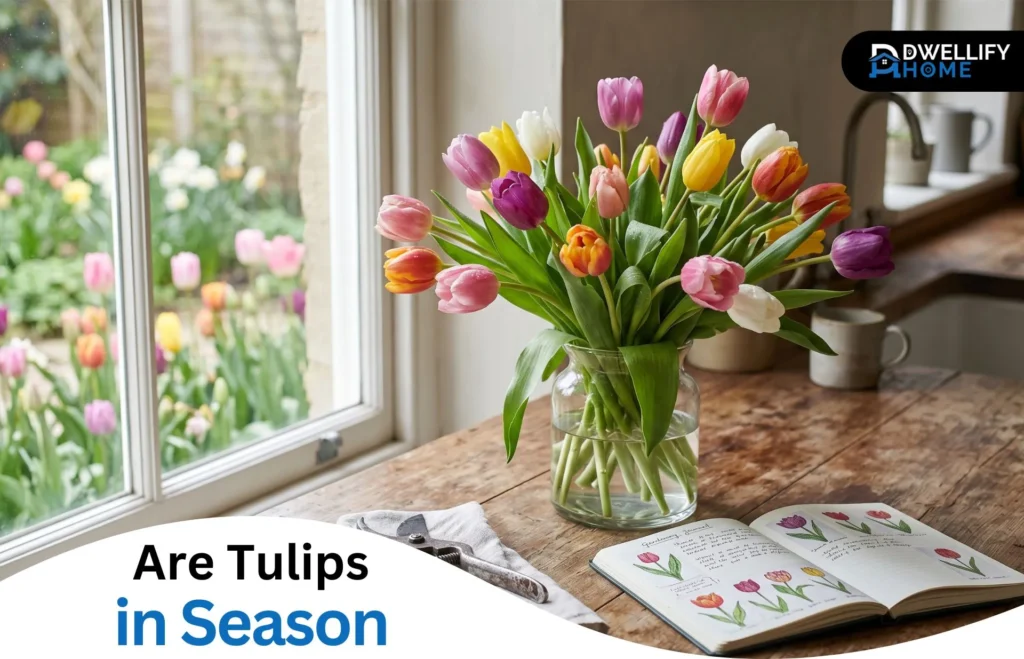
Tulips have a rhythm, and once you’ve worked with them for a few years, you stop guessing about it. They show up when the cold breaks, peak fast, and disappear before most people are ready to let them go. That short window is exactly why so many folks ask whether tulips are in season — usually because they’re standing in a flower shop in November or planning a wedding in July and wondering what’s realistic.
The honest answer depends on the calendar, your region, and what you’re willing to accept in terms of freshness and price. Let me walk you through it the way I’d explain it to a customer standing at the cooler door.
The Short Answer
Tulips are in season from late February through mid-May, with peak bloom across April. They thrive in cool spring weather and are most fresh, affordable, and widely available at local florists, farmers markets, and gardens during this short window.
Mission Statement
Dwellify Home is built to help homeowners make practical, stylish, and well-informed decisions about their living spaces — from modern home design and garden choices to lifestyle and property guidance. Our goal is simple: clear, trustworthy answers you can actually use.
Are Tulips in Season Right Now? The Quick Answer
The natural tulip season runs from late February through mid-May, with the strongest, freshest, most affordable blooms showing up in April. Reading this in spring? Yes — tulips are in season, and this is the best time to buy them or see them in fields.
Reading this any other time of year? Tulips are still available in many shops, but they’re either greenhouse-grown or imported. Same flower, different story when it comes to quality and price.
Quick Tulip Season Reference
| Time of Year | Tulip Availability | Source |
| Late Feb – March | Early varieties, fresh stock | Field-grown, local florists |
| April | Peak bloom, widest selection | Field-grown, farmers markets, gardens |
| May | Late varieties, season ends | Field-grown, fading availability |
| June – November | Very limited, low quality | Cold storage or imports |
| December – January | Forced bulbs only | Greenhouse-grown, premium pricing |
Key Reasons to Buy Tulips in Season
- Stronger stems and richer color
- Longer vase life (up to 10 days)
- Significantly lower prices
- Wider variety of colors and forms
- More likely to be locally grown and fresh-cut
What Months Are Tulips in Season?
The cleanest way to think about tulip timing is by splitting the calendar into the off-season and the peak.
The Off-Season: Winter, Summer, and Fall
December and January tulips do exist, but they’re forced — meaning growers chill the bulbs artificially and trick them into blooming early. They’re real tulips, just not field-grown. Stems are usually shorter, and prices climb because of the production effort.
February tulips start showing up more consistently, especially the first early varieties from greenhouses. By the second half of February, you’ll see them in better florists.
July tulips are the rarest. By summer, the natural growing cycle is long over in the Northern Hemisphere. What you’ll find in July is almost always pulled from cold storage or flown in from Southern Hemisphere growers — expect a noticeable drop in vase life and a real jump in cost.
Fall tulips, from September through November, are essentially nonexistent in their natural form. Anything you find then is either leftover cold-stored stock or specially forced for early holiday displays.
Peak Bloom: March Through May
March kicks things off with the early varieties. By April, you’re at peak — gardens, fields, and florists are all loaded with fresh stock. Mid-April is the sweet spot if you want the widest selection at the best prices.
May carries the late-blooming varieties, which often have the most unusual shapes and colors. By the third week of May, the season starts to wind down for most regions.
Why Tulips Are a True Spring Flower
Tulips need a long cold rest before they bloom — usually 12 to 16 weeks below 48°F. Without that chill, the bulb won’t develop the energy reserves needed to push out a strong stem and flower.
This is why tulips perform best after a real winter. Cool nights and mild days trigger the bloom, and once temperatures climb above the mid-60s consistently, the show ends quickly.
It’s also why warmer regions struggle to grow tulips outdoors without help. The flower’s biology is built around winter, not summer.
Early, Mid, and Late-Season Tulip Varieties
The tulip family is wider than most people realize, and growers use that variety on purpose to stretch the bloom window across nearly three months.
Early-season tulips like Single Earlies and Greigii types open in late February and March. They’re shorter, hardier, and hold up well in cold spring weather.
Mid-season tulips — Triumphs and Darwin Hybrids — are the workhorses of April. These are the tall, classic-looking tulips most people picture when they think of the flower.
Late-season tulips include Lily-Flowered, Parrot, Double Late, and Fringed varieties. They bloom from late April through mid-May and tend to be the most dramatic in shape.
Plant a mix of all three groups and you can have tulips blooming from the last frost almost into early summer.
Are Tulips in Season Across the USA?
Tulip season in the USA isn’t one date — it shifts depending on where you live.
Cooler Climates: Northeast, Midwest, and Pacific Northwest
These regions hit the textbook tulip schedule. Boston, Chicago, Minneapolis, and the Pacific Northwest see early blooms in late March, peak displays in April, and late blooms into May. The Skagit Valley in Washington State is one of the most reliable bloom windows in the country, usually peaking in early to mid-April.
Cold winters help the bulbs establish properly, which is why tulips genuinely thrive in these areas.
Warmer Climates: California, Texas, and the South
This is where it gets tricky. Tulips in California bloom much earlier — sometimes as early as late January in the southern parts — but the season is shorter and the flowers don’t always come back the next year. Most warm-climate gardeners treat tulips as annuals and replant fresh bulbs every fall.
Texas and the Deep South have similar challenges. The lack of a real cold period means bulbs need to be pre-chilled in the refrigerator for 10 to 12 weeks before planting. It’s extra work, but it’s the only way to get a proper bloom in those zones.
Are Tulips Available Year-Round? Greenhouse and Imported Tulips Explained
Yes, you can find tulips year-round in most major cities — but they’re rarely the same flower you’d buy in April.
Off-season tulips fall into two camps: greenhouse-forced (grown locally under controlled conditions) and imported (flown in from places like Holland, Chile, or New Zealand depending on the time of year). Both work, but expect:
- Higher prices, sometimes double or triple peak-season rates
- Shorter stems and smaller heads
- A vase life that’s a few days shorter than spring stock
- Less variety in colors and types
It’s not a bad option for off-season weddings or events when you specifically want tulips — just go in knowing the trade-offs.
Where to Find Fresh Tulips in Season
Once spring hits, tulips are everywhere. But not all sources are equal.
Florists, Farmers Markets, and Flower Farms
A good local florist usually gets fresh deliveries twice a week, so your tulips have likely been cut within 48 hours. Farmers markets are even better when local growers attend — you’re often buying flowers cut that morning.
Flower farms with U-pick options are the freshest you’ll ever find. If there’s one near you in spring, it’s worth the drive.
Supermarkets and Online Delivery
Grocery store tulips are convenient and affordable, but they’ve often passed through more hands and longer transit. Quality varies a lot by chain.
Online flower delivery services range widely. The better ones source directly from growers and ship cool. The cheaper services often use older stock — the giveaway is when the buds arrive already half-open.
How to Spot Fresh, In-Season Tulips
This part takes seconds once you know what to look for:
- Buds should be closed or just barely showing color. Fully open tulips are at the end of their life.
- Stems should feel firm and stand up straight, not droop or feel slimy near the cut.
- Leaves should be a clean green — yellowing or wilted leaves mean old stock.
- Avoid bunches with brown edges on the petals. That’s age, not character.
If the shop keeps tulips in cool water away from direct sun, that’s a good sign too. Heat is the enemy of vase life.
How Long Tulips Last and How to Care for Them
A fresh tulip should give you 5 to 10 days in a vase. Closer to 10 if you bought them in peak season and care for them right.
Here’s what actually matters:
- Cut about an inch off the bottom at an angle before placing them in water
- Use cool, fresh water and refresh it every 2 to 3 days
- Keep them away from direct sun, heaters, and ripening fruit (fruit gives off ethylene gas, which speeds up wilting)
- Re-trim the stems every couple of days
One quirk worth knowing: tulips keep growing after they’re cut. Stems will stretch an inch or two over the first few days, and the flowers bend toward the light. That’s not a problem — it’s just what tulips do.
Growing Tulips at Home: When to Plant for Spring Blooms
Want tulips in your own garden next spring? The work happens in fall. Plant the bulbs after the soil cools below 60°F — usually September or October in the northern half of the country, October or November further south.
Plant them 6 to 8 inches deep, pointy end up, in a spot with good drainage. Soggy soil is the fastest way to kill a tulip bulb.
Hardiness Zones and Climate Considerations
Tulips do best in USDA Zones 3 through 7, where winters are reliably cold. In Zone 8 and warmer, you’ll need to pre-chill bulbs in the fridge for 10 to 12 weeks before planting. Keep them away from fruit while chilling — that ethylene problem again.
Zones 9 and 10 can grow tulips, but they’re best treated as one-season annuals.
Forced Indoor Tulips for Off-Season Color
Forcing bulbs indoors is one of the more rewarding tricks if you miss having flowers in winter. Plant chilled bulbs in a shallow pot in October, keep them somewhere cold and dark for 12 to 14 weeks, then bring them into a bright cool room in January. You’ll have blooms in 3 to 4 weeks.
It’s a small project, but it’s how you get tulips on your kitchen table in February without paying florist prices.
Famous Tulip Fields and Festivals Worth Visiting
A few destinations are worth planning a trip around if you want to see tulips at scale:
- Keukenhof Gardens in the Netherlands — open mid-March to mid-May, with peak in mid-April. Over 7 million bulbs.
- Tulip Time Festival in Holland, Michigan — early to mid-May, six million tulips and Dutch heritage events.
- Skagit Valley Tulip Festival in Washington State — all of April, sweeping field displays.
- Canadian Tulip Festival in Ottawa — May, with over a million tulips planted across the city.
- Tulip displays in Washington DC — late March through mid-April, woven through the National Mall and Smithsonian gardens.
For all of these, mid-April is the safest target if you want guaranteed blooms.
What to Buy When Tulips Aren’t in Season
When tulips aren’t realistic, a few flowers can stand in depending on what drew you to tulips in the first place:
- Ranunculus has the same soft, cup-like form and lasts longer in the vase. Available roughly November through May.
- Peonies offer that lush, rounded look — peak season is May and June.
- Anemones bring bold color contrast and a similar elegant stem. Late winter into spring.
- Lisianthus is a year-round option with a similar romantic feel to double tulips.
Any decent florist will help you build an arrangement around these when tulips aren’t viable.
Frequently Asked Questions About Tulip Season
Are Tulips Cheaper in Season?
Yes — usually quite a bit cheaper. April tulips can be half the price of December or July ones. Local supply is high, transport costs are low, and growers are moving large volumes.
Do Tulips Bloom More Than Once a Year?
Most tulip varieties bloom once per year and are best treated as annuals in many gardens. Darwin Hybrids and species tulips are the most reliable rebloomers if you want a perennial display.
Why Are Tulips Sold in Winter?
Two reasons: forced bulbs grown in greenhouses, and imports flown in from Southern Hemisphere growers whose seasons are flipped. The flowers are real — they’re just produced outside the natural cycle.
Can I Grow Tulips in a Warm Climate?
You can, but you’ll need to pre-chill the bulbs in the fridge for 10 to 12 weeks before planting in late fall. Treat them as annuals and replant fresh bulbs each year for consistent results.
Can you buy tulips all year round?
Yes, but only spring tulips are field-grown and naturally in season. Off-season tulips are either greenhouse-forced or imported, which means higher prices, shorter stems, and a slightly shorter vase life.
What flower was worth more than gold?
The tulip. During the 1630s in the Netherlands, a period known as Tulip Mania saw rare bulbs sell for the price of a canal-side house in Amsterdam — making tulips, briefly, more valuable than gold by weight.
Can I use pennies to keep tulips upright?
The penny trick is folklore. Older copper pennies (pre-1982) contain copper that may slow bacterial growth, but a clean vase, fresh cool water, and re-trimming the stems every couple of days does the same job more reliably.
Are tulips toxic to dogs or cats?
Yes. Tulips contain compounds that are toxic to both dogs and cats, with the bulbs being the most dangerous part. Keep tulips and bulbs out of reach, and contact a vet right away if a pet eats any portion of the plant.
Do tulips come back every year?
Some do, but most modern hybrid tulips bloom strongest in their first year. Darwin Hybrids and species tulips are the most reliable rebloomers if you want a perennial display.
Conclusion: Enjoying Tulips at Their Peak
Tulips reward people who pay attention to timing. Once you understand when tulips are in season — late February to mid-May, with April as the clear winner — every other decision gets easier. You buy fresher, you spend less, and you get the flower at its actual best.
If spring is within reach, wait for it. If it isn’t, buy with realistic expectations or pick a thoughtful substitute. Either way, you’ll appreciate tulips more knowing exactly when they shine.
Disclaimer
The content on Dwellify Home is provided for general informational purposes only. Bloom timing, product availability, and care results may vary depending on your local climate, region, and individual circumstances. Always check with local growers, florists, or qualified specialists for guidance specific to your situation.