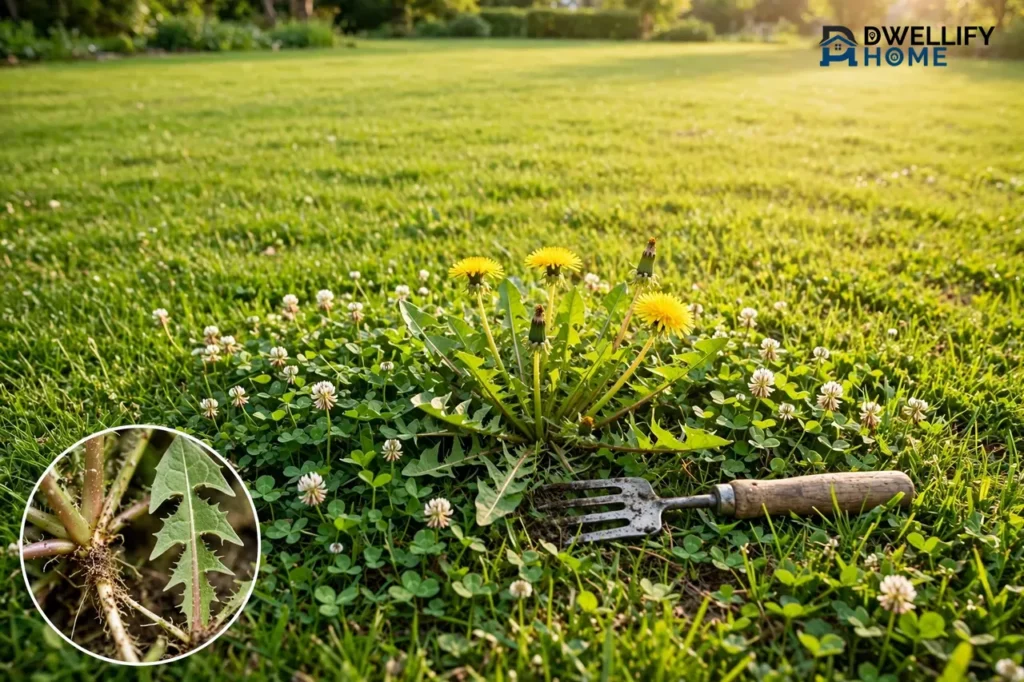
You get rid of weeds in grass by pulling small patches by hand and treating the rest with a selective weed killer made for your grass type. Scotts Miracle-Gro states that pre-emergent weed preventer only works when soil temperatures reach 50 to 55 degrees Fahrenheit in spring, so timing matters as much as the product you pick.
Weeds steal water, sunlight, and nutrients from your grass, and they spread fast if you leave them alone. A few dandelions in April can turn into a lawn full of them by June. The good news is that you do not need to rip out your whole lawn or hire a crew to fix it. Most weed problems come down to three moves: identify the weed, remove what is growing now, and stop the next round of seeds from sprouting. This guide walks through each move in order, so you can pick the right method for the weeds you actually have.
First, Identify the Weeds in Your Grass
Not every weed dies the same way, so start by figuring out what is growing in your lawn. The University of Minnesota Extension puts it plainly: identifying weeds and understanding why they are growing where they are is the key to controlling them. A product that kills dandelions will not touch crabgrass, and a product that kills crabgrass can hurt your lawn if you pick the wrong one.
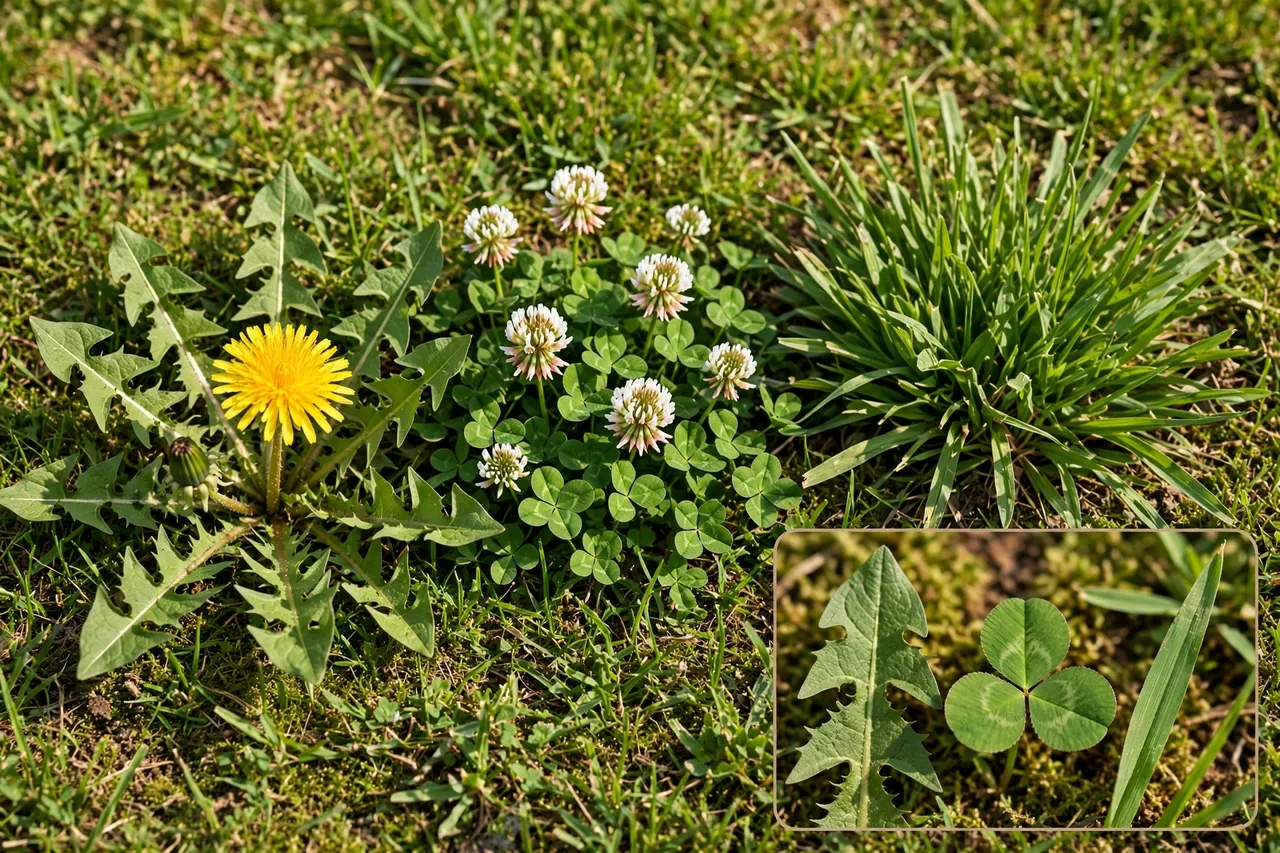
Lawn weeds fall into three main groups. Broadleaf weeds have wide, flat leaves and often show flowers. Dandelions, white clover, chickweed, and plantain belong here. Grassy weeds look like grass but grow faster and spread in clumps. Crabgrass and foxtail are the usual suspects. Sedges, such as yellow nutsedge, look like grass too, but their stems feel triangular when you roll them between your fingers, and they love wet spots.
Walk your lawn and note what you see. Are the weeds scattered in a few patches, or do they cover whole sections? Do they have flowers, wide leaves, or thin blades? Snap a photo and compare it with a weed identification guide from your local extension office if you are unsure. Getting the group right saves you from buying the wrong product and spraying twice.
Also ask why the weeds are there. Weeds move in where grass is weak. Thin spots, bare patches, soil packed hard by foot traffic, and areas that stay wet after rain all invite weeds. Fixing the cause matters as much as killing the weed, because a weed pulled from weak turf just grows back. You will find the fixes later in this guide.
Pull Weeds by Hand
Hand pulling is the best first move when weeds cover only a small area. It costs nothing, it works right away, and it keeps chemicals out of your yard. It works best on young weeds and on broadleaf weeds with a single taproot, such as dandelions.
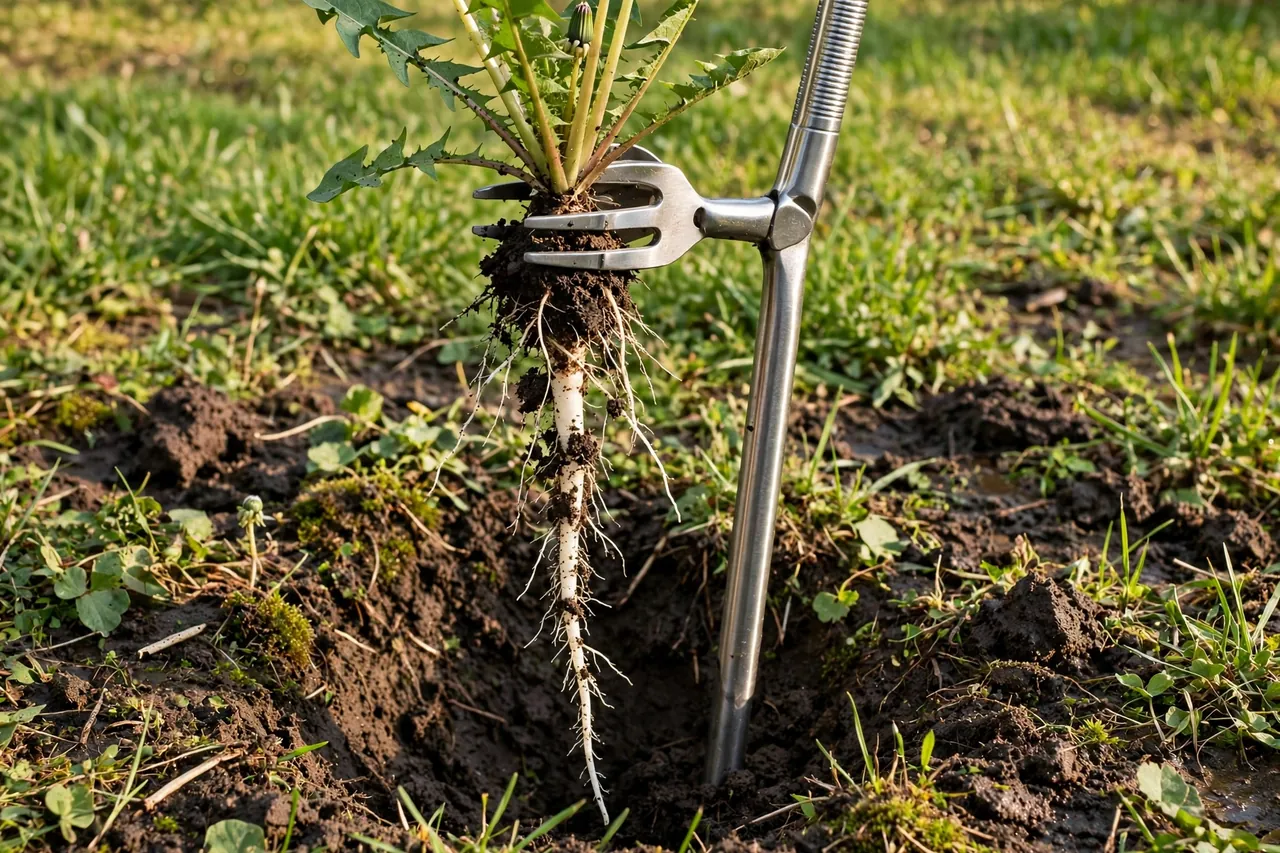
Pull after a good rain or a deep watering, when the soil is soft. The University of Minnesota Extension recommends this timing because roots slide out whole instead of snapping off. Grab the weed low, close to the ground, and pull straight up with a slow, steady motion. If the root breaks, dig the rest out with a hand weeder or a trowel. For dandelions, get at least 2 inches of the taproot, or the plant will return as two plants.
Use the right tool for the weed in front of you:
- A dandelion digger or hand weeder for deep taproots such as dandelions and plantain.
- A garden knife for weeds with long roots in tight spots.
- A hoe for young annual weeds in bare soil, cut just below the surface.
- Gloves, always, so you can grip the plant and protect your hands.
Work when weeds are small, before they flower and set seed. Southern Living notes that the first rule in managing annual weeds is never to let them go to seed, because one plant can scatter hundreds of seeds across your lawn. Bag the weeds you pull and throw them in the trash, not the compost pile, since home compost rarely gets hot enough to kill weed seeds.
Hand pulling has limits. It will not keep up with a lawn that is half weeds, and creeping weeds such as ground ivy and creeping Charlie regrow from tiny root pieces left behind. If you pull the same patch three times and it keeps coming back, move on to the spray methods below.
How to Kill Weeds Without Killing Your Grass
When weeds cover too much ground to pull by hand, a selective herbicide is the tool for the job. Selective means it kills the weed and leaves your grass alone, when you use it as directed. Scotts Miracle-Gro explains that the key is choosing a product formulated for the weed type you have and checking the label to confirm your grass type is listed.
Match the product to the weed group you identified:
- Broadleaf weeds such as dandelions, clover, chickweed, and plantain: a selective broadleaf weed killer with active ingredients such as 2,4-D, dicamba, or mecoprop.
- Grassy weeds such as crabgrass: a grass-selective post-emergent herbicide. These are grass specific, so read the label twice before you spray.
- Sedges such as yellow nutsedge: a sedge-specific product. Broadleaf killers will not control nutsedge.
Spray when weeds are young and actively growing, and when daytime temperatures sit between 65 and 85 degrees Fahrenheit. Scotts notes that weeds absorb herbicide best in that range, and that heat above 85 degrees makes weeds shut down and take in less product. Spray in the early morning or late afternoon, when the wind is calm and the sun is low. Never spray on a windy day, because drift can carry the product onto garden beds and shrubs.
Decide between spot treatment and broadcast treatment before you start. If weeds sit in scattered patches, spot treat each patch with a ready-to-use spray. If weeds cover more than half the lawn, a broadcast application over the whole lawn makes more sense. Spot treating first is the cheaper, gentler option, and it keeps chemicals off the healthy parts of your grass.
After you spray, wait at least 24 to 48 hours before mowing, so the herbicide has time to move through the weed down to the root. Some systemic products work best with a wait of 3 to 5 days. Mowing too soon cuts off the treated leaves before the chemical reaches the root, and the weed grows back. Most broadleaf weeds yellow and wilt within a week or two. If a weed still looks healthy after two weeks, treat it once more according to the label.
Skip the homemade shortcuts for lawn weeds. Vinegar, boiling water, and salt kill whatever green plant they touch, including your grass. They work on weeds in driveway cracks, but they leave dead brown spots in a lawn. Corn gluten meal can help as a natural pre-emergent, but it does not kill weeds that are already growing.
Pre-Emergent Weed Preventer: Stop Weeds Before They Sprout
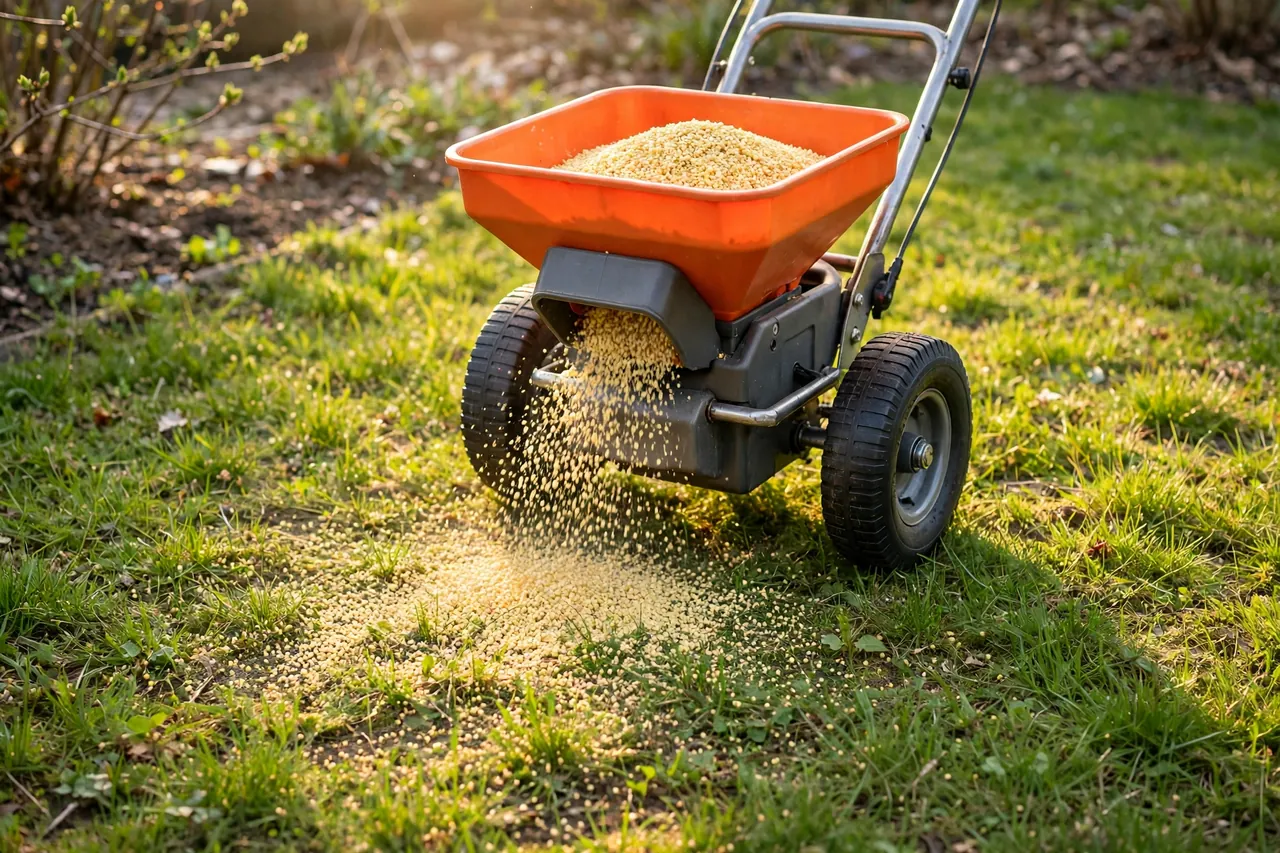
A weed killer handles the weeds you can see. A pre-emergent weed preventer stops the ones you cannot see yet. It forms a thin chemical barrier in the soil that stops weed seeds from sprouting. It does nothing to weeds that are already growing, so use it before the season starts, not after weeds appear.
Timing is everything. Apply a pre-emergent in early spring, when soil temperatures reach 50 to 55 degrees Fahrenheit. The University of Minnesota Extension gives the same mark at about 55 degrees, and Scotts Miracle-Gro warns that applying after that window means the product loses its effectiveness. A soil thermometer pushed 2 inches into the ground gives you the real number, which beats guessing by the calendar. In many northern states, that window falls between May 1 and May 15, according to the University of Minnesota Extension.
Water the product in lightly after you spread it, unless the label says otherwise, so the barrier settles into the soil. Apply it evenly across the lawn, and do not skip strips along driveways and sidewalks, where crabgrass loves to start. One spring application covers most lawns for the season. A fall application also helps against winter annual weeds such as henbit and chickweed, which sprout in cool weather.
Know the trade-off before you spread it. A pre-emergent blocks grass seed just as well as weed seed, so you cannot overseed bare patches after applying it. Scotts states that you should typically wait several months after a pre-emergent before seeding. If you plan to reseed, do the seeding first, or skip the pre-emergent that season and rely on hand pulling and spot spraying instead.
| Feature | Pre-Emergent (Preventer) | Post-Emergent (Killer) |
|---|---|---|
| What it does | Stops weed seeds from sprouting | Kills weeds already growing |
| When to apply | Early spring, soil 50 to 55 degrees | When weeds are young and growing, 65 to 85 degrees |
| Works on | Annual weeds from seed, such as crabgrass | Broadleaf, grassy, and sedge weeds |
| Seeding wait | Several months before seeding | 2 to 4 weeks before seeding |
Fix the Lawn Problems That Let Weeds In
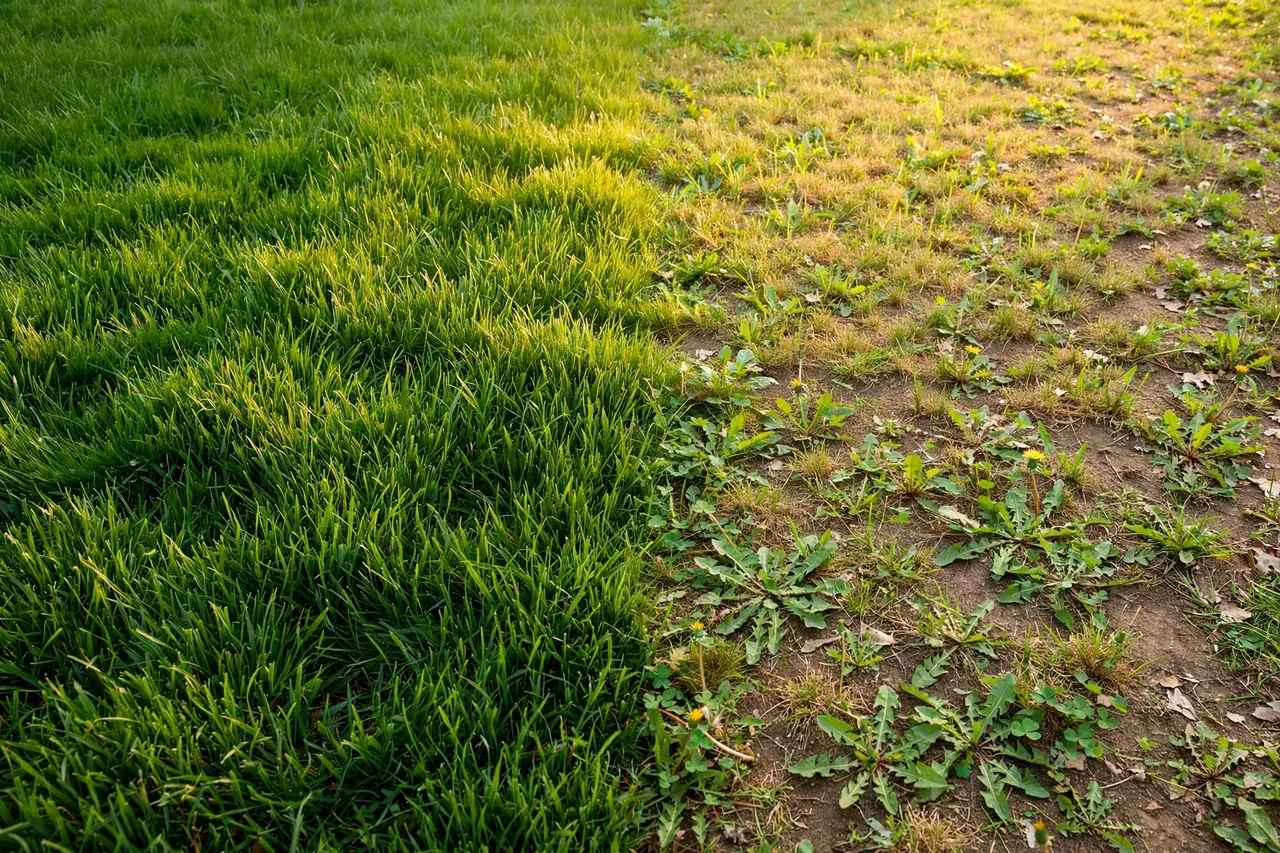
Killing weeds without fixing the lawn is a short-term win. Weeds come back to the same weak spots year after year, so the lasting fix is a thicker, healthier lawn that crowds weeds out on its own. The University of Minnesota Extension says a combination of good cultural practices and careful herbicide use is the best approach, and the cultural practices do most of the long-term work.
Mow high. Keep your grass at about 3 inches tall, and never cut off more than one-third of the blade in a single mow. Taller grass shades the soil, which stops weed seeds from sprouting, and it grows deeper roots that hold up in dry weather. Short, scalped grass lets sunlight hit bare soil, and weed seeds love that light.
Water deeply and less often. Give the lawn about an inch of water a week, in one or two deep soakings, so roots grow down instead of staying near the surface. Shallow, frequent watering grows shallow roots and keeps the surface damp, which suits weeds more than grass.
Feed on schedule. A hungry lawn thins out, and thin grass leaves open soil for weeds. Apply fertilizer at the right times for your grass type, and follow the bag rate exactly. Too much fertilizer feeds weeds too, and overfeeding can burn the lawn.
Aerate compacted soil once a year. Foot traffic, heavy rain, and clay soil pack the ground hard, and grass roots cannot breathe in packed soil. Core aeration pulls small plugs out of the lawn, lets air, water, and nutrients reach the roots, and gives grass the edge over weeds.
Fill bare spots fast. Every bare patch is an open door for weed seed. Overseed thin areas in early fall, when soil is warm and weed pressure is low, and keep the seed damp until it sprouts. If a low area stays soggy after rain, the drainage problem underneath may be feeding the weeds, and our guide to fixing a soggy yard walks through the options, from grading to a French drain.
When to Reseed Bare Patches
Once the weeds are dead, the bare spots they leave behind need grass, or new weeds will move in within weeks. Reseeding is the last step of weed removal, not an afterthought, and the timing depends on what you sprayed.
After a post-emergent broadleaf weed killer, wait 2 to 4 weeks before seeding, and check the product label for the exact wait time. After a pre-emergent, wait several months, since the barrier stops grass seed from sprouting too. If you seeded first and weeds showed up later, spot spray only the weeds and keep the spray off the new seedlings.
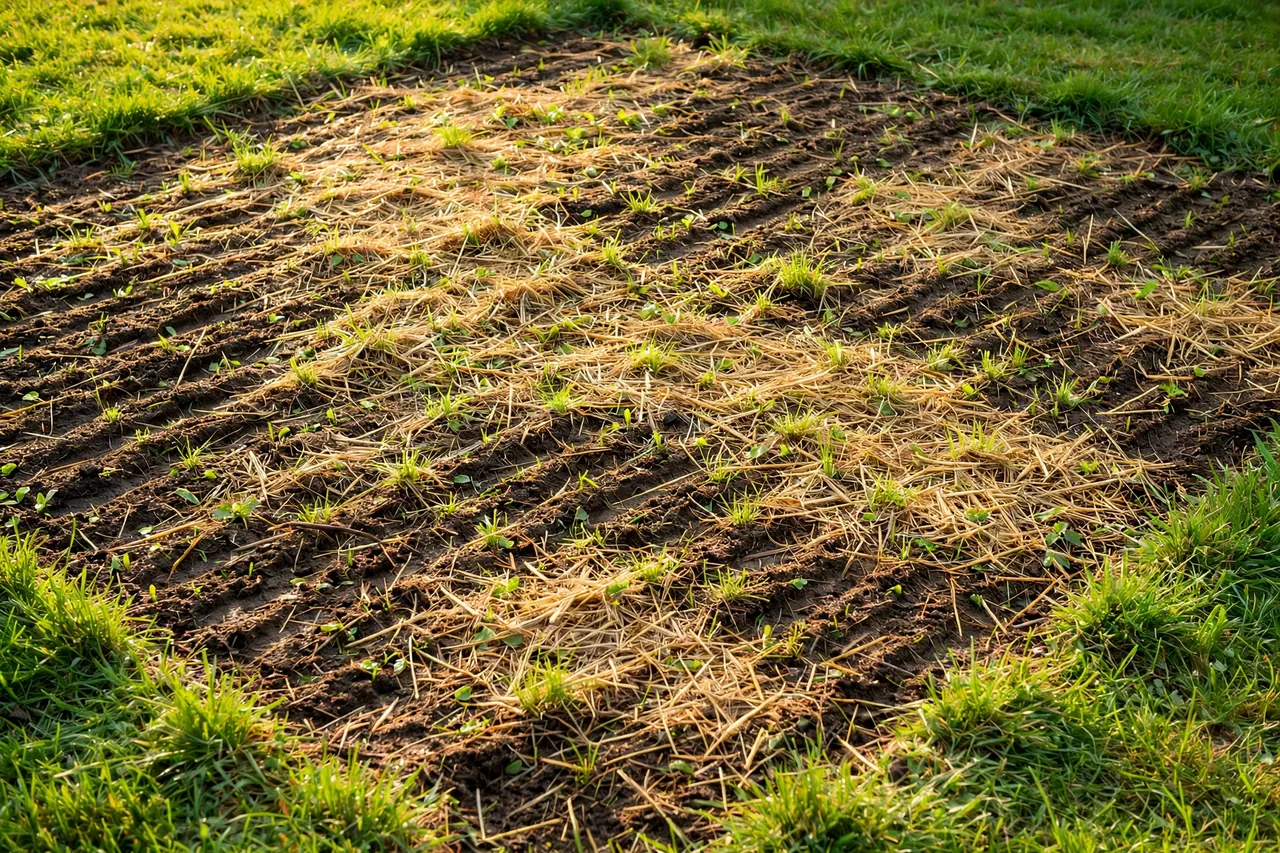
Early fall is the best time to reseed in most of the country. The soil is still warm, nights are cool, and most annual weeds have stopped sprouting. Rake the bare spot loose, spread seed at the rate on the bag, press it into the soil with the back of a rake, and water lightly every day until the new grass is about 2 inches tall. A thin layer of straw or compost over the seed keeps it damp and hides it from birds.
Pick seed that matches the grass already in your lawn, so the patch blends in instead of standing out. If you need seed or plants for the repair, our roundup of the best places to buy plants online is a handy source for quality grass seed. Mow the new grass for the first time when it reaches about 3 inches, and keep foot traffic off it for the first month.
What to Do When Weeds Cover Most of the Lawn
Some lawns are past spot treatment. If broadleaf or grassy weeds cover 30 to 50 percent of the lawn and not much healthy turf is left, the University of Minnesota Extension says renovation is the honest answer, because killing the weeds leaves too little grass to fill the gaps.
Renovation means starting over on the worst areas. Kill the remaining weeds, rake out the dead material, loosen the top few inches of soil, and reseed or lay sod in early fall. It is a bigger job, but it costs less than fighting the same weeds every year and losing.
Call a lawn care pro when the problem is bigger than a weekend job. A pro can identify tricky weeds such as nutsedge and quackgrass, apply restricted products a homeowner cannot buy, and set up a season-long plan. Get help sooner if the weeds include poison ivy, which causes a painful rash, or if the lawn sits on a steep slope where spraying and digging get risky.
Stay Safe When You Use Weed Killers
Herbicides work well, but they are chemicals, and they deserve respect. Read the whole product label before you open the container, and follow it exactly. The label tells you which grass types are safe, how much to use, when to apply, and how long to keep people and pets off the lawn. The University of Minnesota Extension gives the same advice: when using herbicides, follow the label directions exactly as printed on the product container.
Wear gloves, long sleeves, long pants, and closed shoes when you mix or spray. Keep children and pets off the treated area until the spray has dried, and longer if the label says so. Store products in their original containers, out of reach of children, in a cool, dry place. Never pour leftover spray down a drain or into a storm drain.
Do not spray near vegetable gardens, fruit trees, or ponds, and keep the product off flowering plants that bees visit. If you feel sick, get spray in your eyes, or spill product on your skin, stop at once, wash with soap and water, and call your local poison control center.
Disclaimer: every lawn, grass type, and local rule is different, so use this guide as general information, not as a substitute for the product label or local regulations. Some herbicides are restricted in certain states or towns, so check your local rules before you buy. When in doubt, ask your local extension office or a licensed lawn care professional.
Related Guides
Fix a Soggy Yard: Drainage That Actually Works · Best Places to Buy Plants Online · Creeping Myrtle vs Periwinkle · How to Restore a Muddy Lawn · Reseeding Lawn: How to Start Over and Grow Thick New Grass · Fall Lawn Care · How to Get Rid of Crabgrass in Lawn
Frequently Asked Questions
What is the difference between a weed preventer and a weed killer?
A weed preventer, or pre-emergent, stops weed seeds from sprouting by creating a barrier in the soil, while a weed killer, or post-emergent, targets weeds that are already growing. Use the preventer in early spring before weeds appear, and use the killer once you can see the weeds.
Why are the weeds in my lawn dying but the grass is fine?
Selective herbicides are made to target specific weed species while leaving common turfgrasses unharmed. The active ingredients disrupt processes that only broadleaf weeds have, so your grass does not share those same weaknesses and stays healthy while the weeds die off.
When is the best time of day to spray weeds in my yard?
Early morning or late afternoon is ideal, when temperatures are moderate, wind speeds are low, and the spray is less likely to evaporate before the weed absorbs it. Avoid spraying mid-day or when temperatures pass 85 degrees, since heat makes weeds close up and take in less product.
How long should I wait to mow the lawn after applying weed control?
For post-emergent products, wait at least 24 to 48 hours before mowing so the herbicide can fully reach the weed roots. Some systemic products work best if you wait 3 to 5 days. Mowing too soon cuts off treated leaves before the chemical reaches the root.
Can I plant new grass seed immediately after using a weed killer?
No. Most post-emergent herbicides and all pre-emergent products need a waiting period before seeding. Pre-emergent products stop grass seed from sprouting just like weed seed, so you typically wait several months after one, and 2 to 4 weeks after a post-emergent broadleaf killer.
Start with the weeds you can see, pull the small patches by hand, and spray the rest with the right selective product. Then put down a pre-emergent next spring before the soil warms, mow at 3 inches, and fill every bare spot with seed. Do those steps in order, and the weeds run out of places to grow.