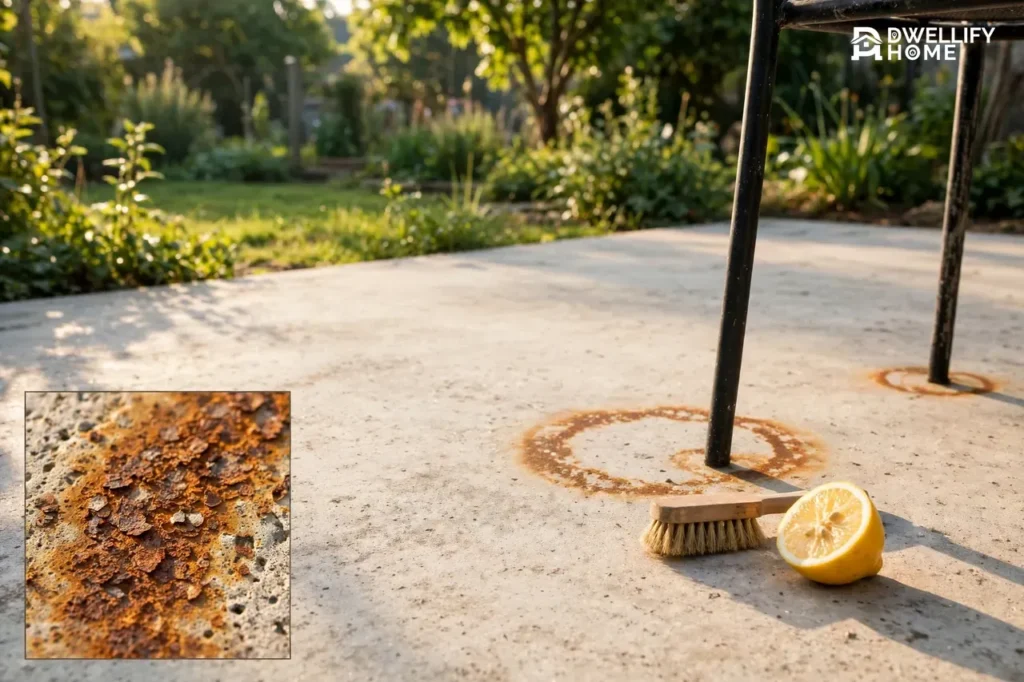
You can remove a fresh rust stain from patio concrete with pure lemon juice in about 15 minutes, and HGTV’s cleaning guide says the same thing: soak the stain in undiluted lemon juice, let it steep for 10 to 15 minutes, scrub with a stiff brush, and rinse. Rust is iron oxide, and it bonds with the porous surface of concrete, so soap and water will never lift it — only an acid can dissolve it. This guide works from the gentlest acid up to the strongest, so you clear the orange marks your patio furniture left behind without etching the concrete underneath.
One common cleaner makes rust stains look worse, not better, and it sits in most laundry rooms already. It is in the mistakes section below, along with the one step people skip that lets the stain come straight back. First, you need to know why the stain appeared, because the fix for a stain under a chair leg is different from the fix for a stain that keeps spreading.
Why Rust Stains Appear on Patio Concrete
Rust stains appear on patio concrete when iron meets oxygen and water, and the usual culprit is your own outdoor furniture. Bare steel chair legs, a wrought-iron table base, a rusty grill, garden tools left out in the rain, and even some lawn fertilizers all shed tiny iron particles onto the patio. Rain and dew turn those particles into iron oxide, and the orange-brown color soaks into the pores of the concrete instead of sitting on top of it.
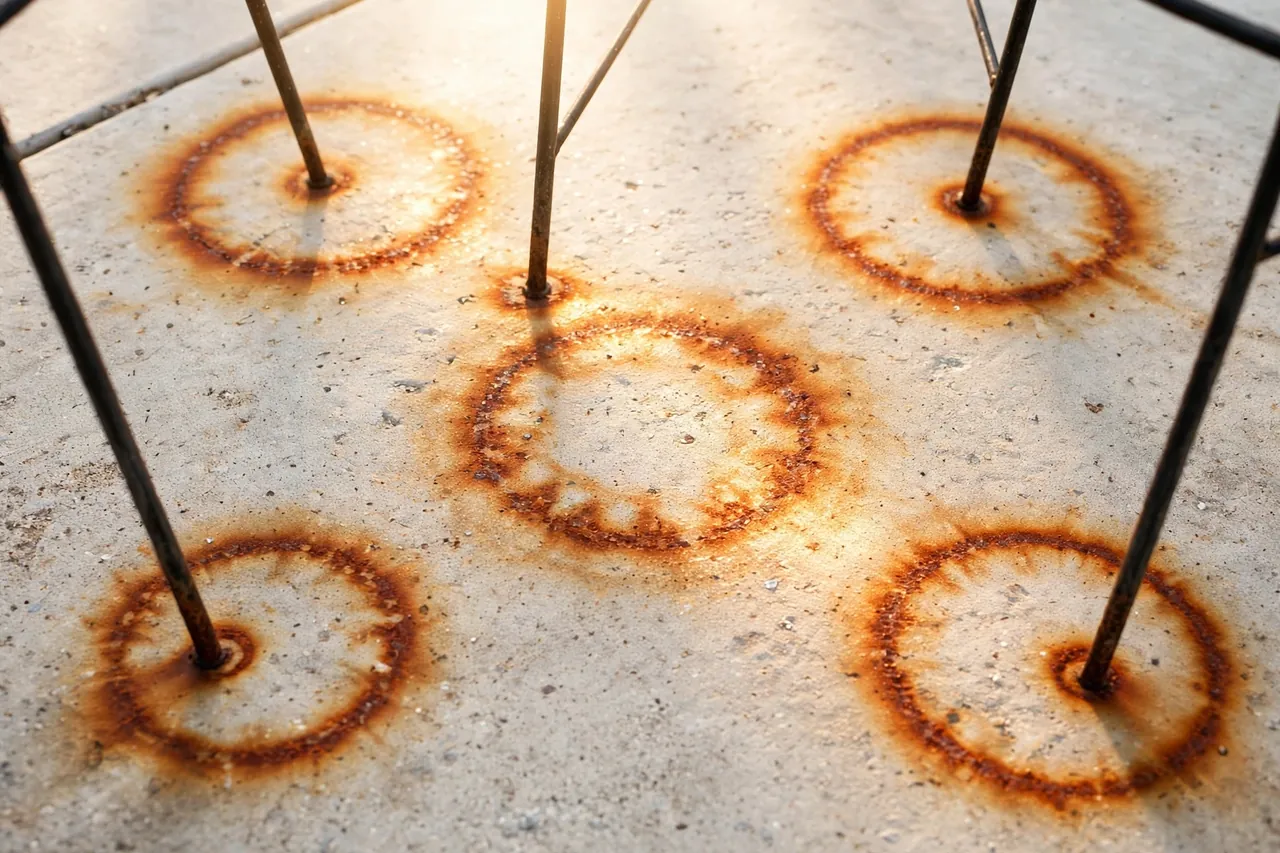
The longer a stain sits, the deeper it goes. HGTV warns that an old stain is much harder to remove than a fresh one, because the iron oxide bonds with the calcium compounds in the concrete over time. A stain from last weekend may lift with lemon juice alone. A stain that has baked in the sun for two summers may need oxalic acid, and a stain under a chair that has sat in the same spot for years may never come out completely.
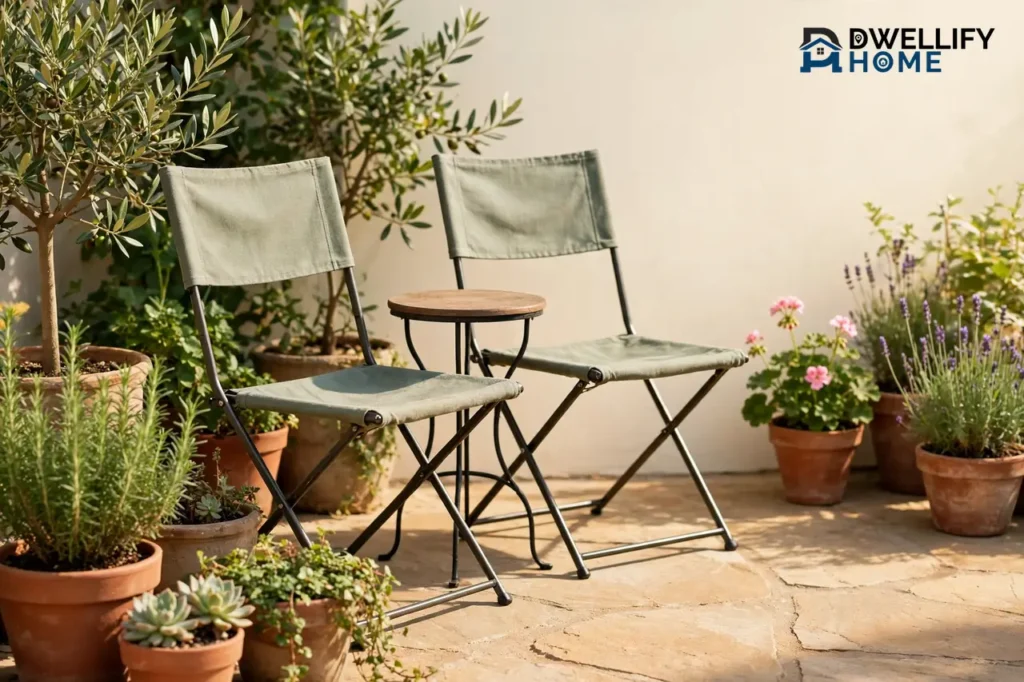
Stains also tell you something about the furniture above them. A ring under each chair leg means the feet have lost their caps or their coating. A long streak means water runs off a rusting frame and across the slab every time it rains. A stain near the grill usually comes from a rusting drip tray or a metal tool hook. Fix the source while you clean the stain, or you will clean the same spot again next month. Our guide to wrought iron outdoor furniture explains which frames rust first and how to spot the early signs, and metal outdoor furniture compares rust-prone steel with rust-proof aluminum so your next set does not stain the patio at all.
The stain is a symptom, not the disease. Clean the mark, then fix the metal that made it.
What You Need Before You Start
Start with the gentlest tools and keep the strong acids in the cupboard until you know you need them. For a fresh stain you need pure lemon juice or white vinegar, a stiff-bristled brush, a bucket of clean water, dish soap, and rubber gloves. For an older stain add a commercial rust remover that contains oxalic acid, safety goggles, and baking soda to neutralize the acid when you finish.
Pick the brush to match the concrete. A stiff nylon or wire brush works on plain, unsealed concrete. On painted, stained, or sealed concrete, use a soft nylon brush instead, because a wire brush can strip the finish and leave a pale patch that looks worse than the rust. The Concrete Network guide makes the same point: a wire brush is fine on bare concrete, but a nylon brush protects a coated surface.
Test first, always. Pick a hidden corner of the patio, apply your chosen cleaner there, wait the full time, scrub, and rinse. If the test spot looks clean and the concrete color is unchanged, go ahead on the visible stain. If the test spot lightens or turns blue-gray, stop — that cleaner is too strong for your surface. Never mix cleaners, and never mix an acid with a TSP degreaser or bleach, because the combination can release toxic gas. Work outside in fresh air, wear gloves and goggles for anything stronger than lemon juice, and keep children and pets off the wet patio until it is rinsed and dry.
Test in a hidden corner first. Ten minutes there saves a ruined patio.
How to Remove Rust Stains From Concrete With Lemon Juice
Lemon juice removes fresh rust stains from concrete because its citric acid dissolves iron oxide, and it is the safest place to start. HGTV’s method is simple: clean the surface with soap and water first, soak the stain in pure lemon juice, let it steep for 10 to 15 minutes, scrub with a stiff brush, and rinse with clean water. Repeat the soak once if a faint shadow remains.
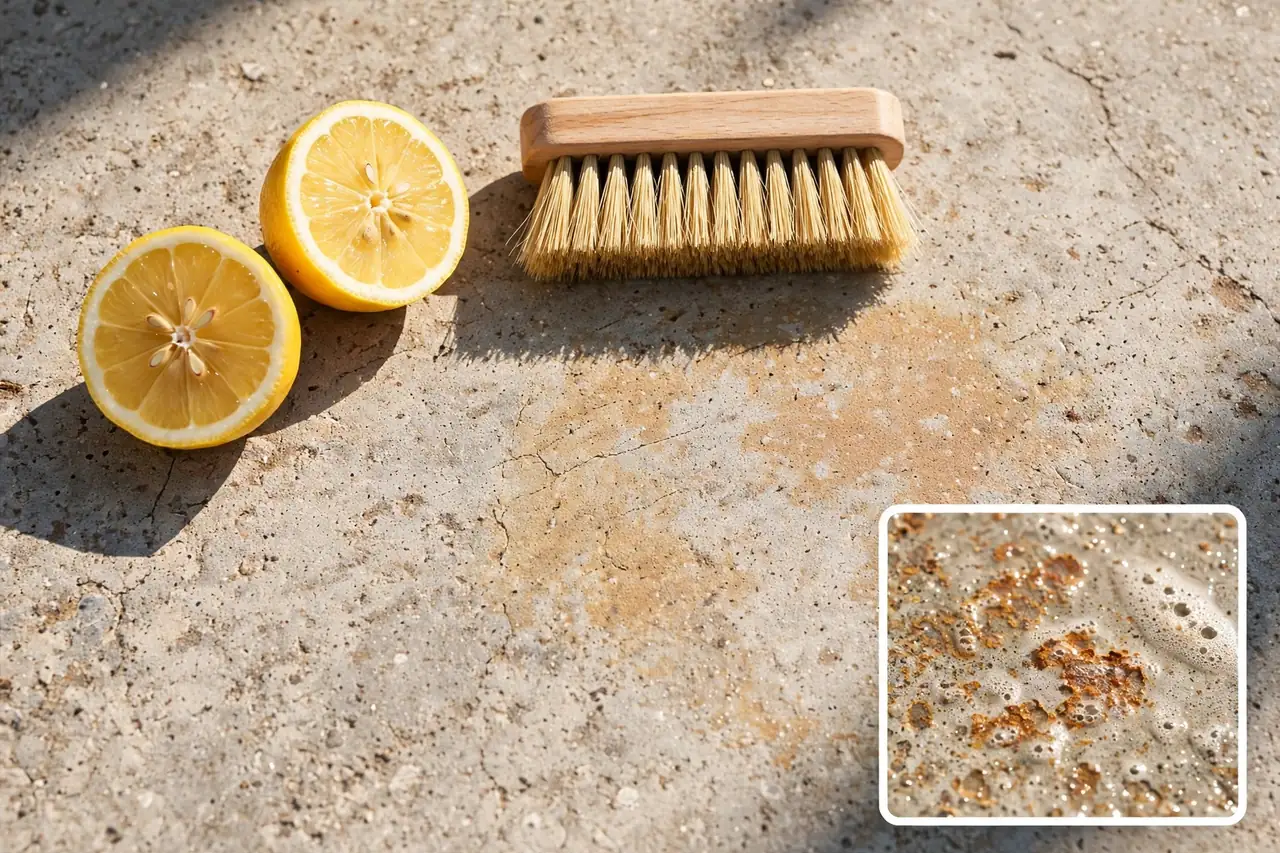
Follow these steps in order, and do not skip the cleaning step. Dirt and grit on the surface block the acid from reaching the stain, so the juice ends up cleaning the dirt instead of the rust.
- Sweep the area and wash it with dish soap and water, then rinse and let it dry for a few minutes.
- Pour pure lemon juice straight onto the stain until the whole orange area is wet. Do not dilute it — the stronger the acid, the better it works.
- Let it steep for 10 to 15 minutes. Do not let it dry out; add a little more juice if the sun is baking the patio.
- Scrub hard with a stiff brush, working from the outside edge toward the center so you do not spread the stain.
- Rinse with clean water, let the spot dry, and judge the result. A second soak usually clears whatever is left of a fresh stain.
Salt can help on a stubborn spot. Mix lemon juice with a spoonful of table salt to make a paste, spread it on the stain, wait about ten minutes, then scrub. The salt acts as a gentle abrasive while the acid does the chemical work. This trick suits small, round stains under chair feet. It does not suit large areas, where you would need far too much juice and salt to cover the ground.
Pure juice, full 15 minutes, then scrub. Diluted juice and a quick wipe will not touch the stain.
Vinegar Method for Deeper Stains
White vinegar removes deeper rust stains that lemon juice leaves behind, because it carries slightly more acid than lemon juice. The method is the same: pour undiluted white vinegar onto the clean stain, let it sit for about 30 minutes, scrub with a stiff brush, and rinse. The Concrete Network guide notes that vinegar has a slightly higher acid content than lemon juice and may work better on some stains.
Vinegar is stronger, so it carries more risk. It can strip paint and stained finishes more easily than lemon juice, and it can lighten colored concrete if you leave it on too long. Test it on a hidden corner first, and never use it on a sealed or coated patio without checking the sealer maker’s advice. If the stain is on stamped or colored concrete, keep the vinegar to 15 minutes and scrub sooner rather than later.
One household trick also works here: cola. Coca-Cola contains phosphoric acid, and the Concrete Network guide says it can remove minor rust stains for the same reason vinegar does. Pour it on, wait 10 minutes, scrub, and rinse. It is a fun backup when you have no lemon juice or vinegar in the house, but it leaves sticky sugar behind, so rinse twice and do not use it as your first choice.
Vinegar is the middle rung, not the first step. Use it only when lemon juice has done all it can.
Oxalic Acid for Old, Set-In Stains
Oxalic acid removes old, set-in rust stains that kitchen acids cannot touch, because it binds iron particles into a form that rinses away with water. Look for a commercial rust remover that lists oxalic acid on the label — HGTV and the Concrete Network both name it as the ingredient that does the real work — and follow the label exactly, because strengths vary by brand.
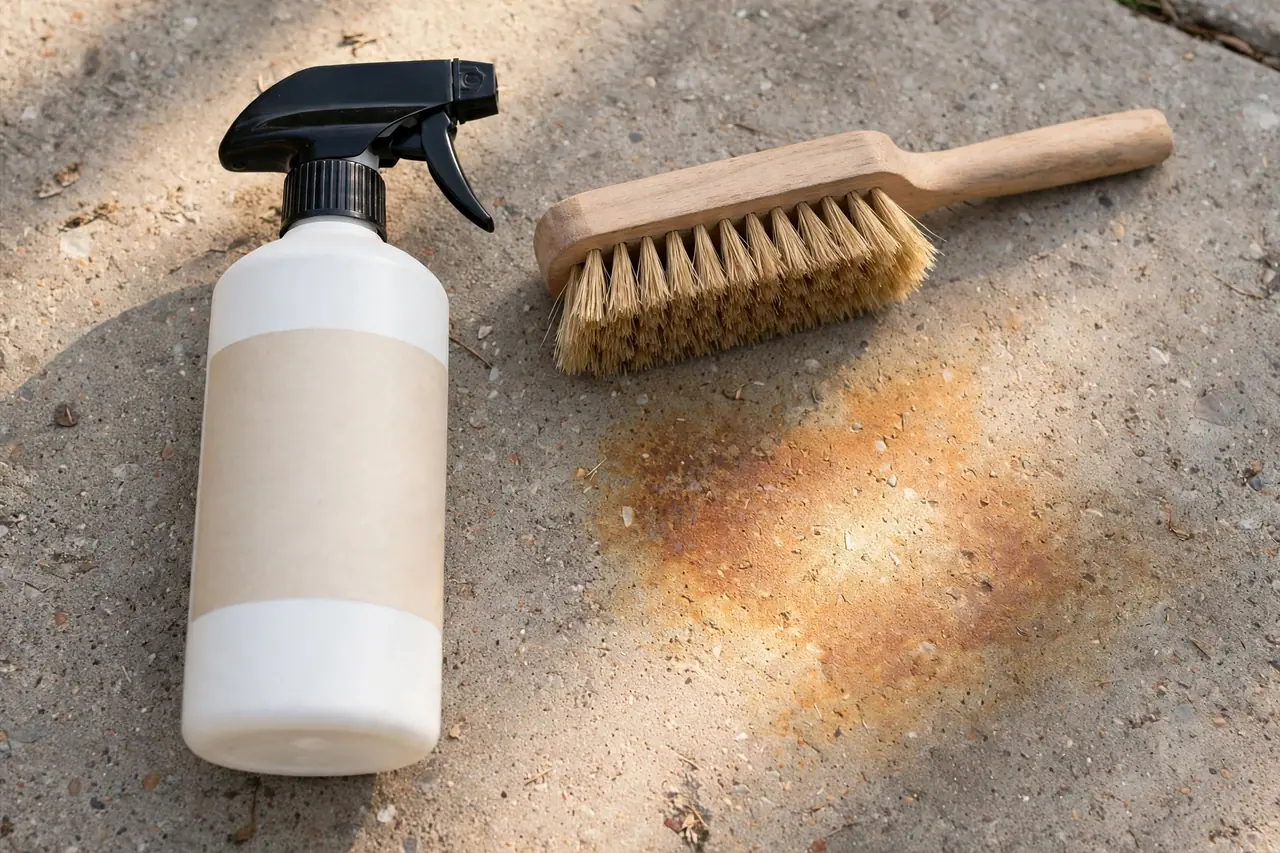
Work through these steps carefully, and treat this as a chemical job, not a cleaning job.
- Clean the concrete with soap and water, rinse, and let the surface dry until it is damp, not soaking wet.
- Put on rubber gloves, safety goggles, and long sleeves, and keep the area ventilated.
- Mix the oxalic acid product exactly as the label directs. One widely used ratio is about three tablespoons of oxalic acid per gallon of water, but your product’s label wins over any general ratio.
- Apply the solution to the stain with a brush or spray bottle, and let it sit for 5 to 10 minutes. Do not let it dry on the surface.
- Scrub with a nylon brush, then neutralize the acid by sprinkling baking soda over the area and rinsing with plenty of clean water.
Two warnings matter here. First, never use trisodium phosphate (TSP) cleaners on the same spot before an acid treatment, because the residue can react with the acid and release toxic gas — clean with plain soap and water instead. Second, hydrochloric acid is stronger still, but it can turn concrete blue if it sits too long, so it belongs in a professional’s hands, not a Saturday DIY job. If oxalic acid does not clear the stain after two tries, the iron has likely bonded too deep, and a professional concrete cleaner with a soft-wash system is the honest next step.
Keep oxalic acid away from plants and grass at the patio edge. Rinse the surrounding soil after you rinse the concrete, and do not let the runoff pool on a lawn. Read the safety precautions on the bottle before you open it, and store what is left where children cannot reach it.
Label directions beat any general recipe. Strengths vary, and your bottle knows its own strength.
What Most People Get Wrong About Rust Stains
Most people get rust stains wrong in three ways, and each one costs time or damages the patio. The first mistake is reaching for bleach. Bleach does not dissolve iron oxide at all — it only lightens the orange color for a while, and it can damage the concrete surface over time. A bleached stain looks better for a week, then comes back exactly as it was.
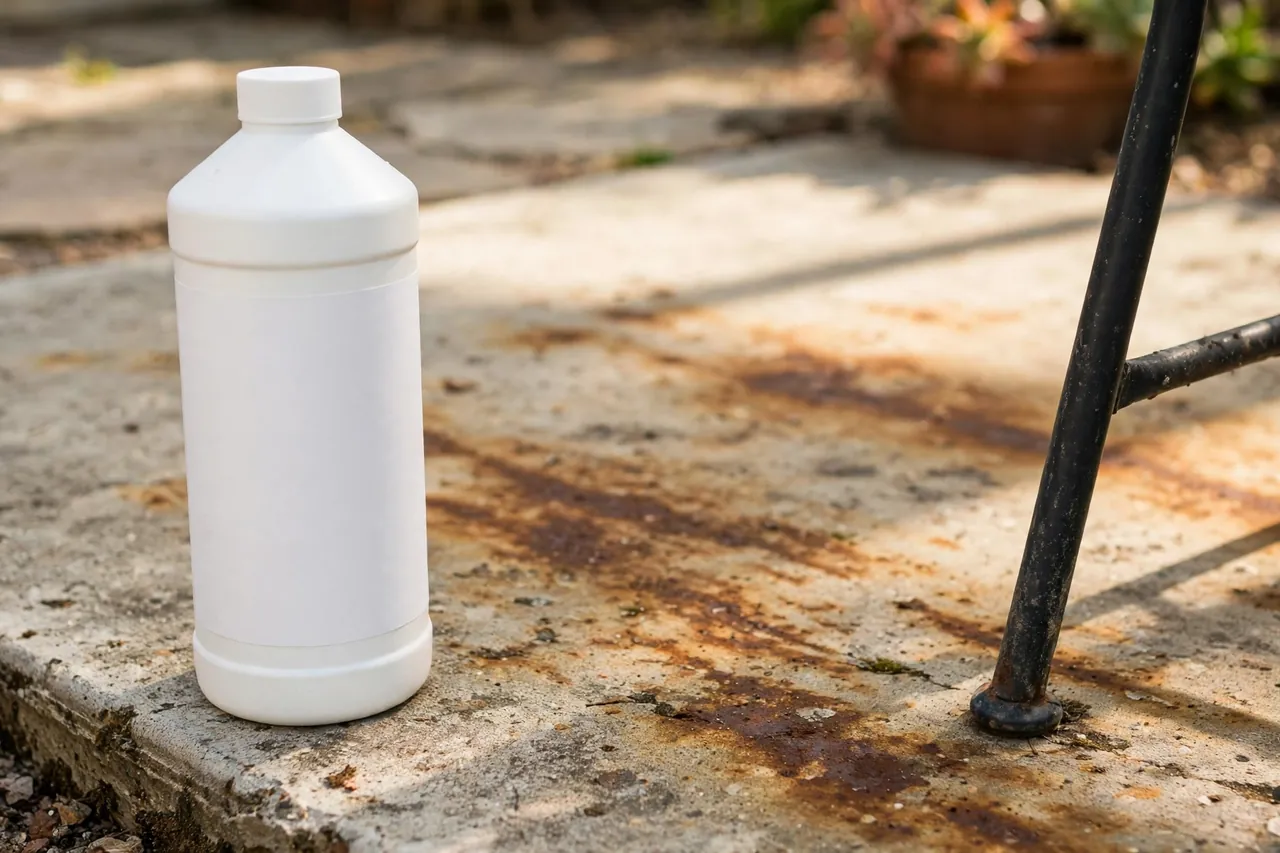
The second mistake is pressure washing first. Pressure washing alone cannot remove rust, because the stain is chemically bonded inside the concrete, not sitting on top of it. A pressure washer can help rinse a stain after an acid treatment, but on its own it only cleans the dirt around the stain and makes the orange stand out more. Worse, high pressure on stamped or colored concrete can strip the color and texture, leaving permanent damage.
The third mistake is starting with the strongest acid. Muriatic acid will remove the stain, but it also eats the top layer of concrete and can damage your lungs if you breathe the fumes. The right order is always lemon juice, then vinegar, then oxalic acid, then a professional. Each step up costs more and risks more, so you only climb the ladder when the rung below has genuinely failed.
Guess which cleaner most homeowners grab first — the bleach bottle or the lemon? The bleach bottle wins, and it is the one cleaner in the house that cannot remove rust at all. That is why this section sits in the middle of the guide instead of at the end: the wrong first move wastes the whole afternoon.
Bleach lightens rust, it never removes it. Save the bleach for mold on the cushions.
How to Stop Rust Stains Coming Back
You stop rust stains coming back by keeping bare metal off wet concrete, and the cheapest fix costs less than a dollar per chair. Slip plastic or rubber foot caps onto every metal chair and table leg, and replace them when they crack or fall off. A cap that costs pennies stops a stain that costs an afternoon to remove.
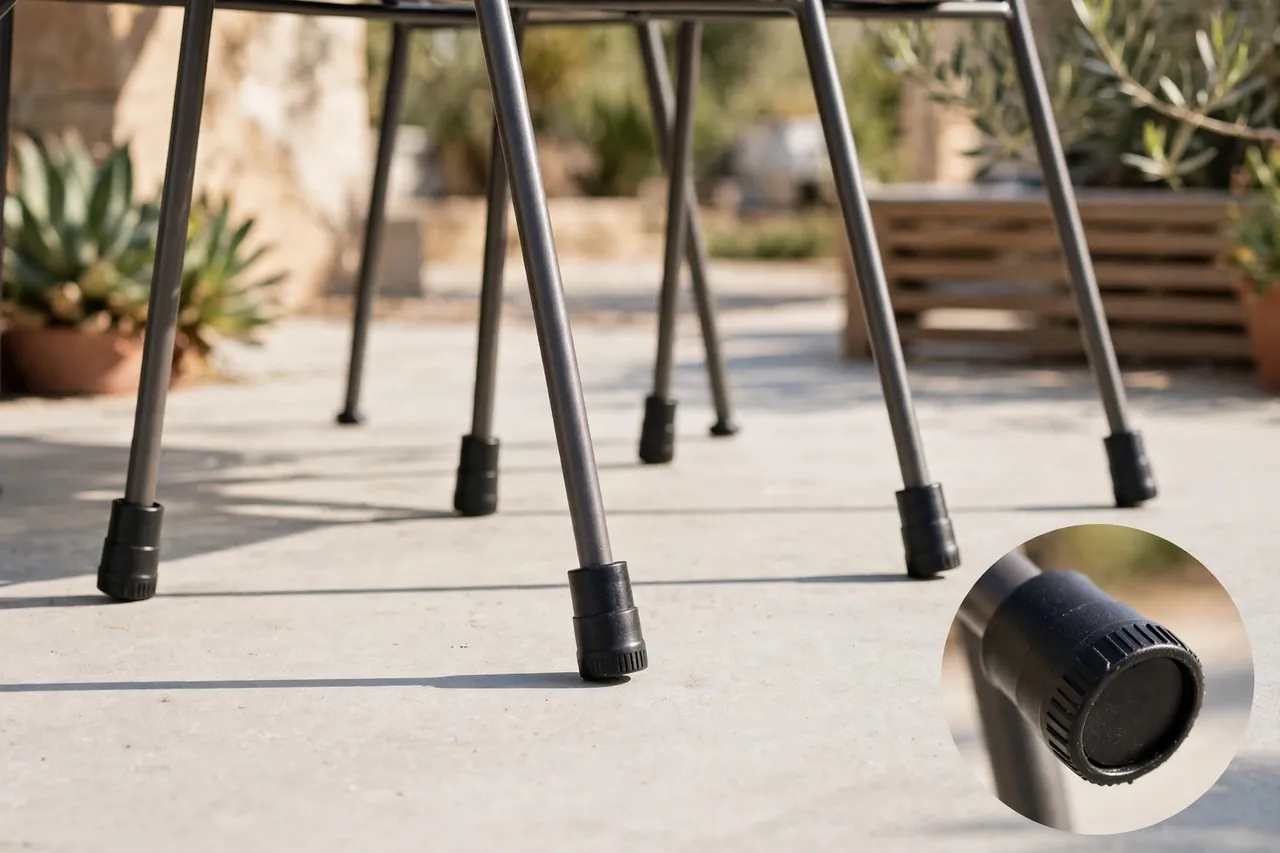
Seal the concrete once the stains are gone. A penetrating sealer fills the pores of the slab so iron particles and water cannot soak in together, and it makes the next stain far easier to clean. Reseal every two to three years, or sooner on a patio that takes full sun and rain. Do not seal over a stain you have not removed yet — the sealer will lock the orange in place.
Choose rust-proof furniture the next time you buy. Powder-coated aluminum never rusts, and resin wicker over an aluminum frame keeps the classic look without a steel core that can rust at the welds. Our aluminum outdoor furniture guide explains why aluminum is the safe pick near pools and coasts, and how to care for outdoor furniture shows the seasonal routine that keeps frames, fabric, and feet in good shape. If you love the look of steel or wrought iron, keep it painted, touch up chips the week they appear, and never let a bare metal edge sit in a puddle.
Move things around once a season. A chair that never moves traps moisture under its feet and hides the first rust ring until it is deep. Shift the furniture, sweep underneath, and check the feet while you are there. Five minutes a season beats a full afternoon of scrubbing.
Caps on the feet, sealer on the slab. Those two habits end most rust stains for good.
Rust Stain Methods Compared
Pick your method by the age of the stain, not by what is closest to hand. This table puts the whole ladder in one place so you can start at the right rung.
Which rust remover to use, by stain age
| Method | Best for | Wait time | Risk |
|---|---|---|---|
| Lemon juice | Fresh stains, days old | 10–15 minutes | Very low |
| White vinegar | Stains lemon juice left behind | 30 minutes | Can strip paint or color |
| Oxalic acid cleaner | Old, set-in stains | 5–10 minutes | Burns skin and eyes; follow the label |
| Professional soft wash | Deep or widespread stains | One visit | Costs more, but safest for colored concrete |
Two methods never belong on this table: bleach, which only lightens rust, and pressure washing alone, which cannot break the chemical bond. If you have tried lemon juice, vinegar, and oxalic acid and the stain is still there, the iron has bonded too deep for a DIY cleaner, and a professional is cheaper than replacing the slab. For the rest of your patio care routine, patio furniture cleaner covers the cleaners that work on frames and fabric, and concrete patio design ideas shows how to plan a patio that is easier to keep clean in the first place.
Safety note: acids, including oxalic acid, can burn skin and eyes and damage plants, so wear gloves and goggles, follow the label, never mix cleaners, and keep children and pets away until the area is rinsed and dry. If a stain covers a large area or the concrete is stamped, colored, or sealed, call a professional rather than risking the finish.
Frequently Asked Questions
How do you get rust off of concrete?
Clean the surface with soap and water, then soak the stain in pure lemon juice for 10 to 15 minutes, scrub with a stiff brush, and rinse. If the stain stays, repeat with white vinegar for 30 minutes, then try an oxalic acid rust remover. Always work from the gentlest method up.
Does vinegar remove rust from concrete?
Yes, white vinegar removes rust stains that lemon juice leaves behind, because it carries slightly more acid. Pour it on undiluted, wait about 30 minutes, scrub, and rinse. Test it first on painted or colored concrete, because vinegar can strip paint and lighten color if left on too long.
Will bleach remove rust stains from concrete?
No, bleach does not dissolve iron oxide, so it only lightens the orange color for a short time and the stain comes back. Bleach can also damage the concrete surface over time. Use an acid — lemon juice, vinegar, or an oxalic acid cleaner — because only acids break the bond between rust and concrete.
Can you pressure wash rust off concrete?
No, pressure washing alone cannot remove rust stains, because the iron oxide is chemically bonded inside the concrete pores. A pressure washer can rinse the area after an acid treatment, but on its own it only cleans the dirt around the stain. High pressure can also damage stamped or colored concrete.
What are the best rust removers for concrete?
The best rust removers for concrete are acid-based cleaners, because only an acid dissolves iron oxide. Start with lemon juice or white vinegar for fresh stains, then use a commercial rust remover that contains oxalic acid for old stains. The Concrete Network guide says the same: detergents and pressure washing alone cannot remove rust.
Start with the lemon juice tonight, while the stain is still fresh, and check the feet of the chair that made it before you put it back. The stain took minutes to make and minutes to remove — the caps that stop the next one take even less.