Outdoor furniture parts are the replacement pieces that keep a good set alive: cushions, slings, glides, feet, hardware, straps, and swivel mechanisms. Most of them are available from the original maker, an authorized dealer, or a specialty parts seller, and the right part starts with three facts: the brand, the collection name, and the model or part number. This guide maps every part that wears out, shows you how to identify the one you need, and tells you where to buy it without ordering twice.
The habit that saves the most money is simple. When a chair starts to wobble or a sling starts to sag, find the part before you shop for a new chair. A set of glides costs a few dollars, a replacement sling costs far less than a new chair, and a good frame can outlive three sets of cushions. The furniture is usually fine. The part is what gave up.
What Counts as an Outdoor Furniture Part?
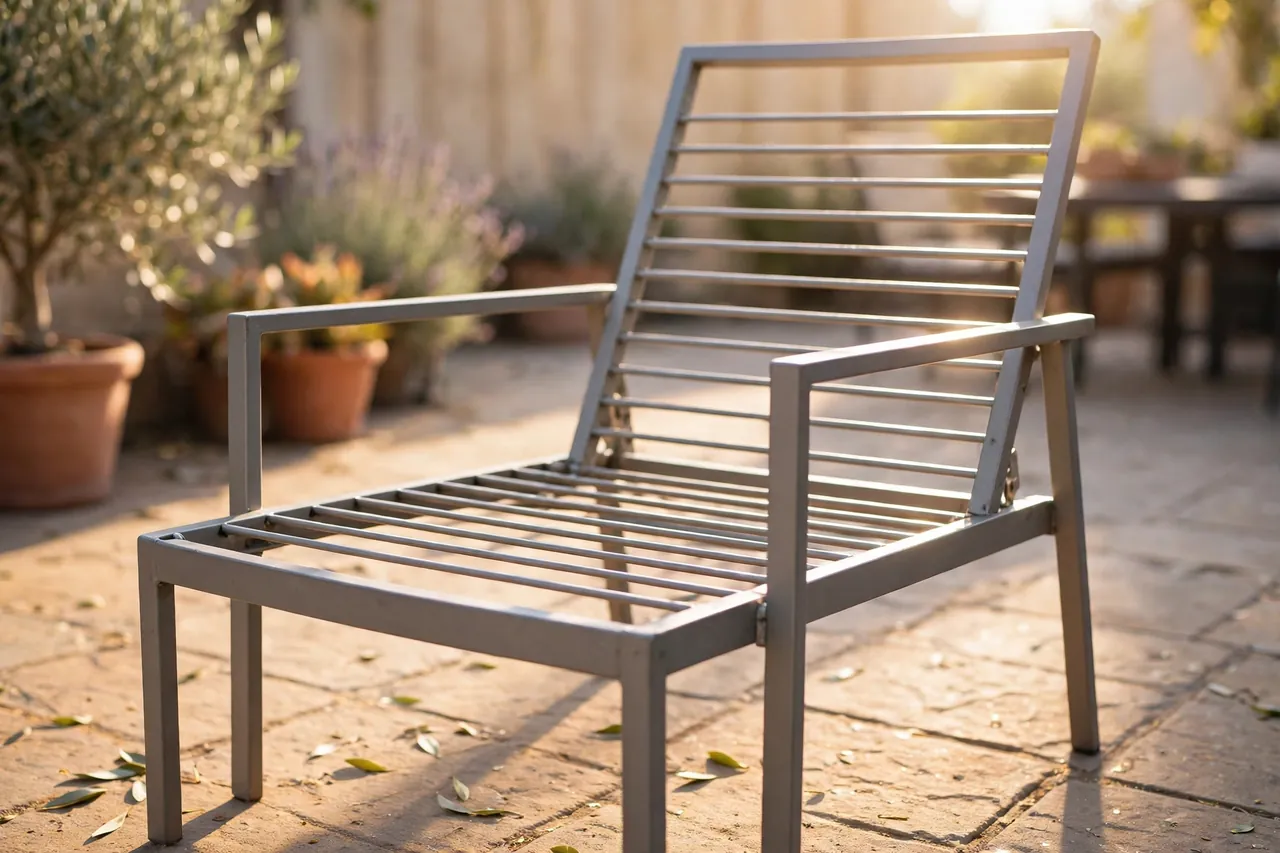
Every outdoor chair, sofa, and table is a small kit of parts, and each one fails in its own way. Cushions lose their foam and fade. Slings stretch and tear. Glides and feet wear flat, crack, or fall off. Straps dry out and snap. Hardware rusts, loosens, or strips. Swivel mechanisms grind and seize. Table tops chip or crack, and umbrella holes wear oval. Knowing the name of the failed piece is half the repair, because parts sellers organize their whole catalog by those names.
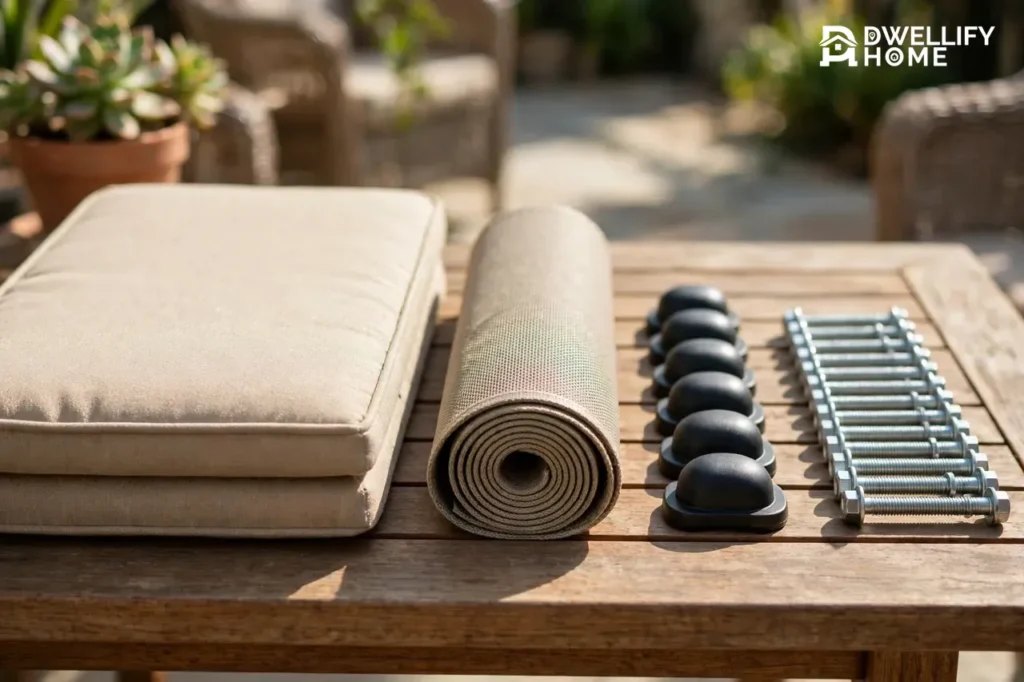
The parts fall into four groups. Soft parts are cushions, slings, straps, and covers. These wear out fastest because sun and rain attack them every day. Small hard parts are glides, feet, end caps, bolts, screws, and washers. These are cheap, and they are the parts most people lose or ignore until the chair wobbles. Moving parts are swivel mechanisms, gliders, recliner hardware, and hinges. These need the exact match, because a wrong mechanism will not bolt up. Big parts are frames, table tops, and glass. These are worth replacing only on a good frame, and glass usually comes from a local glass shop rather than the furniture maker.
Before you order anything, find the label. Most outdoor furniture carries a tag under the seat or on the frame with the brand, the collection name, and a model number. Photograph it. That photo is the single most useful thing you will show a dealer or a parts seller. Our outdoor furniture repair guide walks through the same identification step before any fix begins.
Photograph the label first. The brand, collection, and model number decide every part that fits.
Cushions and Slings First: The Parts That Wear Out Fastest
Cushions and slings are the parts you will replace most often, and they are also the easiest to get right. A cushion needs three measurements: width, depth, and thickness, plus the shape of the seat it sits on. Measure the seat, not the old cushion, because old foam compresses and old covers shrink. A cushion that is half an inch too wide will not sit flat, and one that is too thin will feel like sitting on the frame.
Slings are the fabric panels that stretch across a chair frame, and they fail when the fabric fades, sags, or tears at the rails. To order one, you need the model number of the chair, because the sling is cut to that exact frame. Brands like Tropitone, Brown Jordan, Winston, and Woodard publish sling specifications online, and their dealers can match a sling from the model number alone. Homecrest sells replacement slings and cushions through its authorized dealers, and its catalog archive helps identify older collections by year and product type. The KB Patio Furniture guide to replacement parts explains the same point from the restorer’s side: slings are sewn with fade-resistant thread and can be re-stitched, but a stretched sling never tightens again, so replacement is the real fix. Read their parts breakdown at KB Patio Furniture’s patio furniture replacement parts guide.
Fabric choice matters as much as size. Solution-dyed acrylic, such as Sunbrella, holds its color far longer than surface-dyed fabric, because the color runs through the fiber instead of sitting on top. If your old cushions faded in two seasons, the replacement fabric is the upgrade, not just the replacement. Our replacement cushions for patio furniture guide covers measuring and fabric choice in detail, and outdoor sectional cushions covers the bigger modular pieces.
Measure the seat, not the old cushion. Old foam lies about its size, and a half inch is the difference between flat and lumpy.
Glides, Feet, and End Caps: The Small Parts That Save Your Deck
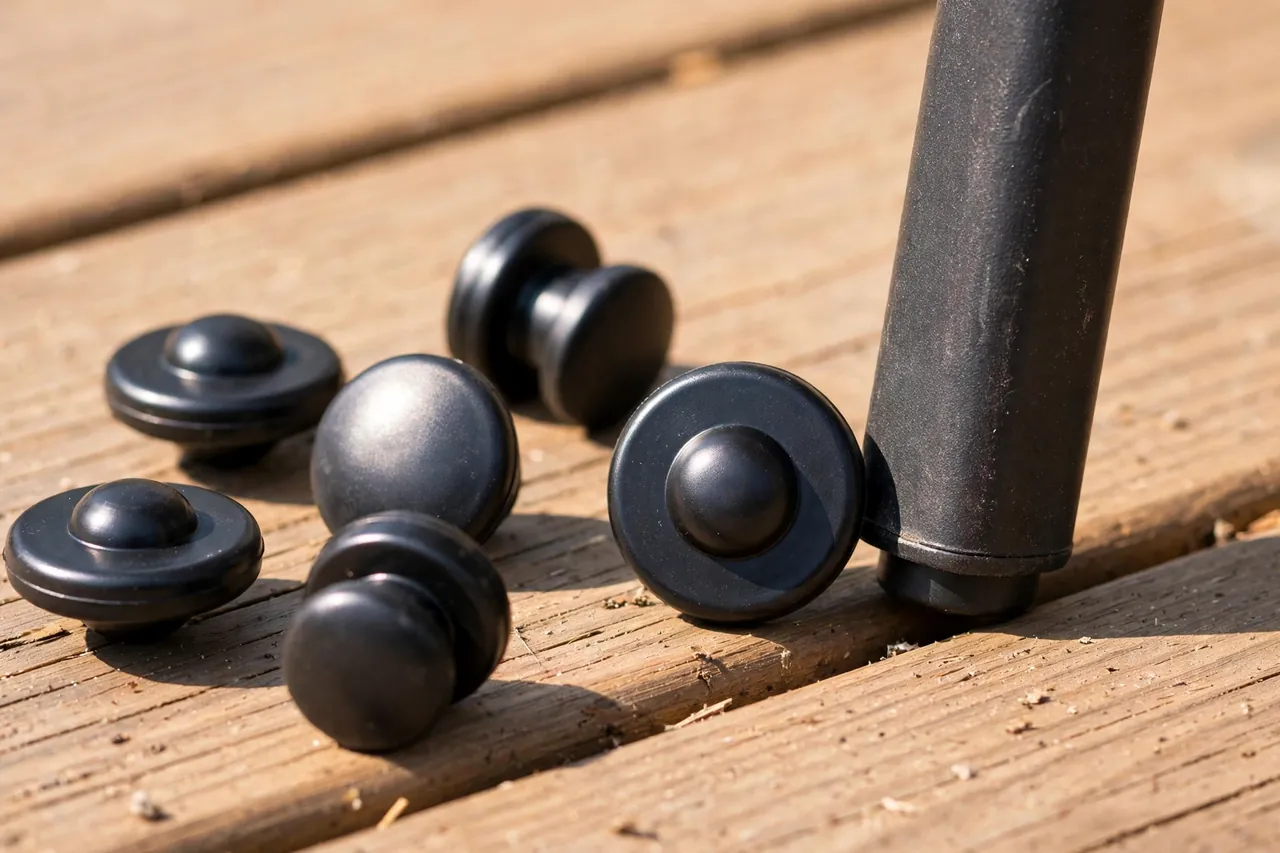
Glides are the small caps on the bottom of furniture legs, and they do three jobs at once: they protect the deck or patio from scratches, they keep the chair stable, and they let it slide without screeching. When a glide wears flat or falls off, the bare metal or plastic leg meets the floor directly, and every move leaves a mark. Replacing glides is the cheapest repair in outdoor furniture, and it is the one most people skip until the deck shows the damage.
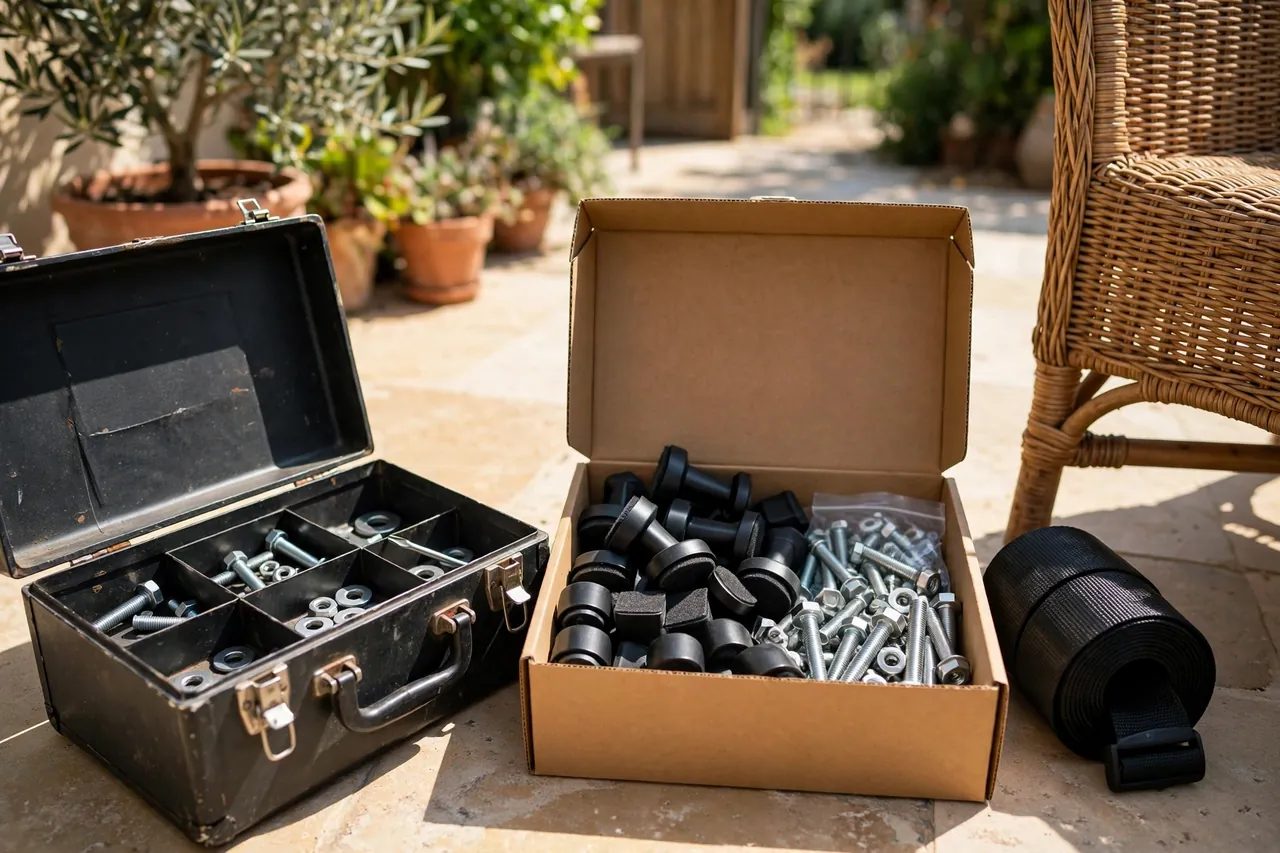
Glides come in several types, and the type must match the leg. Screw-in glides thread into the leg, riveted nylon glides are drilled out and replaced with a pop rivet, and push-in glides press into the tube end. Measure the outside diameter of the leg and the thread size if it screws in. A common threaded size is 5/16-inch thread with a 1-1/8-inch glide face, sold in packs of eight, but never guess the size. Take the old glide with you, or measure it with calipers and match the listing exactly.
Feet and end caps are close cousins. Feet are the larger pads or levelers under tables and heavy chairs, and many are adjustable, so a wobbly table can be leveled by turning the foot rather than shimming the leg. End caps close the ends of sling rails and keep the fabric from sliding off the frame. They look trivial until one goes missing and the sling starts to walk. Tropitone’s own FAQ confirms the range it supports: replacement glides, caps, cushions, slings, and many other parts are available through its dealers. See the full list on Tropitone’s FAQ on replacement parts.
A five-dollar glide protects a five-thousand-dollar deck. Replace them the season they wear flat, not the season after.
Hardware, Straps, and Swivel Mechanisms
Hardware is the least glamorous part of the set and the most common reason a chair feels loose. Outdoor furniture lives in rain, so bolts and screws must be stainless steel or another rust-proof material. A regular steel bolt will rust, seize, and then snap when you try to remove it. When you replace hardware, match the diameter, the thread, and the length, and use a lock washer or a nylon-insert nut so vibration does not back it out again. A 1/4-inch stainless bolt with a matching lock washer is a common size for chairs and tables, but check your own piece before ordering.
Vinyl straps are the woven bands across older sling-style chairs, and they dry out, crack, and snap after years in the sun. Replacement straps come in rolls or cut lengths in many colors, and the fix is a re-strap rather than a new chair. Measure the strap width and the length between the attachment points, and order a little extra, because a strap cut short is wasted. The same logic applies to the small springs and clips that tension the straps.
Swivel mechanisms and glider hardware are the parts where an exact match is not optional. A swivel rocker base has a specific bolt pattern, a specific height, and a specific weight rating. Order by the chair’s model number, never by a photo alone, and if the maker has discontinued the mechanism, an authorized dealer can often match a current equivalent. Do not improvise with a generic swivel from a hardware store. A mechanism that bolts up but sits a half inch too high changes the seat height and the balance of the whole chair.
Match the thread, not just the size. A bolt that looks right and threads wrong will strip the fitting it was meant to save.
Frames and Tabletops: When a Part Is Worth Replacing
A frame is worth saving when the metal is sound and only the surface is tired. Aluminum frames can be cleaned, touched up, and re-slung for years. Wrought iron frames can be sanded, treated for rust, and powder-coated again. A frame is not worth saving when the weld has cracked at a load-bearing joint, when aluminum has corroded through, or when the repair costs more than half the price of a comparable new piece. That is the honest line, and it is better to know it before ordering parts.
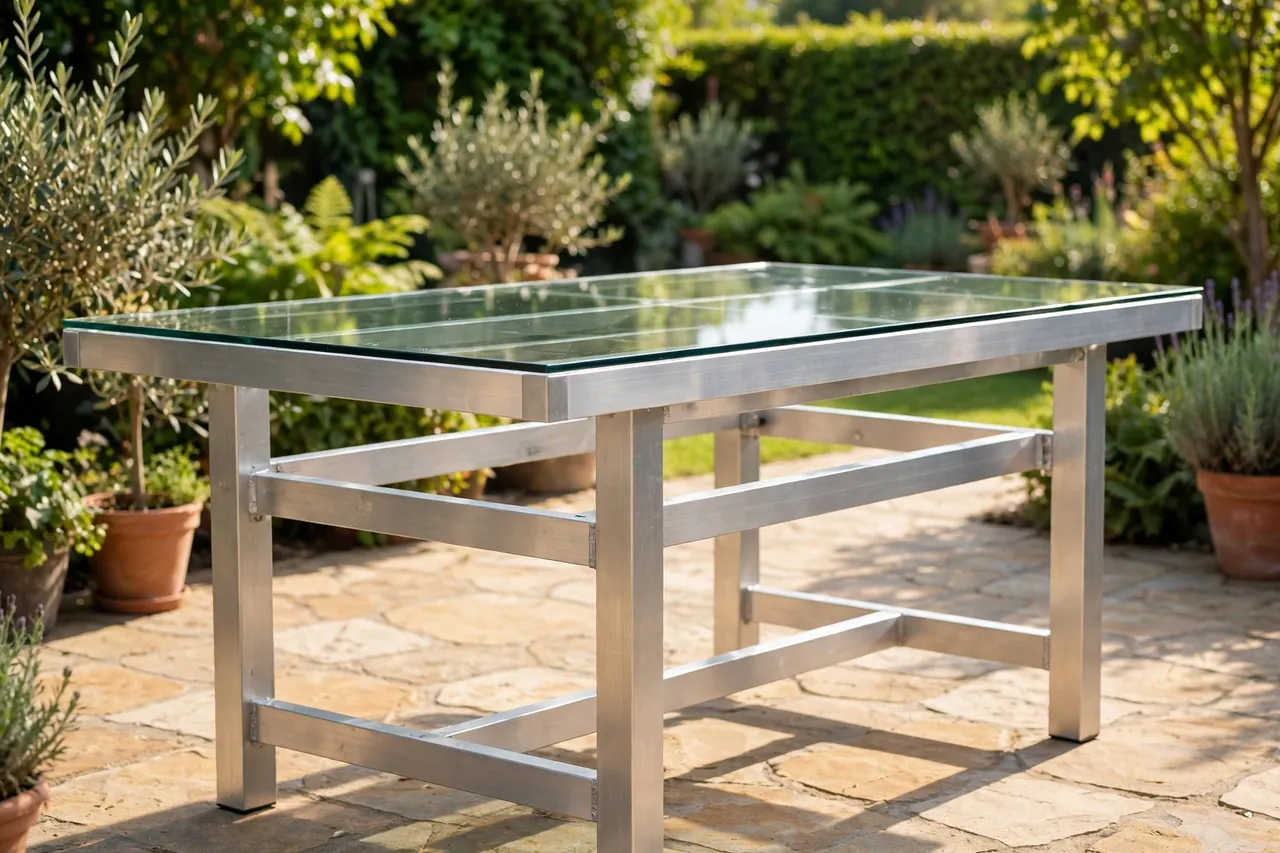
Table tops follow the same logic. A stone, tile, or cast aluminum top that chips at the edge can often be lived with or repaired. A glass top is different: most furniture makers do not sell replacement glass, and the right move is a local glass shop that cuts a new top to the exact size and thickness of the old one. Homecrest says exactly this in its own FAQ: it does not offer replacement glass, and a local glass vendor can cut a new table top for you. Bring the old glass, or the frame, so the shop can match the thickness and the edge.
Umbrella parts deserve a mention too. A crank handle, a tilt mechanism, or a rib can usually be replaced by the umbrella’s maker, and the model number matters as much as it does for chairs. Keep the umbrella’s manual and the receipt together, because the model number is the key to every part in it. Our how to care for outdoor furniture guide shows the cleaning routine that keeps frames and tops in the worth-saving category.
Save the frame, replace the glass locally. A sound frame earns new parts; a cracked weld does not.
How to Find the Right Part: The 4-Step Compatibility Check
Step one is identification. Find the brand, the collection name, and the model number from the label under the seat or on the frame, and photograph all of it. If the label is gone, photograph the whole piece from the front and the side, plus a close photo of the failed part and its fitting. A dealer can often identify a chair from those four photos.
Step two is measurement. Measure the part itself and the place it fits. For a glide, measure the leg diameter and the thread. For a sling, measure the rail-to-rail distance and the fabric width. For a cushion, measure the seat. For hardware, measure the bolt diameter, thread pitch, and length. Write the numbers down before you open a shopping page, because a listing with ten near-identical options will blur them fast.
Step three is the source check. Start with the maker or its authorized dealer, because only they carry the exact original part. If the maker has discontinued the piece, check a specialty parts seller that lists by brand and model, then check a restoration shop that stocks generic equivalents. A generic part is fine for a glide or a bolt. It is a gamble for a sling or a swivel mechanism, where the fit is exact or it is wrong.
Step four is the one-piece test. Order one part first when the fit is uncertain, and test it before ordering the full set. A single glide, a single strap, or a single sling costs little, and it proves the match before you spend the real money. This is the step that separates a one-order fix from a three-order saga. The VT Furniture Works guide to restoring patio furniture makes the same point from the repair side: start with the manufacturer, verify compatibility, and only then buy the full set. Read it at VT Furniture Works’ essential parts guide for DIY repairs.
Order one, test it, then order the rest. A single part proves the fit before the real money goes out.
Where to Buy Outdoor Furniture Parts
The maker comes first. Brands like Tropitone and Homecrest sell replacement parts through their authorized dealers, and the dealer can match parts from a model number or a photo. This is the only route that guarantees an exact original part, and it is the route to use for slings, swivel mechanisms, and anything structural. Find your dealer through the brand’s website, and bring the label photo and the measurements with you.
Specialty parts sellers come second. Sites that focus only on patio furniture parts carry glides, end caps, slings, straps, hardware, and covers across many brands, and they list by brand and model so you can check the fit before buying. They are the best option when the maker has discontinued a part or the dealer is far away. Check the seller’s return policy before ordering, because a part that does not fit is only useful if you can send it back.
Local options come third, and they are better than most people expect. A local outdoor furniture retailer often stocks common parts like glides, straps, and cushion covers. A restoration shop can re-sling a chair, re-strap a frame, and match hardware from its own bins. A glass shop cuts table tops. A hardware store carries stainless bolts, washers, and pop rivet kits. For vintage or discontinued pieces, a restoration supply company or a salvage yard can be the only source left.
Online marketplaces are the last resort, not the first. They host many sellers of patio parts, and the prices can be good, but the listings are often generic, and the compatibility check is on you. Verify the seller’s reputation, confirm the measurements in the listing against your own, and confirm the return policy before you pay. Our how to store outdoor furniture guide helps the new parts last, and washing outdoor cushions keeps the soft parts from wearing out early.
Maker first, specialist second, marketplace last. The order decides whether the part fits or gets returned.
Parts Checklist: What to Keep on Hand
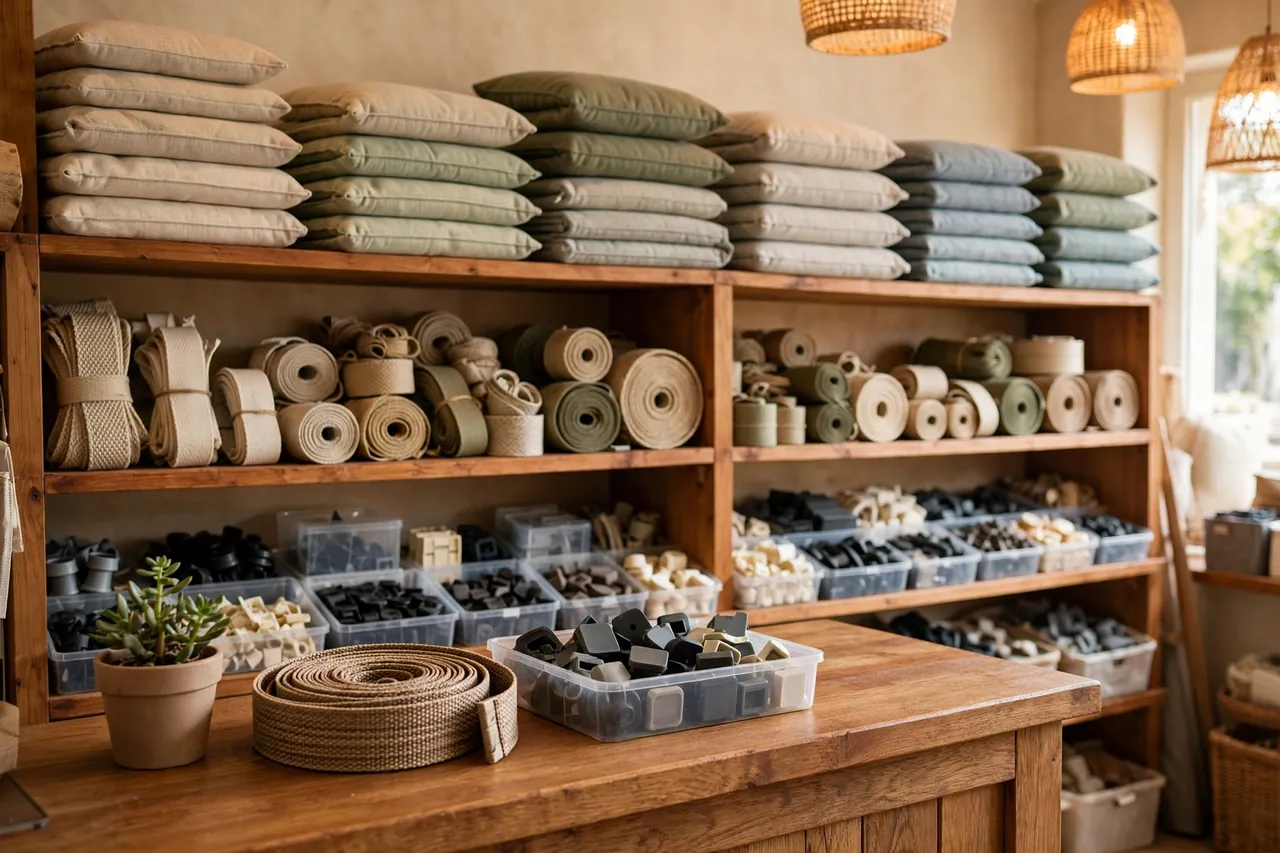
A small parts box saves a season. Keep a set of spare glides in the sizes your chairs use, a few stainless bolts with lock washers, a spare strap or two, and a tube of touch-up paint matched to your frames. Keep the label photos and the model numbers in your phone, not in a drawer, so the dealer can be called from the patio instead of the garage. And keep the covers on when the furniture is not in use, because the parts that last longest are the ones the sun never reaches.
Check the whole set once each spring. Sit in every chair, rock every swivel, and look under every table. Tighten what is loose, replace the glides that are flat, and order the slings that are starting to sag before they tear. A spring check takes twenty minutes and turns a mid-summer failure into a spring errand. For the cover that protects all of it, see outdoor covers for furniture, and for the cleaning routine that keeps fabric alive, see patio furniture cleaner.
Twenty minutes each spring beats a broken chair in July. Check every seat before the season starts, not after it fails.
Frequently Asked Questions
Can I get replacement parts for my furniture?
Yes. Start with the maker or an authorized dealer near you, who can match parts from the brand, collection, and model number. Many brands also sell replacements online through their dealers. Bring the label photo and the measurements, and the dealer can confirm the exact part before you order.
Where can I get replacement slings/cushions for my furniture?
You can buy replacement slings and cushions from any authorized dealer of your furniture’s brand, or order them through the brand’s online replacements shop. You need the model number of the chair, because each sling is cut to its exact frame. A dealer can also help identify older collections from the catalog archive.
How do I purchase replacement parts?
Contact your local authorized dealer or sales representative and give them the brand, collection, and model number. For most major brands, the dealer is the only route that guarantees an exact original part. For common parts like glides and hardware, a specialty parts seller can match the size from your measurements.
How do I order replacement cushions & slings?
Contact your local authorized dealer with the model numbers of the pieces you want to re-sling or re-cushion. You need the model number for each piece, because slings and cushions are cut to the exact frame. The dealer will confirm the fabric, the size, and the price before ordering.
Can I get replacement parts for my Tropitone Outdoor Furniture or Basta Sole Market Umbrellas?
Yes. Tropitone offers replacement glides, caps, cushions, slings, and many other parts for its furniture, and Basta Sole is known for easy part replacement on its umbrellas. Contact your local authorized Tropitone dealer or sales representative for ordering details and availability.
Start with the label, measure twice, and order one part before the full set. Most outdoor furniture fails one small piece at a time, and the set that gets its glides, slings, and cushions on schedule will outlast the set that gets replaced whole. Keep the model numbers in your phone, and the next repair will take a phone call instead of a weekend.