Plastic outdoor furniture is a great buy only when it is made from HDPE, because HDPE poly lumber lasts 20 to 30 years outside with zero maintenance, never rots, rusts, or splinters, and holds its color for decades — while a cheap polypropylene set fades, turns brittle, and cracks within one to three seasons. The word on the label decides everything, and most “plastic” furniture is not HDPE at all. This guide shows you how to tell the difference, what real HDPE sets cost checked November 16, 2026, and how to pick plastic that still looks new in ten years.
One number in the price table below decides whether plastic is the cheapest seat on your patio or the most expensive mistake you will make twice, and it has nothing to do with the sticker price. It sits in the lifespan section, and most buyers never see it until their chairs crack. Before that, you need the plastic types straight, because three different plastics share one shelf.
What Is Plastic Outdoor Furniture?
Plastic outdoor furniture is patio, garden, or deck furniture built from synthetic polymers instead of wood or metal: chairs, tables, benches, Adirondack chairs, dining sets, and loungers made to live outside in rain, sun, and wind. It is the lightest-maintenance furniture you can buy, and it is also the most misunderstood, because “plastic” covers materials that last 25 years and materials that last 2 seasons.
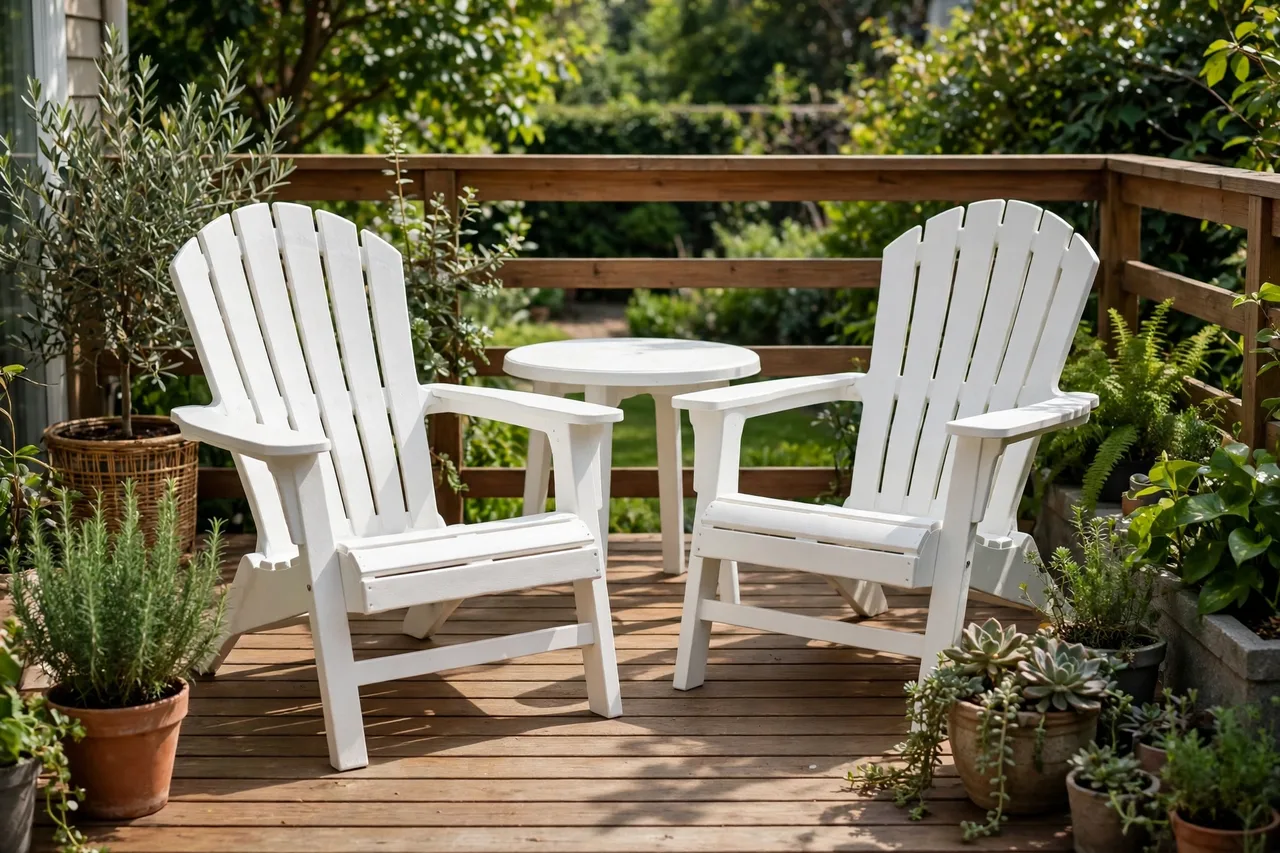
Three plastics dominate the shelf. HDPE, high-density polyethylene, is the premium one: dense, solid boards extruded from recycled plastic, with UV stabilizers and color mixed all the way through. Polypropylene, or PP, is the budget one: light, cheap, and injection-molded into thin-walled chairs that stack by the dozen outside a grocery store. PVC, polyvinyl chloride, is the flexible one: it shows up in wicker-style weaves and budget frames, and it turns brittle in cold and sun unless it is UV-stabilized.
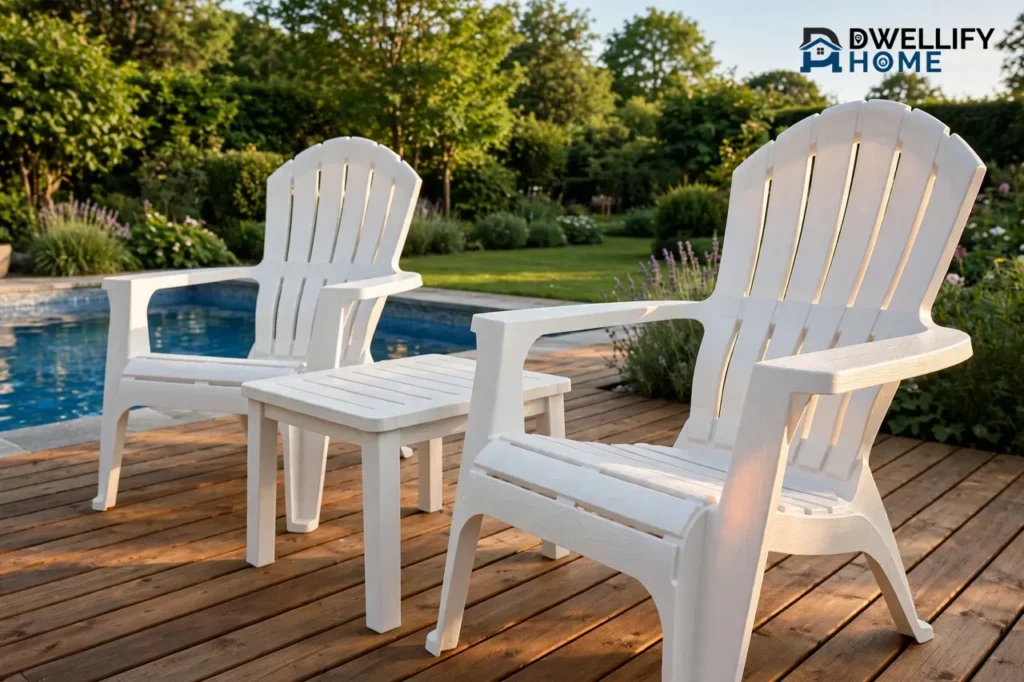
Plastic furniture also comes in two builds that matter more than the brand. Solid HDPE lumber furniture, sold under brand names like POLYWOOD, is made from thick boards that look and feel like painted wood. Hollow molded plastic furniture is made from thin plastic shells blown or injected into shape: light, cheap, and easy to stack, but thin-walled and quick to crack. The plastic outdoor furniture guide from Alibaba Wellness puts the rule plainly: choose furniture made from recycled HDPE for longevity and minimal care, because it resists fading, cracking, and moisture better than standard polypropylene or PVC.
Plastic suits almost any outdoor room. It works on a poolside deck, a coastal patio, a kids’ play area, a rental property, and a garden that gets hosed down, not pampered. It never needs painting, staining, or sealing, and it wipes clean with soap and water. That is why it outsells wood in beach towns and poolside homes, and why the wrong plastic stings so much when it cracks in year two.
What Plastic Is Used for Outdoor Furniture?
HDPE is the plastic used in the best outdoor furniture, and the other plastics are cheaper substitutes that cost more over time. The differences are not subtle, and they show up in the first summer.
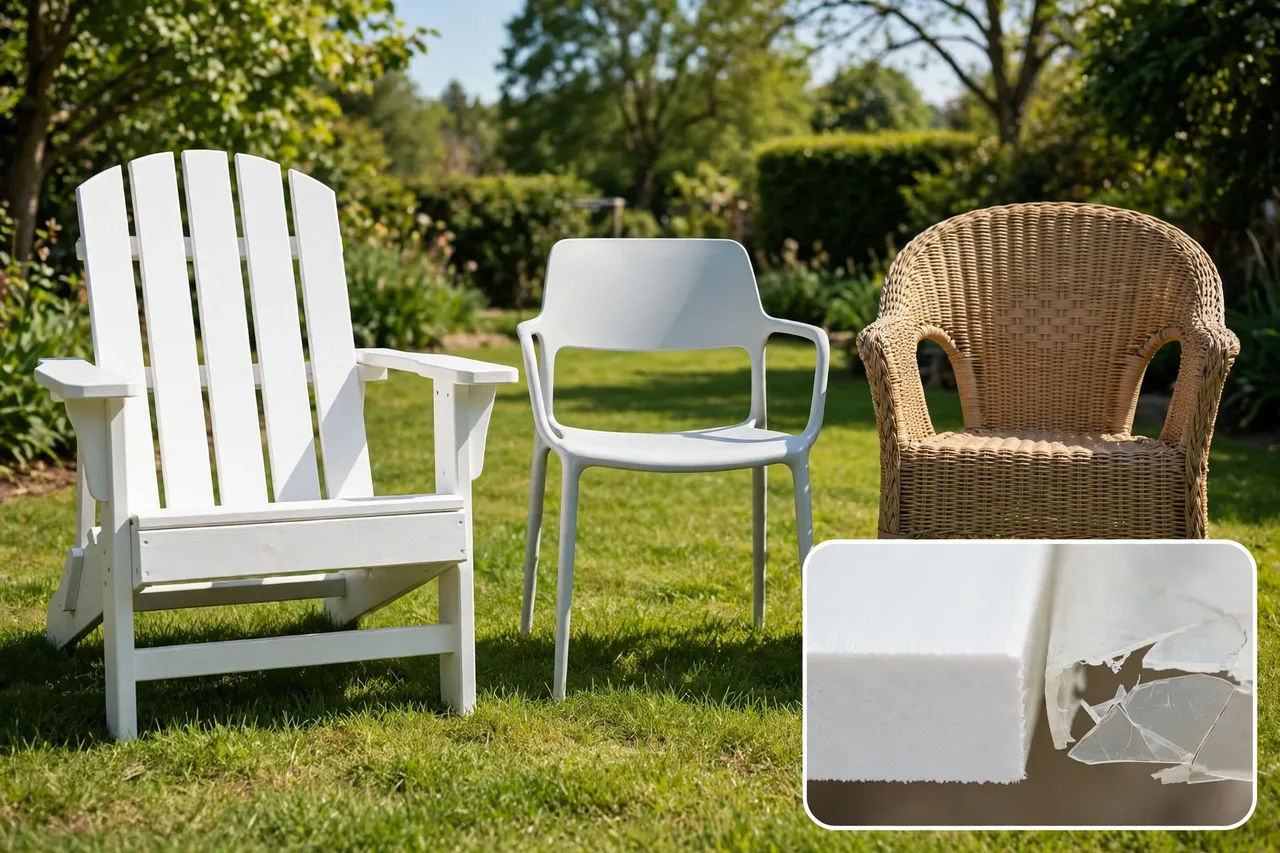
HDPE, high-density polyethylene, is the gold standard. It is made from recycled plastic such as milk jugs and detergent bottles, extruded into solid boards, and built into furniture that lasts 20 to 30 years or more. HDPE is non-porous, so it cannot absorb water, will not swell or crack from moisture, and will not rust or corrode. Its color runs all the way through the plank, the same way color runs through a crayon, so there is no surface layer to fade or chip away. It also carries UV stabilizers built into the formulation, not applied as a coating. The POLYWOOD materials guide from Opple House explains it clearly: POLYWOOD is made from 100 percent recycled HDPE, with UV inhibitors, color pigments, and protective stabilizers blended into the HDPE before it is shaped into planks, and the brand recycles an average of 400,000 milk jugs per day.
Polypropylene is the plastic in most cheap patio chairs. It is lighter and cheaper than HDPE, but it has no UV stabilizers unless the maker adds them, so it fades within one to two seasons and turns brittle and cracks within one to three years in direct sun. It suits a shaded porch or a chair you replace every year, not a set you want to keep.
PVC is the plastic in many wicker-style weaves and budget frames. It is flexible and cheap to mold, but it stiffens and cracks under sun and cold, and it degrades faster than HDPE unless it is UV-stabilized. It works in a covered, mild-climate setting and gambles everywhere else. The table below puts the three plastics side by side.
| Plastic | Lasts outside | Sun damage | Water damage | Typical chair price |
|---|---|---|---|---|
| HDPE poly lumber | 20–30+ years | Minimal, UV-stable | None, non-porous | $150–$400 |
| Polypropylene | 1–3 years | Fades, turns brittle | None | $20–$80 |
| PVC | 3–5 years | Stiffens, cracks | Low | $40–$120 |
| Recycled HDPE lumber | 25+ years | Minimal, UV-stable | None, non-porous | $200–$500 |
One line in that table decides most purchases: HDPE costs more once and polypropylene costs more forever. A $150 HDPE chair that lasts 25 years costs $6 a year. A $40 polypropylene chair replaced every 2 years costs $20 a year, plus the trip to buy it and the trip to throw the old one away. Check the label for the letters HDPE before you buy, and walk away from any listing that only says “plastic” or “resin” with no type named.
How Long Does HDPE Furniture Last Outside?
HDPE outdoor furniture typically lasts 15 to 20 years without fading, cracking, or requiring maintenance, even in harsh climates, and premium HDPE poly lumber lasts 20 to 30 years or more with zero maintenance. That is the honest answer from the Alibaba Wellness plastic guide and the WestinTrends material guide, and it is the number that makes HDPE the cheapest plastic per year despite the highest sticker price.
Three things decide where your set lands in that range. First, the UV stabilizers: HDPE with hindered amine light stabilizers built into the formulation holds its color for decades, while HDPE without them chalks and fades in a few summers. Second, the wall thickness: solid lumber boards last longer than thin molded shells, because a thick board resists cracking when someone drops a heavy pot on it. Third, the climate: HDPE handles deep freezes down to minus 58 degrees Fahrenheit and summer heat up to 122 degrees without cracking, warping, or losing strength, so it survives winters that kill wood and summers that bake metal.
Compare that with the alternatives. Budget polypropylene lasts 1 to 3 years in direct sun. Cheap PVC wicker lasts 2 to 5 years. Untreated wood lasts 5 to 10 years. Even teak, the king of outdoor wood, lasts 10 to 15 years if left untreated and needs annual oiling to reach 50 years. HDPE is the only outdoor furniture material that asks nothing of you and still lasts decades. That is the thing most guides skip: the best furniture is not the prettiest on day one, it is the one that still looks good on day one thousand with no work from you.
How Much Does Plastic Outdoor Furniture Cost?
Plastic outdoor furniture costs $20 to $3,650, checked November 16, 2026, and the price follows the plastic type, the size, and the brand. A budget polypropylene chair runs $20 to $80. A mid-range HDPE Adirondack chair runs $150 to $400. A POLYWOOD 3-piece Adirondack set runs $749 to $1,350. A POLYWOOD 4-piece conversation set runs $1,195 to $1,196. A large POLYWOOD dining set runs $3,650 to $6,095.
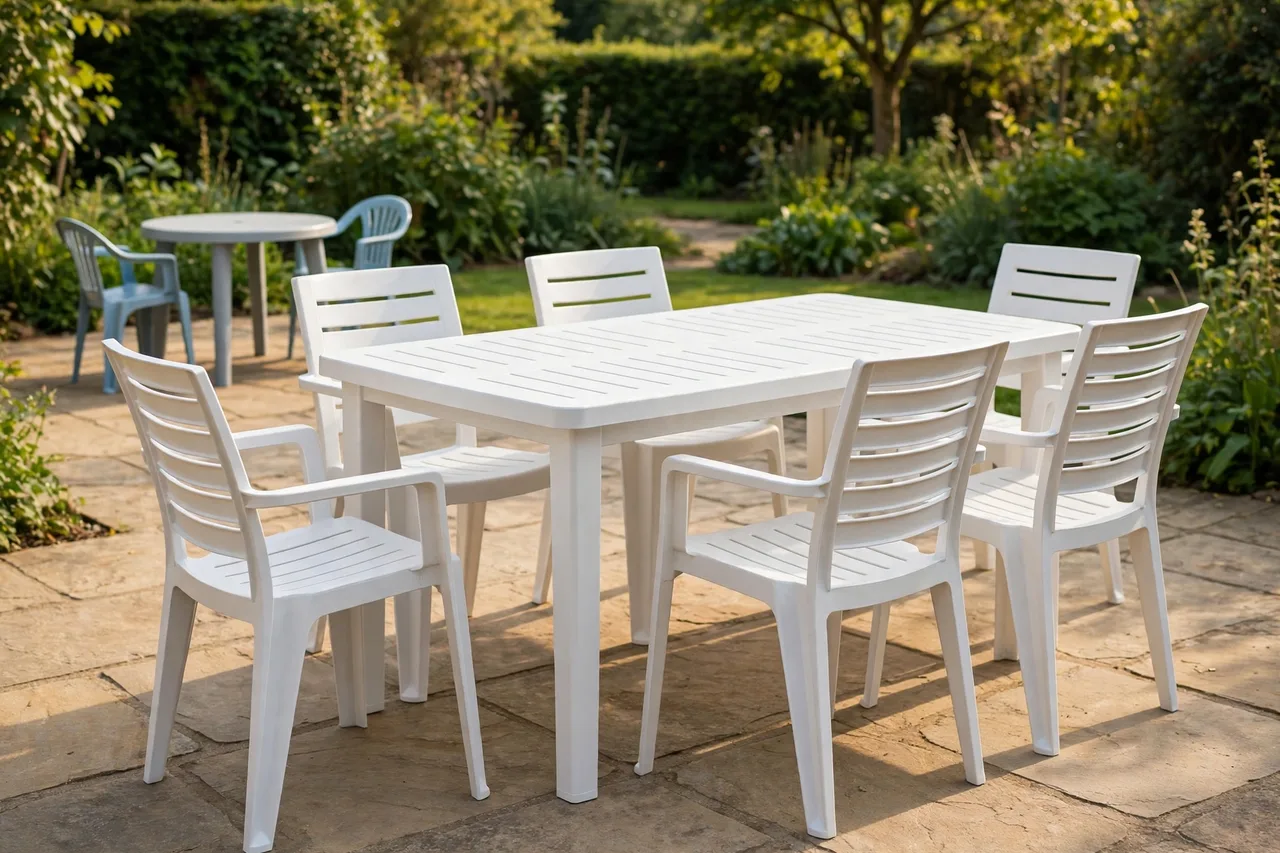
Real listings from furniture retailers on November 16, 2026 show the range clearly. The POLYWOOD Nautical 3-piece Curveback Adirondack set lists at $749. The POLYWOOD Modern 3-piece Adirondack set with an angled connecting table lists at $795. The POLYWOOD 4-piece Modern Studio Adirondack conversation set lists at $1,195. The POLYWOOD Nautical 4-piece Curveback Adirondack conversation set lists at $1,196. The POLYWOOD Nautical 3-piece Grand Upright Adirondack set lists at $1,349.99. The POLYWOOD Nautical 9-piece conversation set lists at $3,749. Budget polypropylene chairs, by contrast, sell for $80 to $150 each in the Alibaba Wellness guide’s price table, and a basic plastic patio set runs $150 to $300.
Three things push the price up. First, the material: a single HDPE board costs far more than a hollow polypropylene shell, and that difference shows in the final furniture price. Second, the build: solid lumber with stainless-steel hardware costs more than thin molded plastic with cheap screws, and it lasts ten times longer. Third, the warranty: premium HDPE furniture carries a 20-year warranty on the lumber, and that warranty is the maker’s bet that the set will last.
Here is the problem with shopping by price alone. A $150 budget plastic set replaced every 2 to 3 years costs $800 to $2,000 over a decade, plus disposal. A comparable POLYWOOD HDPE set costing $3,000 lasts 15 years or more with no maintenance. Work out the cost per year before you buy, and the “expensive” set often wins. That is the same math in our weather-resistant outdoor furniture guide, and it is the reason HDPE outsells every other plastic despite the highest price.
What Most People Get Wrong About Plastic Furniture
Most people get one thing wrong about plastic outdoor furniture: they believe all plastic is the same, so they buy the cheapest set and blame “plastic” when it cracks. It is not the same. HDPE poly lumber and a thin polypropylene stacking chair share a word and nothing else, and judging HDPE by a grocery-store chair is like judging wood by a cardboard box.
The second wrong belief is that plastic looks cheap. Cheap plastic looks cheap. Good HDPE lumber looks like painted wood, comes in deep colors that run all the way through the plank, and fools most guests into thinking it is wood until they touch it. It never needs painting, and it never shows a scratch in a different color underneath, because the color is the material, not a coating.
The third wrong belief is that plastic needs no care at all. HDPE needs almost no care, but it still needs a wash. Dirt, pollen, and bird droppings left on the surface stain it over time, and a dark-colored piece gets hot in direct sun, so a towel over the seat before sitting is a good habit on the hottest days. The next section shows you the two-minute routine that keeps HDPE looking new.
How to Care for Plastic Outdoor Furniture
Plastic outdoor furniture needs the shortest care routine of any outdoor material, and the routine is simple: wash it with soap and water, rinse it, and let it dry. Ten minutes a season covers most HDPE sets.
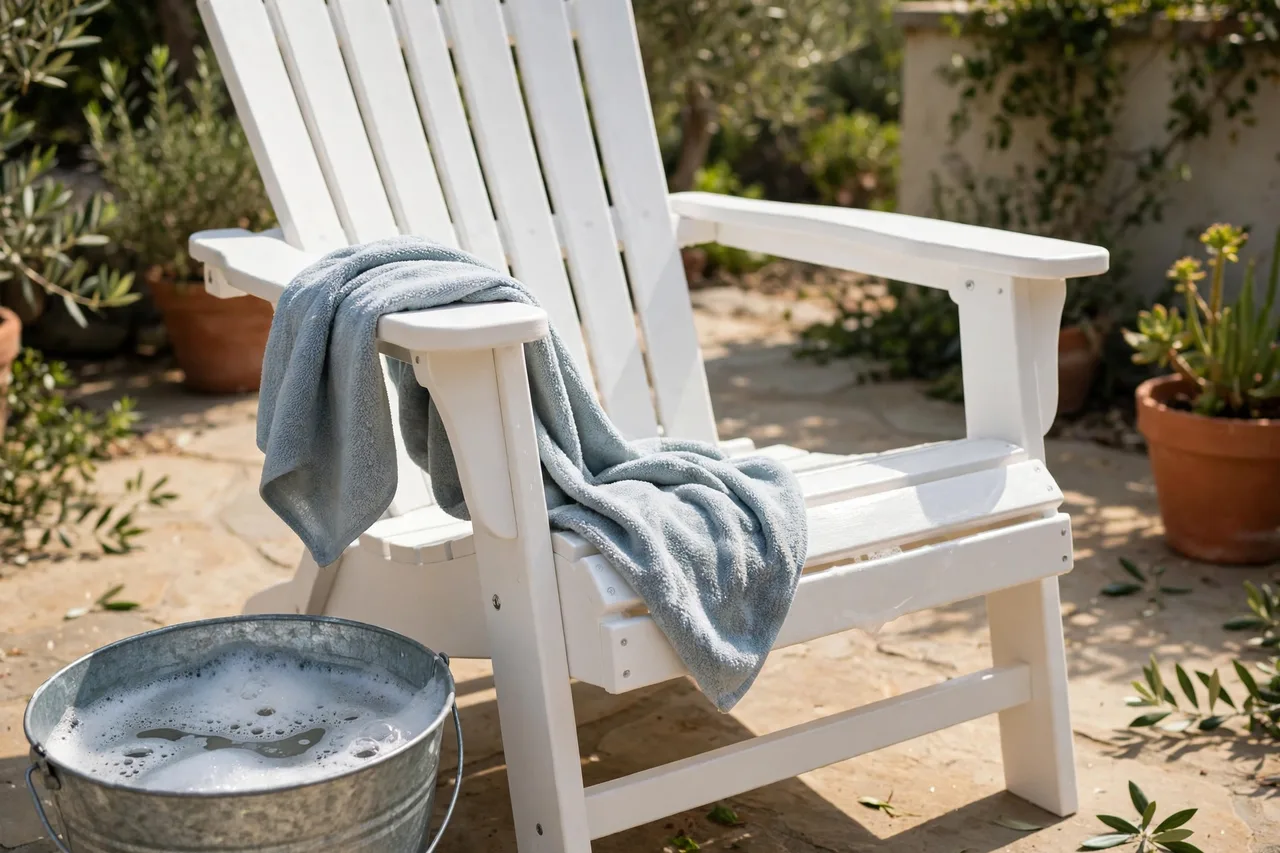
Start with a seasonal wash. Mix mild dish soap with warm water, wipe the furniture with a soft cloth or a soft-bristle brush, rinse with a garden hose on gentle spray, and let it dry in the sun. For stubborn marks, a paste of baking soda and water lifts most stains without scratching the surface. HDPE is power-washer safe under 1,500 PSI, but keep the nozzle moving and stay back from the surface, because a close, hard blast can mark even HDPE.
Never sand HDPE lumber. Sanding scratches the surface and voids the warranty, because the color and the UV protection live in the material itself, not in a coating you can renew. Never use bleach or a harsh solvent cleaner, because it strips the finish and dulls the color. Never leave a dark HDPE piece under a black tarp in summer, because trapped heat can warp even thick boards.
For winter, HDPE needs nothing. It resists freezing temperatures and moisture absorption, so you can leave it outside all year, and it comes through spring with a wash. That is the honest answer, and it is the main reason HDPE outsells wood and metal in cold climates. If you do store it, our guide on how to store outdoor furniture covers the full routine, and our outdoor covers for furniture guide shows which covers actually breathe. For the cushions on a plastic set, our guide to replacement cushions for patio furniture shows how to measure and pick new ones.
Is Plastic Furniture Eco-Friendly?
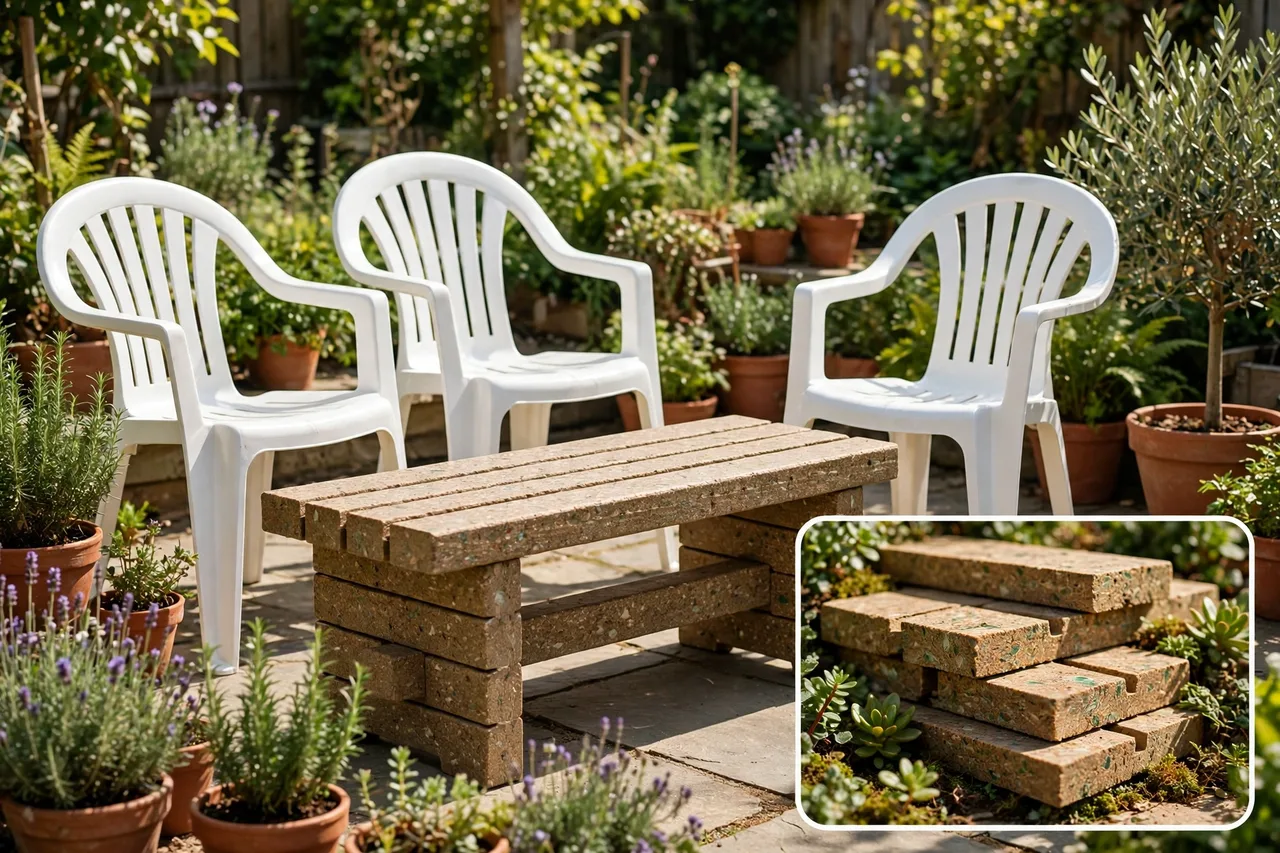
Recycled HDPE furniture is one of the most eco-friendly choices on a patio, because it turns waste into a product that lasts decades. A single HDPE Adirondack chair uses roughly 500 recycled milk jugs, and POLYWOOD recycles an average of 400,000 milk jugs per day, reusing 99 percent of all production scrap back into new lumber. The furniture itself is infinitely recyclable at the end of its life, and it contains no wood fibers, no formaldehyde, and no harmful sealants.
That does not make all plastic furniture green. A cheap polypropylene chair replaced every 2 years creates more waste than a wooden chair that lasts 10, because the cheap chair is thrown away five times as often. The green choice is the long-lived choice: buy HDPE once, keep it for 25 years, and the waste math works in your favor. Check the label for the recycled content percentage before you buy, and aim for 90 to 100 percent post-consumer HDPE, because that is the number honest makers disclose. The recycled outdoor furniture guide from Alibaba Wellness gives the same test: true recycled furniture discloses its percentage, and many top-tier products use 90 to 100 percent post-consumer material.
One honest limit: not every town accepts large plastic furniture for recycling at the end of its life, so check your local rules before you buy, and ask the maker whether it runs a take-back program. Many HDPE makers do, and that closes the loop properly. If the eco angle matters to you, our resin patio furniture guide covers the other recycled-plastic option, resin wicker, and how it compares with solid HDPE lumber.
Related Guides
If plastic is your material, these guides answer the next questions most owners ask. Start with our weather-resistant outdoor furniture guide to compare plastic against wood, metal, and wicker, then read our resin patio furniture guide to compare solid HDPE lumber with resin wicker. Our HDPE patio furniture guide goes deeper on HDPE itself, and our wicker outdoor furniture guide covers the woven look on a plastic frame. For the frame alternative, see our metal outdoor furniture guide, and for the space around the set, our patio garden ideas and our outdoor furniture for small spaces guide.
Frequently Asked Questions
What plastic is used for outdoor furniture?
The most durable option is recycled high-density polyethylene (HDPE), known for UV resistance and structural strength. Polypropylene and PVC are cheaper but less resilient over time. HDPE is made from post-consumer waste like milk jugs and detergent bottles, and it resists fading, cracking, and moisture better than standard polypropylene or PVC alternatives.
How long does HDPE furniture last outside?
With proper care, HDPE outdoor furniture typically lasts 15 to 20 years without fading, cracking, or requiring maintenance, even in harsh climates. Premium HDPE poly lumber lasts 20 to 30 years or more with zero maintenance. Budget polypropylene, by contrast, lasts only 1 to 3 years in direct sun before it fades and turns brittle.
Can plastic patio furniture withstand winter?
Yes, especially HDPE models. They resist freezing temperatures and moisture absorption, and they handle deep freezes down to minus 58 degrees Fahrenheit without cracking or warping. HDPE is designed for permanent outdoor use, resistant to rain, snow, and freeze-thaw cycles, so you can leave it outside all year and it comes through spring with a wash.
Is HDPE outdoor furniture the same as regular plastic patio furniture?
No. HDPE poly lumber is extruded as solid high-density boards, not injection-molded in thin-walled shapes. It is significantly heavier and stronger, rated for a lifespan of 20 to 50 years compared to just a few seasons for basic resin chairs. A second misconception is that HDPE furniture is the same as lightweight injection-molded plastic chairs, and it is not.
Will HDPE furniture fade in direct sunlight?
HDPE poly lumber contains UV stabilizers embedded in the material, not applied as a coating, so it holds its color far longer than ordinary plastic. Unprotected plastics fade within one to two seasons, while quality HDPE with built-in UV protection keeps its color for 15 to 20 years or more. Dark colors absorb more heat, so a lighter color suits the sunniest patios.
Why does cheap plastic patio furniture fall apart so quickly?
Budget patio sets are typically made from polypropylene, which lacks UV stabilizers. Sun exposure causes fading, brittleness, and cracking within one to three seasons. HDPE poly lumber uses a different formulation with built-in UV protection, solid boards instead of thin shells, and color mixed all the way through, which is why it lasts decades instead of seasons.
Plastic outdoor furniture earns its place when you buy the letters HDPE and nothing else. Solid recycled HDPE lumber, UV stabilizers built in, color all the way through, a 20-year warranty on the lumber: that is the whole checklist. Buy it once, wash it twice a year, and it will still be the set your neighbors sit on in twenty years.
Note: This guide gives general advice for choosing and caring for outdoor furniture. Check weight limits before you buy, and follow the maker’s cleaning instructions for your set.