
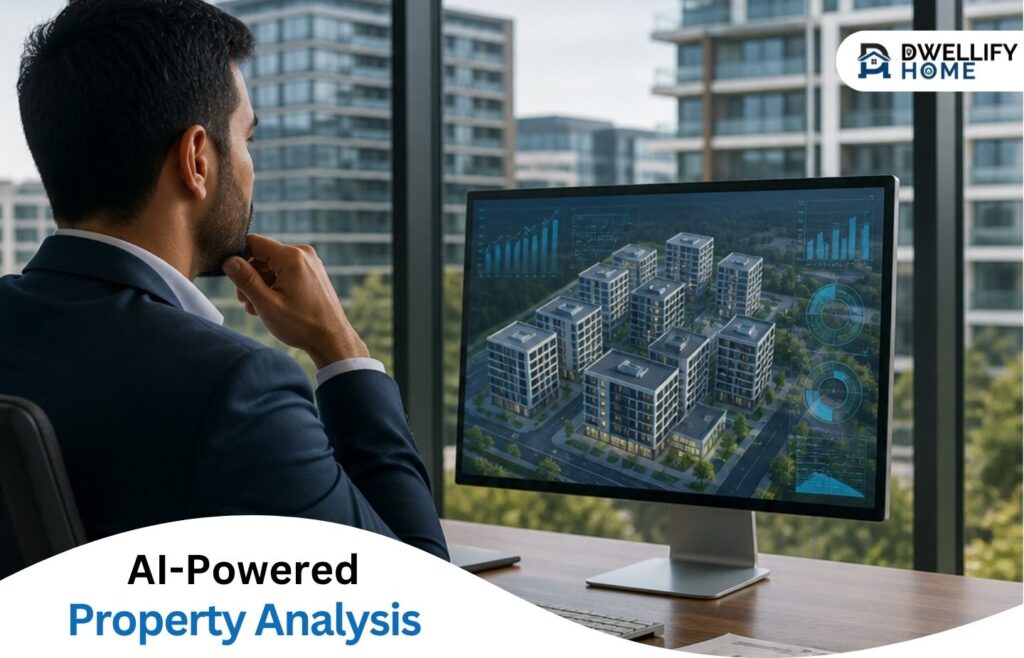
The relationship between property acquisition and interior design has always been more interconnected than most realize. When acquisition teams evaluate multifamily assets, they’re not just analyzing cap rates and debt service coverage ratios—they’re assessing the potential for value-add renovations, unit mix optimization, and design improvements that drive rent premiums. As artificial intelligence transforms commercial real estate underwriting, it’s also changing how investors think about design-driven value creation from the earliest stages of deal evaluation.
The Traditional Disconnect Between Acquisition and Design Planning
Historically, design considerations entered the conversation far too late in the multifamily acquisition process. Underwriting teams would spend weeks building financial models based on broad assumptions about renovation costs—$15,000 per unit for a moderate upgrade, perhaps $30,000 for a full gut renovation—without detailed design specifications or material selections. These placeholder figures often bore little resemblance to actual construction costs once architects and designers became involved months after closing.
This sequential approach created cascading problems. Budget overruns forced design compromises that undermined the original value-add thesis. Renovation timelines stretched as teams discovered structural limitations that weren’t apparent during initial diligence. Most critically, investors missed opportunities to differentiate their properties through thoughtful design because aesthetic decisions were treated as afterthoughts rather than integral components of the investment strategy.
How Modern Underwriting Workflows Incorporate Design Variables
Forward-thinking acquisition teams now integrate design considerations directly into their underwriting models. This means evaluating not just whether a property can support Class A rents after renovation, but specifically which design interventions will generate the highest returns. A 1970s garden-style complex might benefit more from exterior modernization and amenity space redesign than from expensive unit interiors. A 1990s mid-rise could justify premium finishes in penthouses while maintaining moderate specifications in lower floors.
The financial modeling becomes more granular. Instead of a single line item for “tenant improvements,” sophisticated models break out costs by component: cabinetry, countertops, flooring, lighting, plumbing fixtures, and paint. Each component connects to a rent premium assumption based on local market comparables. This level of detail allows investors to test different design scenarios during underwriting—luxury vinyl plank versus engineered hardwood, quartz versus granite, builder-grade versus designer lighting packages—and quantify the return on each decision.
AI’s Role in Accelerating Design-Informed Deal Analysis
The bottleneck in this more sophisticated approach has always been time. Building detailed renovation budgets for multiple design scenarios across different unit types requires dozens of hours per deal. In competitive acquisition environments where offers are due within days of receiving a confidential information memorandum, most teams simply don’t have time for this level of analysis. They revert to broad assumptions and hope they’ve left adequate contingency buffers.
Artificial intelligence is eliminating this constraint by automating the data extraction and model-building process. Platforms like Noal AI can process rent rolls, operating statements, loan documents, and property condition reports to generate complete investment models in minutes rather than weeks. This speed allows acquisition teams to test multiple value-add scenarios—including different design and renovation approaches—before making an offer. An underwriter can model both a moderate refresh strategy and an aggressive repositioning, each with specific finish specifications and corresponding rent assumptions, then present both options to investment committees with full financial projections.
Design Trends That Impact Multifamily Investment Returns
Certain design movements carry direct financial implications for multifamily investors. The shift toward contemporary minimalism, with its emphasis on clean lines and neutral palettes, has actually reduced per-unit renovation costs in many markets. Contemporary home design prioritizes quality materials over ornate details, which often means investors can achieve a premium aesthetic without the cost of traditional crown molding, decorative tile work, or elaborate cabinetry profiles.
Open-concept layouts continue to command rent premiums, but the return on investment varies significantly by unit size. In sub-800-square-foot studios, removing walls to create openness often sacrifices essential storage, potentially limiting appeal to longer-term renters. In 1,200-square-foot two-bedrooms, opening the kitchen to the living area typically adds $75 to $150 in monthly rent while costing $8,000 to $12,000 in structural work and finish updates—a reasonable return if the property hold period supports the payback timeline.
Smart home features represent another design consideration with evolving financial impact. Keyless entry systems reduce operational costs by eliminating lock changes between tenants and enabling remote property access for maintenance and tours. Smart thermostats reduce utility expenses in properties where owners pay heating and cooling. However, integrated smart lighting and voice-controlled systems show mixed results—they appeal strongly to certain demographic segments but add maintenance complexity and replacement costs that some operators find difficult to justify.
Balancing Aesthetic Trends With Long-Term Value
The challenge for multifamily investors is distinguishing between enduring design principles and fleeting trends. Subway tile and shiplap—ubiquitous in renovated apartments five years ago—now appear dated in some markets. Investors who installed these trendy finishes may face earlier-than-expected renovation cycles. Conversely, classic materials like white oak flooring and marble-look quartz maintain appeal across market cycles, justifying their higher upfront costs through extended useful lives.
Color choices carry particular risk. Bold accent walls or trendy paint colors (the “millennial pink” era serves as a cautionary tale) require repainting when tenant preferences shift. Neutral grays and warm whites offer more flexibility, allowing tenants to personalize with furnishings and artwork while maintaining broad appeal for future renters. The financial impact appears in turnover costs and days vacant—properties requiring full repaints between tenants add $1,500 to $2,500 in turnover expenses and extend vacancy periods by several days.
Technology’s Broader Influence on Design Decisions
Beyond underwriting automation, technology is changing how design professionals approach multifamily projects. Leading interior design studios are using AI to accelerate concept development, generate alternative layouts, and visualize finish combinations. For multifamily investors, this technological capability means receiving detailed design proposals faster, testing more renovation scenarios, and making more informed decisions about which design interventions justify their costs.
Virtual staging and 3D rendering have become essential tools in the acquisition process itself. Investors can now present lenders and investment committees with photorealistic renderings of proposed renovations, making the value-add thesis more tangible. This visual clarity improves capital raising efficiency and helps align stakeholder expectations about the post-renovation product. Properties with compelling renovation visions often secure better financing terms because lenders can more clearly evaluate the projected stabilized value.
Building Design Considerations Into Your Acquisition Process
Investors looking to strengthen the connection between acquisition underwriting and design planning should start by building relationships with design professionals before deals arise. Having architects and interior designers familiar with your investment criteria and target markets allows for rapid consultation when opportunities emerge. Some acquisition firms maintain preferred vendor networks or even retain design consultants on a monthly basis to ensure immediate availability during compressed due diligence periods.
Standardizing renovation specifications across your portfolio also accelerates the underwriting process. Developing three or four renovation tiers—value, standard, premium, and luxury—with predetermined finish packages and cost ranges for each tier allows underwriters to quickly slot properties into the appropriate category. This standardization doesn’t eliminate customization for specific properties, but it provides a reliable starting point that reduces the time required to generate initial financial projections.
Finally, tracking actual renovation costs and rent premiums across your existing portfolio creates a proprietary data set that improves future underwriting accuracy. Most acquisition teams discover that certain design interventions consistently outperform their initial projections while others underdeliver. Kitchen upgrades might generate larger rent increases than expected, while bathroom renovations provide smaller returns than industry benchmarks suggest. This performance data, fed back into underwriting assumptions, compounds accuracy over time and creates a sustainable competitive advantage.
The Future of Design-Driven Multifamily Investment
The convergence of sophisticated financial modeling, AI-powered automation, and design technology is creating a new category of multifamily investors who treat aesthetic and experiential considerations as core components of their investment thesis rather than operational details to be addressed post-closing. These investors recognize that in many markets, the physical product differentiates otherwise similar assets more than location or price point alone.
This evolution requires acquisition teams to develop new competencies. Financial analysts need basic fluency in design principles and construction costs. Design professionals need to understand how their decisions impact cash-on-cash returns and internal rates of return. The most successful multifamily platforms are building cross-functional teams where underwriters, asset managers, and design professionals collaborate from the earliest stages of deal evaluation through stabilization and exit.
As technology continues to reduce the time and cost barriers to sophisticated analysis, the competitive advantage will increasingly belong to investors who can move quickly without sacrificing analytical rigor. The firms that master this balance—leveraging automation for speed while maintaining deep expertise in both financial analysis and design execution—will be best positioned to identify value-add opportunities that others overlook and execute renovations that deliver superior risk-adjusted returns.
Some links featured in this content may be part of affiliate or sponsored arrangements. Dwellifyhome.com may receive a commission from qualifying purchases made through these links. We aim to provide useful information while being transparent about these relationships.



