
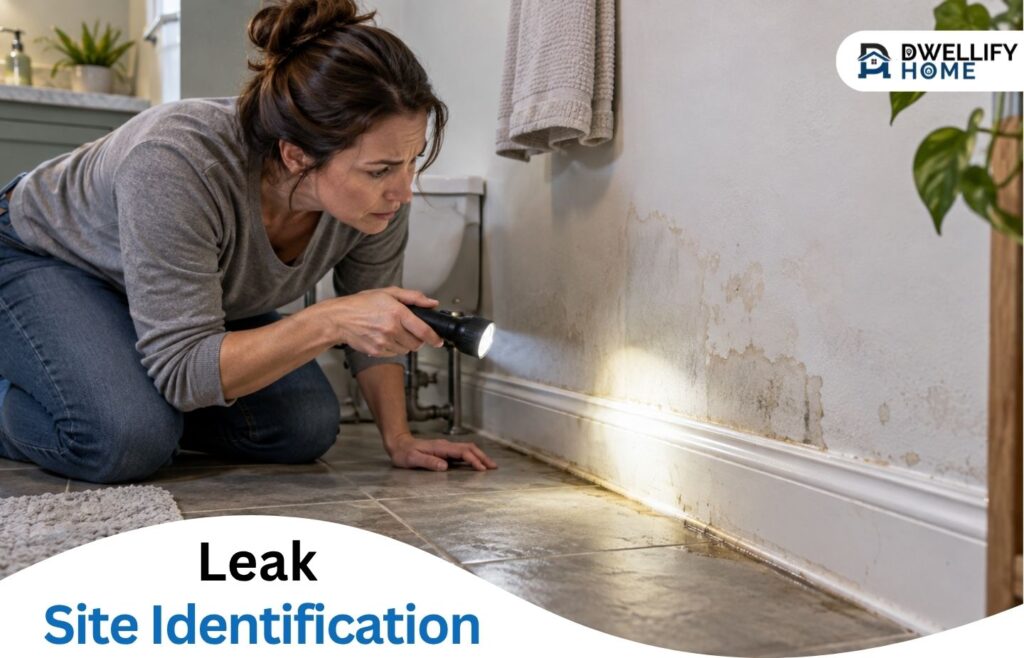
A homeowner checks the floor and wall around a bathroom fixture with a flashlight after noticing a faint musty smell.
A hidden leak rarely announces itself. It shows up as a water bill that creeps up for no reason, a stain the size of a coin on the ceiling, or a baseboard that feels a little soft. You know something’s wrong. What you don’t know is where the water is actually coming from.
That gap is the expensive part. Water can travel through walls, floors, and crawl spaces, so the wet spot you see may be several feet from the actual leak. Finding the source means knowing which clues to follow, what you can safely check yourself, and when professional leak detection can save you from unnecessary damage. Here’s how to narrow things down before a small leak becomes a costly repair.
How to Narrow Down the Source of a Hidden Leak
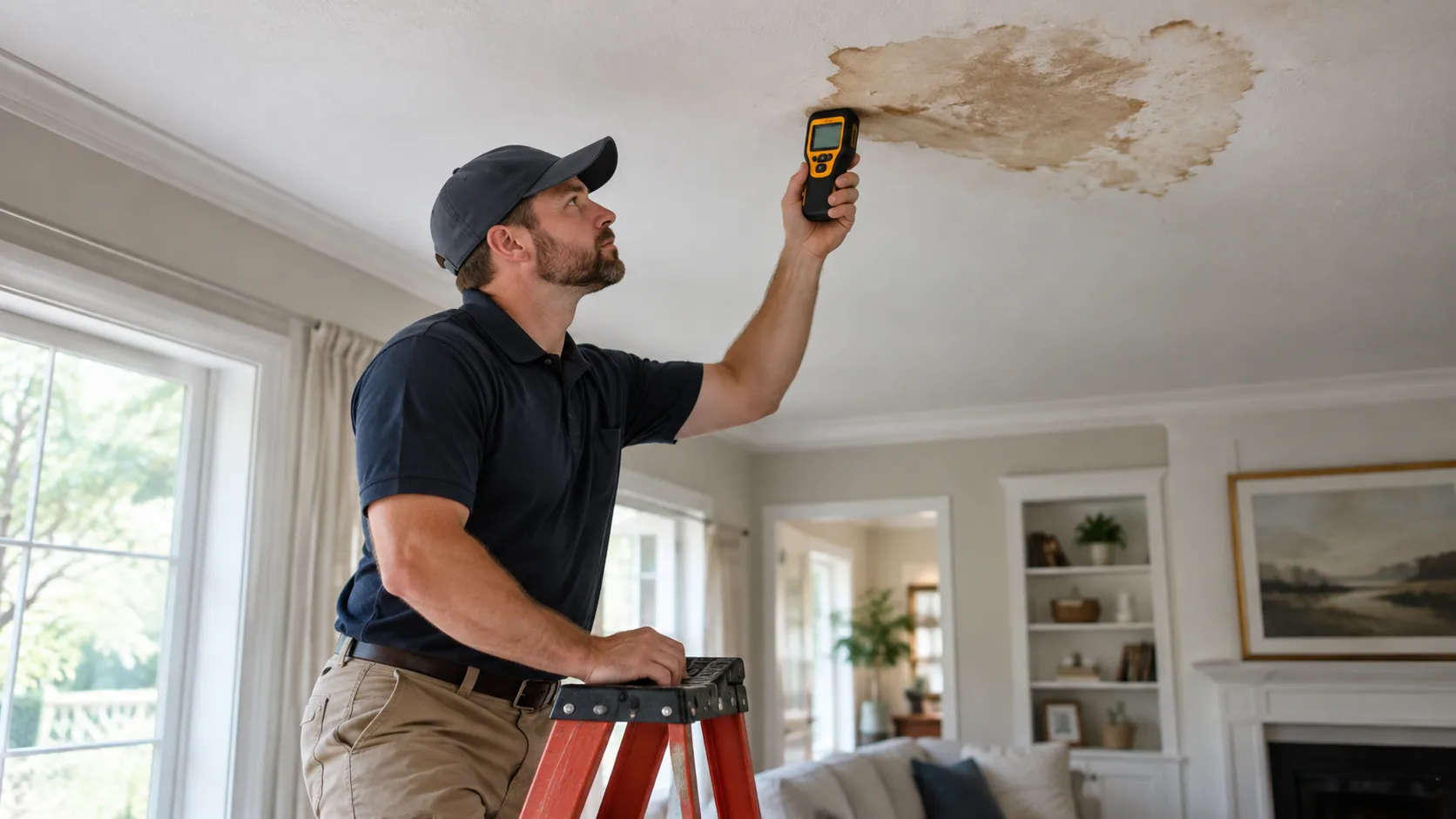
Plumber using a moisture meter to inspect a brown water stain on a living room ceiling and locate a hidden water leak.
You notice a brown ring spreading across your living room ceiling, directly under the upstairs bathroom. Before opening up the ceiling, remember that water can travel along joists and pipes before it drips through. The stain is a clue, not necessarily the source.
Start by checking which fixtures sit above the damaged area. Notice whether the stain grows after someone showers, flushes the toilet, or runs a faucet. These patterns can help you narrow down whether the problem involves a supply line, drain, or shower waterproofing.
When the source isn’t obvious, professional leak site identification can help you avoid unnecessary demolition. Specialists use acoustic listening, thermal imaging, and moisture mapping to locate hidden leaks more accurately. This is especially useful when water damage keeps spreading or the affected pipes are buried inside walls or floors.
You can narrow down the possibilities yourself, but finding the exact source of a concealed leak often takes professional equipment and experience. The goal is to fix the right problem without creating more damage along the way.
Confirm That a Leak Exists
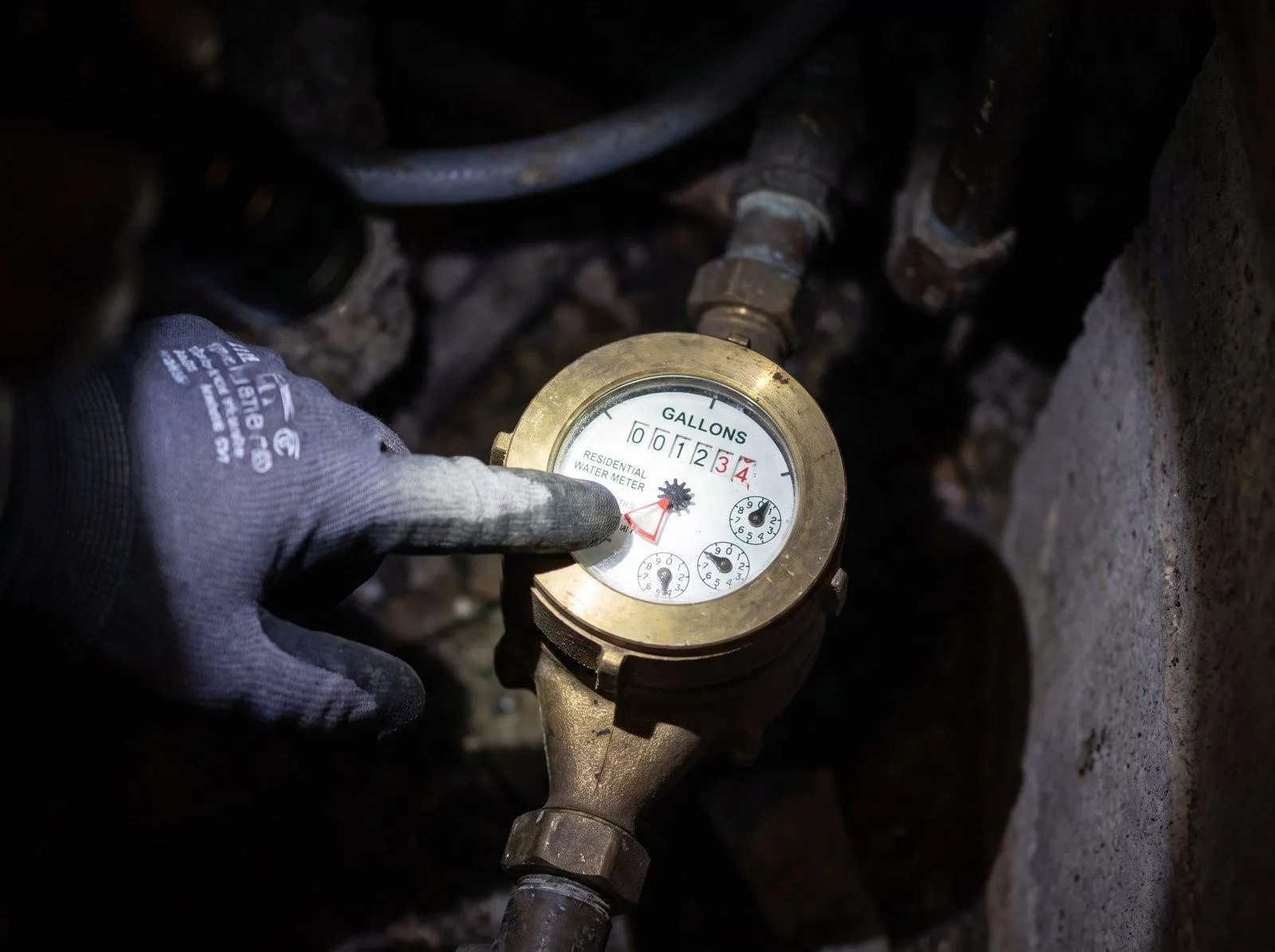
A water meter’s small leak indicator spins slowly even though every fixture in the house is switched off.
Once you’ve narrowed down where the water might be coming from, the next step is to check whether there’s an ongoing leak. The EPA’s 2026 WaterSense program guidance says household leaks waste nearly 1 trillion gallons of water nationwide every year, and the Fix a Leak Week guidance gives you a simple test. Shut off every tap and appliance, record the water meter, wait two hours, and read it again. If the number moved, water is escaping somewhere.
The same 2026 EPA page puts the average household’s leaks at more than 9,300 gallons a year, and says nine percent of homes leak 50 gallons or more per day. Those aren’t dramatic floods. They’re steady, quiet losses, which is why they run for months.
Check the Usual Suspects First
Most leaks come from a short list of places. Toilets are the top offender: drop a little food coloring in the tank, wait ten minutes, and see whether color reaches the bowl. Worn flappers are cheap to replace. Next, look under sinks and around the base of faucets for damp cabinet floors and corrosion on fittings. Check the water heater’s drain valve and the washing machine hoses too, since both fail more often than people expect.
Bathrooms deserve special attention. As we noted in our bathroom remodel cost breakdown, a bathroom can hide plumbing, mold, and structural trouble that only appears once the tile comes off. Soft floors and a musty smell are the warning signs.
Outdoors, a leaking hose spigot or a broken irrigation line can pull the meter without any sign indoors. Walk the yard after a dry spell and look for patches that stay green or soggy. A line between the meter and the house can also leak underground, so if every fixture checks out dry, that’s the next place to look.
Keep a simple log while you work. Write down the meter reading, the time, and which fixture you tested. It sounds fussy, but a plain list of what you ruled out saves you from checking the same toilet three times, and it gives a plumber a head start if you do end up calling one.
Know When It’s Bigger Than a DIY Fix
Some leaks are a washer swap. Others signal that the pipes themselves are failing. If you find repeated pinhole leaks, rusty water, or damp spots in several rooms, read our guide to home repiping before you patch anything again. Slow leaks inside walls rot framing and ruin insulation, and the damage often costs more than the pipe work would have.
A plumber can assess whether you’re dealing with an isolated leak or a larger problem with aging pipes. If the same issues keep returning, replacing a worn section or upgrading the plumbing may make more sense than paying for one temporary repair after another.
Why Speed Matters
Water damage is common, not rare. The Insurance Information Institute reports that about one in 60 insured homes has a water damage or freezing claim in a typical year, based on 2018 to 2022 data. Many of those started as a drip someone meant to look at later.
Write down what you found, take photos of the stain and the meter reading, and shut off the water to the affected line if you can. If the source remains hidden or the damage continues spreading, a professional leak detection specialist can help pinpoint the problem before repairs begin. A short diagnostic visit costs far less than a second round of wall repairs.
Some links featured in this content may be part of affiliate or sponsored arrangements. Dwellifyhome.com may receive a commission from qualifying purchases made through these links. We aim to provide useful information while being transparent about these relationships.



